
Facilities and Safety Learning Objectives At the end
Facilities and Safety
Learning Objectives At the end of this module, participants will be able to: n n n relate how facility design impacts the efficiency and safety of laboratory workers describe practices to prevent or reduce risks list personal protective equipment (PPE) that should be used routinely by laboratory workers explain general safety requirements for the laboratory describe steps to take in response to emergencies such as biological or chemical spills, or laboratory fires Facilities and Safety - Module 2 2
Scenario Your laboratory specializes in virology. There is an epidemic of H 5 N 1 in your country and the Ministry of Health names your laboratory as the reference laboratory for processing all samples. What are the elements to consider ensuring biosafety in your laboratory? Facilities and Safety - Module 2 3
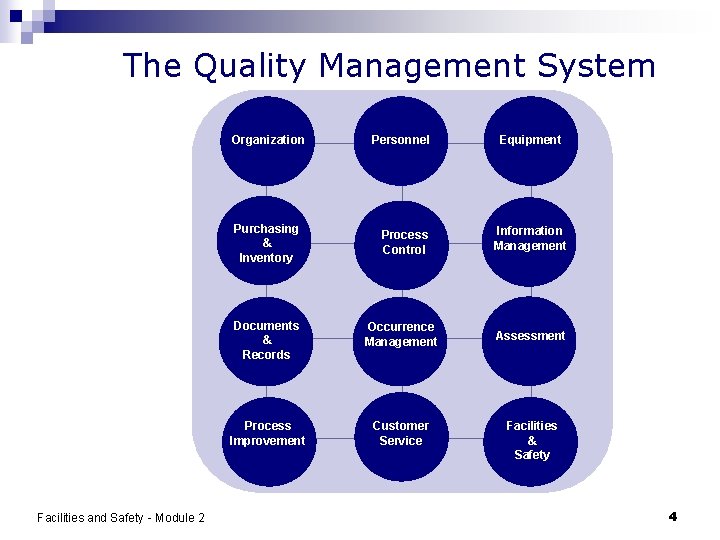
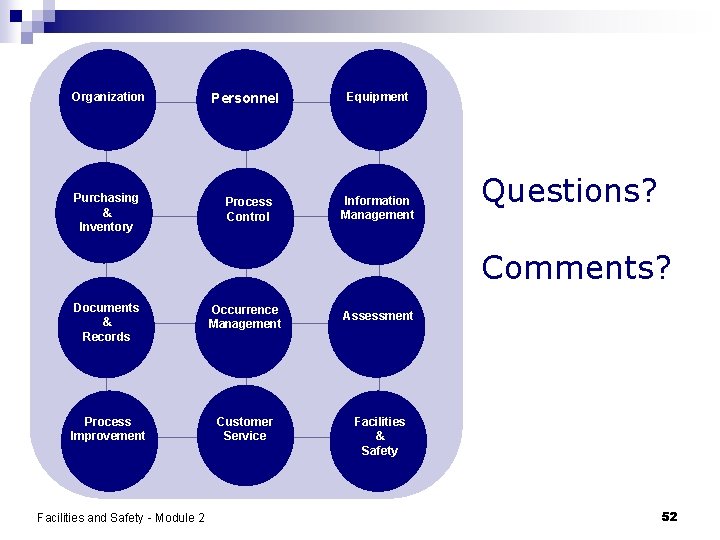
The Quality Management System Organization Purchasing & Inventory Facilities and Safety - Module 2 Personnel Process Control Documents & Records Occurrence Management Process Improvement Customer Service Equipment Information Management Assessment Facilities & Safety 4
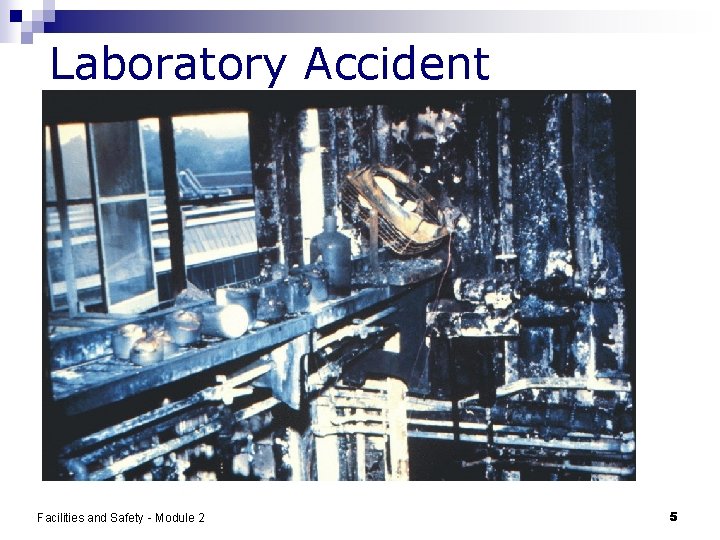
Laboratory Accident Facilities and Safety - Module 2 5
Secondary effects of a laboratory accident n n loss of staff confidence loss of reputation loss of customers increased costs litigation, insurance Negligence of laboratory safety is costly! Facilities and Safety - Module 2 6
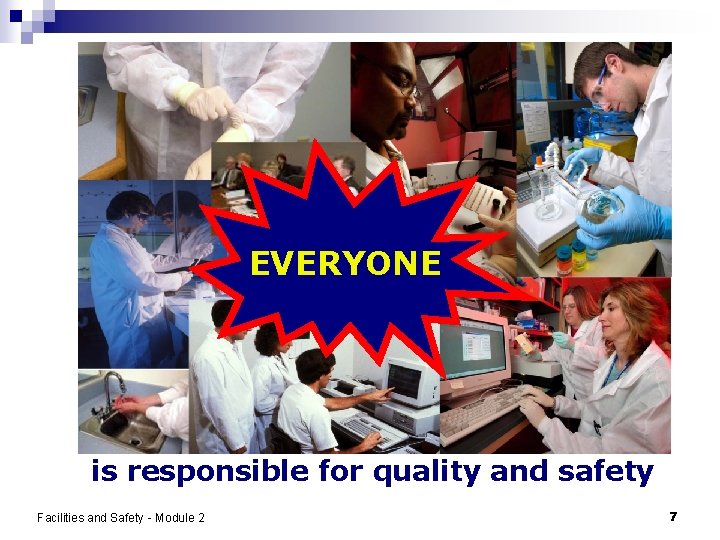
EVERYONE is responsible for quality and safety Facilities and Safety - Module 2 7
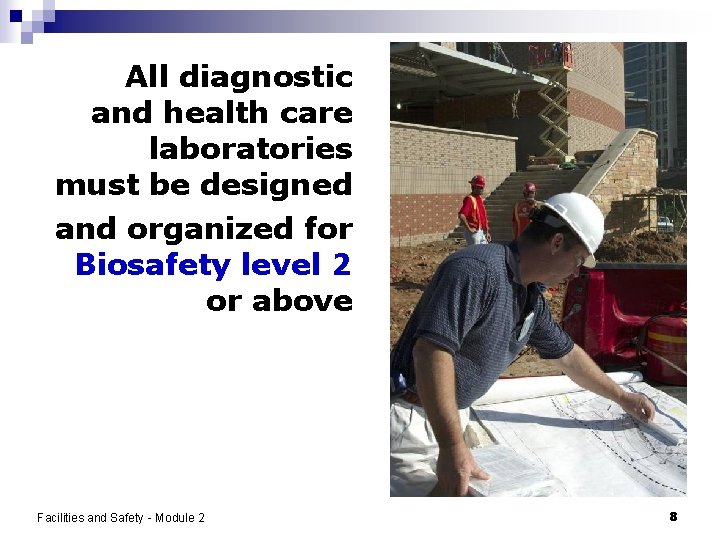
All diagnostic and health care laboratories must be designed and organized for Biosafety level 2 or above Facilities and Safety - Module 2 8
Laboratory design n Path followed by the sample ¨ reception and registration of patients ¨ sampling rooms ¨ dispatch between different laboratories ¨ analysis of samples n Report delivery, filing n Service rooms Facilities and Safety - Module 2 9 9
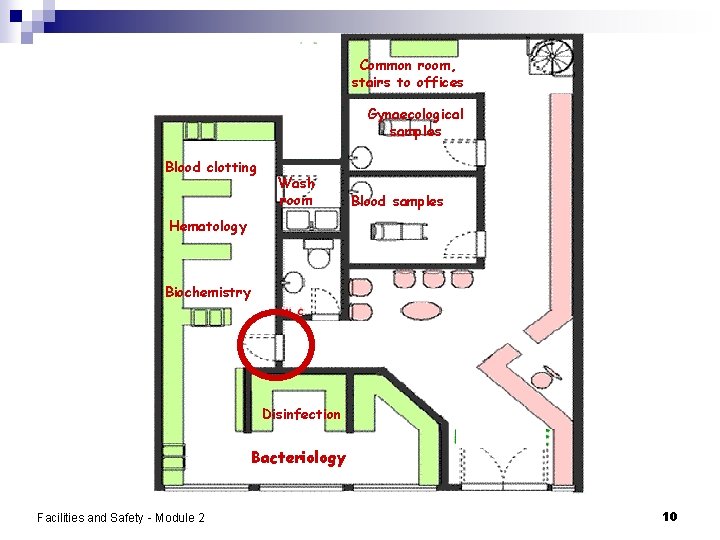
Common room, stairs to offices Gynaecological samples Blood clotting Wash room Blood samples Hematology Biochemistry Disinfection Bacteriology Facilities and Safety - Module 2 10
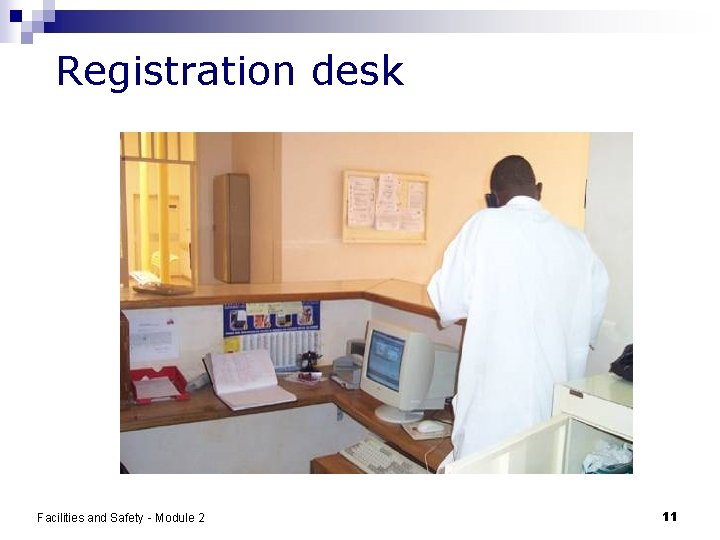
Registration desk Facilities and Safety - Module 2 11
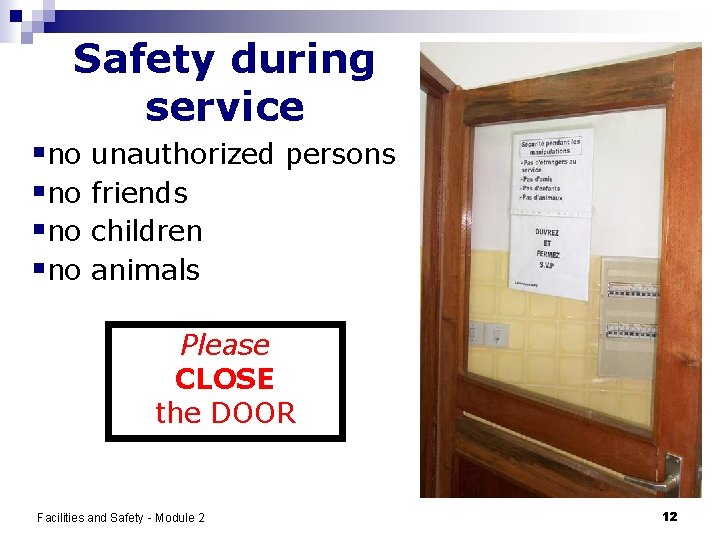
Safety during service §no unauthorized persons §no friends §no children §no animals Please CLOSE the DOOR Facilities and Safety - Module 2 12
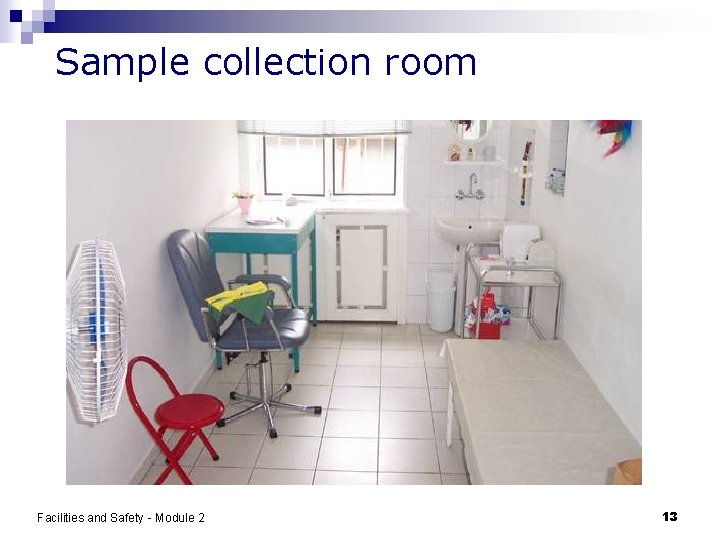
Sample collection room Facilities and Safety - Module 2 13
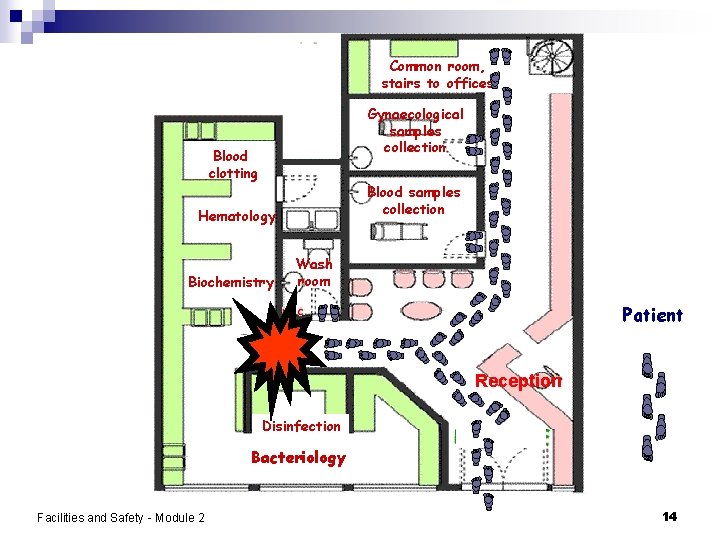
Common room, stairs to offices Gynaecological samples collection Blood clotting Blood samples collection Hematology Biochemistry Wash room Patient Reception Disinfection Bacteriology Facilities and Safety - Module 2 14
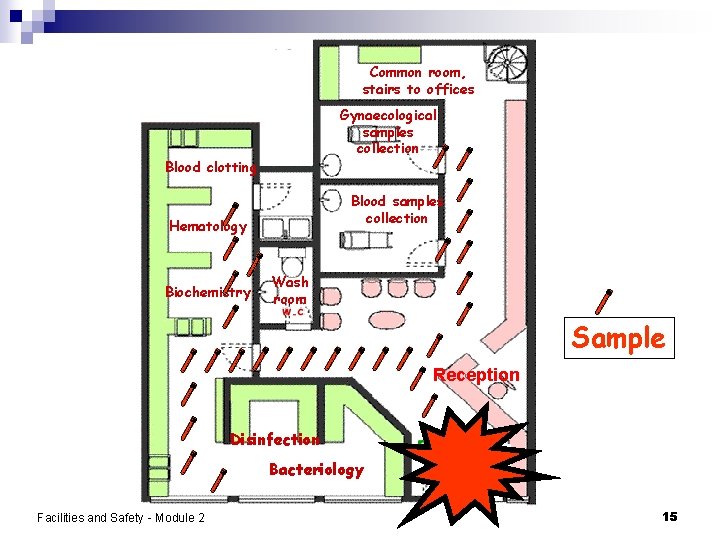
Common room, stairs to offices Gynaecological samples collection Blood clotting Blood samples collection Hematology Biochemistry Wash room Sample Reception Disinfection Bacteriology Facilities and Safety - Module 2 15
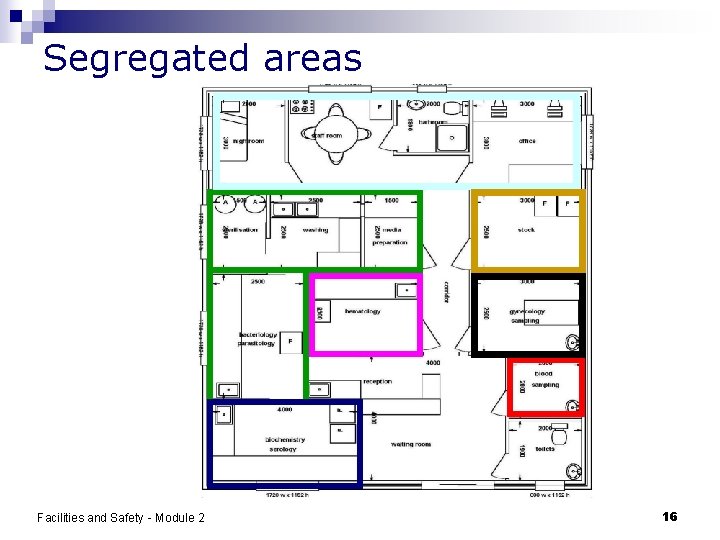
Segregated areas Facilities and Safety - Module 2 16
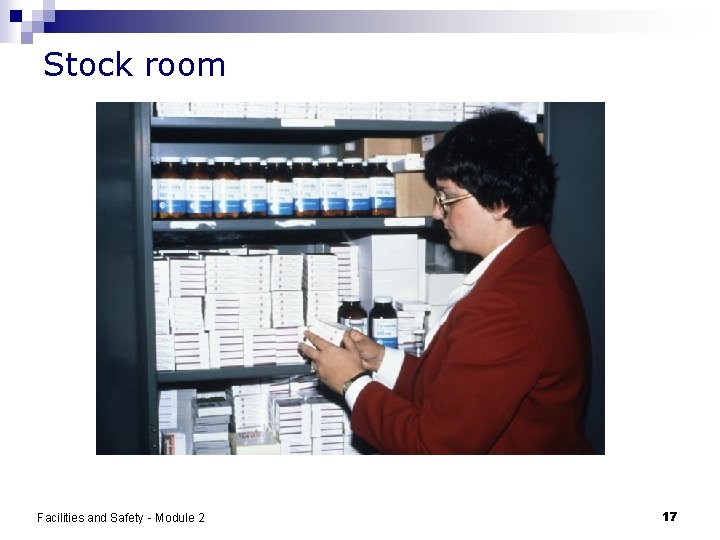
Stock room Facilities and Safety - Module 2 17
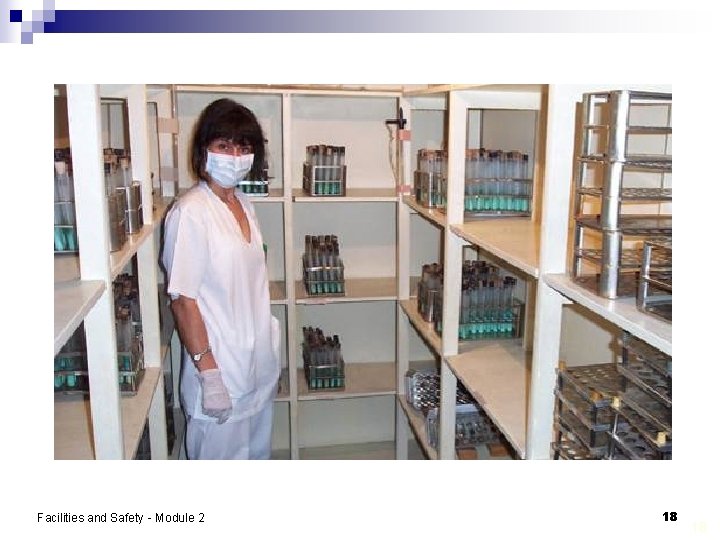
Facilities and Safety - Module 2 18 18
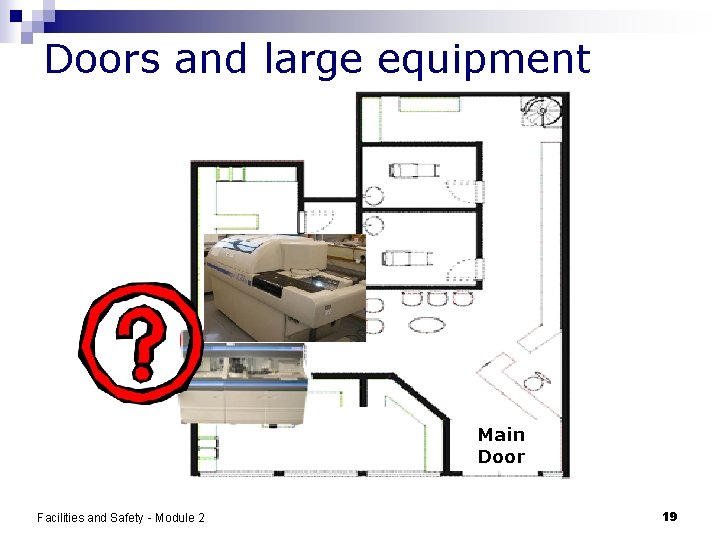
Doors and large equipment Main Door Facilities and Safety - Module 2 19
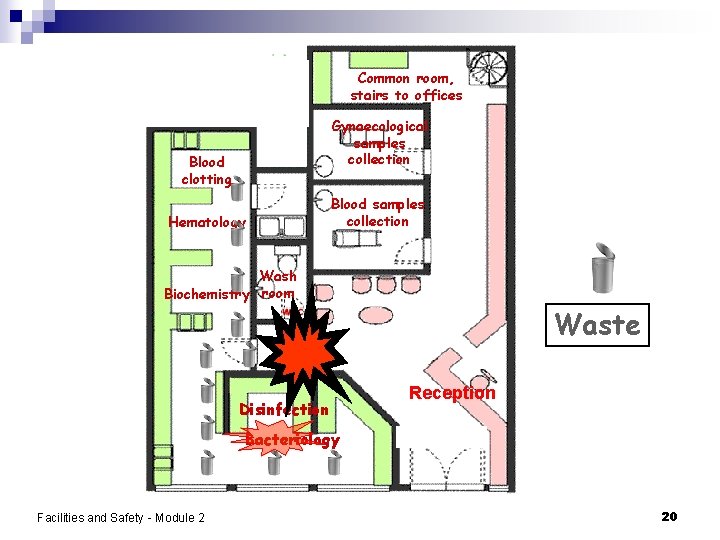
Common room, stairs to offices Gynaecological samples collection Blood clotting Hematology Blood samples collection Wash Biochemistry room Waste Disinfection Reception Bacteriology Facilities and Safety - Module 2 20
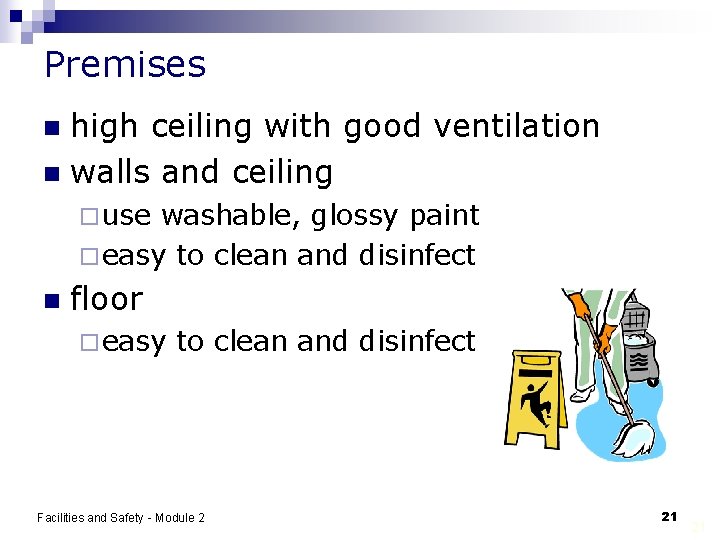
Premises high ceiling with good ventilation n walls and ceiling n ¨ use washable, glossy paint ¨ easy to clean and disinfect n floor ¨ easy to clean and disinfect Facilities and Safety - Module 2 21 21
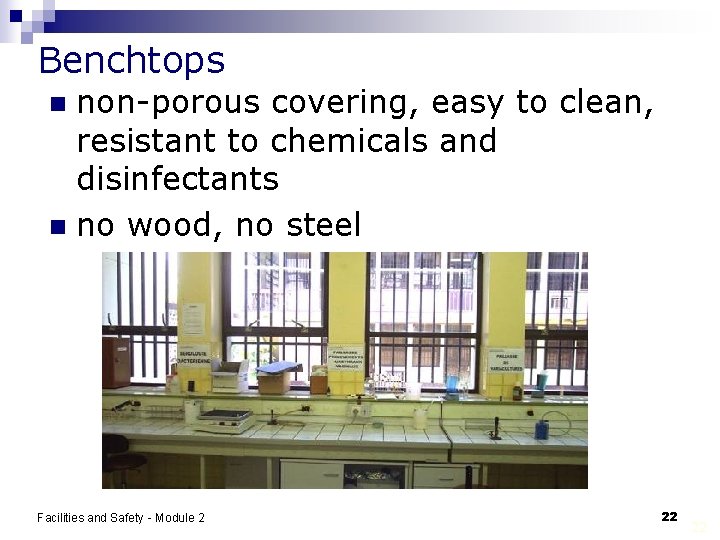
Benchtops non-porous covering, easy to clean, resistant to chemicals and disinfectants n no wood, no steel n Facilities and Safety - Module 2 22 22
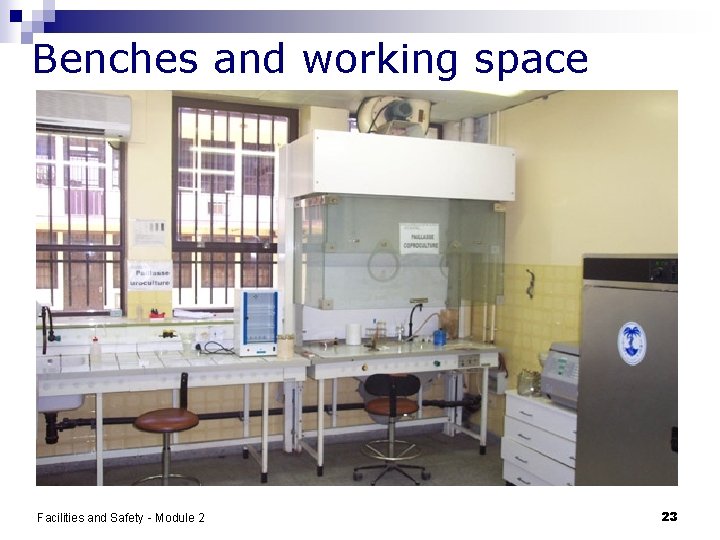
Benches and working space Facilities and Safety - Module 2 23
Scheduled Cleaning n n daily ¨ bench tops ¨ floors weekly ¨ ceiling and walls other ¨ refrigerators ¨ freezers ¨ storage areas record date and cleaning staff Facilities and Safety - Module 2 24 24
Safety Management n Responsible: Safety Officer n Safety Manual: laboratory-specific n Standard Operating Procedures n Trained personnel q potential risks q safety procedures n Waste Management Facilities and Safety - Module 2 25
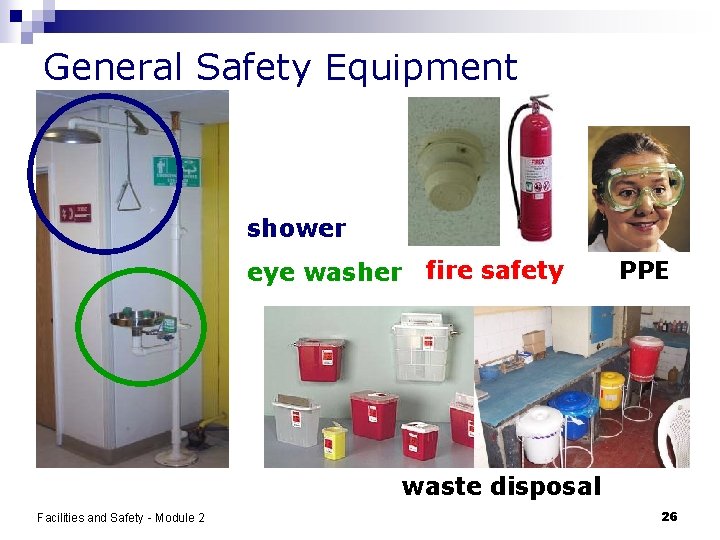
General Safety Equipment shower eye washer fire safety PPE waste disposal Facilities and Safety - Module 2 26
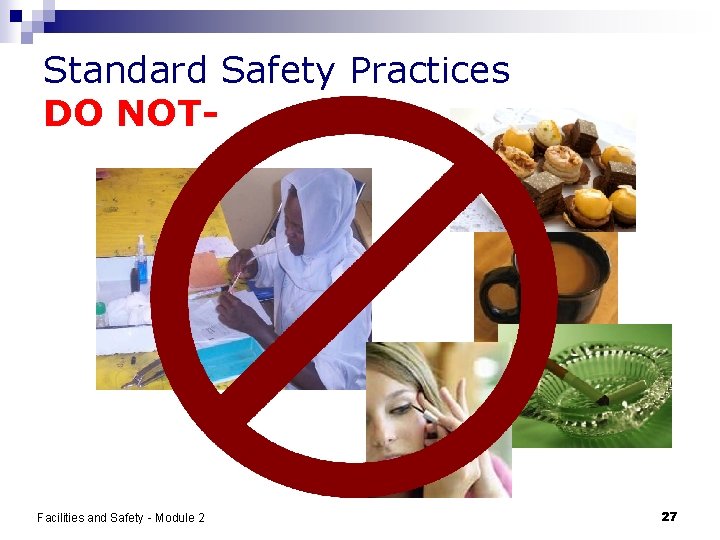
Standard Safety Practices DO NOT- Facilities and Safety - Module 2 27
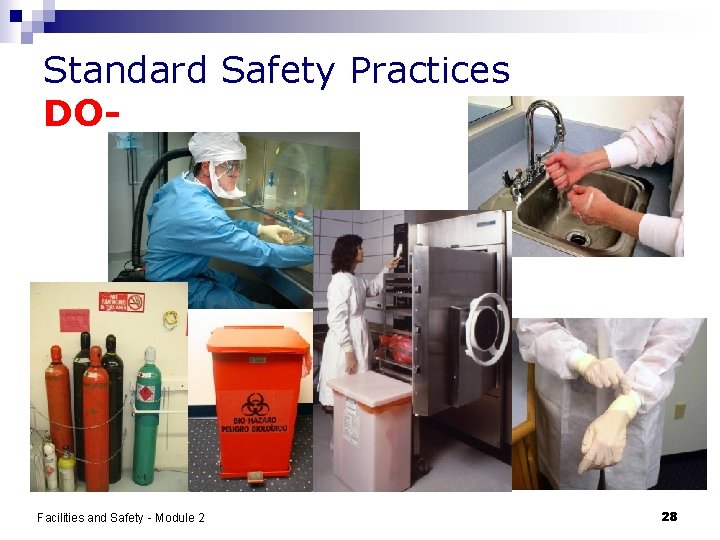
Standard Safety Practices DO- Facilities and Safety - Module 2 28
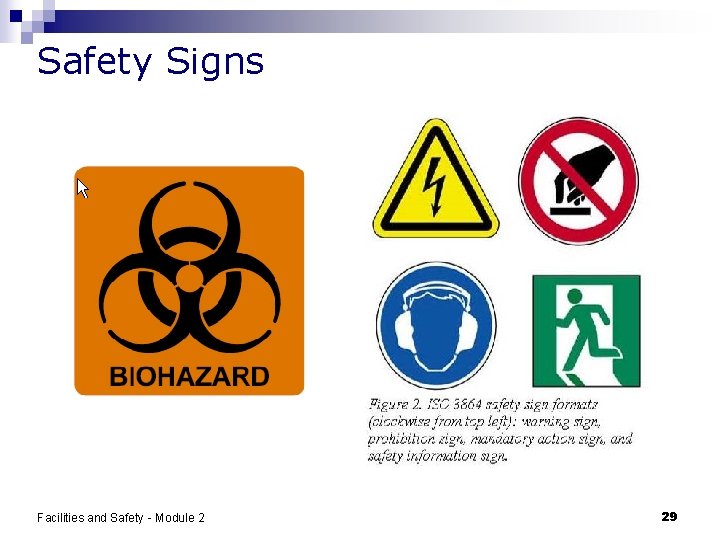
Safety Signs Facilities and Safety - Module 2 29
Facilities and Safety - Module 2 30
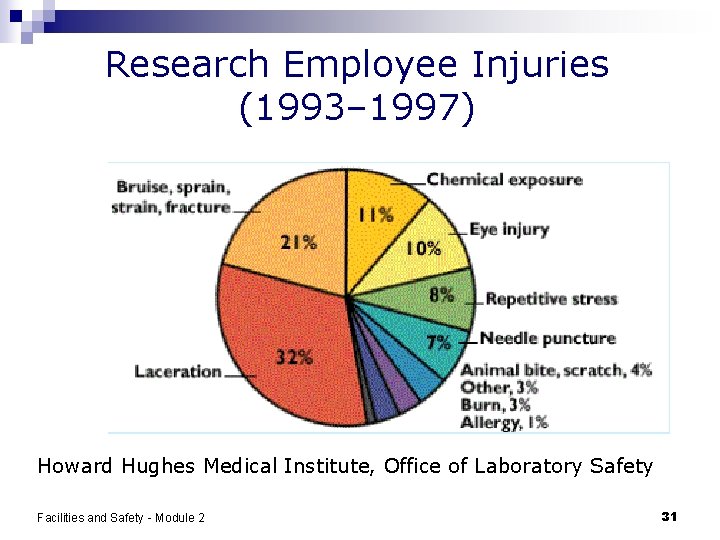
Research Employee Injuries (1993– 1997) Howard Hughes Medical Institute, Office of Laboratory Safety Facilities and Safety - Module 2 31
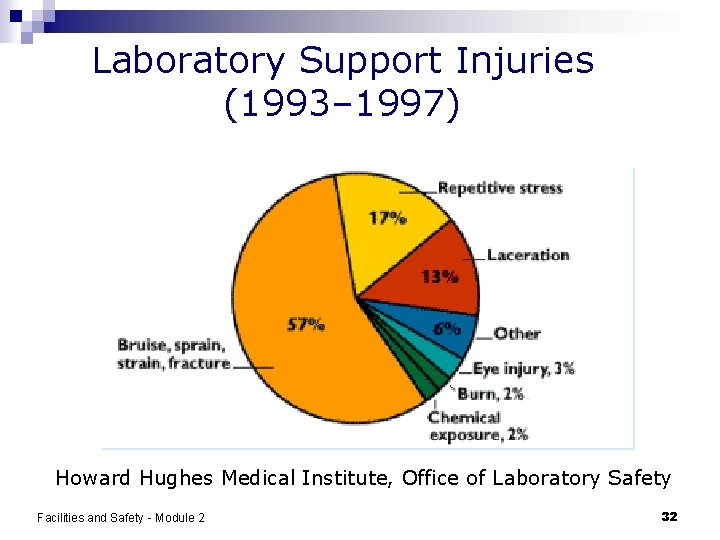
Laboratory Support Injuries (1993– 1997) Howard Hughes Medical Institute, Office of Laboratory Safety Facilities and Safety - Module 2 32
Laboratory Hazards n physical n chemical n biological Facilities and Safety - Module 2 33
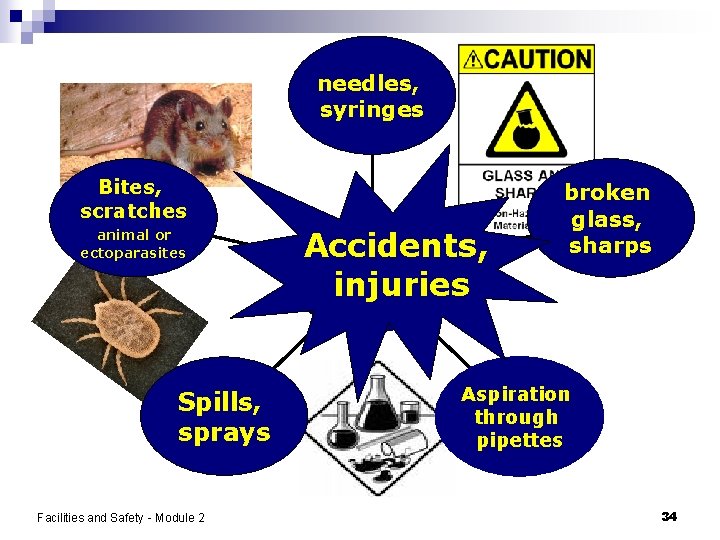
needles, syringes Bites, scratches animal or ectoparasites Spills, sprays Facilities and Safety - Module 2 Accidents, injuries broken glass, sharps Aspiration through pipettes 34
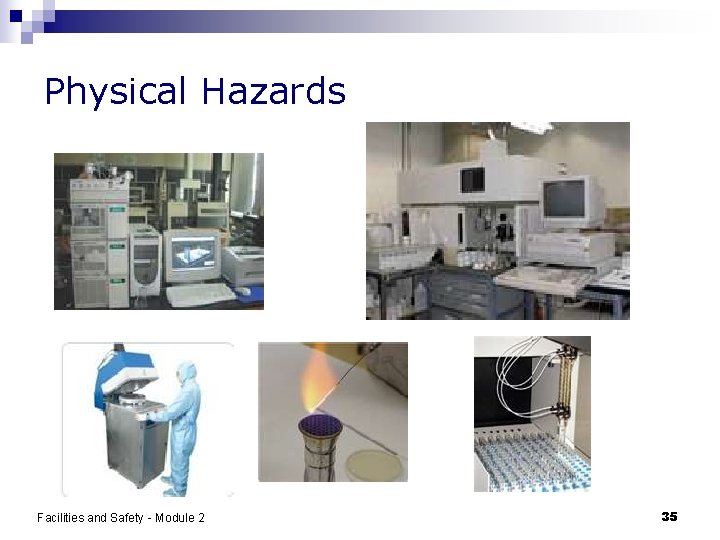
Physical Hazards Facilities and Safety - Module 2 35
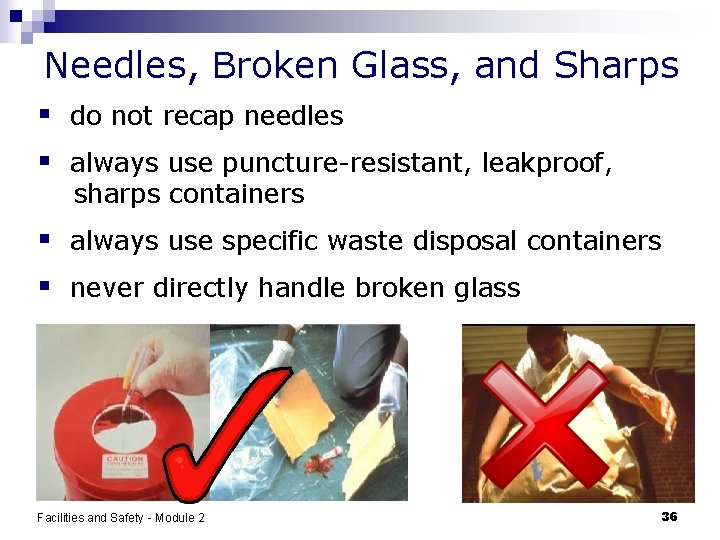
Needles, Broken Glass, and Sharps § do not recap needles § always use puncture-resistant, leakproof, sharps containers § always use specific waste disposal containers § never directly handle broken glass Facilities and Safety - Module 2 36
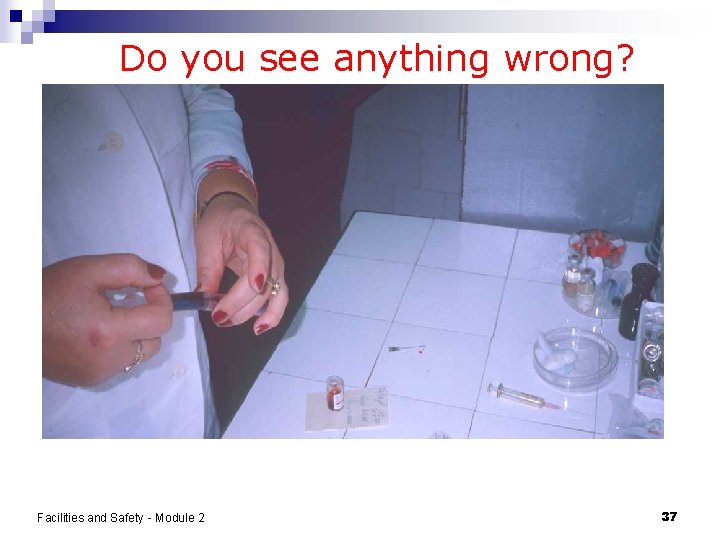
Do you see anything wrong? Facilities and Safety - Module 2 37
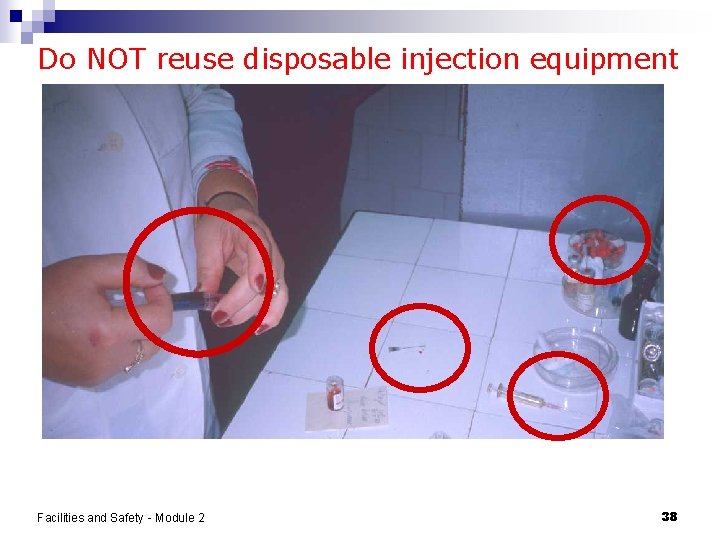
Do NOT reuse disposable injection equipment Facilities and Safety - Module 2 38
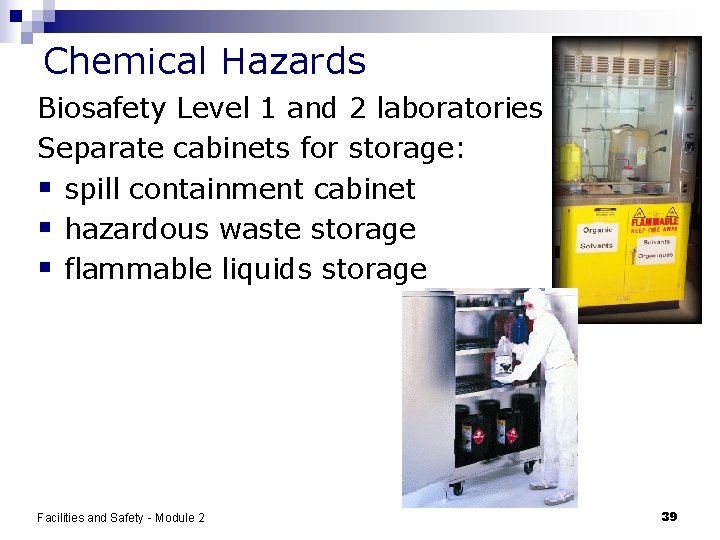
Chemical Hazards Biosafety Level 1 and 2 laboratories Separate cabinets for storage: § spill containment cabinet § hazardous waste storage § flammable liquids storage Facilities and Safety - Module 2 39
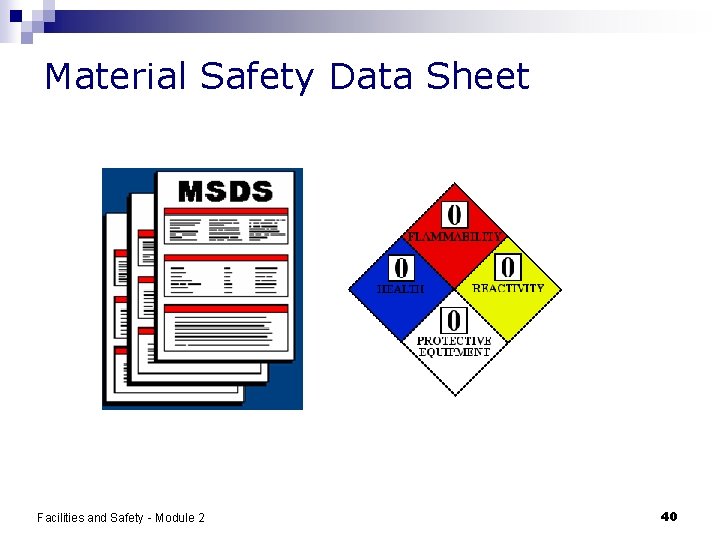
Material Safety Data Sheet Facilities and Safety - Module 2 40
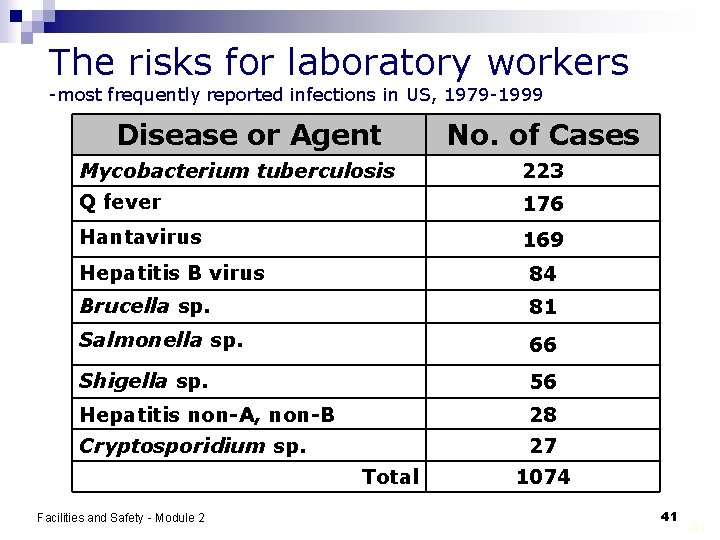
The risks for laboratory workers -most frequently reported infections in US, 1979 -1999 Disease or Agent No. of Cases Mycobacterium tuberculosis 223 Q fever 176 Hantavirus 169 Hepatitis B virus 84 Brucella sp. 81 Salmonella sp. 66 Shigella sp. 56 Hepatitis non-A, non-B 28 Cryptosporidium sp. 27 Total Facilities and Safety - Module 2 1074 41 41
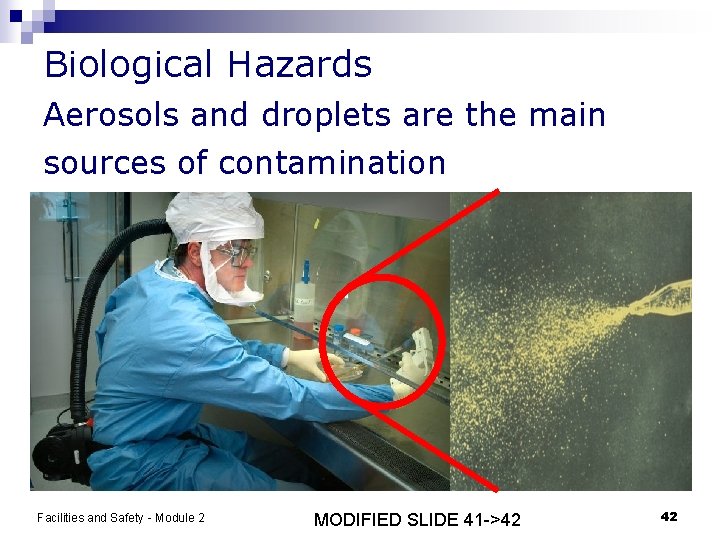
Biological Hazards Aerosols and droplets are the main sources of contamination Facilities and Safety - Module 2 MODIFIED SLIDE 41 ->42 42
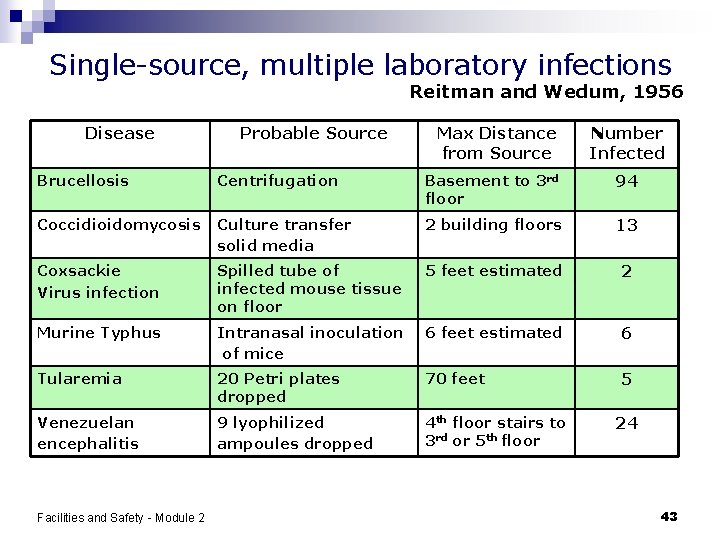
Single-source, multiple laboratory infections Reitman and Wedum, 1956 Disease Probable Source Max Distance from Source Number Infected Brucellosis Centrifugation Basement to 3 rd floor 94 Coccidioidomycosis Culture transfer solid media 2 building floors 13 Coxsackie Virus infection Spilled tube of infected mouse tissue on floor 5 feet estimated 2 Murine Typhus Intranasal inoculation of mice 6 feet estimated 6 Tularemia 20 Petri plates dropped 70 feet 5 Venezuelan encephalitis 9 lyophilized ampoules dropped 4 th floor stairs to 3 rd or 5 th floor Facilities and Safety - Module 2 24 43
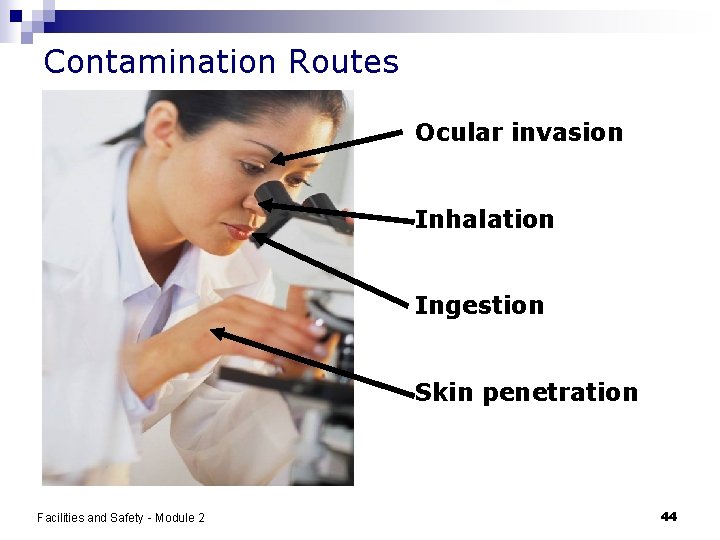
Contamination Routes Ocular invasion Inhalation Ingestion Skin penetration Facilities and Safety - Module 2 44
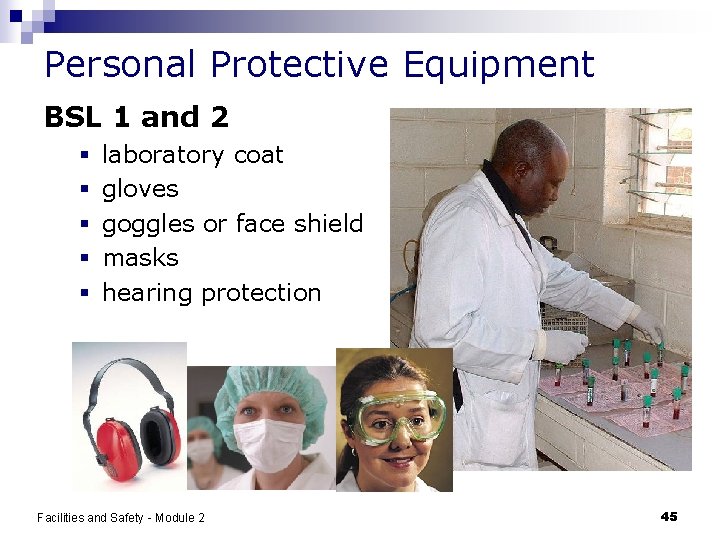
Personal Protective Equipment BSL 1 and 2 § § § laboratory coat gloves goggles or face shield masks hearing protection Facilities and Safety - Module 2 45
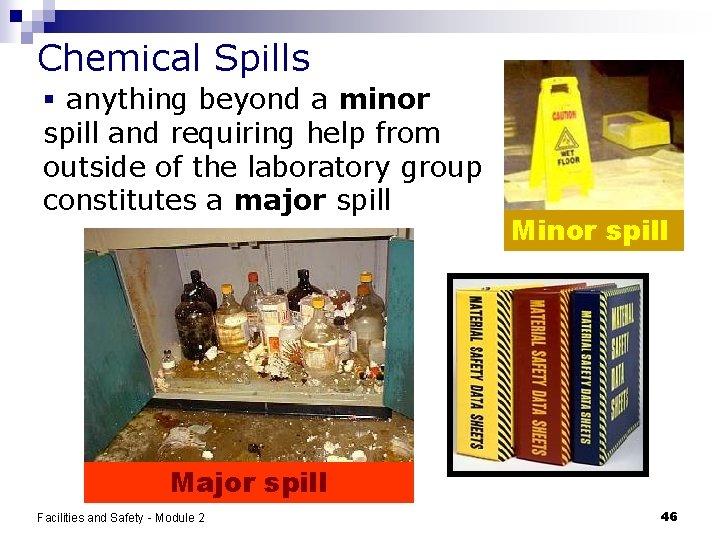
Chemical Spills § anything beyond a minor spill and requiring help from outside of the laboratory group constitutes a major spill Minor spill Major spill Facilities and Safety - Module 2 46
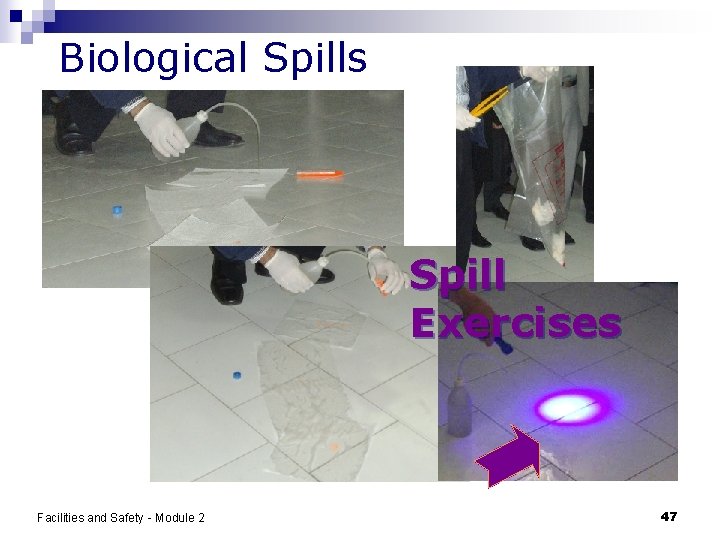
Biological Spills Spill Exercises Facilities and Safety - Module 2 47
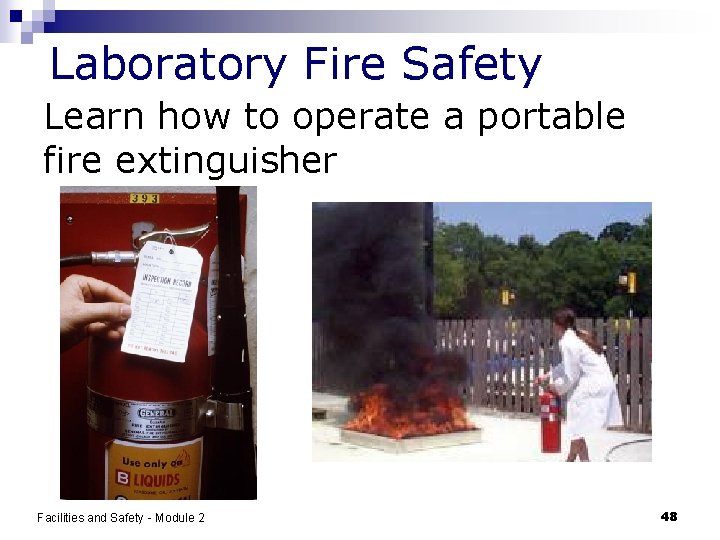
Laboratory Fire Safety Learn how to operate a portable fire extinguisher Facilities and Safety - Module 2 48
Summary When designing a laboratory or organizing workflow, ensure that patients and patient samples do not have common pathways Facilities and Safety - Module 2 49
Summary Safety is dependent on: § a responsible supervisor § a safety manual and SOPs § trained personnel § assessment of risks § laboratory design Facilities and Safety - Module 2 50
Key Message Neglecting laboratory safety is costly. It jeopardizes the lives and health of employees and patients, and jeopardizes laboratory reputation, equipment, and facilities. Facilities and Safety - Module 2 51
Organization Purchasing & Inventory Personnel Process Control Equipment Information Management Questions? Comments? Documents & Records Occurrence Management Process Improvement Customer Service Facilities and Safety - Module 2 Assessment Facilities & Safety 52
- Slides: 52