
FACILITATOR PATRICK WAMEYO FINANCIAL LITERACY EDUCATOR COACH ACIB
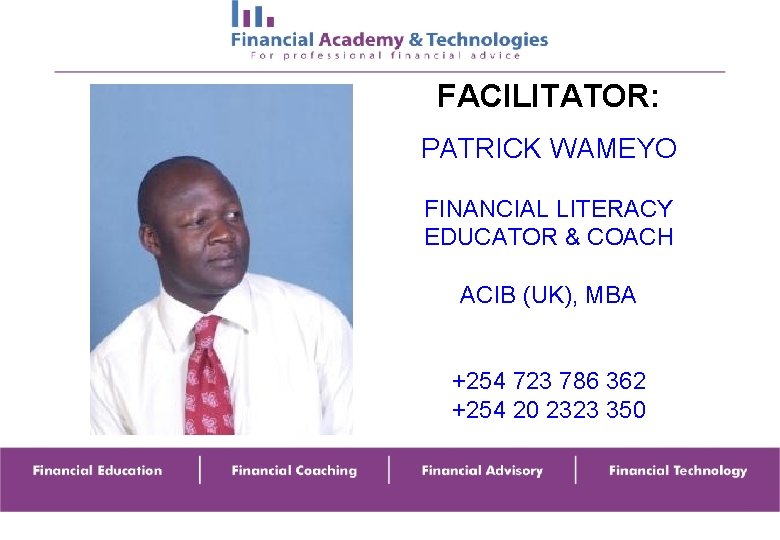
FACILITATOR: PATRICK WAMEYO FINANCIAL LITERACY EDUCATOR & COACH ACIB (UK), MBA +254 723 786 362 +254 20 2323 350
Patrick Wameyo, ACIB (UK) § Over 14 years banking experience in E. Africa § Over 6 years in consulting for Sacco’s Product development, Business Development, Credit risk § SASRA/ Micro Save Certified Sacco resource for individual Lending and delinquency management § Bsc. MBA, ACIB(UK), CSAP (USA)
Training & Consulting 1. 2. 3. 4. 5. 6. Individual lending credit appraisal for Sacco’s Loan Delinquency management Personal Finance Management Performance Management and appraisal Sales Capacity Development – Induction, and expert Career Transition – Retirement & Retrenchment preparedness 7. Omega Performance Credit Skills Development program
Background PERSONAL GROWTH
Making Hard Decisions
Session Objectives : a) Feel that you can start a business when the time is right b) Acquire an understanding about starting a business c) Understand drafting of the business concept d) Encounter problems and solve them
Investor Life Cycle
3 Challenges on Job Loss 1. Managing finances 2. Finding something to do 3. Dealing with a loss of “status”
What is A transition ? § The process of moving from one set of circumstances to another, and refers to the range of issues and emotions that individuals face during various new stages of their life or career
Exploration Phase In the beginning… We were all born babies § Body § Soul § Spirit
Exploration Phase The Soul § Mind –Thinking § Will – Choices § Emotions - Feelings
EXPLORATION PHASE We were all born babies The Soul §Mind –Thinking §Will – Choices §Emotions - Feelings
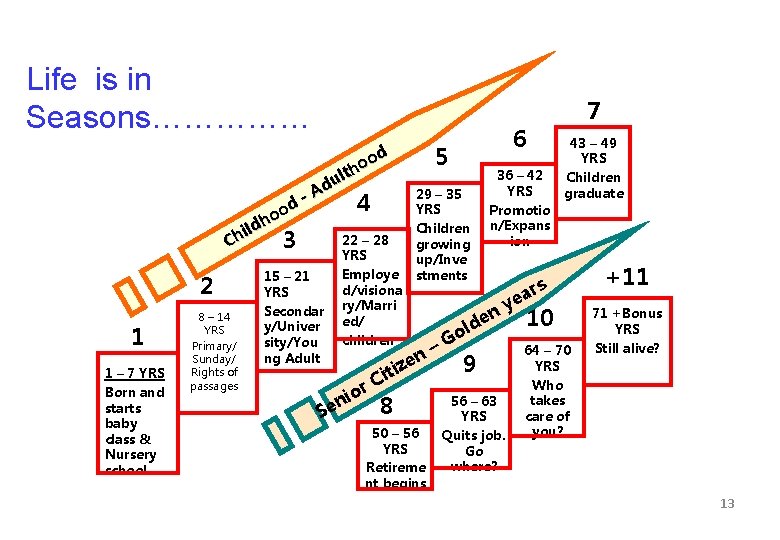
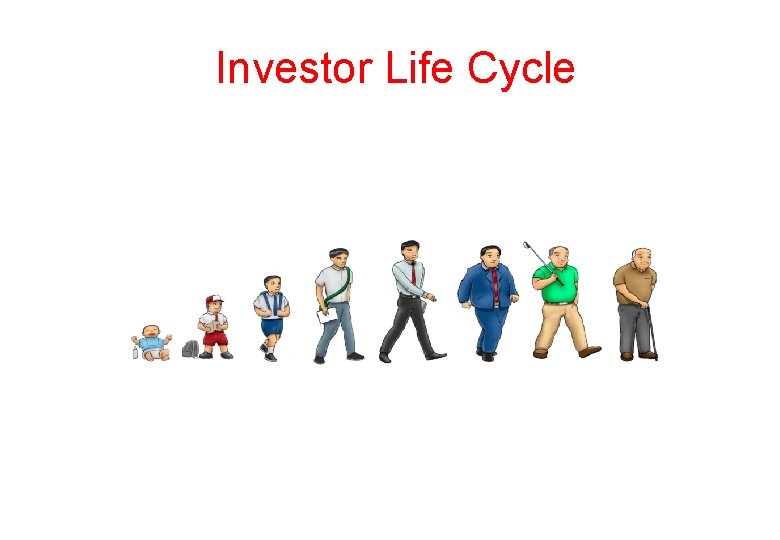
Life is in Seasons…………… od o dh l i Ch 3 2 1 1 – 7 YRS Born and starts baby class & Nursery school 8 – 14 YRS Primary/ Sunday/ Rights of passages 4 15 – 21 YRS Secondar y/Univer sity/You ng Adult 22 – 28 YRS Employe d/visiona ry/Marri ed/ children 29 – 35 YRS Children growing up/Inve stments G – n ize it C r io n Se 6 5 od o lth u d -A 8 50 – 56 YRS Retireme nt begins 36 – 42 YRS Promotio n/Expans ion n e d ol 9 56 – 63 YRS Quits job. Go where? 7 43 – 49 YRS Children graduate rs a ye 10 64 – 70 YRS Who takes care of you? +11 71 +Bonus YRS Still alive? 13
Establishment Phase (Block 4): Ideal time for establishing 1. Earning options ( Sal + Entrepreneurship) 2. Savings towards a goal (visionary) 3. Spending habits 4. Investing habits 5. Borrowing for leverage
Career Stages A career includes many positions, stages and transitions just as a person’s life does. 15
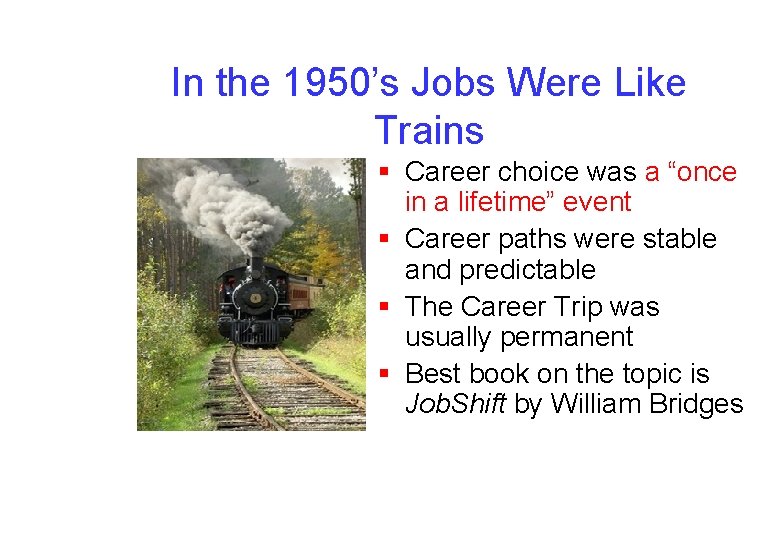
In the 1950’s Jobs Were Like Trains § Career choice was a “once in a lifetime” event § Career paths were stable and predictable § The Career Trip was usually permanent § Best book on the topic is Job. Shift by William Bridges
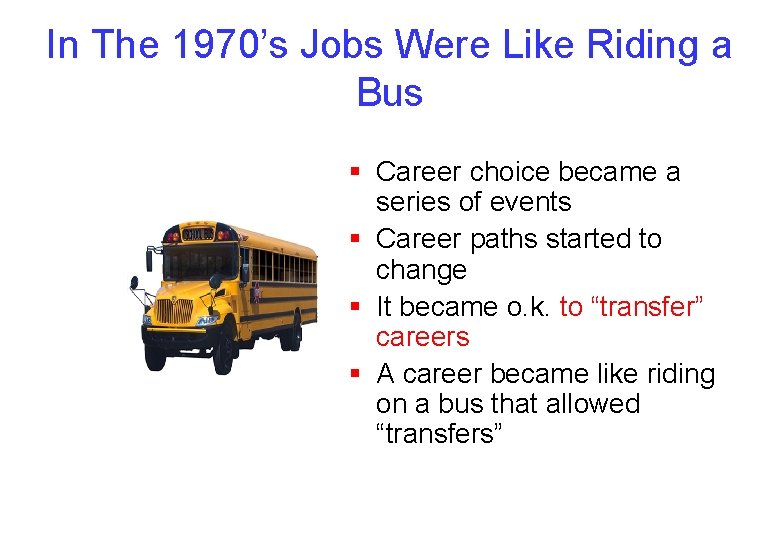
In The 1970’s Jobs Were Like Riding a Bus § Career choice became a series of events § Career paths started to change § It became o. k. to “transfer” careers § A career became like riding on a bus that allowed “transfers”
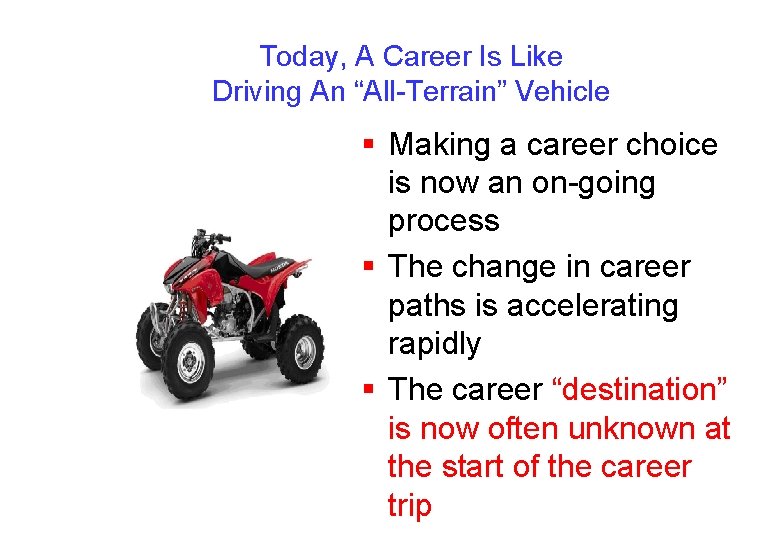
Today, A Career Is Like Driving An “All-Terrain” Vehicle § Making a career choice is now an on-going process § The change in career paths is accelerating rapidly § The career “destination” is now often unknown at the start of the career trip
Career Management Strategy § Assessment Stage “Who am I? ” § Exploration Stage “What are my options? ” § Focus Stage “Which option is best for me? ” § Strategy/Implementation Stage “How do I get there?
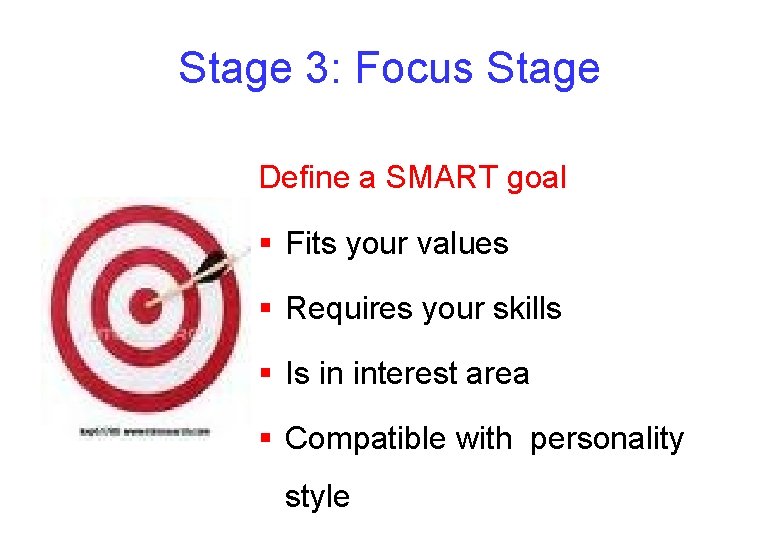
Stage 3: Focus Stage Define a SMART goal § Fits your values § Requires your skills § Is in interest area § Compatible with personality style
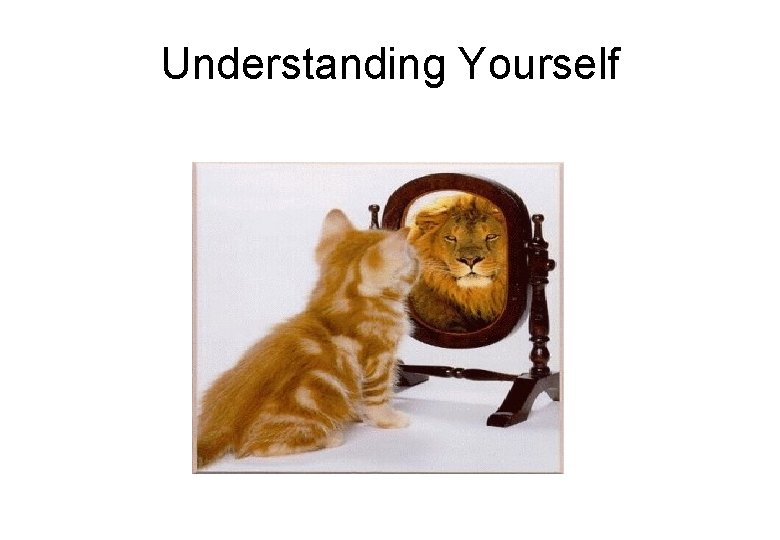
Understanding Yourself © 2009 Launch. Pad Careers, Inc.

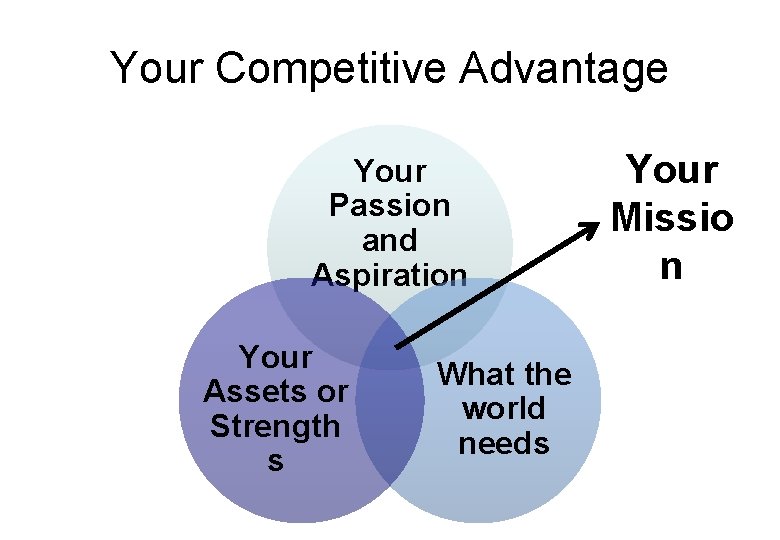
Your Competitive Advantage Your Passion and Aspiration Your Assets or Strength s What the world needs Your Missio n
ENTREPRENEURSHIP
Session Objectives : a) Feel that you can start a business when the time is right b) Acquire an understanding about starting a business c) Understand drafting of the business concept d) Encounter problems and solve them
1. 2. 3. 4. 5. Learning Outcomes Be able to write a business plan Create an establishing budget Create an operating budget Show that you have solved problems and challenges Plan & execute a presentation of business plan
Definitions Entrepreneurship § Is a dynamic process of creating incremental wealth. § This wealth is created by individuals who assume the major risks in terms of equity, time, and or career commitment of providing value for some product or service
Definitions Entrepreneurship § The product OR service itself may or may not be new or unique but value must somehow be infused by the entrepreneur by securing and allocating the necessary skills and resources.
Definitions Entrepreneurship § Vision § Change § Idea § Managing § Creating
Definitions Entrepreneurship § Entrepreneurship is first and foremost a mind set. § It is the art of finding profitable solutions to problems § It provides society with small enterprises which grow into medium and large enterprises § Promote potential innovators for new services, new processes, new product –for the good of the society
Who is an Entrepreneur ? A person who habitually creates and innovates to build something of recognised value around perceived opportunities. – habitually creates – Innovates – perceives opportunities – Recognised value
Your Task Plan Start to start a business ? 1. Choose type of business 2. Make a business plan 3. Present the business plan
Presentation The following must be included: 1. What will the company sell? 2. Which customers & how many customers? 3. How to come in contact with the customers? 4. Estimated sales in year one? 5. Profit in one year 6. Need for financing

DEVELOPING A BUSINESS IDEA : a) What type of business do you prefer the most? b) Where do you find most customers to day? c) Where do you find most customers in two years?
DEVELOPING A BUSINESS IDEA : Discuss the use of mobile phone: a) Two years ago b) Today c) In three (X) years to come
DEVELOPING A BUSINESS IDEA : Can you see ways to profit of the mobile market in three years?
DEVELOPING A BUSINESS IDEA : Be creative: § Combine known things in a new way: an idea Examples :
DEVELOPING A BUSINESS IDEA : Be innovative § The found idea must be useful for customers Examples :
DEVELOPING A BUSINESS IDEA : Entrepreneurship § Carry out the useful idea in real life, action! Implementation in real life !
DEVELOPING A BUSINESS IDEA : Three ingredients must be present to start business: + Be creative (combine known things in a new way: an idea) + Be innovative(the found idea must be useful for customers) + Entrepreneurship (carry out the useful idea in real life, action!) = Start of a new innovative business
DEVELOPING A BUSINESS IDEA : A business plan helps you describe the new business
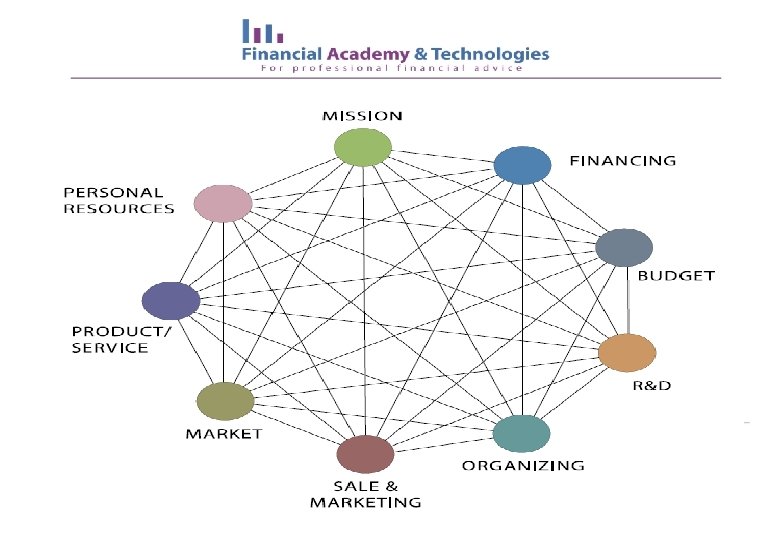
Business Pillars
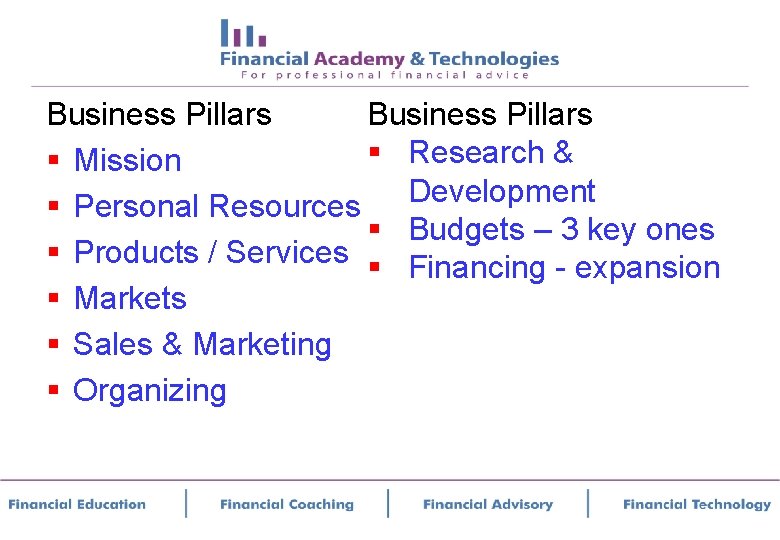
Business Pillars § Research & § Mission Development § Personal Resources § Budgets – 3 key ones § Products / Services § Financing - expansion § Markets § Sales & Marketing § Organizing
DEVELOPING A BUSINESS IDEA :
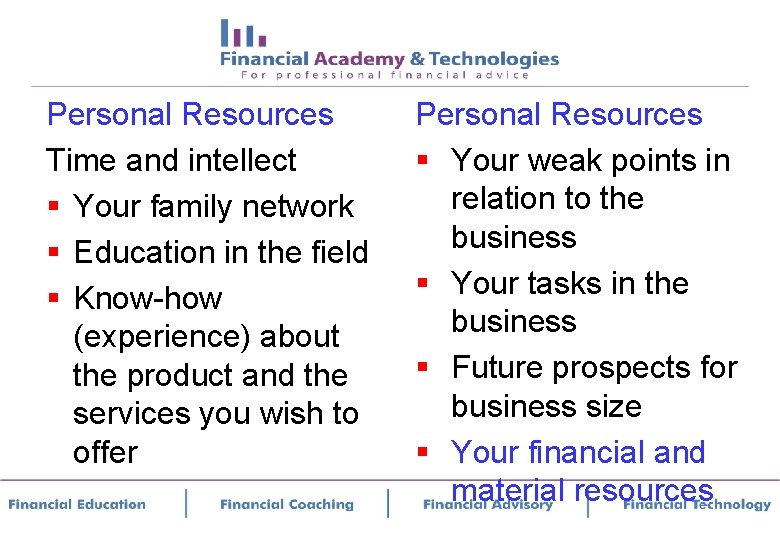
Personal Resources Time and intellect § Your family network § Education in the field § Know-how (experience) about the product and the services you wish to offer Personal Resources § Your weak points in relation to the business § Your tasks in the business § Future prospects for business size § Your financial and material resources
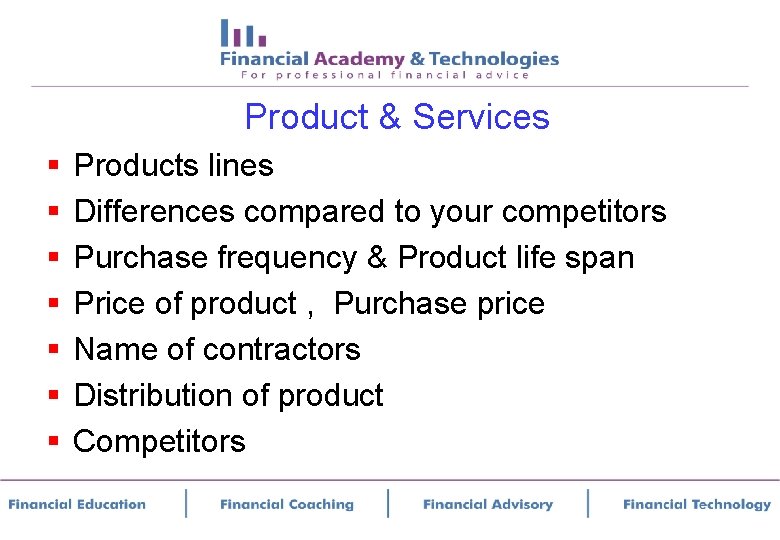
Product & Services § § § § Products lines Differences compared to your competitors Purchase frequency & Product life span Price of product , Purchase price Name of contractors Distribution of product Competitors
The Market § § § § The typical private customer The typical business customer Geographical coverage (limits) Realistic number of customers Important competitors Possibilities in the market for your business Threats that may destroy these possibilities
Sales And Marketing § § § § Direct (mail, Internet) Customer visit Telephone sale Advertising / Publications / Signposting Presentation material Trade Fair Public Relation (PR) Opening market activity
Management & Organization § § § § Name of business Address/phone no/ Legal status of business Owners Bank Accountant Business policies
Management & Organization Who will be involved in day to day running of the business § Accountancy and administrative routines § Telephone reception § Insurance § Business partners § Consultants
Management & Organization § Establishing budget § Operating budget § Cash Flow budget § Financing (Total funding needs = Necessary establishing capital + Necessary liquidity)
Business Development § § § Business appearance in three years? The product or service in three years? Customers in one and in three years? Financial forecast for year three? Other goals with your business?
What is happening in the Business Environment ?
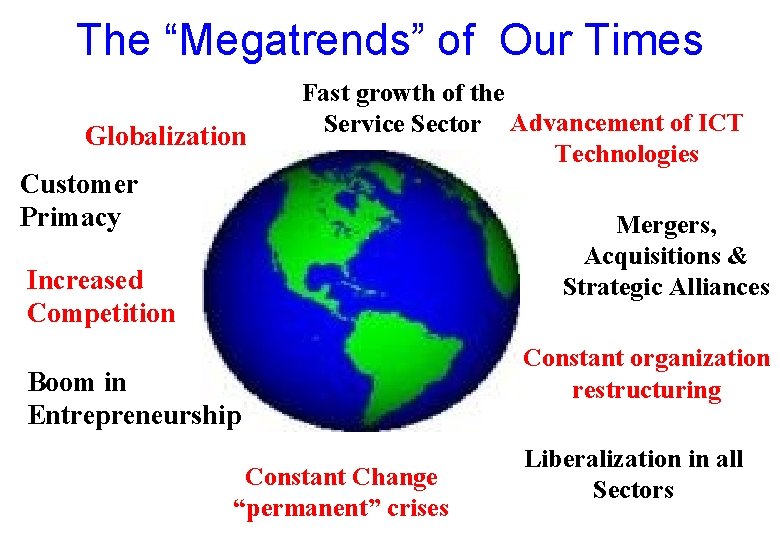
The “Megatrends” of Our Times Globalization Fast growth of the Service Sector Advancement of ICT Technologies Customer Primacy Mergers, Acquisitions & Strategic Alliances Increased Competition Boom in Entrepreneurship Constant Change “permanent” crises Constant organization restructuring Liberalization in all Sectors
Blog: www. financialacademy. co. ke/blog Skype: Patrick. Wameyo. Odhiambo Email: coach@financialacademy. co. ke Telephone (P) : +254 723 786 362 Telephone (O) : +254 2323350 Visit : Adalyn Flats, Next to Bemuda, Ngong Rd
- Slides: 55