
Facilitator ManagerAsSupervisor Versus ManagerAs Facilitator Systems Approach Versus
- Slides: 15
Facilitator Manager-As-Supervisor Versus Manager-As. Facilitator Systems Approach Versus Analytical Approach ◦ suboptimization Must ensure project team members have appropriate knowledge and resources Micromanagement
FACILITATION The Key To Productivity in the Workplace
The real secret to making magic is a bunch of people all working together. - TONY JEARY
Facilitation The Key to Productivity in the Workplace 55
FACILITATE -TO MAKE EASIER (Webster’s 11 th Collegiate Dictionary)
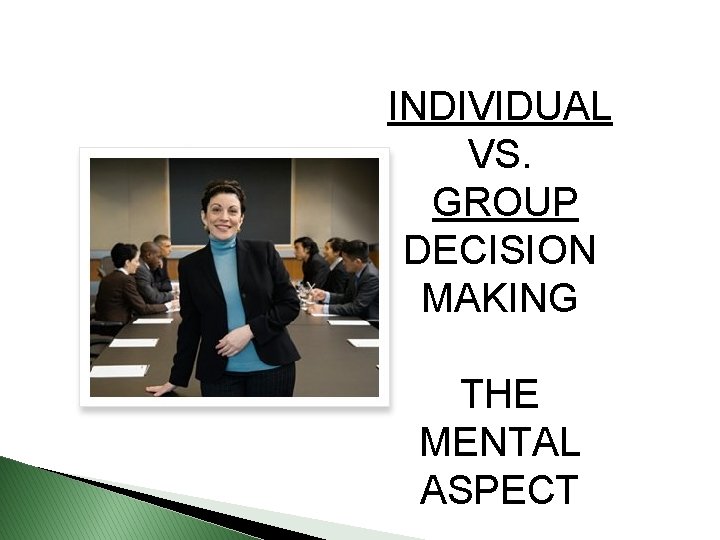
INDIVIDUAL VS. GROUP DECISION MAKING THE MENTAL ASPECT
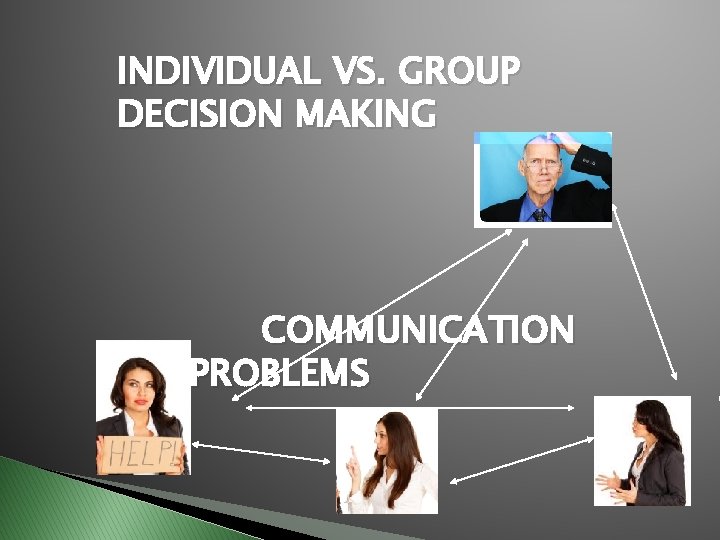
INDIVIDUAL VS. GROUP DECISION MAKING COMMUNICATION PROBLEMS
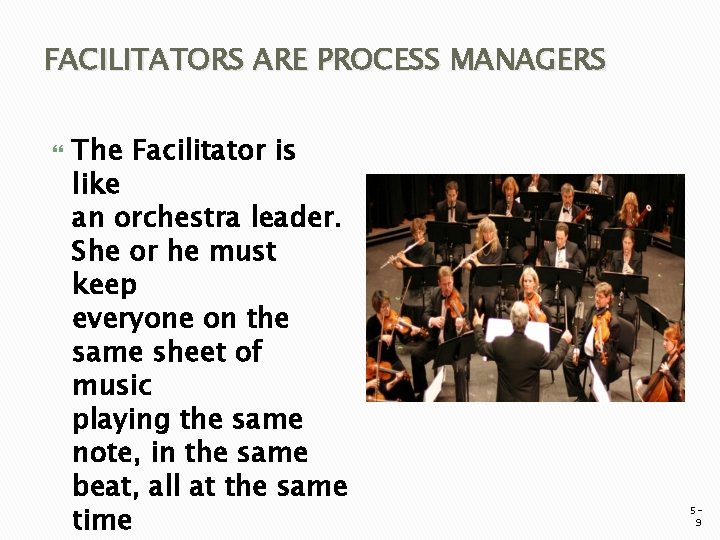
FACILITATORS ARE PROCESS MANAGERS The Facilitator is like an orchestra leader. She or he must keep everyone on the same sheet of music playing the same note, in the same beat, all at the same time 59
Put your energies into guiding rather then ruling. The more unobtrusive you lead, the more people will grow and learn to use their powers wisely. Make your aim as a leader to be unnoticed and eventually unneeded!” “ --from My Tao, by R. W. Russell 510
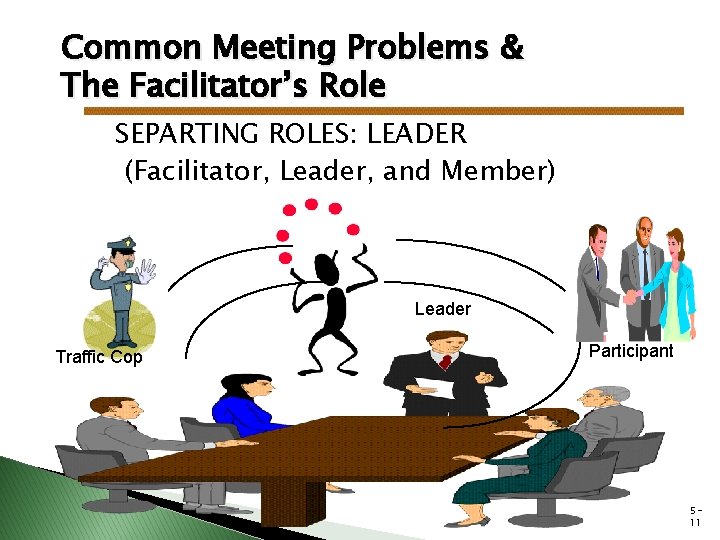
Common Meeting Problems & The Facilitator’s Role SEPARTING ROLES: LEADER (Facilitator, Leader, and Member) Leader Traffic Cop Participant 511
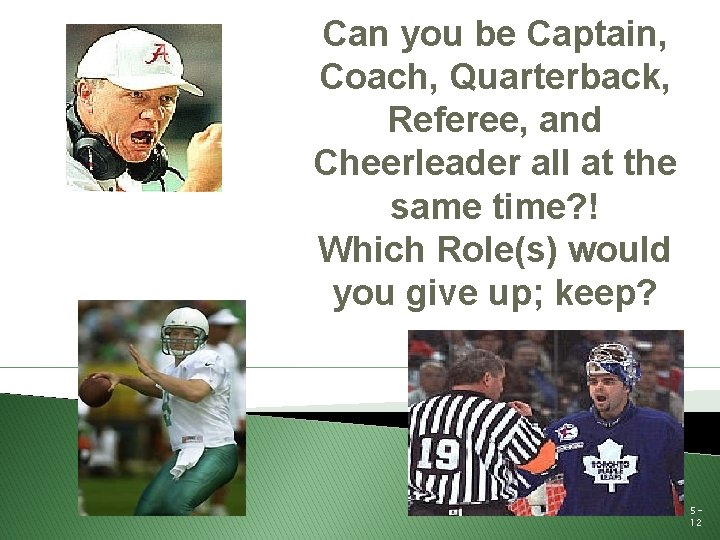
Can you be Captain, Coach, Quarterback, Referee, and Cheerleader all at the same time? ! Which Role(s) would you give up; keep? 512
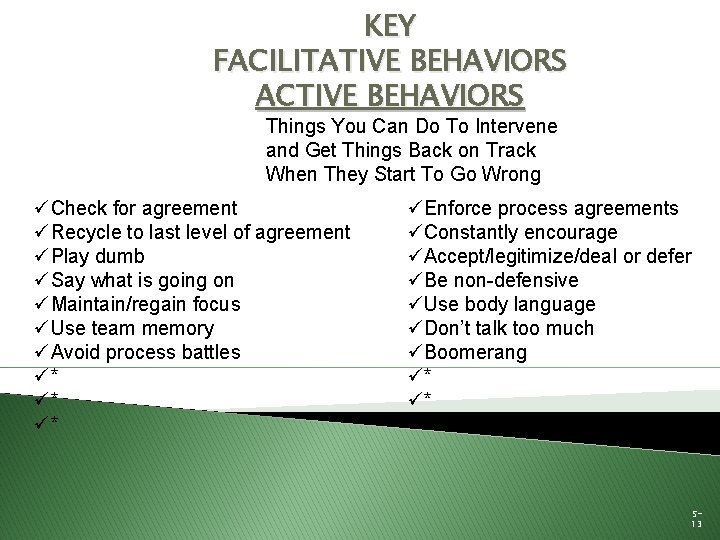
KEY FACILITATIVE BEHAVIORS ACTIVE BEHAVIORS Things You Can Do To Intervene and Get Things Back on Track When They Start To Go Wrong üCheck for agreement üRecycle to last level of agreement üPlay dumb üSay what is going on üMaintain/regain focus üUse team memory üAvoid process battles ü* ü* ü* üEnforce process agreements üConstantly encourage üAccept/legitimize/deal or defer üBe non-defensive üUse body language üDon’t talk too much üBoomerang ü* ü* ü* 513
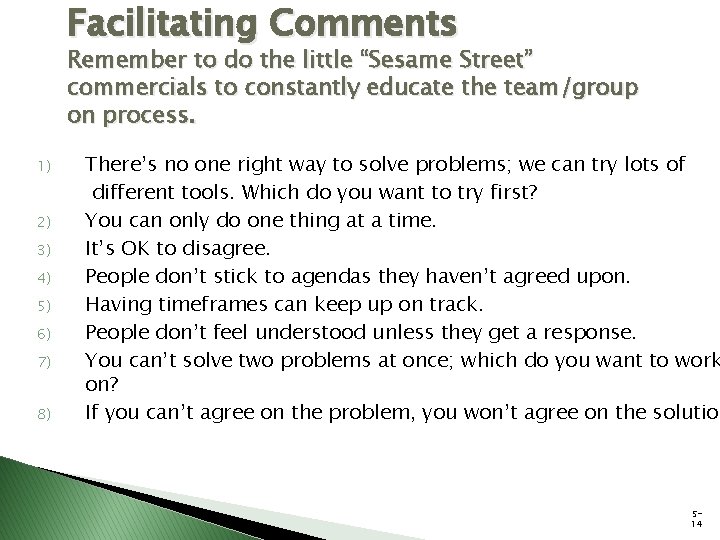
Facilitating Comments Remember to do the little “Sesame Street” commercials to constantly educate the team/group on process. 1) 2) 3) 4) 5) 6) 7) 8) There’s no one right way to solve problems; we can try lots of different tools. Which do you want to try first? You can only do one thing at a time. It’s OK to disagree. People don’t stick to agendas they haven’t agreed upon. Having timeframes can keep up on track. People don’t feel understood unless they get a response. You can’t solve two problems at once; which do you want to work on? If you can’t agree on the problem, you won’t agree on the solution 514
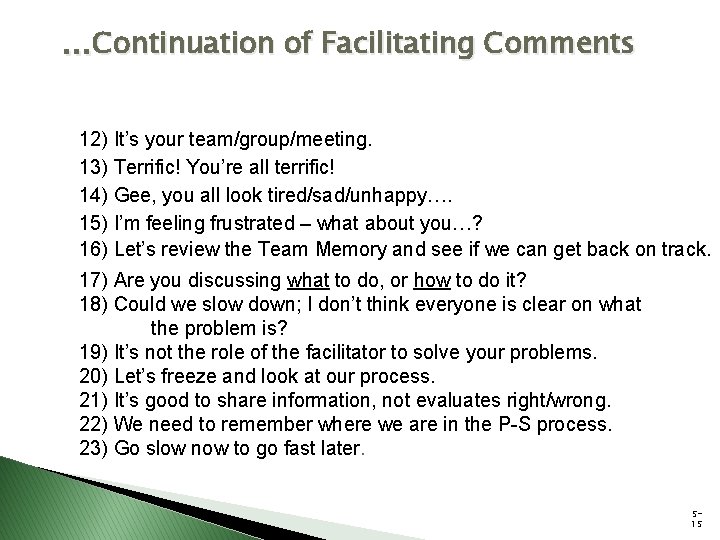
…Continuation of Facilitating Comments 12) It’s your team/group/meeting. 13) Terrific! You’re all terrific! 14) Gee, you all look tired/sad/unhappy…. 15) I’m feeling frustrated – what about you…? 16) Let’s review the Team Memory and see if we can get back on track. 17) Are you discussing what to do, or how to do it? 18) Could we slow down; I don’t think everyone is clear on what the problem is? 19) It’s not the role of the facilitator to solve your problems. 20) Let’s freeze and look at our process. 21) It’s good to share information, not evaluates right/wrong. 22) We need to remember where we are in the P-S process. 23) Go slow now to go fast later. 515