
Facilitating Collaborative and Constructive Interactions in Online Courses

Facilitating Collaborative and Constructive Interactions in Online Courses Joi L. Moore, Ph. D. Moorejoi@missouri. edu Krista Galyen kgalyen@gmail. com
Overview Online Learning Theoretical Framework Discussion Board Research Tools CANS Skype Podcast Second Life
2. Student Preferences and Perceptions Goals are to understand: student characteristics and behaviors within Web-based courses how students learn within Web-based courses Methods Survey Questionnaire Demographics Web-based learning experience Index of Learning Styles (Felder & Soloman, 1991) Open ended questions focused on advice for students and challenges
Conceptual Framework
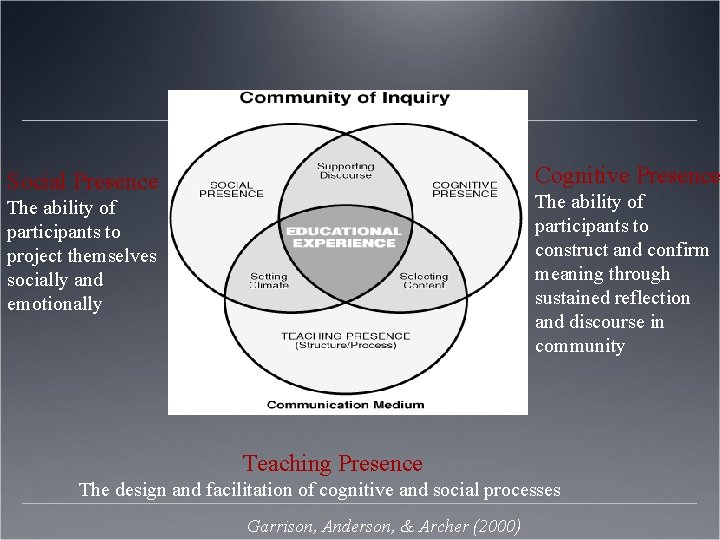
Cognitive Presence Social Presence The ability of participants to construct and confirm meaning through sustained reflection and discourse in community The ability of participants to project themselves socially and emotionally Teaching Presence The design and facilitation of cognitive and social processes Garrison, Anderson, & Archer (2000)
Interaction Findings Students who were more active with students and instructor, were: more satisfied with learning, willing to recommend the course, and preferred Web-based courses to FTF A sense of community was important Kim & Moore (2005)
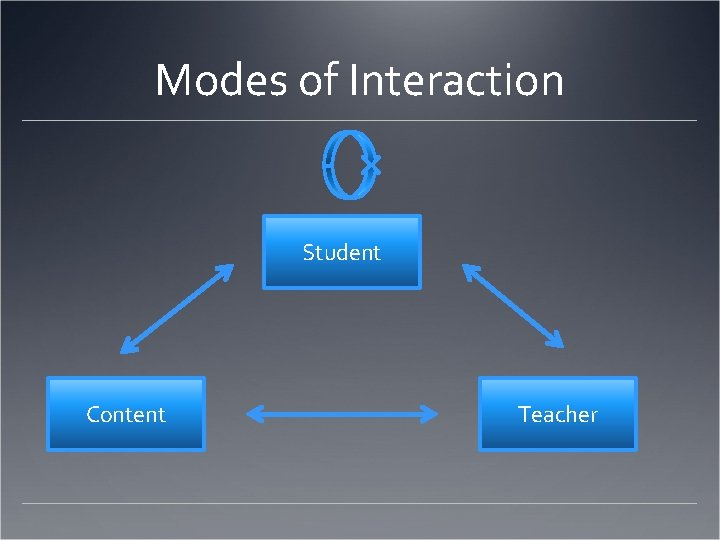
Modes of Interaction Student Content Teacher

Online Discussions
Issues Dissatisfaction with having required discussions every week Regarded as busy work and time consuming to read all of the postings Action Items based on instructional design: Determining the quantity and quality of postings Determining the number of students to participate in one discussion Entire class or groups Avoiding repetition or redundant information Determining the number of class discussions during a semester
Online Discussion Research Purpose: Compare evidence of knowledge construction Two discussion forums with identical content Different participation protocols for postings Questions Did social construction of knowledge occur in both forums? Did the participation protocols affect knowledge construction and participation? Moore & Marra (2005)
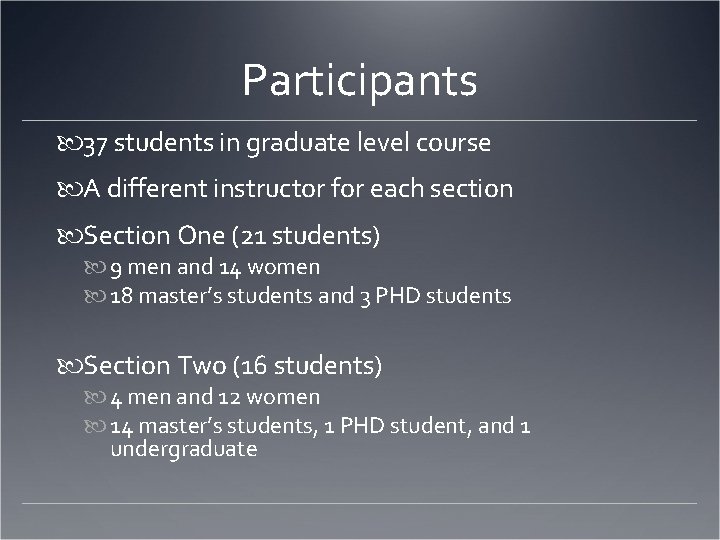
Participants 37 students in graduate level course A different instructor for each section Section One (21 students) 9 men and 14 women 18 master’s students and 3 PHD students Section Two (16 students) 4 men and 12 women 14 master’s students, 1 PHD student, and 1 undergraduate
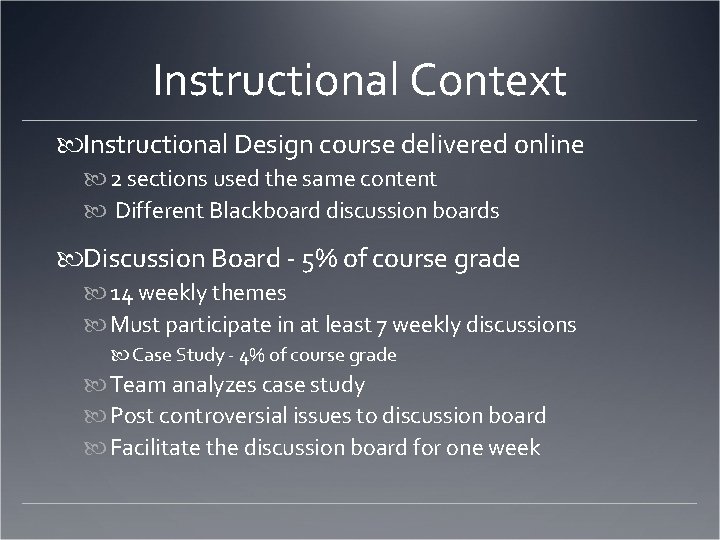
Instructional Context Instructional Design course delivered online 2 sections used the same content Different Blackboard discussion boards Discussion Board - 5% of course grade 14 weekly themes Must participate in at least 7 weekly discussions Case Study - 4% of course grade Team analyzes case study Post controversial issues to discussion board Facilitate the discussion board for one week
Interaction Analysis Model (IAM) (Gunawardena, Lowe, & Anderson, 1997)
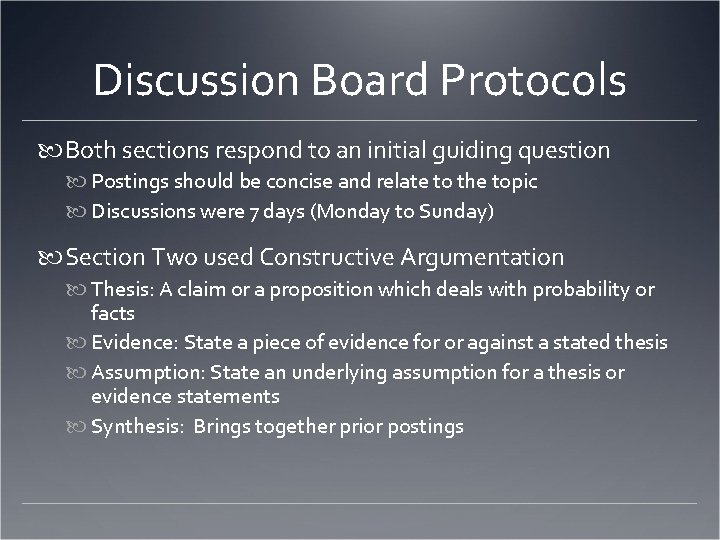
Discussion Board Protocols Both sections respond to an initial guiding question Postings should be concise and relate to the topic Discussions were 7 days (Monday to Sunday) Section Two used Constructive Argumentation Thesis: A claim or a proposition which deals with probability or facts Evidence: State a piece of evidence for or against a stated thesis Assumption: State an underlying assumption for a thesis or evidence statements Synthesis: Brings together prior postings
Number of Postings Section One With larger enrollment, requirements decreased the “saturation effect” Reduced redundant and meaningless postings in order to receive credit Section Two With smaller enrollment, smaller number of postings Requirements were met early in the semester, Little discussion toward the end of semester Students focused on projects
Constructive Argumentation Impact Protocol was difficult to implement Students concerned with the structure of their posting Consider cultural differences Debate Format Students had little experience debating in a structured format Focus to agree or disagree on presented issues may have inhibited summarization or synthesis No evidence of application of new knowledge for Section Two
Conclusions Discussion Board Protocols should: ü be aligned with course or learning objectives analyzing and presenting the cases was effective for teams weight of activity may affect participation ü emphasize student responsibilities for facilitation and summaries promotes participation, meaningful discussions, and “ownership” ü consider the length (i. e. , number of days) for the discussion ü consider the impact of the number of students on the quantity and quality of postings. Allow flexibility for the number of postings required for a semester
Facilitating Social Presence: Aware of the other person in the interaction Acknowledge and welcome participants Be encouraging and supportive while directing discussion Allow students to get to know your as a person, to a certain degree Suggest a minimum number of times to log-in Encourage students to acknowledge peers when responding Laud contributions when appropriate Encourage “lurkers” to participate Express feelings but avoid flaming Be cautious using humor until familiarity is achieved Encourage students to inform the teacher by email of tensions and anxiety.
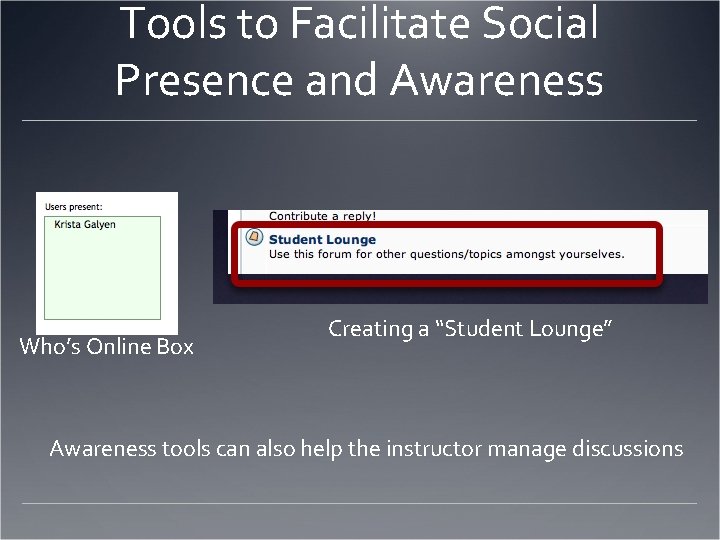
Tools to Facilitate Social Presence and Awareness Who’s Online Box Creating a “Student Lounge” Awareness tools can also help the instructor manage discussions
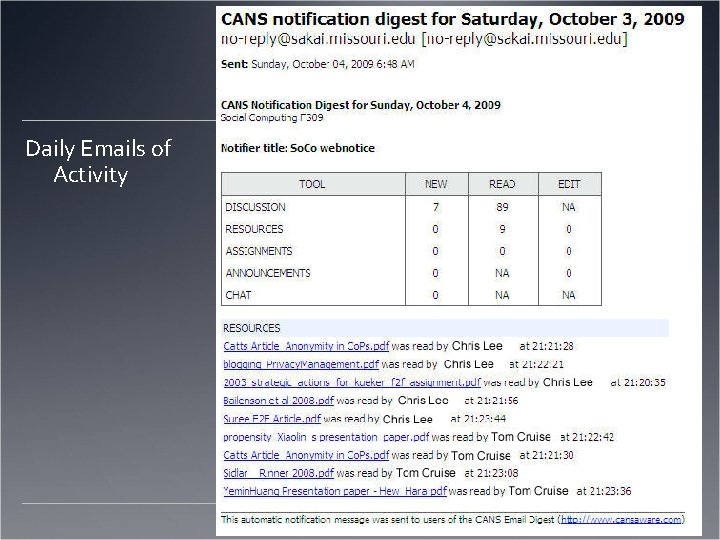
Daily Emails of Activity
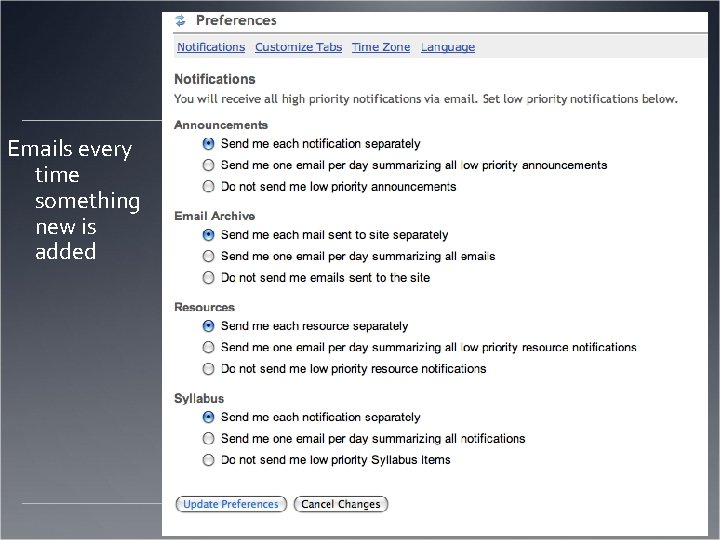
Emails every time something new is added
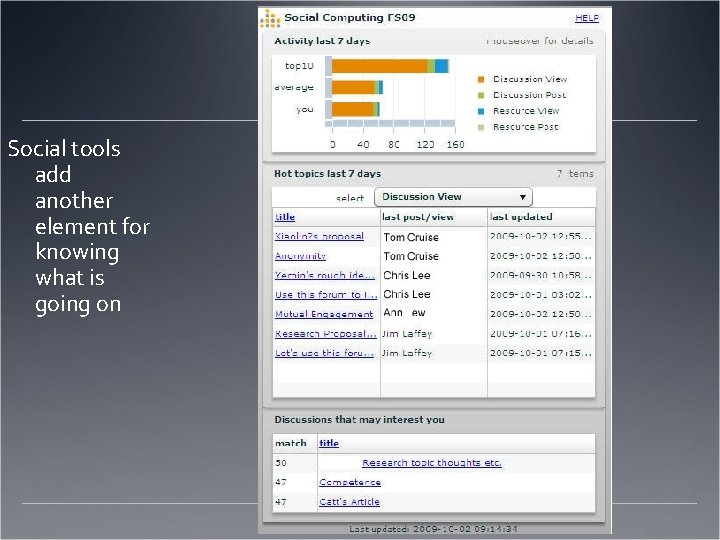
Social tools add another element for knowing what is going on
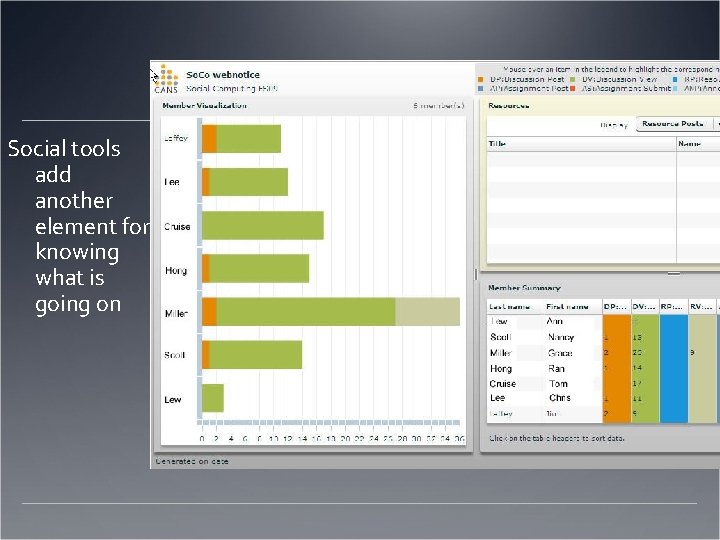
Social tools add another element for knowing what is going on
Communicating Your Social Presence Effectively Communicating in a way that allows others to remember there is a real human being on the other end Add in elements to communicate that which is lost in f 2 f communication: emotion, intonation, body language It may be more informal than when talking f 2 f in order to convey personality
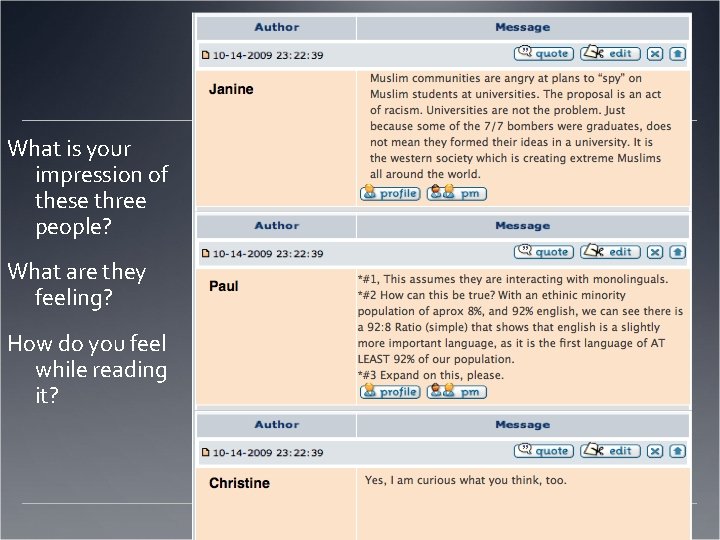
What is your impression of these three people? What are they feeling? How do you feel while reading it?
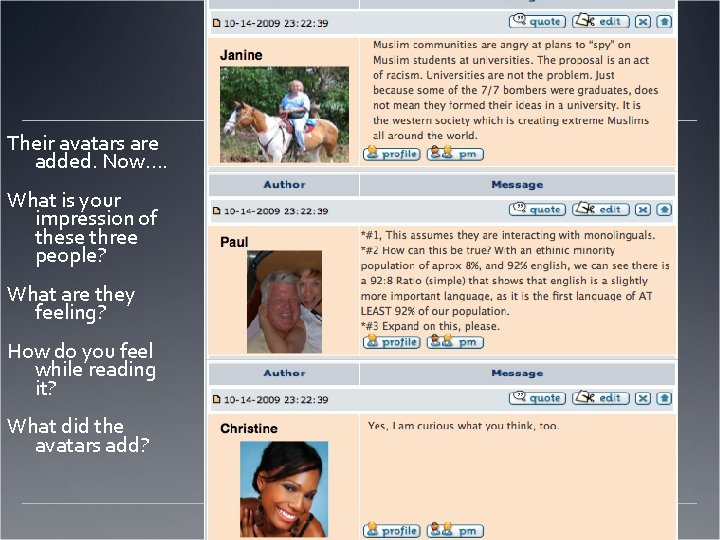
Their avatars are added. Now…. What is your impression of these three people? What are they feeling? How do you feel while reading it? What did the avatars add?
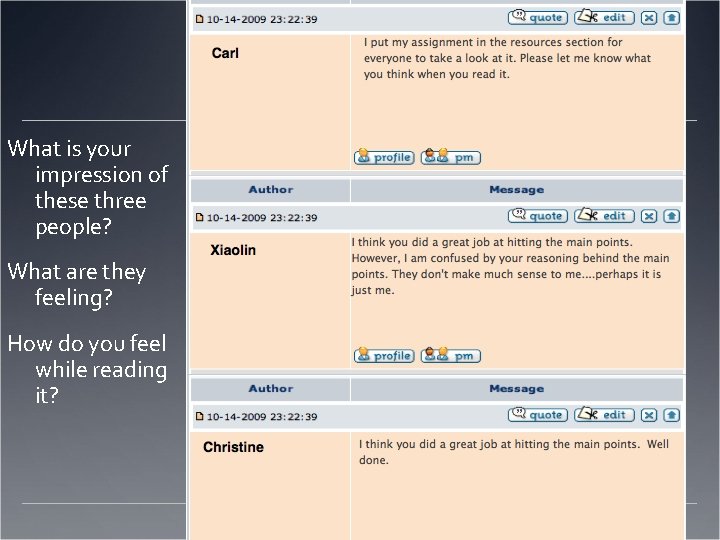
What is your impression of these three people? What are they feeling? How do you feel while reading it?
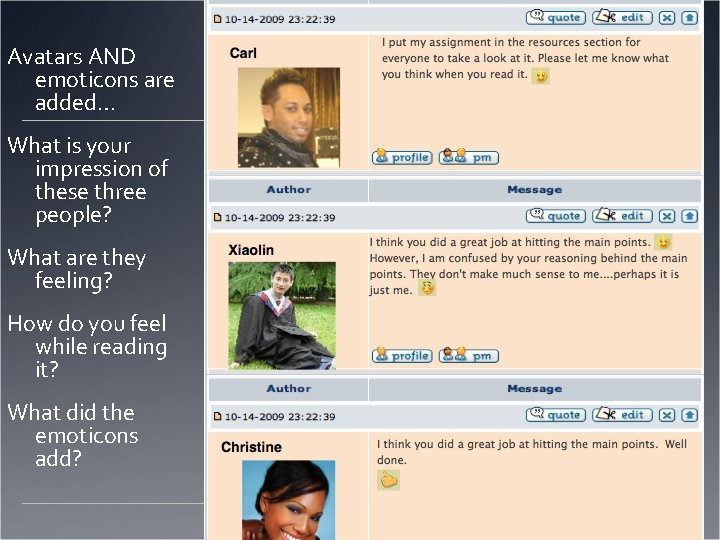
Avatars AND emoticons are added… What is your impression of these three people? What are they feeling? How do you feel while reading it? What did the emoticons add?
Communicating Your Social Presence Effectively Prevent embarrassment by using the private message features (or email) in the learning environment Allows 1: 1 communication about issues you wish to discuss more privately
Communicating Your Social Presence Effectively Opportunities to hear your voice (podcasts) allows you to convey your personality through a different venue Record your voice and upload to the course site, or use a podcast Opportunities to interact synchronously or talk (Skype voice, skype video, skype chat)
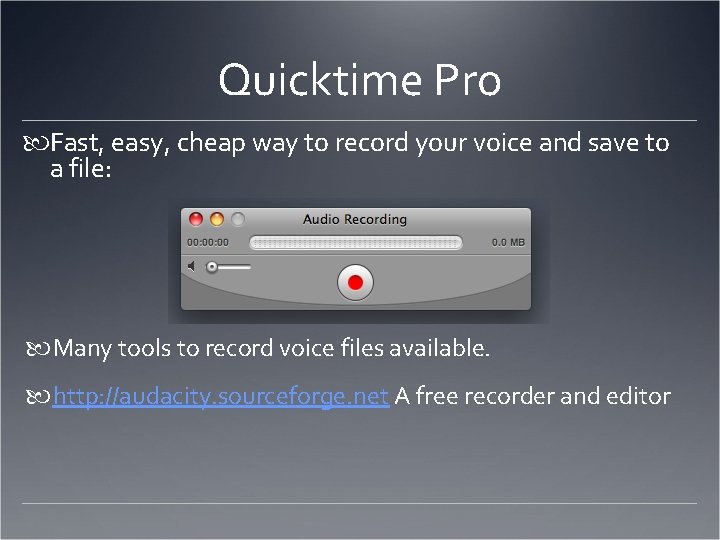
Quicktime Pro Fast, easy, cheap way to record your voice and save to a file: Many tools to record voice files available. http: //audacity. sourceforge. net A free recorder and editor
Podcast Audio and video content delivered via subscriptions Resources The Education Podcast Network (EPN) http: //epnweb. org/index. php As seen from here- the Ophthalmology podcast http: //mtrope. libsyn. com/rss Johns Hopkins Pod. Med http: //www. hopkinsmedicine. org/media. II/Podcasts. html
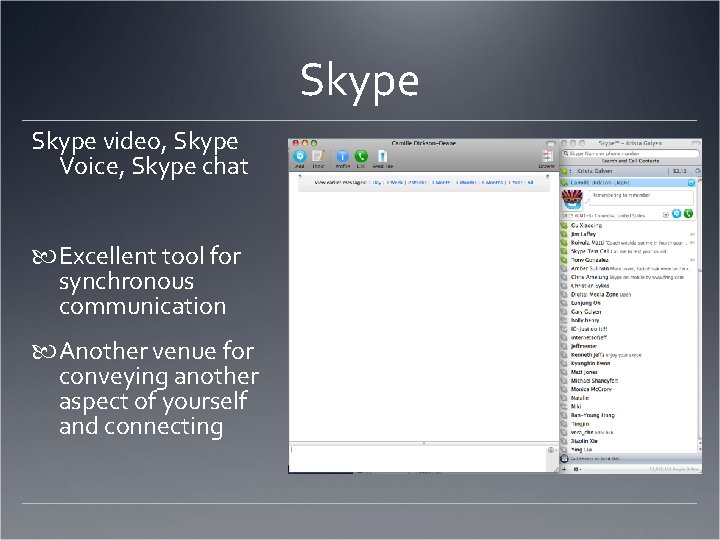
Skype video, Skype Voice, Skype chat Excellent tool for synchronous communication Another venue for conveying another aspect of yourself and connecting
Second Life Virtual environment where users create the content and interact with avatars. People use it for classes, conferences, music concerts, demonstrations, etc. Top Ten Sites http: //scienceroll. com/2007/06/17/top-10 -virtual-medical-sites-insecond-life/ MD Kiosk Virtual Health Island on Second Life® http: //youtube. com/watch? v=U 3 Szet 7 MJEM&feature=related Second Health: Planned Care http: //youtube. com/watch? v=pl. Rf. Qzx. Nkiw&feature=related
Questions? !
Research References Kim, K. S. & Moore, J. L. (2005). Web-Based Learning: Factors Affecting Students' satisfaction and learning experiences. First Monday, 10(11). Moore, J. L. , Kim, K. S. , & Esser, L. (2002). Aiming for effective student learning in Web-based courses: Insights from student experiences. In M. A. Fitzgerald, M. Orey, & R. M. Branch (Eds. ), Educational media and technology yearbook (Vol 27, pp. 204 -208). Englewood, CO: Libraries Unlimited. Moore, J. L. , & Marra, R. M. (2005) A comparative analysis of online discussion participation protocols. Journal of Research on Technology in Education, 38(2).
- Slides: 36