
Facilitated by Sophia Chin and Philip Decter Think
Facilitated by Sophia Chin and Philip Decter
} Think about a time or an incident in the last 7 -10 days when you handled something difficult or challenging in such a way that you felt (a least a little!) proud of yourself. This can be in your professional role as social worker, manager, supervisor, etc. or a personal role such as a partner, parent, friend and so on. } Look for details in how you handled this moment. What exactly did you do that you were most proud of? If someone were to have observed you right then, what would they have seen? } Take a minute and jot down these details.
} Think about a time or an incident in the last 7 -10 days when you handled something difficult or challenging in such a way that you felt (a least a little!) proud of yourself. This can be in your professional role as social worker, manager, supervisor, etc. or a personal role such as a partner, parent, friend and so on. } Look for details in how you handled this moment. What exactly did you do that you were most proud of? If someone were to have observed you right then, what would they have seen? } Take a minute and jot down these details. } Think for a moment: What helped you to accomplish this? What did you have to do? What did others have to do? } Hang on to these thoughts, we will come back to them later.
ØMostly originates from David Cooperrider’s work with organizations and systems at the Case Western School of Management in Ohio, US ØInvolves a collaborative exploration into the “best” of people, their relationships, and the world around them ØIs a systematic discovery of what gives “life” to a living system when it is most alive, when it is at its best, most effective, and most constructive.

} Historically, CW professionals have done a better job of focusing on families’ problems and what needs to be fixed. ◦ We need to design our interventions to support and increase what’s already working well in families. } AI helps support the “parallel process” ◦ If we ask workers to treat families in different ways we have to be prepared to treat our staff in different ways } We as a field need to increase the strategies we use to learn from practice ◦ The development of “practice-based evidence” } AI can be used in multiple settings ◦ Between worker and family, supervisor and worker, group supervision, coaching, training, etc.
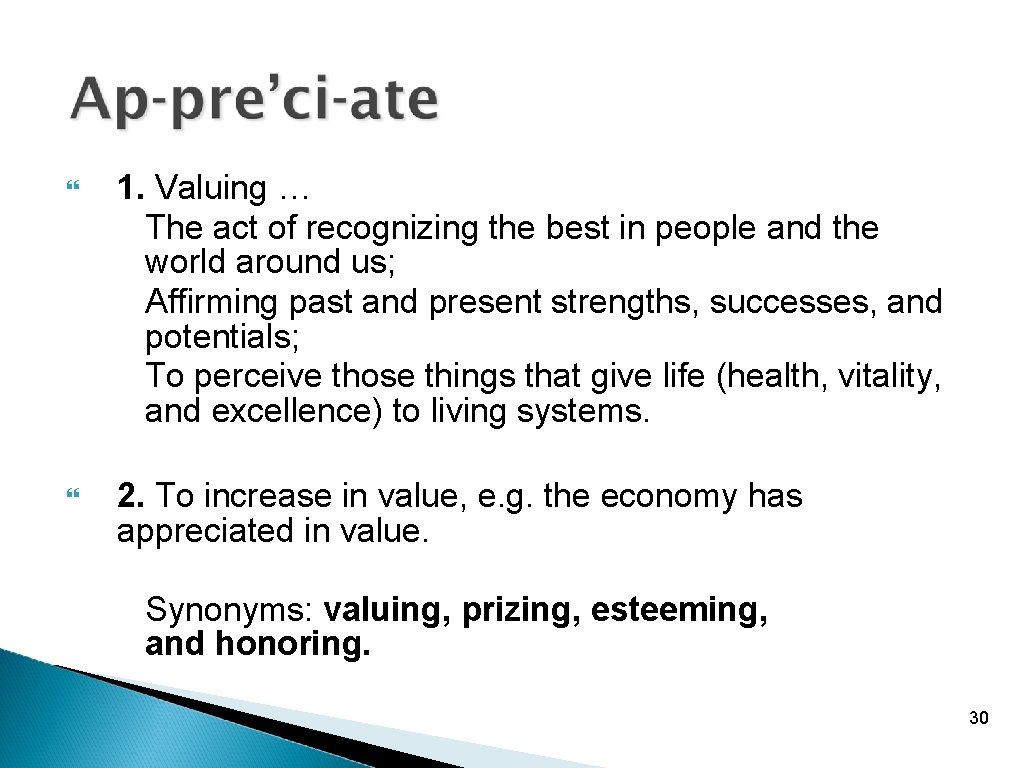
} } 1. Valuing … § The act of recognizing the best in people and the world around us; § Affirming past and present strengths, successes, and potentials; § To perceive those things that give life (health, vitality, and excellence) to living systems. 2. To increase in value, e. g. the economy has appreciated in value. § Synonyms: valuing, prizing, esteeming, and honoring. 30

} 1. The act of exploration and discovery. } 2. To ask questions; to be open to seeing new potentials and possibilities. ◦ Synonyms: discovery, search, study and systematic exploration.

An analytic and problem solving approach to change and An appreciative inquiry approach to change
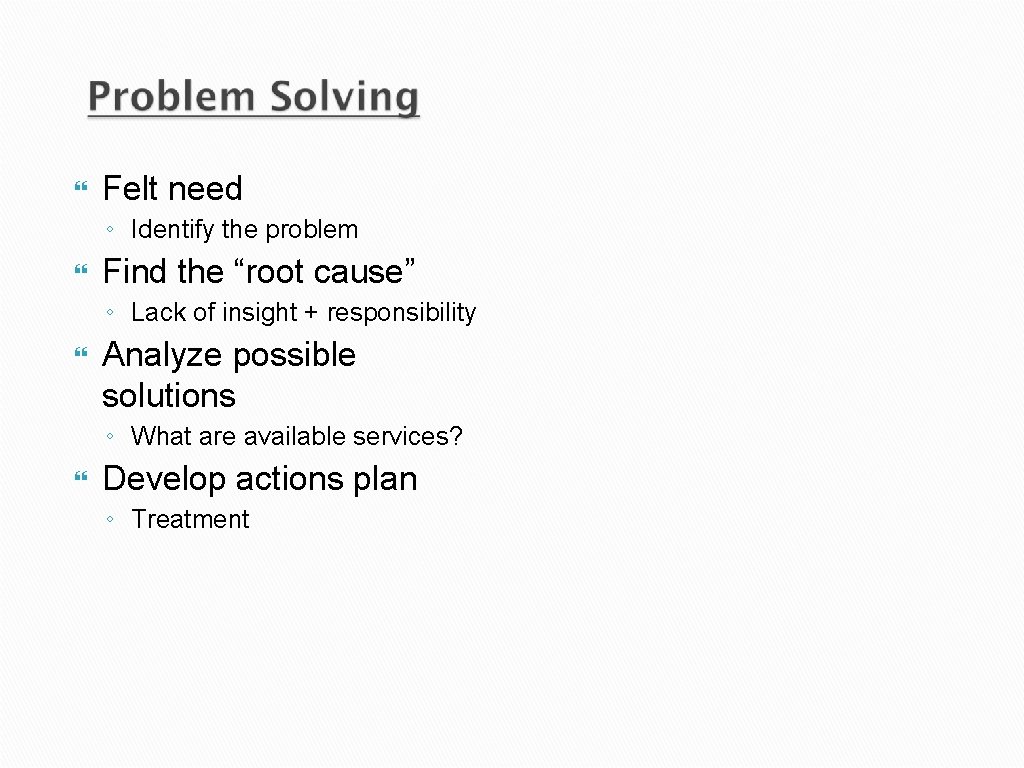
} Felt need ◦ Identify the problem } Find the “root cause” ◦ Lack of insight + responsibility } Analyze possible solutions ◦ What are available services? } Develop actions plan ◦ Treatment
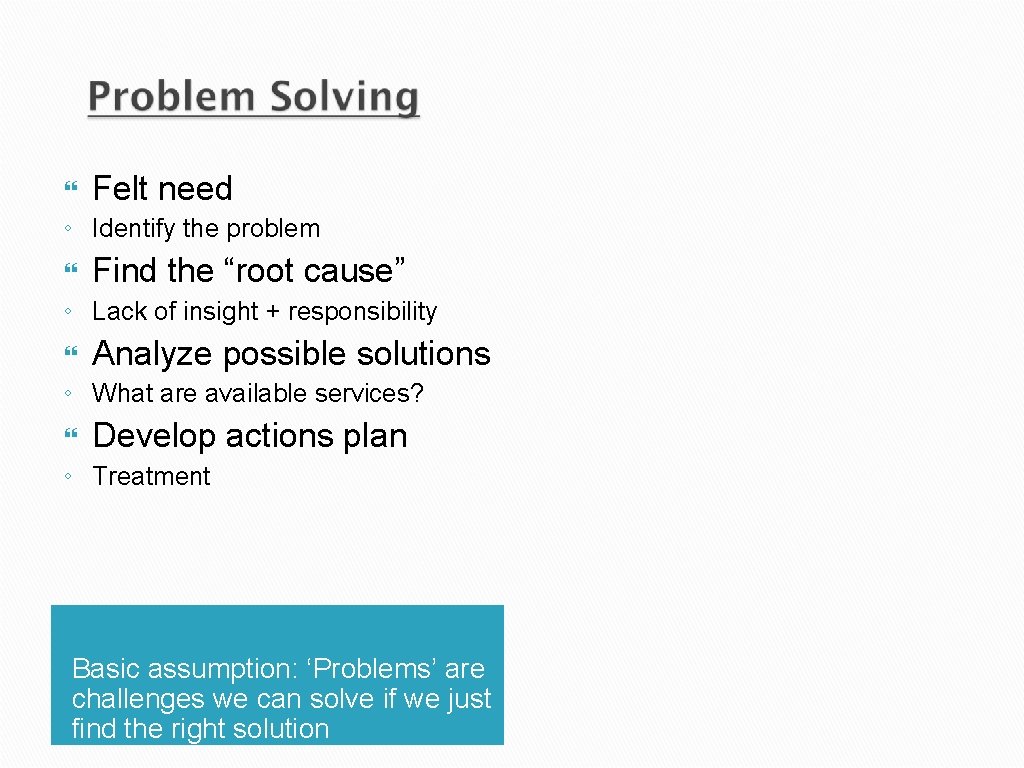
} Felt need ◦ Identify the problem } Find the “root cause” ◦ Lack of insight + responsibility } Analyze possible solutions ◦ What are available services? } Develop actions plan ◦ Treatment Basic assumption: ‘Problems’ are challenges we can solve if we just find the right solution
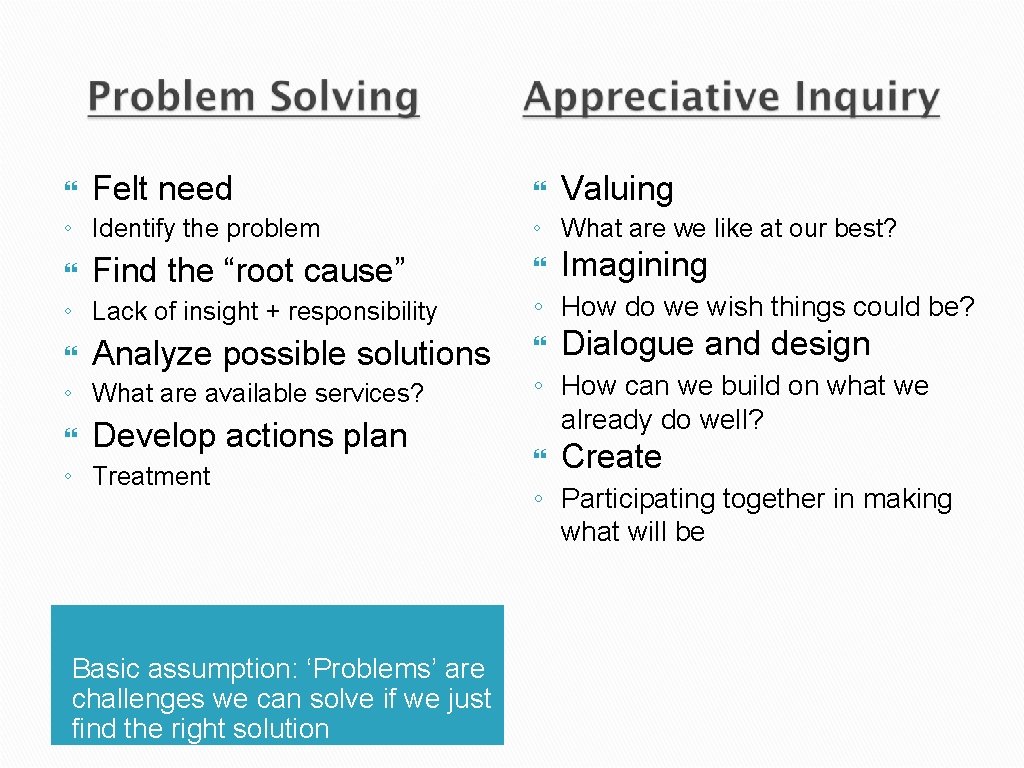
} Felt need ◦ Identify the problem } Find the “root cause” ◦ Lack of insight + responsibility } Analyze possible solutions ◦ What are available services? } Develop actions plan ◦ Treatment Basic assumption: ‘Problems’ are challenges we can solve if we just find the right solution } Valuing ◦ What are we like at our best? } Imagining ◦ How do we wish things could be? } Dialogue and design ◦ How can we build on what we already do well? } Create ◦ Participating together in making what will be
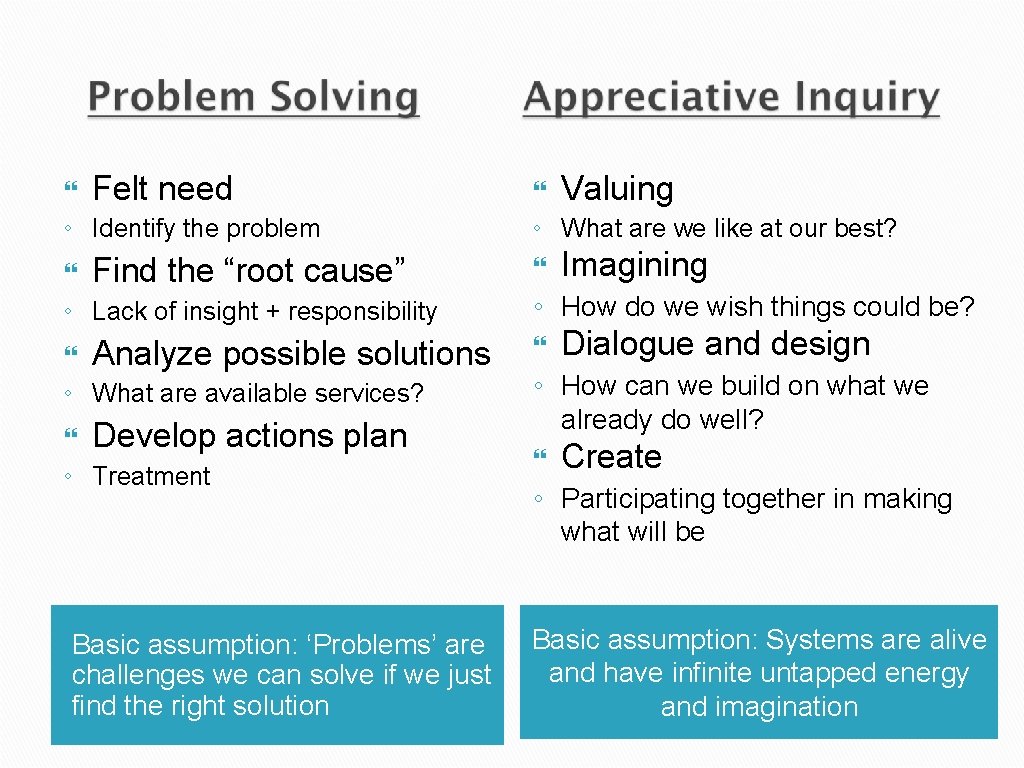
} Felt need ◦ Identify the problem } Find the “root cause” ◦ Lack of insight + responsibility } Analyze possible solutions ◦ What are available services? } Develop actions plan ◦ Treatment Basic assumption: ‘Problems’ are challenges we can solve if we just find the right solution } Valuing ◦ What are we like at our best? } Imagining ◦ How do we wish things could be? } Dialogue and design ◦ How can we build on what we already do well? } Create ◦ Participating together in making what will be Basic assumption: Systems are alive and have infinite untapped energy and imagination
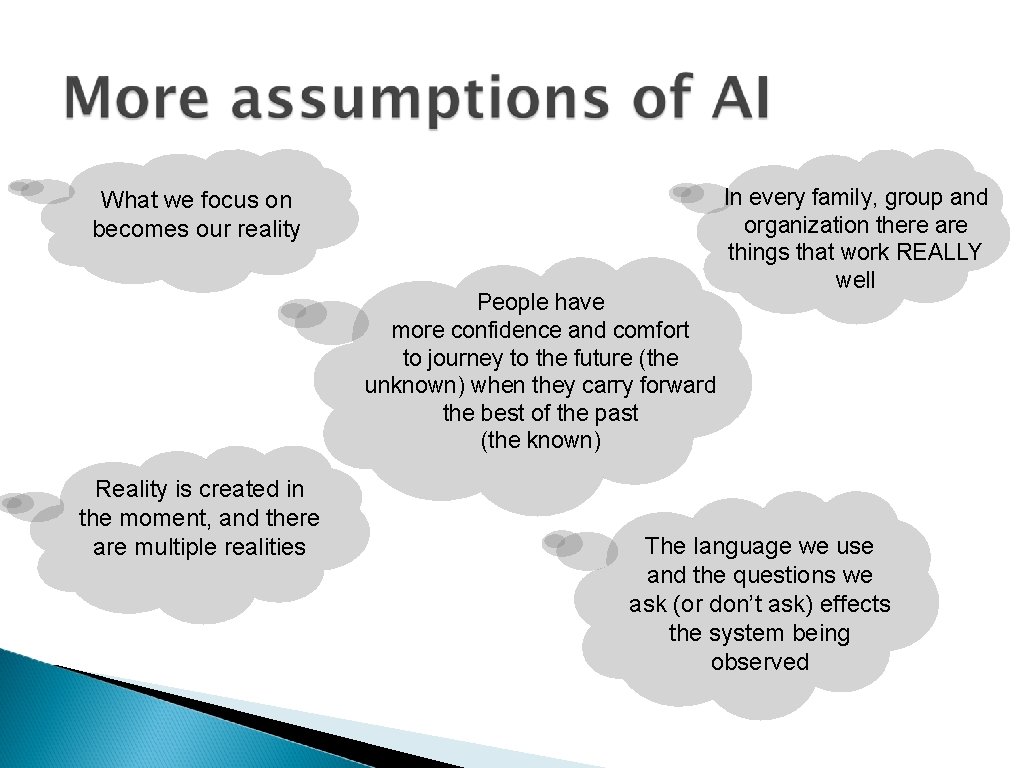
What we focus on becomes our reality “Valuing the best of what is” Appreciate Imagine (What might be) People have more confidence and comfort to journey to the future (the Dialogue andcarry design forward unknown) when they (What should be) the best of the past (the known) Reality is created in the moment, and there are multiple realities In every family, group and organization there are things that work REALLY well Create (What will be) Basic assumption: “mystery” organization is a web of strengths The linked to infinite capacity, infinite and imagination… alive language we use the questions we ask (or don’t ask) effects the system being observed
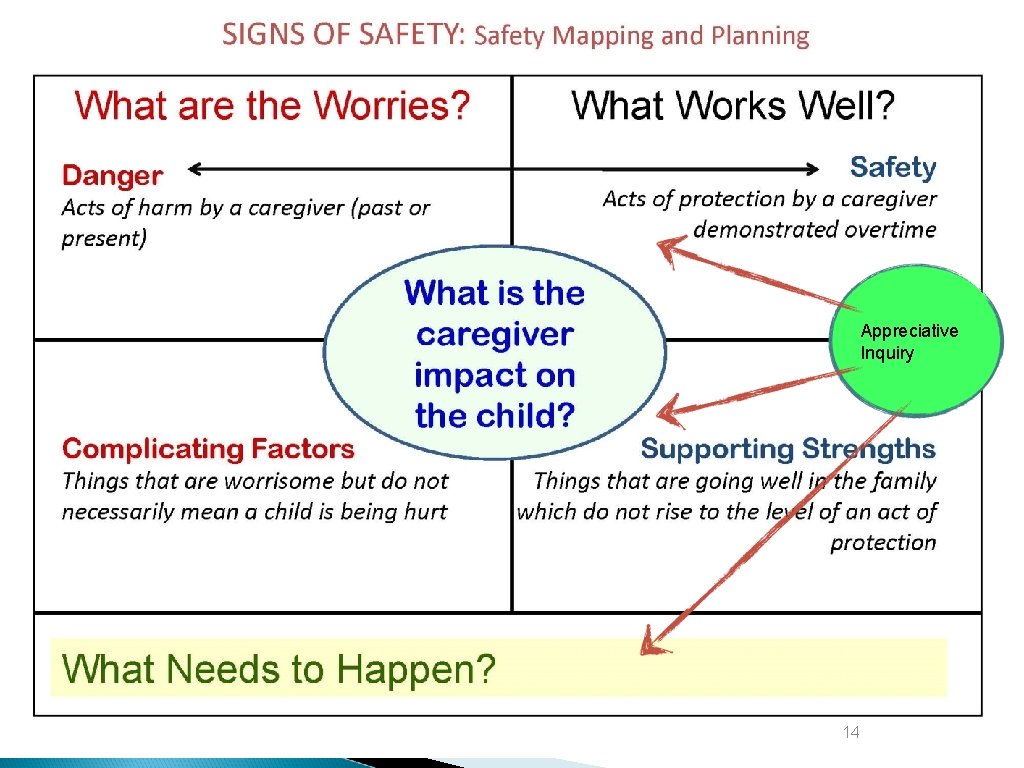
Appreciative Inquiry 14
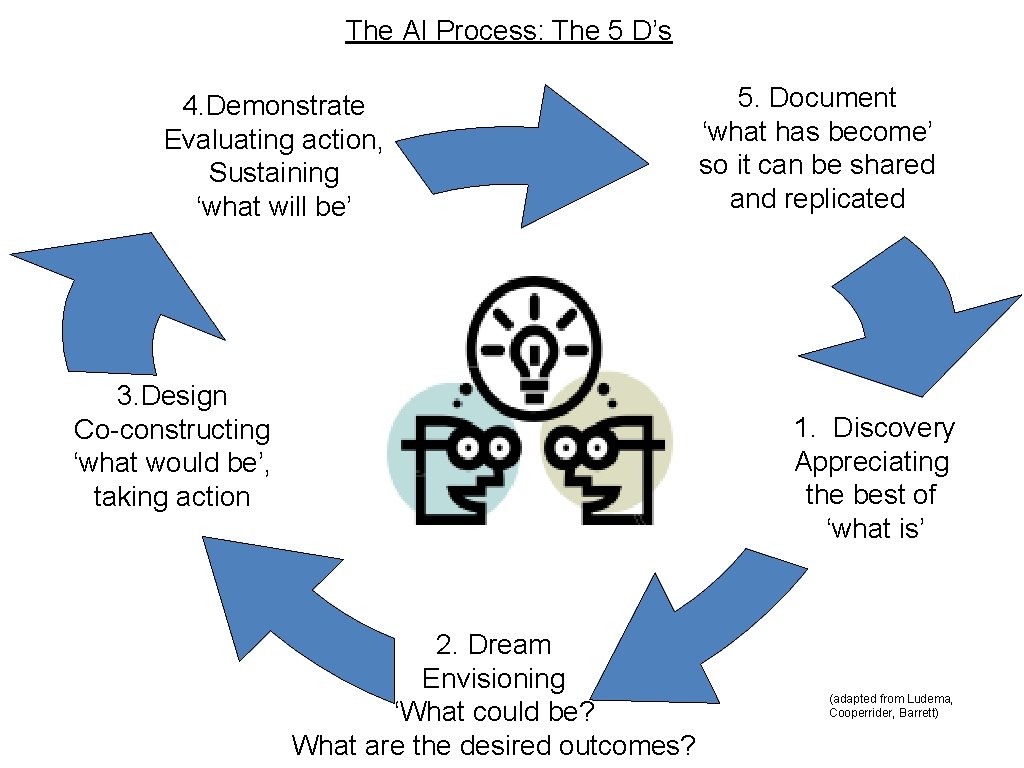
The AI Process: The 5 D’s 4. Demonstrate Evaluating action, Sustaining ‘what will be’ 3. Design Co-constructing ‘what would be’, taking action 5. Document ‘what has become’ so it can be shared and replicated 1. Discovery Appreciating the best of ‘what is’ 2. Dream Envisioning ‘What could be? What are the desired outcomes? (adapted from Ludema, Cooperrider, Barrett)
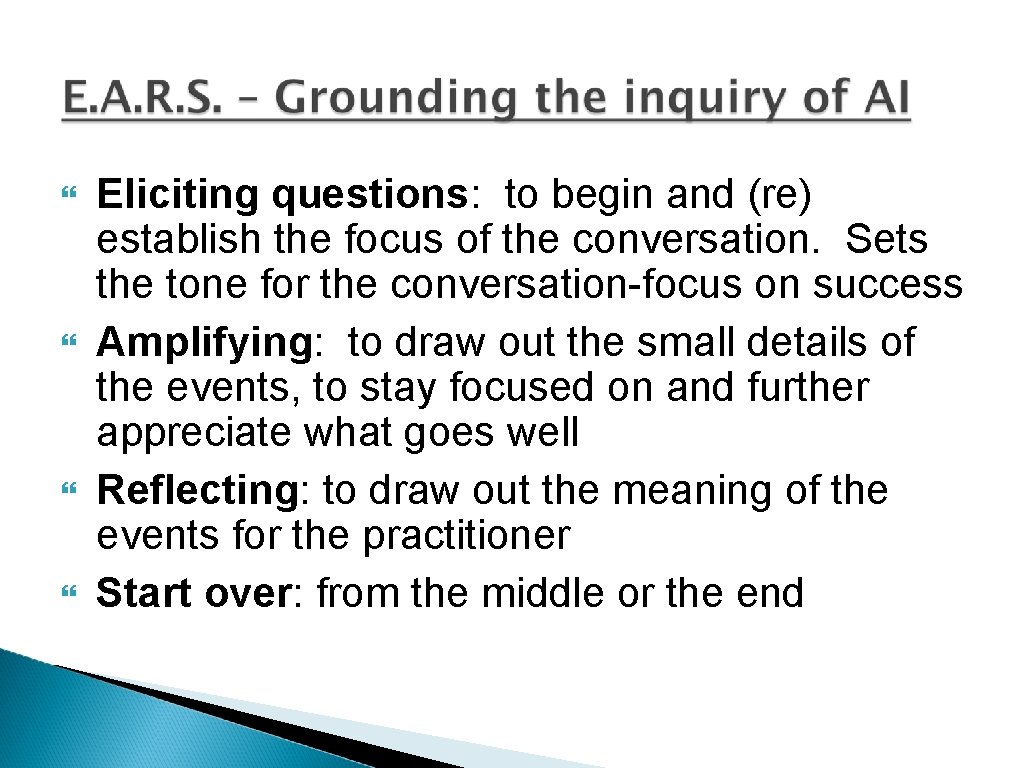
} } Eliciting questions: to begin and (re) establish the focus of the conversation. Sets the tone for the conversation-focus on success Amplifying: to draw out the small details of the events, to stay focused on and further appreciate what goes well Reflecting: to draw out the meaning of the events for the practitioner Start over: from the middle or the end
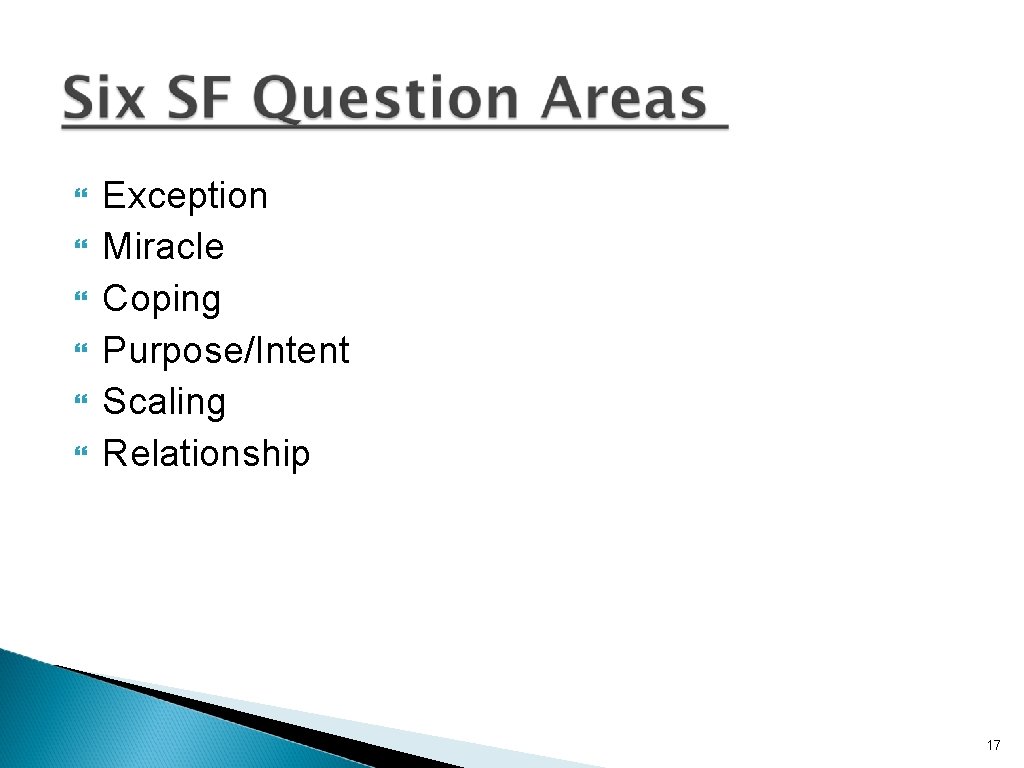
} } } Exception Miracle Coping Purpose/Intent Scaling Relationship 17
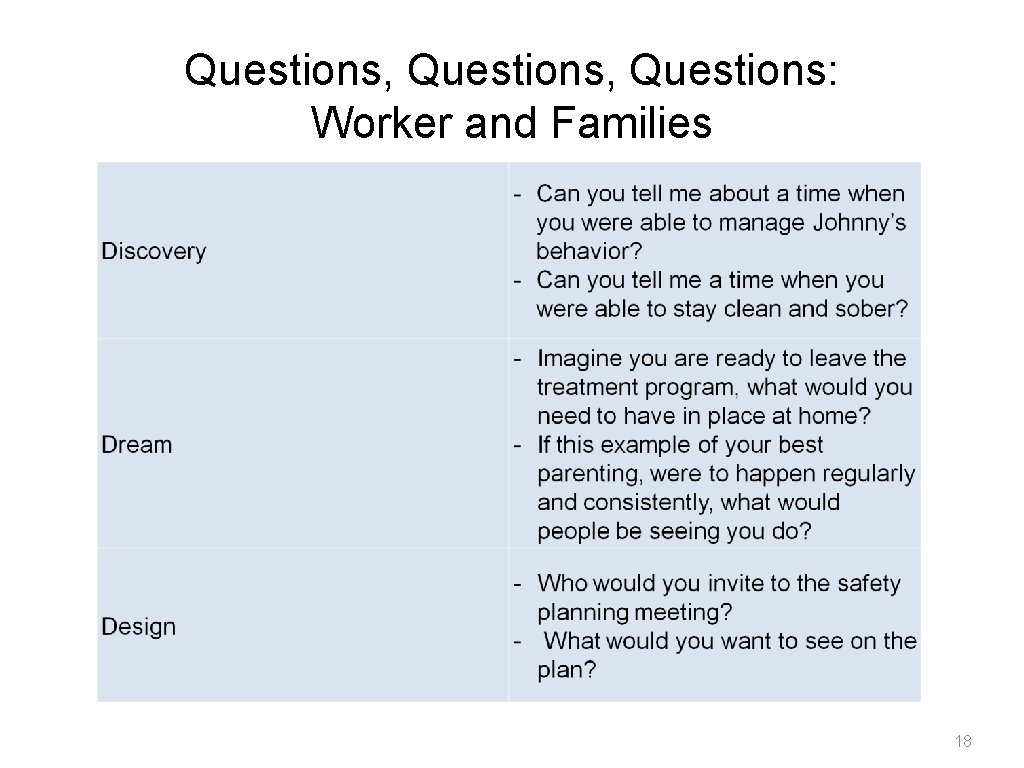
Questions, Questions: Worker and Families 18
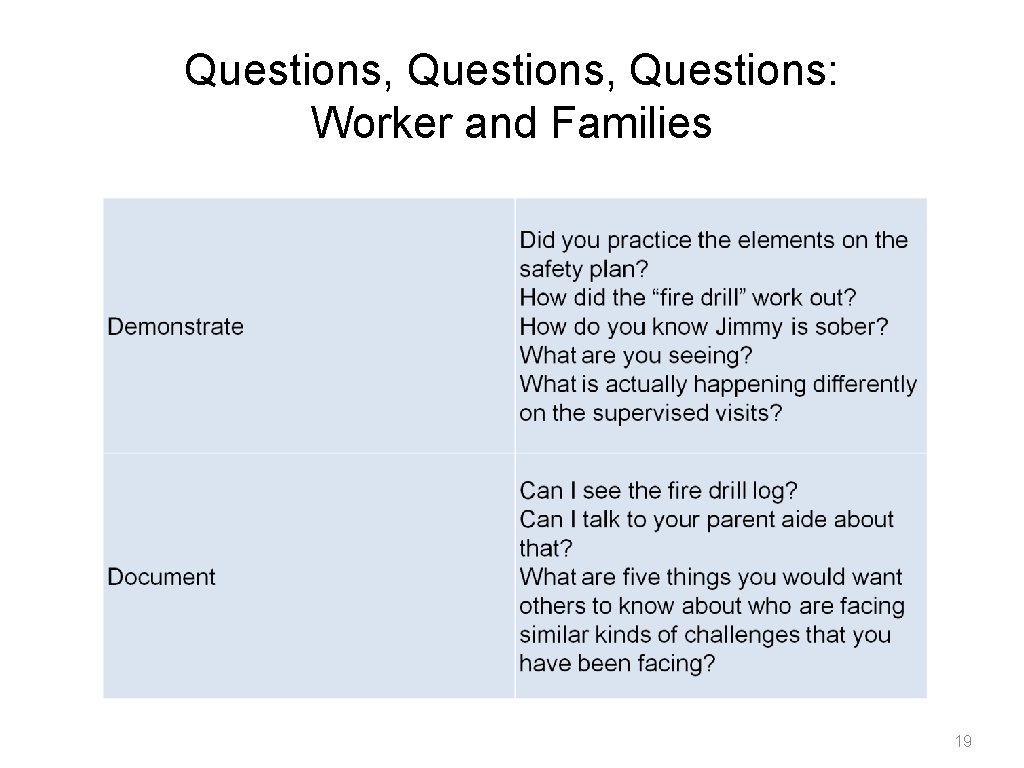
Questions, Questions: Worker and Families 19
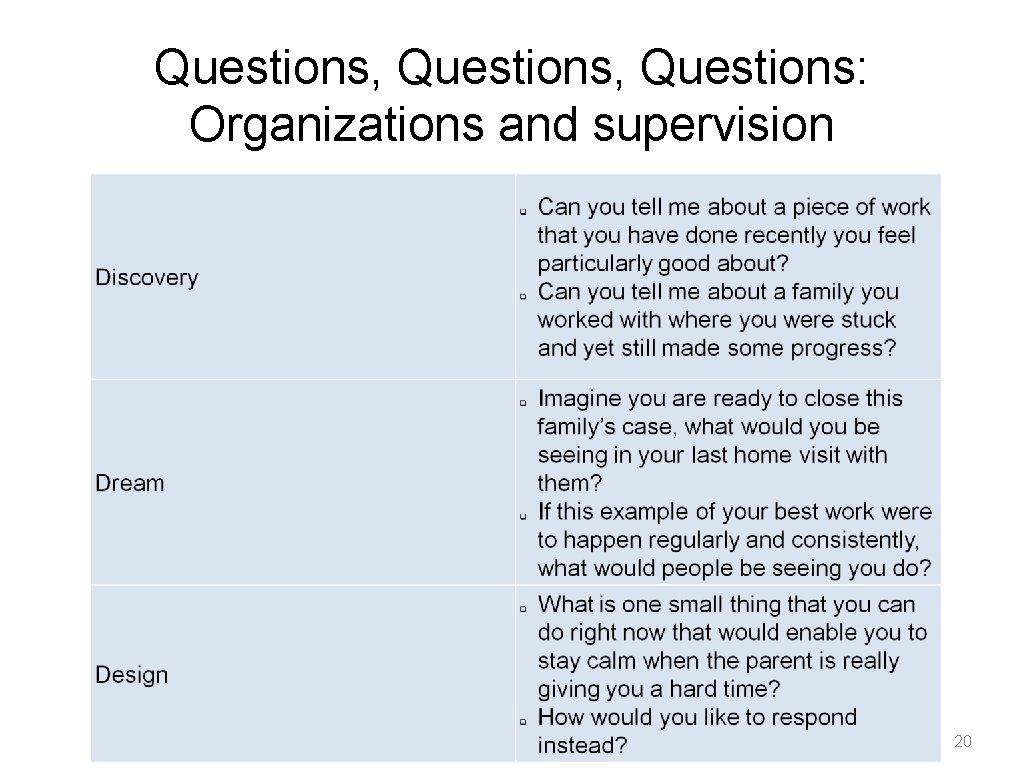
Questions, Questions: Organizations and supervision 20
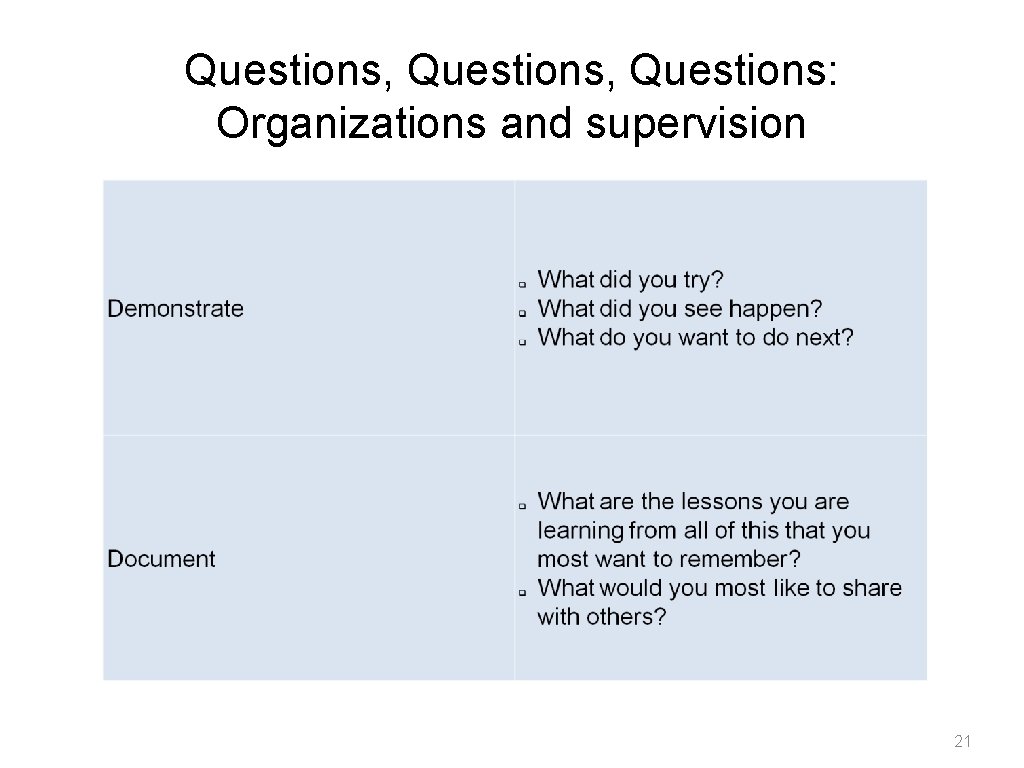
Questions, Questions: Organizations and supervision 21
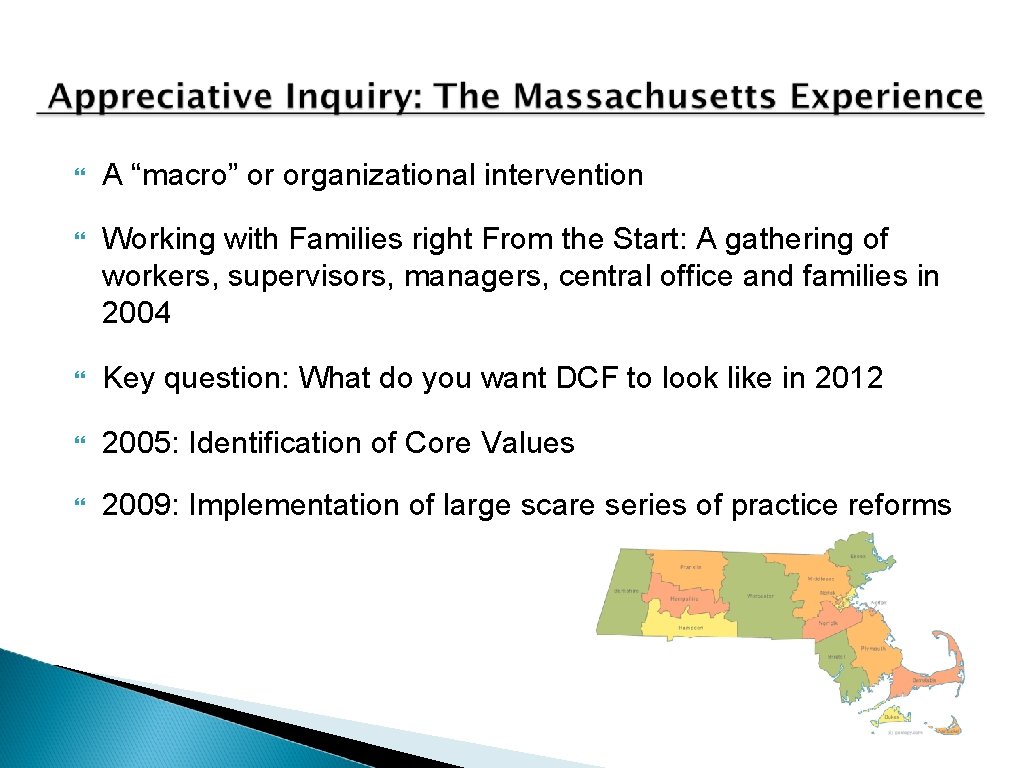
} A “macro” or organizational intervention } Working with Families right From the Start: A gathering of workers, supervisors, managers, central office and families in 2004 } Key question: What do you want DCF to look like in 2012 } 2005: Identification of Core Values } 2009: Implementation of large scare series of practice reforms
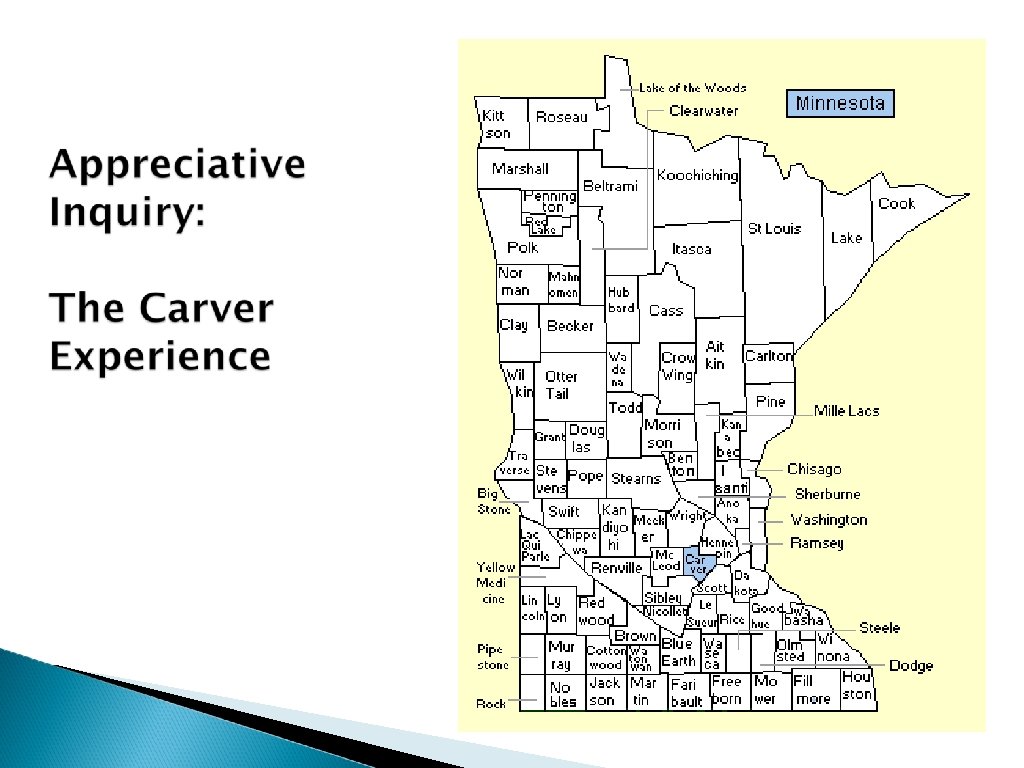
} AI as a regular part of daily practice } Dan Koziolek: If I could change one thing about our implementation journey in Carver it would be to have started by learning AI and doing a lot of it before learning anything else. } In September 2007 Andrew Turnell did an appreciative inquiry with one of our intake social workers about how she used solution focused questions as she took child protection calls. There was an immediate and lasting impact in the use of Sof. S in this worker’s entire unit. } A 15 minute AI at a weekly unit meeting is one of the most powerful transformation tools I have yet seen. } Some of the AI’s we have done with parents as we were ending our work together have impacted work around the world.
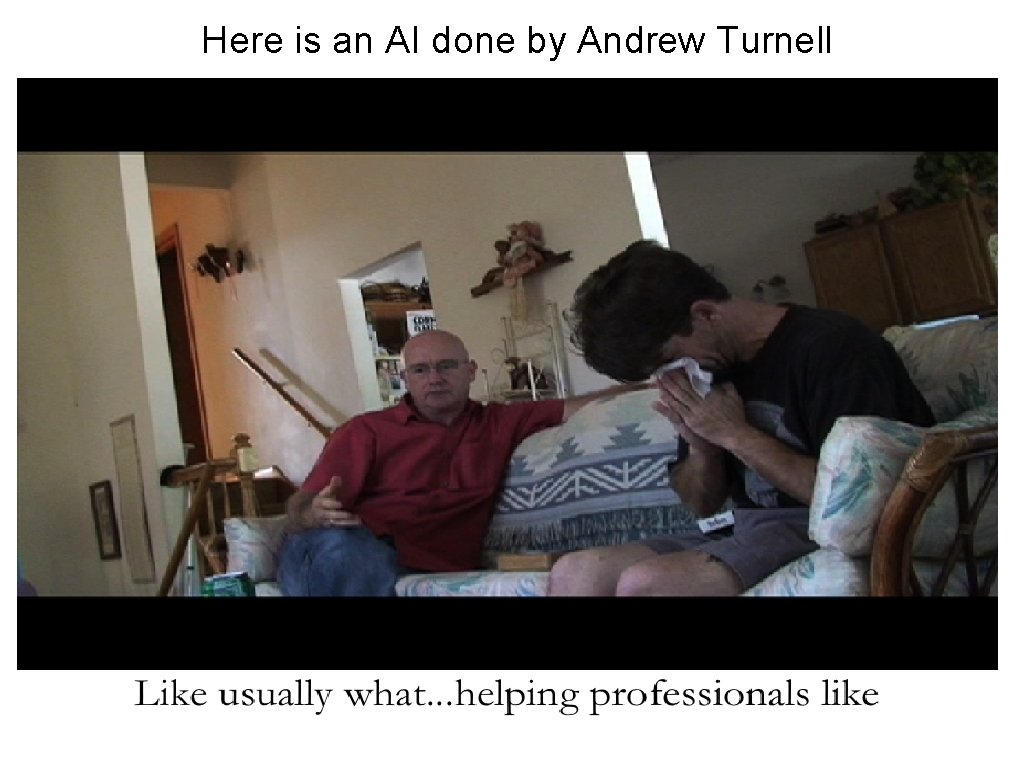
Here is an AI done by Andrew Turnell
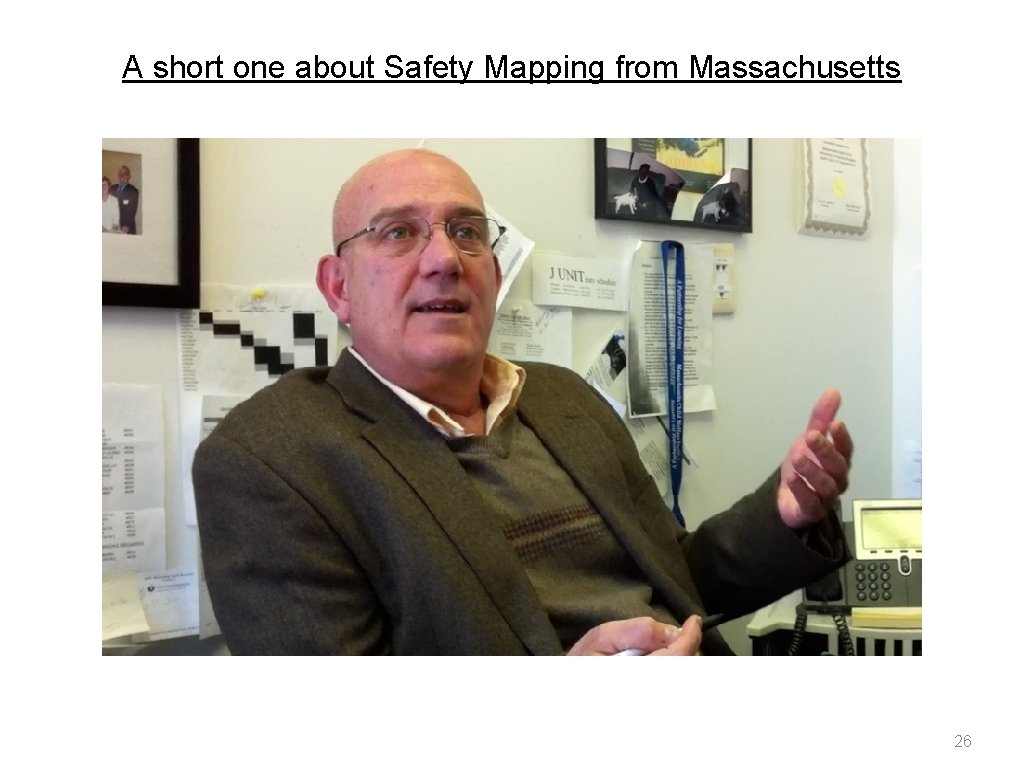
A short one about Safety Mapping from Massachusetts 26
} } Recall that moment you were proud of that you identified at the beginning of this presentation. Take a few minutes and look at the handout on EARS. If you are with someone else on this call, have them ask you a couple of these questions. If you are by yourself, just look at them, see which ones draw your attention and imagine what it would be like to be asked these. 27
} What would it be like to be ask families some of these kinds of questions? ◦ If you already do it – what is it like? ? ? } } What would it be like yourself to be asked these questions by your supervisor or manager? If your team or department were to do more of this, what kind of ripples do you think you would see in your organization, if any? 28
• Much like solution focused work, AI works from the belief that the areas we pay the most attention to grow • That it is far easier to co-create solutions that to dissolve problems • Joining in a appreciative inquiry can reach untapped energy and enthusiasm for change “Motivation (to change) is linked to the degree of hope that change is possible. ” National Clearinghouse on Child Abuse and Neglect 29
- Slides: 29