
FACIAL STRUCTURE Feature by Feature For more review

FACIAL STRUCTURE Feature by Feature For more review at home go to www. artyfactory. com
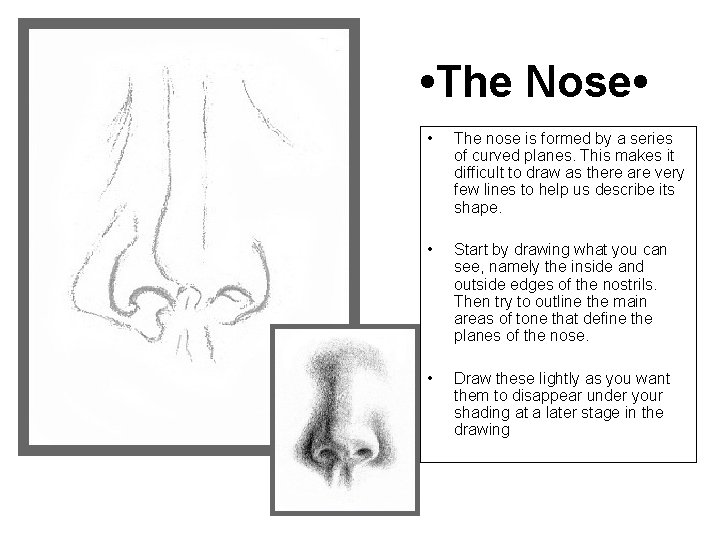
• The Nose • • The nose is formed by a series of curved planes. This makes it difficult to draw as there are very few lines to help us describe its shape. • Start by drawing what you can see, namely the inside and outside edges of the nostrils. Then try to outline the main areas of tone that define the planes of the nose. • Draw these lightly as you want them to disappear under your shading at a later stage in the drawing
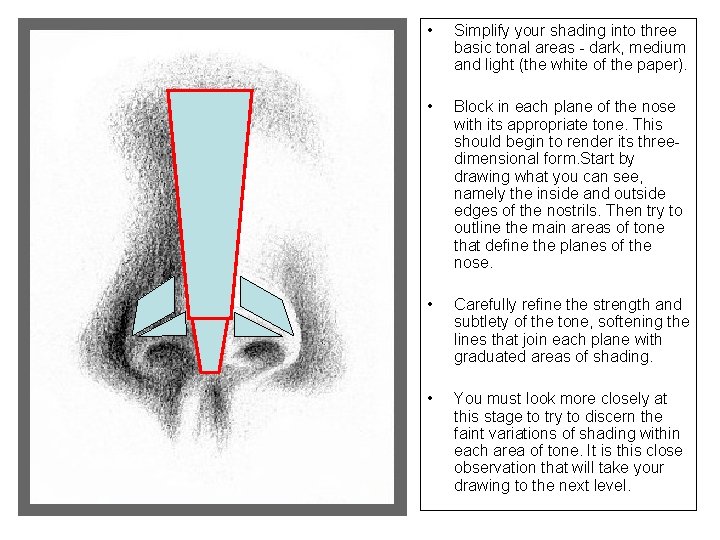
• Simplify your shading into three basic tonal areas - dark, medium and light (the white of the paper). • Block in each plane of the nose with its appropriate tone. This should begin to render its threedimensional form. Start by drawing what you can see, namely the inside and outside edges of the nostrils. Then try to outline the main areas of tone that define the planes of the nose. • Carefully refine the strength and subtlety of the tone, softening the lines that join each plane with graduated areas of shading. • You must look more closely at this stage to try to discern the faint variations of shading within each area of tone. It is this close observation that will take your drawing to the next level.
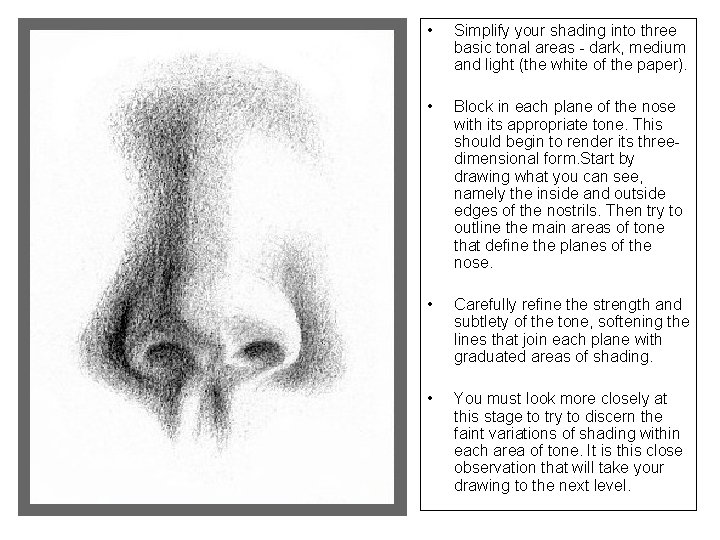
• Simplify your shading into three basic tonal areas - dark, medium and light (the white of the paper). • Block in each plane of the nose with its appropriate tone. This should begin to render its threedimensional form. Start by drawing what you can see, namely the inside and outside edges of the nostrils. Then try to outline the main areas of tone that define the planes of the nose. • Carefully refine the strength and subtlety of the tone, softening the lines that join each plane with graduated areas of shading. • You must look more closely at this stage to try to discern the faint variations of shading within each area of tone. It is this close observation that will take your drawing to the next level.
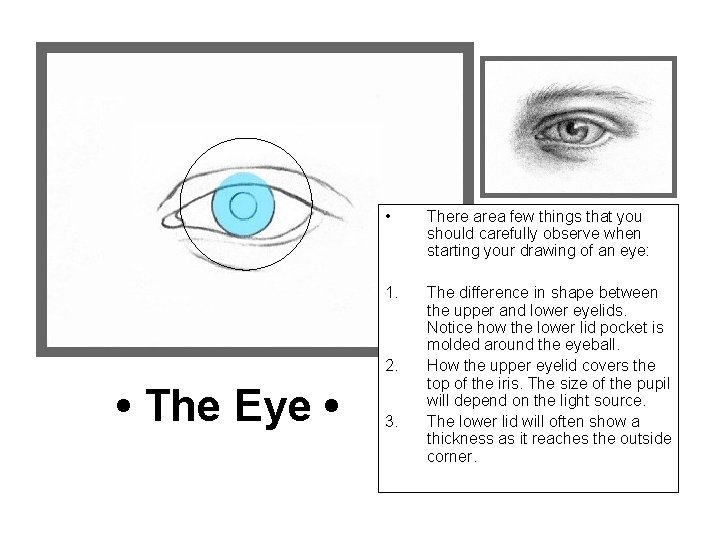
• There area few things that you should carefully observe when starting your drawing of an eye: 1. The difference in shape between the upper and lower eyelids. Notice how the lower lid pocket is molded around the eyeball. How the upper eyelid covers the top of the iris. The size of the pupil will depend on the light source. The lower lid will often show a thickness as it reaches the outside corner. 2. • The Eye • 3.
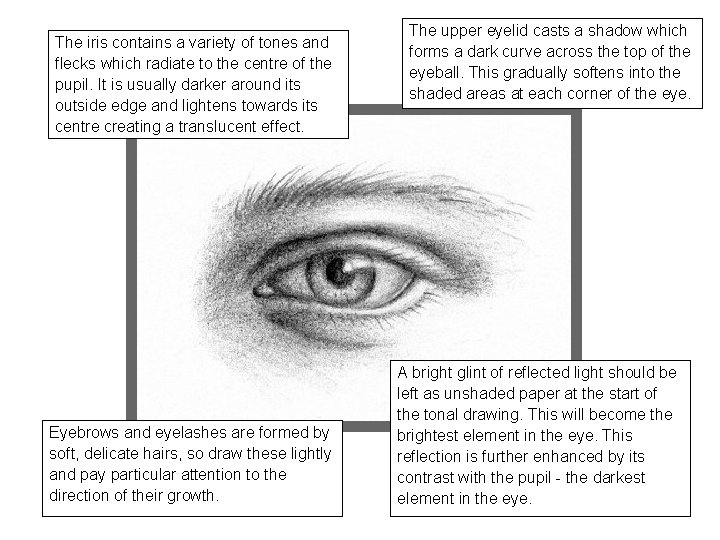
The iris contains a variety of tones and flecks which radiate to the centre of the pupil. It is usually darker around its outside edge and lightens towards its centre creating a translucent effect. Eyebrows and eyelashes are formed by soft, delicate hairs, so draw these lightly and pay particular attention to the direction of their growth. The upper eyelid casts a shadow which forms a dark curve across the top of the eyeball. This gradually softens into the shaded areas at each corner of the eye. A bright glint of reflected light should be left as unshaded paper at the start of the tonal drawing. This will become the brightest element in the eye. This reflection is further enhanced by its contrast with the pupil - the darkest element in the eye.
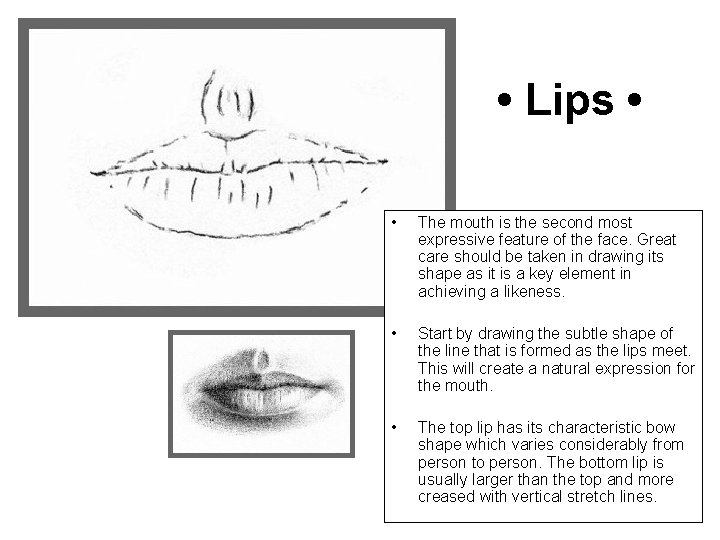
• Lips • • The mouth is the second most expressive feature of the face. Great care should be taken in drawing its shape as it is a key element in achieving a likeness. • Start by drawing the subtle shape of the line that is formed as the lips meet. This will create a natural expression for the mouth. • The top lip has its characteristic bow shape which varies considerably from person to person. The bottom lip is usually larger than the top and more creased with vertical stretch lines.
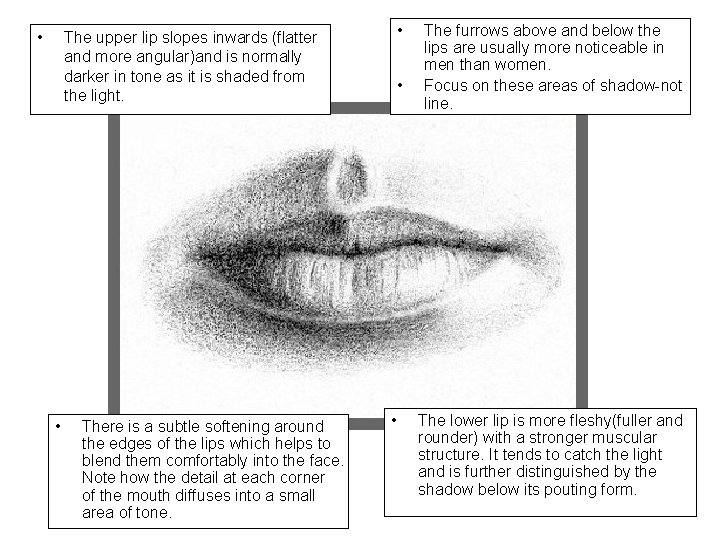
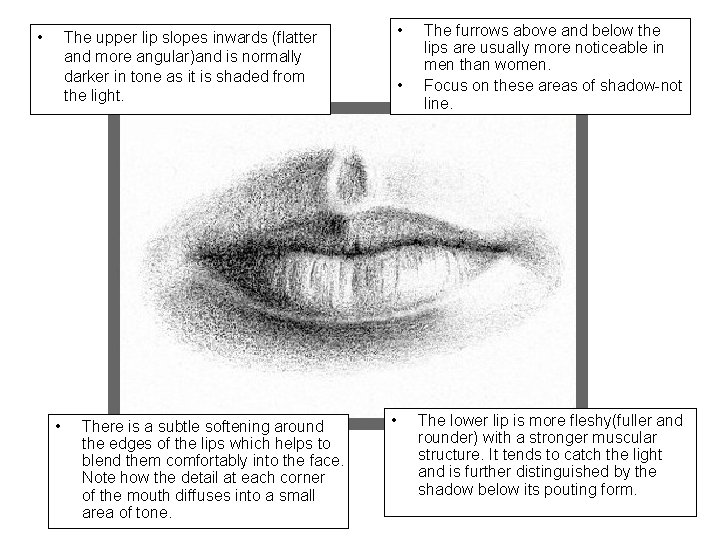
• • The upper lip slopes inwards (flatter and more angular)and is normally darker in tone as it is shaded from the light. • There is a subtle softening around the edges of the lips which helps to blend them comfortably into the face. Note how the detail at each corner of the mouth diffuses into a small area of tone. • • The furrows above and below the lips are usually more noticeable in men than women. Focus on these areas of shadow-not line. The lower lip is more fleshy(fuller and rounder) with a stronger muscular structure. It tends to catch the light and is further distinguished by the shadow below its pouting form.
• • The upper lip slopes inwards (flatter and more angular)and is normally darker in tone as it is shaded from the light. • There is a subtle softening around the edges of the lips which helps to blend them comfortably into the face. Note how the detail at each corner of the mouth diffuses into a small area of tone. • • The furrows above and below the lips are usually more noticeable in men than women. Focus on these areas of shadow-not line. The lower lip is more fleshy(fuller and rounder) with a stronger muscular structure. It tends to catch the light and is further distinguished by the shadow below its pouting form.
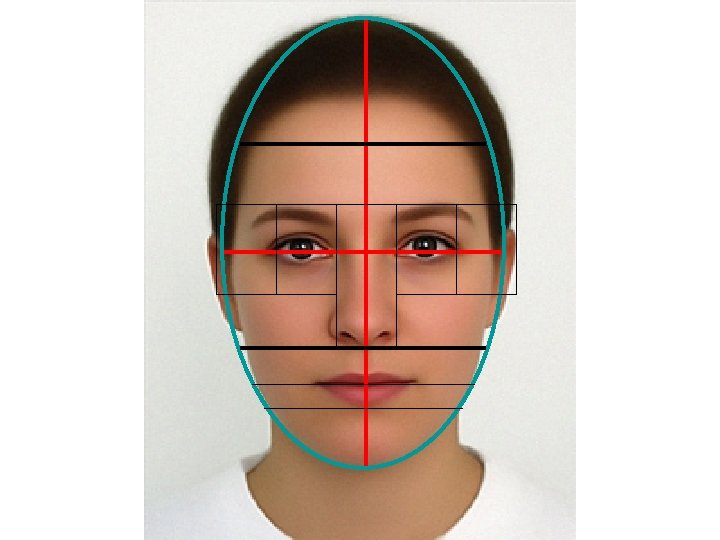
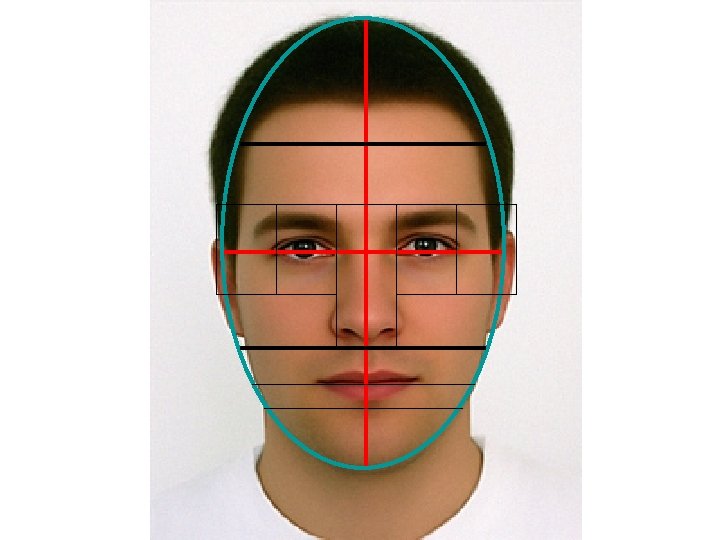
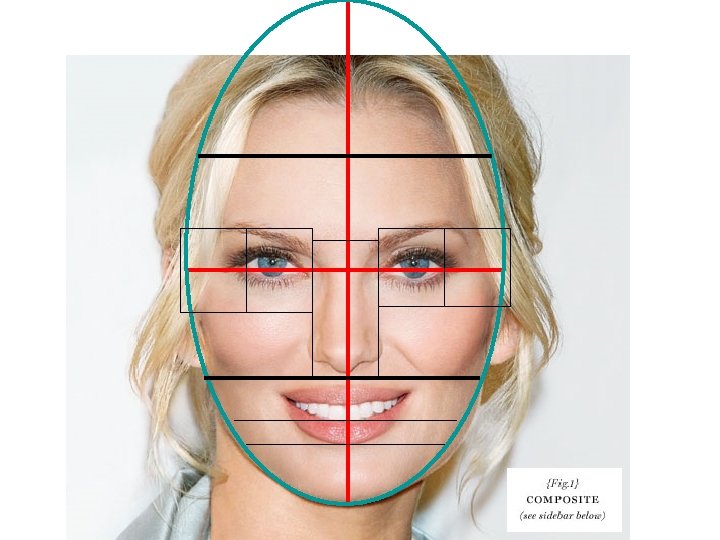
FACIAL STRUCTURE Putting it All Together
FACIAL STRUCTURE Head in Movement
While it is VERY Important to Understand Proportions from the Front, the Truth is Most People Don’t Draw Images from this Perspective
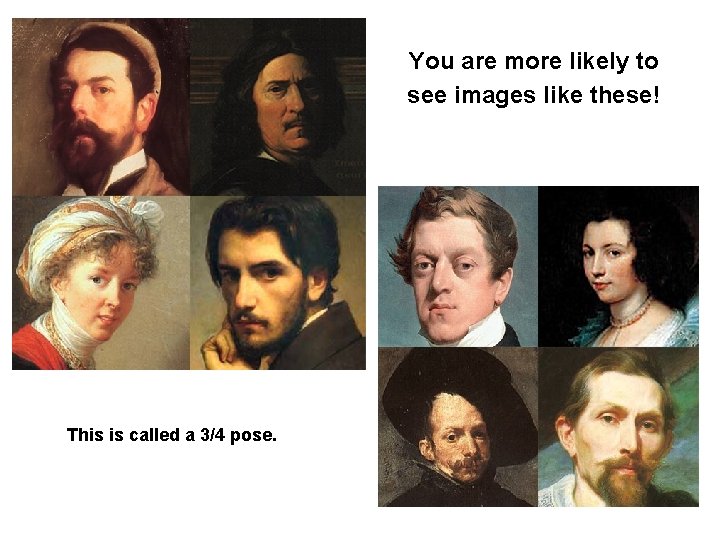
You are more likely to see images like these! This is called a 3/4 pose.
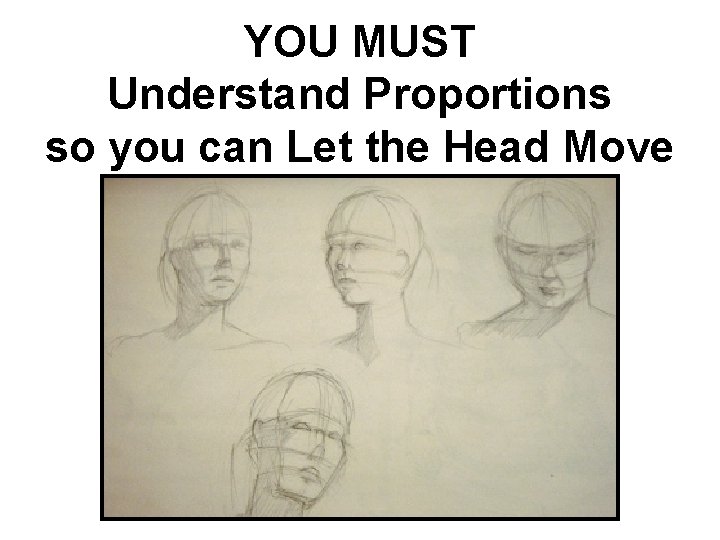
YOU MUST Understand Proportions so you can Let the Head Move

- Slides: 18