
Facial Nerve Palsy R V Lloyd Facial Nerve
- Slides: 31
Facial Nerve Palsy R V Lloyd
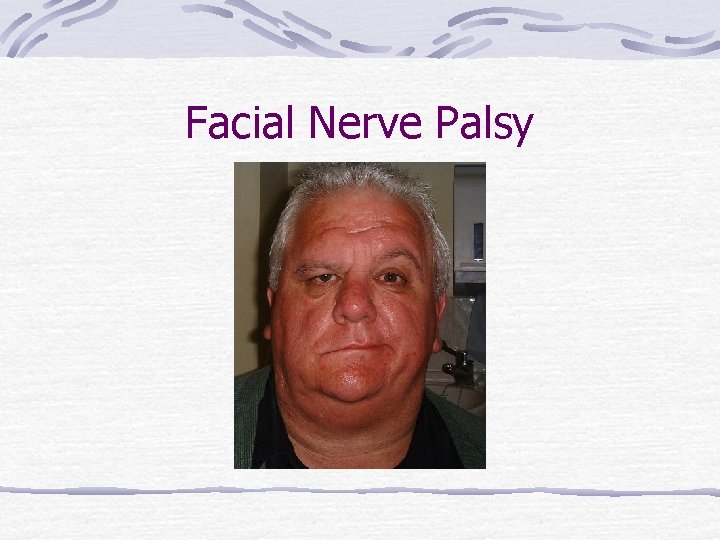
Facial Nerve Palsy
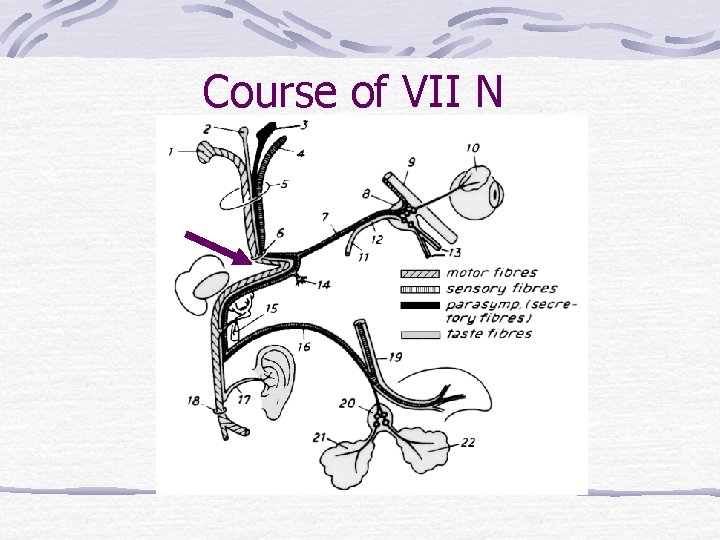
Course of VII N
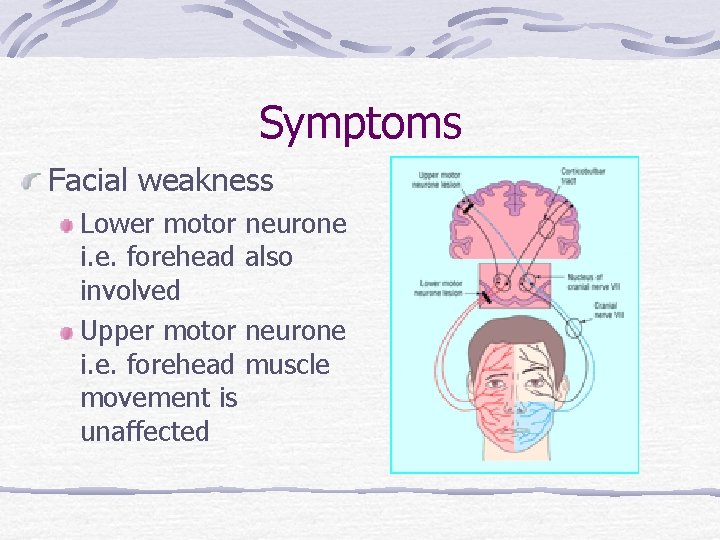
Symptoms Facial weakness Lower motor neurone i. e. forehead also involved Upper motor neurone i. e. forehead muscle movement is unaffected
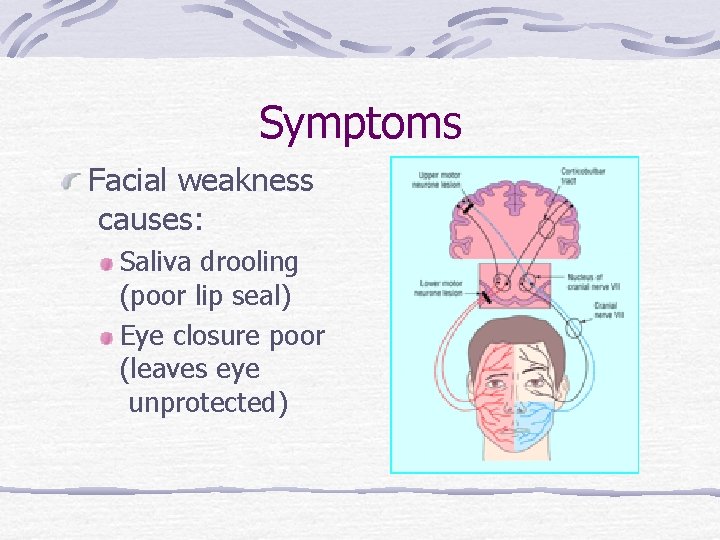
Symptoms Facial weakness causes: Saliva drooling (poor lip seal) Eye closure poor (leaves eye unprotected)
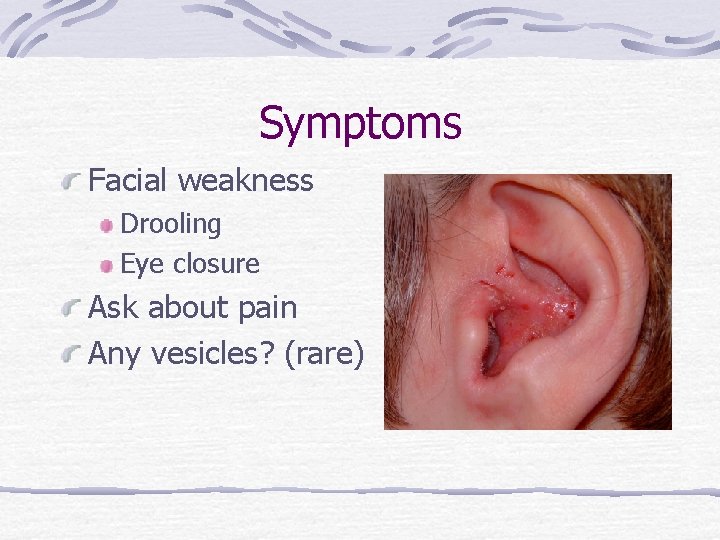
Symptoms Facial weakness Drooling Eye closure Ask about pain Any vesicles? (rare)
Symptoms Facial weakness Drooling Eye closure ? Pain (Bell’s palsy or Ramsay Hunt syndrome) ? Vesicles (Ramsay Hunt syndrome) ? Hyperacusis (sensitive to loud sounds, due to stapedius muscle paparlysis)
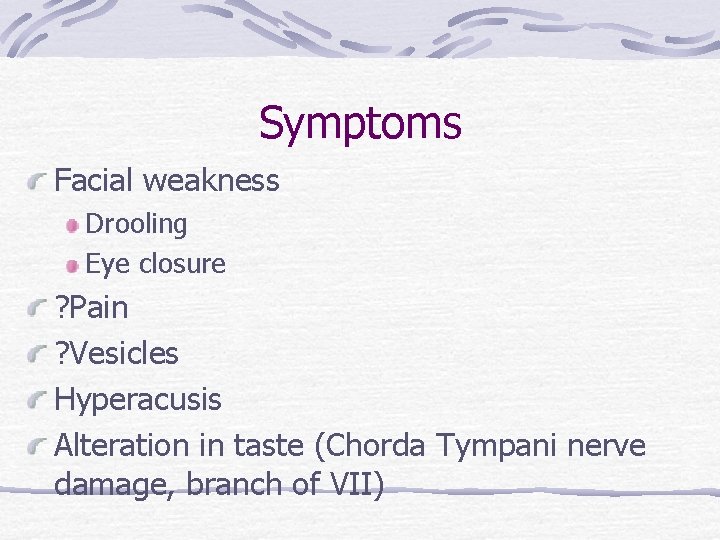
Symptoms Facial weakness Drooling Eye closure ? Pain ? Vesicles Hyperacusis Alteration in taste (Chorda Tympani nerve damage, branch of VII)
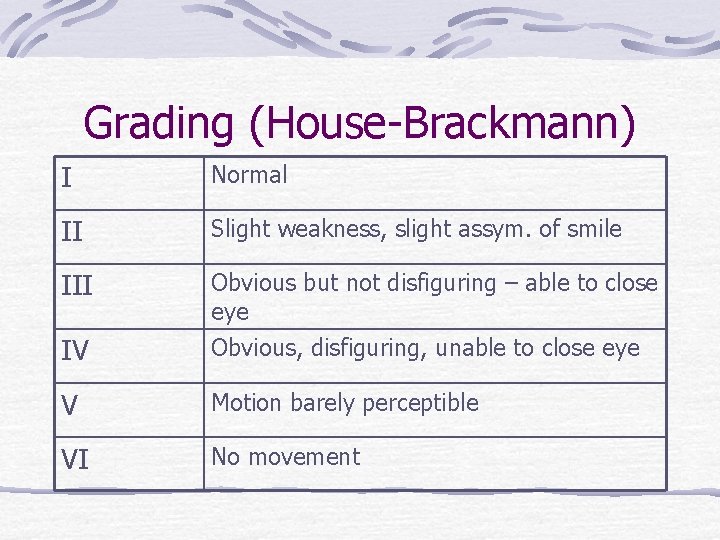
Grading (House-Brackmann) I Normal II Slight weakness, slight assym. of smile III IV Obvious but not disfiguring – able to close eye Obvious, disfiguring, unable to close eye V Motion barely perceptible VI No movement
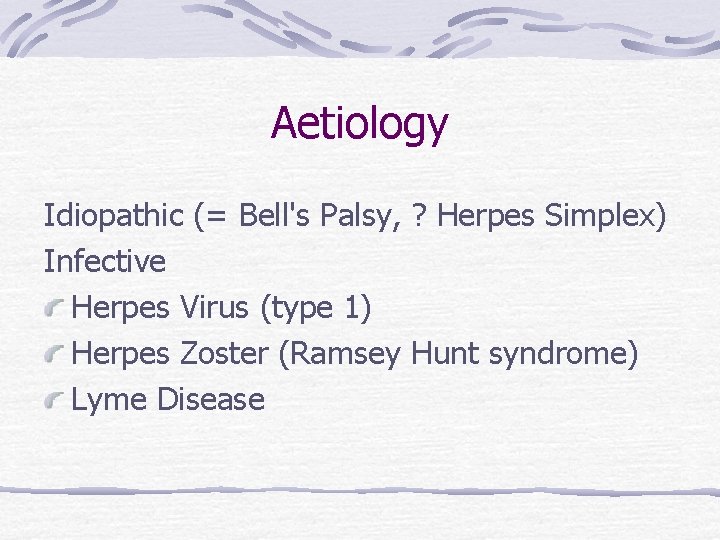
Aetiology Idiopathic (= Bell's Palsy, ? Herpes Simplex) Infective Herpes Virus (type 1) Herpes Zoster (Ramsey Hunt syndrome) Lyme Disease
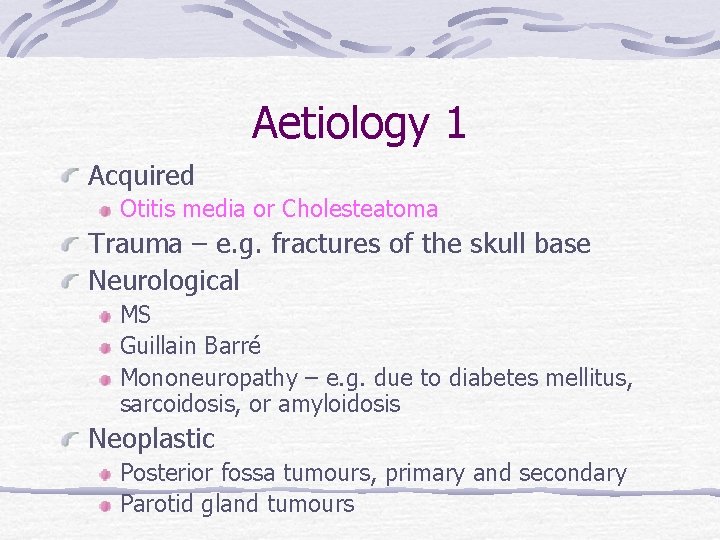
Aetiology 1 Acquired Otitis media or Cholesteatoma Trauma – e. g. fractures of the skull base Neurological MS Guillain Barré Mononeuropathy – e. g. due to diabetes mellitus, sarcoidosis, or amyloidosis Neoplastic Posterior fossa tumours, primary and secondary Parotid gland tumours
Aetiology 2 Sjögren's syndrome Hypertension and Eclampsia Melkersson's syndrome (recurrent facial palsy, chronic facial oedema of the face and lips, and hypertrophy/fissuring of the tongue)
Investigations Blood tests: ESR Lyme disease (Borrelia), ? HSV, HZ
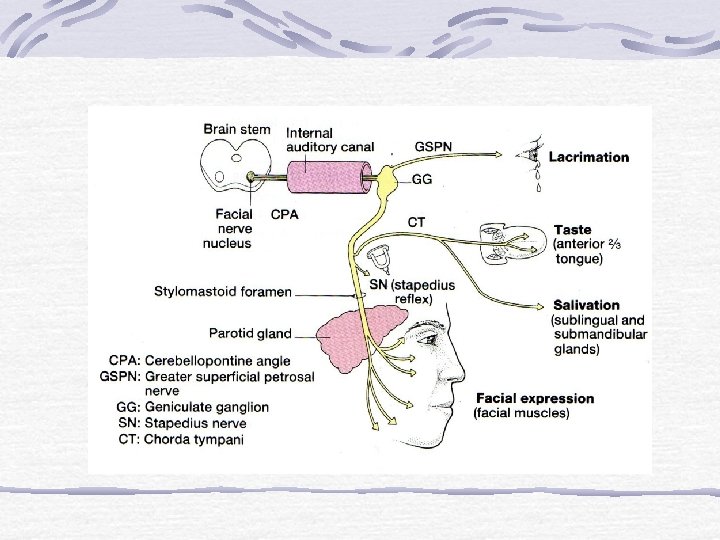
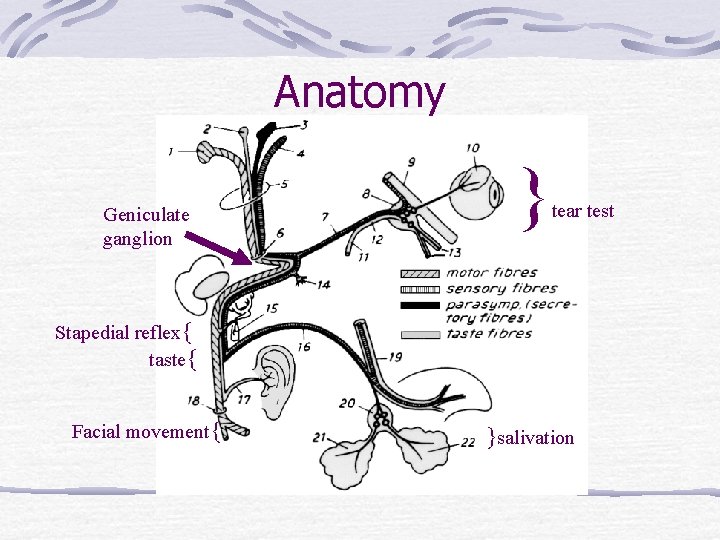
Anatomy Geniculate ganglion } tear test Stapedial reflex{ taste{ Facial movement{ }salivation
Investigations Blood tests: ESR Lyme disease, ? HSV, HZ Stapedial reflexes
Investigations Blood tests: ESR Lyme disease, ? HSV, HZ Stapedial reflexes Schirmer tear test
Investigations Blood tests: ESR Lyme disease, ? HSV, HZ Stapedial reflexes Schirmer tear test MRI
Investigations Blood tests: ESR Lyme disease, ? HSV, HZ Stapedial reflexes Schirmer tear test MRI Electroneurography
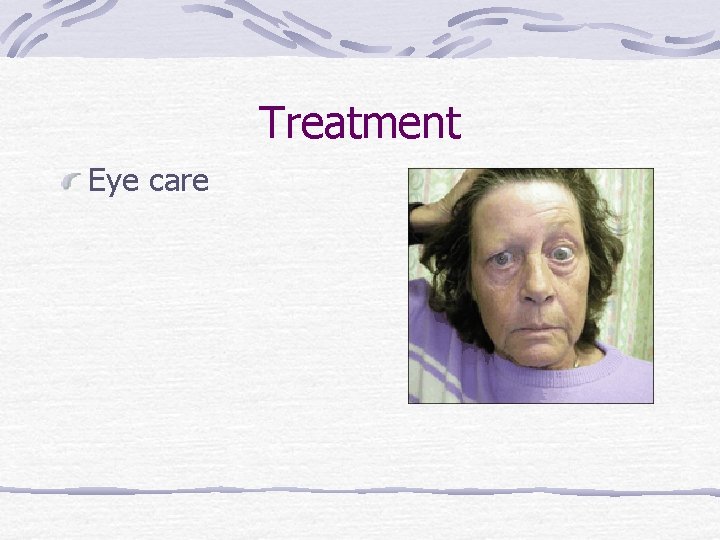
Treatment Eye care
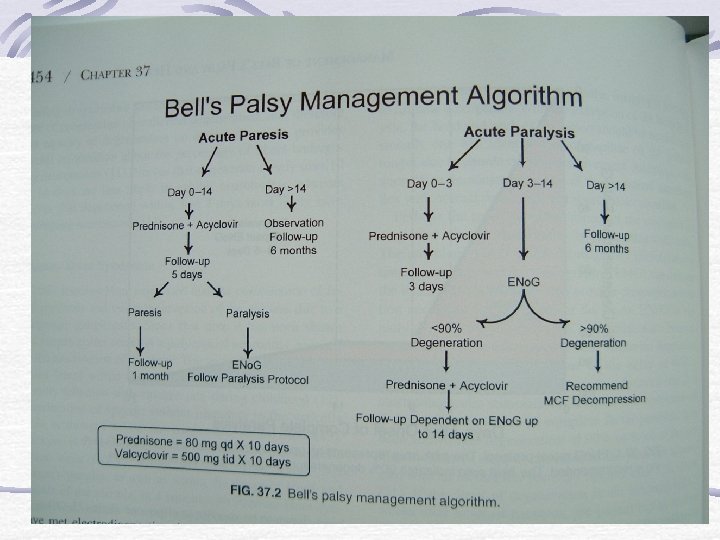
Treatment Eye care Steroids (1 mg/kg/d, max 80 mg)
Treatment Eye care Steroids Acyclovir (>2000 mg /day) x ? /52
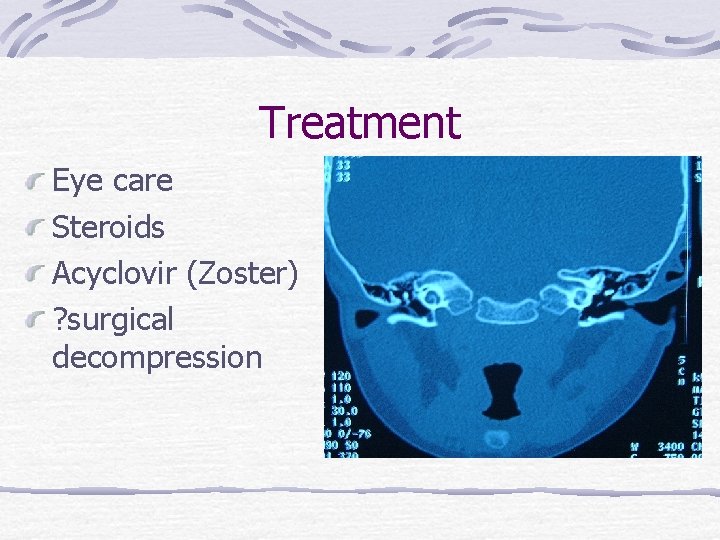
Treatment Eye care Steroids Acyclovir (Zoster) ? surgical decompression
Prognosis 70% recover fully, 80% recover near normal function without treatment
Prognosis 70% recover fully, 80% recover near normal function Additional 17% with Rx steroids / antivirals Recent studies suggest no benefit of antivirals in Bell’s palsy
Better prognosis: Partial palsy Treatment within 72 hours
Poor prognosis Complete palsy No signs of recovery by three weeks Age >60 Severe pain Herpes zoster virus Associated with either hypertension, diabetes, or pregnancy
Incomplete recovery Synkinesis Crocodile tears
Treatment of complications Botulinum toxin Gold weights (eyelids) Facial plastics Facial reanimation
Remember: Bell's palsy is probably caused by herpes viruses, mainly herpes simplex virus type 1 and herpes zoster virus Facial palsy improves after treatment with combined oral acyclovir and prednisolone Treatment of partial Bell's palsy is controversial; a few patients don't recover if left untreated Treatment is probably more effective before 72 hours and less effective after seven days A fifth of cases of acute facial palsy have an alternative cause that should be managed appropriately Failure to improve in 6/12 or recurrent, mandatory MRI of CPAs