
Facial Injuries in Sports and Exercise Epidemiology Scope
- Slides: 41
Facial Injuries in Sports and Exercise
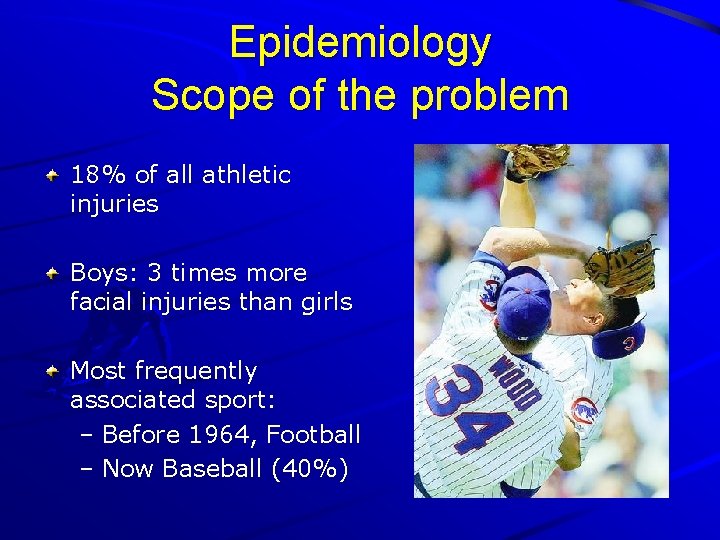
Epidemiology Scope of the problem 18% of all athletic injuries Boys: 3 times more facial injuries than girls Most frequently associated sport: – Before 1964, Football – Now Baseball (40%)
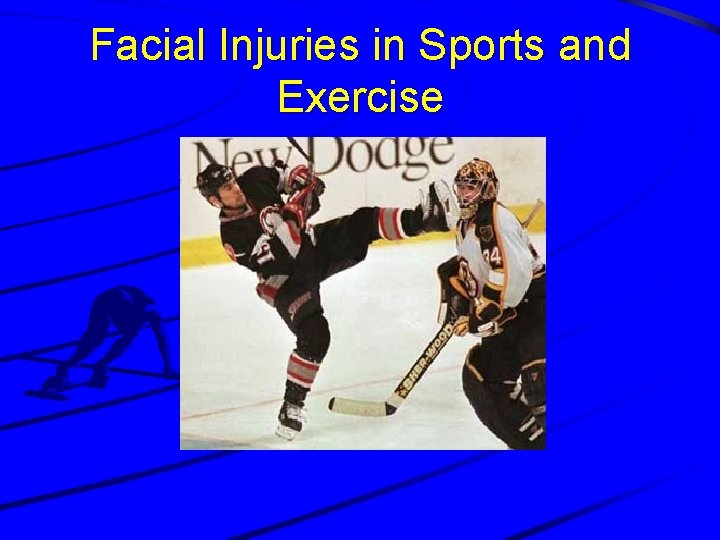
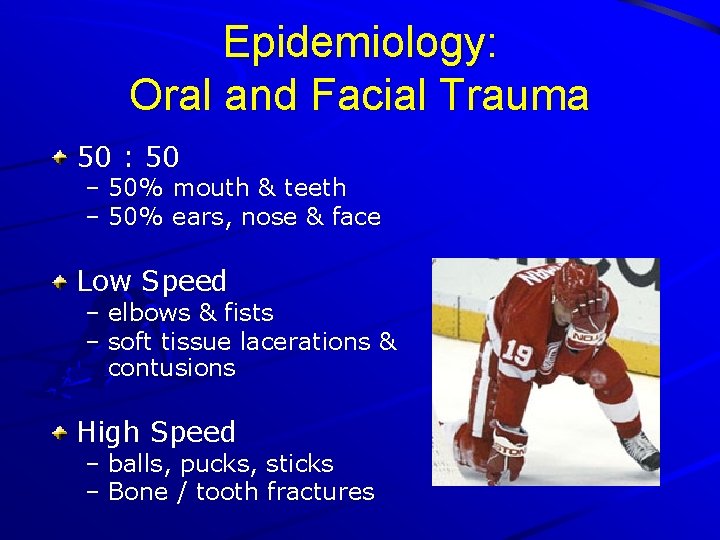
Epidemiology: Oral and Facial Trauma 50 : 50 – 50% mouth & teeth – 50% ears, nose & face Low Speed – elbows & fists – soft tissue lacerations & contusions High Speed – balls, pucks, sticks – Bone / tooth fractures
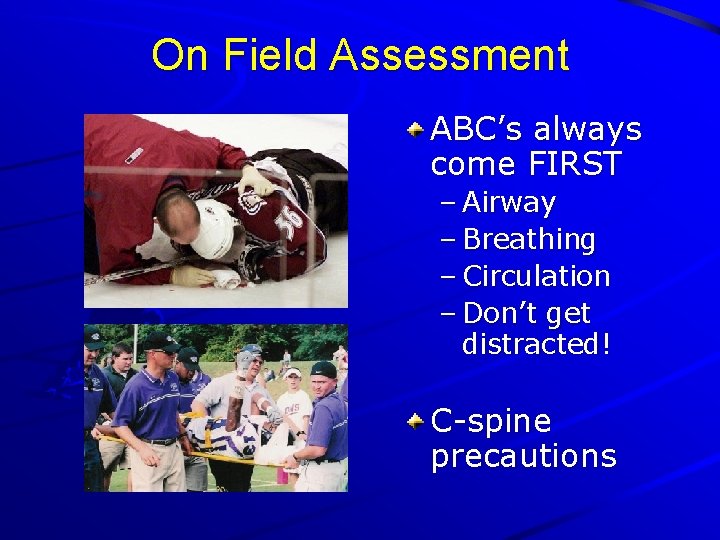
On Field Assessment ABC’s always come FIRST – Airway – Breathing – Circulation – Don’t get distracted! C-spine precautions
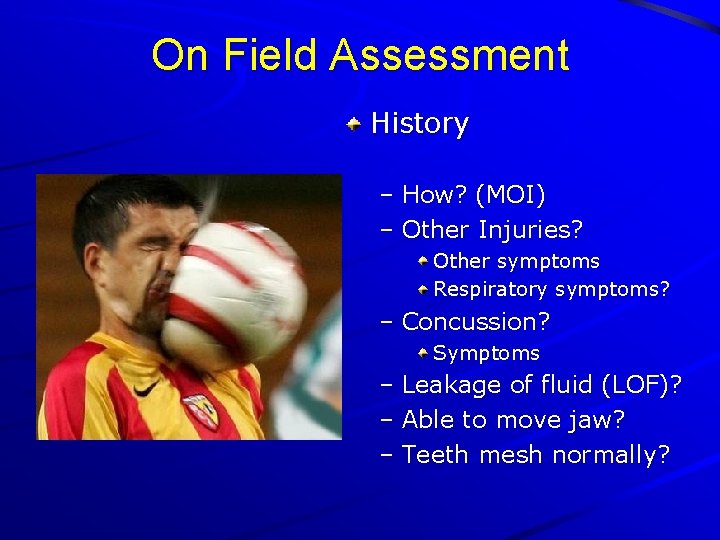
On Field Assessment History – How? (MOI) – Other Injuries? Other symptoms Respiratory symptoms? – Concussion? Symptoms – Leakage of fluid (LOF)? – Able to move jaw? – Teeth mesh normally?
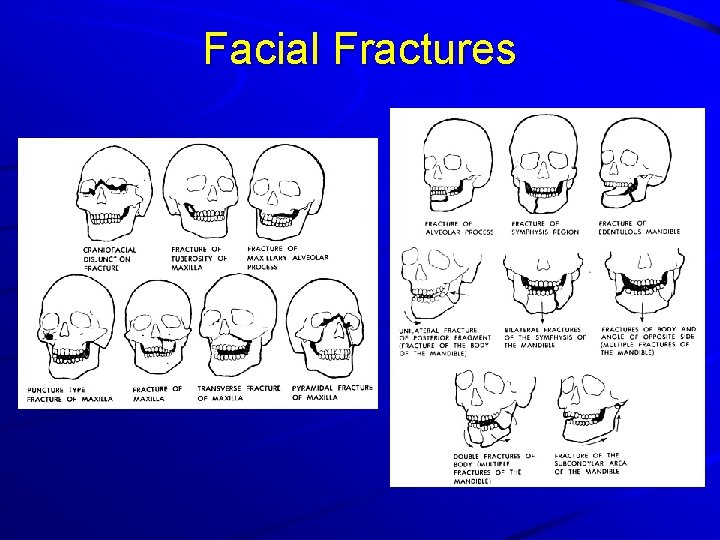
Facial Fractures
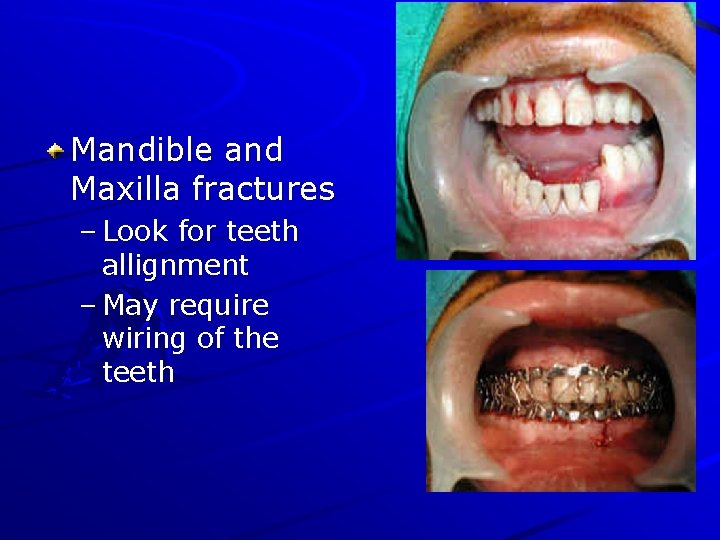
Mandible and Maxilla fractures – Look for teeth allignment – May require wiring of the teeth
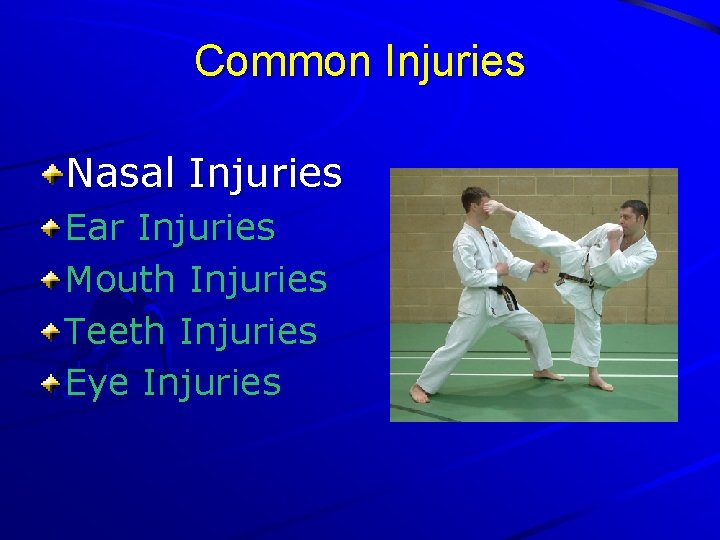
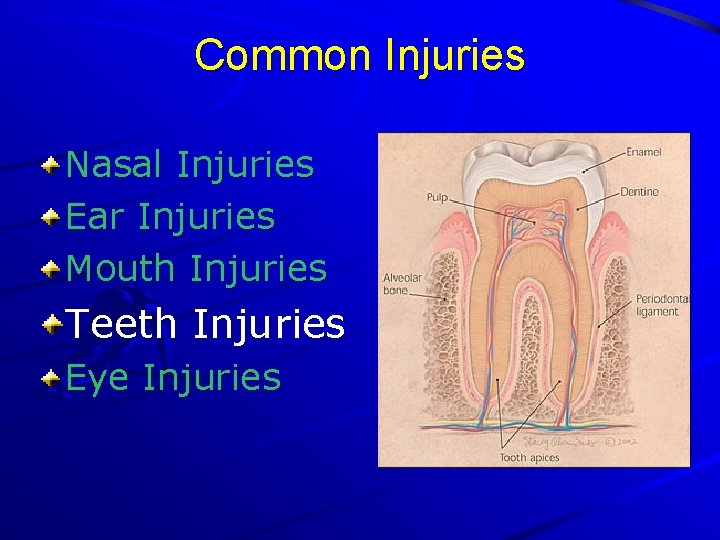
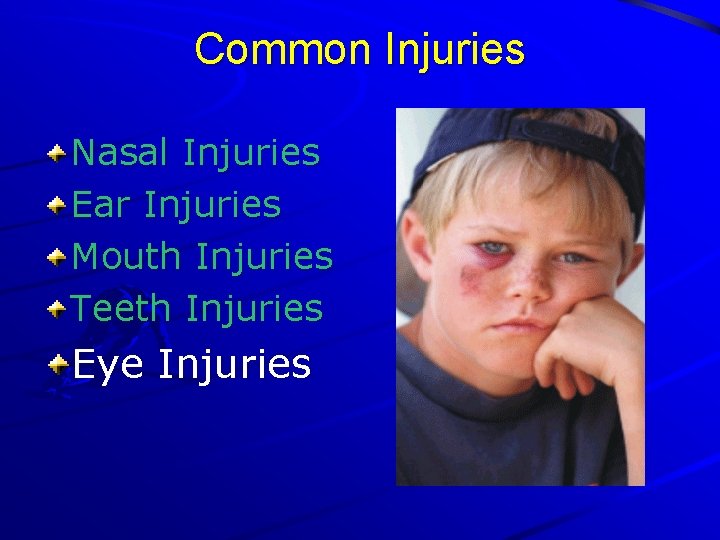
Common Injuries Nasal Injuries Ear Injuries Mouth Injuries Teeth Injuries Eye Injuries
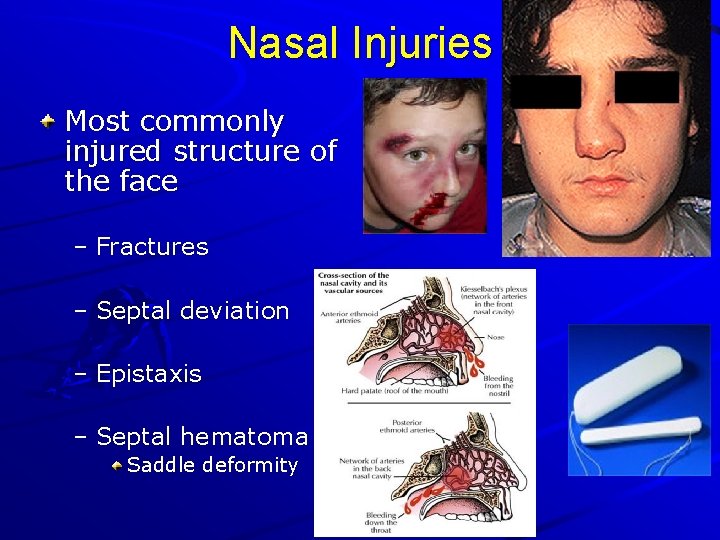
Nasal Injuries Most commonly injured structure of the face – Fractures – Septal deviation – Epistaxis – Septal hematoma Saddle deformity
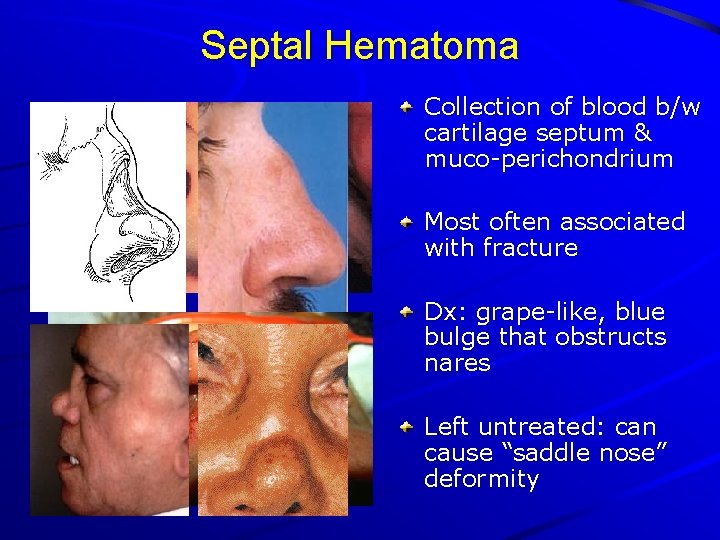
Septal Hematoma Collection of blood b/w cartilage septum & muco-perichondrium Most often associated with fracture Dx: grape-like, blue bulge that obstructs nares Left untreated: can cause “saddle nose” deformity
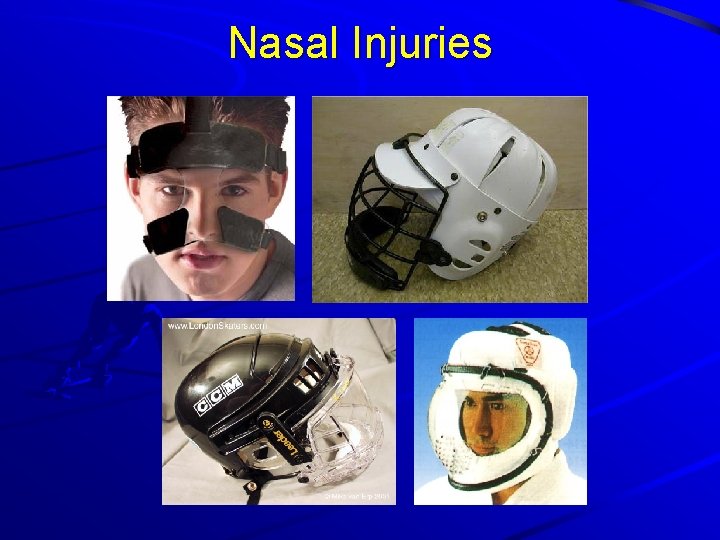
Nasal Injuries
Common Injuries Nasal Injuries Ear Injuries Mouth Injuries Teeth Injuries Eye Injuries
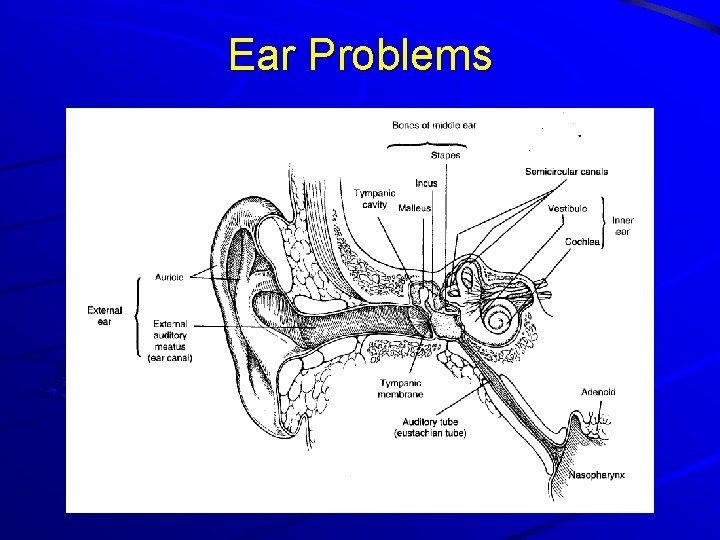
Ear Problems
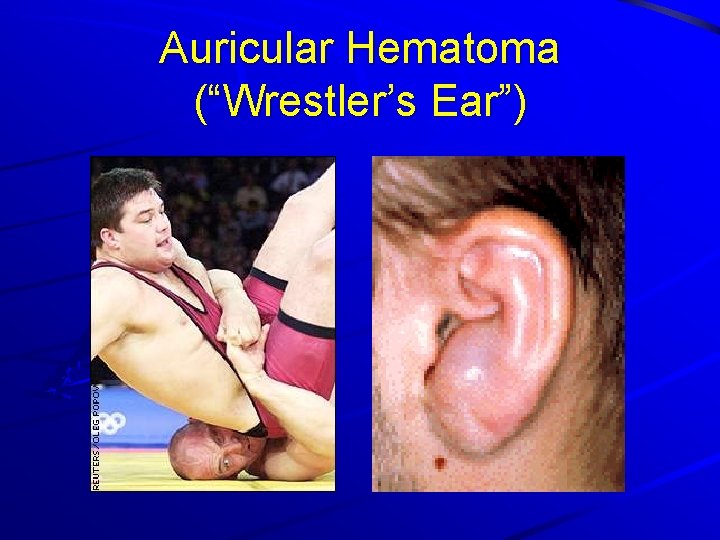
Auricular Hematoma (“Wrestler’s Ear”)
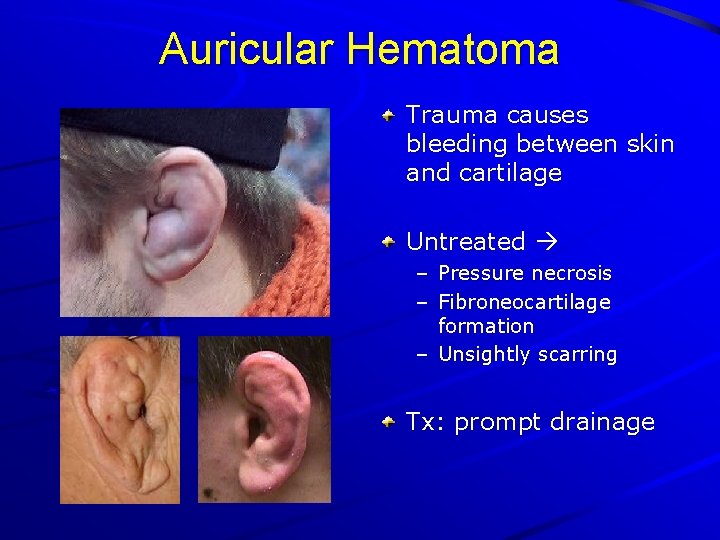
Auricular Hematoma Trauma causes bleeding between skin and cartilage Untreated – Pressure necrosis – Fibroneocartilage formation – Unsightly scarring Tx: prompt drainage
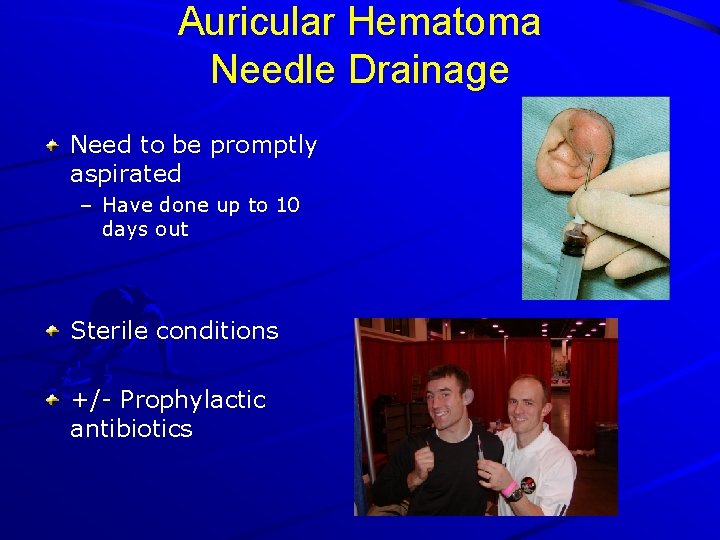
Auricular Hematoma Needle Drainage Need to be promptly aspirated – Have done up to 10 days out Sterile conditions +/- Prophylactic antibiotics
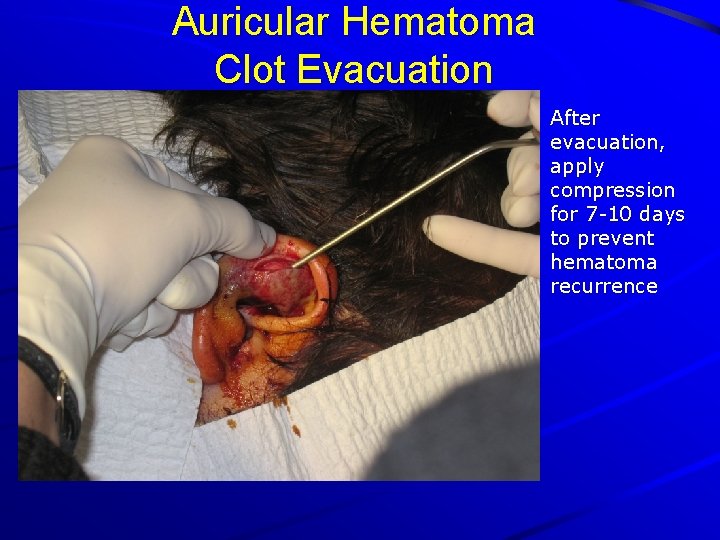
Auricular Hematoma Clot Evacuation After evacuation, apply compression for 7 -10 days to prevent hematoma recurrence
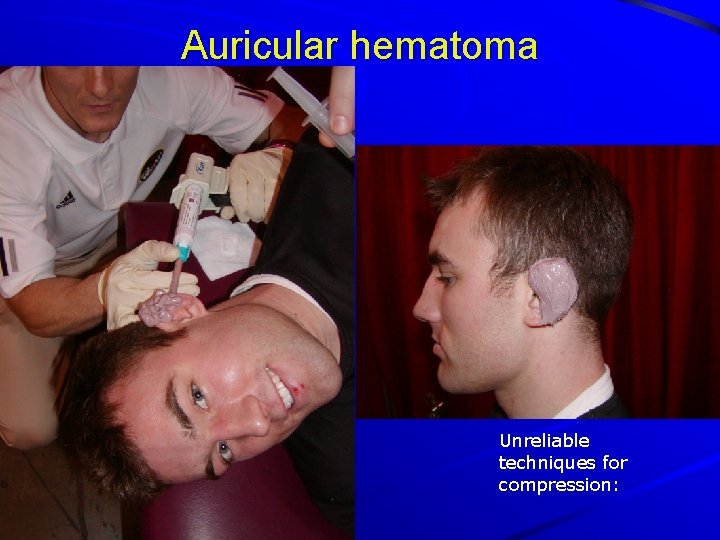
Auricular hematoma Unreliable techniques for compression:
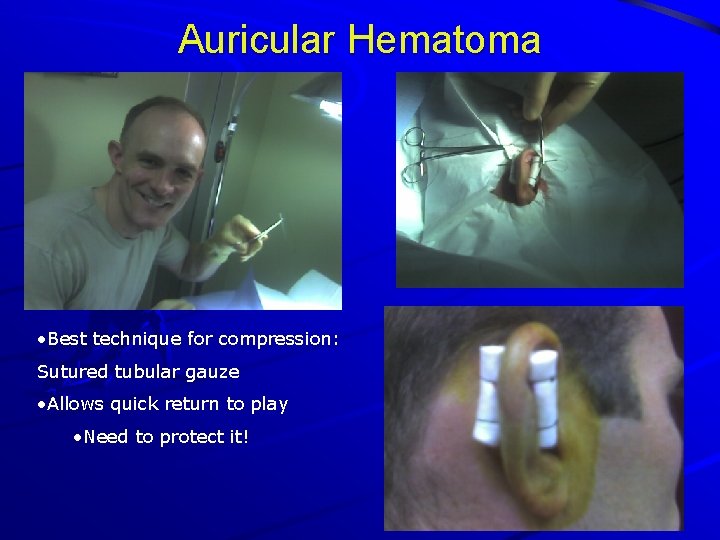
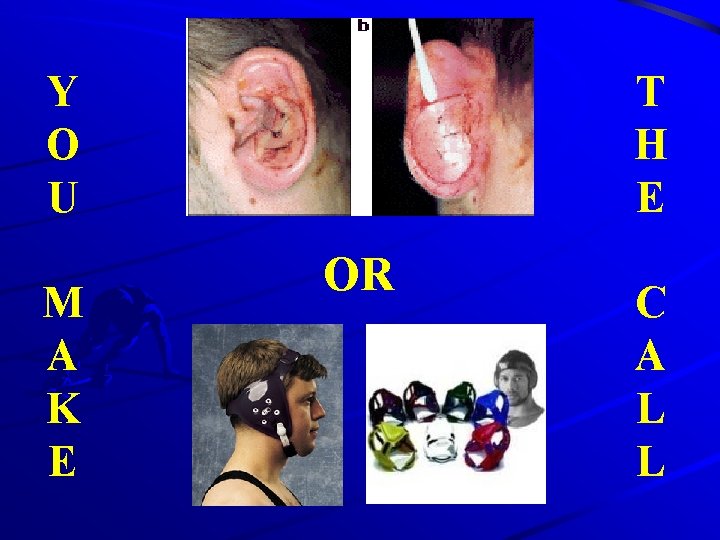
Auricular Hematoma • Best technique for compression: Sutured tubular gauze • Allows quick return to play • Need to protect it!
Y O U M A K E T H E OR C A L L
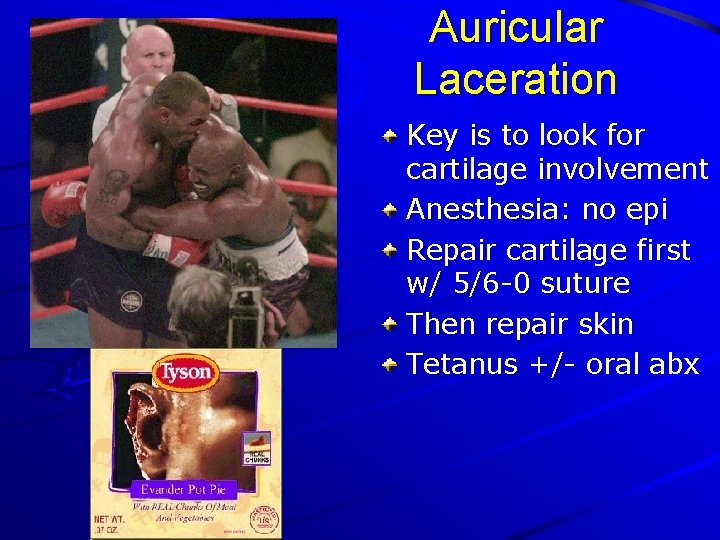
Auricular Laceration Key is to look for cartilage involvement Anesthesia: no epi Repair cartilage first w/ 5/6 -0 suture Then repair skin Tetanus +/- oral abx
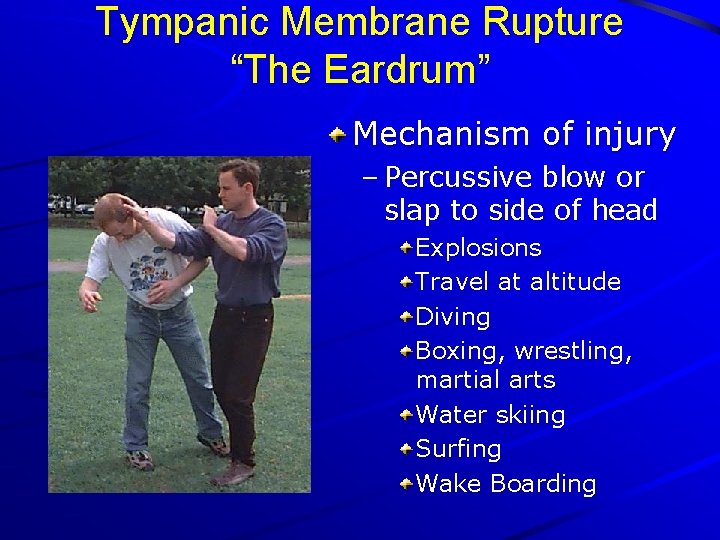
Tympanic Membrane Rupture “The Eardrum” Mechanism of injury – Percussive blow or slap to side of head Explosions Travel at altitude Diving Boxing, wrestling, martial arts Water skiing Surfing Wake Boarding
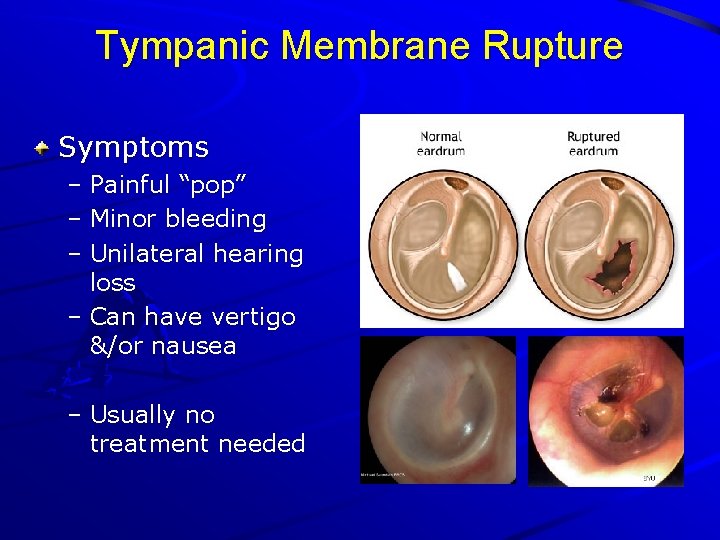
Tympanic Membrane Rupture Symptoms – Painful “pop” – Minor bleeding – Unilateral hearing loss – Can have vertigo &/or nausea – Usually no treatment needed
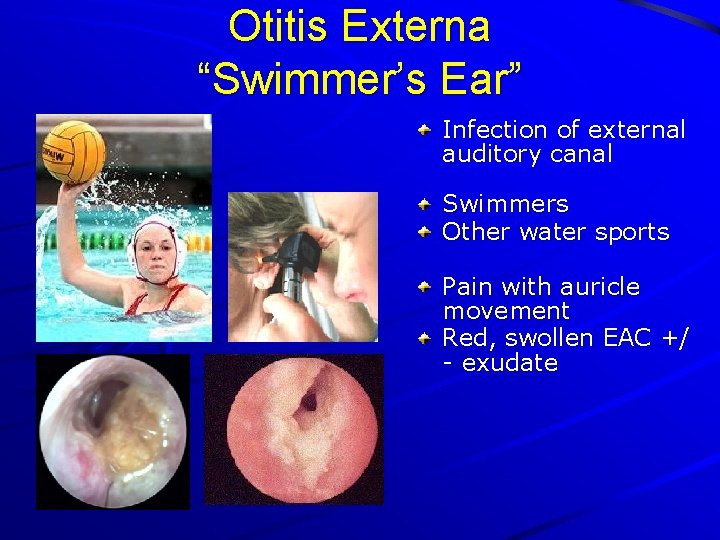
Otitis Externa “Swimmer’s Ear” Infection of external auditory canal Swimmers Other water sports Pain with auricle movement Red, swollen EAC +/ - exudate
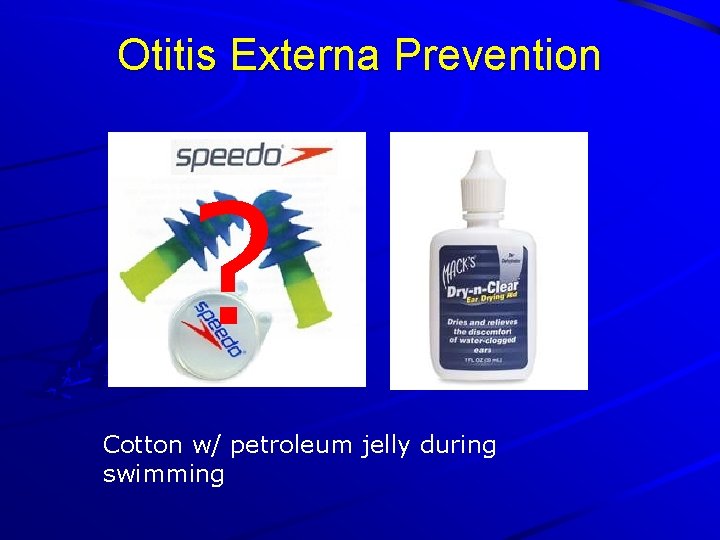
Otitis Externa Prevention ? Cotton w/ petroleum jelly during swimming
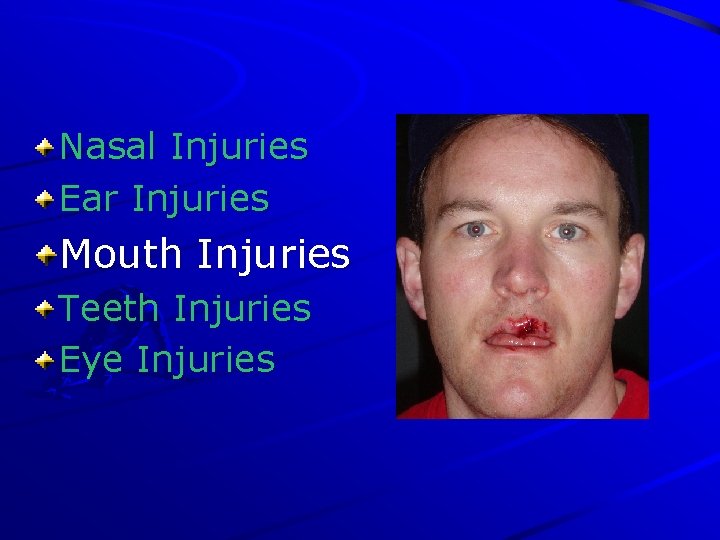
Nasal Injuries Ear Injuries Mouth Injuries Teeth Injuries Eye Injuries
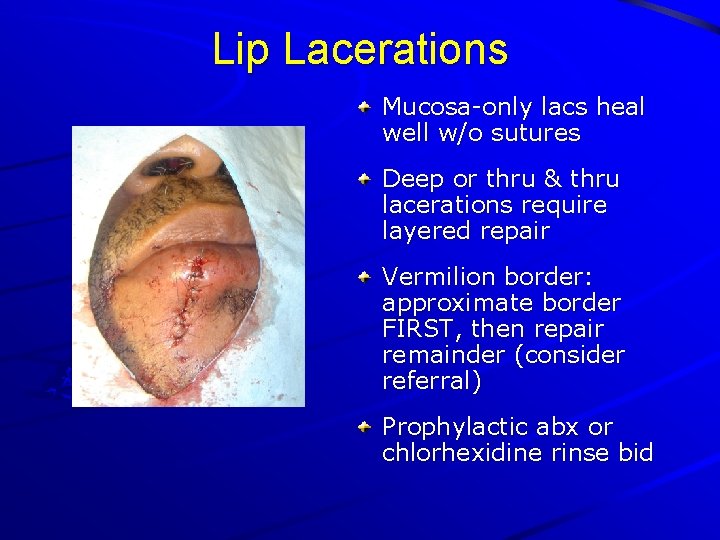
Lip Lacerations Mucosa-only lacs heal well w/o sutures Deep or thru & thru lacerations require layered repair Vermilion border: approximate border FIRST, then repair remainder (consider referral) Prophylactic abx or chlorhexidine rinse bid
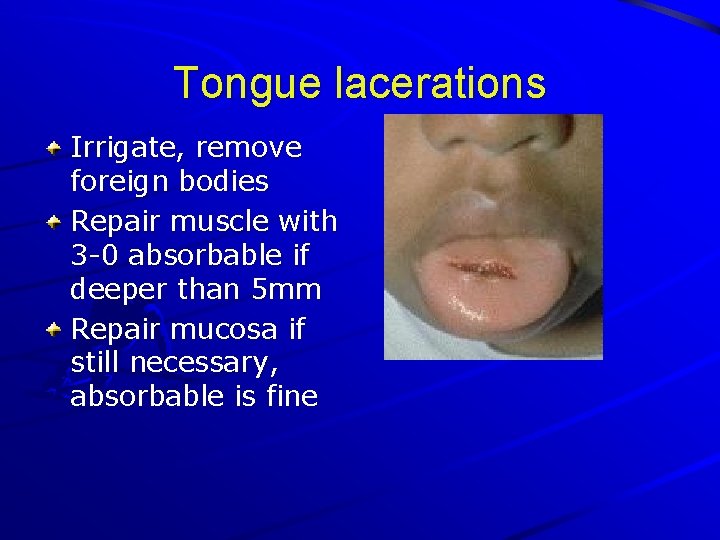
Tongue lacerations Irrigate, remove foreign bodies Repair muscle with 3 -0 absorbable if deeper than 5 mm Repair mucosa if still necessary, absorbable is fine
Common Injuries Nasal Injuries Ear Injuries Mouth Injuries Teeth Injuries Eye Injuries
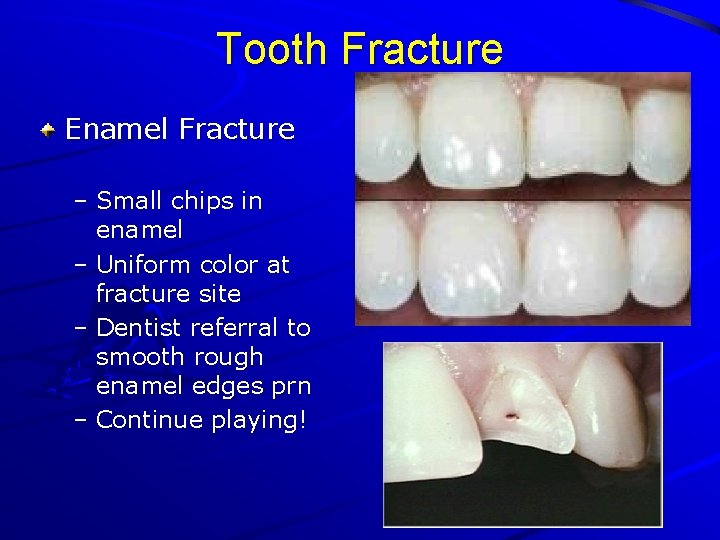
Tooth Fracture Enamel Fracture – Small chips in enamel – Uniform color at fracture site – Dentist referral to smooth rough enamel edges prn – Continue playing!
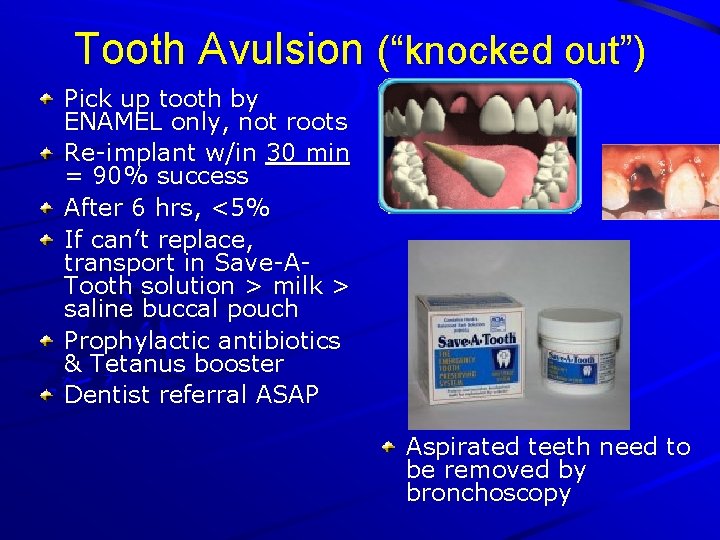
Tooth Avulsion (“knocked out”) Pick up tooth by ENAMEL only, not roots Re-implant w/in 30 min = 90% success After 6 hrs, <5% If can’t replace, transport in Save-ATooth solution > milk > saline buccal pouch Prophylactic antibiotics & Tetanus booster Dentist referral ASAP Aspirated teeth need to be removed by bronchoscopy
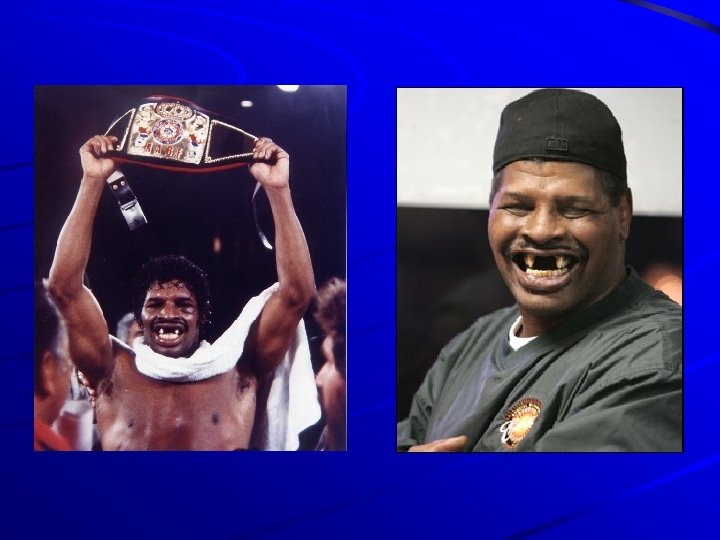
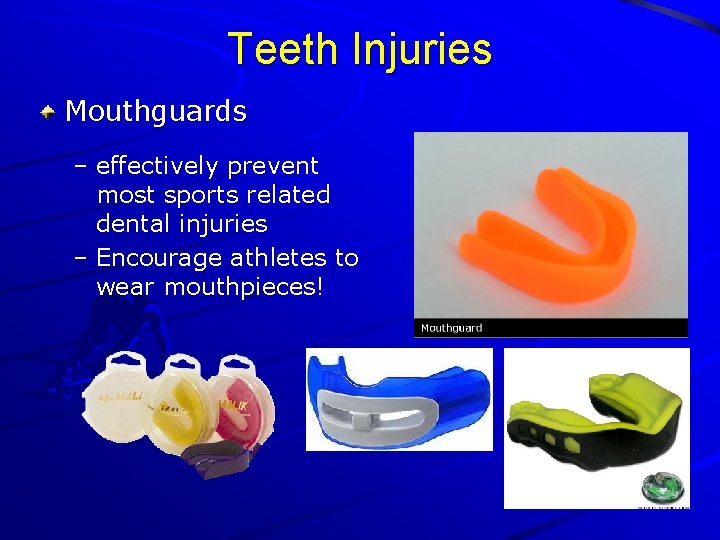
Teeth Injuries Mouthguards – effectively prevent most sports related dental injuries – Encourage athletes to wear mouthpieces!
Common Injuries Nasal Injuries Ear Injuries Mouth Injuries Teeth Injuries Eye Injuries
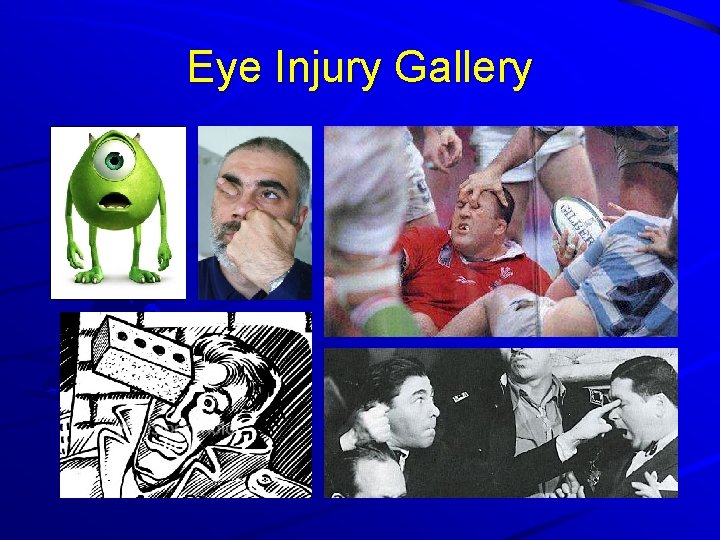
Eye Injury Gallery
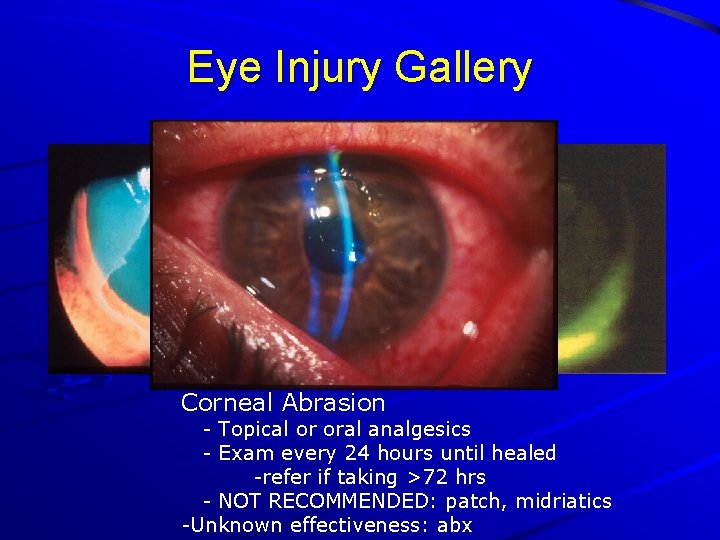
Eye Injury Gallery Corneal Abrasion - Topical or oral analgesics - Exam every 24 hours until healed -refer if taking >72 hrs - NOT RECOMMENDED: patch, midriatics -Unknown effectiveness: abx
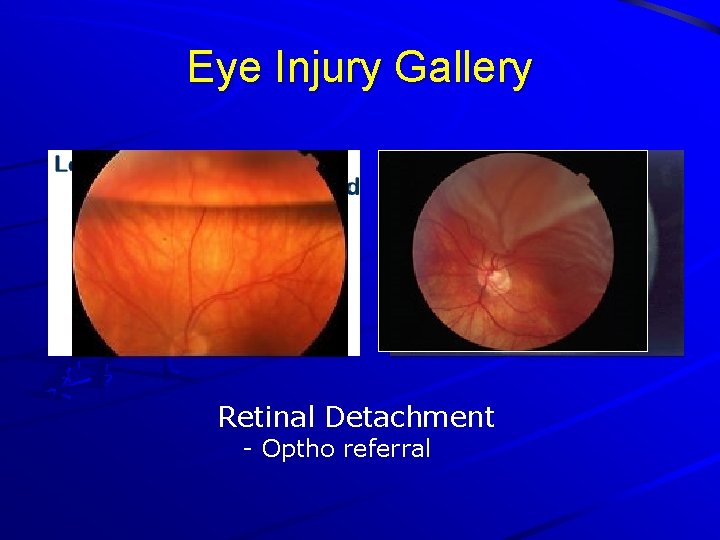
Eye Injury Gallery Retinal Detachment - Optho referral
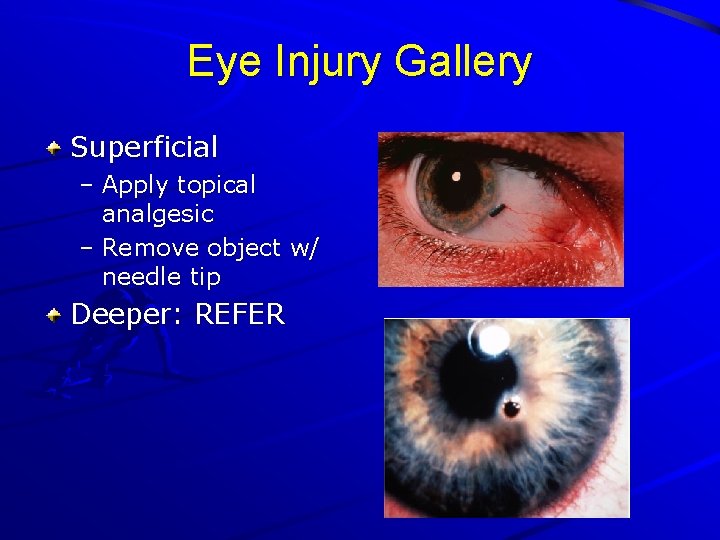
Eye Injury Gallery Superficial – Apply topical analgesic – Remove object w/ needle tip Deeper: REFER
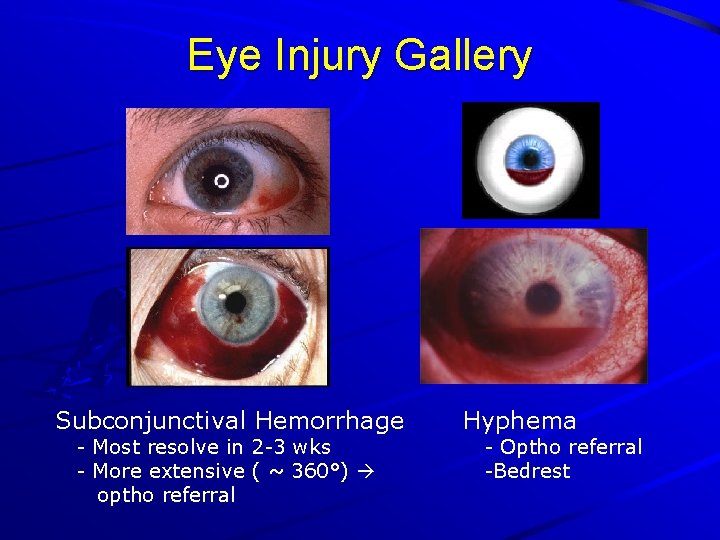
Eye Injury Gallery Subconjunctival Hemorrhage - Most resolve in 2 -3 wks - More extensive ( ~ 360°) optho referral Hyphema - Optho referral -Bedrest
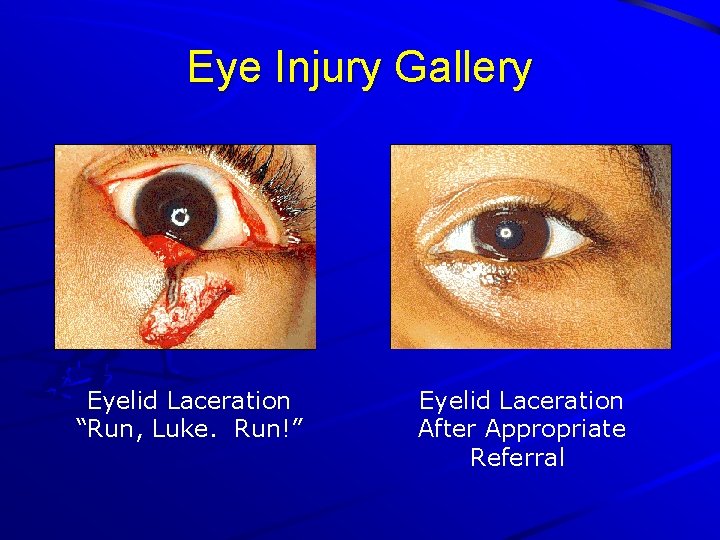
Eye Injury Gallery Eyelid Laceration “Run, Luke. Run!” Eyelid Laceration After Appropriate Referral
Questions?