
Face Detection and Recognition Lucas by Chuck Close

Face Detection and Recognition Lucas by Chuck Close, self portrait Computational Photography Derek Hoiem, University of Illinois Lecture by Kevin Karsch Some slides from Lana Lazebnik, Silvio Savarese, Fei-Fei Li 12/3/13

Administrative stuff • Final project write-up due Dec 17 th 11: 59 pm • Presentations Dec 18 th 1: 30 -4: 30 pm (SC 1214) • Exams back at end of class
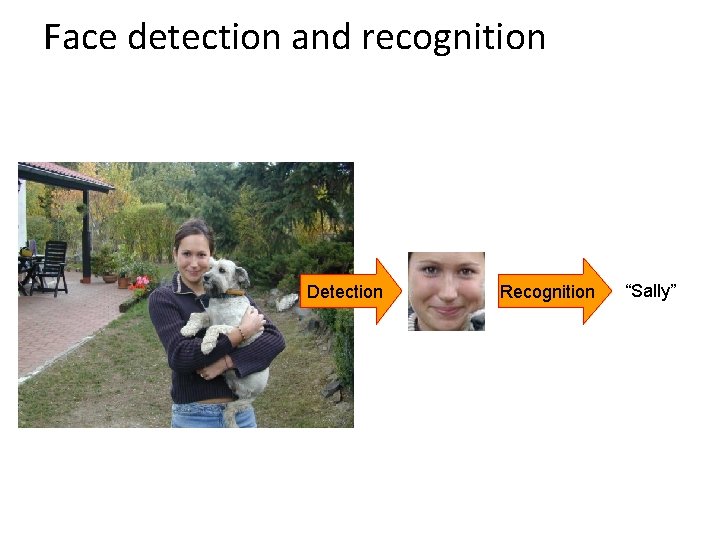
Face detection and recognition Detection Recognition “Sally”
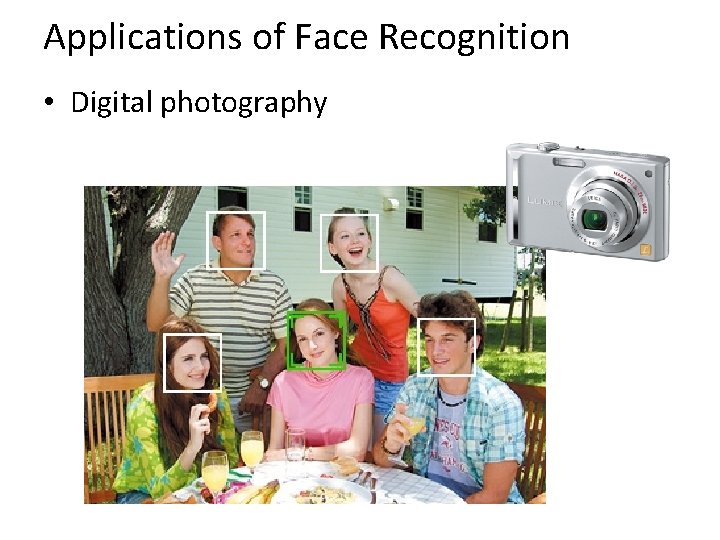
Applications of Face Recognition • Digital photography
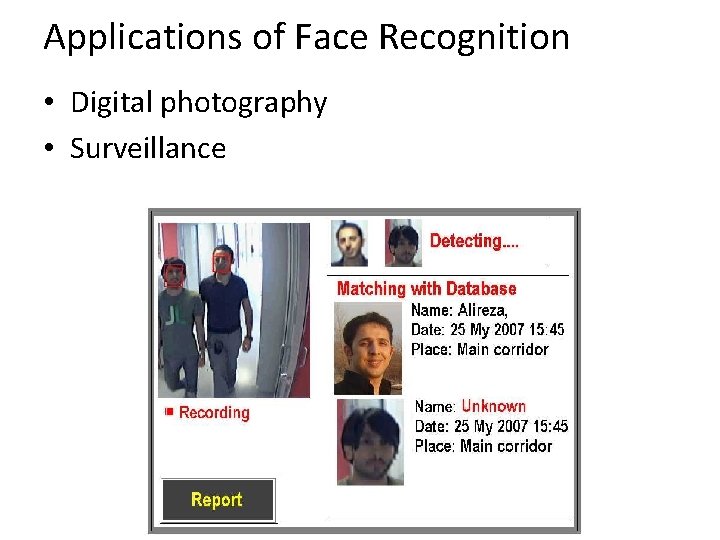
Applications of Face Recognition • Digital photography • Surveillance
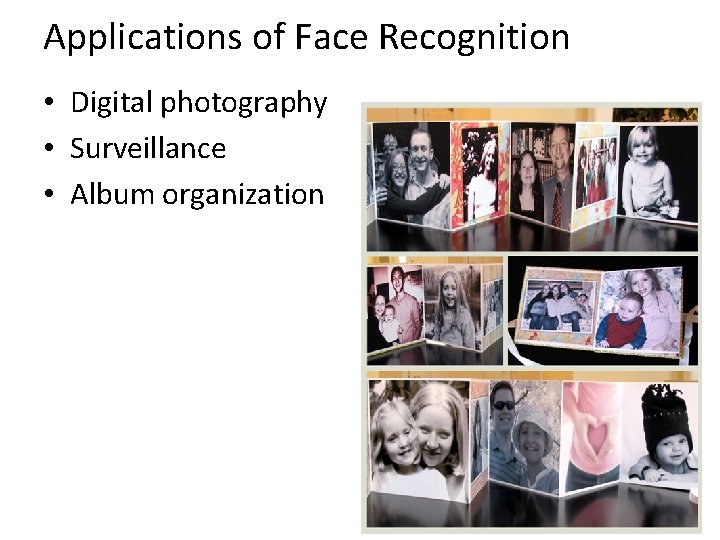
Applications of Face Recognition • Digital photography • Surveillance • Album organization
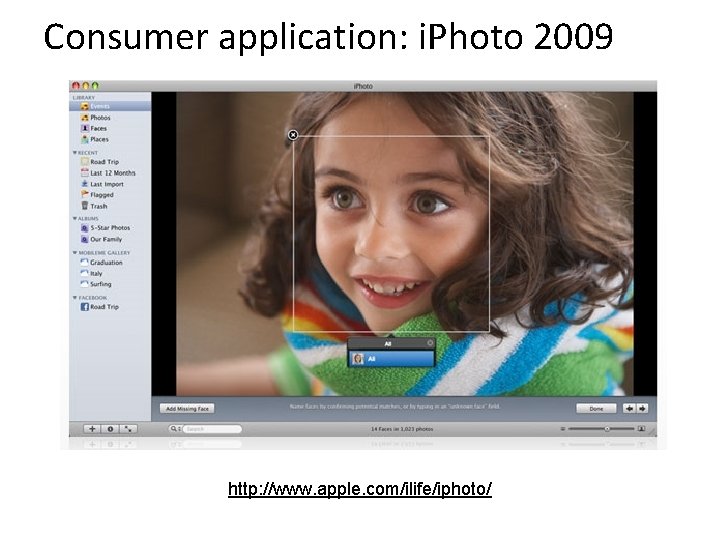
Consumer application: i. Photo 2009 http: //www. apple. com/ilife/iphoto/
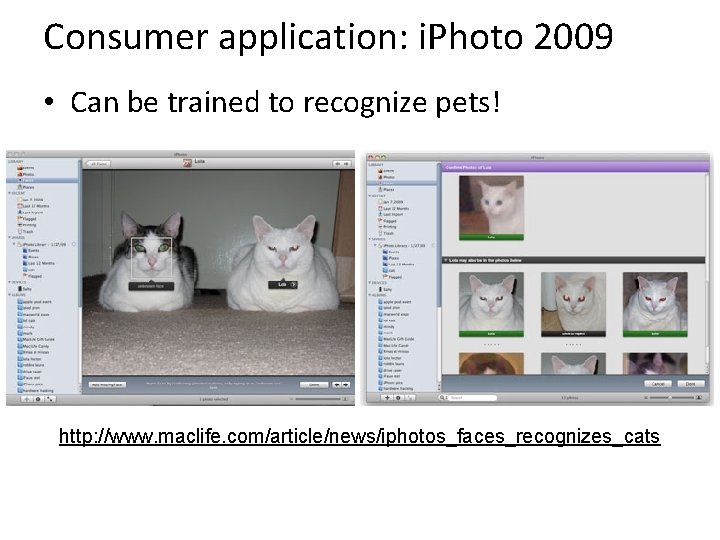
Consumer application: i. Photo 2009 • Can be trained to recognize pets! http: //www. maclife. com/article/news/iphotos_faces_recognizes_cats

What does a face look like?
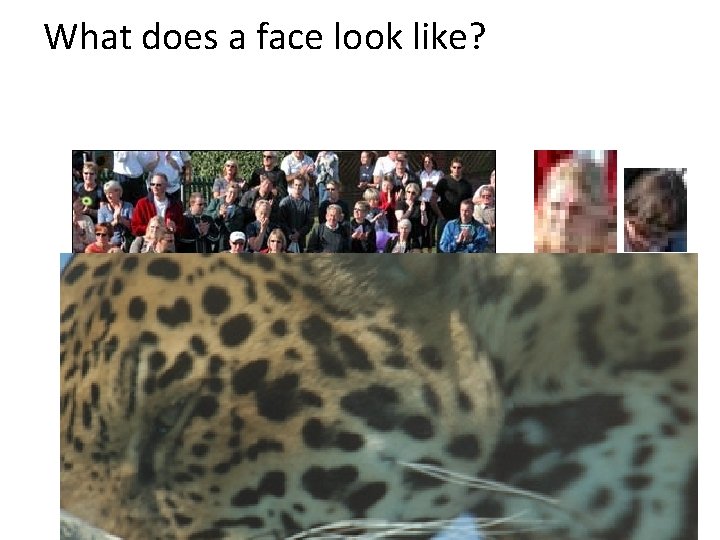
What does a face look like?
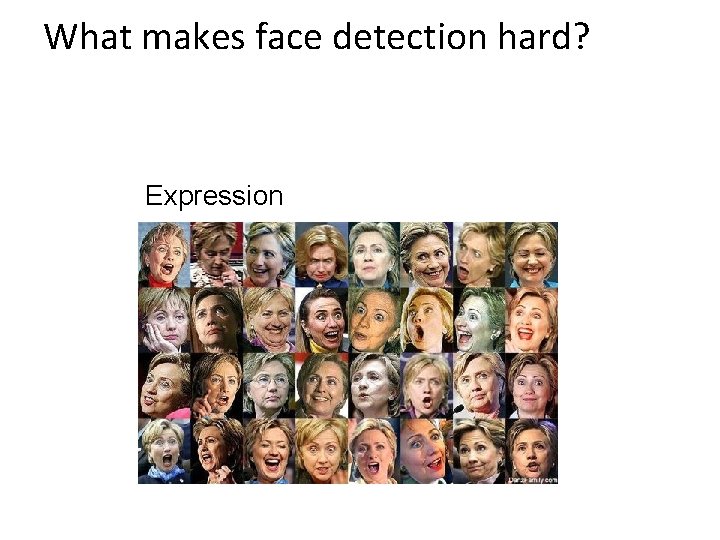
What makes face detection hard? Expression
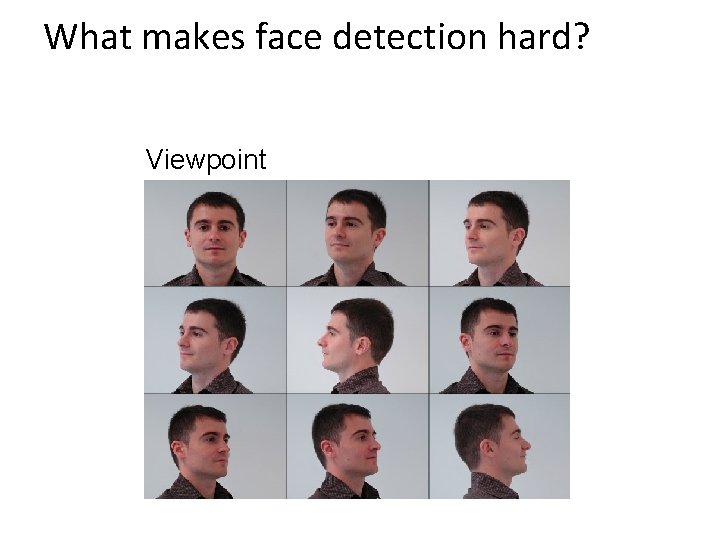
What makes face detection hard? Viewpoint
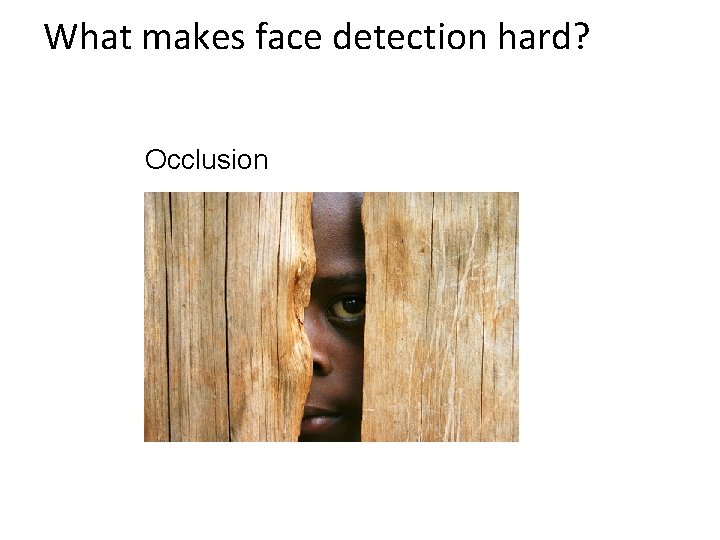
What makes face detection hard? Occlusion
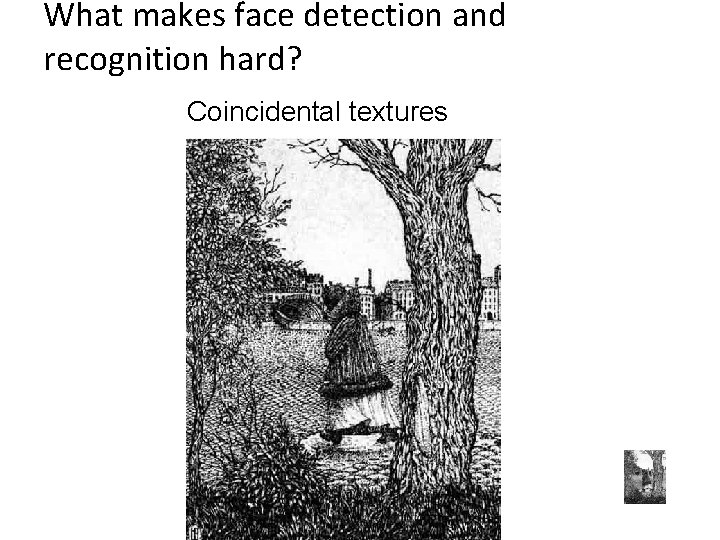
What makes face detection and recognition hard? Coincidental textures
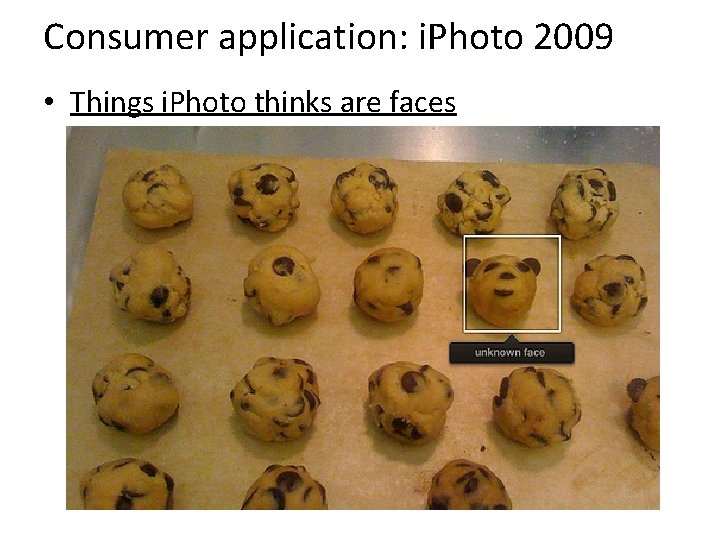
Consumer application: i. Photo 2009 • Things i. Photo thinks are faces
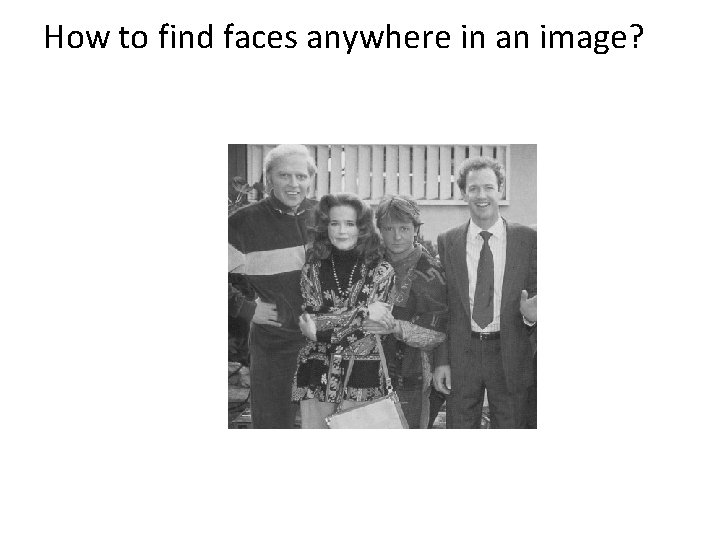
How to find faces anywhere in an image?
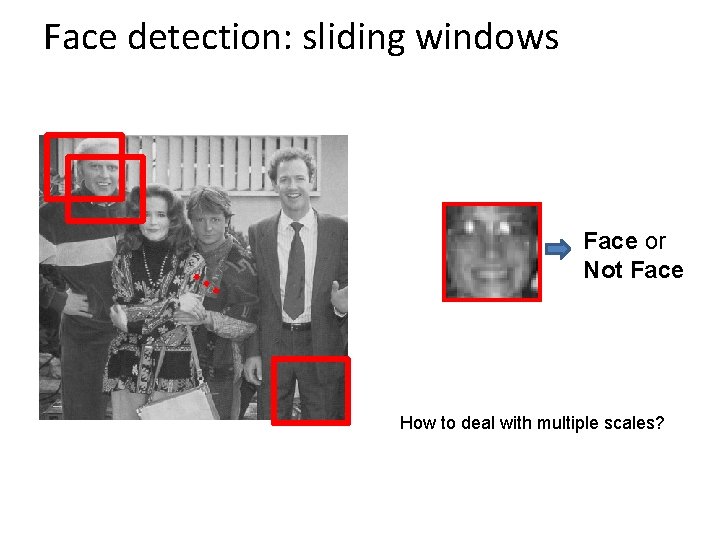
Face detection: sliding windows … Face or Not Face How to deal with multiple scales?
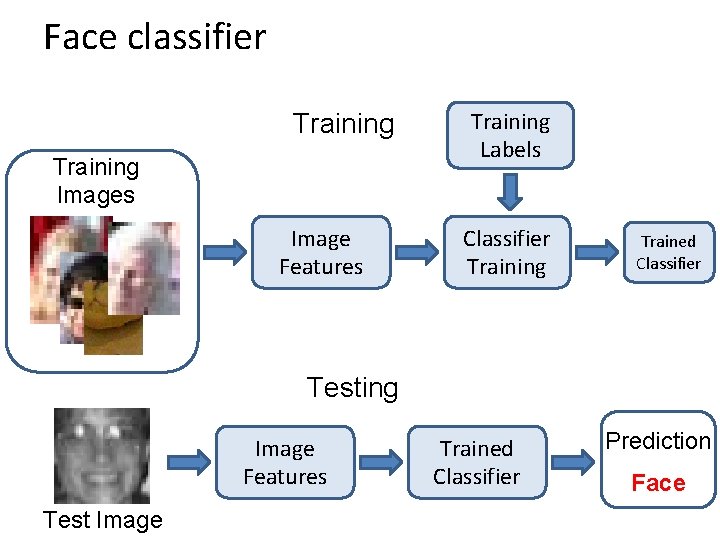
Face classifier Training Images Image Features Training Labels Classifier Training Trained Classifier Testing Image Features Test Image Trained Classifier Prediction Face
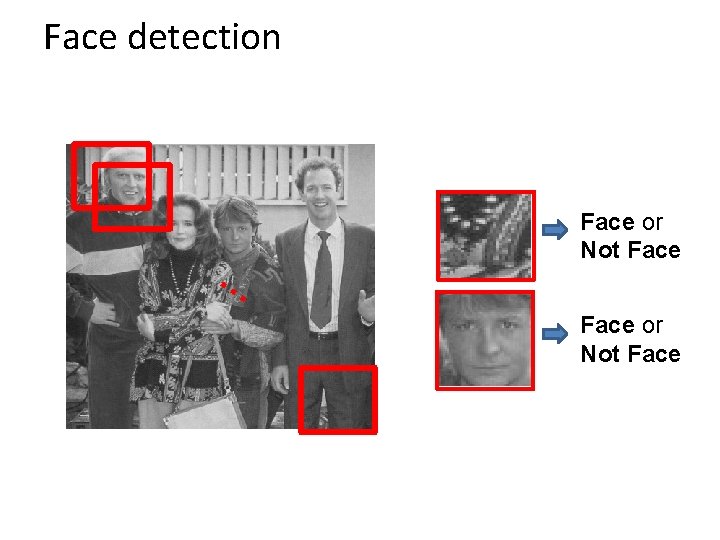
Face detection … Face or Not Face
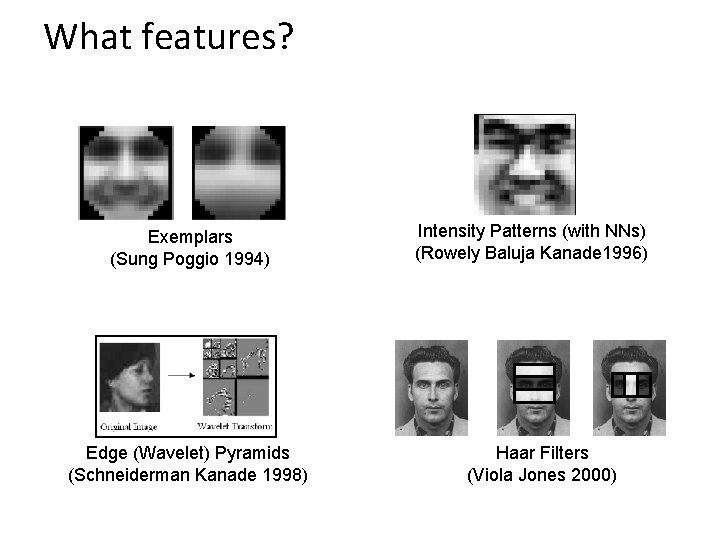
What features? Exemplars (Sung Poggio 1994) Edge (Wavelet) Pyramids (Schneiderman Kanade 1998) Intensity Patterns (with NNs) (Rowely Baluja Kanade 1996) Haar Filters (Viola Jones 2000)
How to classify? • Many ways – Neural networks – Adaboost – SVMs – Nearest neighbor
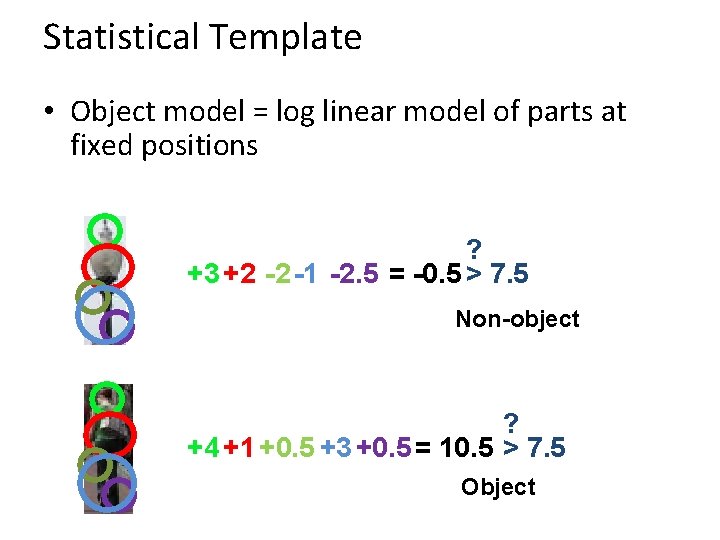
Statistical Template • Object model = log linear model of parts at fixed positions ? +3 +2 -2 -1 -2. 5 = -0. 5 > 7. 5 Non-object ? +4 +1 +0. 5 +3 +0. 5 = 10. 5 > 7. 5 Object
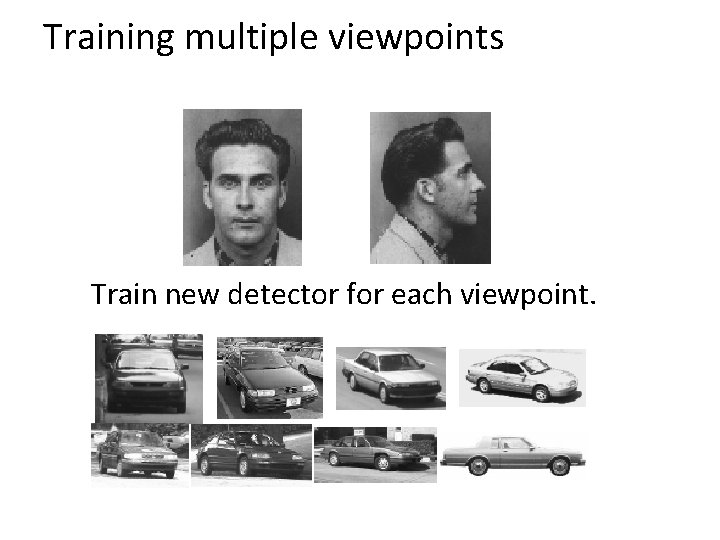
Training multiple viewpoints Train new detector for each viewpoint.
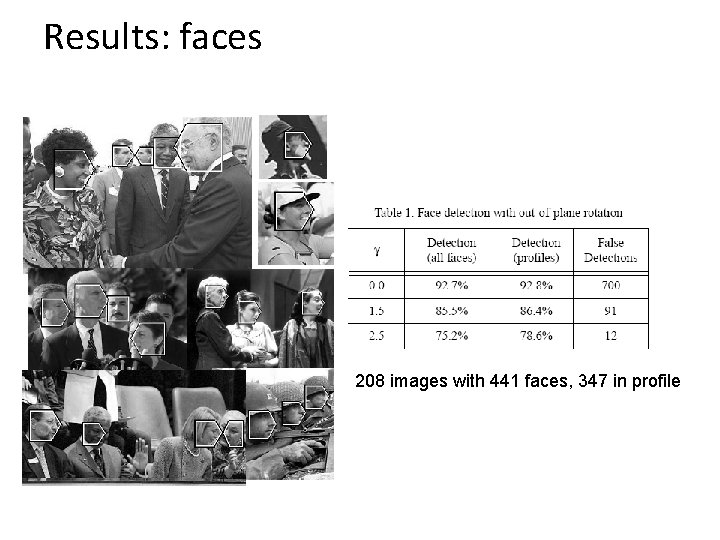
Results: faces 208 images with 441 faces, 347 in profile
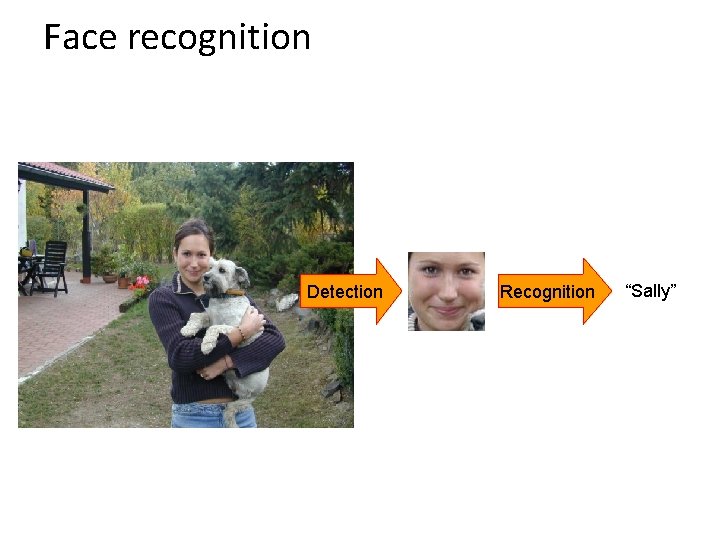
Face recognition Detection Recognition “Sally”
Face recognition • Typical scenario: few examples per face, identify or verify test example • What’s hard: changes in expression, lighting, age, occlusion, viewpoint • Basic approaches (all nearest neighbor) 1. Project into a new subspace (or kernel space) (e. g. , “Eigenfaces”=PCA) 2. Measure face features 3. Make 3 d face model, compare shape+appearance (e. g. , AAM)

Simple idea 1. Treat pixels as a vector 2. Recognize face by nearest neighbor
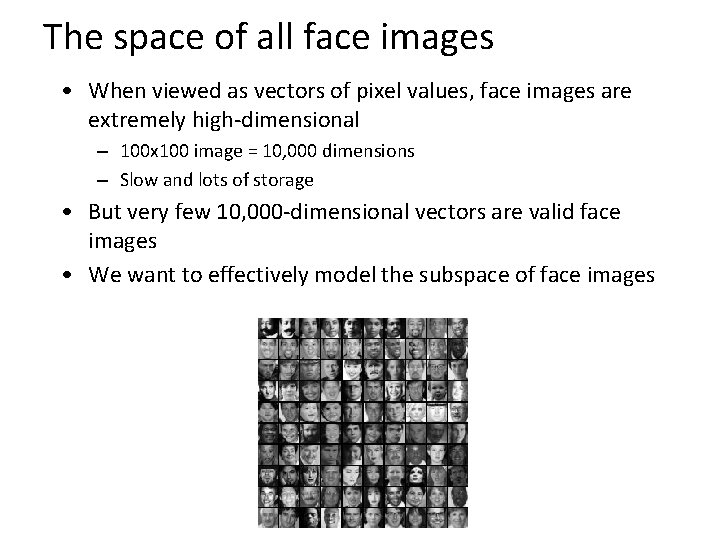
The space of all face images • When viewed as vectors of pixel values, face images are extremely high-dimensional – 100 x 100 image = 10, 000 dimensions – Slow and lots of storage • But very few 10, 000 -dimensional vectors are valid face images • We want to effectively model the subspace of face images
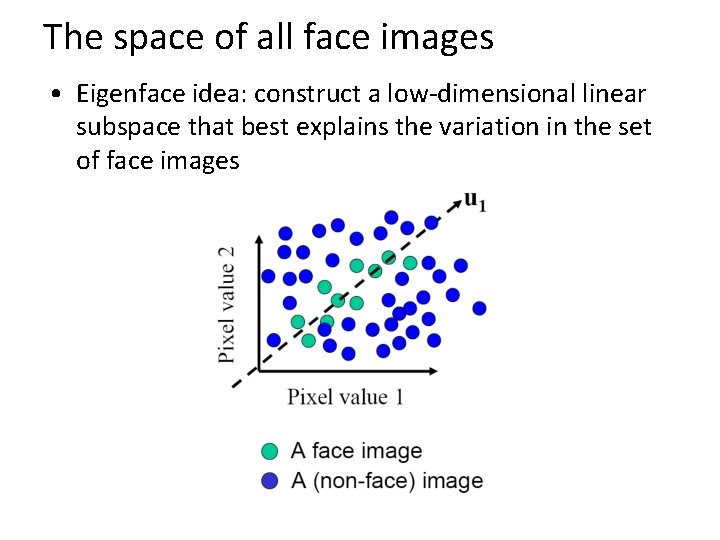
The space of all face images • Eigenface idea: construct a low-dimensional linear subspace that best explains the variation in the set of face images
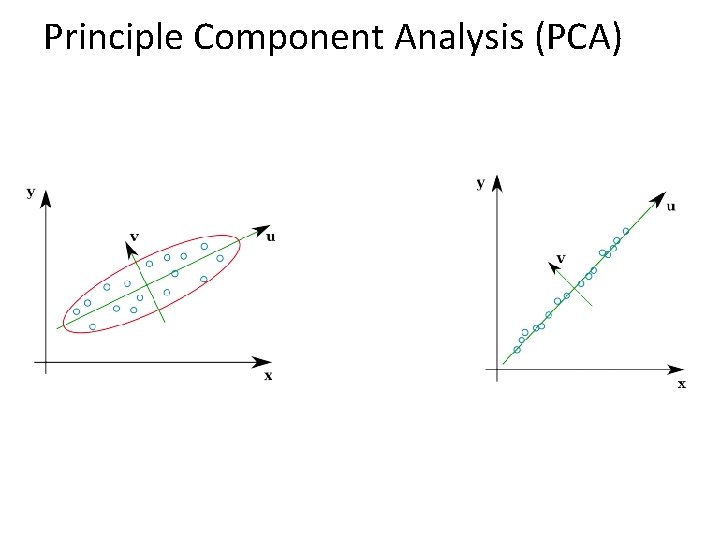
Principle Component Analysis (PCA)
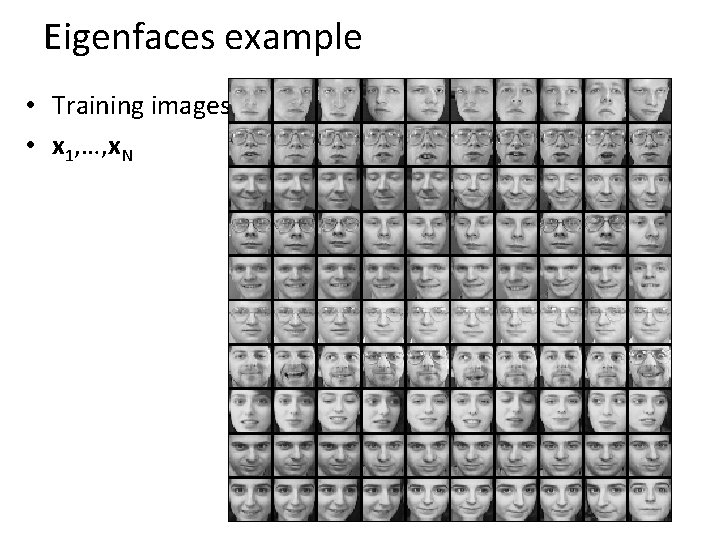
Eigenfaces example • Training images • x 1, …, x. N
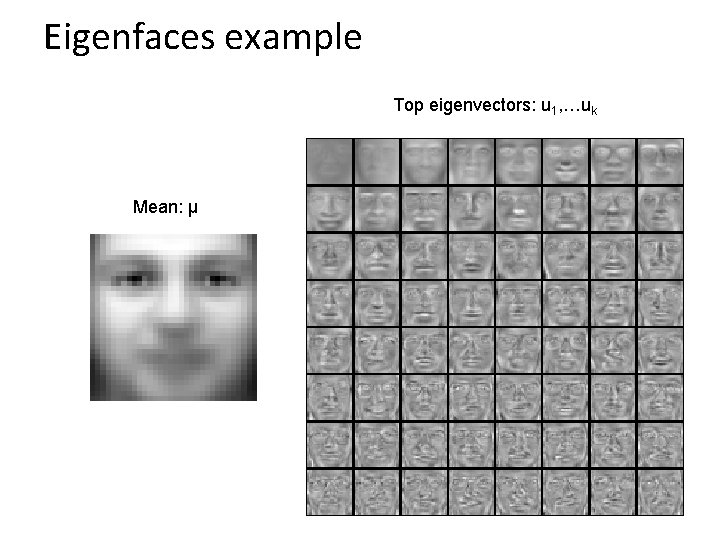
Eigenfaces example Top eigenvectors: u 1, …uk Mean: μ
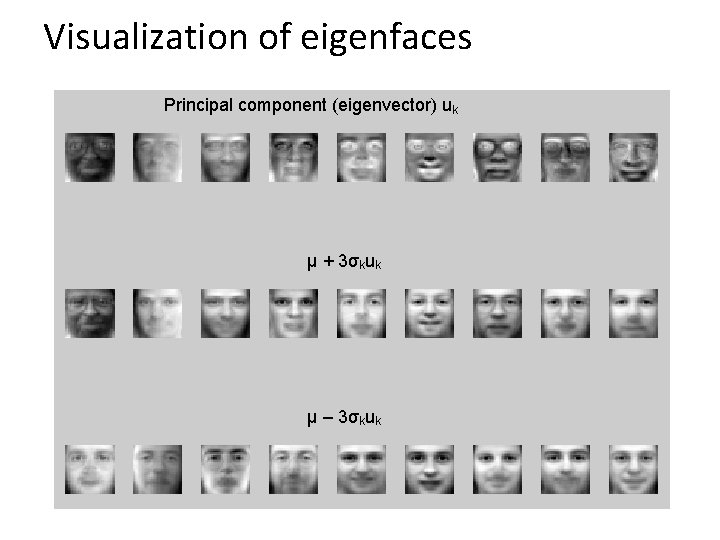
Visualization of eigenfaces Principal component (eigenvector) uk μ + 3σkuk μ – 3σkuk
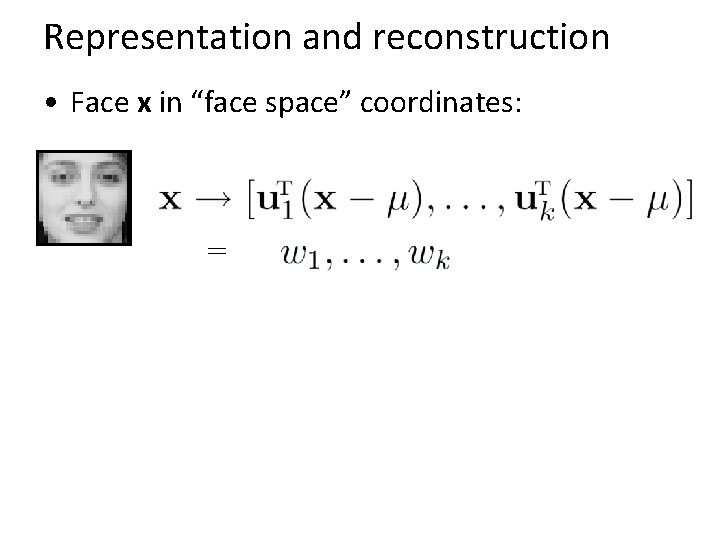
Representation and reconstruction • Face x in “face space” coordinates: =
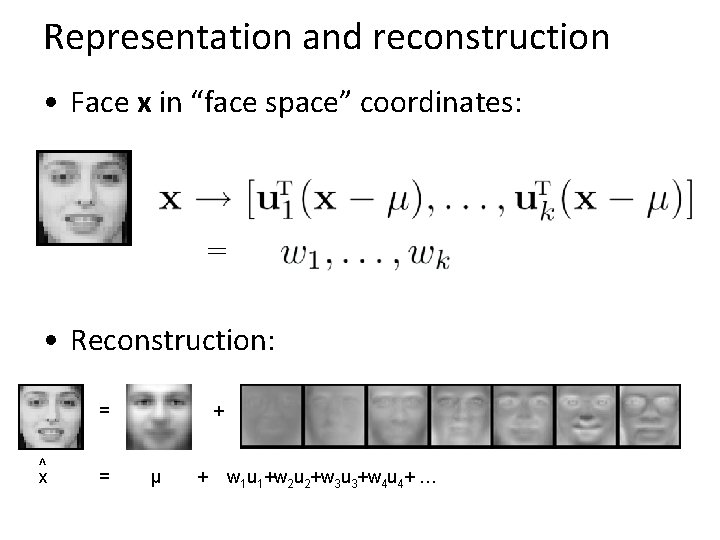
Representation and reconstruction • Face x in “face space” coordinates: = • Reconstruction: = ^ x = + µ + w 1 u 1+w 2 u 2+w 3 u 3+w 4 u 4+ …
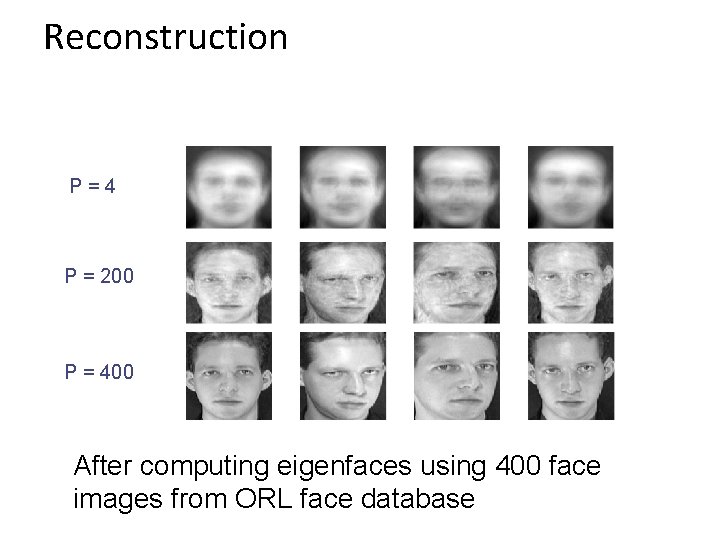
Reconstruction P=4 P = 200 P = 400 After computing eigenfaces using 400 face images from ORL face database
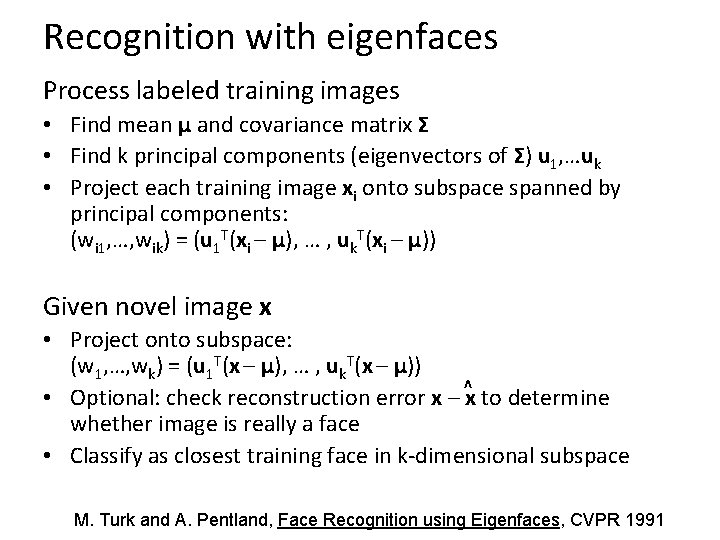
Recognition with eigenfaces Process labeled training images • Find mean µ and covariance matrix Σ • Find k principal components (eigenvectors of Σ) u 1, …uk • Project each training image xi onto subspace spanned by principal components: (wi 1, …, wik) = (u 1 T(xi – µ), … , uk. T(xi – µ)) Given novel image x • Project onto subspace: (w 1, …, wk) = (u 1 T(x – µ), … , uk. T(x – µ)) • Optional: check reconstruction error x – ^x to determine whether image is really a face • Classify as closest training face in k-dimensional subspace M. Turk and A. Pentland, Face Recognition using Eigenfaces, CVPR 1991
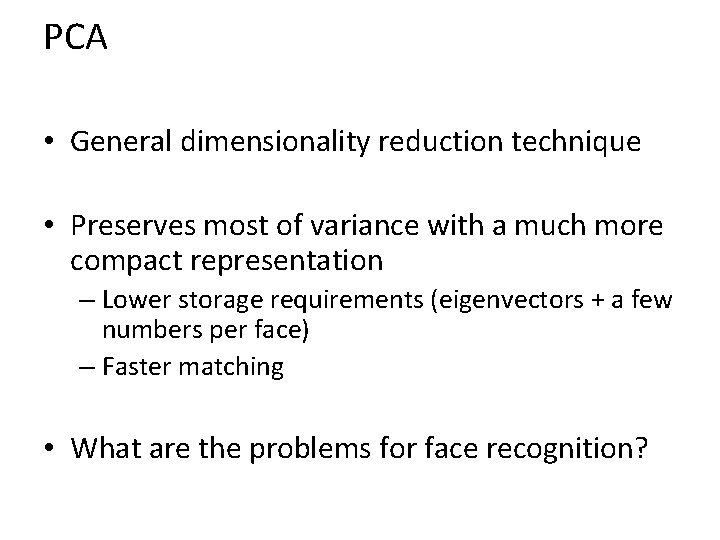
PCA • General dimensionality reduction technique • Preserves most of variance with a much more compact representation – Lower storage requirements (eigenvectors + a few numbers per face) – Faster matching • What are the problems for face recognition?
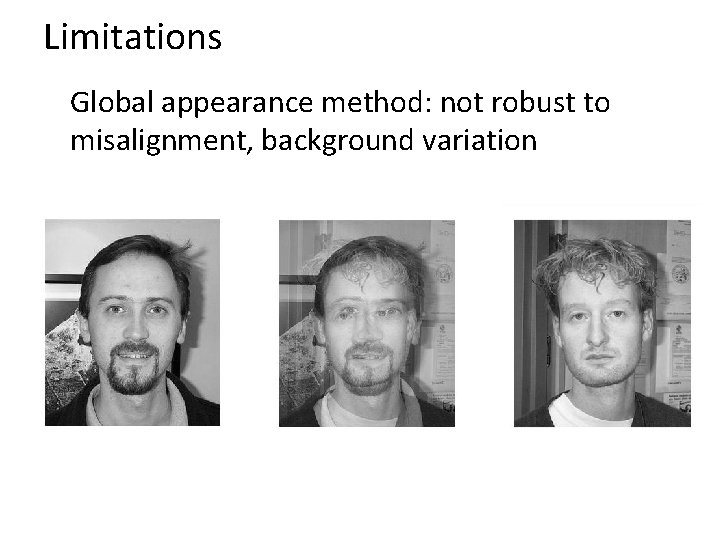
Limitations Global appearance method: not robust to misalignment, background variation
Face recognition by humans: 20 results (2005) Slides by Jianchao Yang
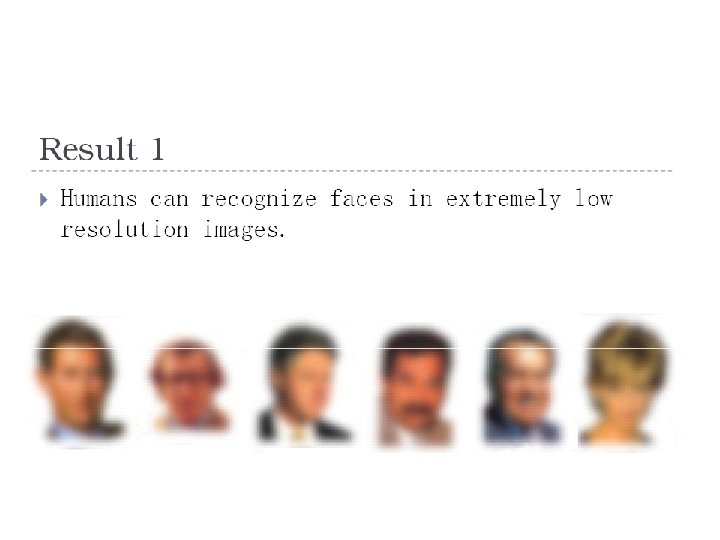
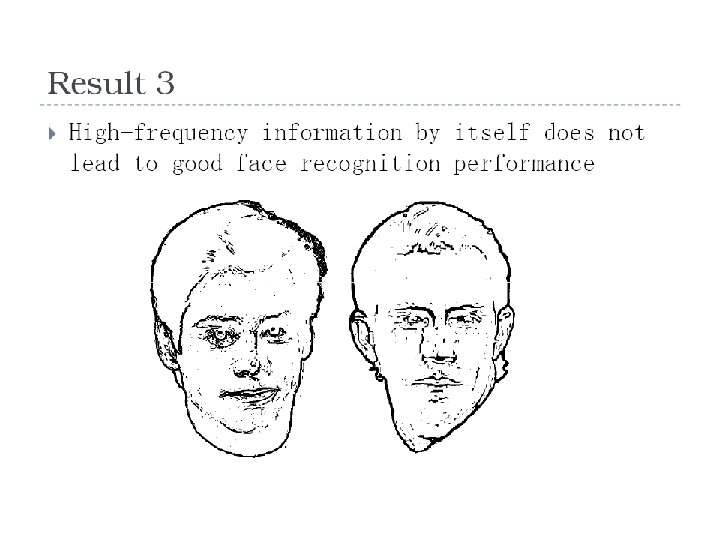
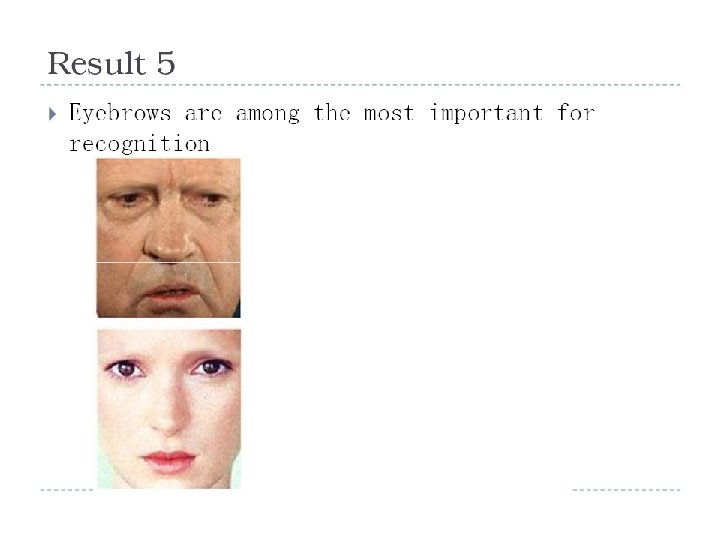
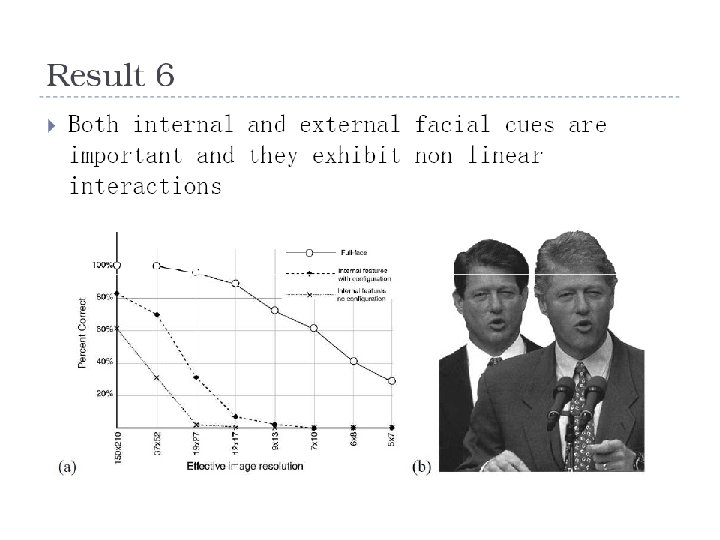
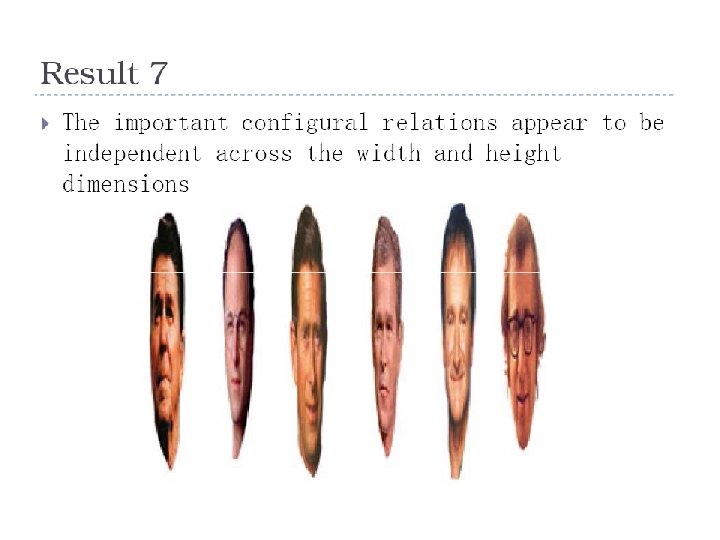
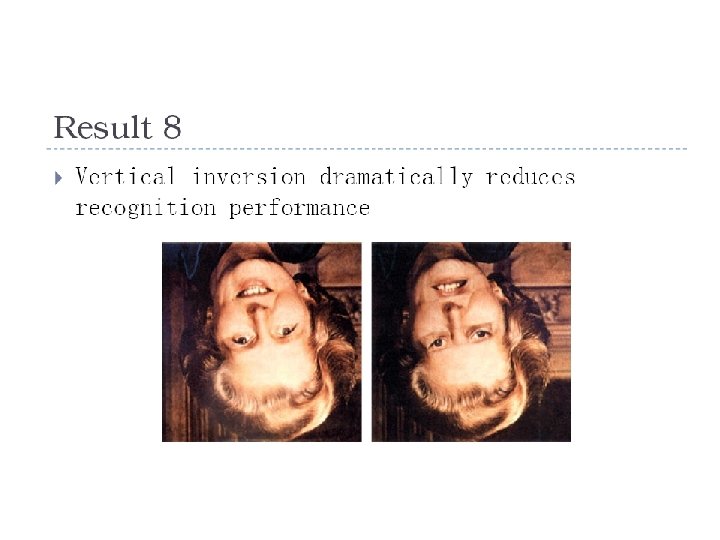
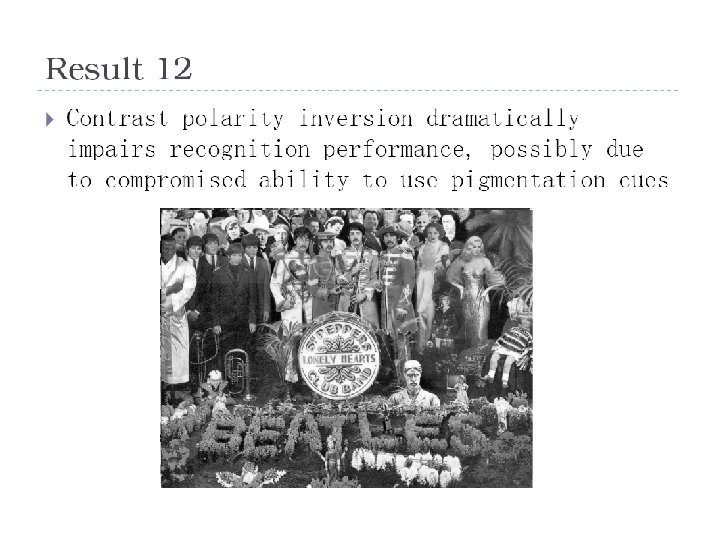
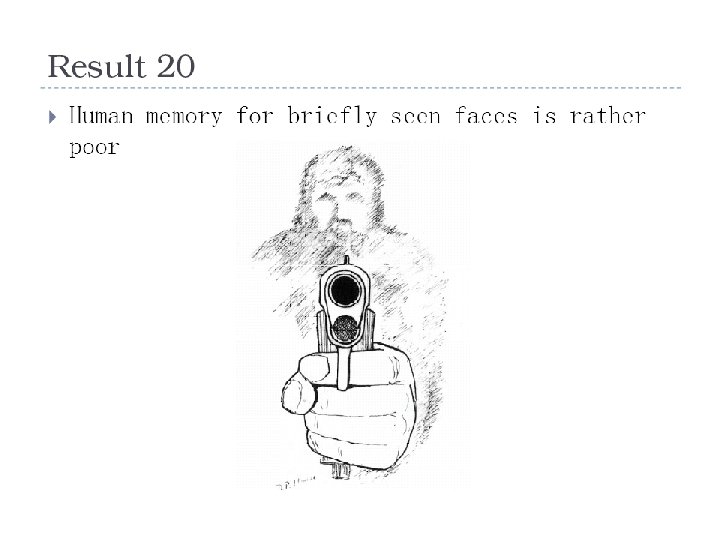
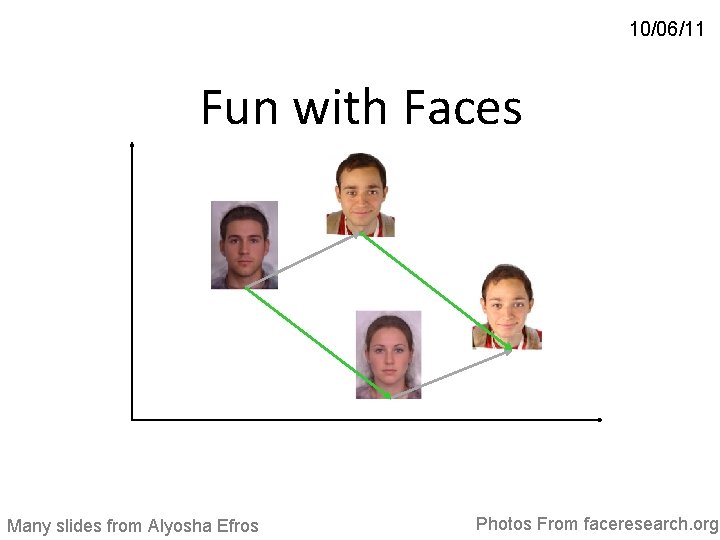
10/06/11 Fun with Faces Many slides from Alyosha Efros Photos From faceresearch. org
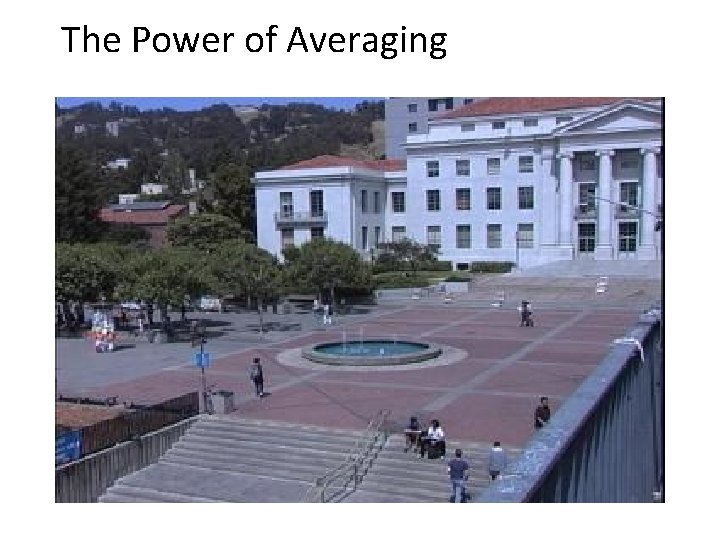
The Power of Averaging
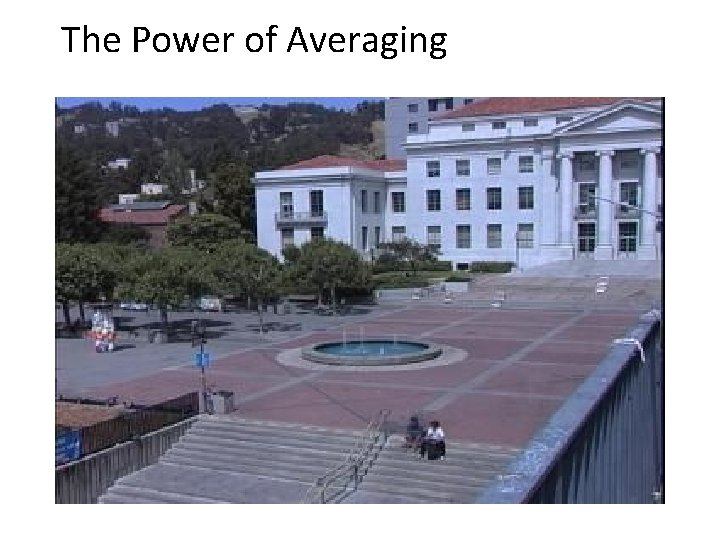
The Power of Averaging
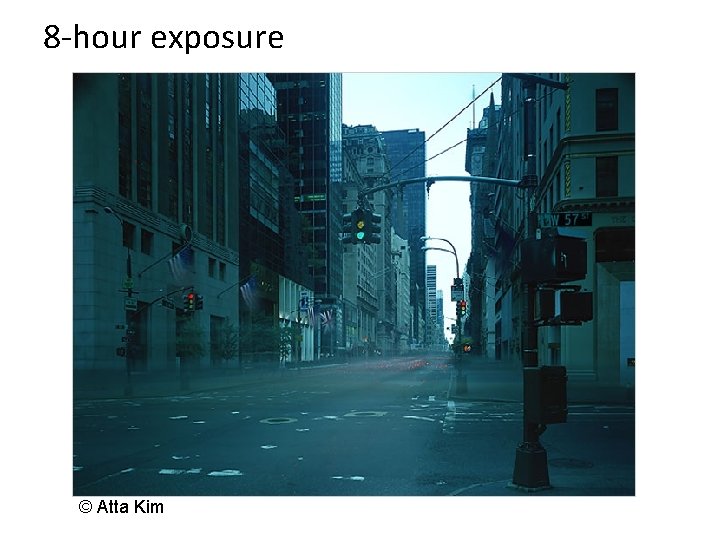
8 -hour exposure © Atta Kim
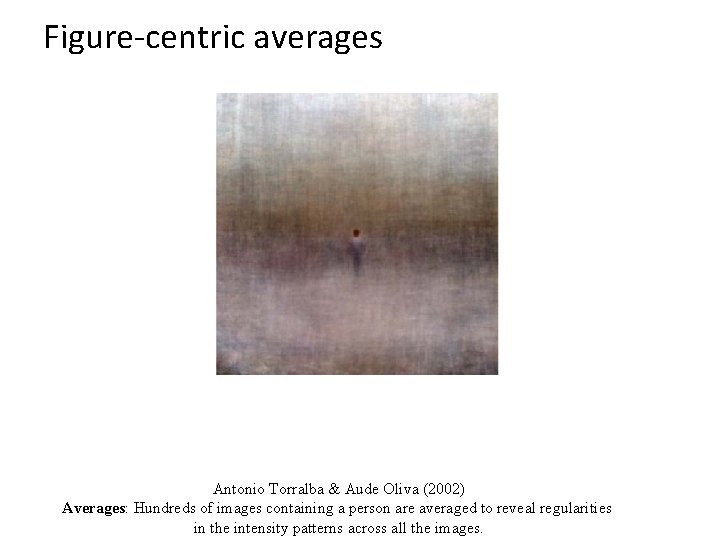
Figure-centric averages Antonio Torralba & Aude Oliva (2002) Averages: Hundreds of images containing a person are averaged to reveal regularities in the intensity patterns across all the images.
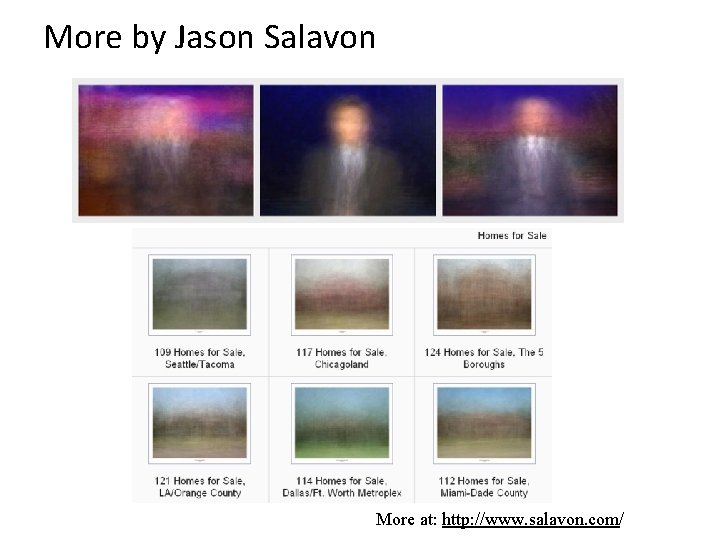
More by Jason Salavon More at: http: //www. salavon. com/
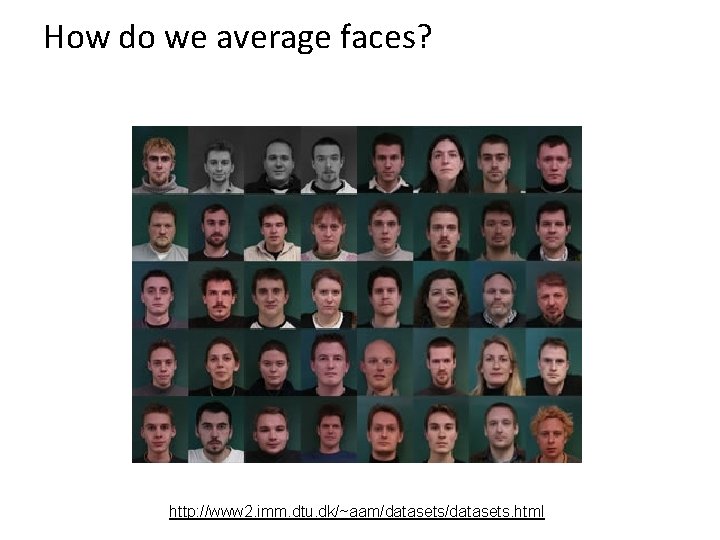
How do we average faces? http: //www 2. imm. dtu. dk/~aam/datasets. html
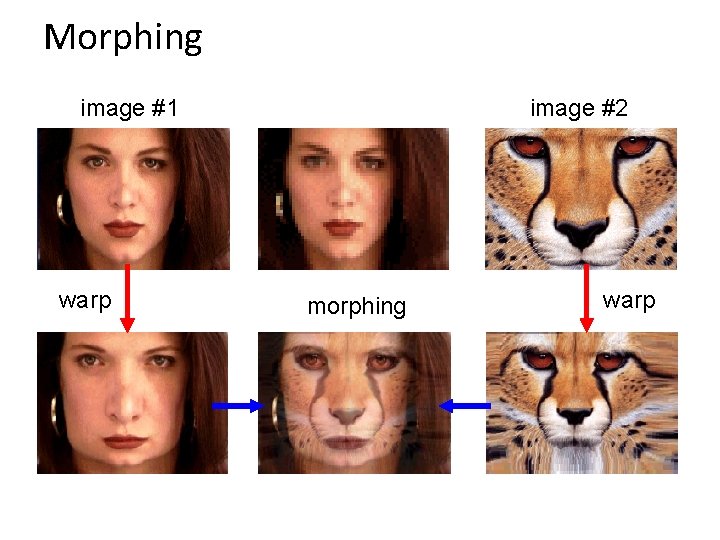
Morphing image #1 warp image #2 morphing warp
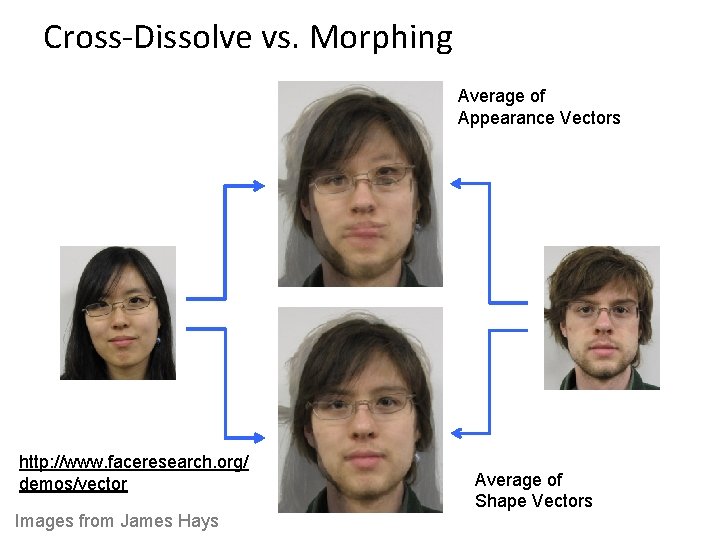
Cross-Dissolve vs. Morphing Average of Appearance Vectors http: //www. faceresearch. org/ demos/vector Images from James Hays Average of Shape Vectors

Average of multiple Face 1. Warp to mean shape 2. Average pixels http: //www. faceresearch. org/demos/average http: //graphics. cmu. edu/courses/15 -463/2004_fall/www/handins/brh/final/

Appearance Vectors vs. Shape Vectors Appearance Vector of 200*150*3 Dimensions • 200*150 pixels (RGB) Vector of 43*2 Dimensions Shape Vector 43 coordinates (x, y) • Requires Annotation Provides alignment!
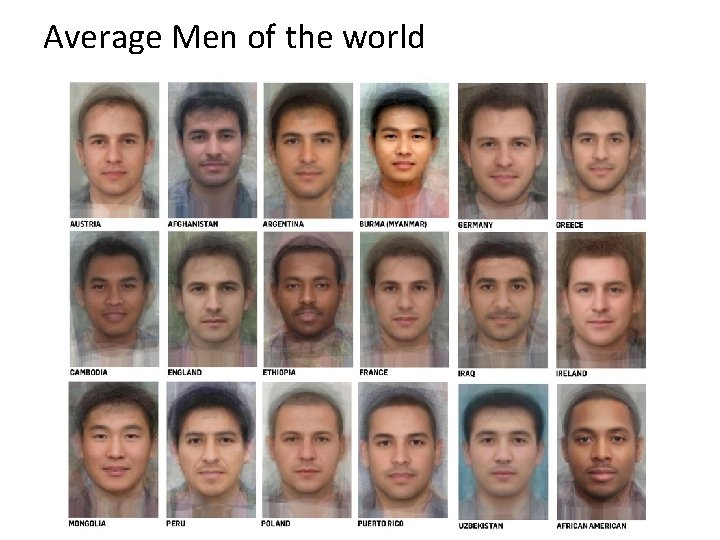
Average Men of the world

Average Women of the world
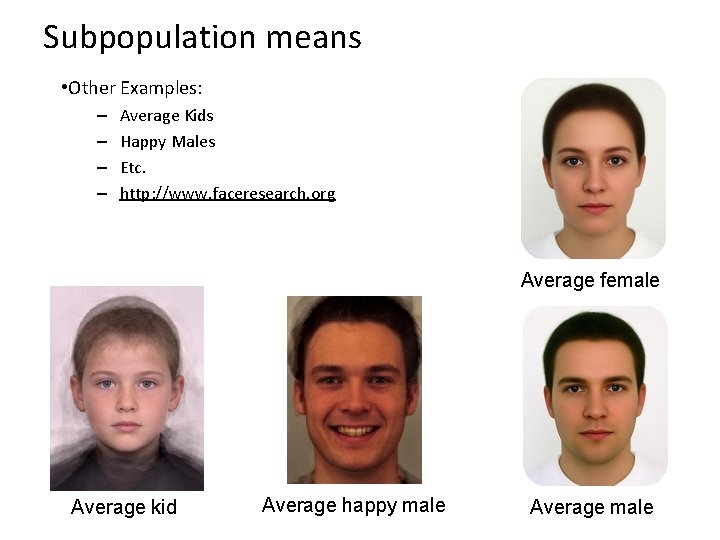
Subpopulation means • Other Examples: – – Average Kids Happy Males Etc. http: //www. faceresearch. org Average female Average kid Average happy male Average male
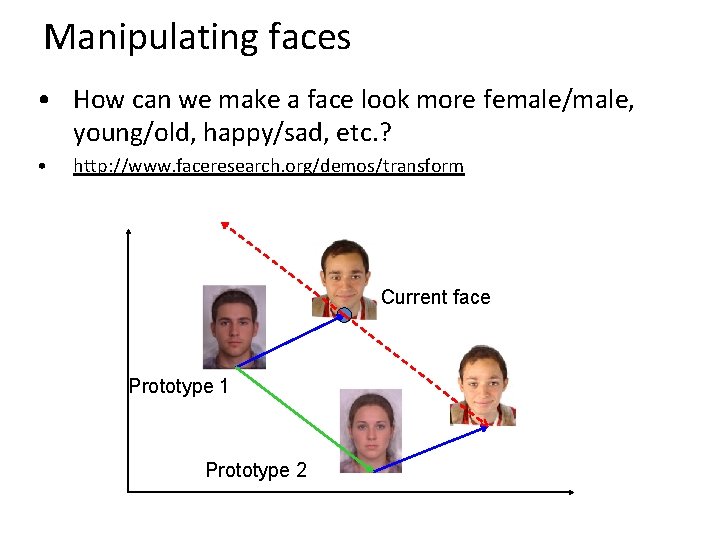
Manipulating faces • How can we make a face look more female/male, young/old, happy/sad, etc. ? • http: //www. faceresearch. org/demos/transform Current face Prototype 1 Prototype 2
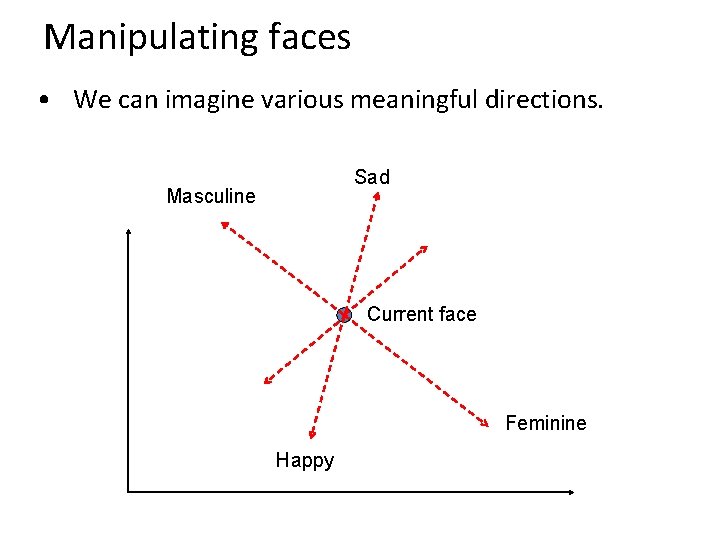
Manipulating faces • We can imagine various meaningful directions. Sad Masculine Current face Feminine Happy
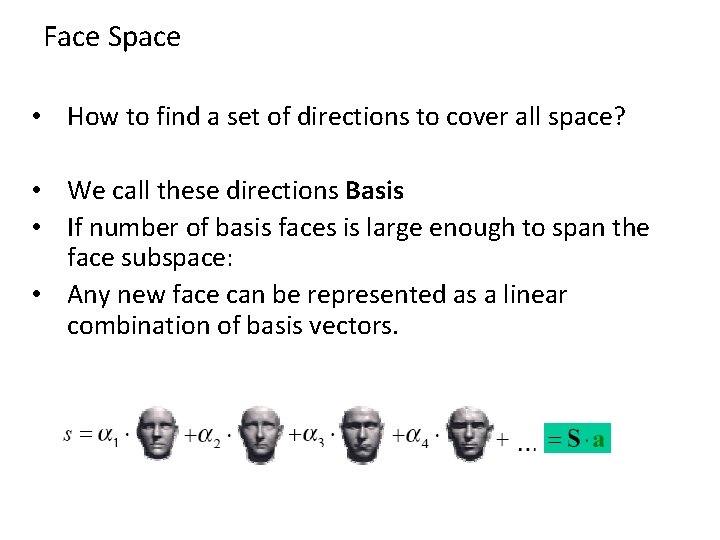
Face Space • How to find a set of directions to cover all space? • We call these directions Basis • If number of basis faces is large enough to span the face subspace: • Any new face can be represented as a linear combination of basis vectors.
Midterm results + review
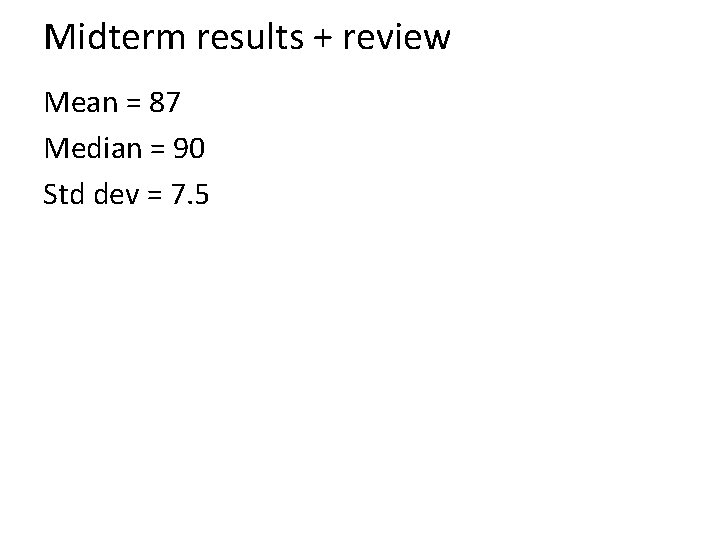
Midterm results + review Mean = 87 Median = 90 Std dev = 7. 5
- Slides: 67