
FACE CENTERED CUBIC STRUCTURE FCC Close packed directions

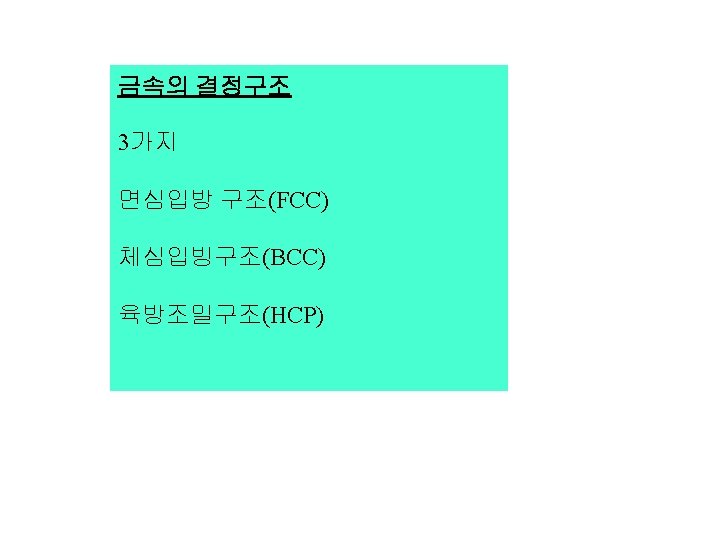

FACE CENTERED CUBIC STRUCTURE (FCC) • Close packed directions are face diagonals. --Note: All atoms are identical; the face-centered atoms are shaded differently only for ease of viewing. • Coordination # = 12 Adapted from Fig. 3. 1(a), Callister 6 e. (Courtesy P. M. Anderson) Chapter 11 - 9

BODY CENTERED CUBIC STRUCTURE (BCC) • Close packed directions are cube diagonals. --Note: All atoms are identical; the center atom is shaded differently only for ease of viewing. • Coordination # = 8 Adapted from Fig. 3. 2, Callister 6 e. (Courtesy P. M. Anderson) Chapter 11 - 7

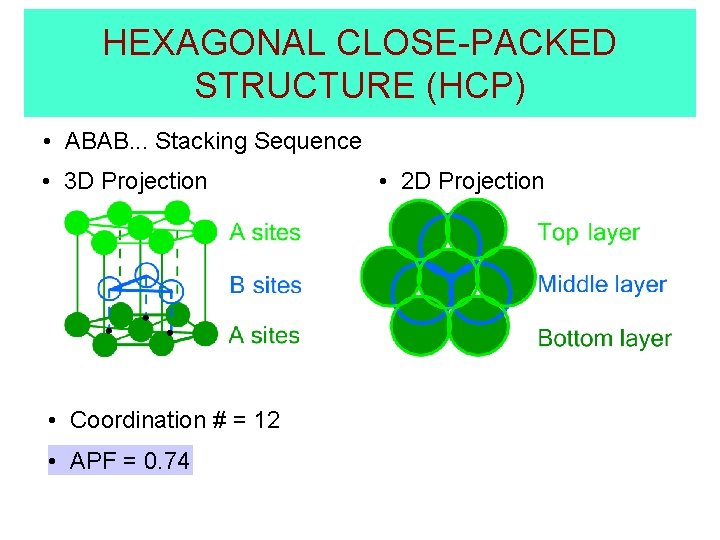
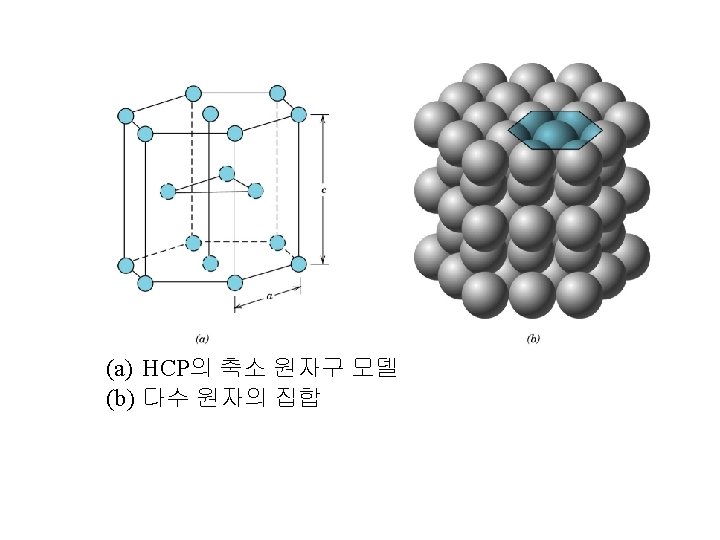
HEXAGONAL CLOSE-PACKED STRUCTURE (HCP) • ABAB. . . Stacking Sequence • 3 D Projection • 2 D Projection • Coordination # = 12 • APF = 0. 74 Chapter 11 - 12
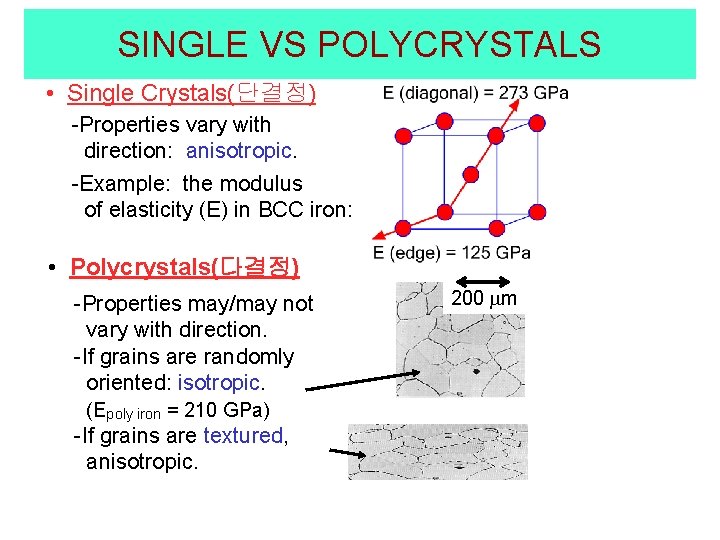
SINGLE VS POLYCRYSTALS • Single Crystals(단결정) -Properties vary with direction: anisotropic. -Example: the modulus of elasticity (E) in BCC iron: • Polycrystals(다결정) -Properties may/may not vary with direction. -If grains are randomly oriented: isotropic. 200 mm (Epoly iron = 210 GPa) -If grains are textured, anisotropic. Chapter 11 - 19

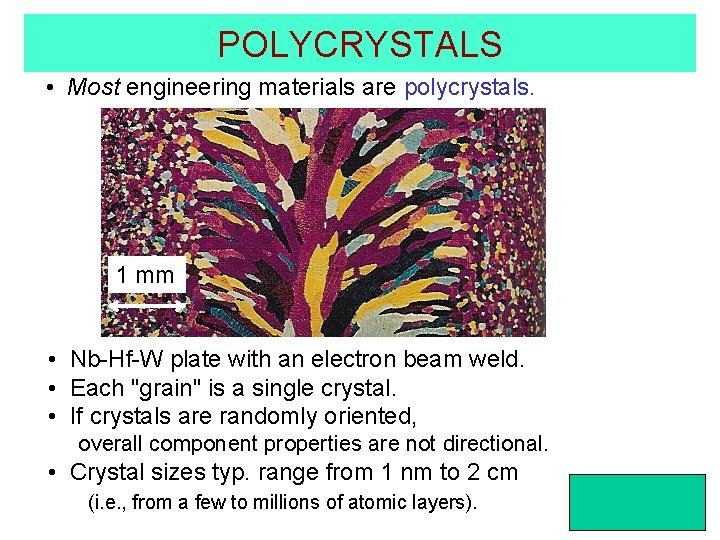
POLYCRYSTALS • Most engineering materials are polycrystals. 1 mm • Nb-Hf-W plate with an electron beam weld. • Each "grain" is a single crystal. • If crystals are randomly oriented, overall component properties are not directional. • Crystal sizes typ. range from 1 nm to 2 cm (i. e. , from a few to millions of atomic layers). Chapter 11 - 18

- Slides: 29