
Face Blindness An Impact Case Study DR SARAH
Face Blindness: An Impact Case Study DR SARAH BATE DEPARTMENT OF PSYCHOLOGY
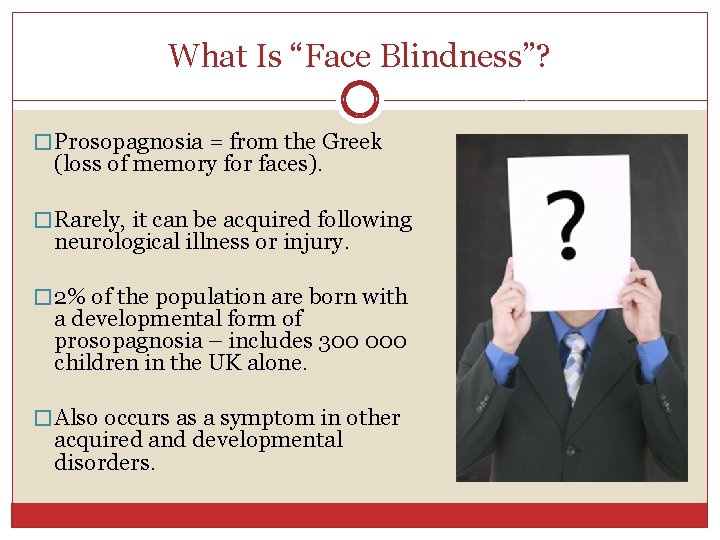
What Is “Face Blindness”? � Prosopagnosia = from the Greek (loss of memory for faces). � Rarely, it can be acquired following neurological illness or injury. � 2% of the population are born with a developmental form of prosopagnosia – includes 300 000 children in the UK alone. � Also occurs as a symptom in other acquired and developmental disorders.

Not literally face blind…
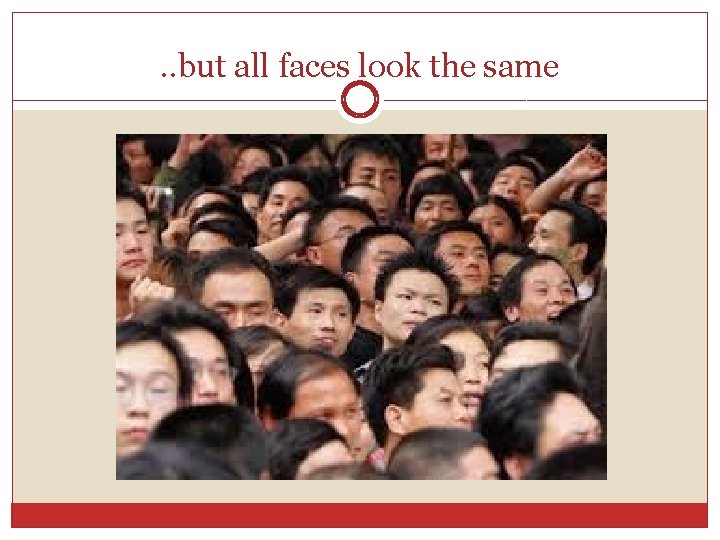
. . but all faces look the same
Face Blindness in the Workplace "If you can't recognise people, you feel like you're socially inept. You're always worrying that people will think you rude. It can be very embarrassing. I remember going to a job interview and the darksuited man who'd been interviewing me left the room, and when he came back I picked up the conversation where we'd left it, not realising it was a completely different dark-suited man. I didn't get the job. "
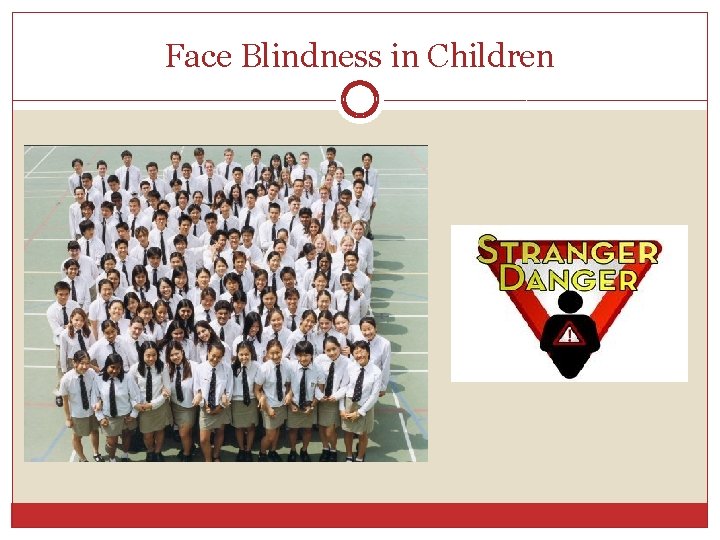
Face Blindness in Children
Face Blindness in Children “Teachers often asked my son to hand out homework, would send him to deliver messages to specific people, ask him about schoolwork outside of the classroom, etc. , all of which were very confusing, stressful and embarrassing. Team sports in PE and school trips were a disaster and very detrimental to his social skills, self-esteem and potentially dangerous. ”
Societal Need �No dedicated assessment battery for the diagnosis of prosopagnosia. �No formal recognition of prosopagnosia. �No guidelines for the management of the condition. �Public and professional awareness is very low.
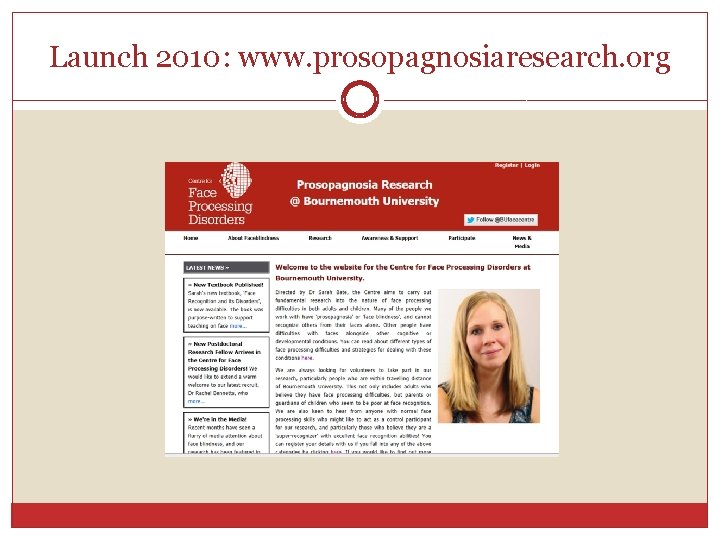
Launch 2010: www. prosopagnosiaresearch. org
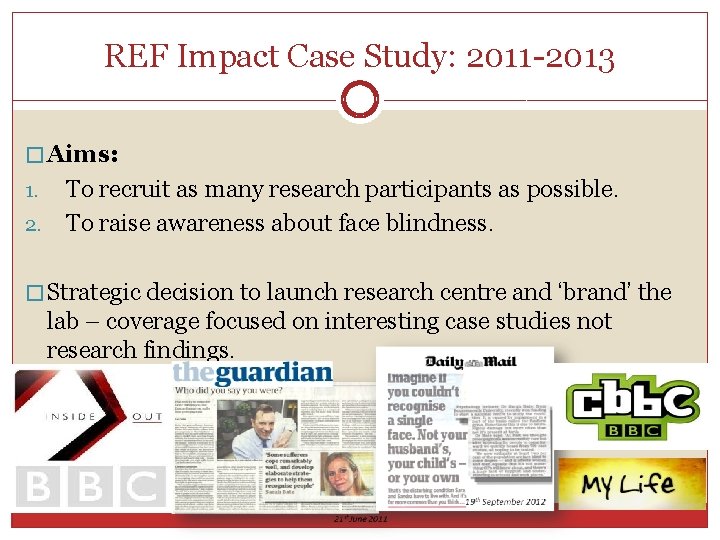
REF Impact Case Study: 2011 2013 � Aims: To recruit as many research participants as possible. 2. To raise awareness about face blindness. 1. � Strategic decision to launch research centre and ‘brand’ the lab – coverage focused on interesting case studies not research findings.
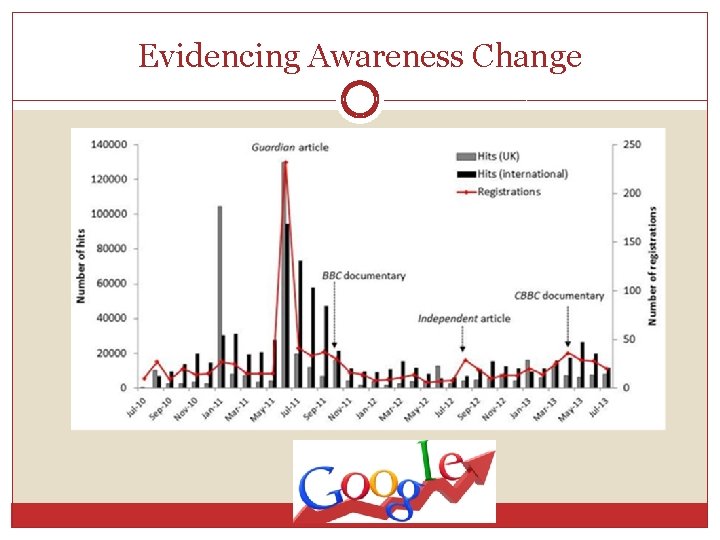
Evidencing Awareness Change
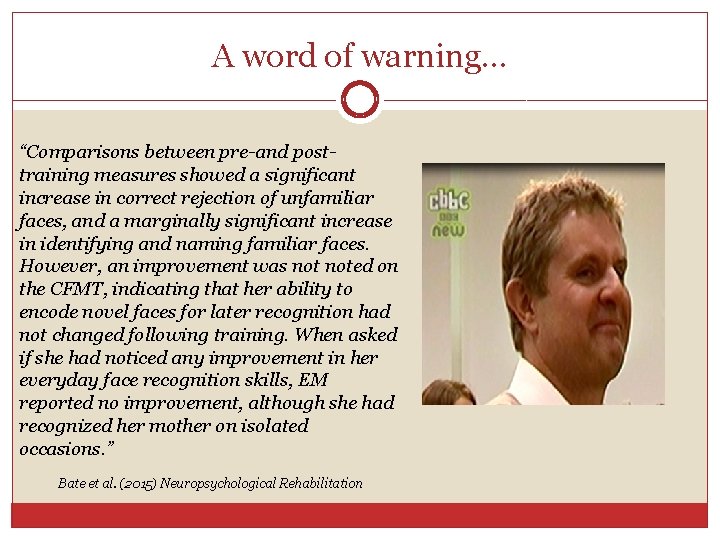
A word of warning… “Comparisons between pre-and posttraining measures showed a significant increase in correct rejection of unfamiliar faces, and a marginally significant increase in identifying and naming familiar faces. However, an improvement was noted on the CFMT, indicating that her ability to encode novel faces for later recognition had not changed following training. When asked if she had noticed any improvement in her everyday face recognition skills, EM reported no improvement, although she had recognized her mother on isolated occasions. ” Bate et al. (2015) Neuropsychological Rehabilitation
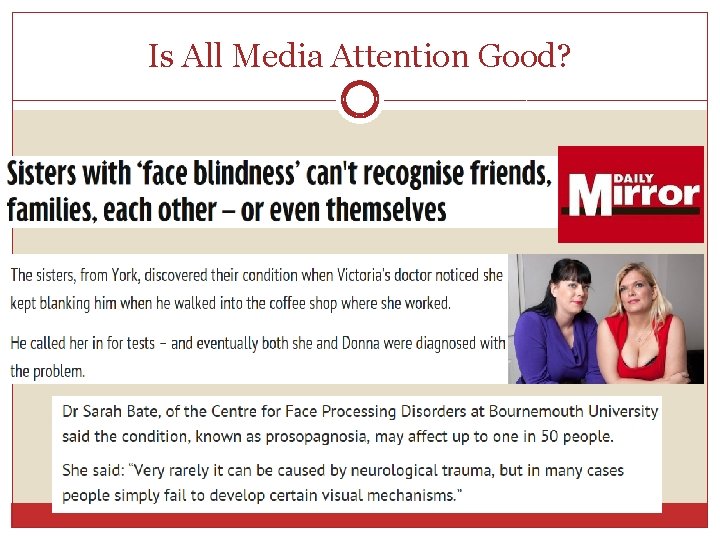
Is All Media Attention Good?
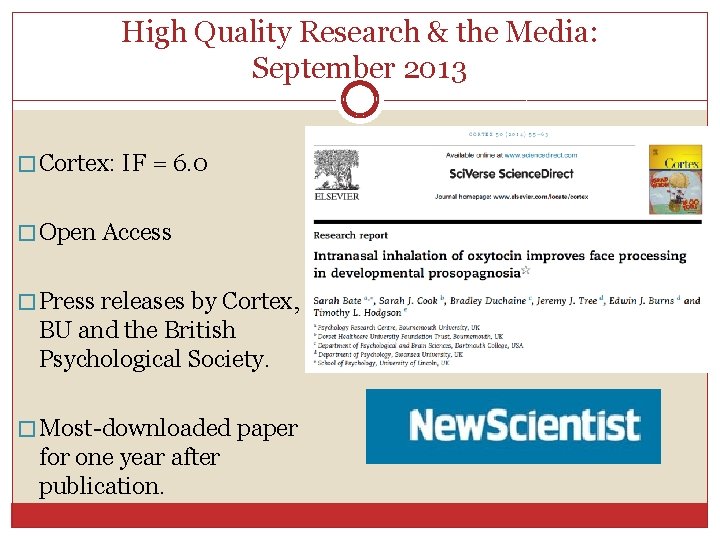
High Quality Research & the Media: September 2013 � Cortex: IF = 6. 0 � Open Access � Press releases by Cortex, BU and the British Psychological Society. � Most downloaded paper for one year after publication.
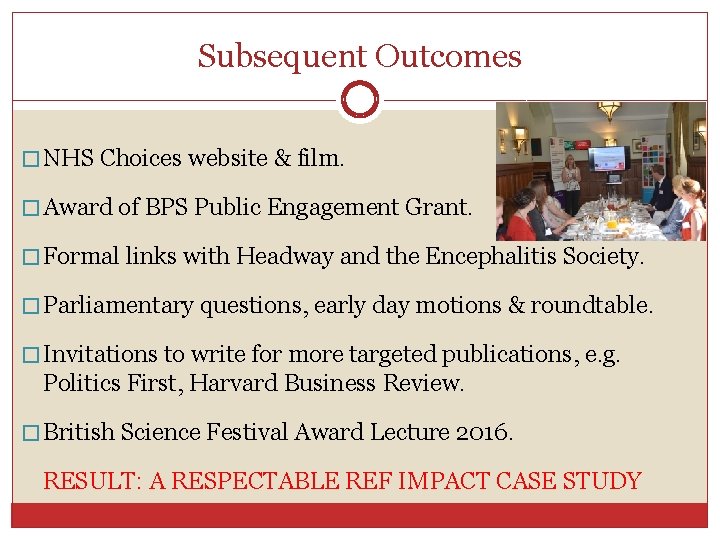
Subsequent Outcomes � NHS Choices website & film. � Award of BPS Public Engagement Grant. � Formal links with Headway and the Encephalitis Society. � Parliamentary questions, early day motions & roundtable. � Invitations to write for more targeted publications, e. g. Politics First, Harvard Business Review. � British Science Festival Award Lecture 2016. RESULT: A RESPECTABLE REF IMPACT CASE STUDY
How Much Media Attention? �You don’t have to accept all invitations. �Will they feature your research? �Do you have time? �Will you gain from additional coverage? �Do your partners have time?
Your Research Career Research Bids: Pathways to Impact document COMMUNICATION AND ENGAGEMENT PLAN Media: SB’s work is often featured in the media, notably on the BBC 1 Inside Out show, and in a CBBC documentary that followed the journey of an adolescent with prosopagnosia. It has been featured in national newspapers, including the Telegraph, Independent, Guardian, Daily Mail, and Sun. Bournemouth University’s Press Office is therefore well placed to assist with press coverage and to exploit existing contacts. Some of the families we currently work with are happy to assist with media coverage, and initial press reports will publicise award of the grant alongside these case studies. Later press coverage will focus on our research findings and real world outcomes for specific individuals who participate in the research programme (i. e. those who directly benefit from the project).
Your Research Career Research Bids: Pathways to Impact document IMPACT PLAN Short-term: The communications and public engagement programme described above will bring about an increase in public and professional awareness of DP. Immediate impact will be assessed by the number of UK and international hits on SB’s website, with a specific focus on pages dedicated to professionals, children and parents. These statistics will be plotted against the timing of key outreach events. In addition, the number of new registrations for research participation will be monitored, as will the number of contacts from professionals. A pop up will ask each new visitor how they came across the website, to estimate the reach of each activity described in the communication plan. Medium-term: Because there are currently no official guide lines for the management of DP, an overview report will communicate these findings to the Department for Education and other interested organizations, utilizing our existing gov ernmental and administrative links(SB recently hosted a Roundtable discussion in the House of Commons seeking to raise professional awareness of DP).
Your Research Career Research Bids: Pathways to Impact document CAPABILITY SB’s existing links with prosopagnosia stakeholders, policy makers and thought leaders will ensure the proposed project achieves maximal impact. In addition to the Parliamentary Roundtable described above, SB has previously worked with politicians to table two House of Commons Early Day Motions to raise awareness of prosopagnosia, and to raise Parliamentary Questions about DP. She has published peer reviewed factsheets on prosopagnosia for the Encephalitis Society and Headway, and contributed to the information page on prosopagnosia on the NHS Choices website. SB’s research has frequently been featured in the media, and she is also the featured expert on a forthcoming NHS information film about prosopagnosia.
Reflections � Working with the media can be extremely productive. BUT: � Be aware of the limits of your expertise. � Make wise decisions. � Understand “impact”, “communication”, and “public engagement” – how can the media be used to actually create measurable impact? � Use the Press Office and Public Engagement team at BU!
Questions? Website: www. prosopagnosiaresearch. org Email: sbate@bournemouth. ac. uk @BUfacecentre
- Slides: 21