
FABRIC CONSTRUCTION Weaving Knitting NonwovenFelting FABRIC TERMS Lengthwise
FABRIC CONSTRUCTION Weaving Knitting Nonwoven/Felting
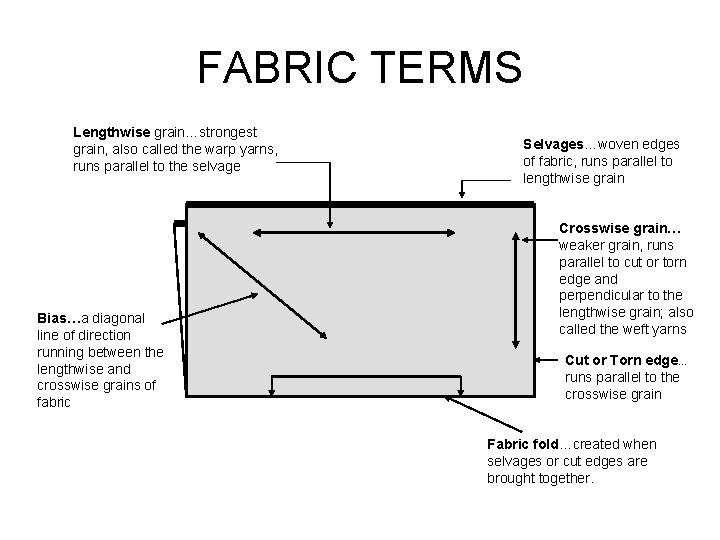
FABRIC TERMS Lengthwise grain…strongest grain, also called the warp yarns, runs parallel to the selvage Bias…a diagonal line of direction running between the lengthwise and crosswise grains of fabric Selvages…woven edges of fabric, runs parallel to lengthwise grain Crosswise grain… weaker grain, runs parallel to cut or torn edge and perpendicular to the lengthwise grain; also called the weft yarns Cut or Torn edge… runs parallel to the crosswise grain Fabric fold…created when selvages or cut edges are brought together.
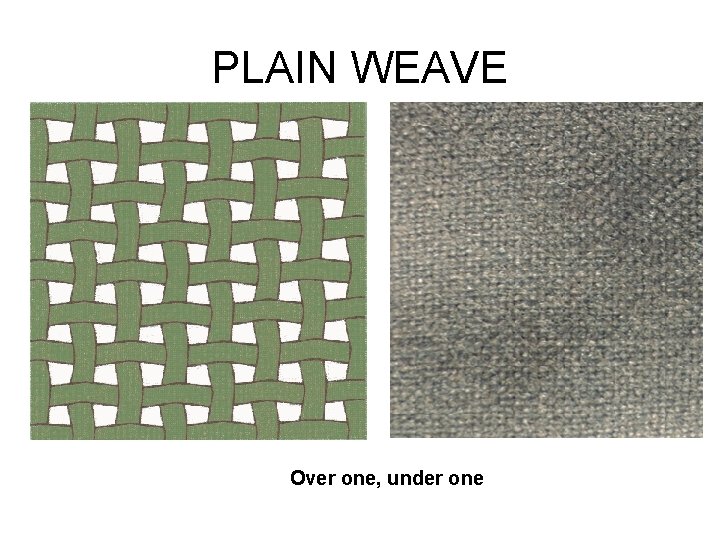
PLAIN WEAVE Over one, under one
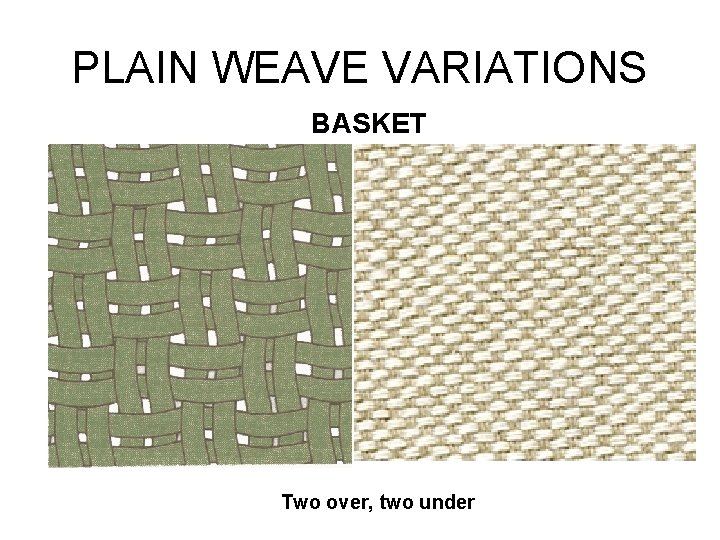
PLAIN WEAVE VARIATIONS BASKET Two over, two under
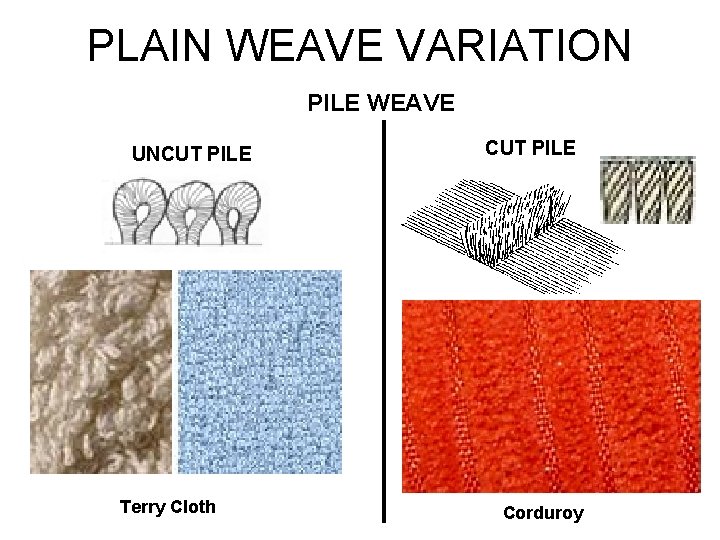
PLAIN WEAVE VARIATION PILE WEAVE UNCUT PILE Terry Cloth CUT PILE Corduroy
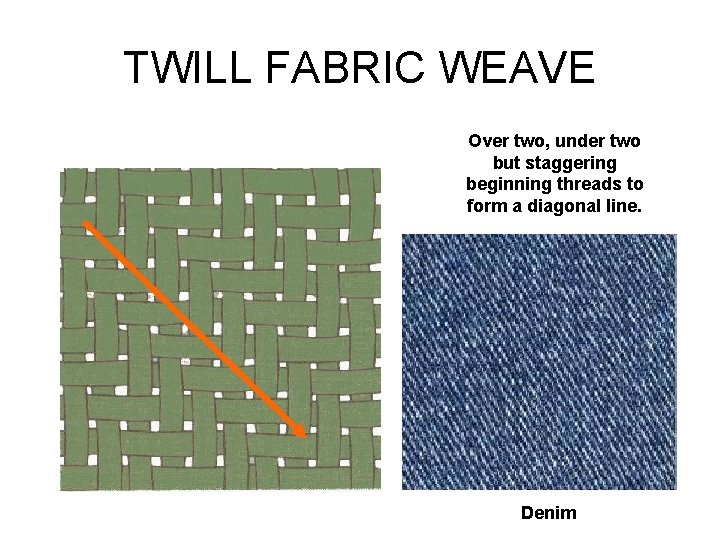
TWILL FABRIC WEAVE Over two, under two but staggering beginning threads to form a diagonal line. Denim
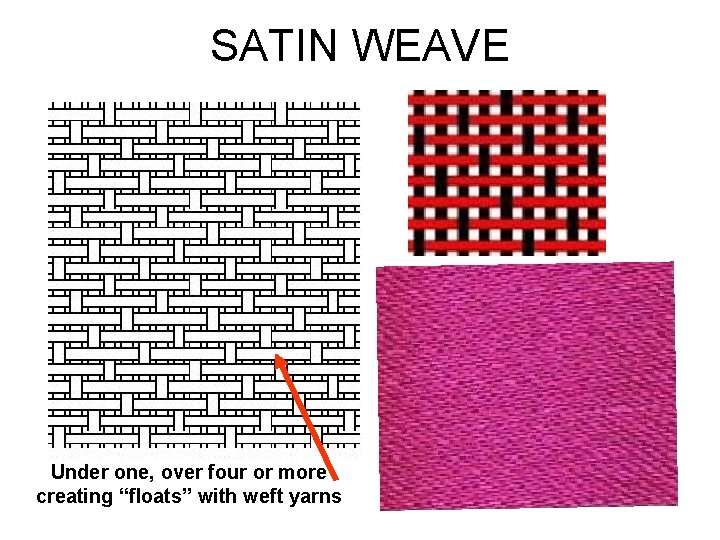
SATIN WEAVE Under one, over four or more creating “floats” with weft yarns
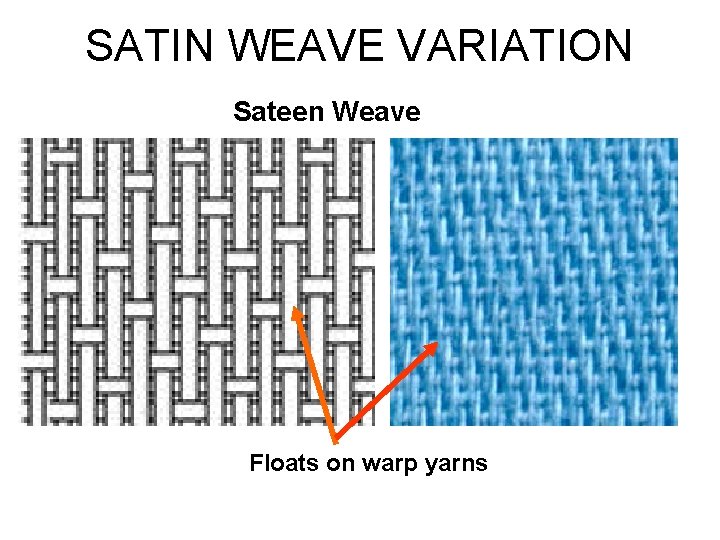
SATIN WEAVE VARIATION Sateen Weave Floats on warp yarns
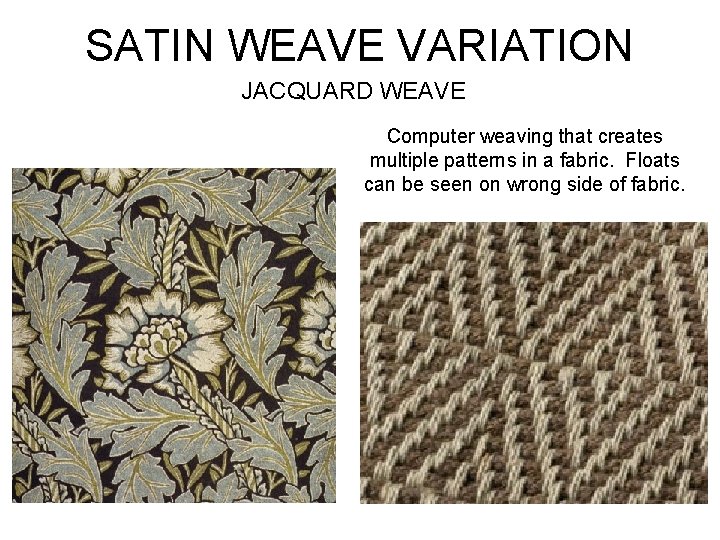
SATIN WEAVE VARIATION JACQUARD WEAVE Computer weaving that creates multiple patterns in a fabric. Floats can be seen on wrong side of fabric.
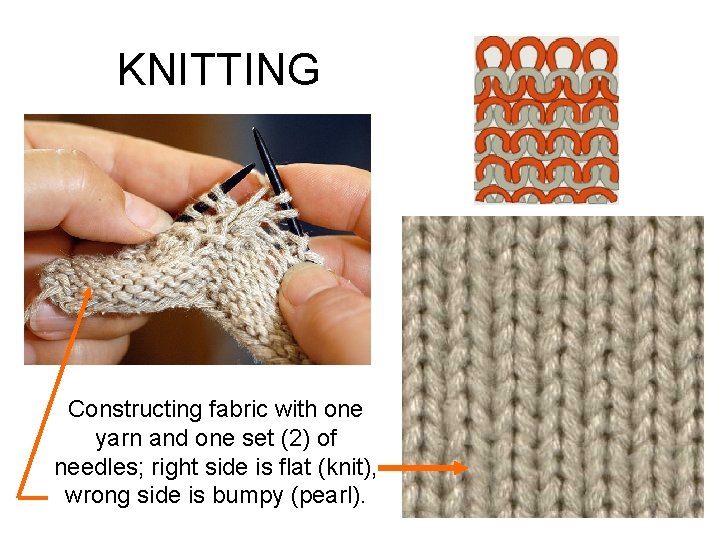
KNITTING Constructing fabric with one yarn and one set (2) of needles; right side is flat (knit), wrong side is bumpy (pearl).
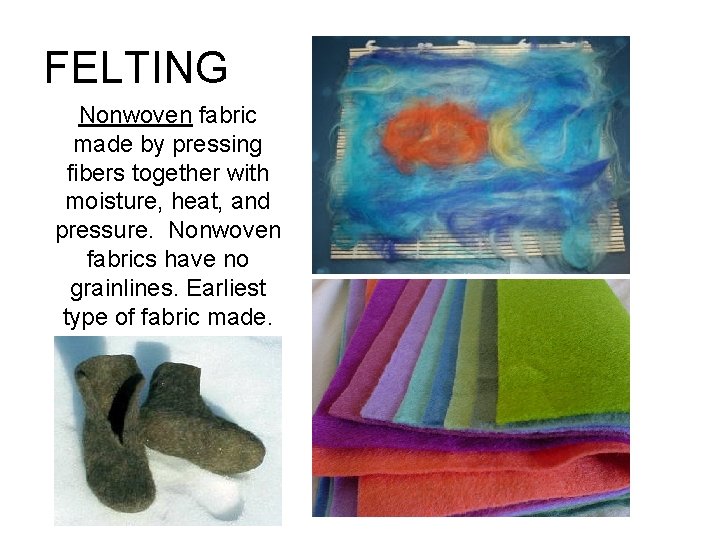
FELTING Nonwoven fabric made by pressing fibers together with moisture, heat, and pressure. Nonwoven fabrics have no grainlines. Earliest type of fabric made.
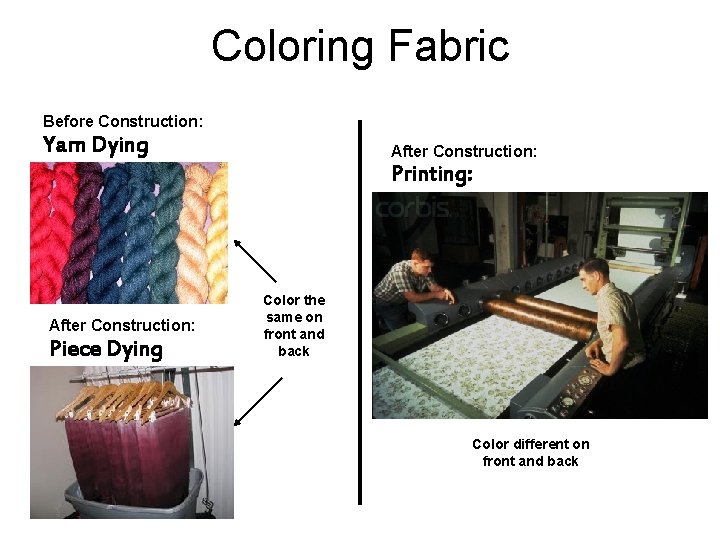
Coloring Fabric Before Construction: Yarn Dying After Construction: Printing: After Construction: Piece Dying Color the same on front and back Color different on front and back
FABRIC WEAVE ID ASSIGNMENT 1. Pick up one of each of the fabric samples on the cutting table and a magnifying glass. 2. Use the magnifying glass to identify the weave or construction method of each fabric sample. 3. Cut samples to fit dotted lines on sample card. (2” x 2”) 4. Glue into place. 5. Place completed card in wire basket. 6. Return magnifying glass to tote tray.
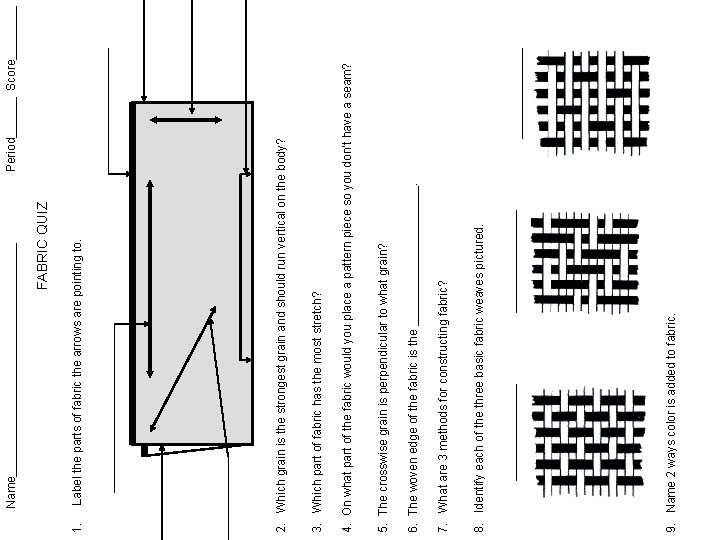
Label the parts of fabric the arrows are pointing to. Period______ Score____ 9. Name 2 ways color is added to fabric. 8. Identify each of the three basic fabric weaves pictured. 7. What are 3 methods for constructing fabric? 6. The woven edge of the fabric is the ___________. 5. The crosswise grain is perpendicular to what grain? 4. On what part of the fabric would you place a pattern piece so you don’t have a seam? 3. Which part of fabric has the most stretch? 2. Which grain is the strongest grain and should run vertical on the body? 1. FABRIC QUIZ Name__________________
- Slides: 14