
F Y B A G 1 General Psychology
F. Y. B. A. G 1: General Psychology (TERM I) Topic - 4 Motivation Presented By Dr. Santosh Gaikwad
4. 1 - Definition and Characteristics – Motivational Cycle. Motivation: The driving force behind behavior that leads us to pursue some things and avoid others. • Motivation has two components: 1) what people want to do (goals) 2) how strongly they want to do it
Motivation Homeostasis – body’s tendency to maintain a relatively constant state that permits cells to live and function • Biological functions such as eating, drinking, and sleeping are regulated by homeostasis
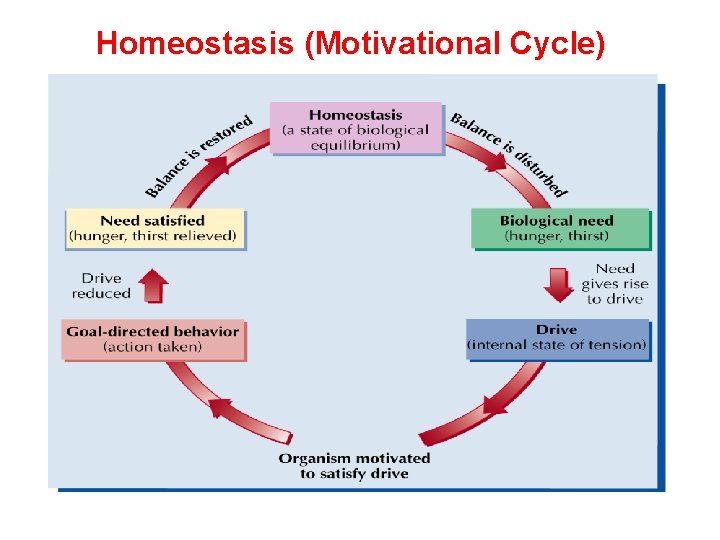
Homeostasis (Motivational Cycle)
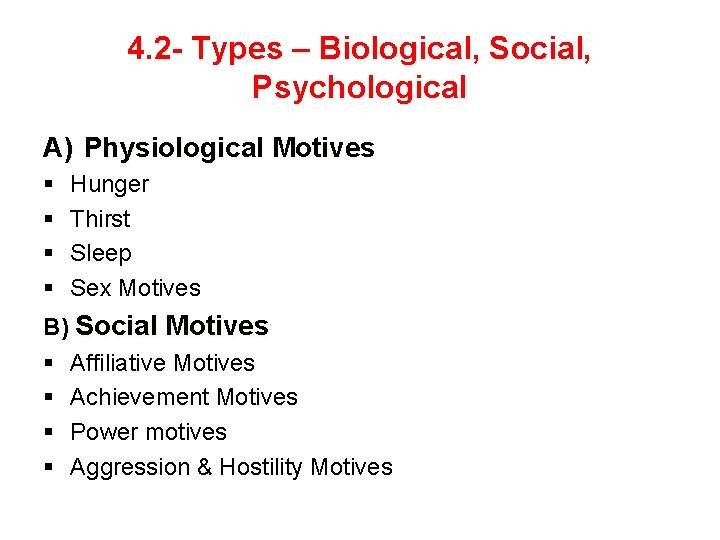
4. 2 - Types – Biological, Social, Psychological A) Physiological Motives § § Hunger Thirst Sleep Sex Motives B) Social Motives § Affiliative Motives § Achievement Motives § Power motives § Aggression & Hostility Motives
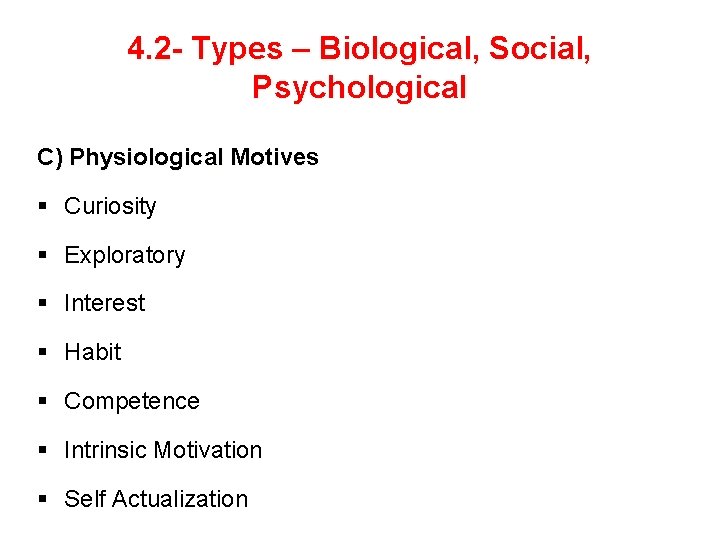
4. 2 - Types – Biological, Social, Psychological C) Physiological Motives § Curiosity § Exploratory § Interest § Habit § Competence § Intrinsic Motivation § Self Actualization
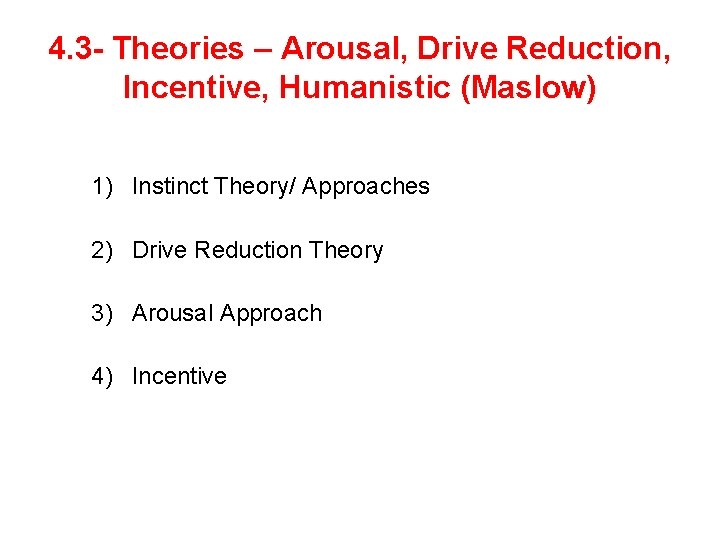
4. 3 - Theories – Arousal, Drive Reduction, Incentive, Humanistic (Maslow) 1) Instinct Theory/ Approaches 2) Drive Reduction Theory 3) Arousal Approach 4) Incentive
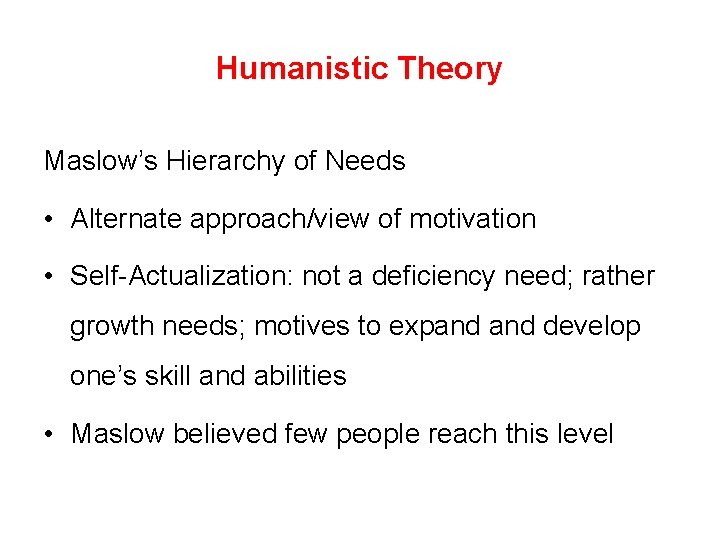
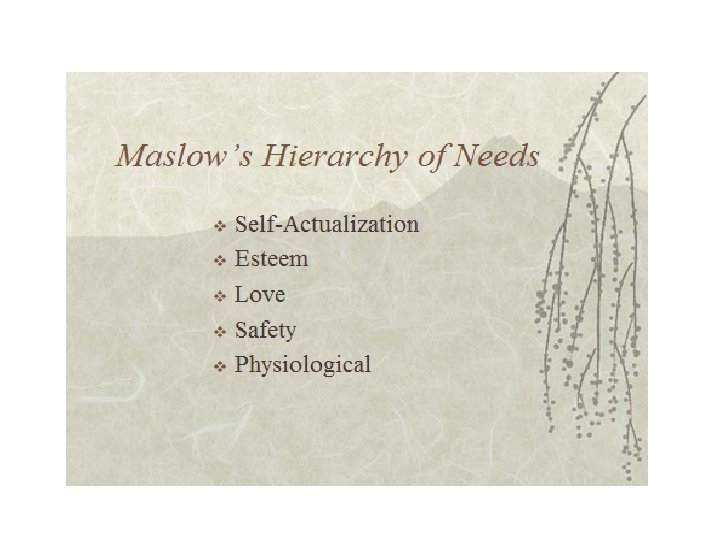
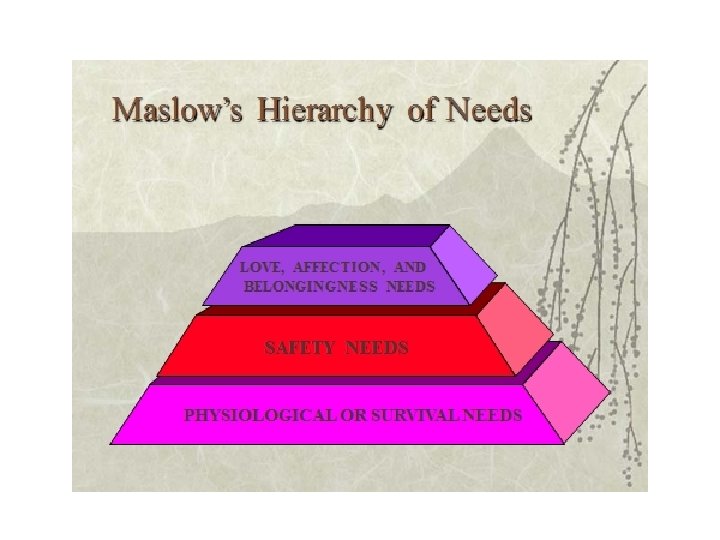
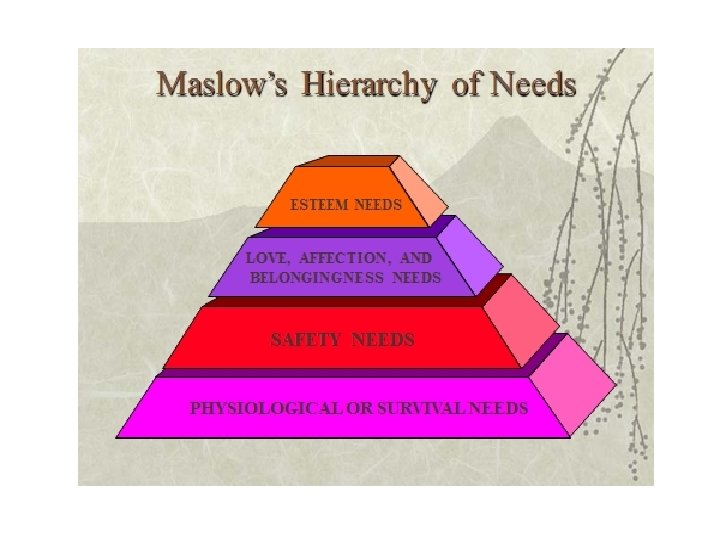
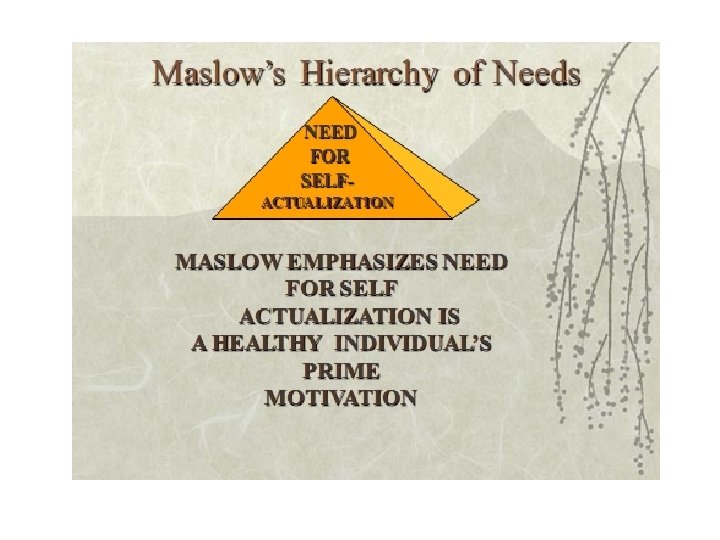
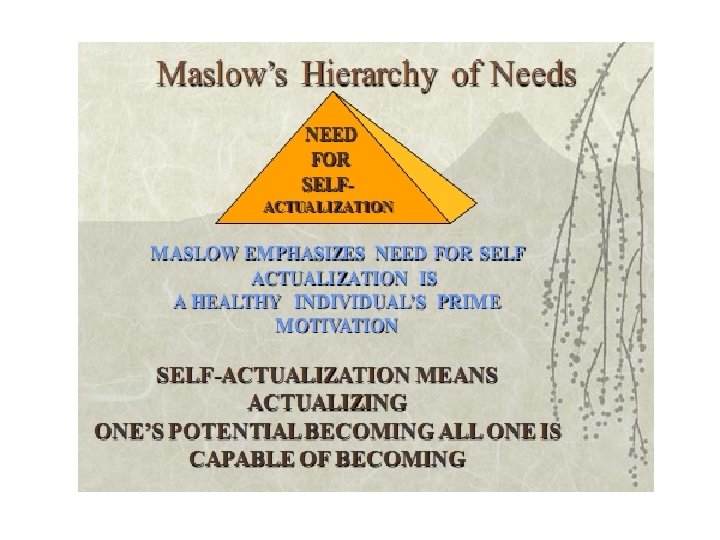
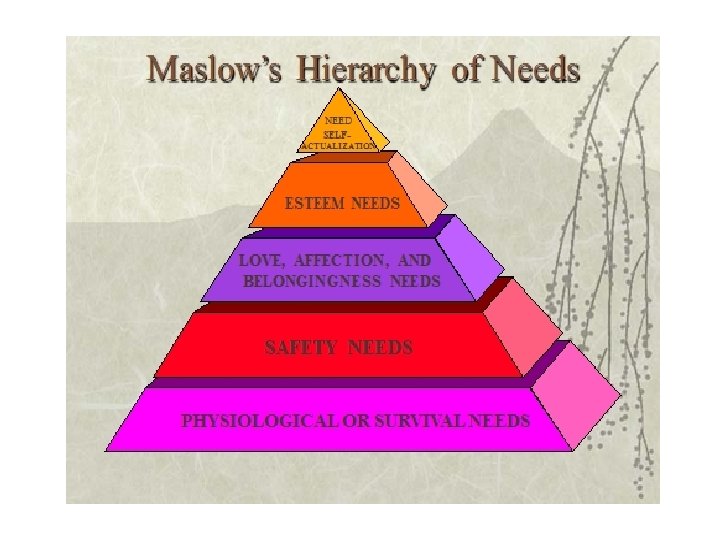
Humanistic Theory Maslow’s Hierarchy of Needs • Alternate approach/view of motivation • Self-Actualization: not a deficiency need; rather growth needs; motives to expand develop one’s skill and abilities • Maslow believed few people reach this level
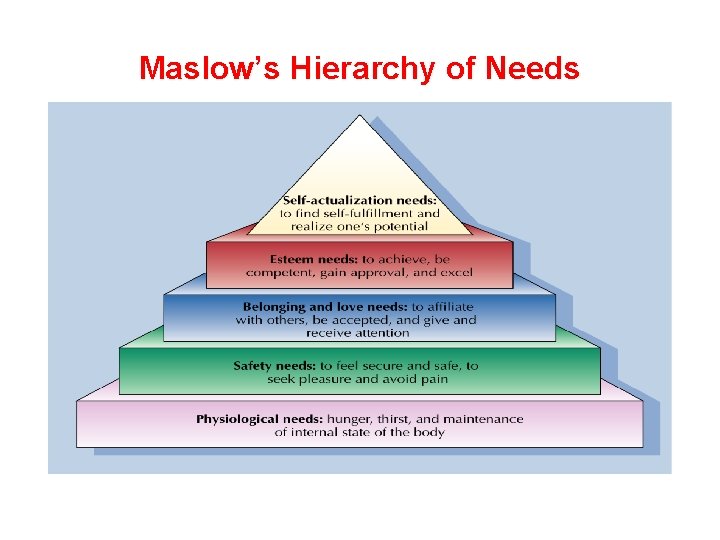
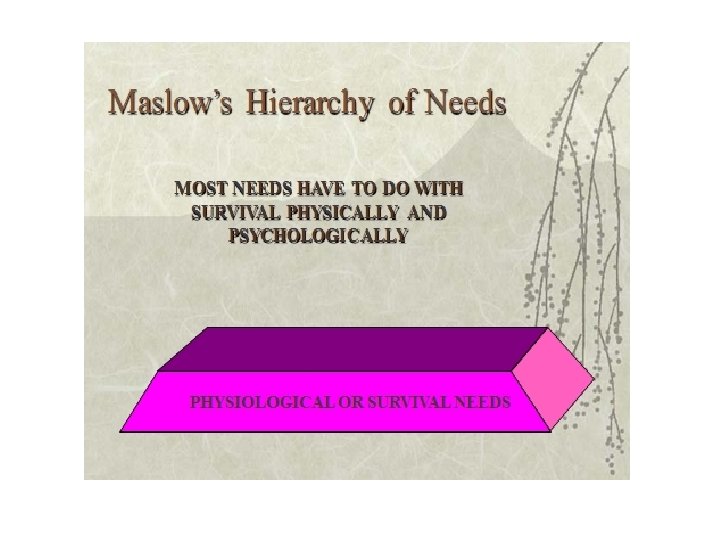
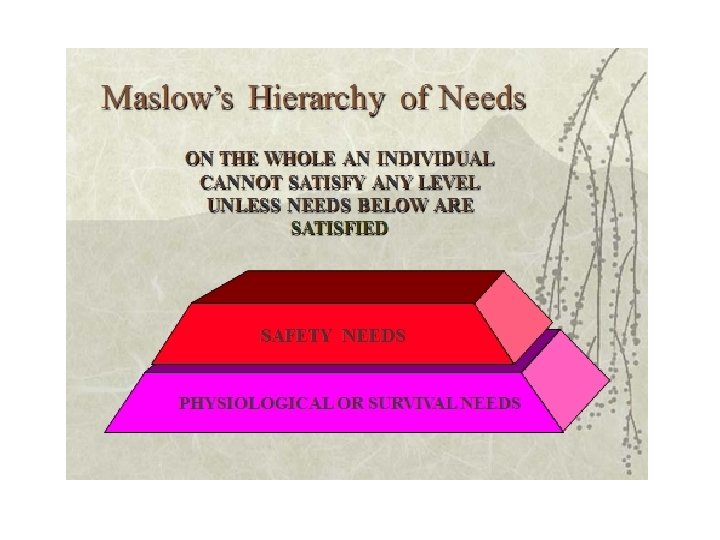
Maslow’s Hierarchy of Needs
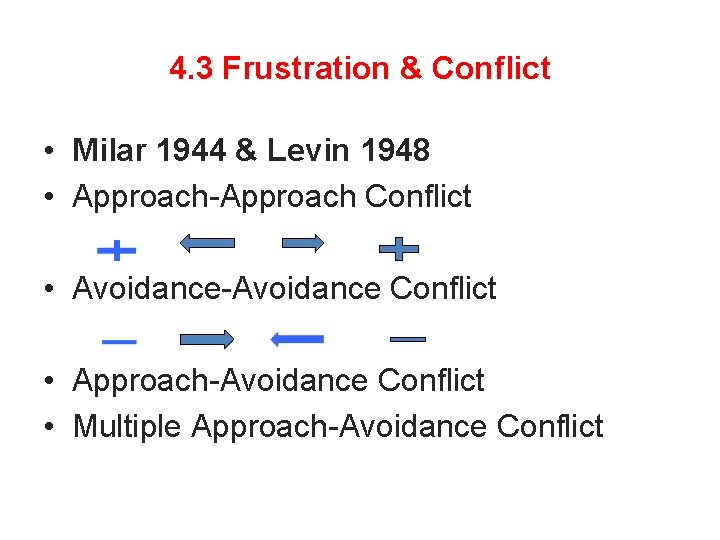
4. 3 Frustration & Conflict • Milar 1944 & Levin 1948 • Approach-Approach Conflict • Avoidance-Avoidance Conflict • Approach-Avoidance Conflict • Multiple Approach-Avoidance Conflict

Thank you for your attention!
- Slides: 23