
F I T T PRINCIPLE BACK Learning Targets

F. I. T. T. PRINCIPLE

BACK

Learning Targets Students will be able to… Define and describe the FITT Principle Apply the FITT Principle to the Components of Fitness Describe two methods of measuring intensity Calculate MHR and THR Identify intensity levels appropriate

What is the F. I. T. T. Principle? A formula in which each letter represents a variable important for determining the correct amount of physical activity to reach fitness goals.
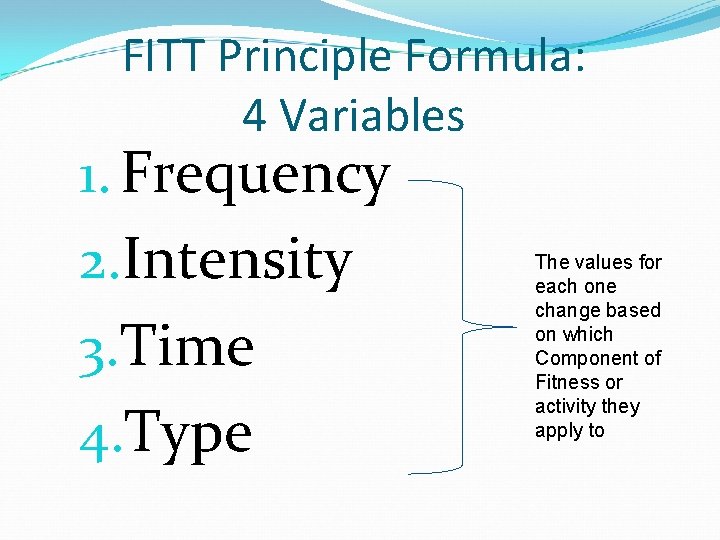
FITT Principle Formula: 4 Variables 1. Frequency 2. Intensity 3. Time 4. Type The values for each one change based on which Component of Fitness or activity they apply to
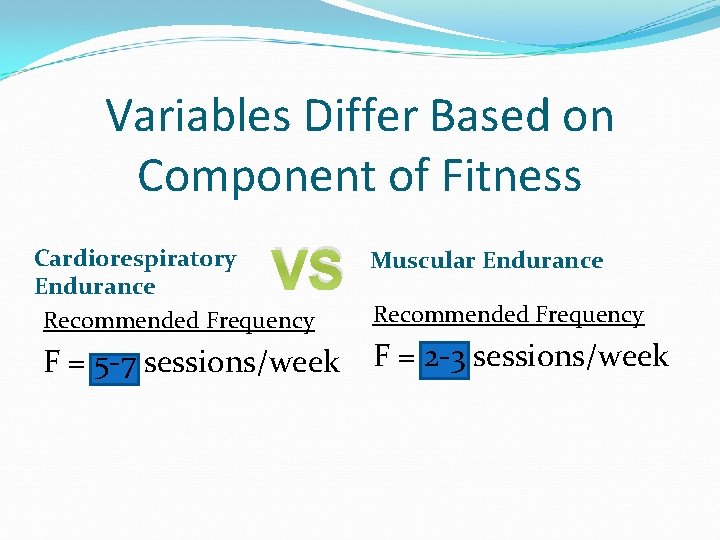
Variables Differ Based on Component of Fitness VS Cardiorespiratory Endurance Recommended Frequency F = 5 -7 sessions/week Muscular Endurance Recommended Frequency F = 2 -3 sessions/week
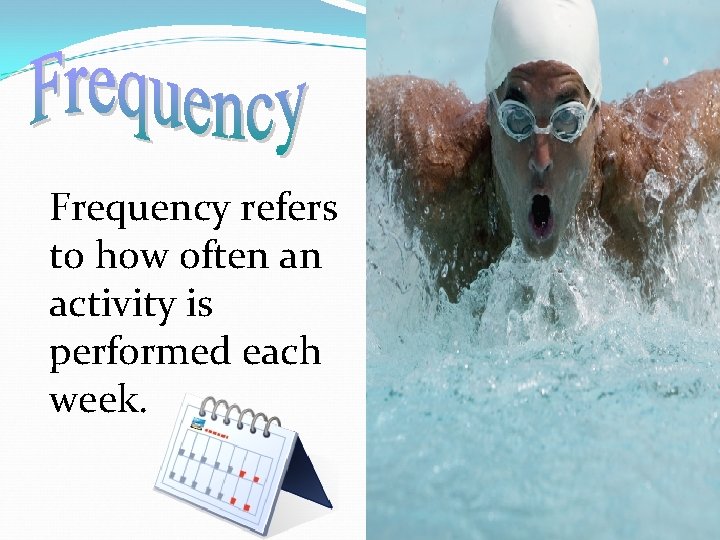
Frequency refers to how often an activity is performed each week.
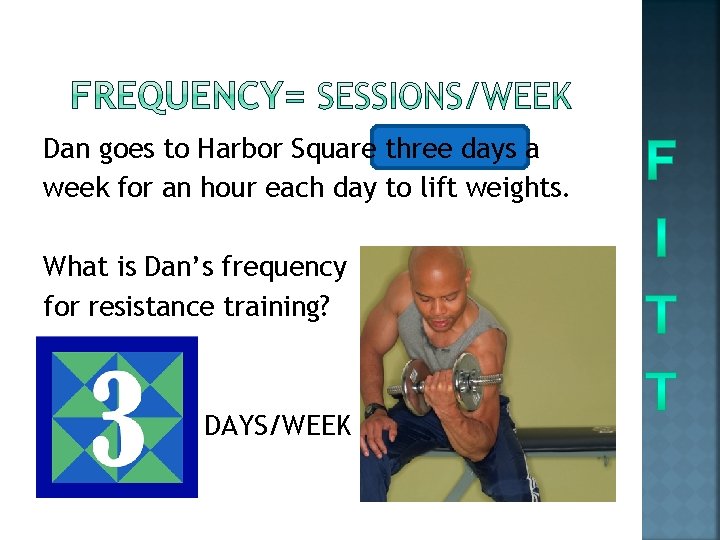
Dan goes to Harbor Square three days a week for an hour each day to lift weights. What is Dan’s frequency for resistance training? DAYS/WEEK

Intensity refers to how hard an activity is performed each session.
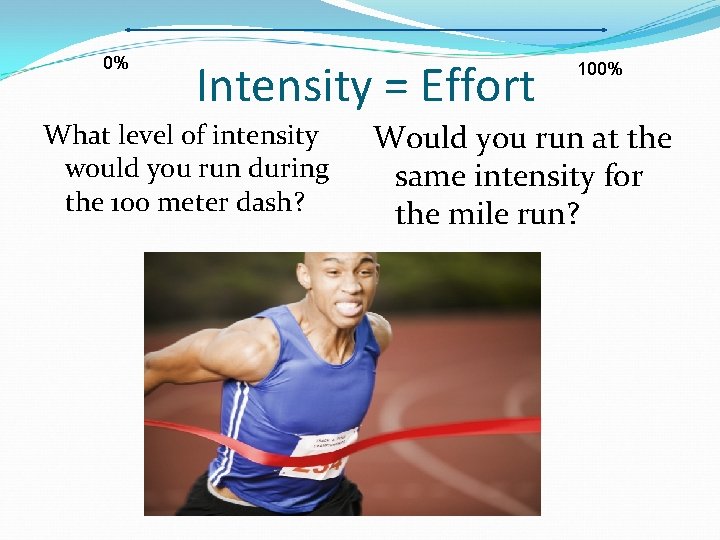
0% Intensity = Effort What level of intensity would you run during the 100 meter dash? 100% Would you run at the same intensity for the mile run?
How do you increase intensity? Increase speed or pace (i. e. run faster!) Add more resistance during weight training Hold a push-up ½ way Bicycling in a lower gear Running/cycling up hills Increase reach of stretch Can you think of additional examples?
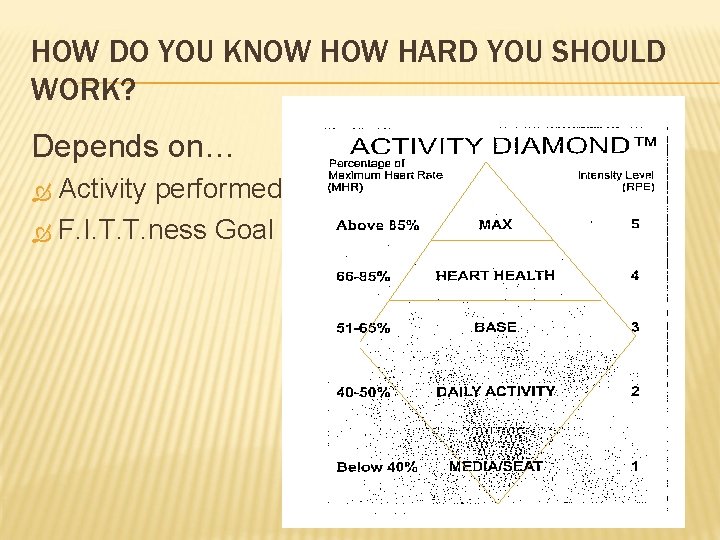
HOW DO YOU KNOW HARD YOU SHOULD WORK? Depends on… Activity performed F. I. T. T. ness Goal

How do we measure how hard you are working? 1. Check your heart rate (pulse) 2. Use a RPE scale (1 -10) based on your opinion of how hard you are working
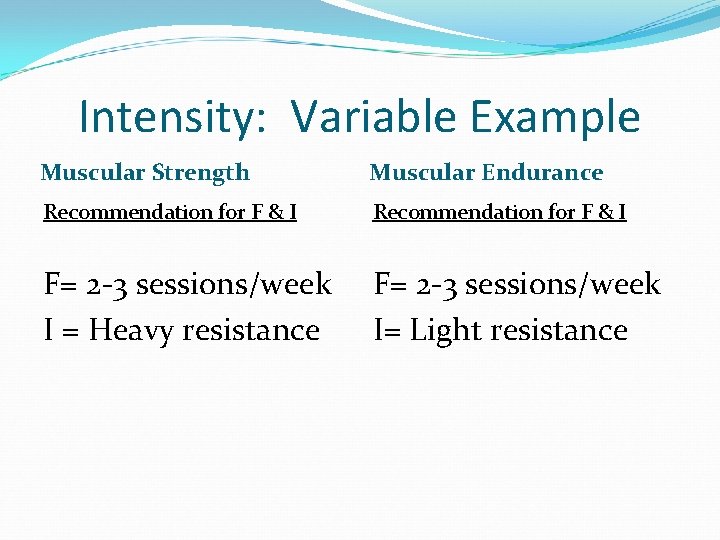
Intensity: Variable Example Muscular Strength Muscular Endurance Recommendation for F & I F= 2 -3 sessions/week I = Heavy resistance F= 2 -3 sessions/week I= Light resistance

Refers to how long an activity is performed at each session.
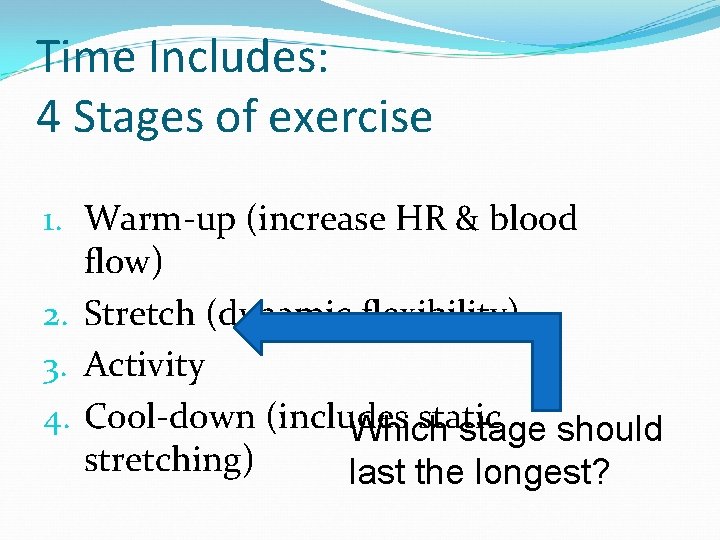
Time Includes: 4 Stages of exercise 1. Warm-up (increase HR & blood flow) 2. Stretch (dynamic flexibility) 3. Activity 4. Cool-down (includes static Which stage should stretching) last the longest?
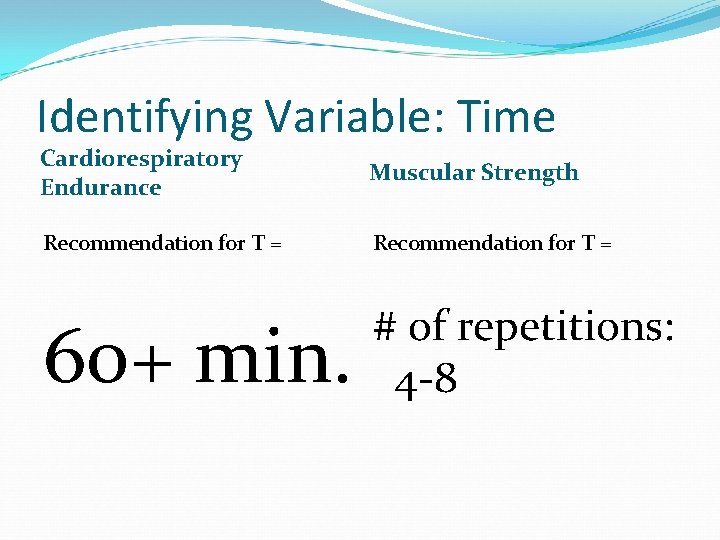
Identifying Variable: Time Cardiorespiratory Endurance Muscular Strength Recommendation for T = 60+ min. # of repetitions: 4 -8
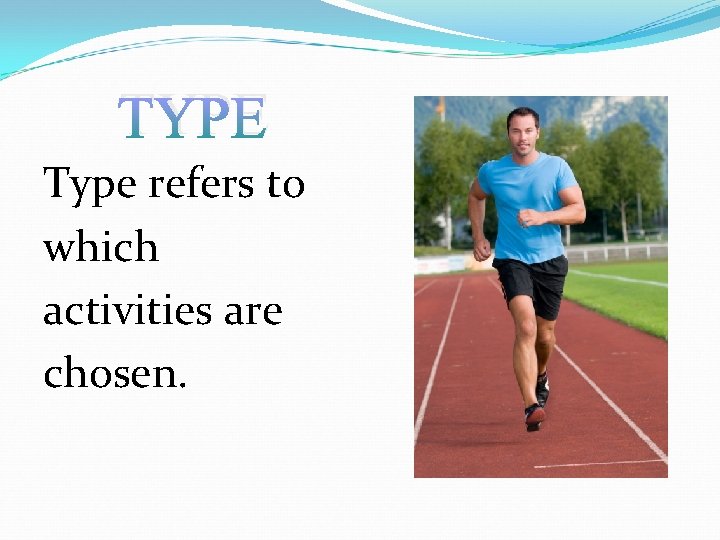
TYPE Type refers to which activities are chosen.
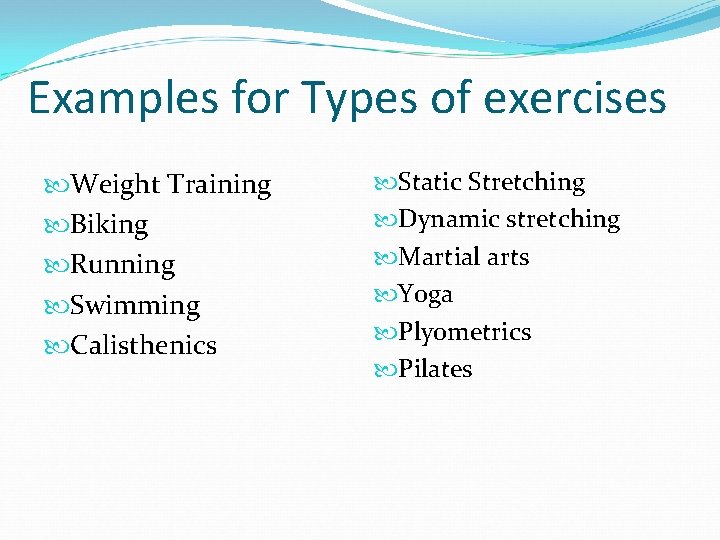
Examples for Types of exercises Weight Training Biking Running Swimming Calisthenics Static Stretching Dynamic stretching Martial arts Yoga Plyometrics Pilates
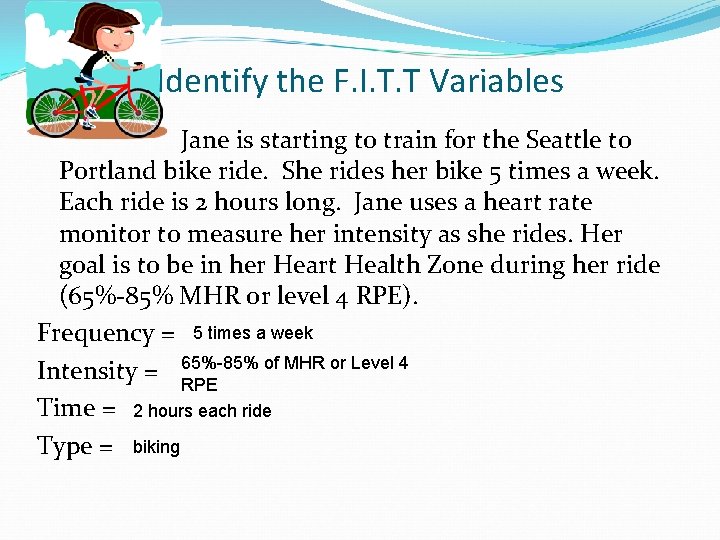
Identify the F. I. T. T Variables Jane is starting to train for the Seattle to Portland bike ride. She rides her bike 5 times a week. Each ride is 2 hours long. Jane uses a heart rate monitor to measure her intensity as she rides. Her goal is to be in her Heart Health Zone during her ride (65%-85% MHR or level 4 RPE). Frequency = 5 times a week of MHR or Level 4 Intensity = 65%-85% RPE Time = 2 hours each ride Type = biking

Maximum Heart Rate & Heart Health Zone
Maximum Heart Rate (MHR): The highest number of times the heart can beat in 1 minute Average MHR: (research based) 220 beats per minute (bpm)
Age Nutrition Activity Level Lifestyle choices Drug use- smoking, drinking, etc.
Age-Adjusted Maximal Heart Rate: A method used to calculate Max Heart Rate (MHR) Age-Adjusted Max Heart Rate Formula: MHR=220 -Age
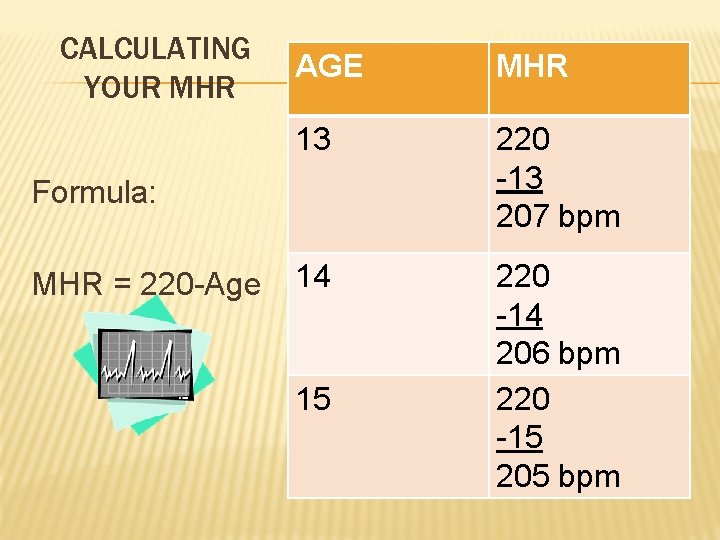
CALCULATING YOUR MHR AGE MHR 13 220 -13 207 bpm 14 220 -14 206 bpm 220 -15 205 bpm Formula: MHR = 220 -Age 15
NOW THAT I HAVE MY MHR, WHAT’S NEXT? Choose a target heart rate or determine a target heart rate range 50%? 85%-100%?
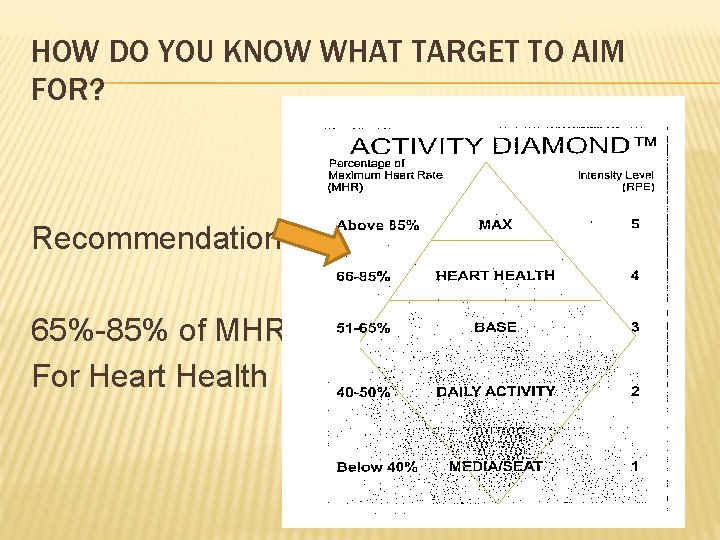
HOW DO YOU KNOW WHAT TARGET TO AIM FOR? Recommendation 65%-85% of MHR For Heart Health
Heart Health Why 65%-85%? Moderate to vigorous activity at 65%-85% of MHR will help improve cardiorespiratory endurance
Benefits of Having Cardiorespiratory Endurance Stronger heart = efficient heart Heart can beat at a slower rate and circulate same amount of blood Efficient heart = longer time to play! Allows a person to exercise and play more often for longer periods of time without getting tired. Endurance training = improves appearance Body will burn more fat and increase muscle tone Improved appearance = sense of well-being Increased self-confidence and self-image
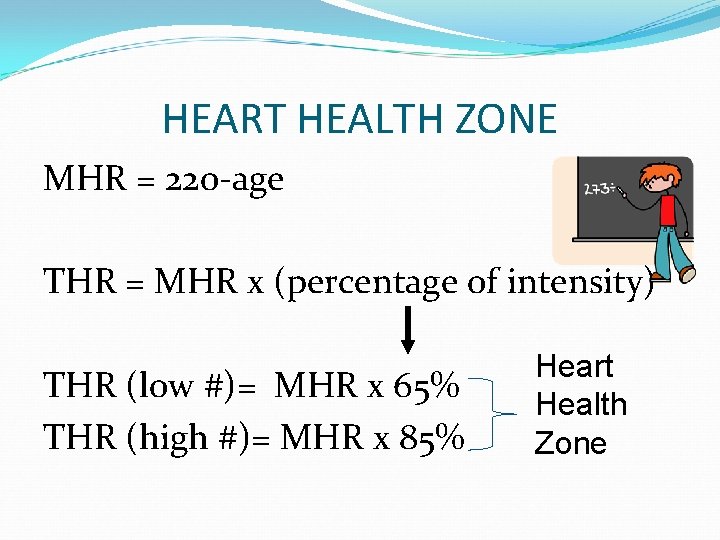
HEART HEALTH ZONE MHR = 220 -age THR = MHR x (percentage of intensity) THR (low #)= MHR x 65% THR (high #)= MHR x 85% Heart Health Zone
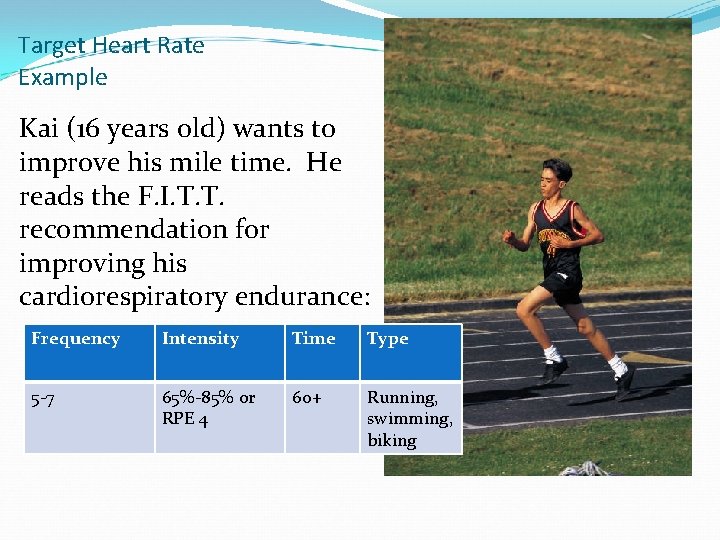
Target Heart Rate Example Kai (16 years old) wants to improve his mile time. He reads the F. I. T. T. recommendation for improving his cardiorespiratory endurance: Frequency Intensity Time Type 5 -7 65%-85% or RPE 4 60+ Running, swimming, biking
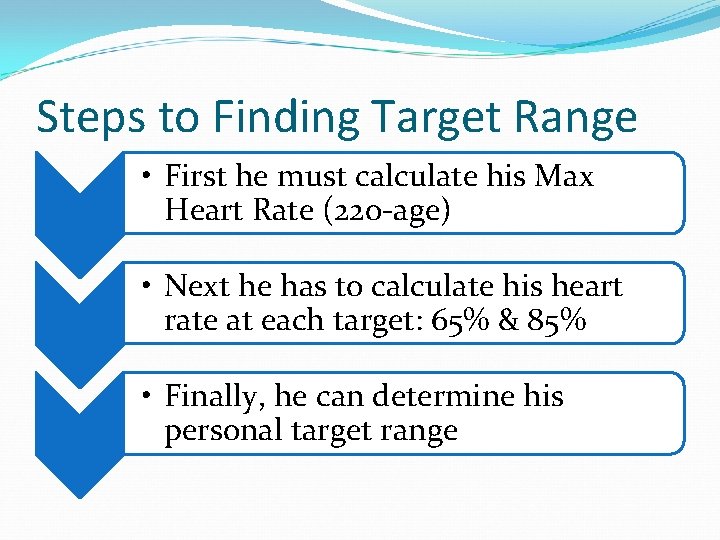
Steps to Finding Target Range • First he must calculate his Max Heart Rate (220 -age) • Next he has to calculate his heart rate at each target: 65% & 85% • Finally, he can determine his personal target range
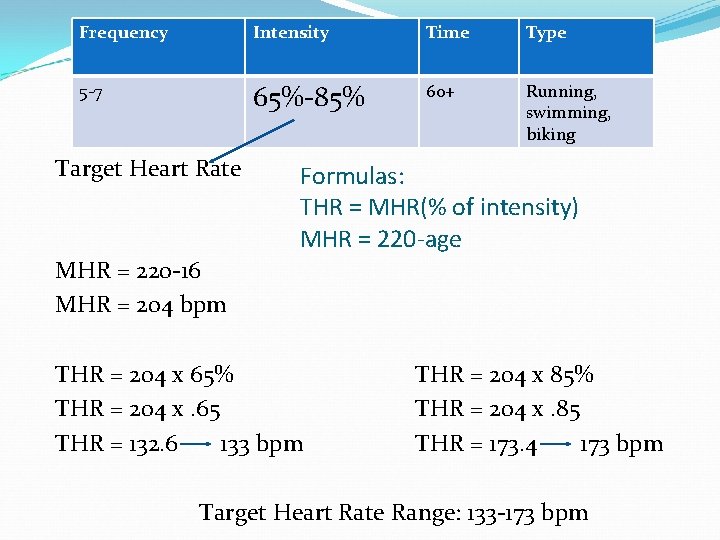
Frequency Intensity Time Type 5 -7 65%-85% 60+ Running, swimming, biking Target Heart Rate Formulas: THR = MHR(% of intensity) MHR = 220 -age MHR = 220 -16 MHR = 204 bpm THR = 204 x 65% THR = 204 x. 65 THR = 132. 6 133 bpm THR = 204 x 85% THR = 204 x. 85 THR = 173. 4 173 bpm Target Heart Rate Range: 133 -173 bpm
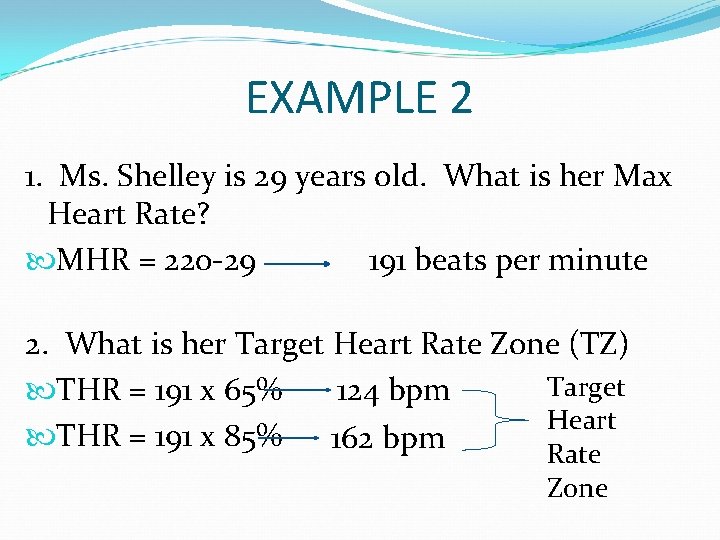
EXAMPLE 2 1. Ms. Shelley is 29 years old. What is her Max Heart Rate? MHR = 220 -29 191 beats per minute 2. What is her Target Heart Rate Zone (TZ) Target 124 bpm THR = 191 x 65% Heart THR = 191 x 85% 162 bpm Rate Zone
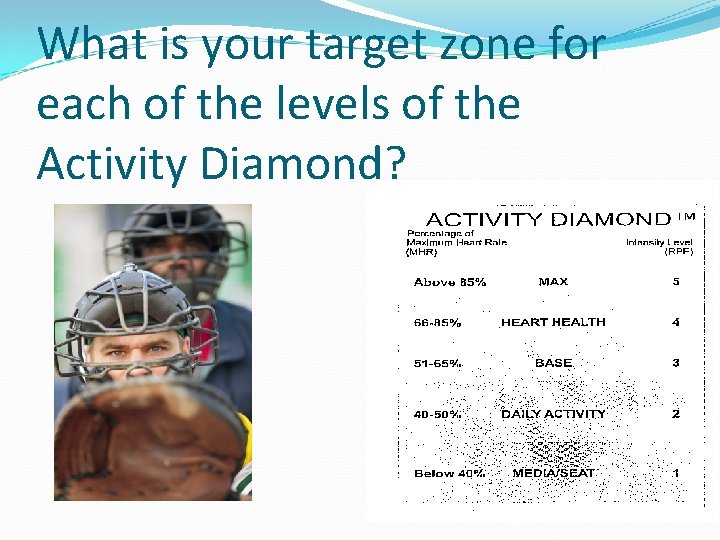
What is your target zone for each of the levels of the Activity Diamond?
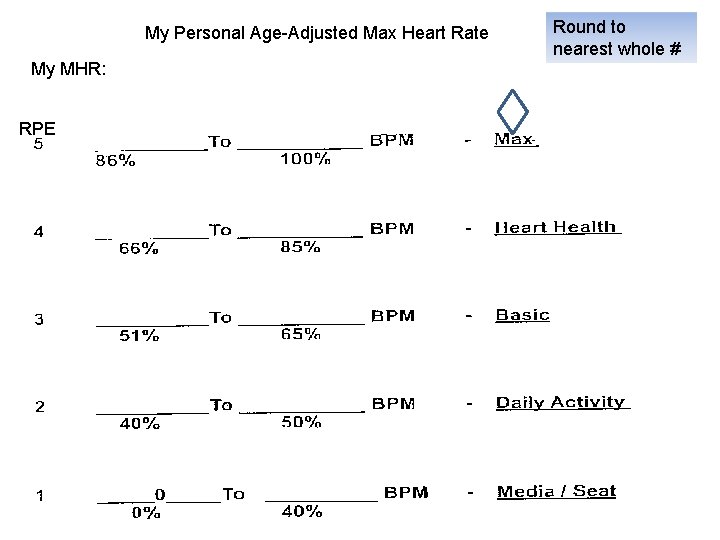
My Personal Age-Adjusted Max Heart Rate My MHR: RPE Round to nearest whole #
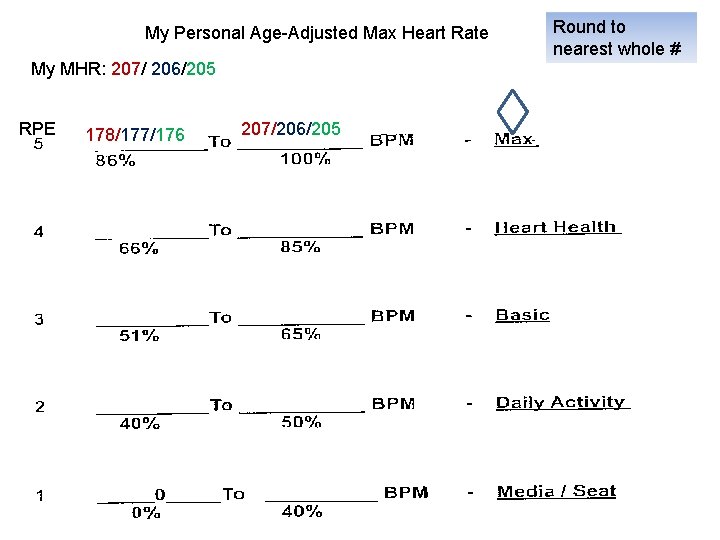
My Personal Age-Adjusted Max Heart Rate My MHR: 207/ 206/205 RPE 178/177/176 207/206/205 Round to nearest whole #

ANATOMY OF THE ACTIVITY DIAMOND
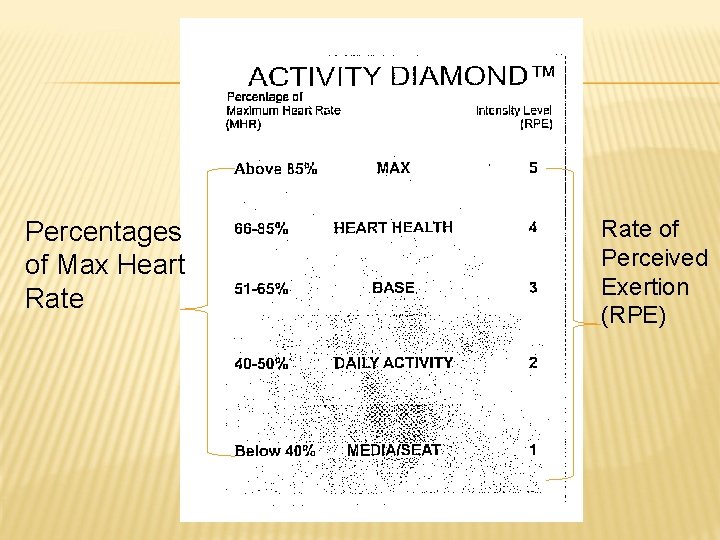
Percentages of Max Heart Rate of Perceived Exertion (RPE)
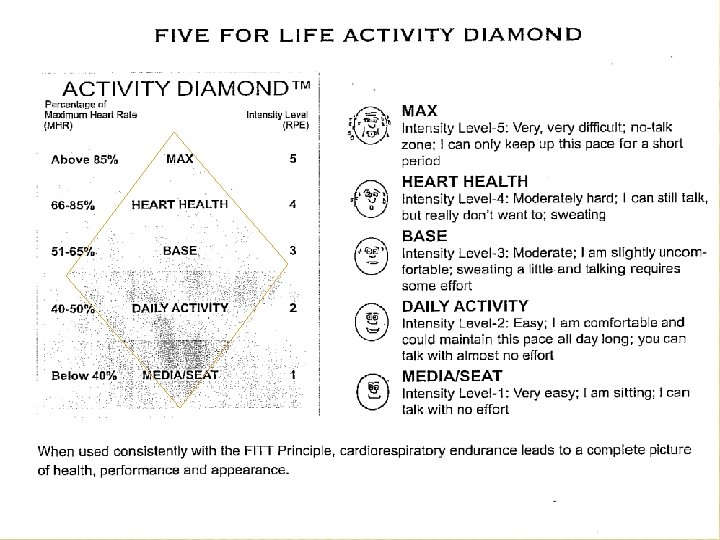
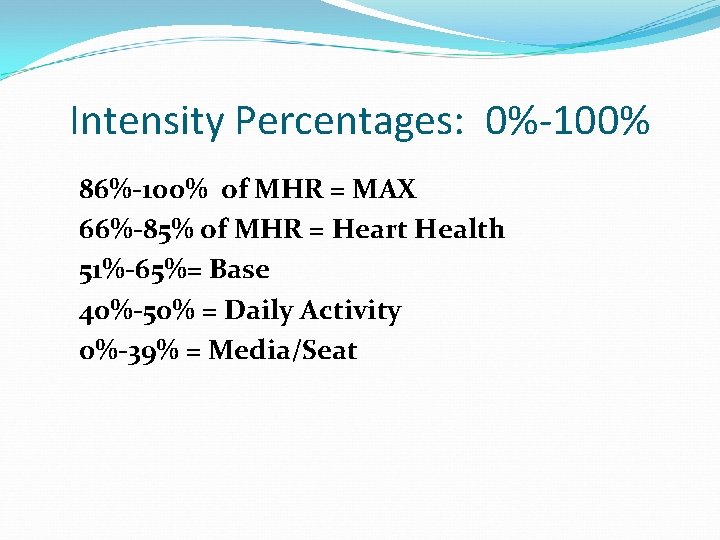
Intensity Percentages: 0%-100% 86%-100% of MHR = MAX 66%-85% of MHR = Heart Health 51%-65%= Base 40%-50% = Daily Activity 0%-39% = Media/Seat
Rate of Perceived Exertion RPE: A subjective rating on a numerical scale (1 -10), used to express the difficulty of a given activity/task. Very Easy (1) Very Difficult (10) BACK Next
Perceived Synonyms Supposed Seeming What is your perception of how cold it is today? Perception = personal view, opinion Back
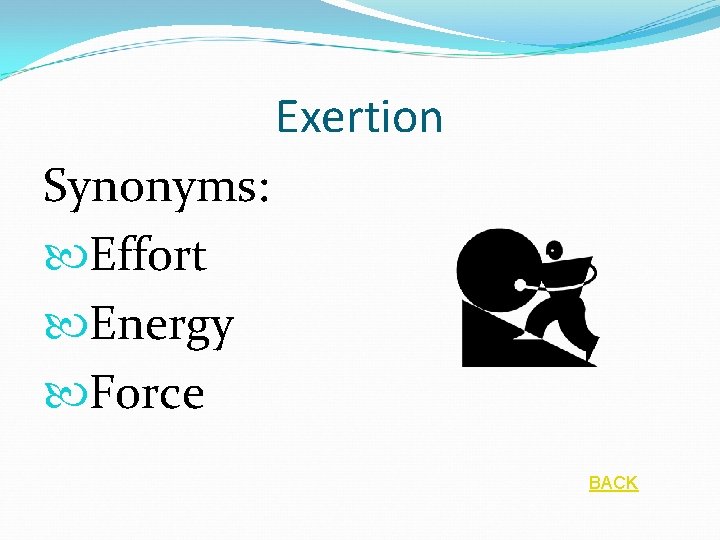
Exertion Synonyms: Effort Energy Force BACK
Subjective Synonyms: Personal Individual One-sided Not always 100% accurate! Back
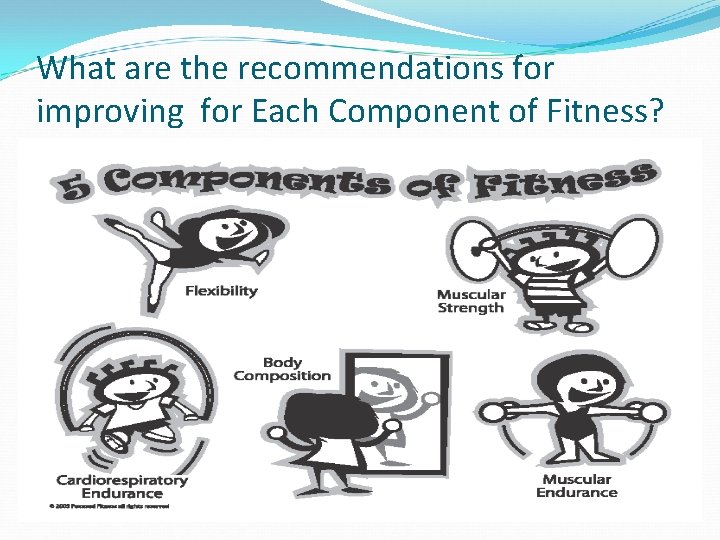
What are the recommendations for improving for Each Component of Fitness?
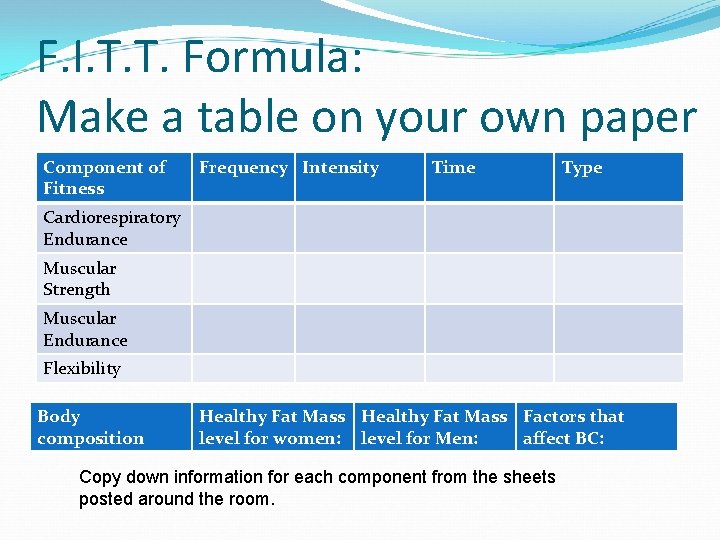
F. I. T. T. Formula: Make a table on your own paper Component of Fitness Frequency Intensity Time Type Cardiorespiratory Endurance Muscular Strength Muscular Endurance Flexibility Body composition Healthy Fat Mass Factors that level for women: level for Men: affect BC: Copy down information for each component from the sheets posted around the room.
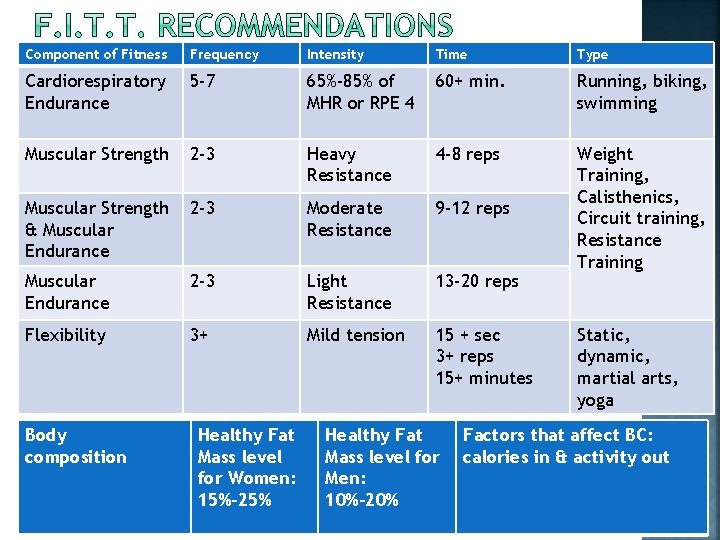
Component of Fitness Frequency Intensity Time Type Cardiorespiratory Endurance 5 -7 65%-85% of MHR or RPE 4 60+ min. Running, biking, swimming Muscular Strength 2 -3 Heavy Resistance 4 -8 reps Muscular Strength & Muscular Endurance 2 -3 Moderate Resistance 9 -12 reps Muscular Endurance 2 -3 Light Resistance 13 -20 reps Weight Training, Calisthenics, Circuit training, Resistance Training Flexibility 3+ Mild tension 15 + sec 3+ reps 15+ minutes Body composition Healthy Fat Mass level for Women: 15%-25% Healthy Fat Mass level for Men: 10%-20% Static, dynamic, martial arts, yoga Factors that affect BC: calories in & activity out
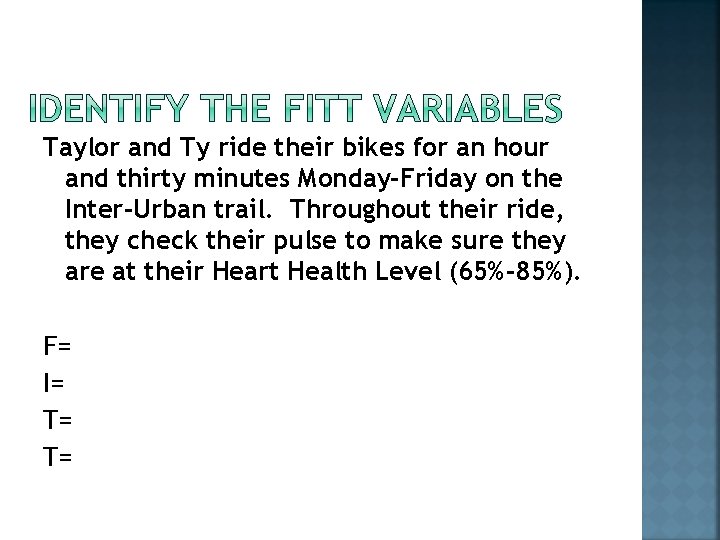
Taylor and Ty ride their bikes for an hour and thirty minutes Monday-Friday on the Inter-Urban trail. Throughout their ride, they check their pulse to make sure they are at their Heart Health Level (65%-85%). F= I= T= T=
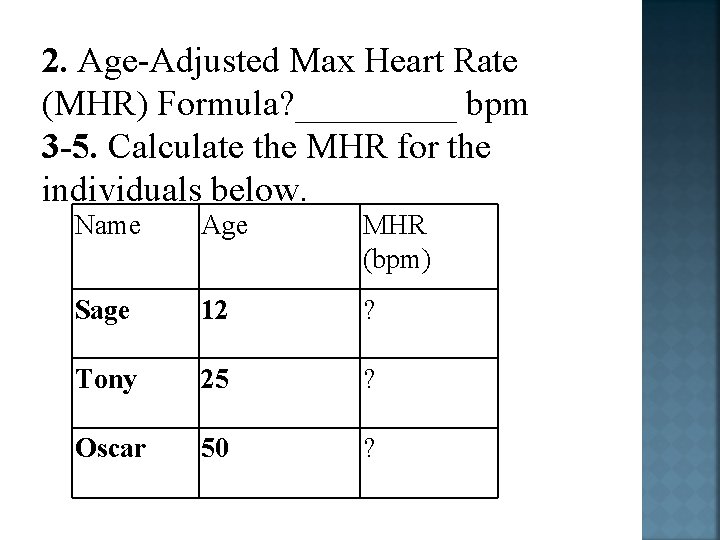
2. Age-Adjusted Max Heart Rate (MHR) Formula? _____ bpm 3 -5. Calculate the MHR for the individuals below. Name Age MHR (bpm) Sage 12 ? Tony 25 ? Oscar 50 ?
- Slides: 50