
F I R S T A I D

- Slides: 22
F I R S T A I D T R A I N G Enhanced Adult Resuscitation Lesson Outline • Heart attack, stroke • CPR and AED • Choking Enhanced © St John Adult Ambulance Resuscitation– Canada Slide 22 -1
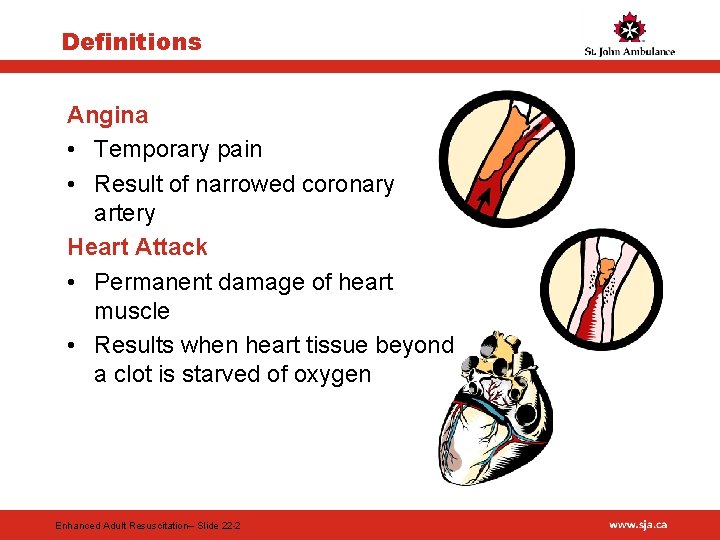
Definitions Angina • Temporary pain • Result of narrowed coronary artery Heart Attack • Permanent damage of heart muscle • Results when heart tissue beyond a clot is starved of oxygen Enhanced Adult Resuscitation– Slide 22 -2
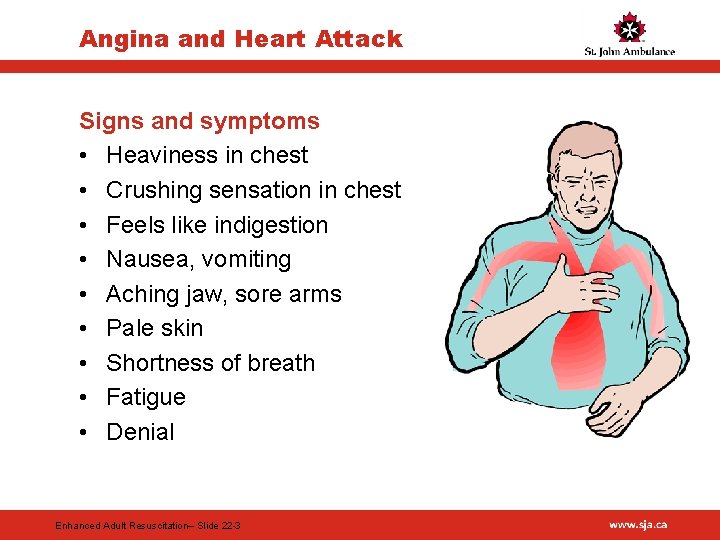
Angina and Heart Attack Signs and symptoms • Heaviness in chest • Crushing sensation in chest • Feels like indigestion • Nausea, vomiting • Aching jaw, sore arms • Pale skin • Shortness of breath • Fatigue • Denial Enhanced Adult Resuscitation– Slide 22 -3
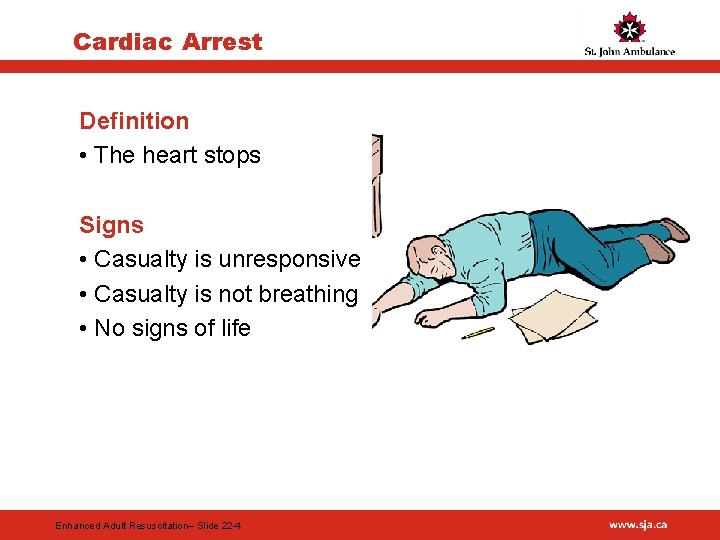
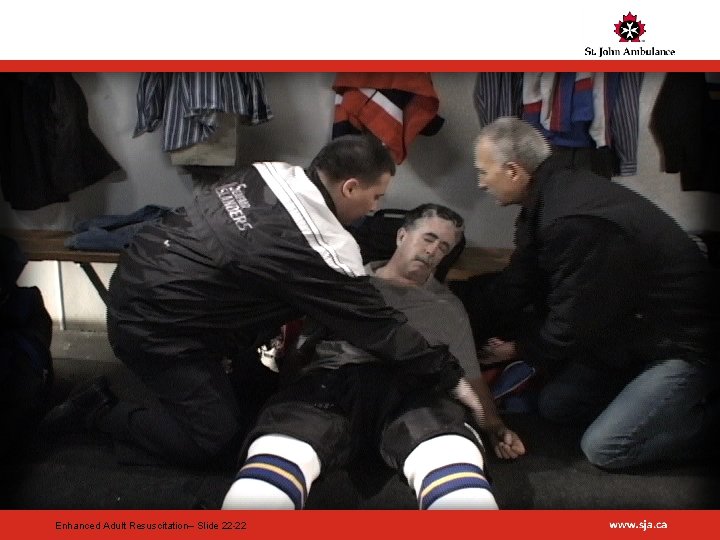
Cardiac Arrest Definition • The heart stops Signs • Casualty is unresponsive • Casualty is not breathing • No signs of life Enhanced Adult Resuscitation– Slide 22 -4
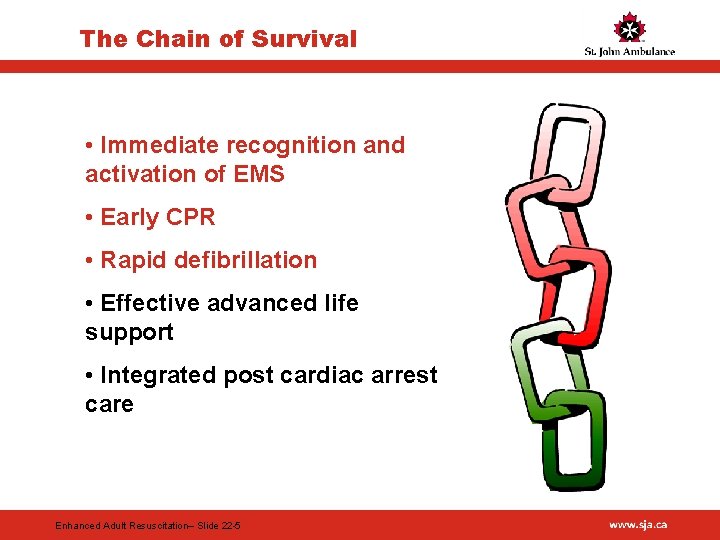
The Chain of Survival • Immediate recognition and activation of EMS • Early CPR • Rapid defibrillation • Effective advanced life support • Integrated post cardiac arrest care Enhanced Adult Resuscitation– Slide 22 -5
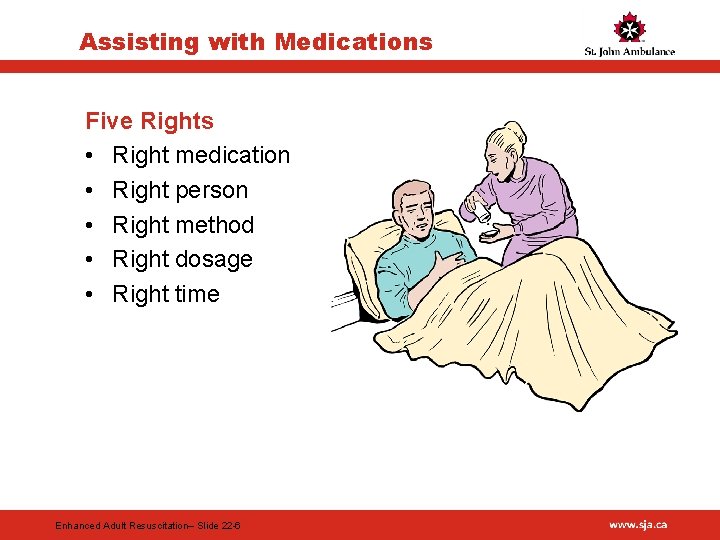
Assisting with Medications Five Rights • Right medication • Right person • Right method • Right dosage • Right time Enhanced Adult Resuscitation– Slide 22 -6
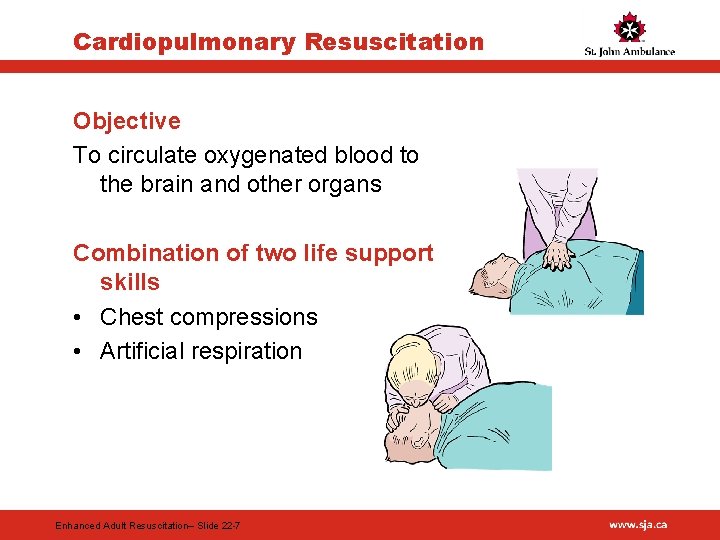
Cardiopulmonary Resuscitation Objective To circulate oxygenated blood to the brain and other organs Combination of two life support skills • Chest compressions • Artificial respiration Enhanced Adult Resuscitation– Slide 22 -7
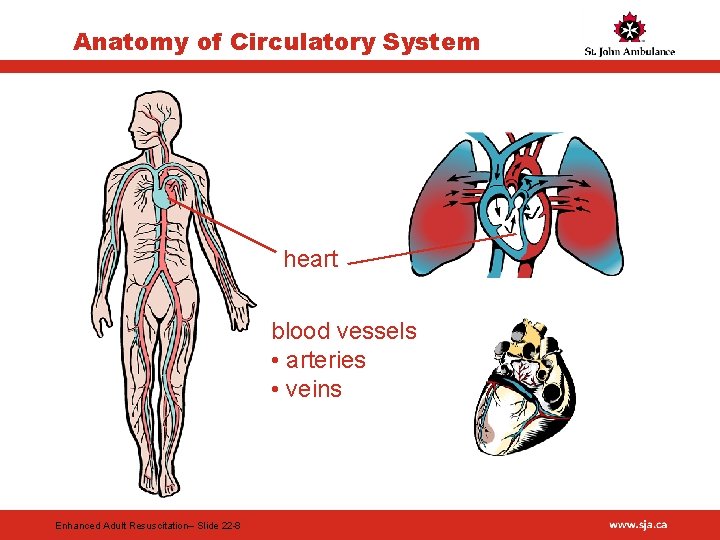
Anatomy of Circulatory System heart blood vessels • arteries • veins Enhanced Adult Resuscitation– Slide 22 -8
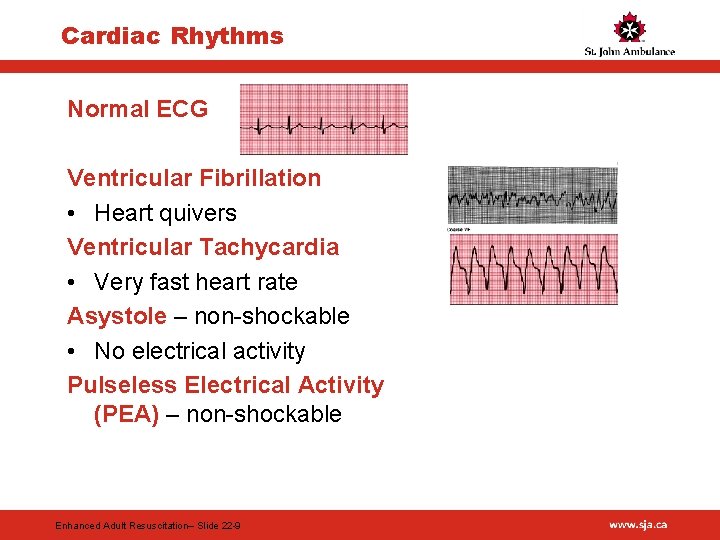
Cardiac Rhythms Normal ECG Ventricular Fibrillation • Heart quivers Ventricular Tachycardia • Very fast heart rate Asystole – non-shockable • No electrical activity Pulseless Electrical Activity (PEA) – non-shockable Enhanced Adult Resuscitation– Slide 22 -9
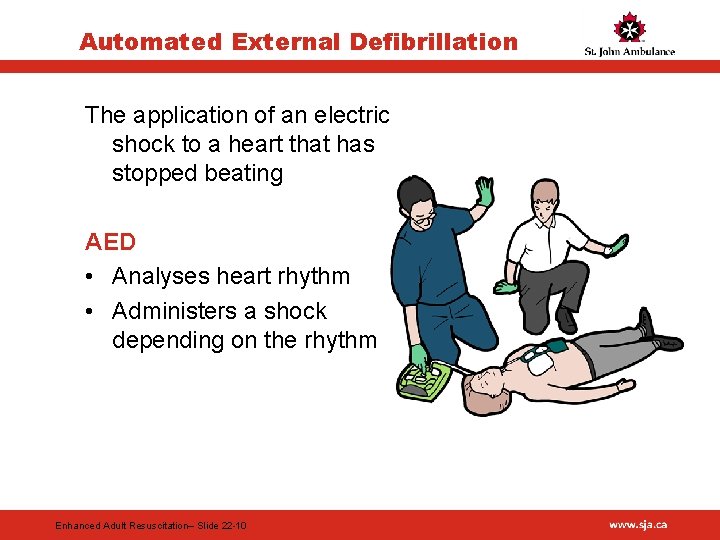
Automated External Defibrillation The application of an electric shock to a heart that has stopped beating AED • Analyses heart rhythm • Administers a shock depending on the rhythm Enhanced Adult Resuscitation– Slide 22 -10
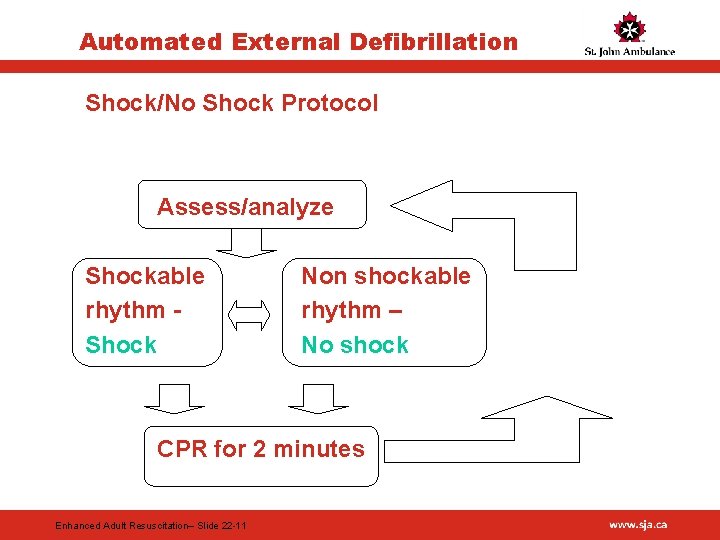
Automated External Defibrillation Shock/No Shock Protocol Assess/analyze Shockable rhythm Shock Non shockable rhythm – No shock CPR for 2 minutes Enhanced Adult Resuscitation– Slide 22 -11
Automated External Defibrillation Special circumstances • Pregnant casualties • Casualties with pacemakers or implanted defibrillators • Children and infants • Trauma casualties • Hypothermic casualties • Casualties with patch medications • AED in a wet environment • AED on a metal surface Enhanced Adult Resuscitation– Slide 22 -12
Automated External Defibrillation When to stop using AED • When EMS personnel take over care of the casualty • If the casualty regains consciousness – do not detach AED pads Position casualty in recovery position Continue to monitor breathing and responsiveness Enhanced Adult Resuscitation– Slide 22 -13
Automated External Defibrillation Transfer of care • Time of collapse • Time of CPR performed • Time of first shock • Number of shocks Confirm who will be responsible for download from AED Enhanced Adult Resuscitation– Slide 22 -14
Automated External Defibrillation Post event responsibilities • Transfer of care to EMS personnel • Recordkeeping and reporting • Maintenance of AED • Follow up with first aider Enhanced Adult Resuscitation– Slide 22 -15
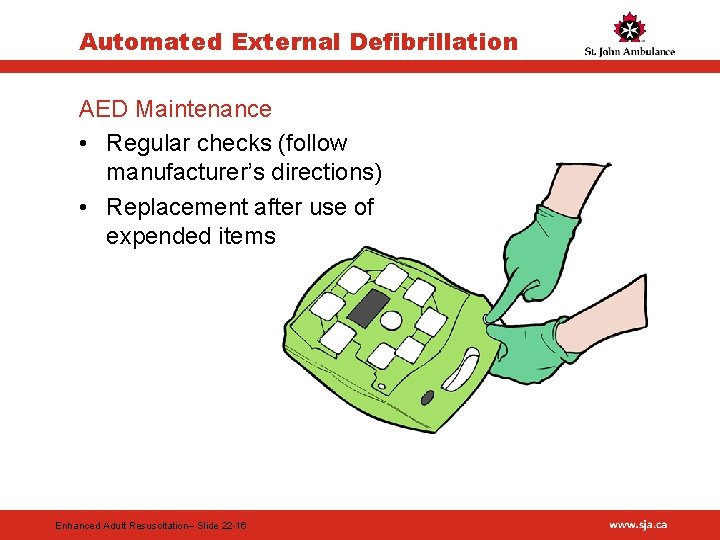
Automated External Defibrillation AED Maintenance • Regular checks (follow manufacturer’s directions) • Replacement after use of expended items Enhanced Adult Resuscitation– Slide 22 -16
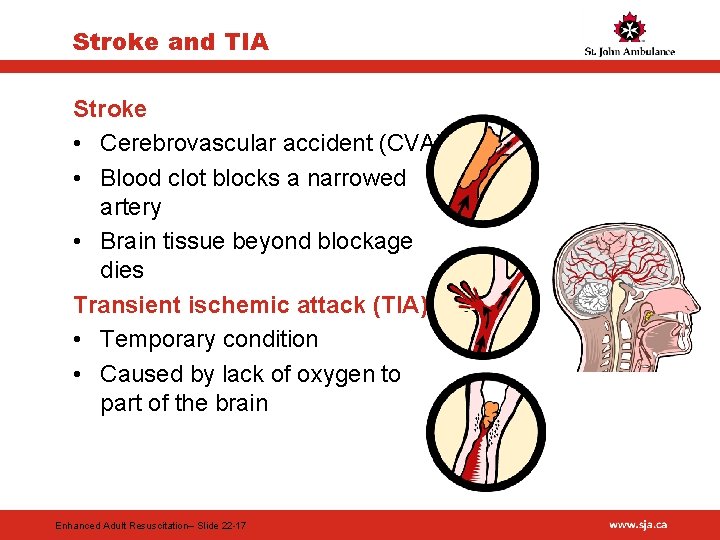
Stroke and TIA Stroke • Cerebrovascular accident (CVA) • Blood clot blocks a narrowed artery • Brain tissue beyond blockage dies Transient ischemic attack (TIA) • Temporary condition • Caused by lack of oxygen to part of the brain Enhanced Adult Resuscitation– Slide 22 -17
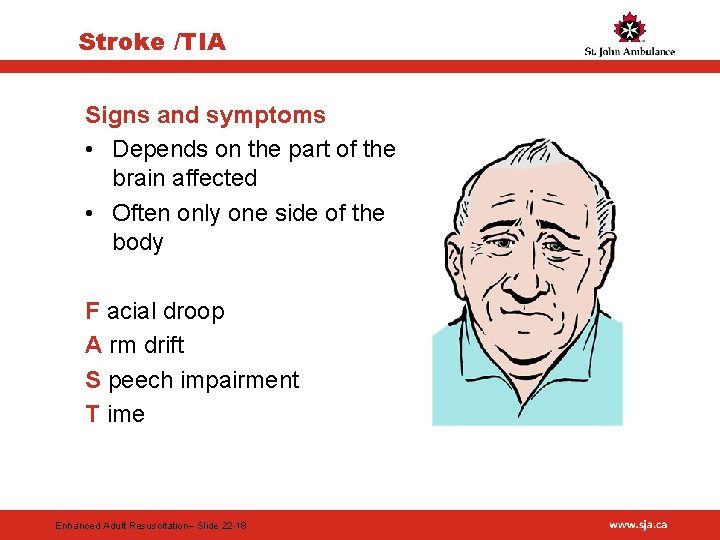
Stroke /TIA Signs and symptoms • Depends on the part of the brain affected • Often only one side of the body F acial droop A rm drift S peech impairment T ime Enhanced Adult Resuscitation– Slide 22 -18
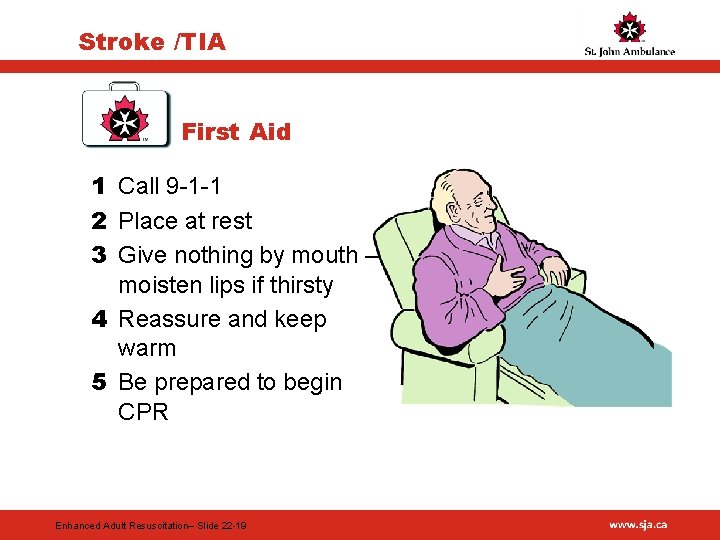
Stroke /TIA First Aid 1 Call 9 -1 -1 2 Place at rest 3 Give nothing by mouth – moisten lips if thirsty 4 Reassure and keep warm 5 Be prepared to begin CPR Enhanced Adult Resuscitation– Slide 22 -19
Enhanced Adult Resuscitation– Slide 22 -20
Enhanced Adult Resuscitation– Slide 22 -21
Enhanced Adult Resuscitation– Slide 22 -22