
EYFS and Year 1 Phonics Parent Meeting Thursday
- Slides: 17
EYFS and Year 1 Phonics Parent Meeting Thursday 13 th February 2020
What is phonics? • Children are taught to read by breaking down words into separate sounds or ‘phonemes’. They are then taught how to blend these sounds together to read the whole word. Children have a phonics lesson each day and they are encouraged to use these strategies to read and write in other lessons. There around 40 different sounds.
Year 1 Phonics Screening Check Towards the end of the year all children will have a phonics screening check which consists of both real and ‘alien’ – made up words containing the sounds that have been taught throughout the year.
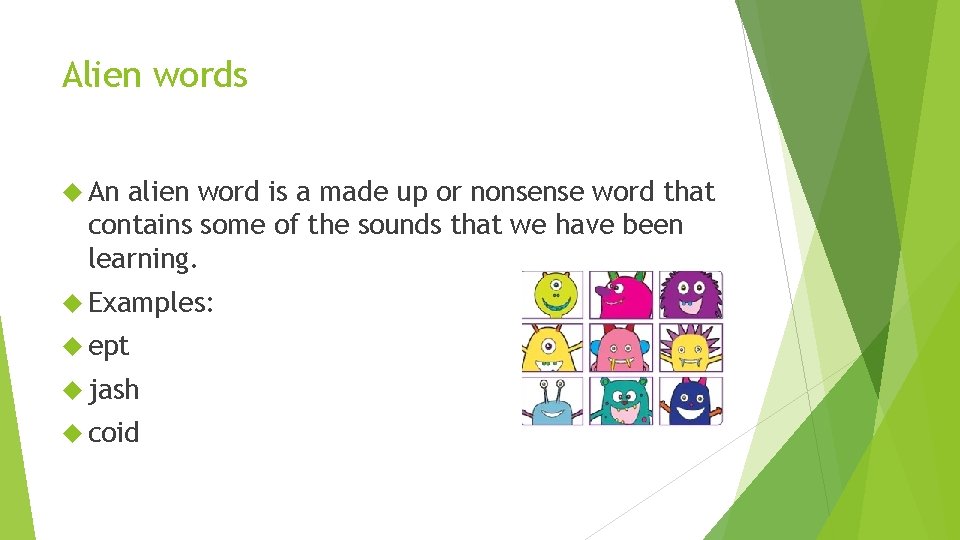
Alien words An alien word is a made up or nonsense word that contains some of the sounds that we have been learning. Examples: ept jash coid
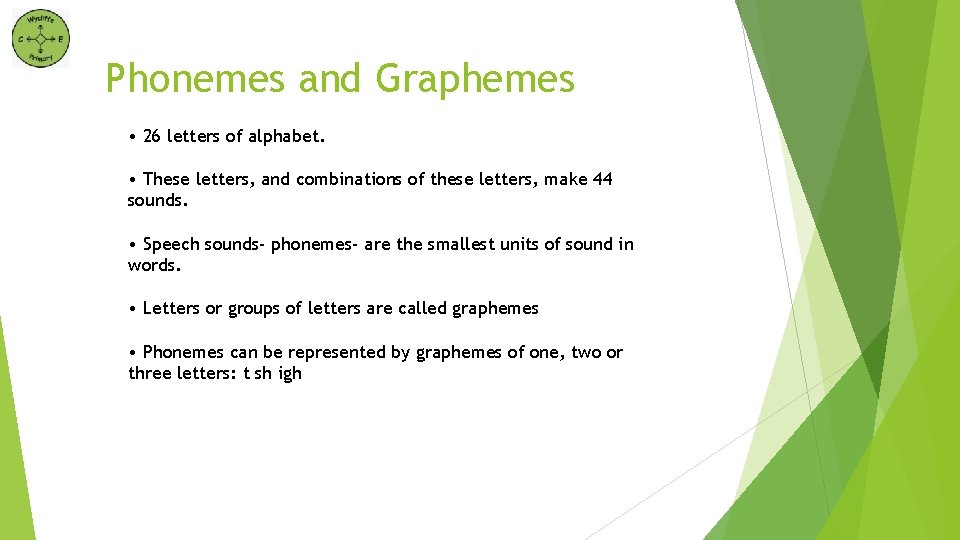
Phonemes and Graphemes • 26 letters of alphabet. • These letters, and combinations of these letters, make 44 sounds. • Speech sounds- phonemes- are the smallest units of sound in words. • Letters or groups of letters are called graphemes • Phonemes can be represented by graphemes of one, two or three letters: t sh igh
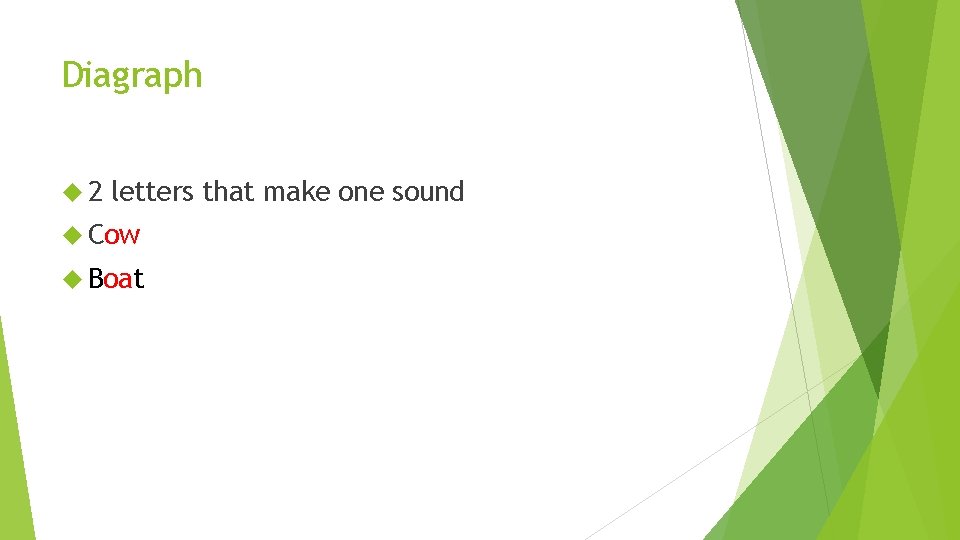
Diagraph 2 letters that make one sound Cow Boat
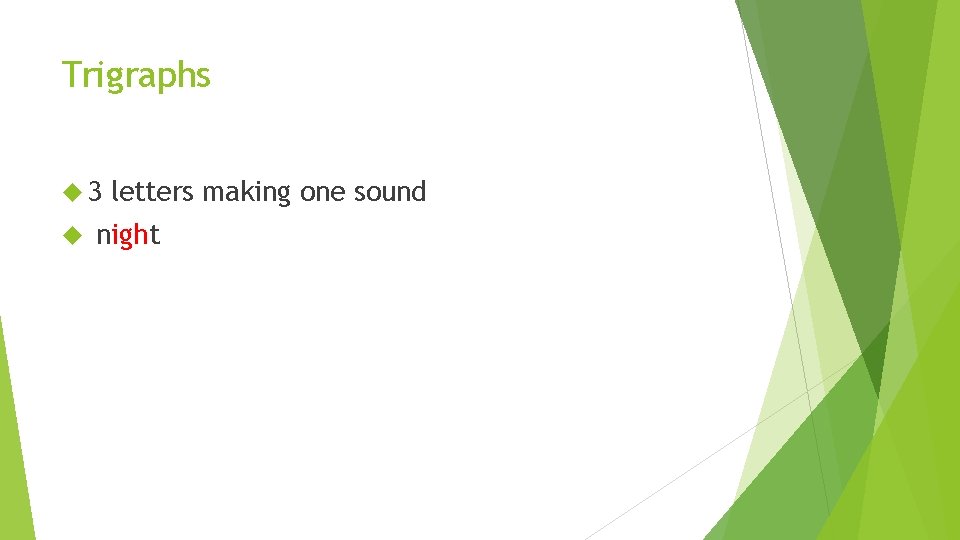
Trigraphs 3 letters making one sound night
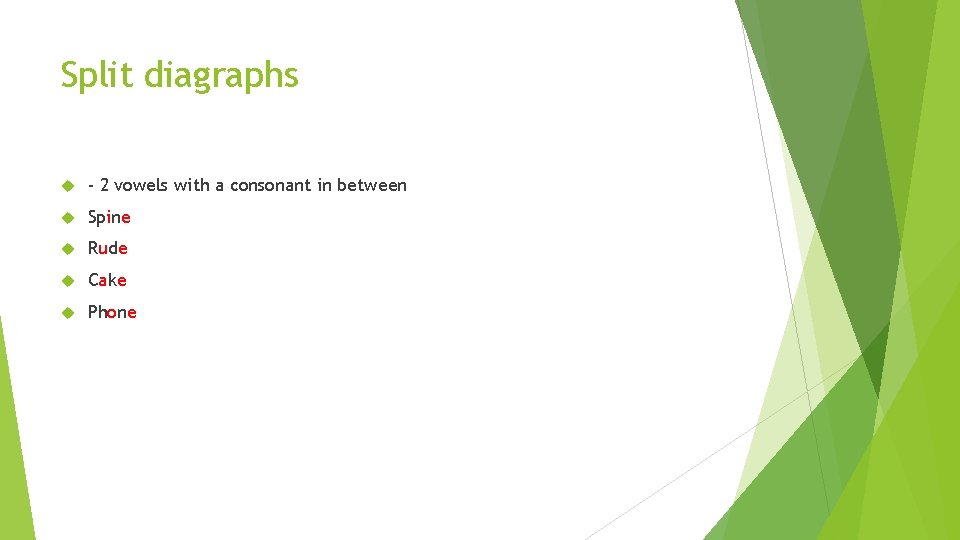
Split diagraphs - 2 vowels with a consonant in between Spine Rude Cake Phone
Segmenting ‘Chopping Up’ the word to S- p- e- ll it out. The opposite of blending.
Blending Recognising the letter sounds in a written word, for example c-a-t. and synthesising or blending them in the order in which they are written to pronounce the word ‘cat’.
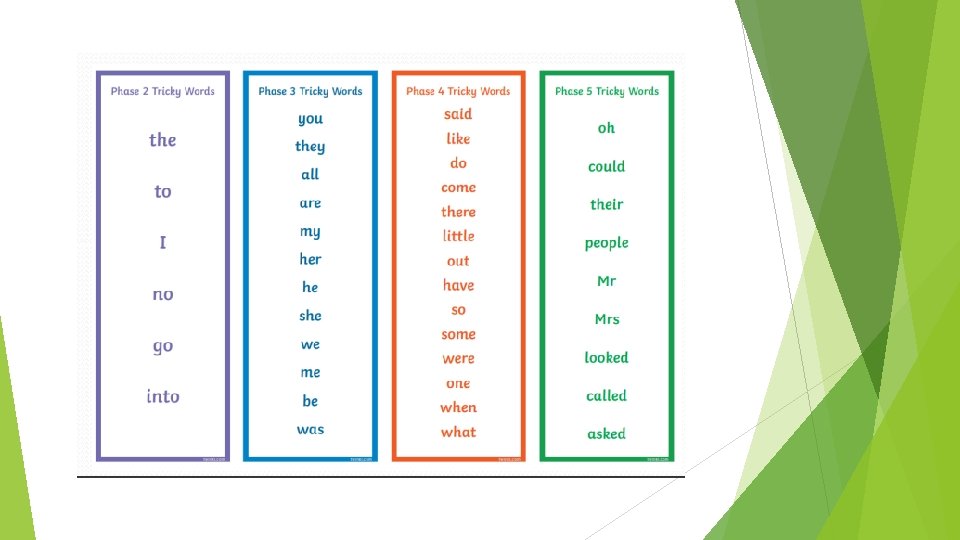
Tricky words These are words that have to be taught through repeated revision. The children need to learn these by sight as they cannot be segmented/blended.
Phonics at Wycliffe In Reception, children should be secure in Phase 2 by Christmas. In Reception, we teach 5 stand alone phonics lessons a week but phonics is a part of our everyday teaching and learning. In Year One, we recap phase 3 sounds to make sure these are embedded before moving on to learning the phase 5 sounds. We learn 4 new sounds a week. In Year One, we teach 4 stand alone phonics lessons a week but phonics is a part of our everyday teaching and learning.
Typical phonics session Revisit and Review • Practise previously learned letters • Practise oral blending and segmentation Teach • Teach a new phoneme/grapheme correspondence • Teach blending and/or segmentation with letters • Teach one or two tricky words Practise reading and/or spelling words through games and activities. Apply Read or write a caption or sentence (with the teacher) using one or more high frequency words and words containing newly learnt phoneme/grapheme correspondences. Assess Learning against criteria.
Reading and spelling Your child is read with once a week with their class teacher. In this time, we look at phonics and developing fluency as well as working on comprehension. Ideally you need to read with your child daily or as often as possible and write a comment in their reading records. We also send out weekly spellings that we link to the phonics sounds or what we have been covering in our English lessons. It is really beneficial for your child to learn their spellings and this links directly to their reading.
How you can help Read with your child at home as much as possible looking at segmenting and blending words and also spotting any tricky words. There are some flashcards for each phase for you to take home and these are great to use for a quick recap.
Any questions?