
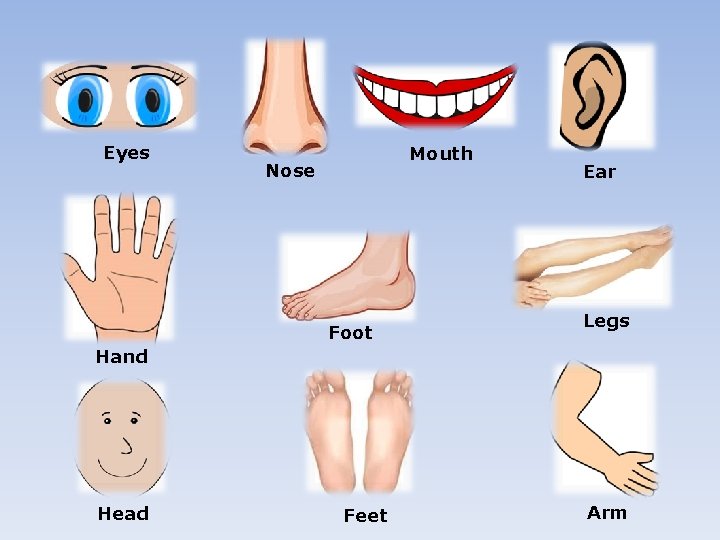
Eyes Mouth Nose Foot Ear Legs Hand Head
- Slides: 8
Eyes Mouth Nose Foot Ear Legs Hand Head Feet Arm
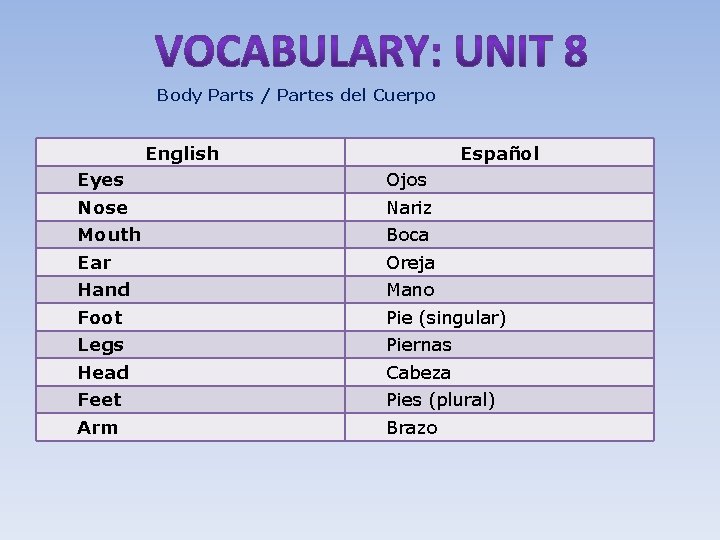
Body Parts / Partes del Cuerpo English Español Eyes Ojos Nose Nariz Mouth Boca Ear Oreja Hand Mano Foot Pie (singular) Legs Piernas Head Cabeza Feet Pies (plural) Arm Brazo
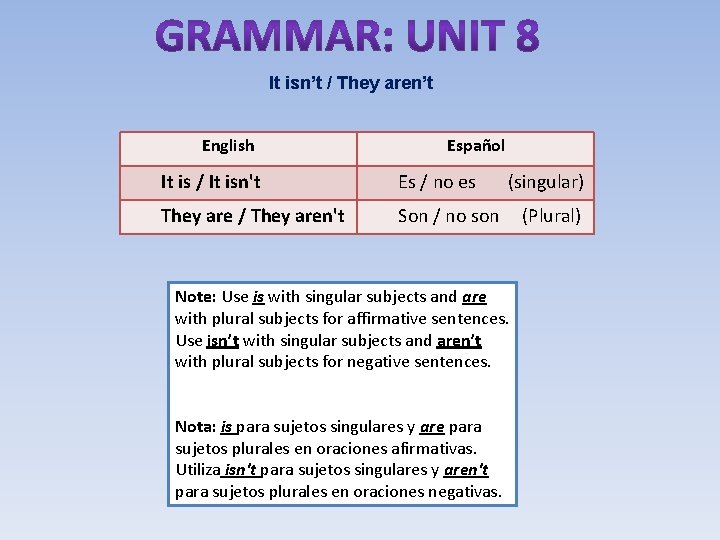
It isn’t / They aren’t English Español It is / It isn't Es / no es They are / They aren't Son / no son (singular) Note: Use is with singular subjects and are with plural subjects for affirmative sentences. Use isn’t with singular subjects and aren’t with plural subjects for negative sentences. Nota: is para sujetos singulares y are para sujetos plurales en oraciones afirmativas. Utiliza isn't para sujetos singulares y aren't para sujetos plurales en oraciones negativas. (Plural)
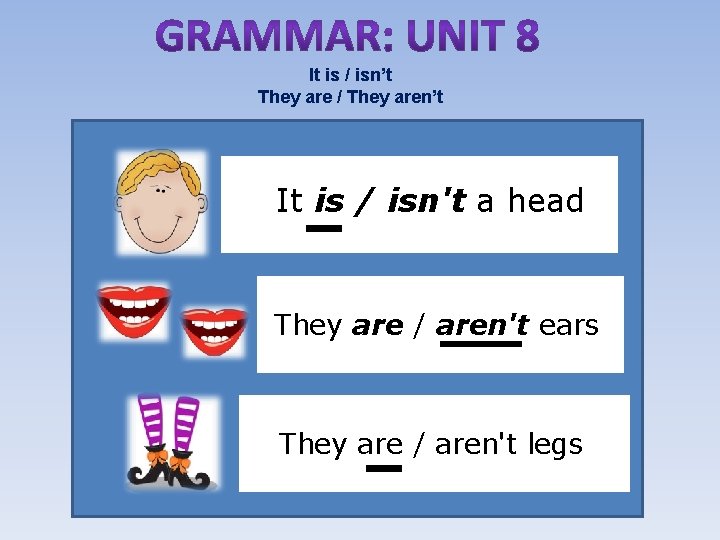
It is / isn’t They are / They aren’t It is / isn't a head They are / aren't ears They are / aren't legs
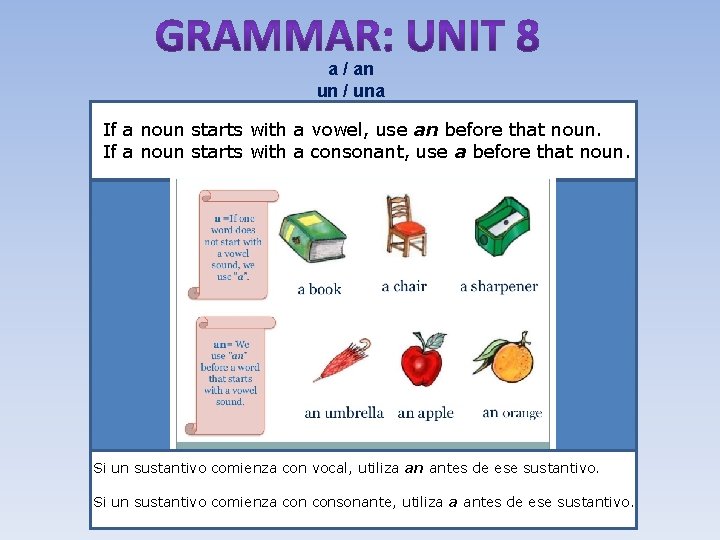
a / an un / una If a noun starts with a vowel, use an before that noun. If a noun starts with a consonant, use a before that noun. Si un sustantivo comienza con vocal, utiliza an antes de ese sustantivo. Si un sustantivo comienza consonante, utiliza a antes de ese sustantivo.
Verb to have English I have Español Yo tengo Note: We use the verb have to indicate that we possess something. Nota: Utilizamos el verbo have para indicar que poseemos algo.
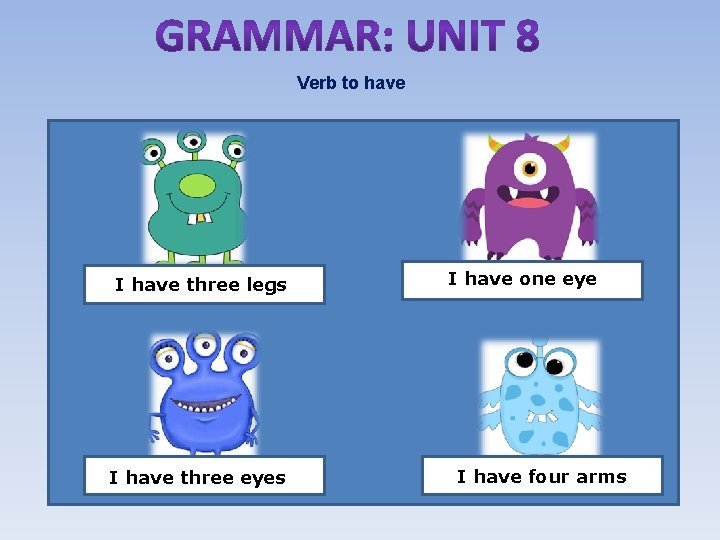
Verb to have I have three legs I have three eyes I have one eye I have four arms