
Eyeglasses with controllable refracting power 6 10 Light
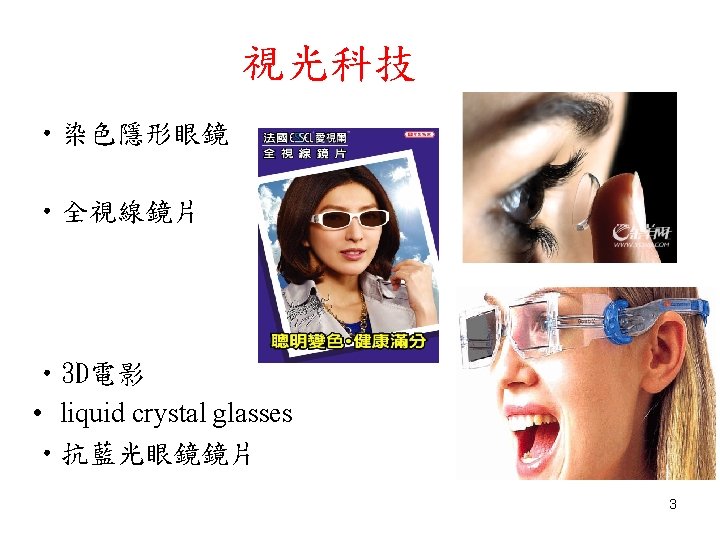
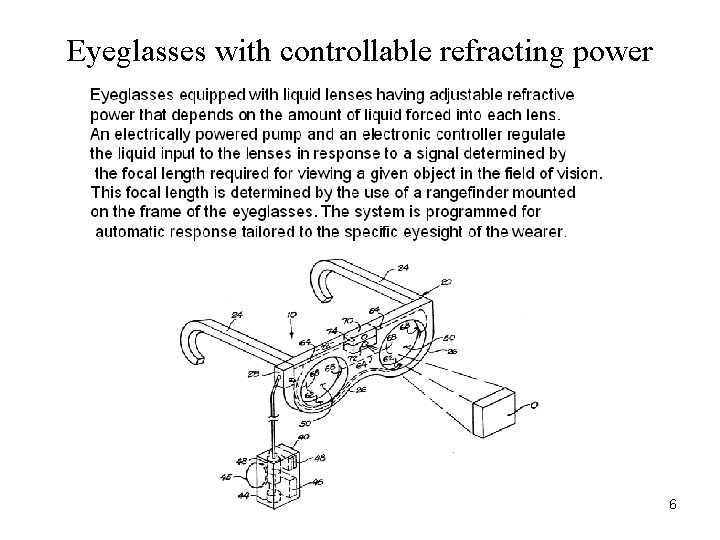
Eyeglasses with controllable refracting power 6
10
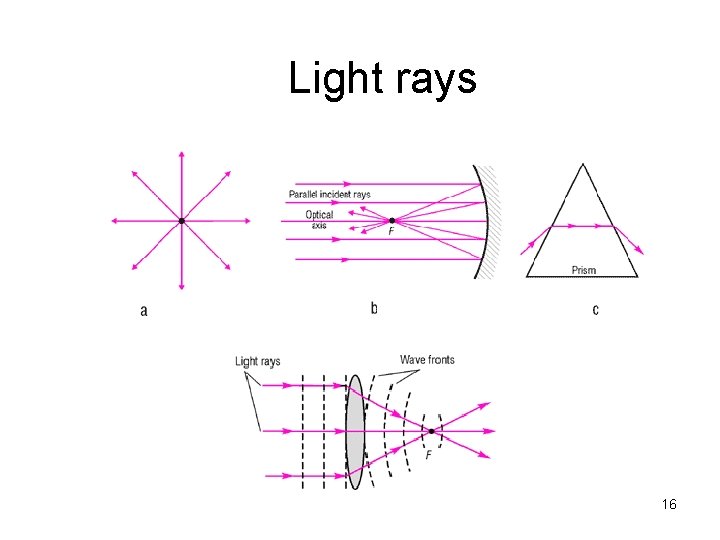
Light rays 16
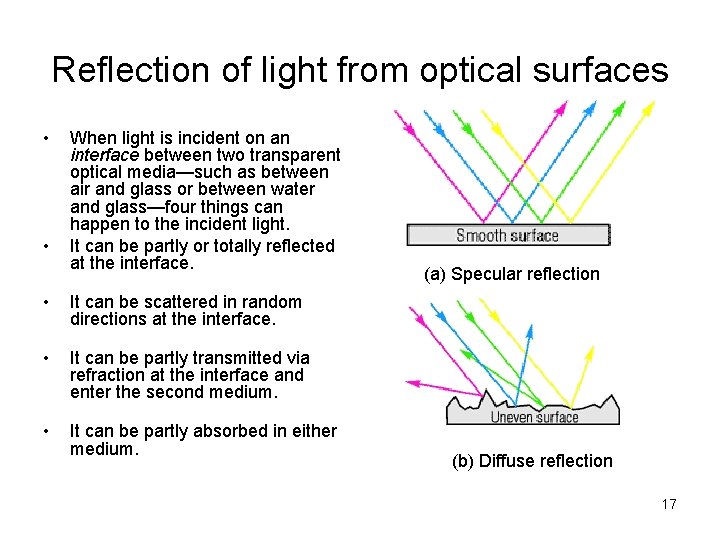
Reflection of light from optical surfaces • • When light is incident on an interface between two transparent optical media—such as between air and glass or between water and glass—four things can happen to the incident light. It can be partly or totally reflected at the interface. • It can be scattered in random directions at the interface. • It can be partly transmitted via refraction at the interface and enter the second medium. • It can be partly absorbed in either medium. (a) Specular reflection (b) Diffuse reflection 17
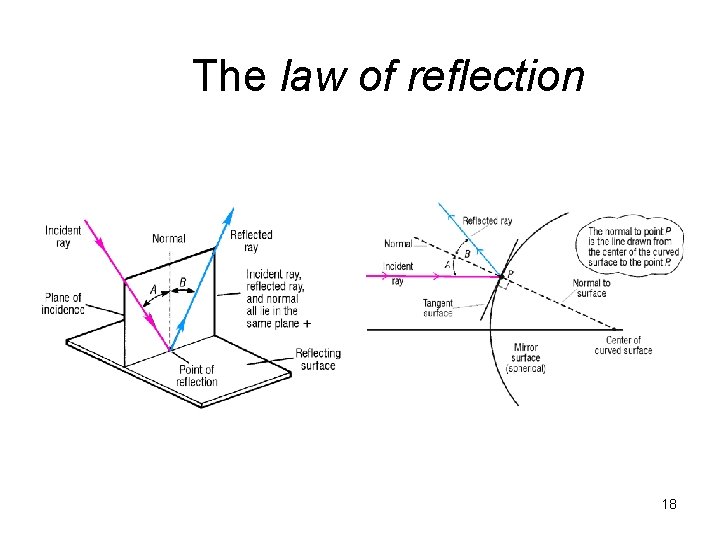
The law of reflection 18
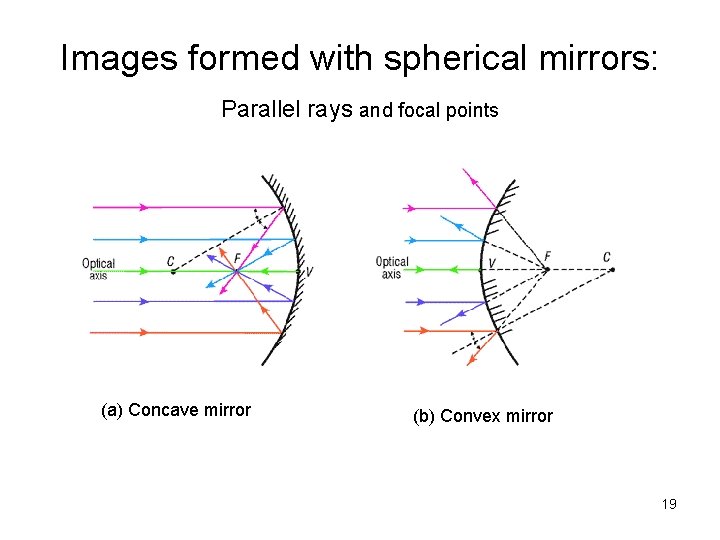
Images formed with spherical mirrors: Parallel rays and focal points (a) Concave mirror (b) Convex mirror 19
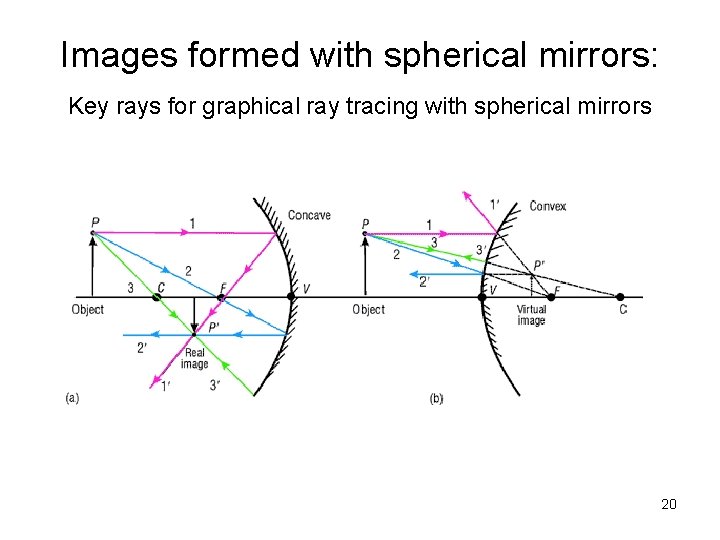
Images formed with spherical mirrors: Key rays for graphical ray tracing with spherical mirrors 20
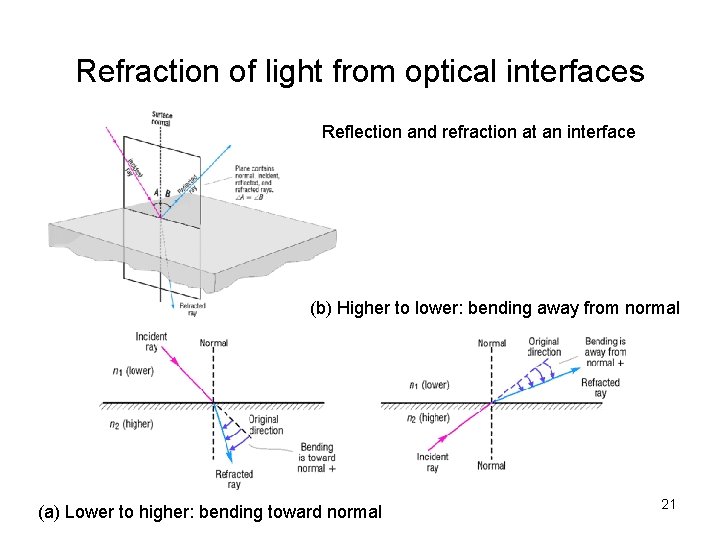
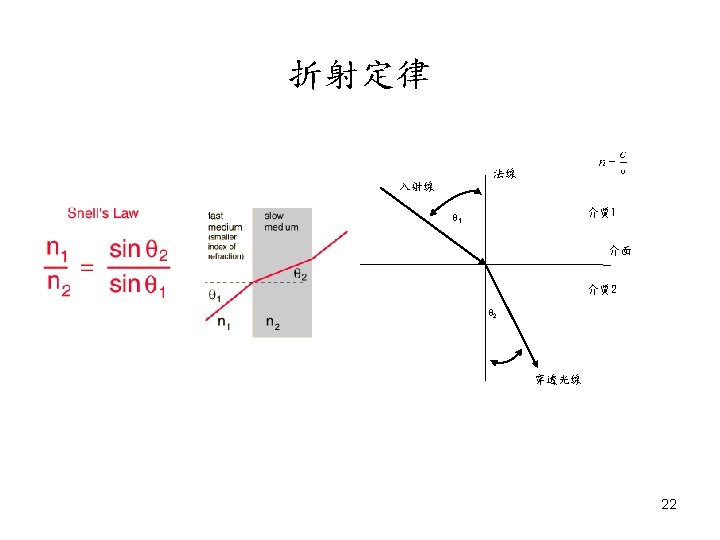
Refraction of light from optical interfaces Reflection and refraction at an interface (b) Higher to lower: bending away from normal (a) Lower to higher: bending toward normal 21
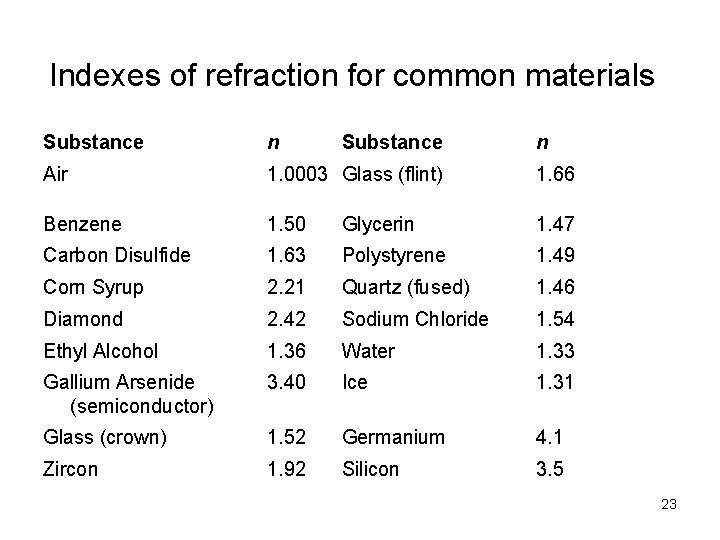
Indexes of refraction for common materials Substance n Air 1. 0003 Glass (flint) 1. 66 Benzene 1. 50 Glycerin 1. 47 Carbon Disulfide 1. 63 Polystyrene 1. 49 Corn Syrup 2. 21 Quartz (fused) 1. 46 Diamond 2. 42 Sodium Chloride 1. 54 Ethyl Alcohol 1. 36 Water 1. 33 Gallium Arsenide (semiconductor) 3. 40 Ice 1. 31 Glass (crown) 1. 52 Germanium 4. 1 Zircon 1. 92 Silicon 3. 5 23
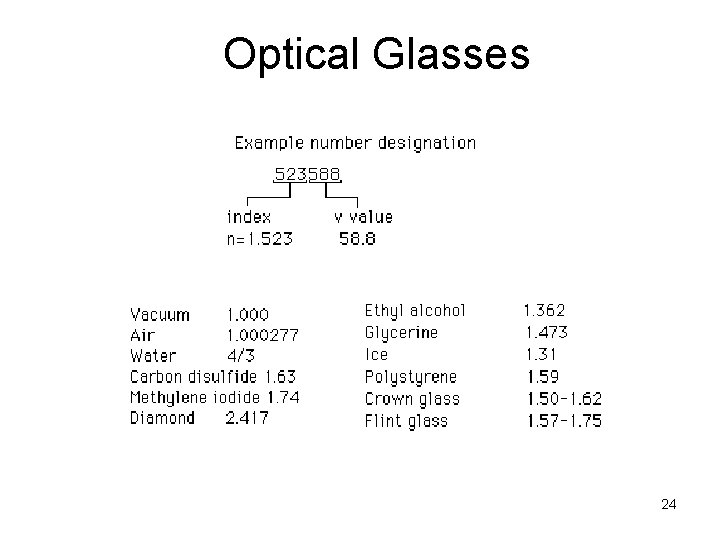
Optical Glasses 24
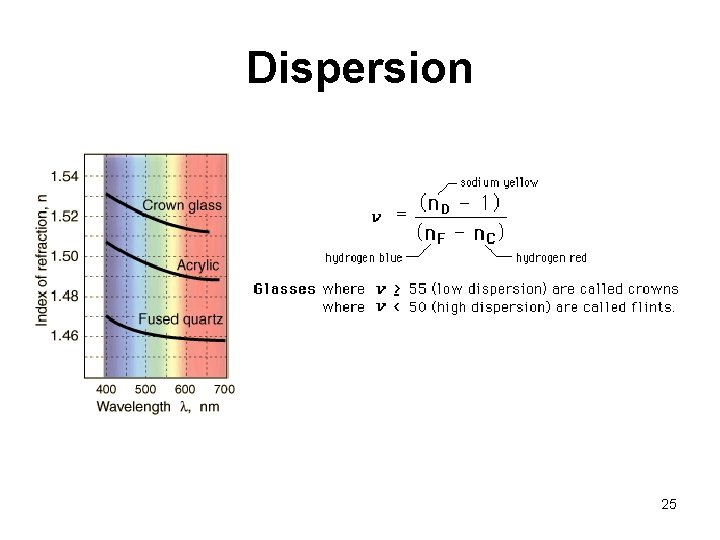
Dispersion 25
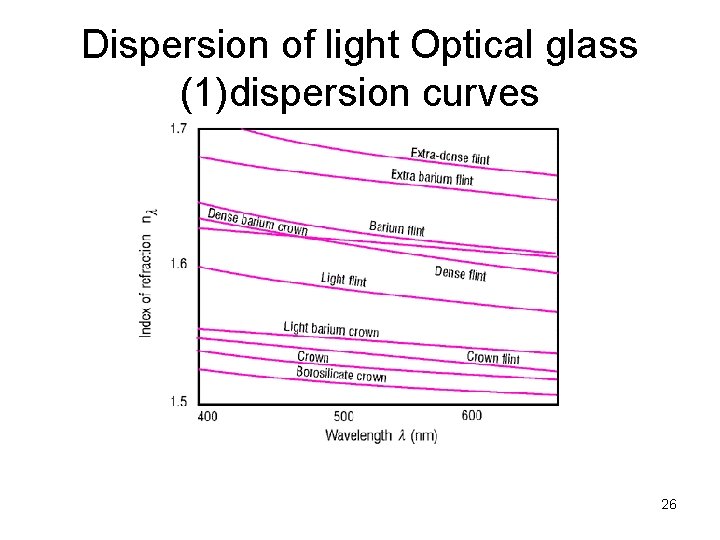
Dispersion of light Optical glass (1)dispersion curves 26
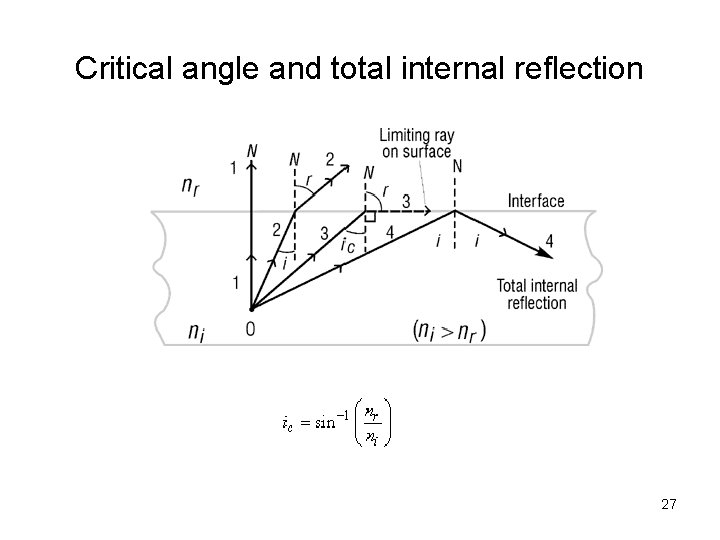
Critical angle and total internal reflection 27
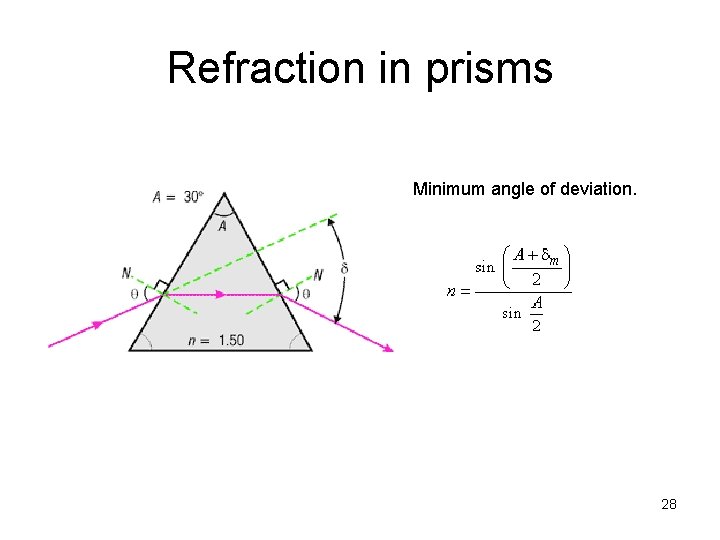
Refraction in prisms Minimum angle of deviation. 28
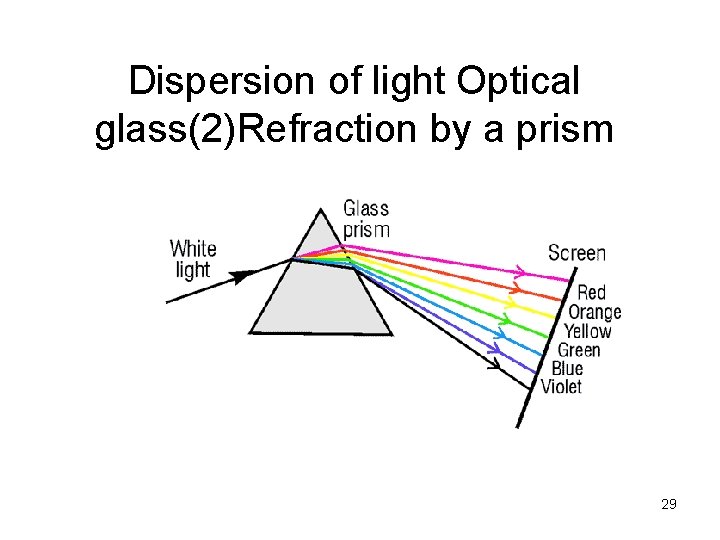
Dispersion of light Optical glass(2)Refraction by a prism 29
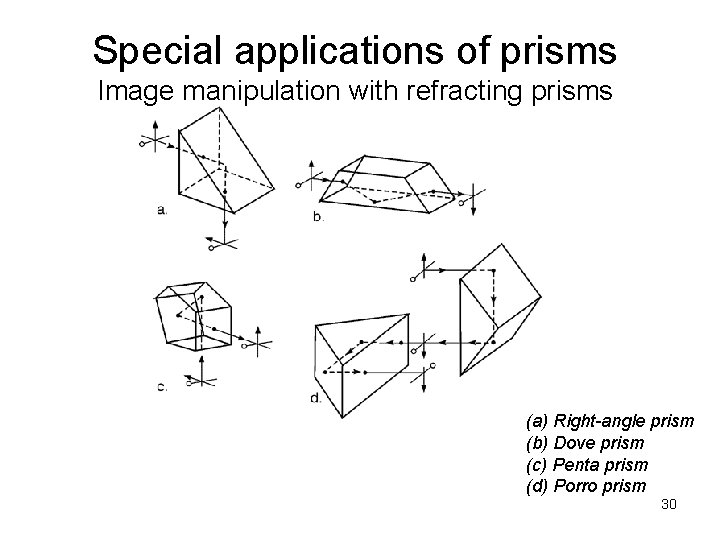
Special applications of prisms Image manipulation with refracting prisms (a) Right-angle prism (b) Dove prism (c) Penta prism (d) Porro prism 30
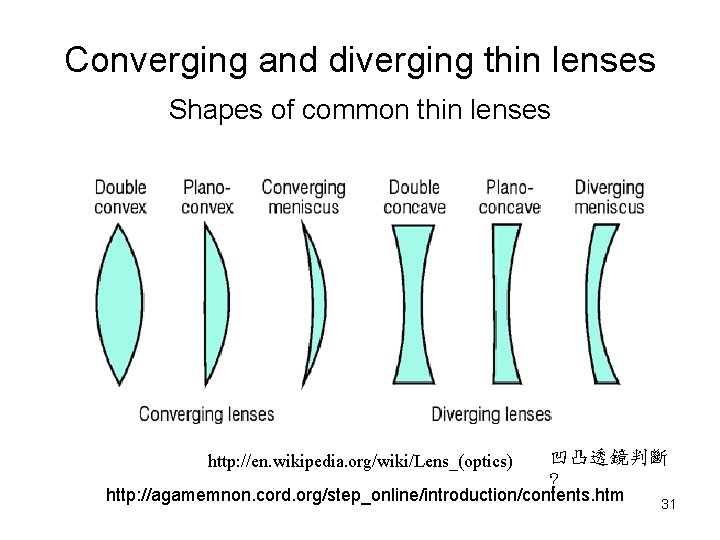
Converging and diverging thin lenses Shapes of common thin lenses http: //en. wikipedia. org/wiki/Lens_(optics) 凹凸透鏡判斷 ? http: //agamemnon. cord. org/step_online/introduction/contents. htm 31
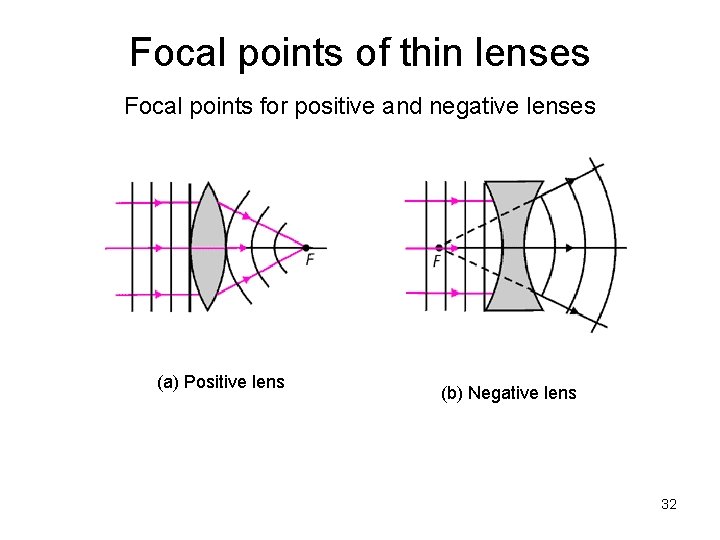
Focal points of thin lenses Focal points for positive and negative lenses (a) Positive lens (b) Negative lens 32
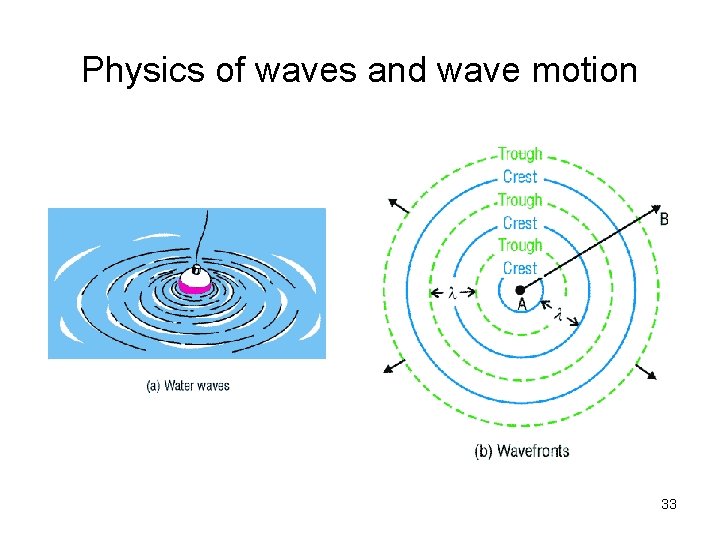
Physics of waves and wave motion 33
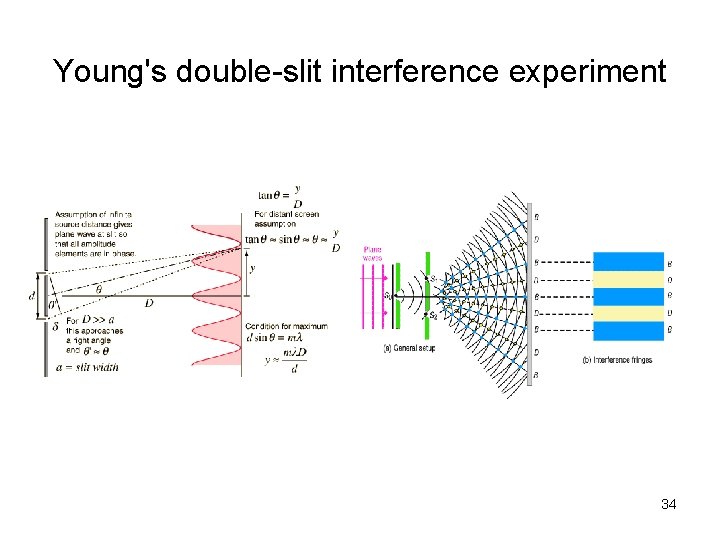
Young's double-slit interference experiment 34
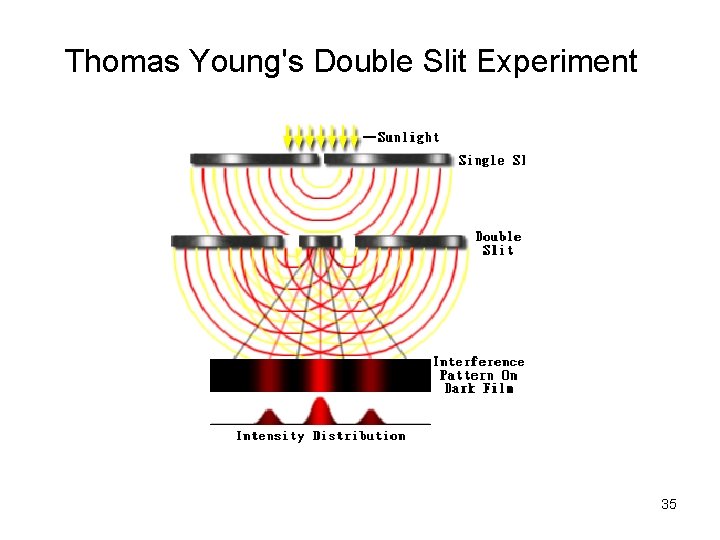
Thomas Young's Double Slit Experiment 35
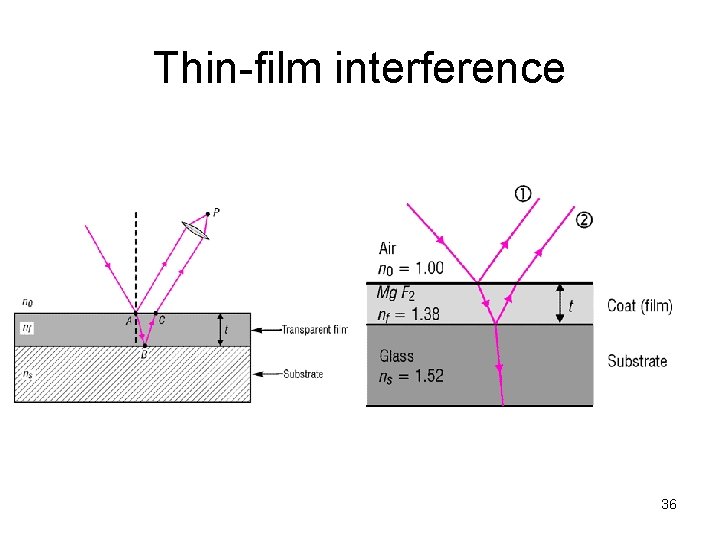
Thin-film interference 36
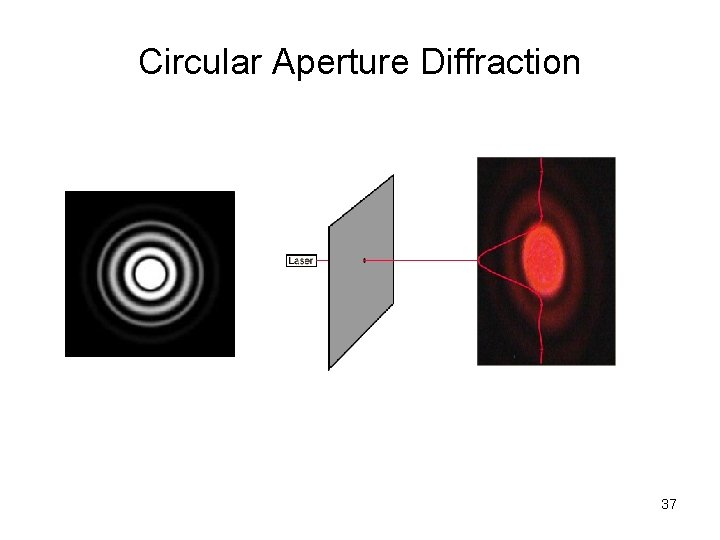
Circular Aperture Diffraction 37
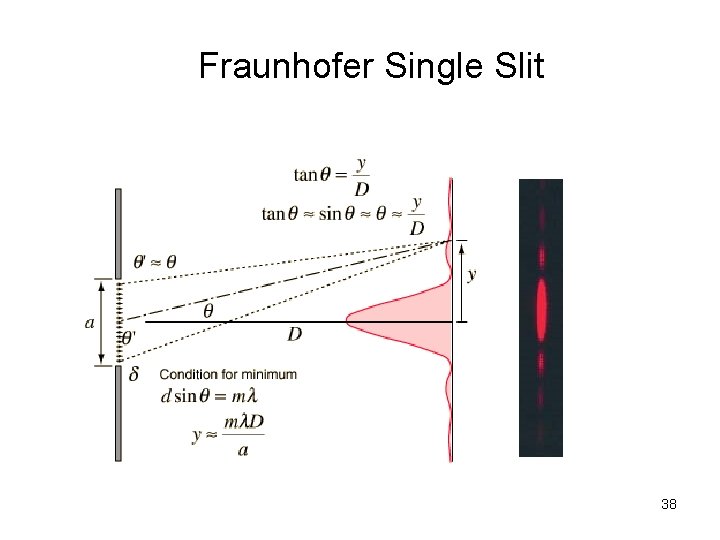
Fraunhofer Single Slit 38
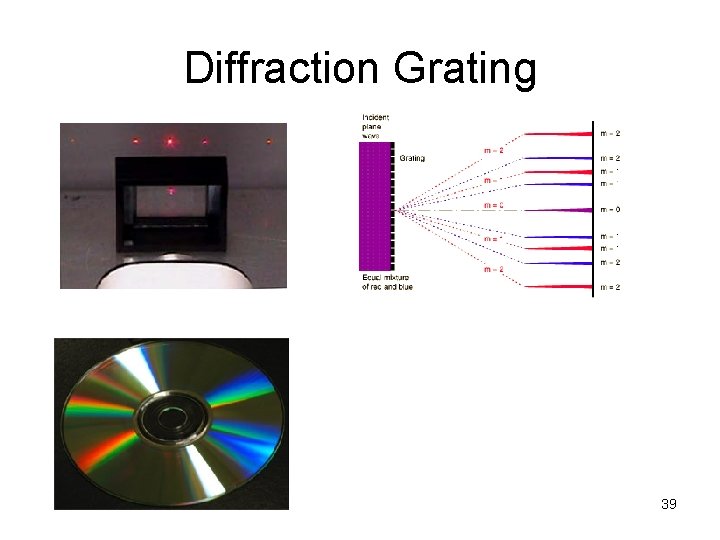
Diffraction Grating 39
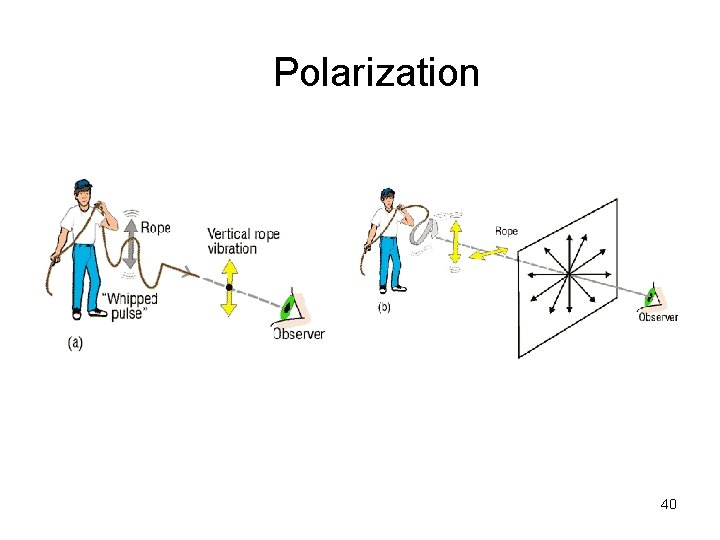
Polarization 40
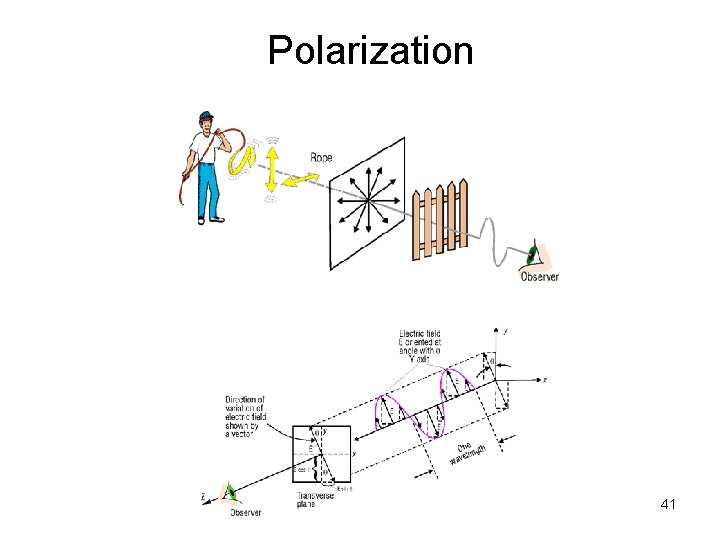
Polarization 41
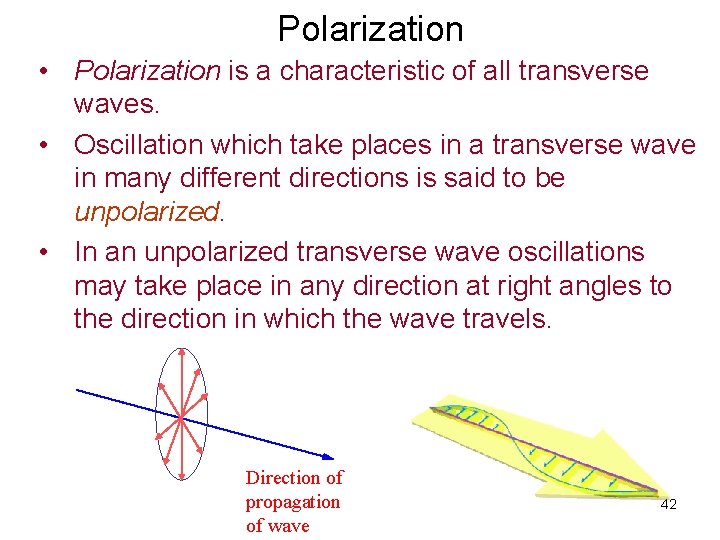
Polarization • Polarization is a characteristic of all transverse waves. • Oscillation which take places in a transverse wave in many different directions is said to be unpolarized. • In an unpolarized transverse wave oscillations may take place in any direction at right angles to the direction in which the wave travels. Direction of propagation of wave 42
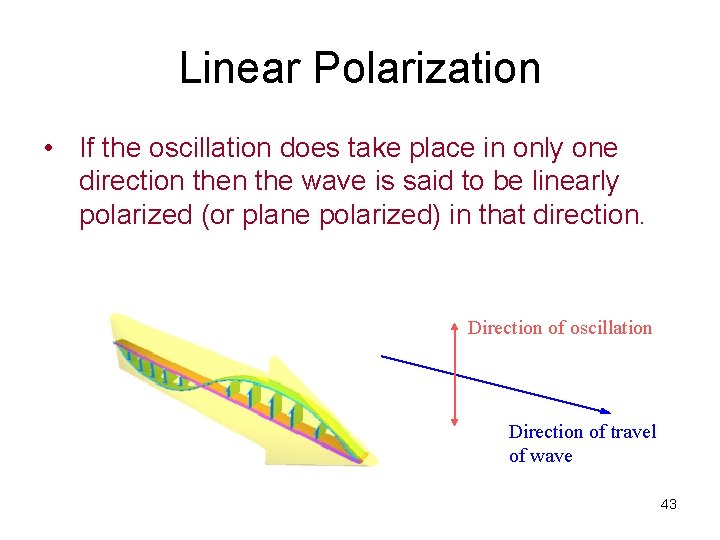
Linear Polarization • If the oscillation does take place in only one direction the wave is said to be linearly polarized (or plane polarized) in that direction. Direction of oscillation Direction of travel of wave 43
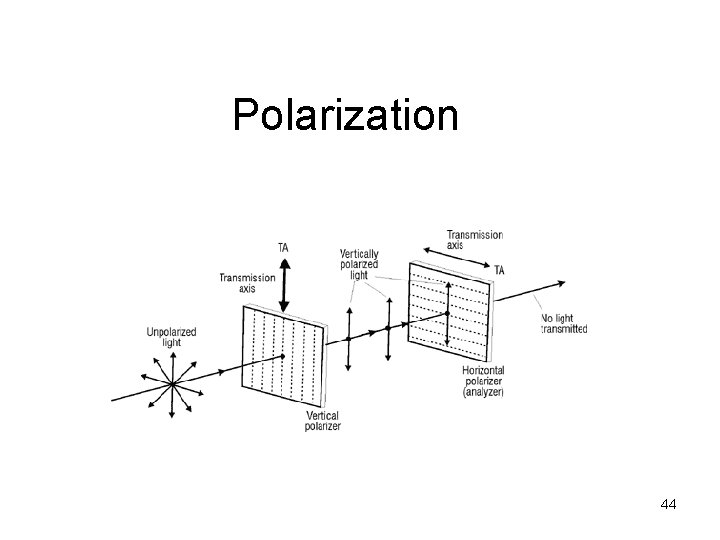
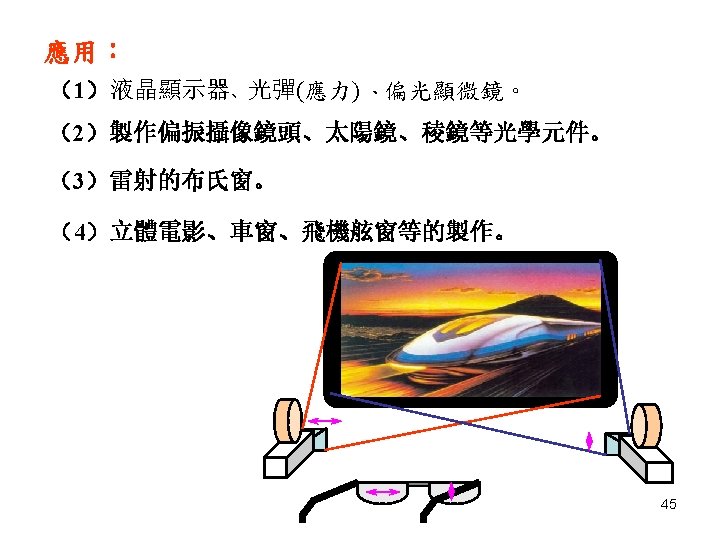
Polarization 44
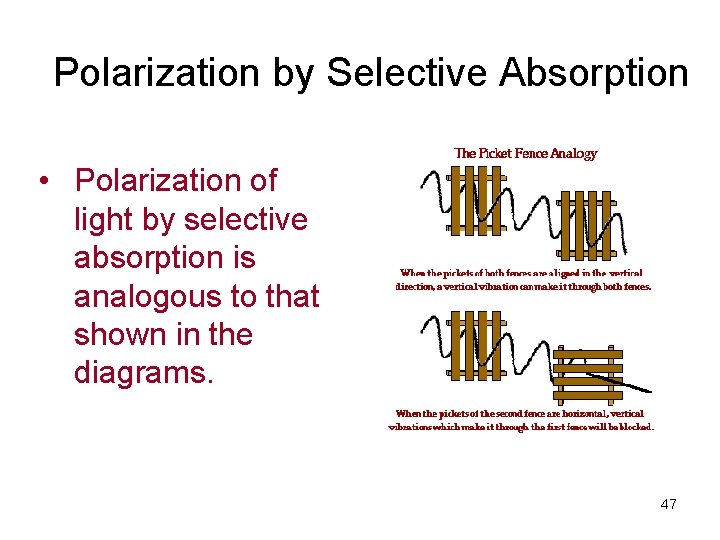
Polarization by Selective Absorption • Polarization of light by selective absorption is analogous to that shown in the diagrams. 47
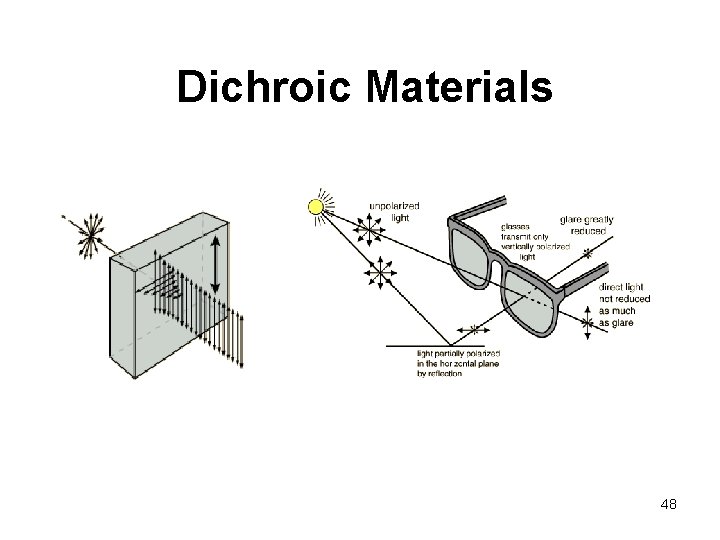
Dichroic Materials 48
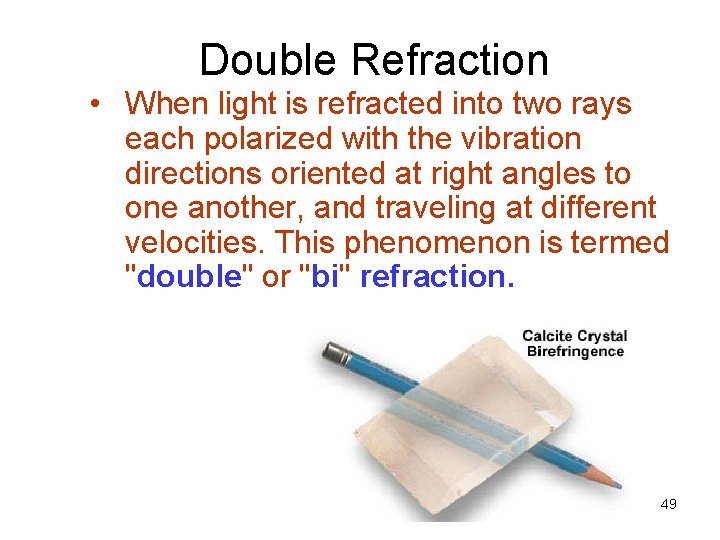
Double Refraction • When light is refracted into two rays each polarized with the vibration directions oriented at right angles to one another, and traveling at different velocities. This phenomenon is termed "double" or "bi" refraction. 49
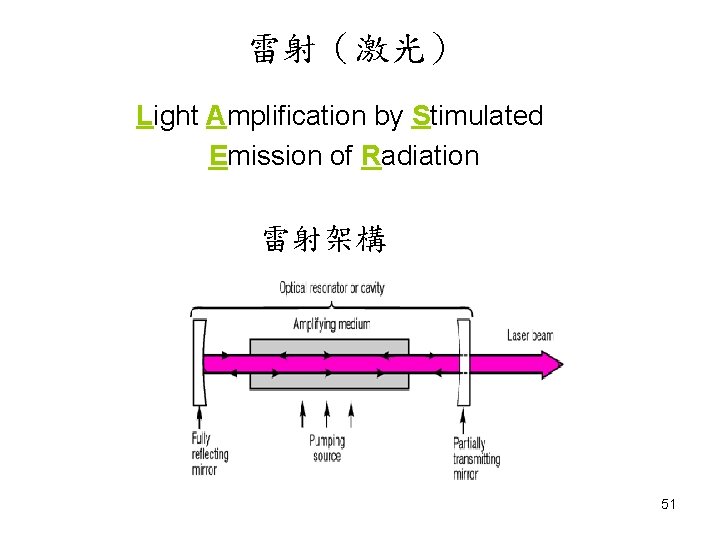
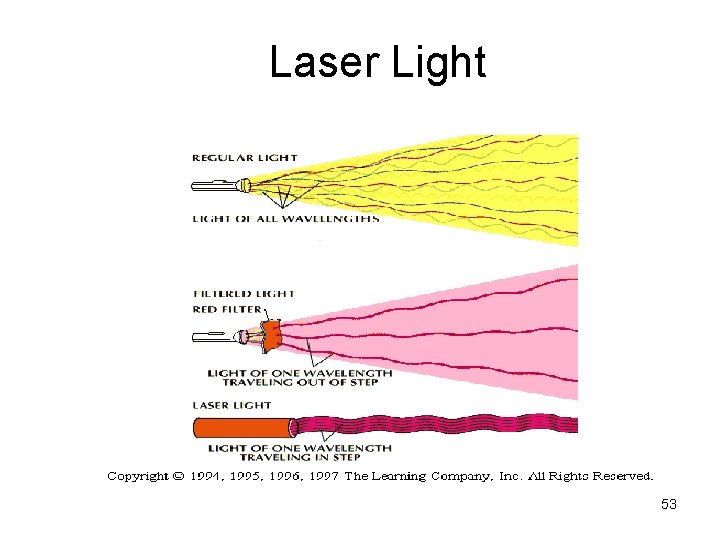
雷射(激光) Light Amplification by Stimulated Emission of Radiation 雷射架構 51
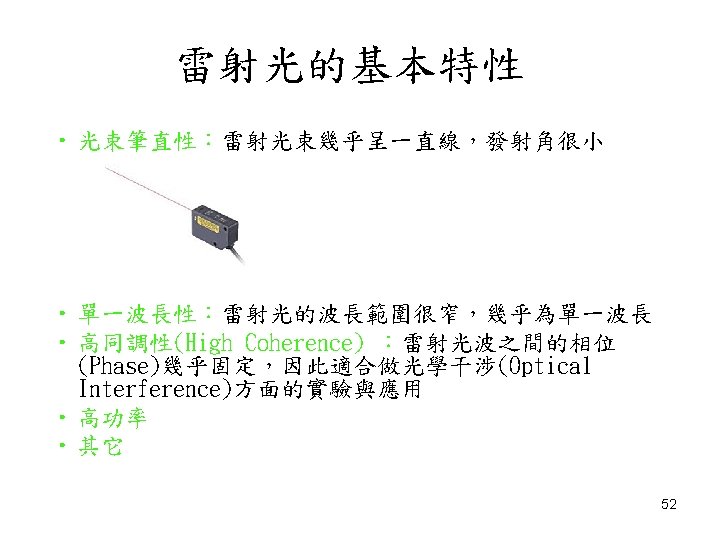
Laser Light 53
- Slides: 54