
EYE HEARING PROTECTION REFRESHER Eye Hazards Machines Lathes
- Slides: 13
EYE & HEARING PROTECTION REFRESHER
Eye Hazards ØMachines: Ø Lathes Ø Drill presses Ø Grinders Ø Sanders ØTasks: Ø Milling Ø Boring Ø Grinding Ø Cleaning with compressed air Ø Welding Ø Hazards: metal particles, UV light, dust
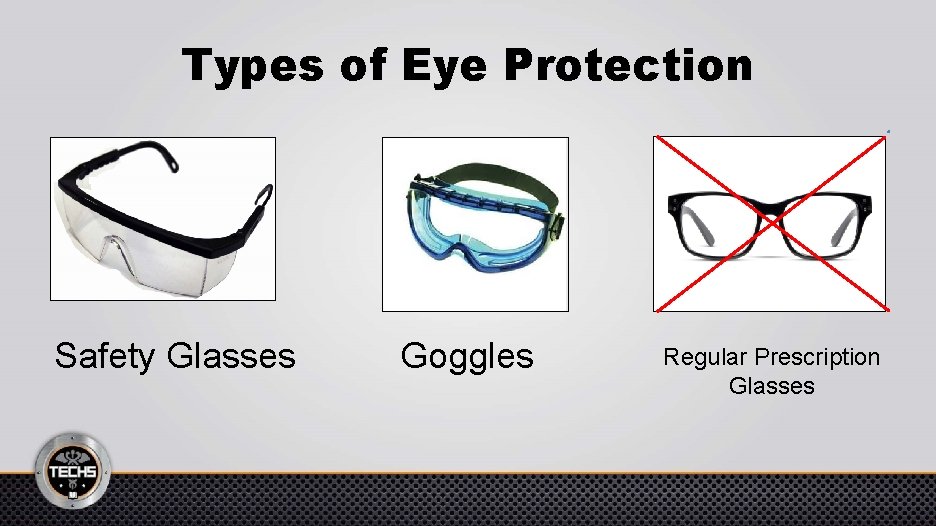
Types of Eye Protection Safety Glasses Goggles Regular Prescription Glasses
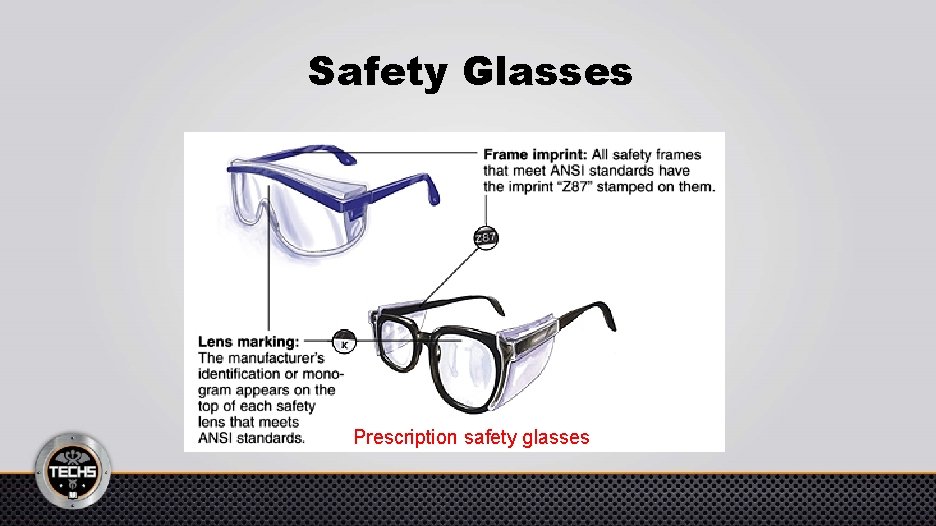
Safety Glasses Prescription safety glasses
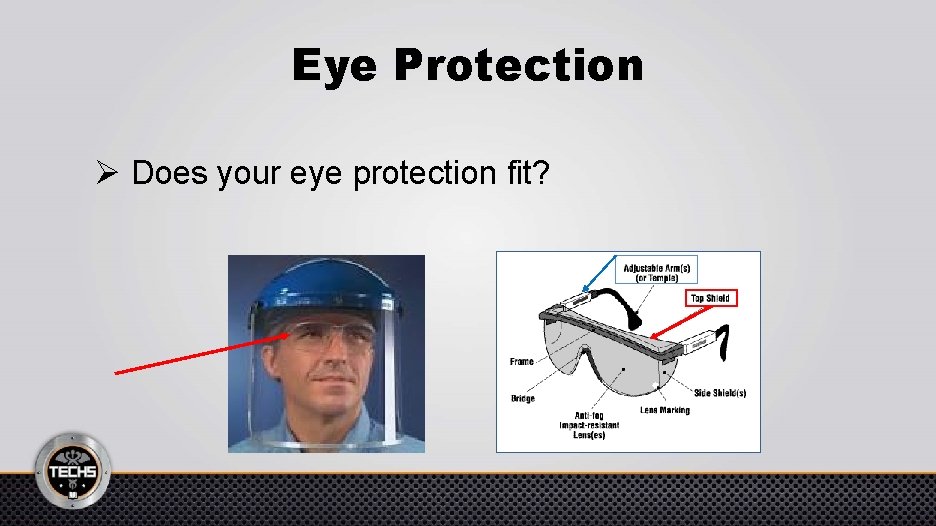
Eye Protection Ø Does your eye protection fit?
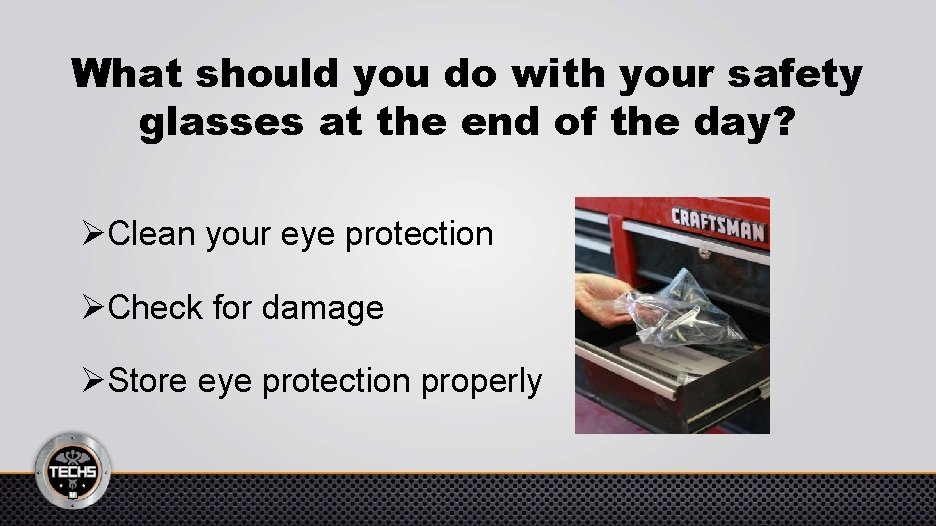
What should you do with your safety glasses at the end of the day? ØClean your eye protection ØCheck for damage ØStore eye protection properly
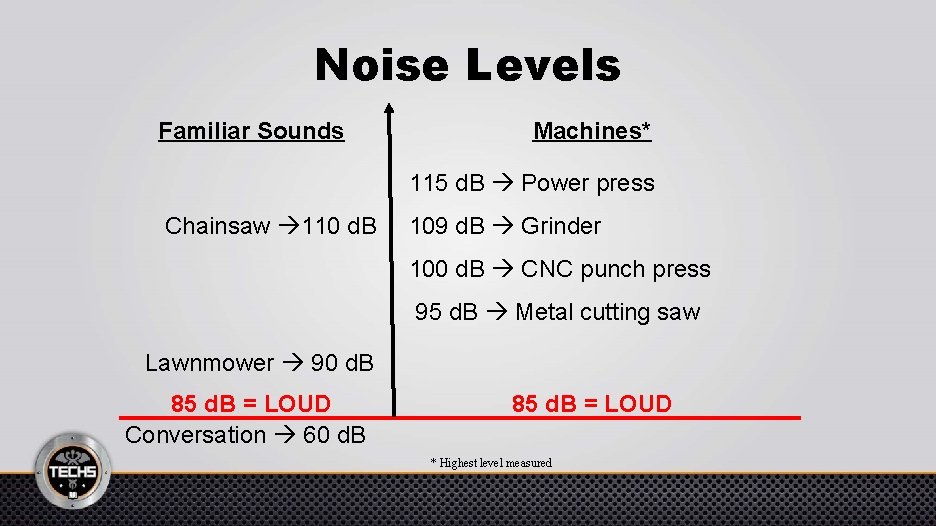
Noise Ø How do you know when a sound is too loud? Prolonged exposure to noise above 85 d. B can damage your hearing!
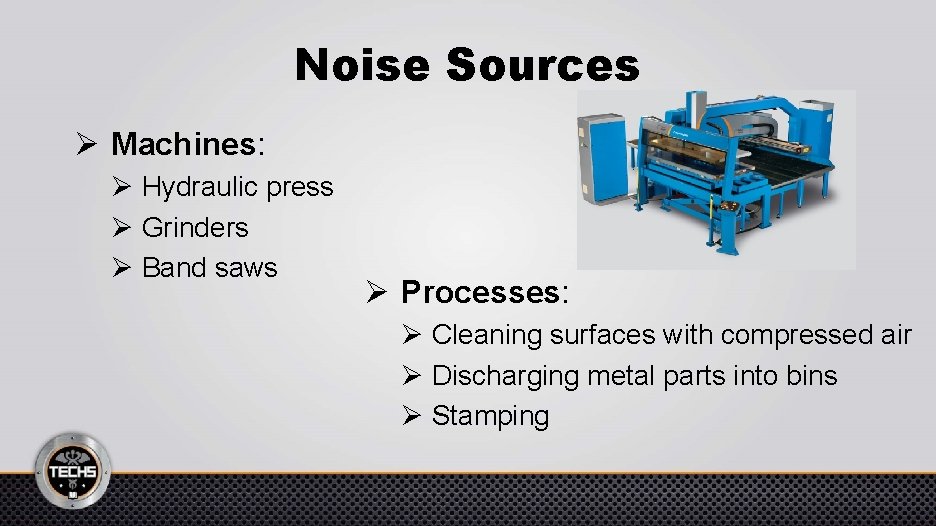
Noise Sources Ø Machines: Ø Hydraulic press Ø Grinders Ø Band saws Ø Processes: Ø Cleaning surfaces with compressed air Ø Discharging metal parts into bins Ø Stamping
Noise Levels Familiar Sounds Machines* 115 d. B Power press Chainsaw 110 d. B 109 d. B Grinder 100 d. B CNC punch press 95 d. B Metal cutting saw Lawnmower 90 d. B 85 d. B = LOUD Conversation 60 d. B 85 d. B = LOUD * Highest level measured
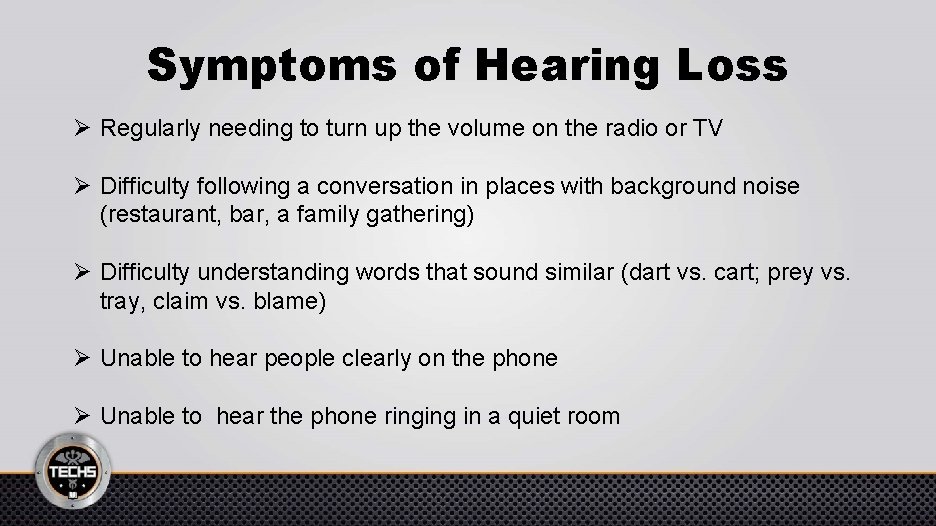
Symptoms of Hearing Loss Ø Regularly needing to turn up the volume on the radio or TV Ø Difficulty following a conversation in places with background noise (restaurant, bar, a family gathering) Ø Difficulty understanding words that sound similar (dart vs. cart; prey vs. tray, claim vs. blame) Ø Unable to hear people clearly on the phone Ø Unable to hear the phone ringing in a quiet room
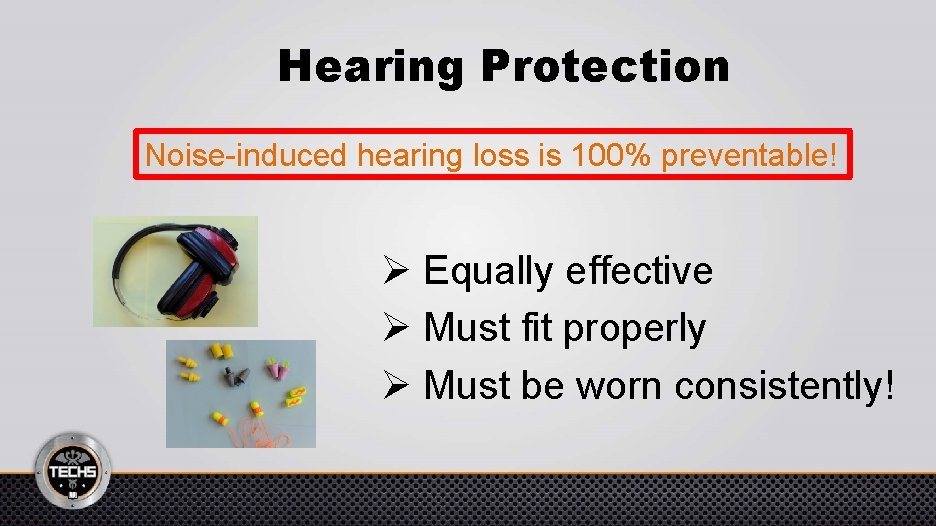
Hearing Protection Noise-induced hearing loss is 100% preventable! Ø Equally effective Ø Must fit properly Ø Must be worn consistently!
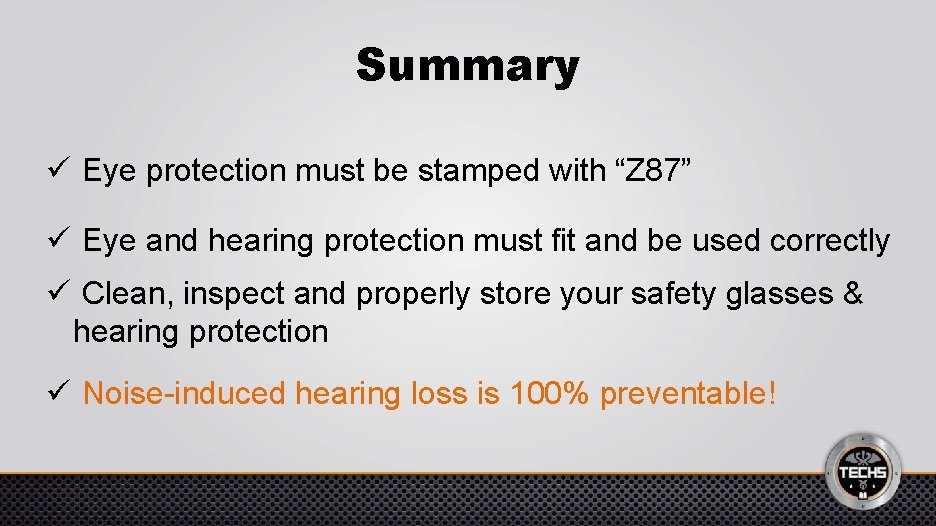
Summary ü Eye protection must be stamped with “Z 87” ü Eye and hearing protection must fit and be used correctly ü Clean, inspect and properly store your safety glasses & hearing protection ü Noise-induced hearing loss is 100% preventable!
Questions?