
Eye development Using genetics to probe intercellular signaling
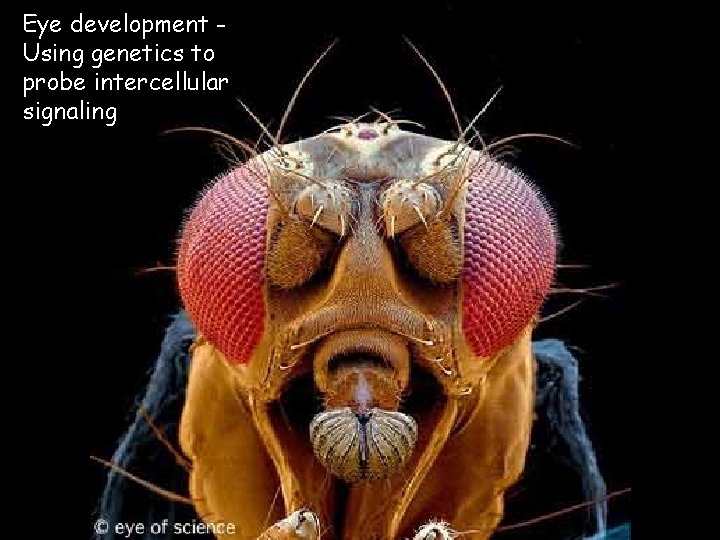
Eye development Using genetics to probe intercellular signaling
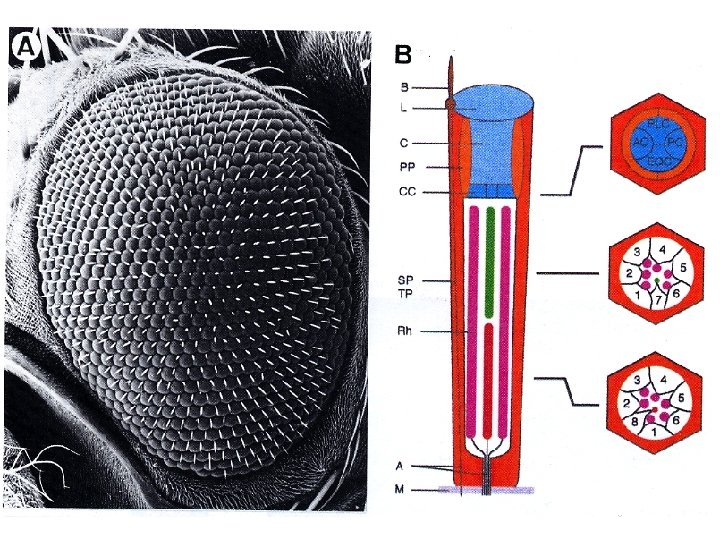
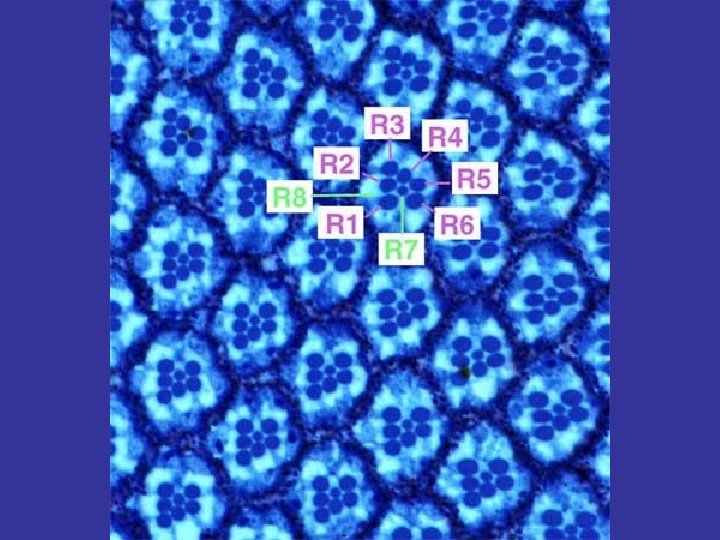
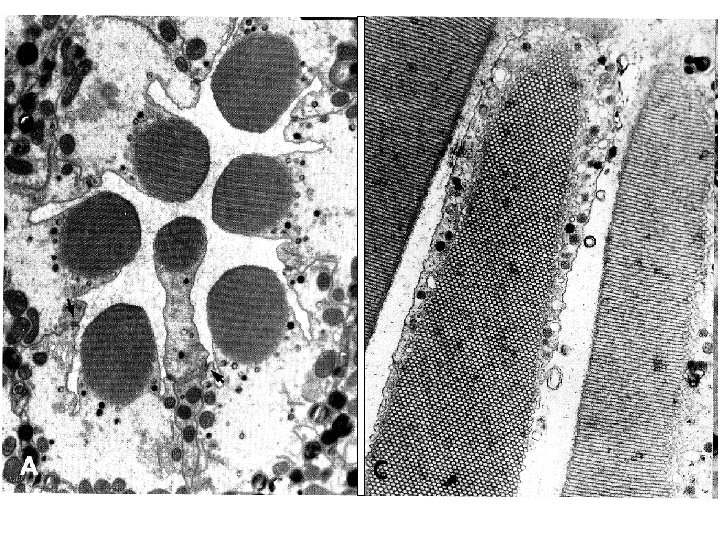
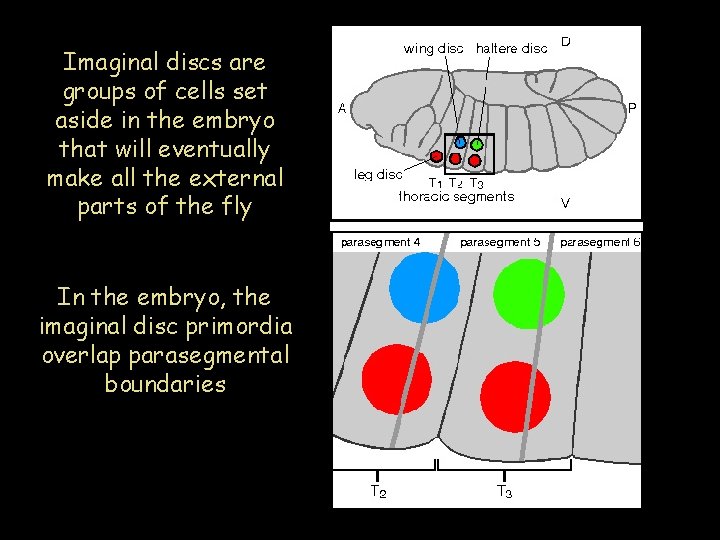
Imaginal discs are groups of cells set aside in the embryo that will eventually make all the external parts of the fly In the embryo, the imaginal disc primordia overlap parasegmental boundaries
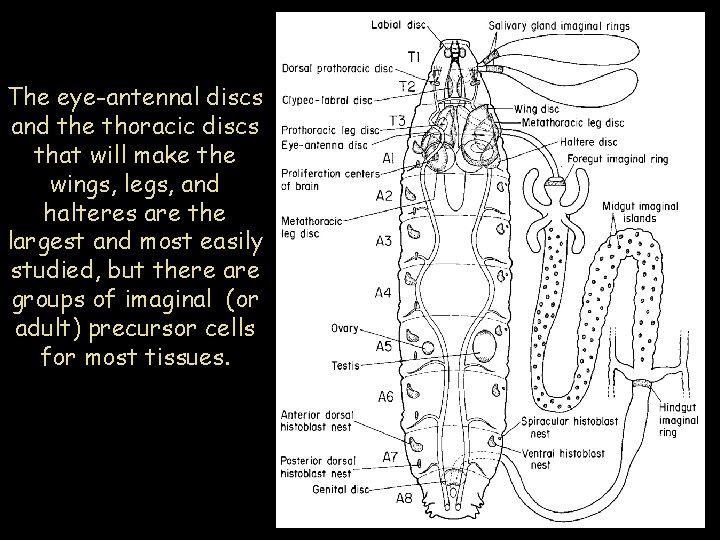
The eye-antennal discs and the thoracic discs that will make the wings, legs, and halteres are the largest and most easily studied, but there are groups of imaginal (or adult) precursor cells for most tissues.
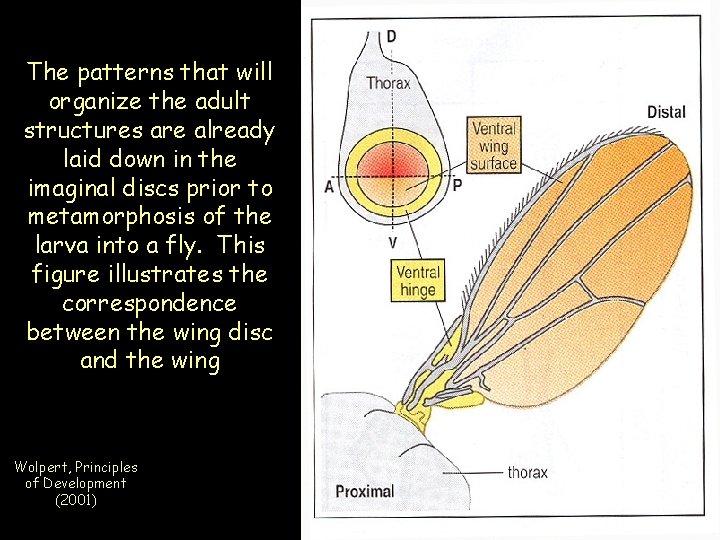
The patterns that will organize the adult structures are already laid down in the imaginal discs prior to metamorphosis of the larva into a fly. This figure illustrates the correspondence between the wing disc and the wing Wolpert, Principles of Development (2001)
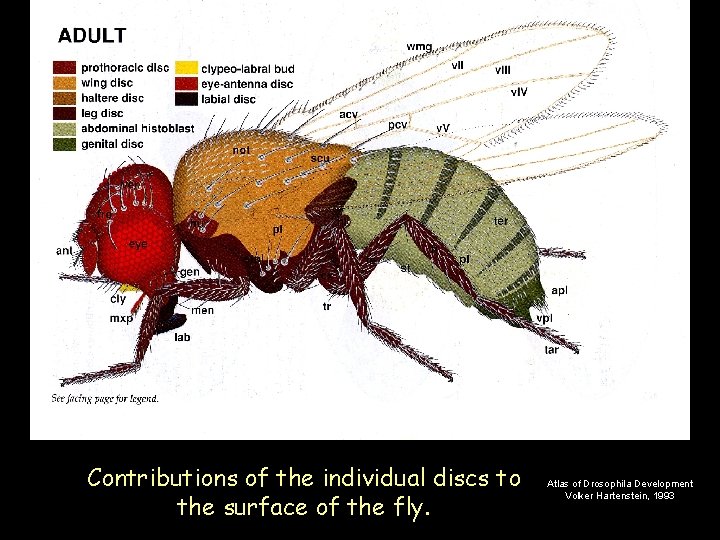
Contributions of the individual discs to the surface of the fly. Atlas of Drosophila Development Volker Hartenstein, 1993
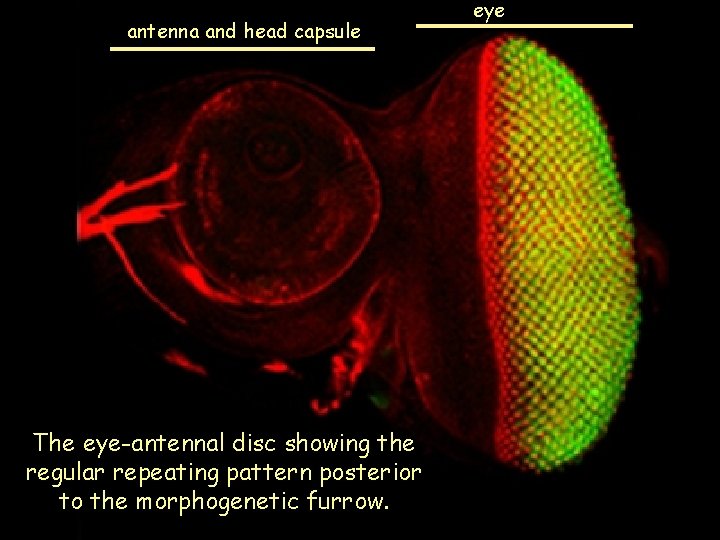
antenna and head capsule The eye-antennal disc showing the regular repeating pattern posterior to the morphogenetic furrow. eye
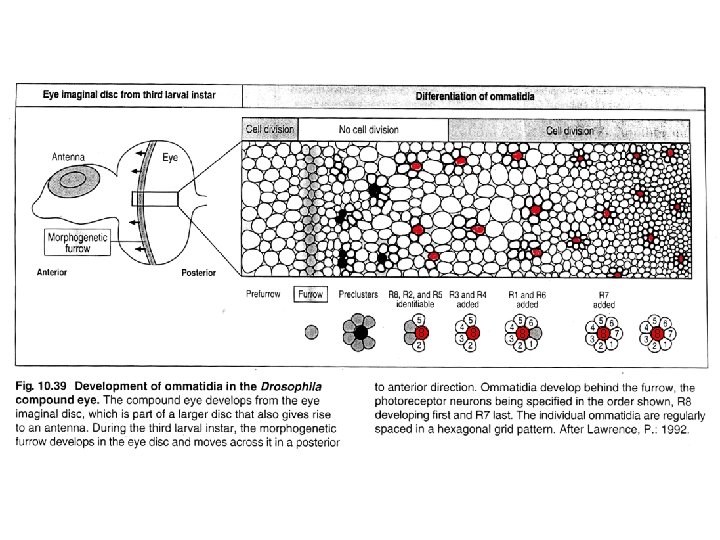
8 8 8
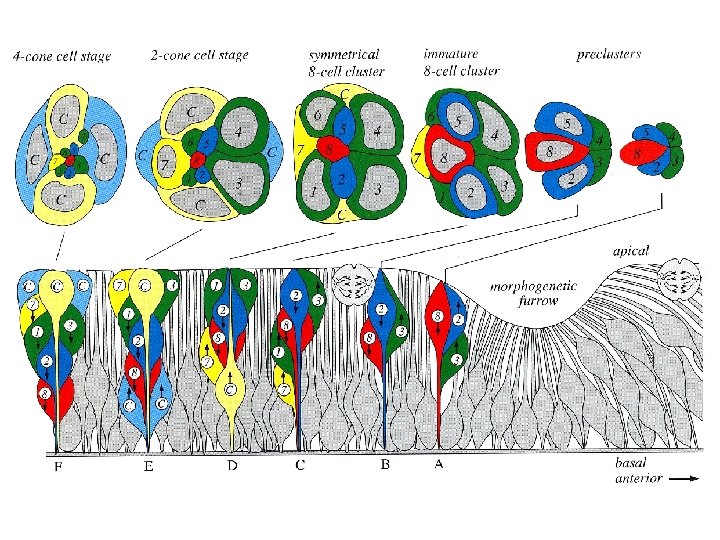
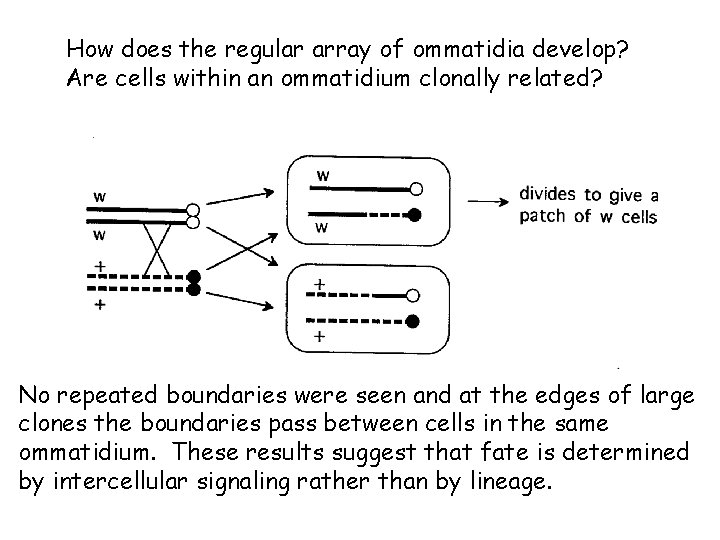
How does the regular array of ommatidia develop? Are cells within an ommatidium clonally related? No repeated boundaries were seen and at the edges of large clones the boundaries pass between cells in the same ommatidium. These results suggest that fate is determined by intercellular signaling rather than by lineage.
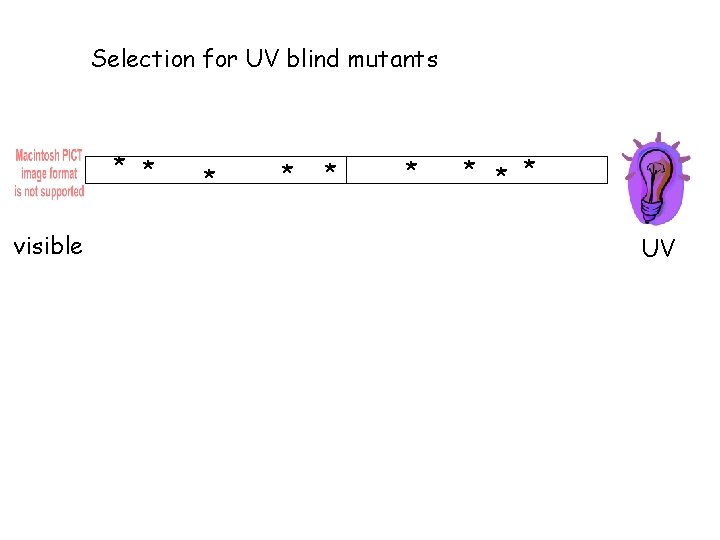
Selection for UV blind mutants * * visible * * * * UV
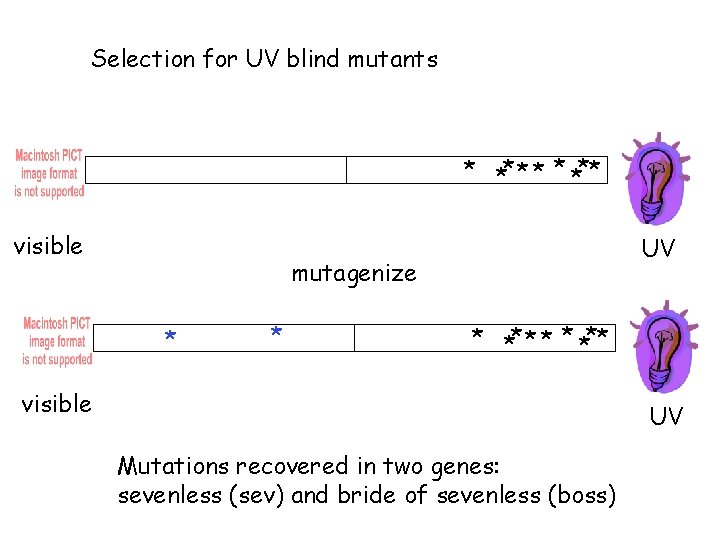
Selection for UV blind mutants * *** visible UV mutagenize * * * *** visible UV Mutations recovered in two genes: sevenless (sev) and bride of sevenless (boss)
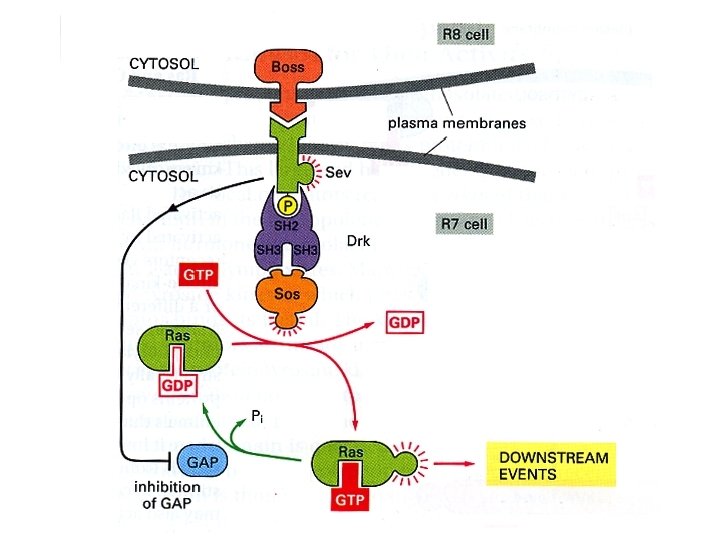
Flies that are homozygous mutant for either sev or boss are not only UV-blind, they lack the R 7 cell in each of their 1600 ommatidia. Since we think that R 7 like the other photoreceptor cells is specified as a result of signaling between cells, it’s important to know whether the sev or boss genes are required in the R 7 cell itself to receive a signal or in some other (probably nearby) cell to send the signal that specifies R 7.
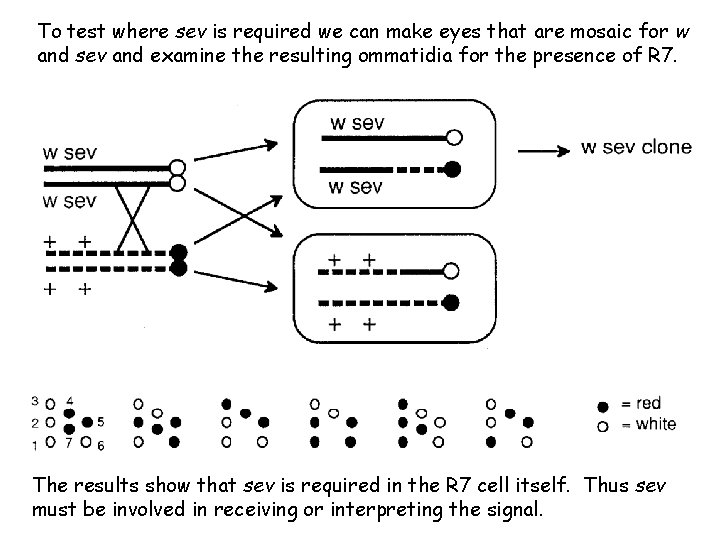
To test where sev is required we can make eyes that are mosaic for w and sev and examine the resulting ommatidia for the presence of R 7. The results show that sev is required in the R 7 cell itself. Thus sev must be involved in receiving or interpreting the signal.
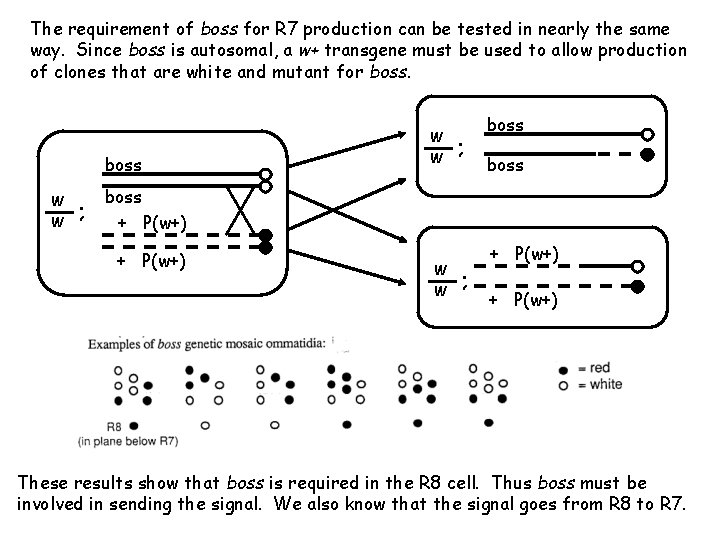
The requirement of boss for R 7 production can be tested in nearly the same way. Since boss is autosomal, a w+ transgene must be used to allow production of clones that are white and mutant for boss w w ; boss + P(w+) w w ; + P(w+) These results show that boss is required in the R 8 cell. Thus boss must be involved in sending the signal. We also know that the signal goes from R 8 to R 7.

There will be a question and answer review session 1 -3 PM on Saturday, December 16, here in 2050 VLSB
- Slides: 20