
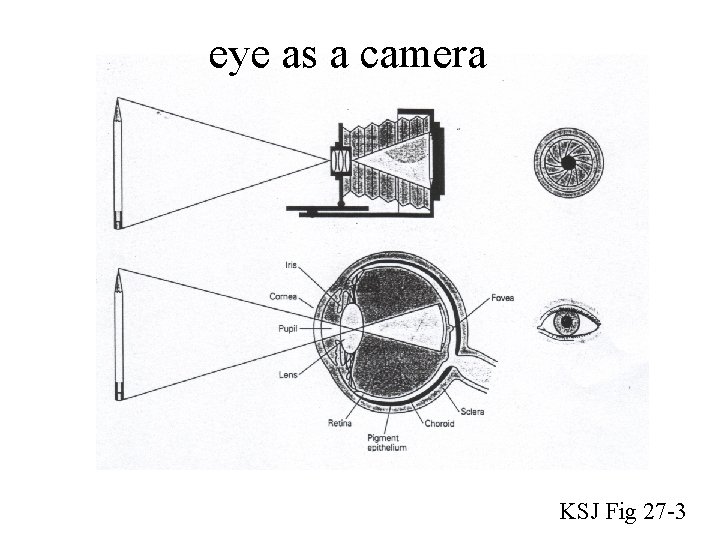
eye as a camera KSJ Fig 27 3
- Slides: 25
eye as a camera KSJ Fig 27 -3
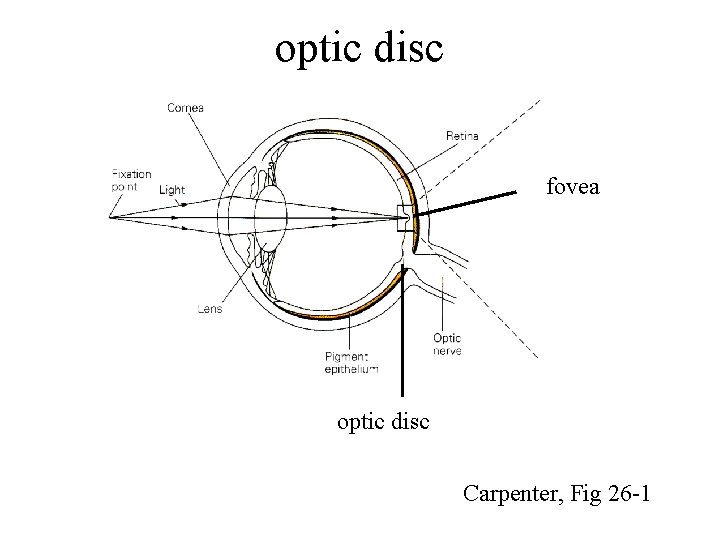
optic disc fovea optic disc Carpenter, Fig 26 -1
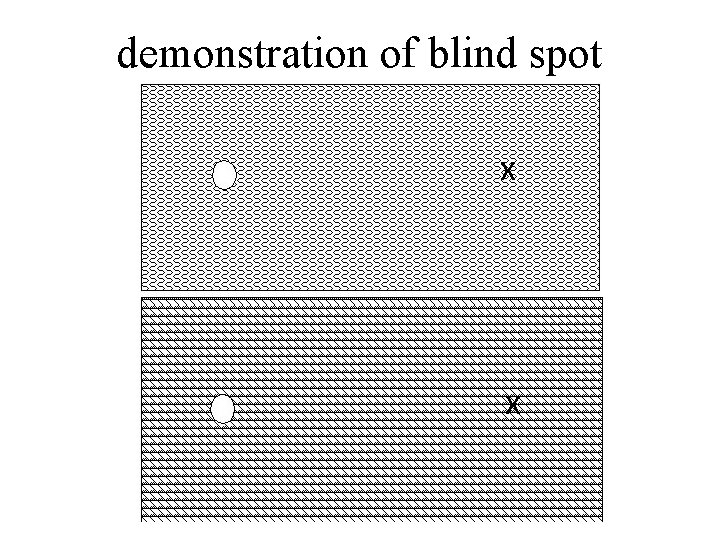
demonstration of blind spot
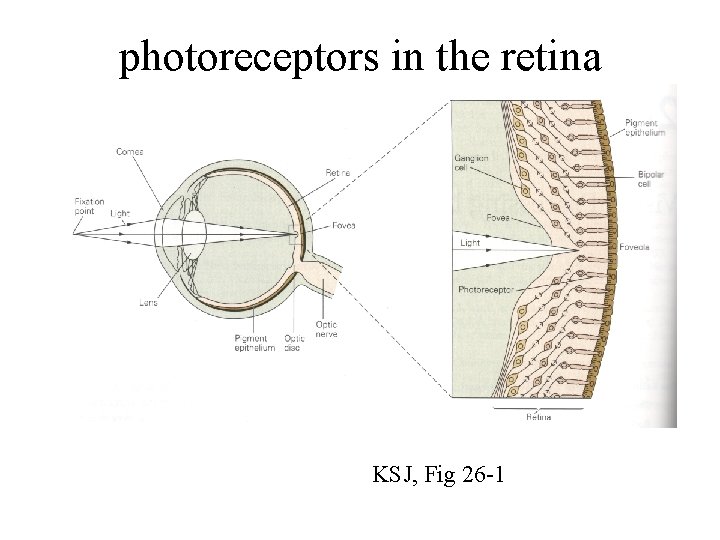
photoreceptors in the retina KSJ, Fig 26 -1
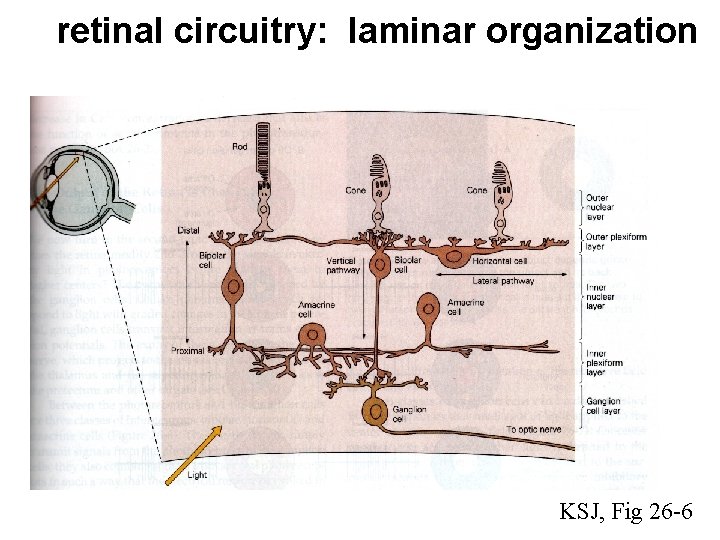
retinal circuitry: laminar organization KSJ, Fig 26 -6
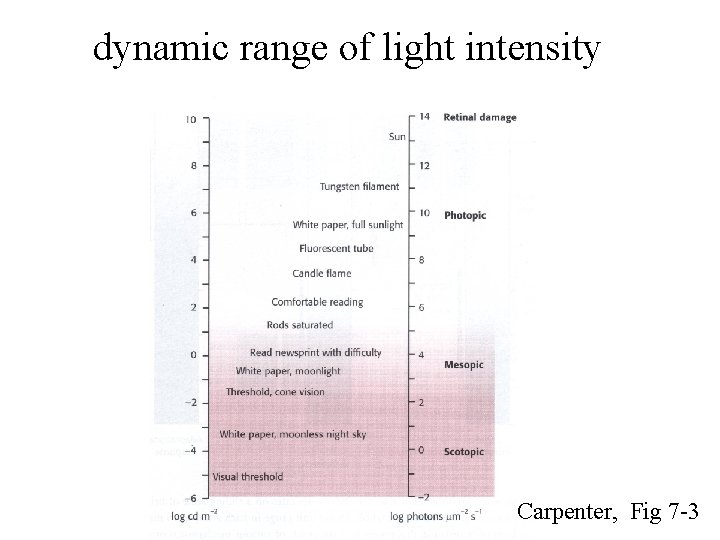
dynamic range of light intensity Carpenter, Fig 7 -3
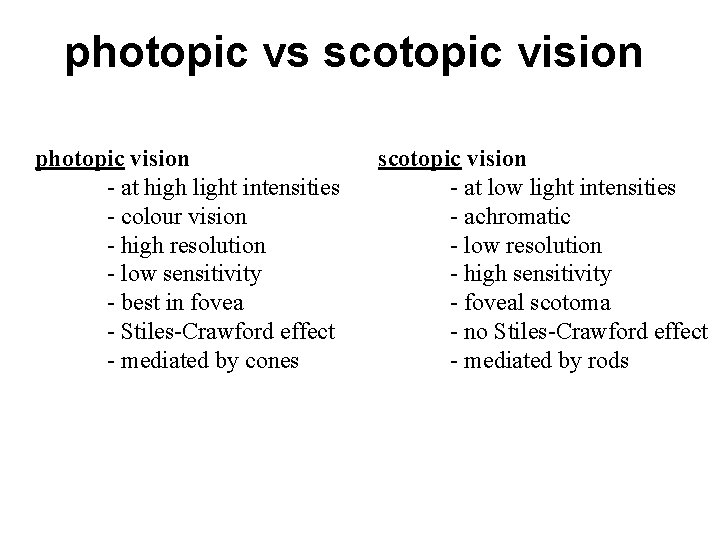
photopic vs scotopic vision photopic vision - at high light intensities - colour vision - high resolution - low sensitivity - best in fovea - Stiles-Crawford effect - mediated by cones scotopic vision - at low light intensities - achromatic - low resolution - high sensitivity - foveal scotoma - no Stiles-Crawford effect - mediated by rods
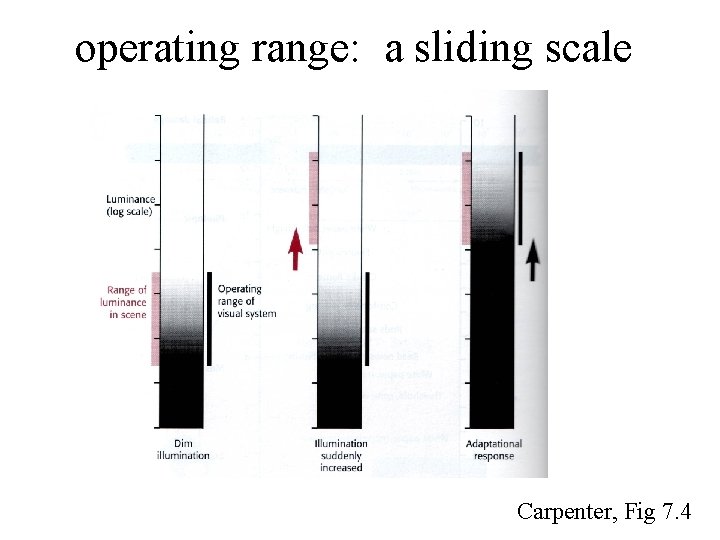
operating range: a sliding scale Carpenter, Fig 7. 4
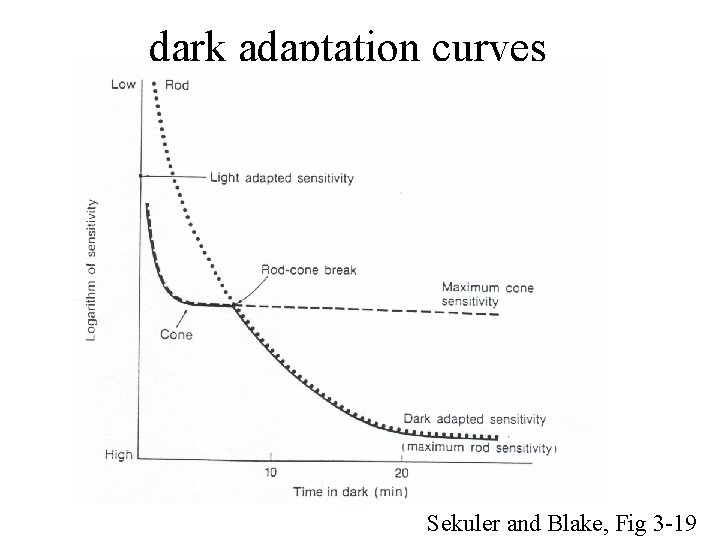
dark adaptation curves Sekuler and Blake, Fig 3 -19
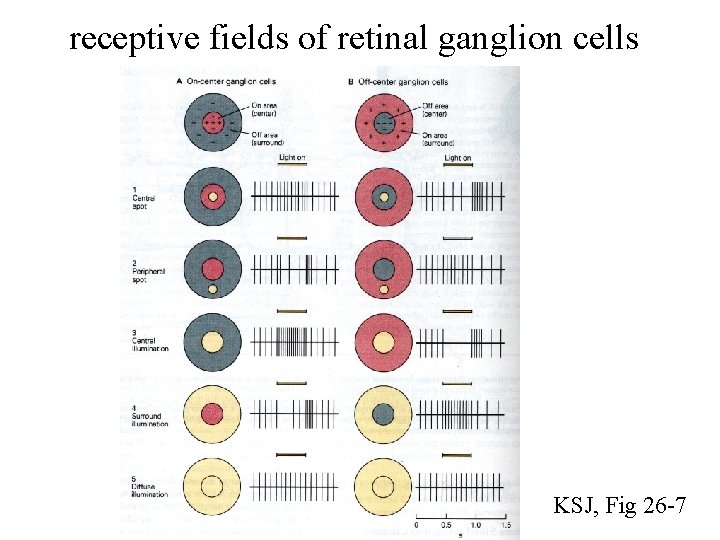
receptive fields of retinal ganglion cells KSJ, Fig 26 -7
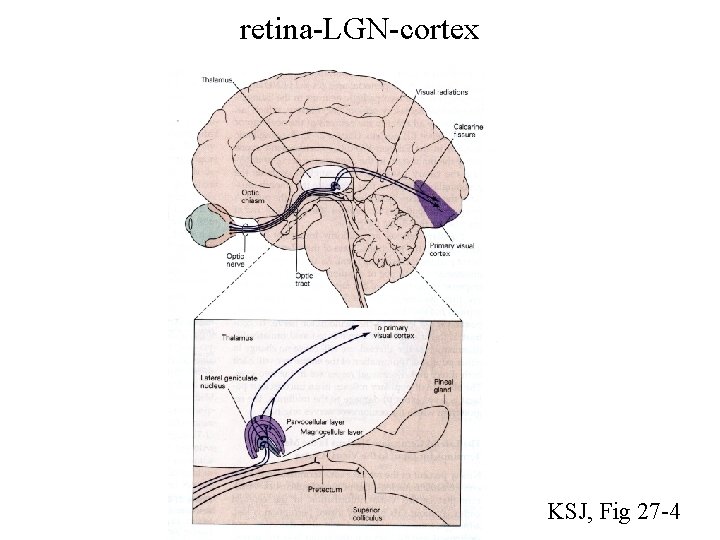
retina-LGN-cortex KSJ, Fig 27 -4
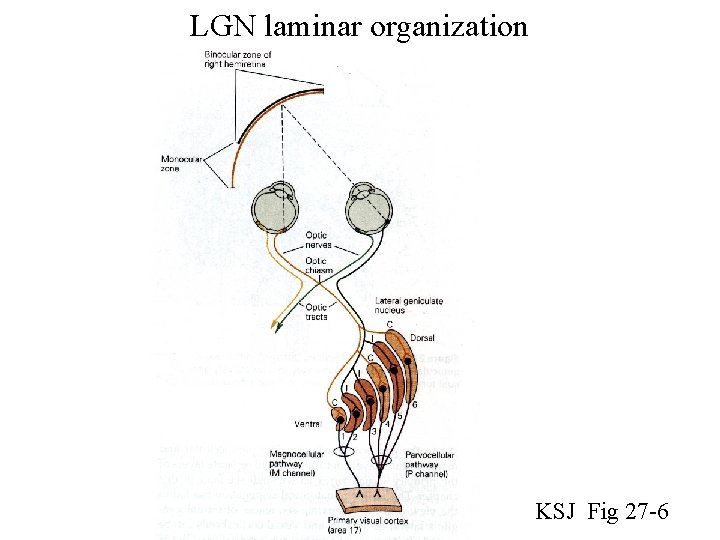
LGN laminar organization KSJ Fig 27 -6
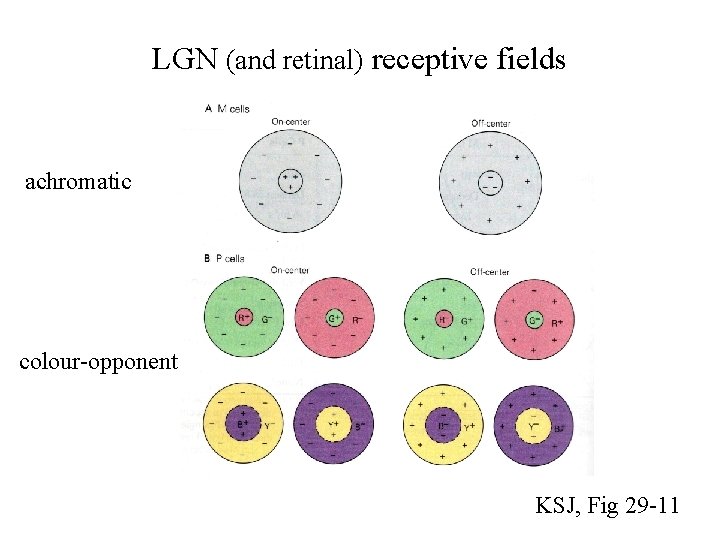
LGN (and retinal) receptive fields achromatic colour-opponent KSJ, Fig 29 -11
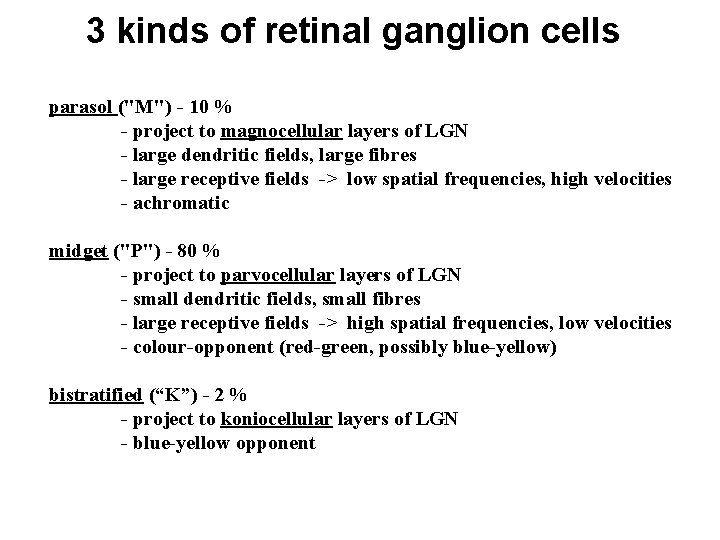
3 kinds of retinal ganglion cells parasol ("M") - 10 % - project to magnocellular layers of LGN - large dendritic fields, large fibres - large receptive fields -> low spatial frequencies, high velocities - achromatic midget ("P") - 80 % - project to parvocellular layers of LGN - small dendritic fields, small fibres - large receptive fields -> high spatial frequencies, low velocities - colour-opponent (red-green, possibly blue-yellow) bistratified (“K”) - 2 % - project to koniocellular layers of LGN - blue-yellow opponent
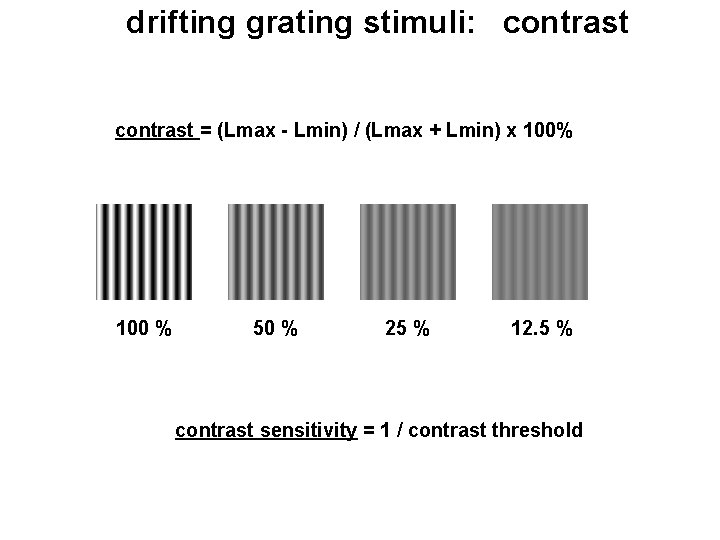
drifting grating stimuli: contrast = (Lmax - Lmin) / (Lmax + Lmin) x 100% 100 % 50 % 25 % 12. 5 % contrast sensitivity = 1 / contrast threshold
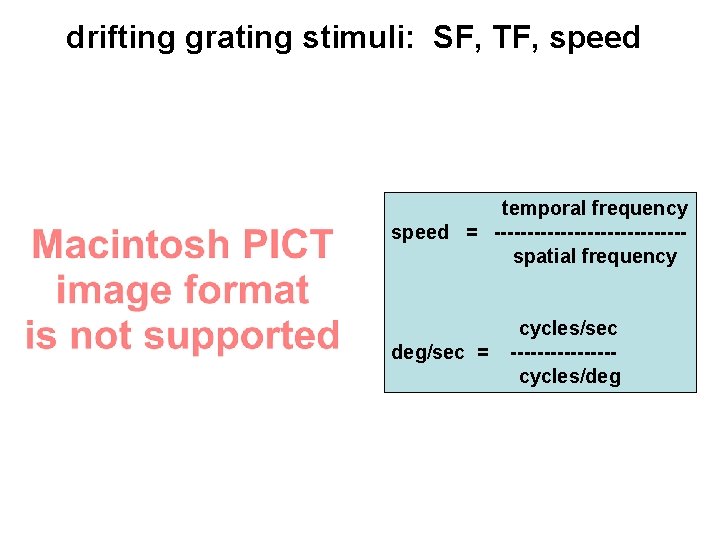
drifting grating stimuli: SF, TF, speed temporal frequency speed = --------------spatial frequency deg/sec = cycles/sec --------cycles/deg
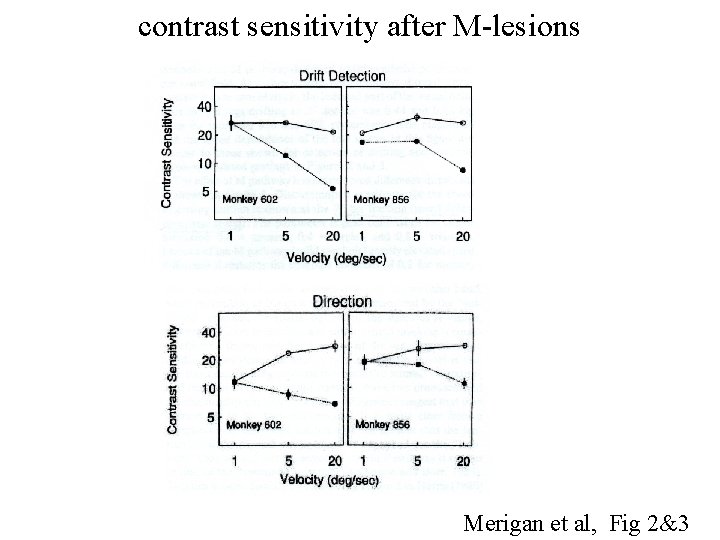
contrast sensitivity after M-lesions Merigan et al, Fig 2&3
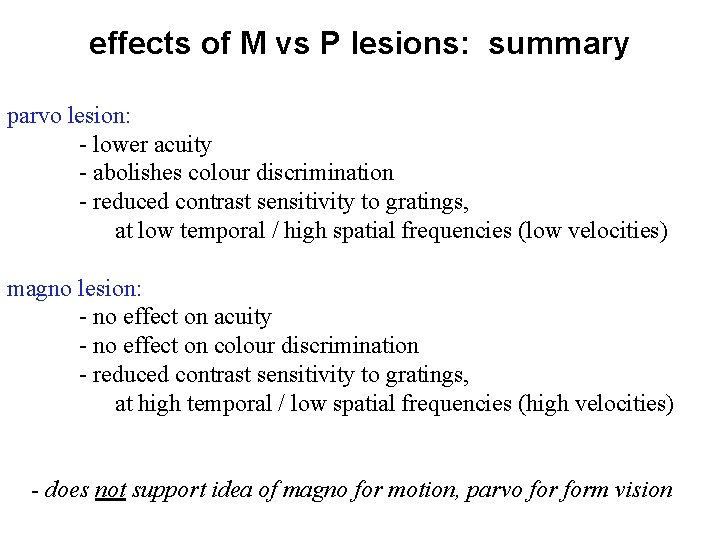
effects of M vs P lesions: summary parvo lesion: - lower acuity - abolishes colour discrimination - reduced contrast sensitivity to gratings, at low temporal / high spatial frequencies (low velocities) magno lesion: - no effect on acuity - no effect on colour discrimination - reduced contrast sensitivity to gratings, at high temporal / low spatial frequencies (high velocities) - does not support idea of magno for motion, parvo form vision
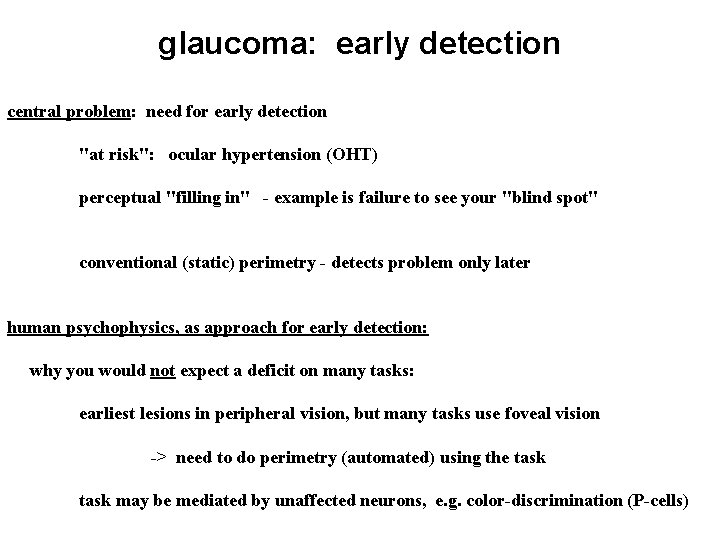
glaucoma: early detection central problem: need for early detection "at risk": ocular hypertension (OHT) perceptual "filling in" - example is failure to see your "blind spot" conventional (static) perimetry - detects problem only later human psychophysics, as approach for early detection: why you would not expect a deficit on many tasks: earliest lesions in peripheral vision, but many tasks use foveal vision -> need to do perimetry (automated) using the task may be mediated by unaffected neurons, e. g. color-discrimination (P-cells)
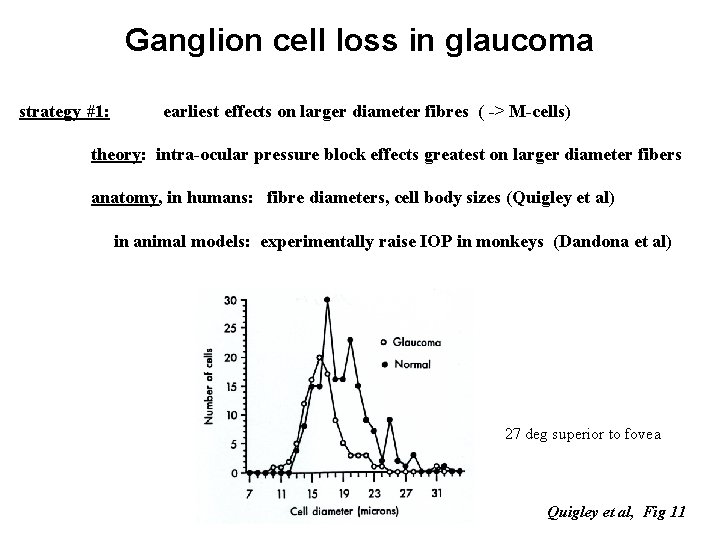
Ganglion cell loss in glaucoma strategy #1: earliest effects on larger diameter fibres ( -> M-cells) theory: intra-ocular pressure block effects greatest on larger diameter fibers anatomy, in humans: fibre diameters, cell body sizes (Quigley et al) in animal models: experimentally raise IOP in monkeys (Dandona et al) 27 deg superior to fovea Quigley et al, Fig 11
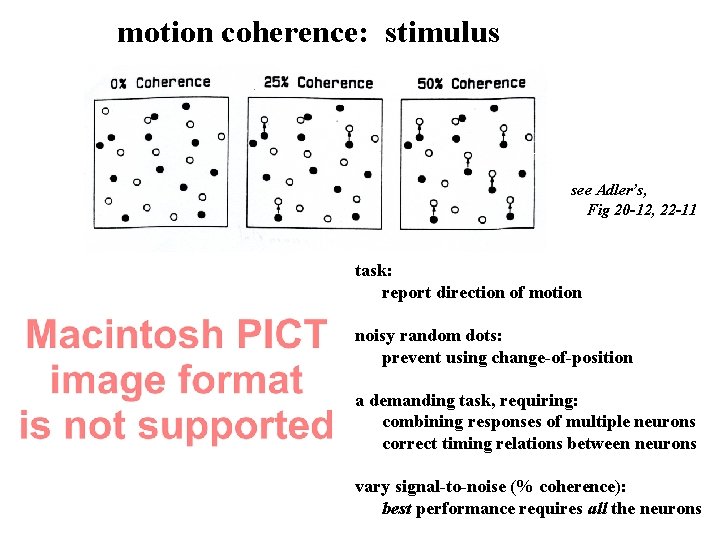
motion coherence: stimulus see Adler’s, Fig 20 -12, 22 -11 task: report direction of motion noisy random dots: prevent using change-of-position a demanding task, requiring: combining responses of multiple neurons correct timing relations between neurons vary signal-to-noise (% coherence): best performance requires all the neurons
% Correct Responses motion coherence: psychophysical thresholds Motion Coherence (%)
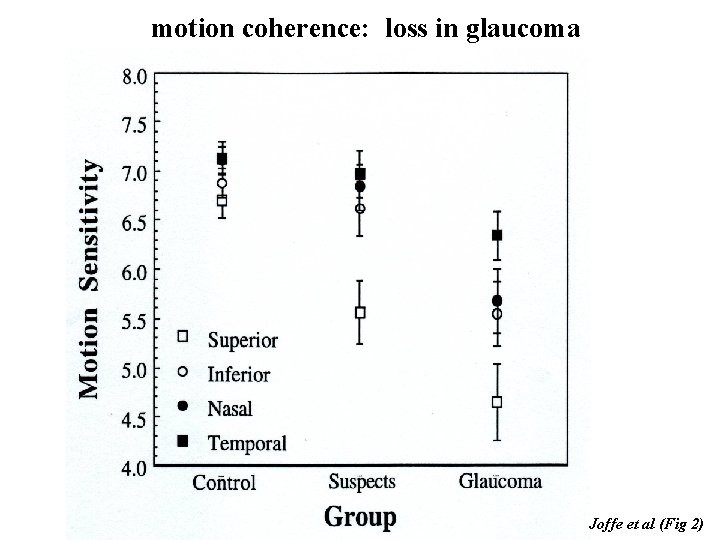
motion coherence: loss in glaucoma Joffe et al (Fig 2)
selective M-cell loss hypothesis: criticisms apparent loss of large cells/fibres might be artifact of cell shrinkage also find losses of P-cell dependent psychophysics
testing for loss of sparse cell types strategy #2: most sensitive tests for capricious loss are those for sparse cell types: (explains loss of abilities that depend on M-cells) -> S-cones, blue/yellow (bistratified ganglion cells) color: detection of blue spot on yellow background rationale: blue-yellow ganglion cells (bistratified) are relatively sparse (ca 5%) results: Sample et al, Johnson et al: perimetry, longitudinal study