
EXTRUSIVE FEATURES Are formed by solidification of lava
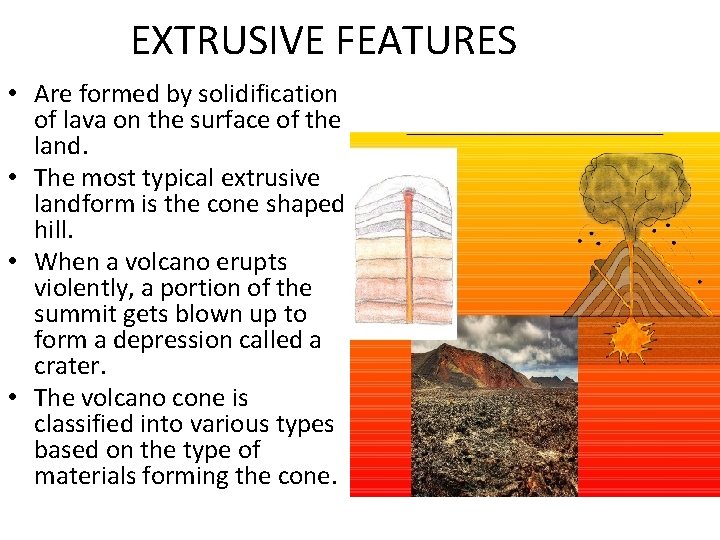
EXTRUSIVE FEATURES • Are formed by solidification of lava on the surface of the land. • The most typical extrusive landform is the cone shaped hill. • When a volcano erupts violently, a portion of the summit gets blown up to form a depression called a crater. • The volcano cone is classified into various types based on the type of materials forming the cone.
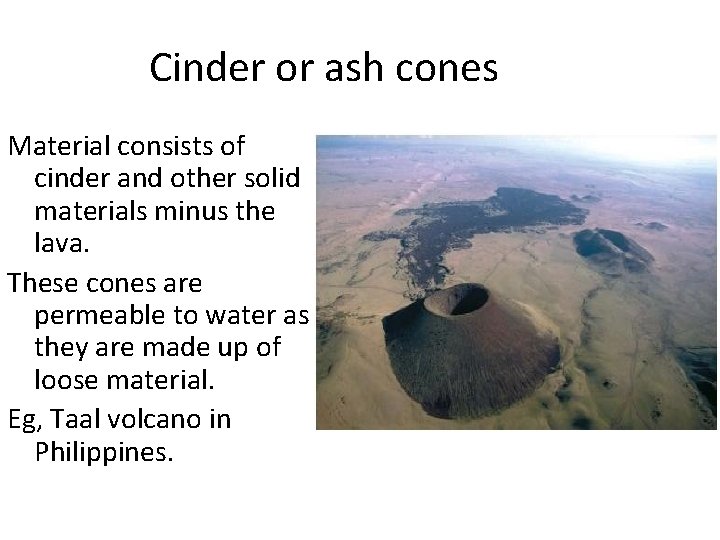
Cinder or ash cones Material consists of cinder and other solid materials minus the lava. These cones are permeable to water as they are made up of loose material. Eg, Taal volcano in Philippines.
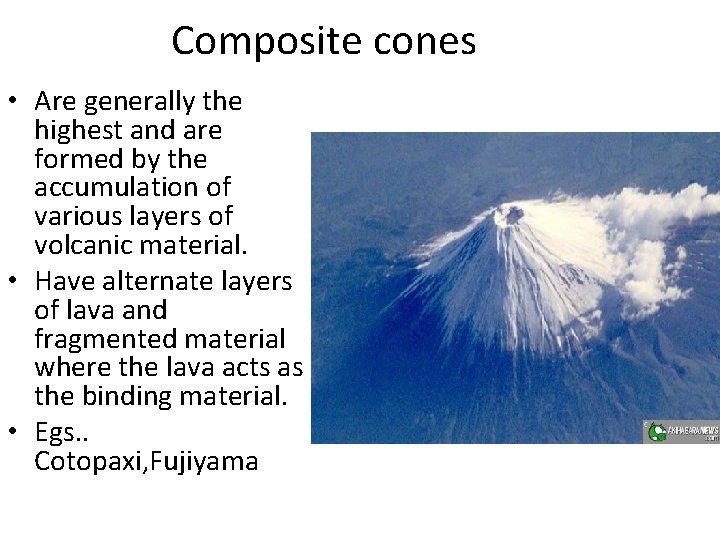
Composite cones • Are generally the highest and are formed by the accumulation of various layers of volcanic material. • Have alternate layers of lava and fragmented material where the lava acts as the binding material. • Egs. . Cotopaxi, Fujiyama
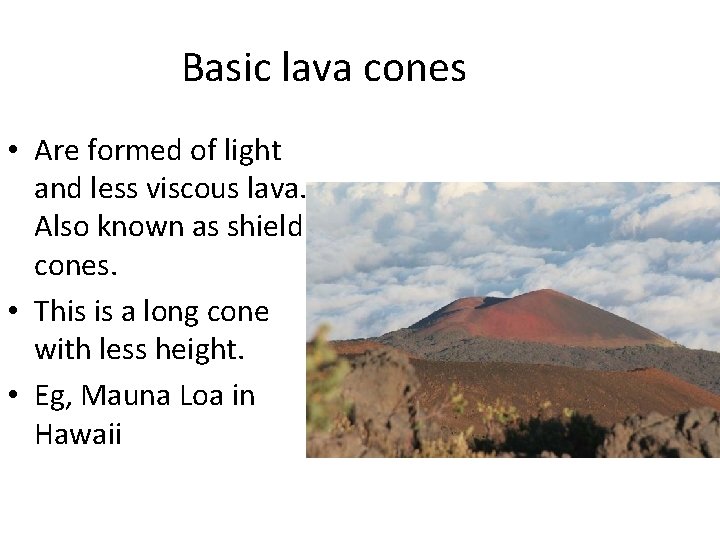
Basic lava cones • Are formed of light and less viscous lava. Also known as shield cones. • This is a long cone with less height. • Eg, Mauna Loa in Hawaii
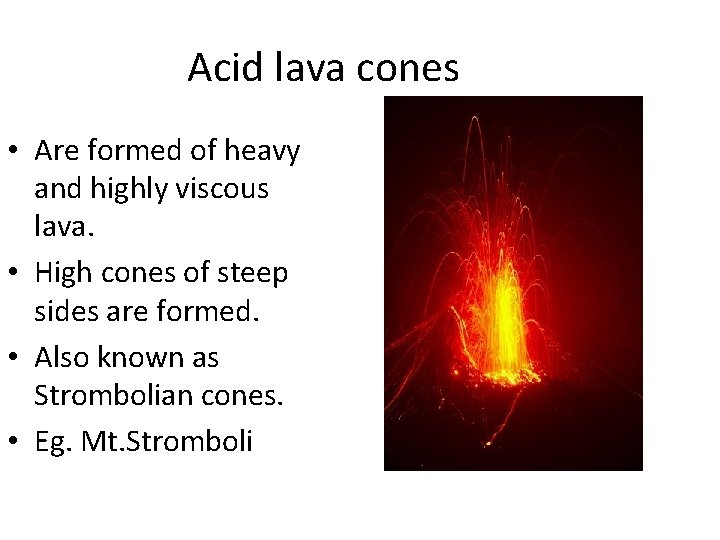
Acid lava cones • Are formed of heavy and highly viscous lava. • High cones of steep sides are formed. • Also known as Strombolian cones. • Eg. Mt. Stromboli
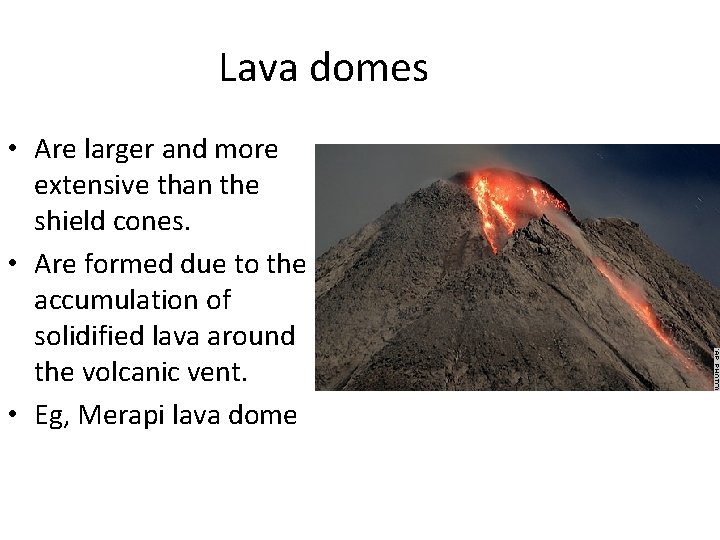
Lava domes • Are larger and more extensive than the shield cones. • Are formed due to the accumulation of solidified lava around the volcanic vent. • Eg, Merapi lava dome
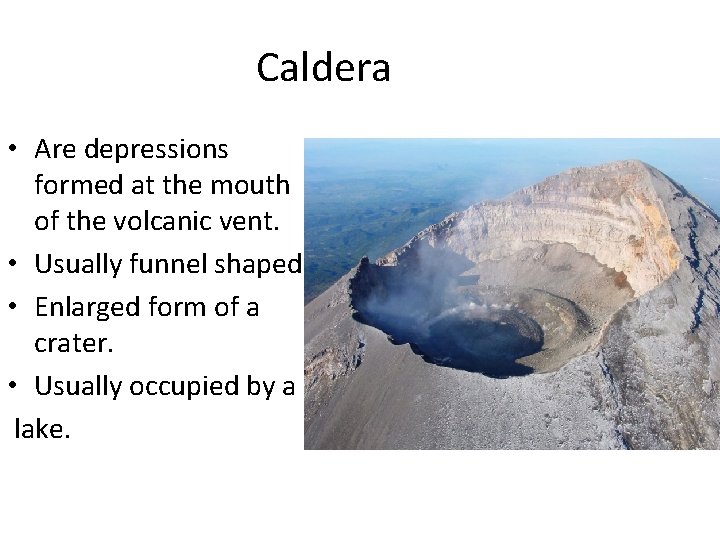
Caldera • Are depressions formed at the mouth of the volcanic vent. • Usually funnel shaped. • Enlarged form of a crater. • Usually occupied by a lake.
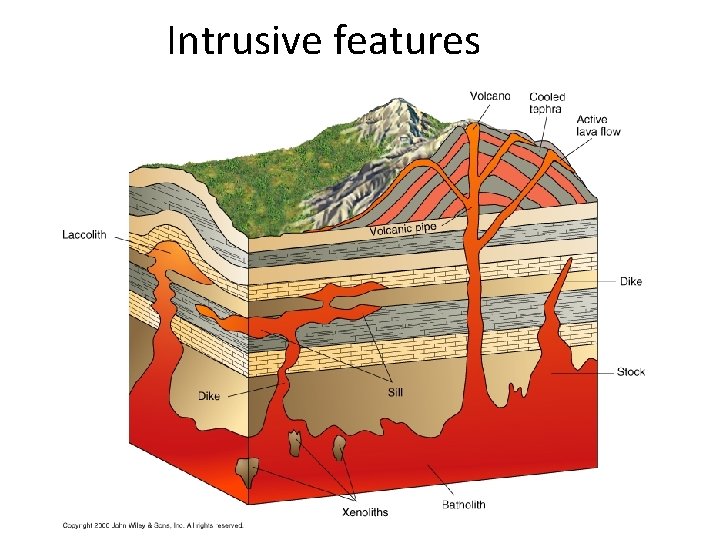
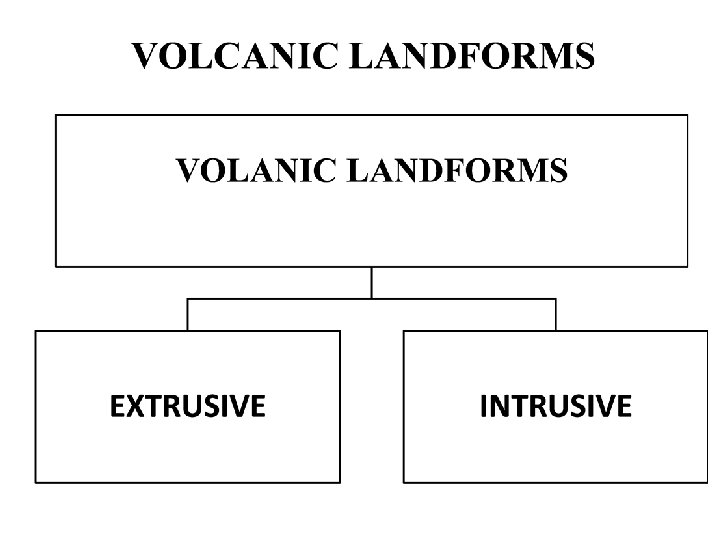
Intrusive features
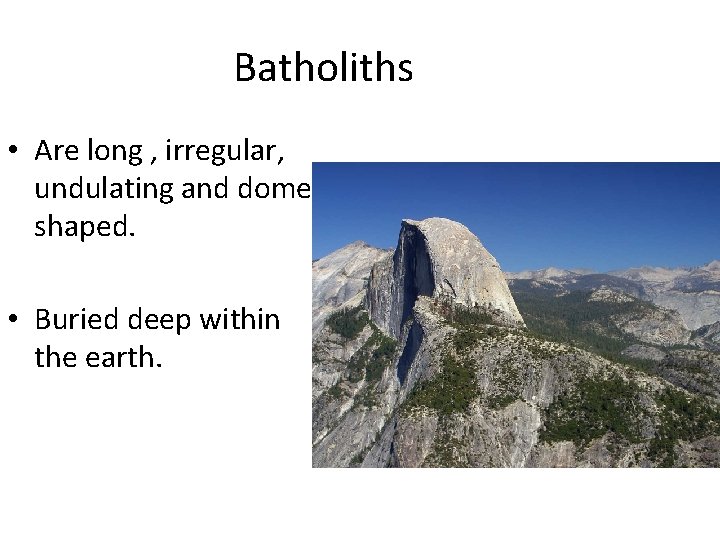
Batholiths • Are long , irregular, undulating and dome shaped. • Buried deep within the earth.
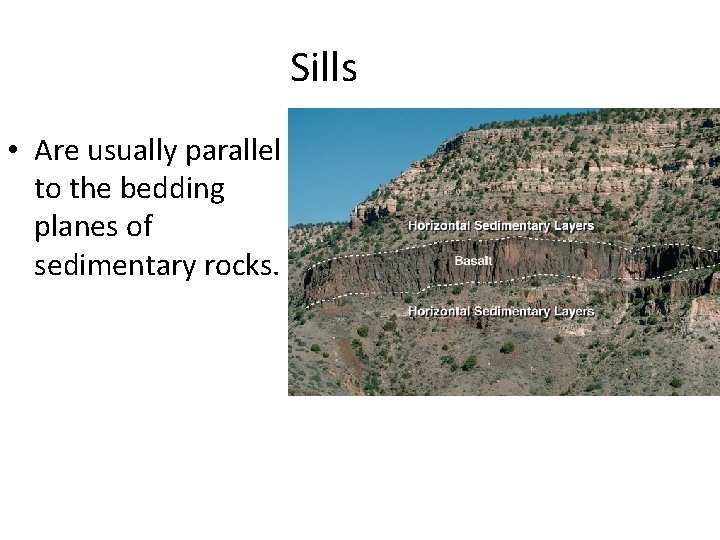
Sills • Are usually parallel to the bedding planes of sedimentary rocks.
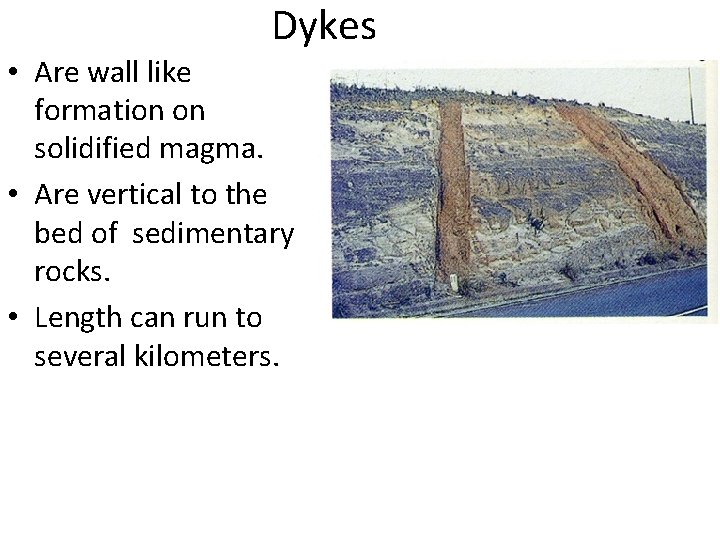
Dykes • Are wall like formation on solidified magma. • Are vertical to the bed of sedimentary rocks. • Length can run to several kilometers.
- Slides: 13