
Extrusion Process q Extrusion is a process of
- Slides: 27
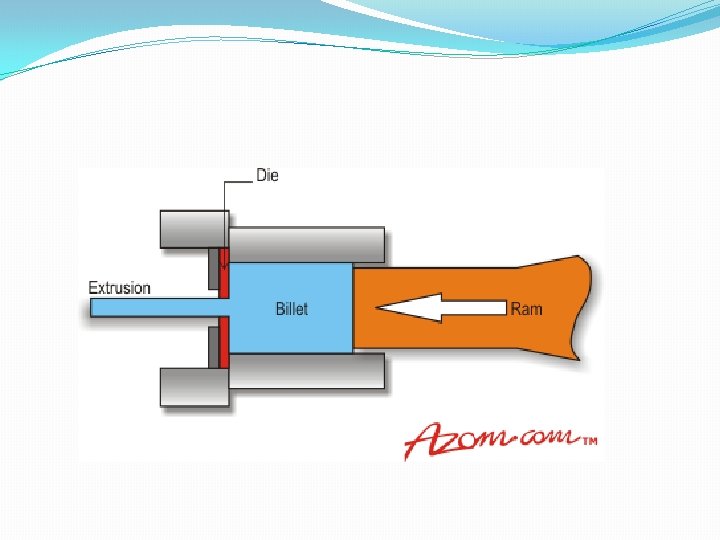
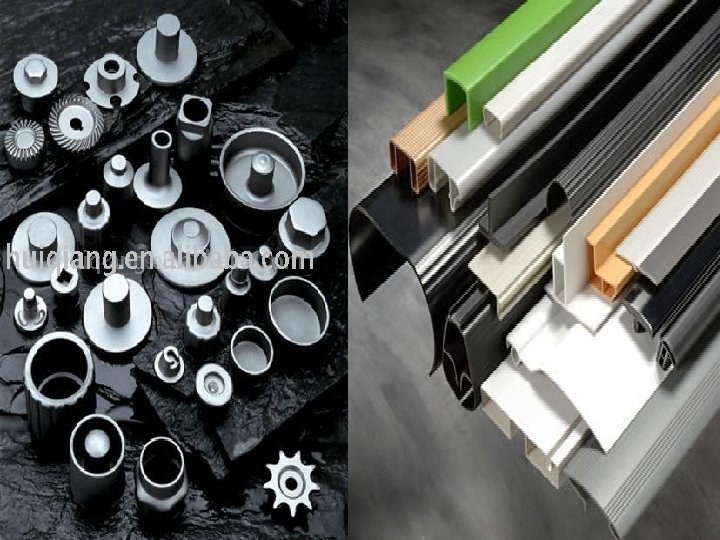
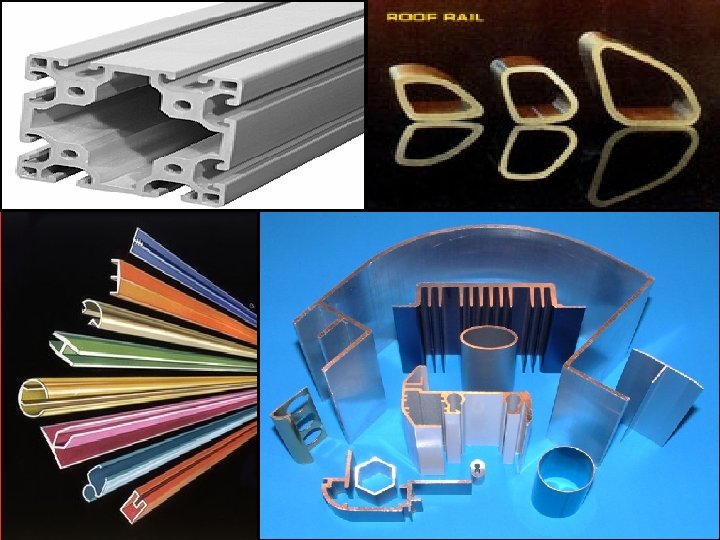
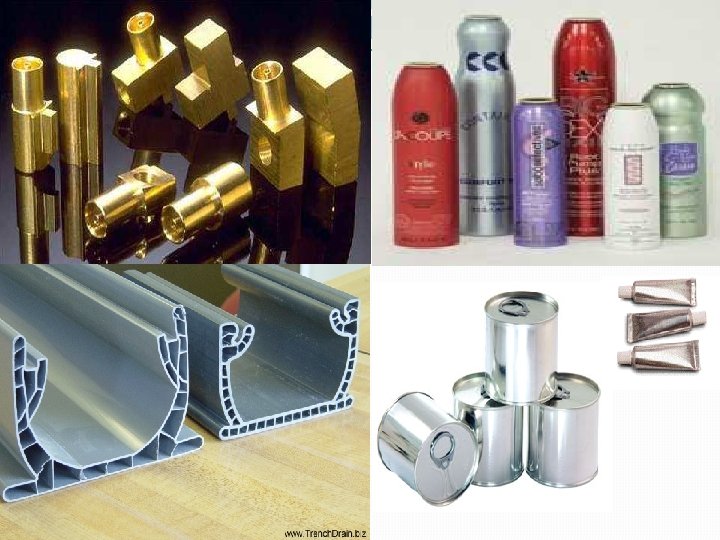
Extrusion Process q. Extrusion is a process of squeeze forming of a metal under compressive forces, which force the metal to flow out of a restricted opening in a die. q. A material is pushed or drawn through a die of the desired cross-section. q. Extrusion is a process used to create objects of a fixed cross-sectional profile.
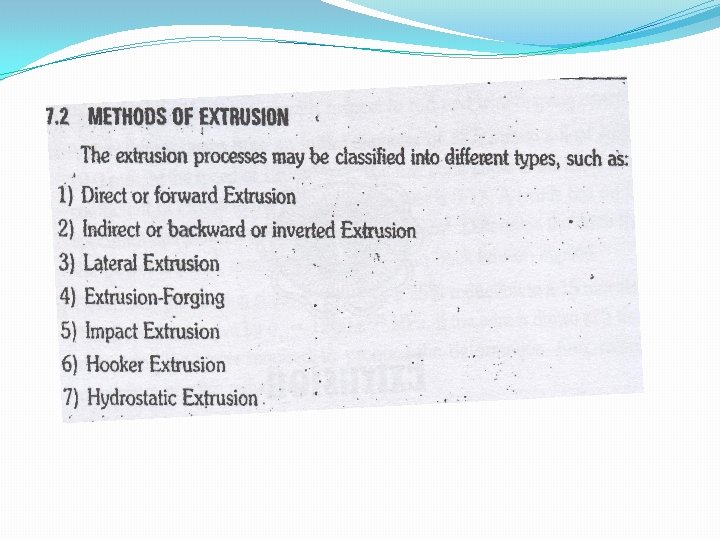
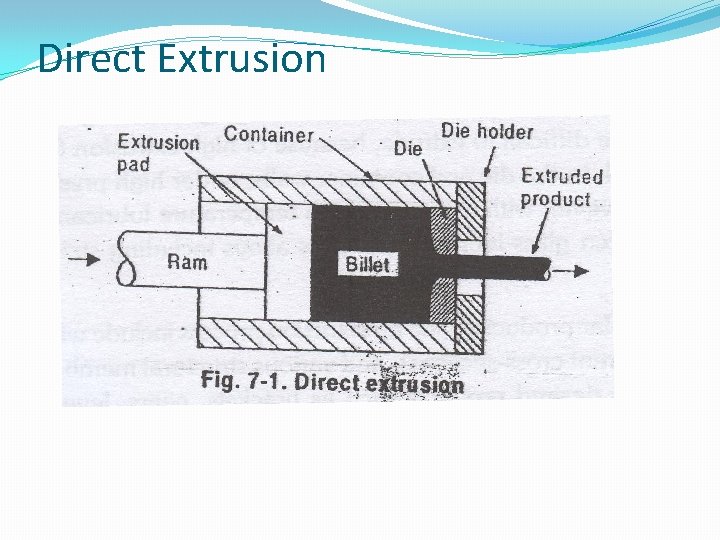
Direct Extrusion
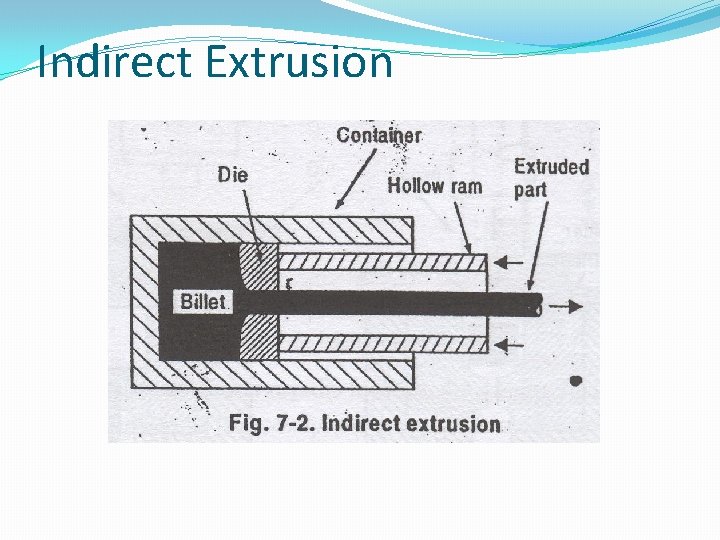
Indirect Extrusion
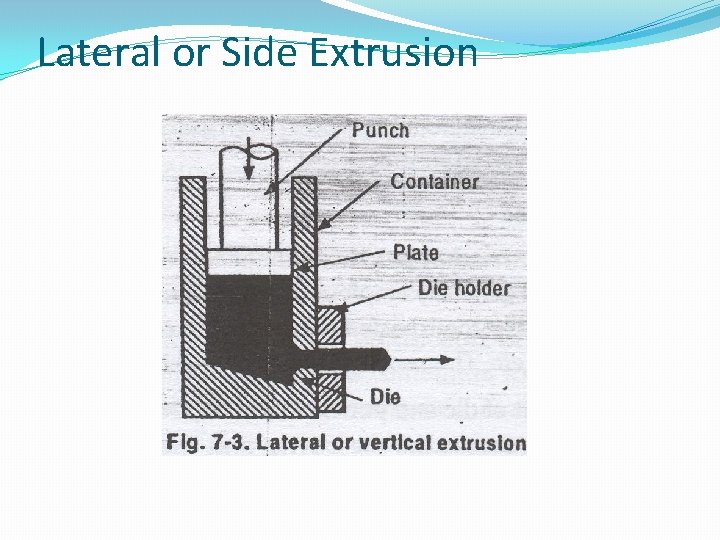
Lateral or Side Extrusion
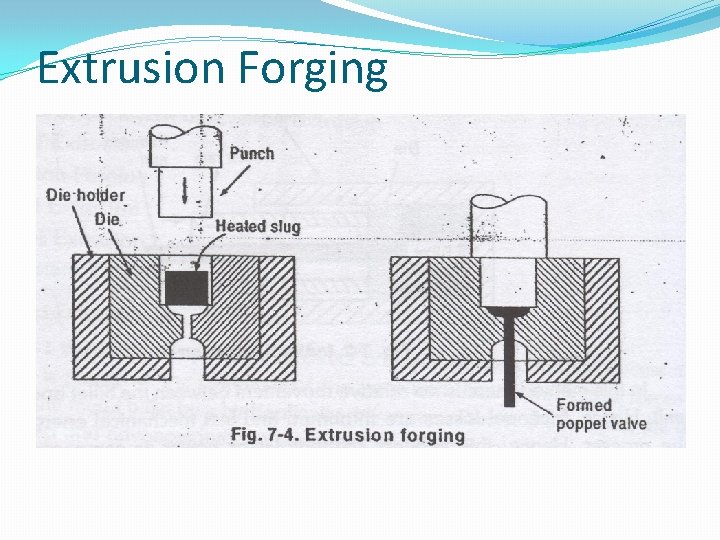
Extrusion Forging
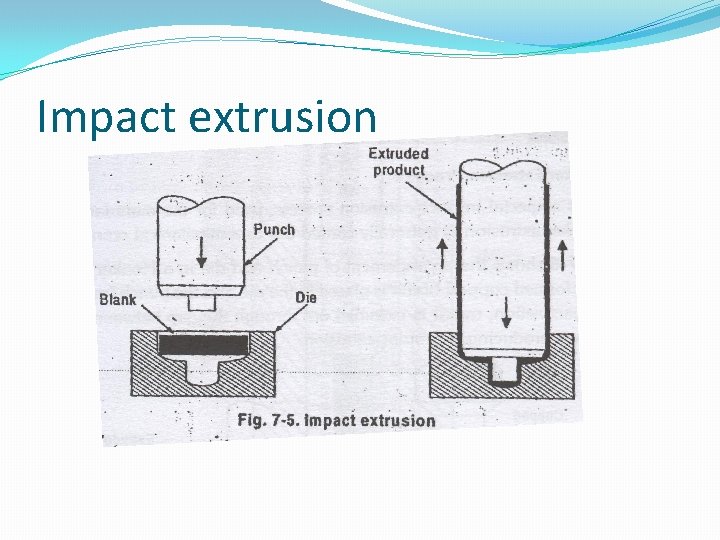
Impact extrusion
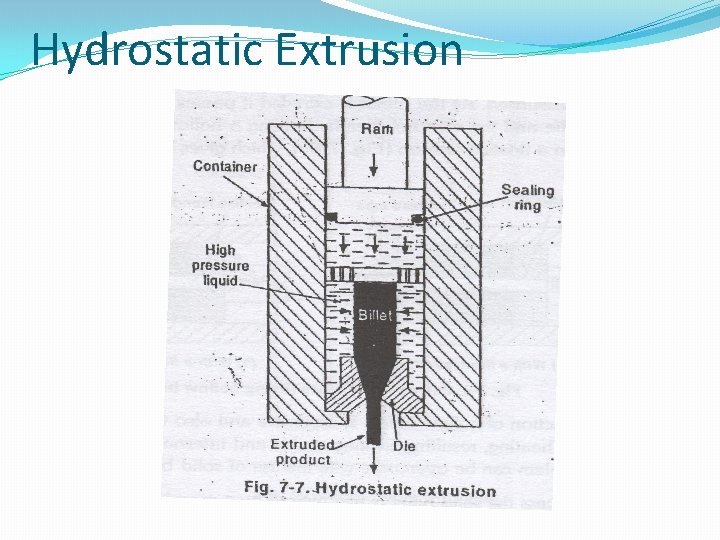
Hydrostatic Extrusion
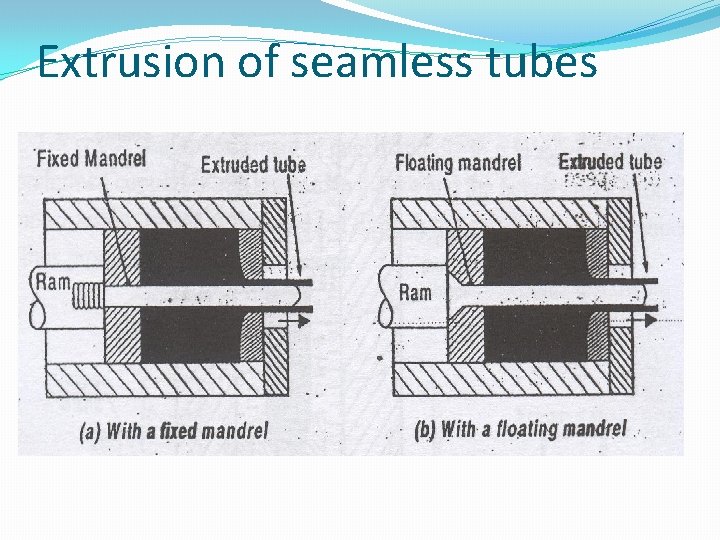
Extrusion of seamless tubes
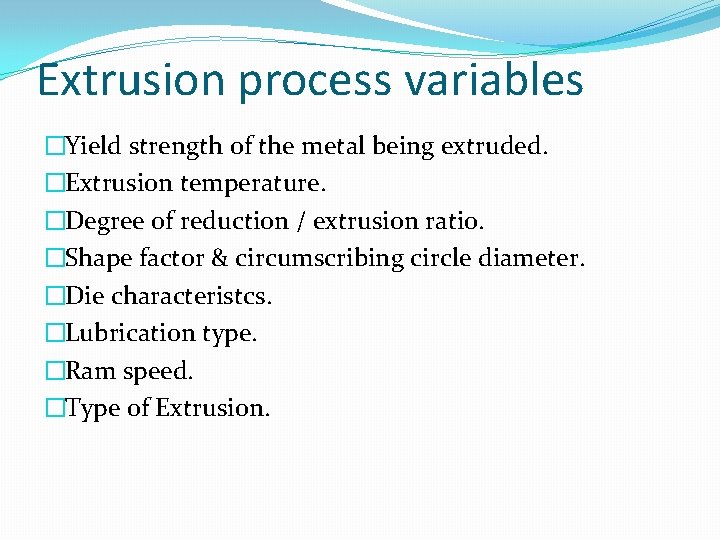
Extrusion process variables �Yield strength of the metal being extruded. �Extrusion temperature. �Degree of reduction / extrusion ratio. �Shape factor & circumscribing circle diameter. �Die characteristcs. �Lubrication type. �Ram speed. �Type of Extrusion.
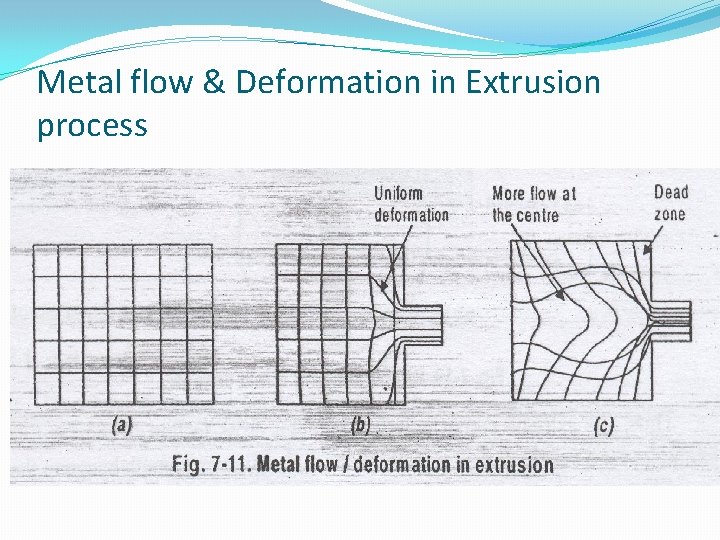
Metal flow & Deformation in Extrusion process
Lubrication in Extrusion. �As needed �As Preventive Measure Type of Lubrication 1. Manual 2. Automatic Lubricants used are: �Molten glass is the most common lubricant for steel and nickel based alloys �Graphite-based lubricants are also be used at high extrusion temperature.
Extrusion Equipment �Extrusion Presses �Auger �Hydraulic Pump �Pressure Intensifier �Drives
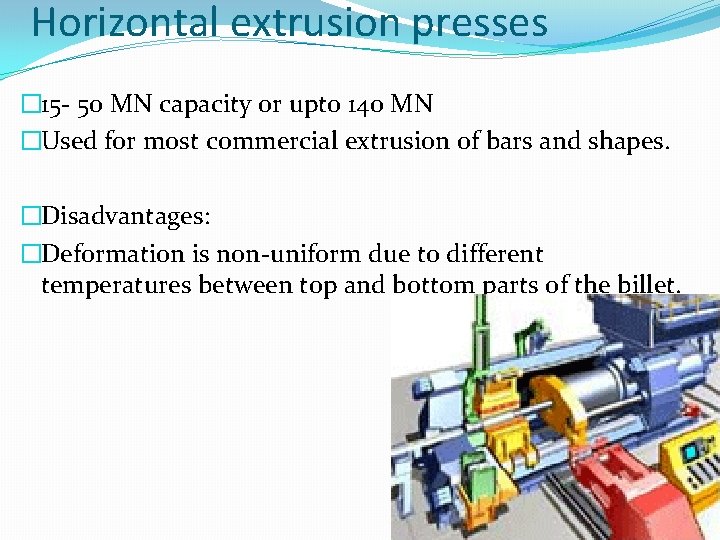
Horizontal extrusion presses � 15 - 50 MN capacity or upto 140 MN �Used for most commercial extrusion of bars and shapes. �Disadvantages: �Deformation is non-uniform due to different temperatures between top and bottom parts of the billet.
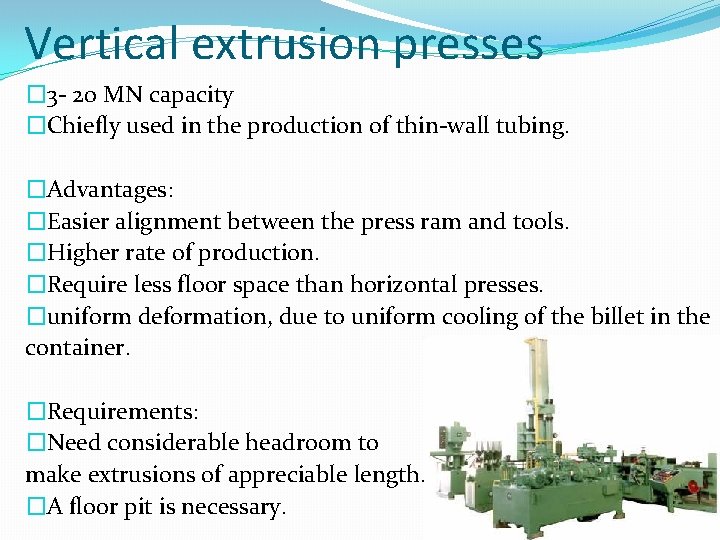
Vertical extrusion presses � 3 - 20 MN capacity �Chiefly used in the production of thin-wall tubing. �Advantages: �Easier alignment between the press ram and tools. �Higher rate of production. �Require less floor space than horizontal presses. �uniform deformation, due to uniform cooling of the billet in the container. �Requirements: �Need considerable headroom to make extrusions of appreciable length. �A floor pit is necessary.
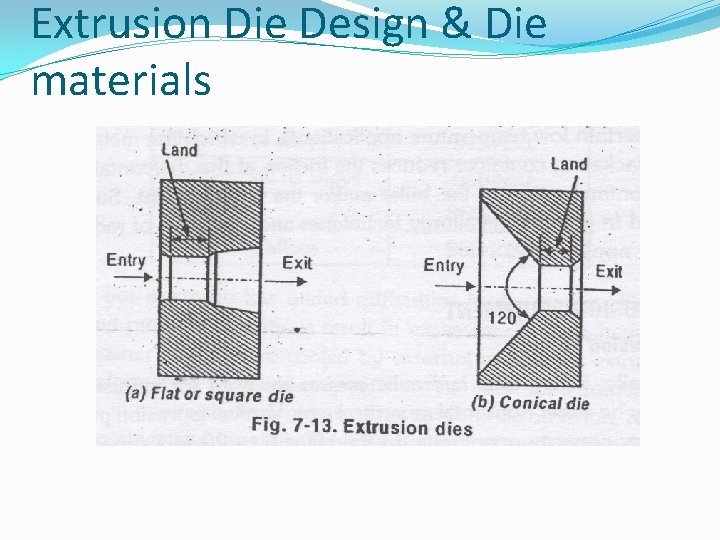
Extrusion Die Design & Die materials
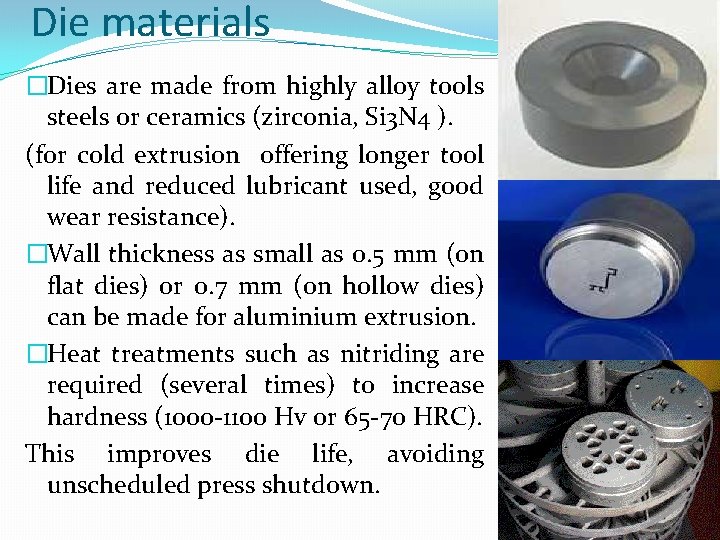
Die materials �Dies are made from highly alloy tools steels or ceramics (zirconia, Si 3 N 4 ). (for cold extrusion offering longer tool life and reduced lubricant used, good wear resistance). �Wall thickness as small as 0. 5 mm (on flat dies) or 0. 7 mm (on hollow dies) can be made for aluminium extrusion. �Heat treatments such as nitriding are required (several times) to increase hardness (1000 -1100 Hv or 65 -70 HRC). This improves die life, avoiding unscheduled press shutdown.
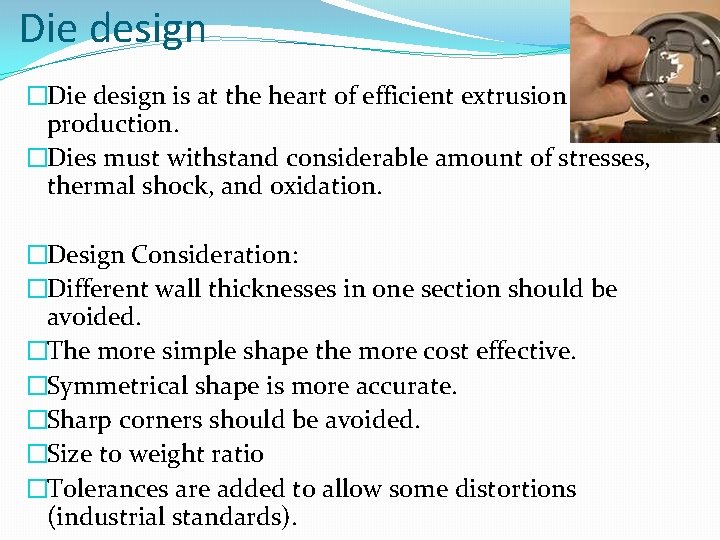
Die design �Die design is at the heart of efficient extrusion production. �Dies must withstand considerable amount of stresses, thermal shock, and oxidation. �Design Consideration: �Different wall thicknesses in one section should be avoided. �The more simple shape the more cost effective. �Symmetrical shape is more accurate. �Sharp corners should be avoided. �Size to weight ratio �Tolerances are added to allow some distortions (industrial standards).
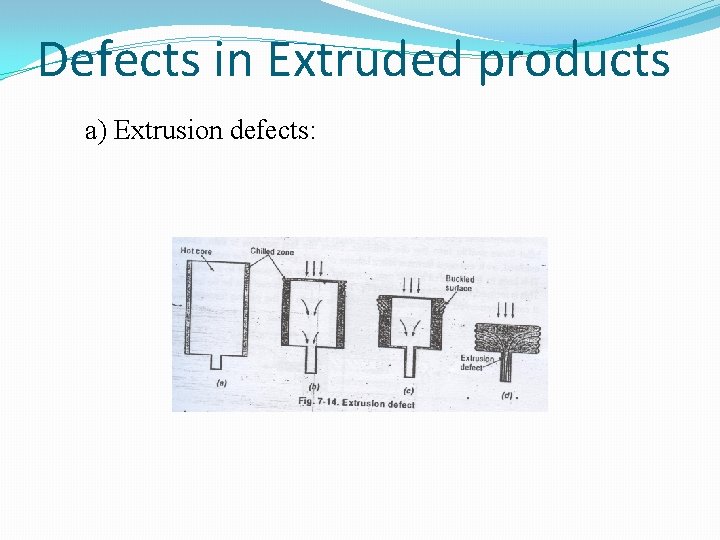
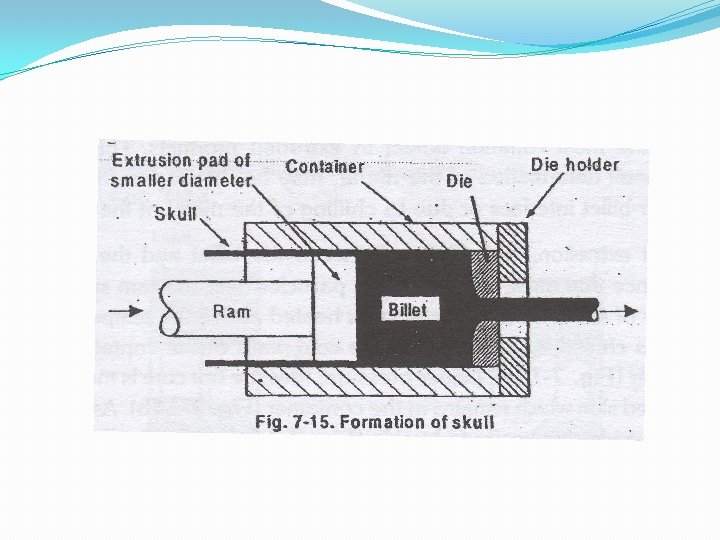
Defects in Extruded products a) Extrusion defects:
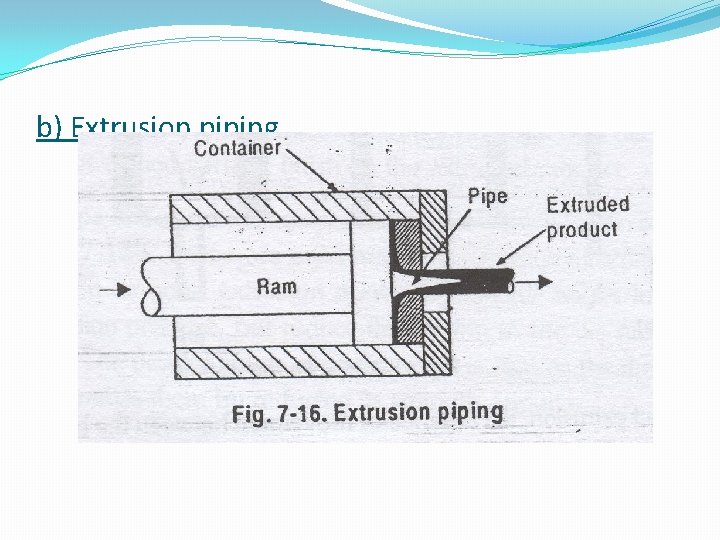
b) Extrusion piping
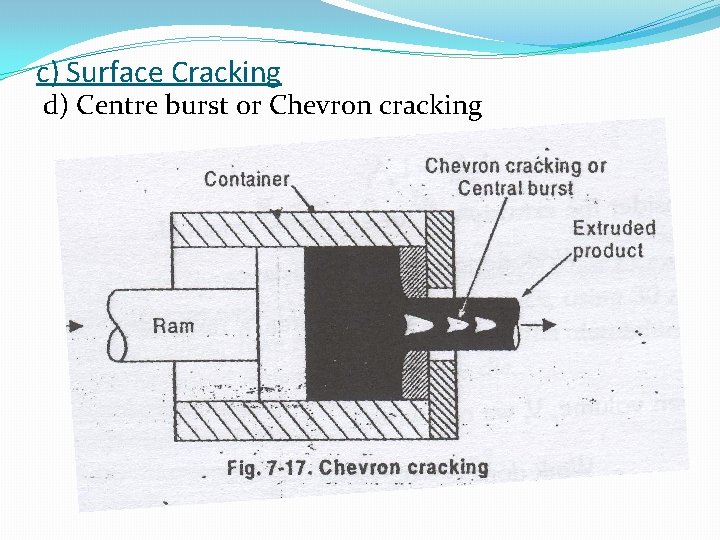
c) Surface Cracking d) Centre burst or Chevron cracking
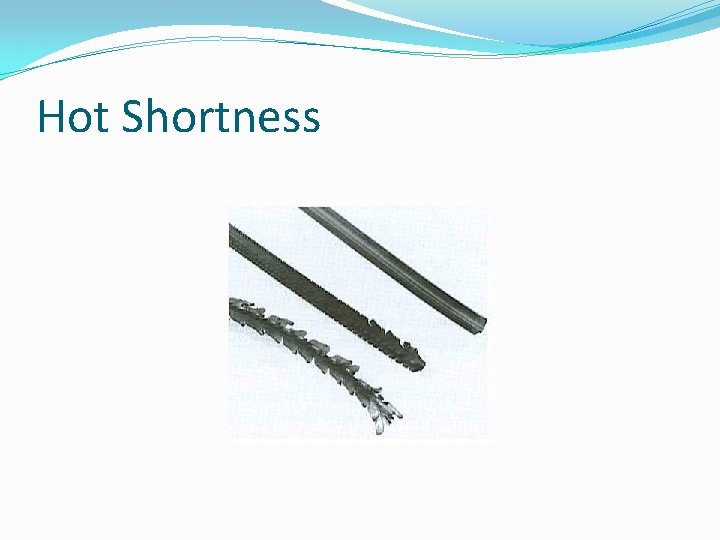
Hot Shortness