
Extremophiles Extremophiles Microbes thriving at high and low
Extremophiles

Extremophiles Microbes thriving at high and low temperatures: • Microbes that grow in harsh conditions are called extremophiles. • Bacillus infernus can live over 1. 5 miles below the earth’s surface, without oxygen, at temperature above 60 degrees centigrade. • Osmotolerant are those that are able to grow over wide range of water activity or osmotic concentration. eg Staphylococcus aureus, Saccharomyces rouxii. • Halophiles require high level of sodium chloride, about. 2 M or above to grow. Eg Halobacterium, Dunaliella, Ectothiorhodospira.
• From p. H point of view, acidophiles have optimum growth between p. H 0 and 5. 5. Examples: Sulfolobus, Picrophilus, Ferroplasma, Acontium, Cyanidium caldarium. • Neutrophiles have optimum growth between p. H 5. 5 and 8. 0. • Examples Escherichia, Euglena, Paramecium. • Alkalophiles have optimum growth between p. H 8. 5 and 11. 5. • Examples Bacillus alcalophilus, Natronobacterium.
• From temperature point of view, psychrophiles grow well at 0 degrees and have an optimum growth temperature of 15 degrees or lower. Examples Bacillus psychrophilus, Chlamydomonas nivalis. • Psychrotrophs can grow at 0 -7 degree centigrade, have an optimum temperature of growth between 20 and 30 degrees and a maximum around 35 degrees. Examples Listeria monocytogenes, Pseudomonas fluorescens.
• Mesophiles grow best around 20 -45 degrees. Examples Escherichia coli, Neisseria gonorrhoeae, Trichomonas vaginalis. • Thermophiles grow at 55 degrees or higher, optimum temperature of growth is often between 55 and 65 degrees. Examples Bacillus stearothermophilus, Thermus aquaticus, Cyanidium caldarium, Chaetomium thermophile.
• Hyperthermophiles have an optimum temperature of growth between 80 and about 113 degrees. Examples Sulfolobus, Pyrococcus, Pyrodictium.
• From oxygen concentration point of view, obligate aerobes are completely dependent on atmospheric oxygen for growth. Examples Micrococcus luteus, Pseudomonas, Mycobacterium, most algae, fungi and protozoa.
• Facultative anaerobes don’t require oxygen for growth, but grows better in the presence of oxygen. Examples : Escherichia, Enterococcus, Saccharomyces cerevisiae. • Aerotolerant anaerobes grow equally well in the presence and absence of oxygen. Examples : Streptococcus pyogenes.
• Obligate anaerobes can’t tolerate oxygen and die in it’s presence Examples: Clostridium, Bacteroides, Methanobacterium, Trepomonas agilis. • Microaerophiles require oxygen levels below (2 -10)% for growth and 20% of atmospheric oxygen causes damage to them. Examples Campylobacter, Spirillum volutans, Treponema pallidum.
• From pressure point of view , barophiles grow more rapidly at high hydrostatic pressures. Examples Photobacterium profundum, • Shewanella benthica, Methanococcus jannaschii
Microbes at low nutrient levels • Oligotroph is an organism living in an environment offering very low levels of nutrients. • Copiotrophs prefer nutritionally rich environment. • The bacterium Pelagibacter ubique is abundant in the ocean. Lichens live in nutritionally poor regions.
Sec B-2 Unit 4 -Water microbiology • Common water borne diseases are caused due to bacteria, viruses, protozoa and algae.
Bacteria • • Organisms Salmonella typhi Salmonella enteritidis Helicobacter pylori (Campylobacter pylori) Shigella dysenteriae, etc Vibrio cholerae Diseases Typhoid fever Gastroenteritis Chronic gastritis, etc Shigellosis (Bacillary dysentery) Cholera
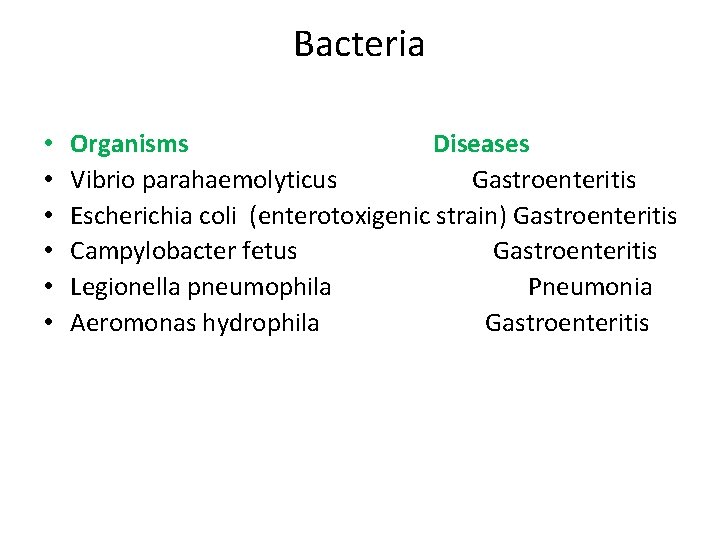
Bacteria • • • Organisms Diseases Vibrio parahaemolyticus Gastroenteritis Escherichia coli (enterotoxigenic strain) Gastroenteritis Campylobacter fetus Gastroenteritis Legionella pneumophila Pneumonia Aeromonas hydrophila Gastroenteritis
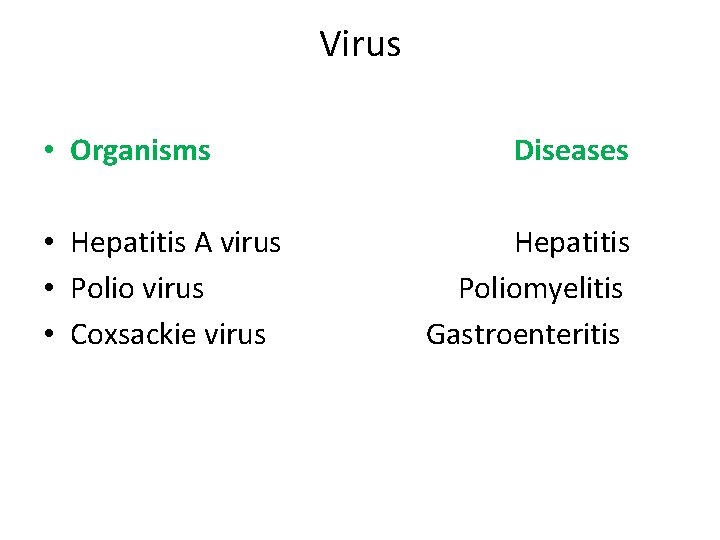
Virus • Organisms • Hepatitis A virus • Polio virus • Coxsackie virus Diseases Hepatitis Poliomyelitis Gastroenteritis
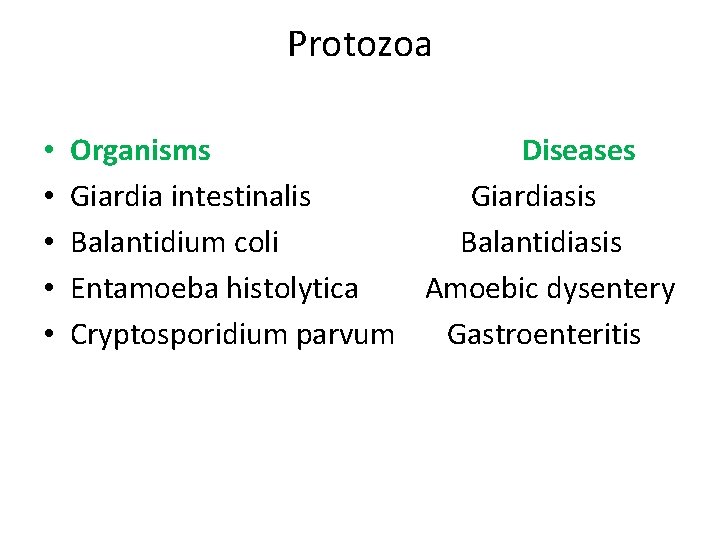
Protozoa • • • Organisms Diseases Giardia intestinalis Giardiasis Balantidium coli Balantidiasis Entamoeba histolytica Amoebic dysentery Cryptosporidium parvum Gastroenteritis
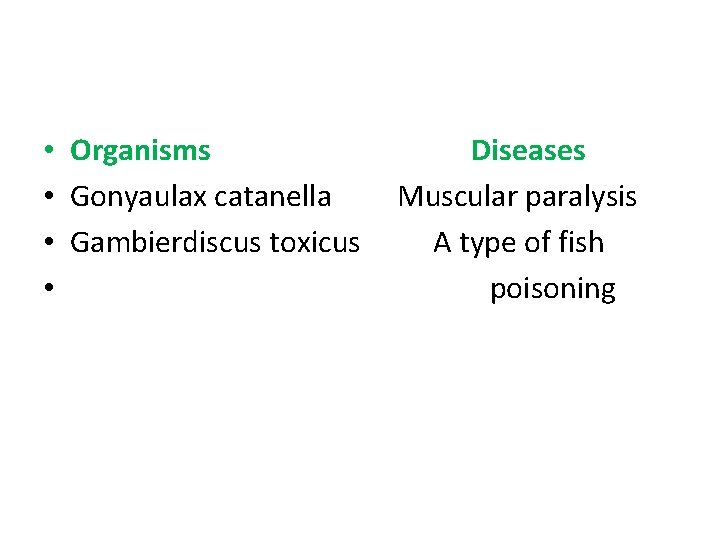
• Organisms • Gonyaulax catanella • Gambierdiscus toxicus • Diseases Muscular paralysis A type of fish poisoning
- Slides: 17