
EXTREMELY RARE CASE OF CECAL PERFORATION FOLLOWING AN
- Slides: 16
EXTREMELY RARE CASE OF CECAL PERFORATION FOLLOWING AN UNCOMPLICATED VAGINAL DELIVERY Morgan Bush, MS 4 Stephen H. Bush, MD, FACOG West Virginia University School of Medicine
Introduction- “Ogilvie’s Syndrome” • “Ogilvie’s Syndrome”, • Rare, life threatening complication of an acute pseudo-obstruction of large bowel • The most important complication can be a large bowel perforation, especially caecal • Etiology • Exact etiology is unknown • Possibly due to declining serum estrogen levels in post partum period • Loss of tone in parasympathetic nerves S 2 -S 4 resulting in atonic distal colon leading to pseudoobstruction
Introduction- “Ogilvie’s Syndrome” • Presentation • Massively dilated colon without any associated mechanical obstruction • Peritonitis, free air in the abdomen • Typically is found after trauma, major abdominal or pelvic surgery (cesarean section), or use of medications disturbing colonic motility ◦ Diagnosis ◦ Often difficult due to non-specific clinical presentation ◦ Abdominal distension and pain most common sign ◦ Electrolyte imbalance, specifically hypocalcemia ◦ Abdominal radiography is first line for investigation ◦ X-ray, CT, or contrast enema ◦ Exploratory laparotomy for conclusive diagnosis ◦ Early recognition and diagnosis is key in management
Introduction- “Ogilvie’s Syndrome” ◦ Management ◦ Conservative therapy can successfully treat the majority of patients ◦ NPO, IV fluid support, and maintaining electrolyte balance ◦ Decompression with NG tube, unless signs of peritonitis are present ◦ Medical therapy is needed in more severe and persistent cases ◦ Prokinetic, parasympathetic medications, Neostigmine, have been successful, but benefit in idiopathic cases is unknown ◦ Erythromycin, a motilin receptor agonist ◦ These should only be used if vitals are stable ◦ Laxative use in post partum period could help ◦ Surgical intervention ◦ Needed if all other attempts fail or if there is ischemia or bowel perforation
Introduction • It is rarely seen in an obstetric population • Majority of these cases are following cesarean section • There have been only 3 prior reported cases following uncomplicated vaginal delivery
◦ 37 year old female ◦ G 4 P 3 ◦ Presented at 38 w 6 d gestation to triage ◦ Early labor ◦ Nausea, vomiting, and severe left side pain Patient
◦ Past Medical History ◦ Ulcerative colitis, endometriosis, and recurrent UTI’s ◦ 4 uncomplicated spontaneous vaginal deliveries ◦ Family History ◦ CAD, Thyroid disease, HTN, cancer ◦ Social History and Past Surgical History: noncontributory Patient
◦ Labor ◦ Pitocin augmentation ◦ Normal spontaneous vaginal delivery ◦ Live born male infant ◦ 7 lb 11 oz (3485 grams) ◦ APGAR 9/10 ◦ Post-Partum ◦ Minimal-moderate bleeding ◦ Controlled by uterine massage and uterotonics ◦ Complaining of abdominal pain, no bowel movements reported after delivery ◦ Discharged home with Percocet for pain management Labor and Post. Partum Course
◦ Post Discharge- Day 1 ◦ Patient presented to ED post partum day 3 ◦ Severe gas pains since discharge, no flatus, and no bowel movement since delivery ◦ Abdominal pain worse with movement ◦ Appeared to be in moderate distress ◦ Vitals ◦ Temp: 37. 2 ◦ BP: 128/76 ◦ HR: 129 ◦ RR: 23 Medical Course
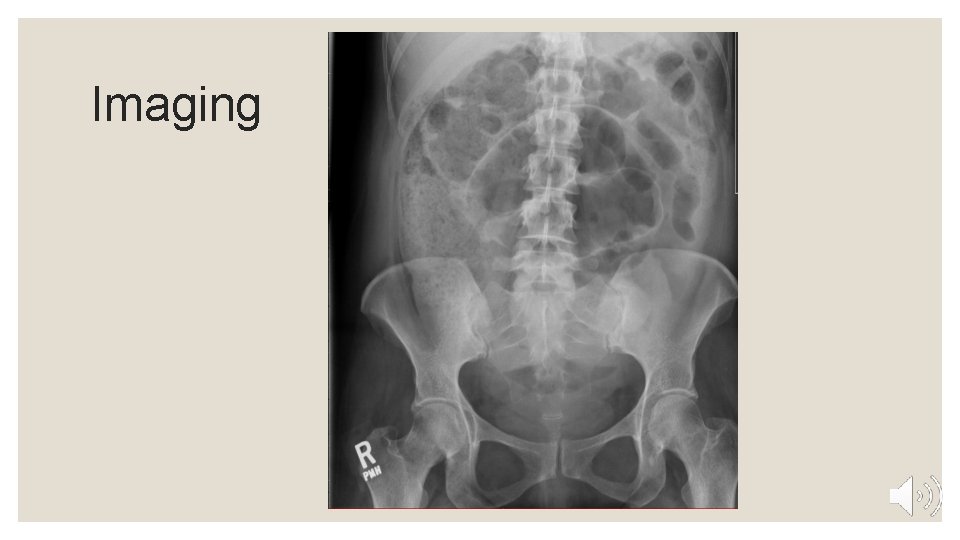
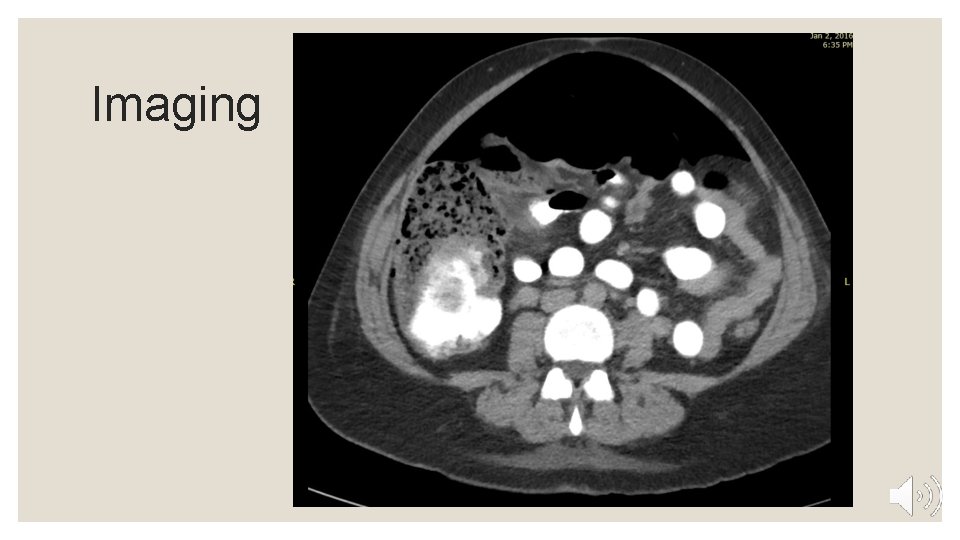
◦ Labs ◦ WBC: 13. 6 ◦ UA showed moderate leukocyte esterase and bacteria ◦ Pertinent Physical Exam ◦ Right lower quadrant pain ◦ Referred pain to shoulders ◦ No rebound tenderness ◦ Bowel sounds present in all four quadrants ◦ Imaging ◦ Abdominal x-ray and CT scan showed dilated small bowel loops, pneumoperitoneum, and free air within abdomen Medical Course
Imaging
Imaging
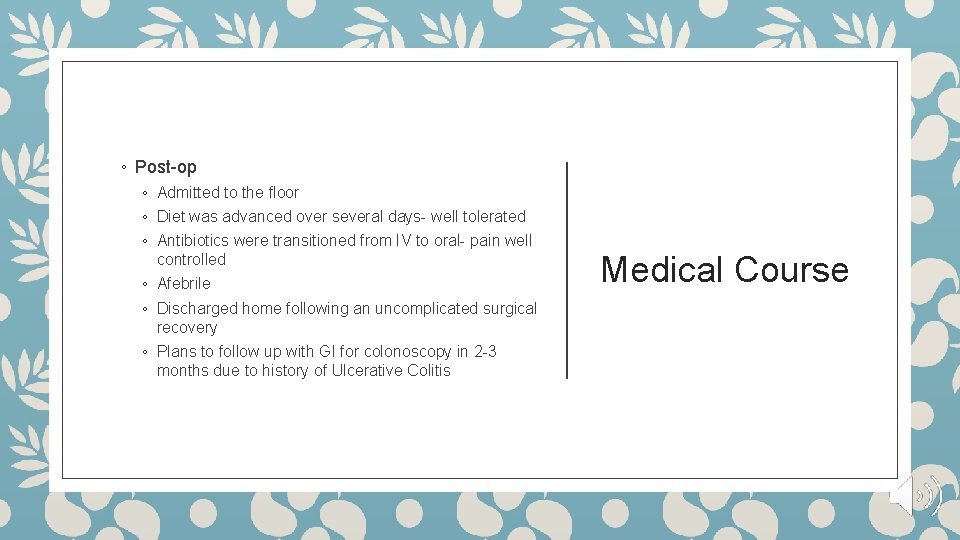
◦ Management ◦ 1 L NS bolus was administered followed by continuous IV fluids ◦ Initially given Fentanyl, but pain was unresolved ◦ Dilaudid was then administered for pain management ◦ IV Flagyl and Cipro were given once images were reviewed ◦ Surgery ◦ Diagnostic laparoscopy/exploratory laparotomy was performed ◦ Peritonitis and a 1 cm cecal perforation was discovered ◦ Primary closure with appendectomy Medical Course
◦ Post-op ◦ Admitted to the floor ◦ Diet was advanced over several days- well tolerated ◦ Antibiotics were transitioned from IV to oral- pain well controlled ◦ Afebrile ◦ Discharged home following an uncomplicated surgical recovery ◦ Plans to follow up with GI for colonoscopy in 2 -3 months due to history of Ulcerative Colitis Medical Course
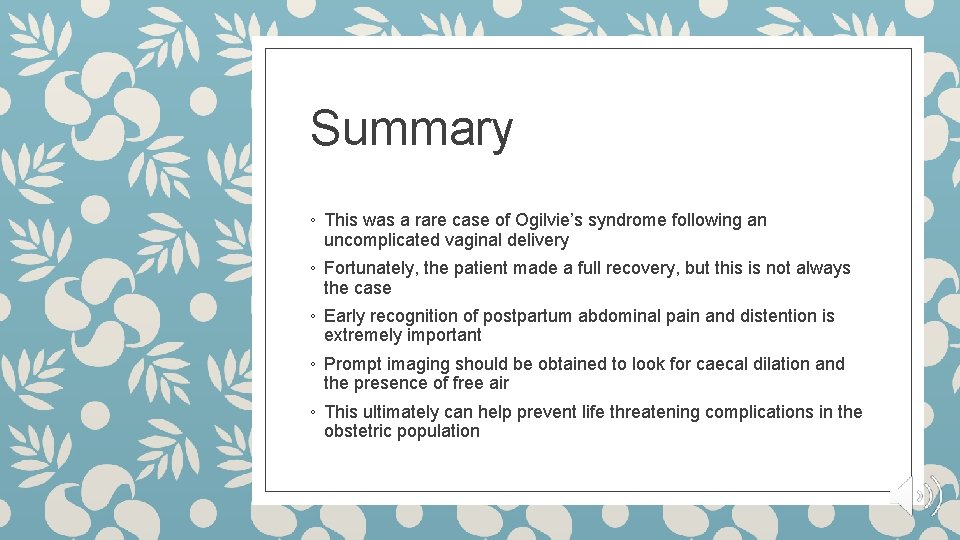
Summary ◦ This was a rare case of Ogilvie’s syndrome following an uncomplicated vaginal delivery ◦ Fortunately, the patient made a full recovery, but this is not always the case ◦ Early recognition of postpartum abdominal pain and distention is extremely important ◦ Prompt imaging should be obtained to look for caecal dilation and the presence of free air ◦ This ultimately can help prevent life threatening complications in the obstetric population
References ◦ Bhatti AB, Khan F, Ahmed A. Acute colonic pseudo-obstruction (ACPO) after normal vaginal delivery. J Pak Med Assoc. 2010; 60(2): 138– 139. ◦ Cartlidge D, Seenath M. Acute pseudo-obstruction of the large bowel with caecal perforation following normal vaginal delivery: a case report. J Med Case Rep. 2010; 4: 123. Published 2010 Apr 29. doi: 10. 1186/1752 -1947 -4 -123 ◦ E H, Vk S, Kola SK, Kg DK. Spontaneous Caecal Perforation Associated with Ogilvie's Syndrome Following Vaginal Delivery - A Case Report. J Clin Diagn Res. 2014; 8(6): ND 08–ND 9. doi: 10. 7860/JCDR/2014/9078. 4484 ◦ Jayaram P, Mohan M, Lindow S, Konje J. Postpartum acute colonic pseudo-obstruction (ogilvie's syndrome): a systematic review of case reports and case series. European journal of obstetrics and gynecology. 2017; 214: 145 -149. ◦ Kakarla A, Posnett H, Jain A, Ash A, Acute pseudo-obstruction of the colon (Ogilvie’s syndrome) following instrumental vaginal delivery. In J Clin. Pract. 2006, 60(10): 1303 -5 ◦ Wells CI, O'Grady G, Bissett IP. Acute colonic pseudo-obstruction: A systematic review of etiology and mechanisms. World J Gastroenterol. 2017; 23(30): 5634– 5644. doi: 10. 3748/wjg. v 23. i 30. 5634