
Extremely halophilic Archaea require large amounts of Na
- Slides: 12
• Extremely halophilic Archaea require large amounts of Na. Cl for growth. • These organisms accumulate large levels of KCl in their cytoplasm as a compatible solute. These salts affect cell wall stability and enzyme activity. • The light-mediated proton pump bacteriorhodopsin helps extreme halophiles make ATP.
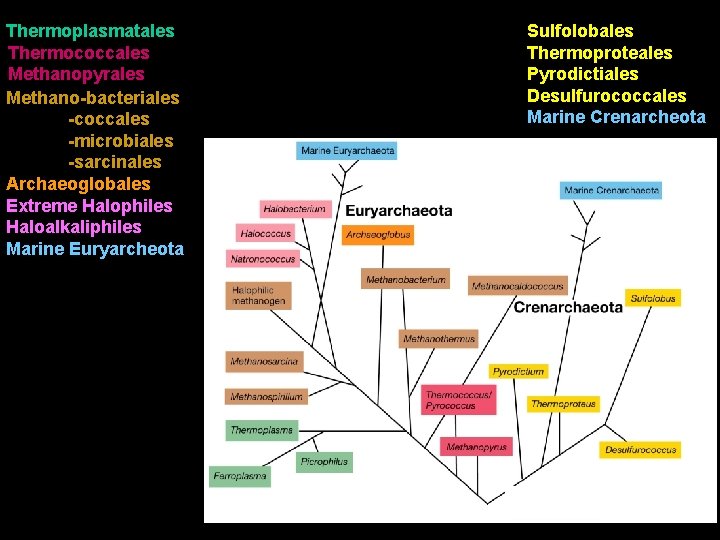
Thermoplasmatales Thermococcales Methanopyrales Methano-bacteriales -coccales -microbiales -sarcinales Archaeoglobales Extreme Halophiles Haloalkaliphiles Marine Euryarcheota Sulfolobales Thermoproteales Pyrodictiales Desulfurococcales Marine Crenarcheota
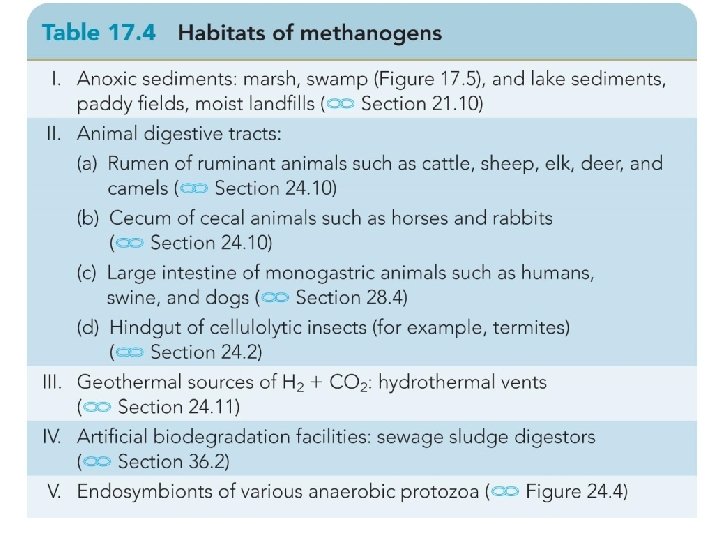
Methanogens • Microbes that produce CH 4 – Found in many diverse environments – Taxonomy based on phenotypic and phylogenetic features – Process of methanogensis first demonstrated over 200 years ago by Alessandro Volta
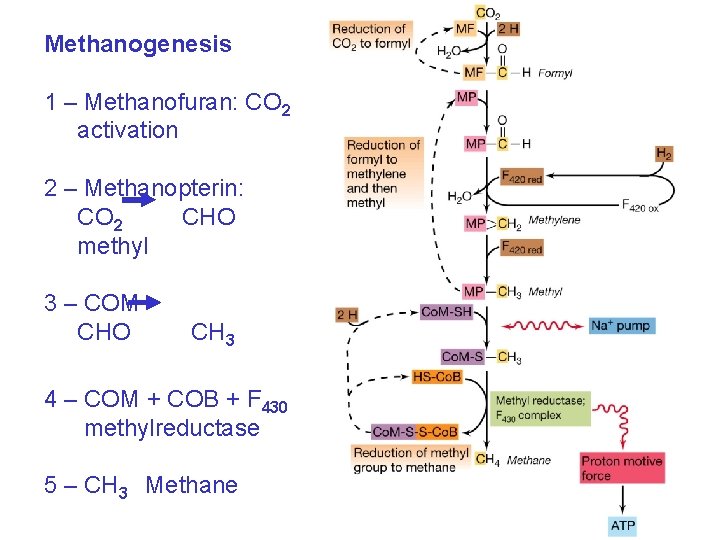
Methanogenesis • The biological production of CH 4 from either CO 2 plus H 2 or from methylated organic compounds. • A variety of unique coenzymes are involved in methanogenesis • The process is strictly anaerobic. • Energy conservation in methanogenesis involves both proton and sodium ion gradients.
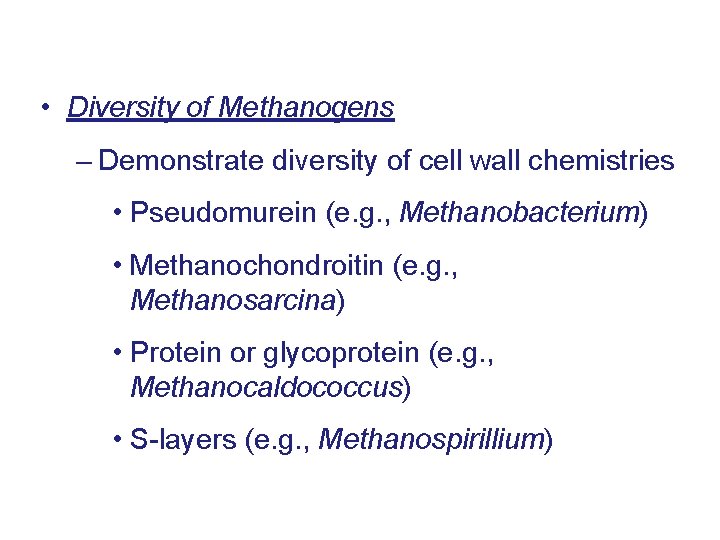
• Diversity of Methanogens – Demonstrate diversity of cell wall chemistries • Pseudomurein (e. g. , Methanobacterium) • Methanochondroitin (e. g. , Methanosarcina) • Protein or glycoprotein (e. g. , Methanocaldococcus) • S-layers (e. g. , Methanospirillium)
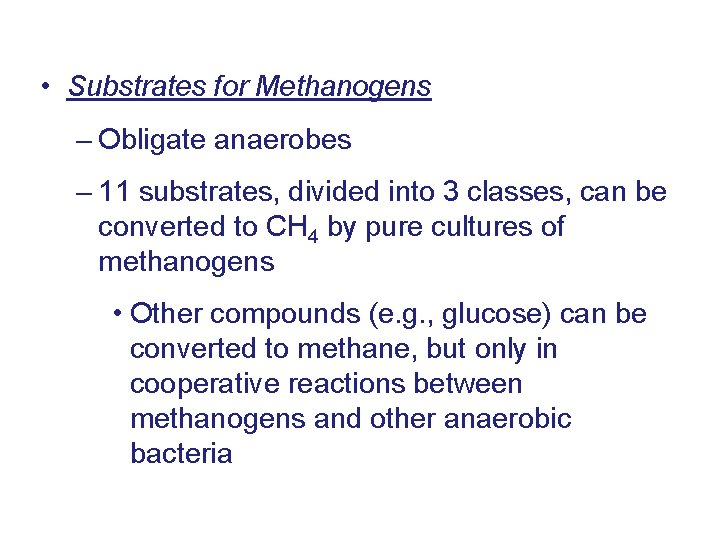
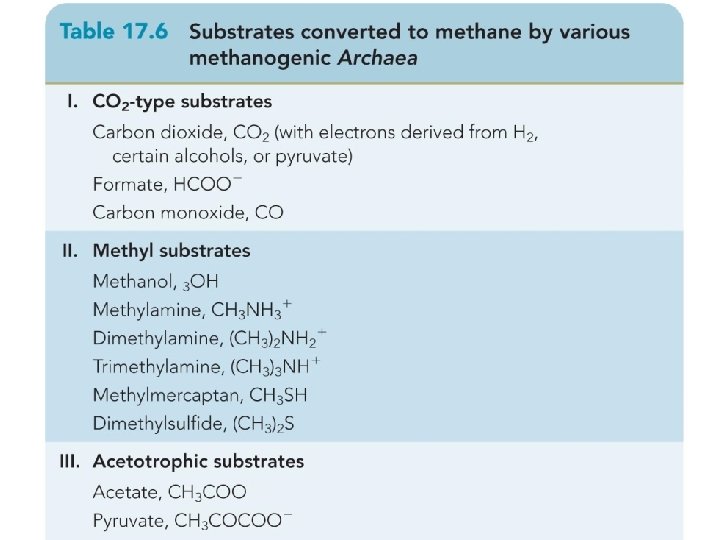
• Substrates for Methanogens – Obligate anaerobes – 11 substrates, divided into 3 classes, can be converted to CH 4 by pure cultures of methanogens • Other compounds (e. g. , glucose) can be converted to methane, but only in cooperative reactions between methanogens and other anaerobic bacteria
Methanogenesis 1 – Methanofuran: CO 2 activation 2 – Methanopterin: CO 2 CHO methyl 3 – COM CHO CH 3 4 – COM + COB + F 430 methylreductase 5 – CH 3 Methane
• Although hyperthermophiles live at very high temperatures, in some cases above the boiling point of water, there are temperature limits beyond which no living organism can survive. • This limit is likely 140– 150°C. Hydrogen (H 2) catabolism may have been the first energy-yielding metabolism of cells.
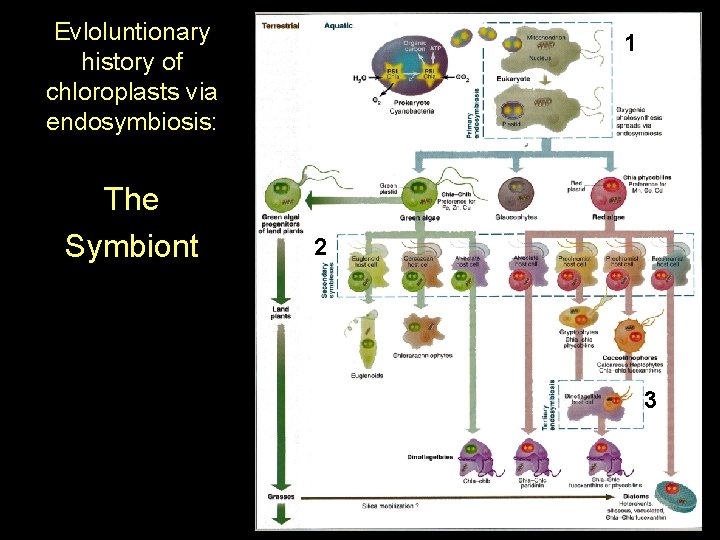
Evloluntionary history of chloroplasts via endosymbiosis: The Symbiont 1 2 3
Origin of the palstids: Cyanobacteria (Bacteria, Prokaryotes) Recipients: Various algae (Protists, Eukaryotes): 1. Glaucophyta 2. Cryptomonads 3. Rhodophyta 4. Chlorophyta 5. Euglenophyta 6. Chlorachniophyta 7. Chrysophyta 8. Heterocontae 9. Diatoms 10. Dinoflagellata (green) 11. Dinoflagellata (brown)