
Extreme Solar Eruptions Sources and Consequences Nat Gopalswamy


![Geomagnetic Storm and CME parameters Gopalswamy 2008 Dst [n. T] Dst = – 0.](https://slidetodoc.com/presentation_image/6623c9128f97ea19fc2395f2782dbbd9/image-30.jpg "Geomagnetic Storm and CME parameters Gopalswamy 2008 Dst [n. T] Dst = – 0.")
- Slides: 36
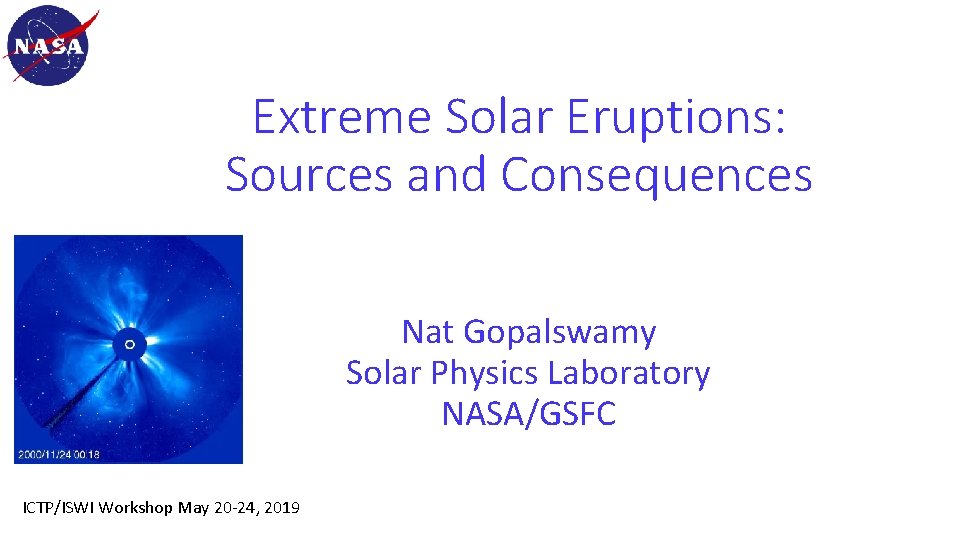
Extreme Solar Eruptions: Sources and Consequences Nat Gopalswamy Solar Physics Laboratory NASA/GSFC ICTP/ISWI Workshop May 20 -24, 2019
What is an Extreme Event? • Event on the tail of a distribution of interest • An occurrence singularly unique either in the occurrence itself or in terms of its consequences • Occurrence: CME, flare (active region size, magnetic content) • Consequences: SEP events, Magnetic storms • Tail: The physics does not change
What can we learn from the study of tails (caudology? ) …
… about the whole animal? David B. Stephenson 2005
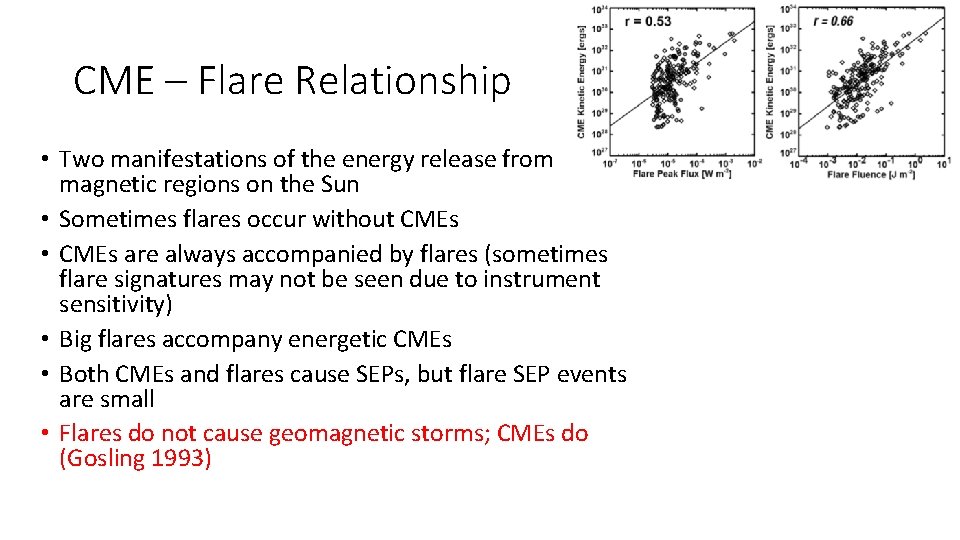
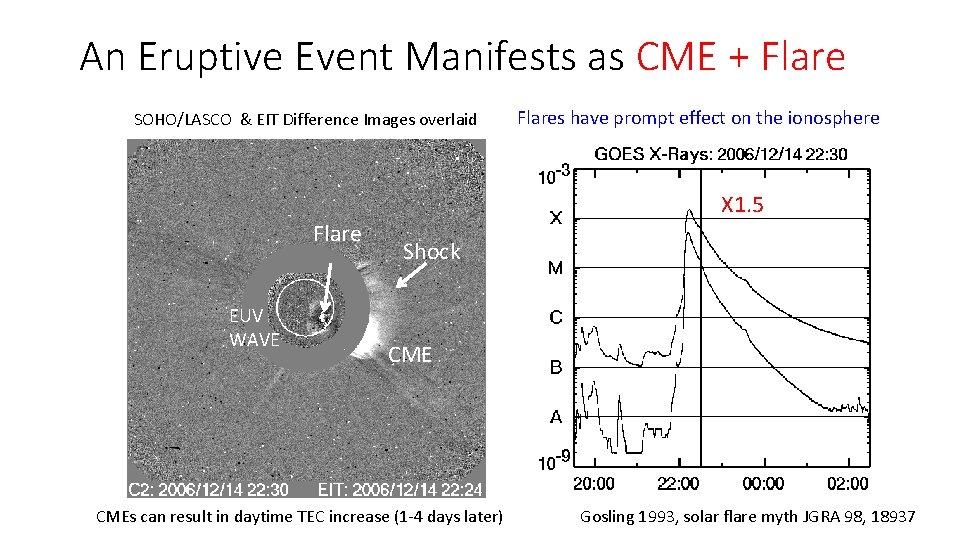
CME – Flare Relationship • Two manifestations of the energy release from magnetic regions on the Sun • Sometimes flares occur without CMEs • CMEs are always accompanied by flares (sometimes flare signatures may not be seen due to instrument sensitivity) • Big flares accompany energetic CMEs • Both CMEs and flares cause SEPs, but flare SEP events are small • Flares do not cause geomagnetic storms; CMEs do (Gosling 1993)
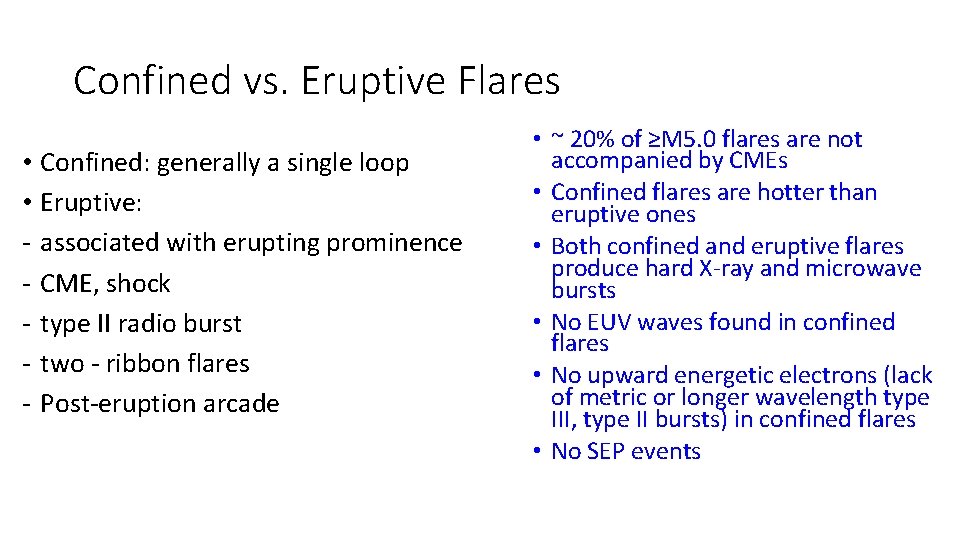
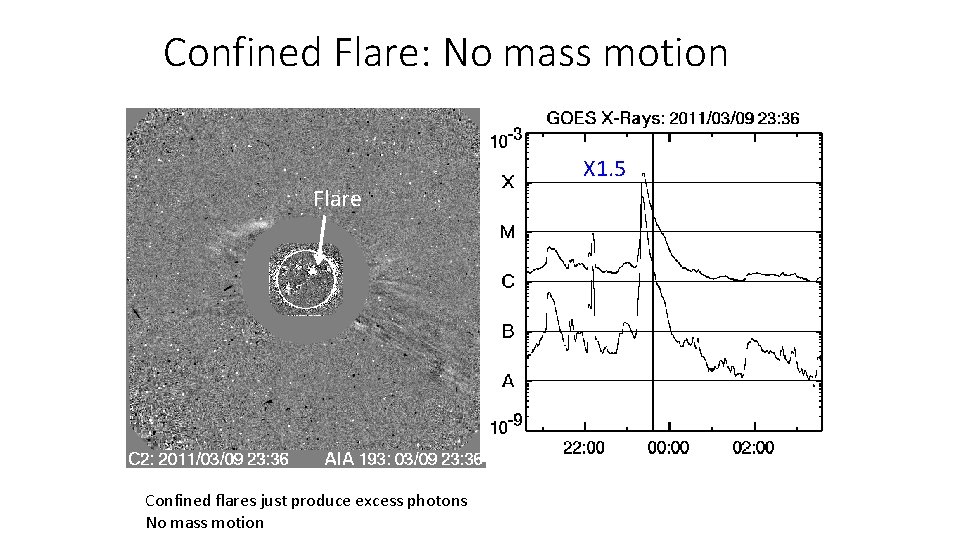
Confined vs. Eruptive Flares • Confined: generally a single loop • Eruptive: - associated with erupting prominence - CME, shock - type II radio burst - two - ribbon flares - Post-eruption arcade • ~ 20% of ≥M 5. 0 flares are not accompanied by CMEs • Confined flares are hotter than eruptive ones • Both confined and eruptive flares produce hard X-ray and microwave bursts • No EUV waves found in confined flares • No upward energetic electrons (lack of metric or longer wavelength type III, type II bursts) in confined flares • No SEP events
Confined Flare: No mass motion X 1. 5 Flare Confined flares just produce excess photons No mass motion
An Eruptive Event Manifests as CME + Flare SOHO/LASCO & EIT Difference Images overlaid Flare EUV WAVE Flares have prompt effect on the ionosphere X 1. 5 Shock CMEs can result in daytime TEC increase (1 -4 days later) Gosling 1993, solar flare myth JGRA 98, 18937
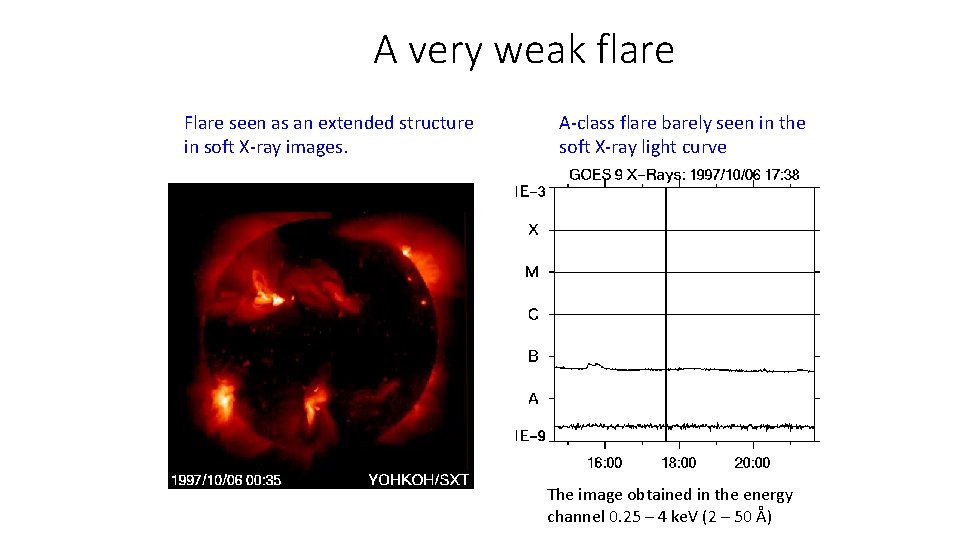
A very weak flare Flare seen as an extended structure in soft X-ray images. A-class flare barely seen in the soft X-ray light curve The image obtained in the energy channel 0. 25 – 4 ke. V (2 – 50 Å)
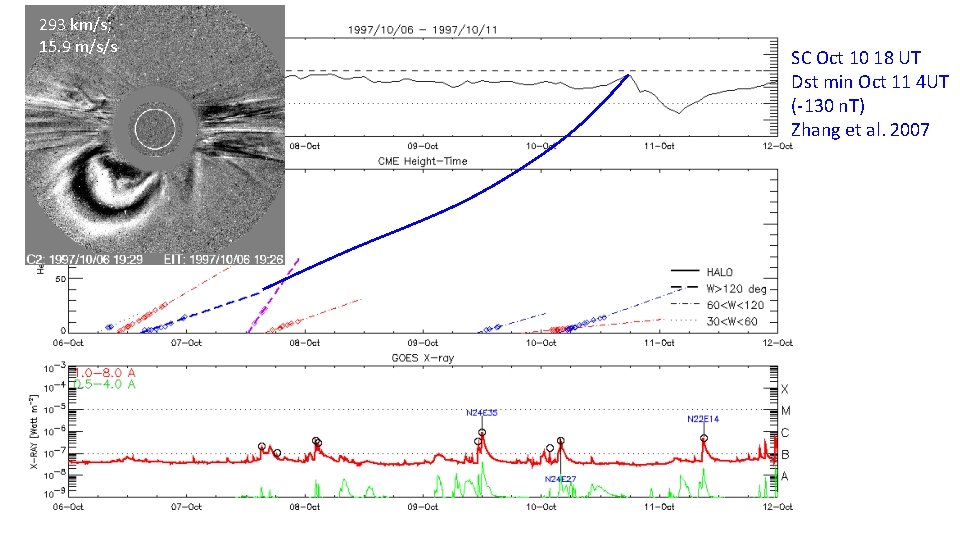
293 km/s; 15. 9 m/s/s SC Oct 10 18 UT Dst min Oct 11 4 UT (-130 n. T) Zhang et al. 2007
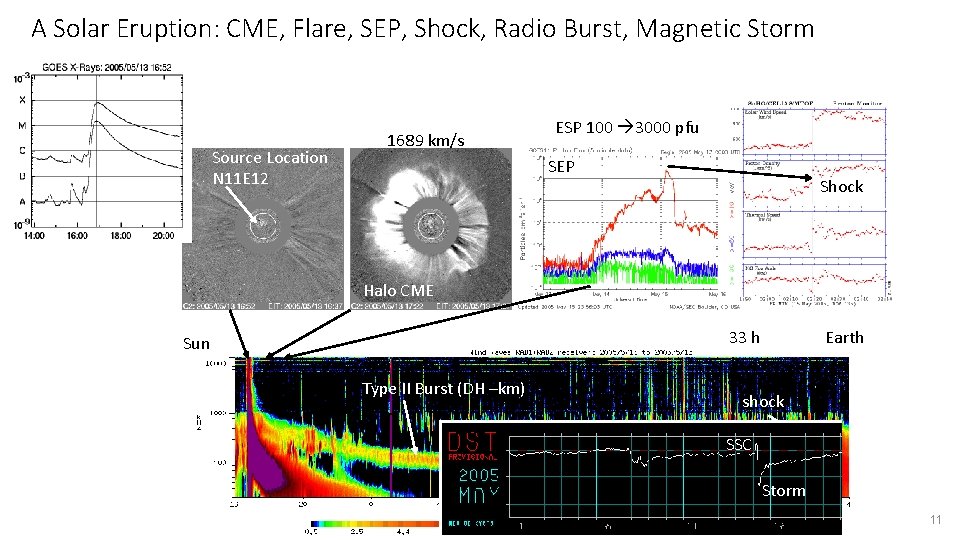
A Solar Eruption: CME, Flare, SEP, Shock, Radio Burst, Magnetic Storm Source Location N 11 E 12 1689 km/s ESP 100 3000 pfu SEP Shock Halo CME 33 h Sun Type II Burst (DH –km) Earth shock SSC Storm UN/ESA/NASA/JAXA Workshop 11
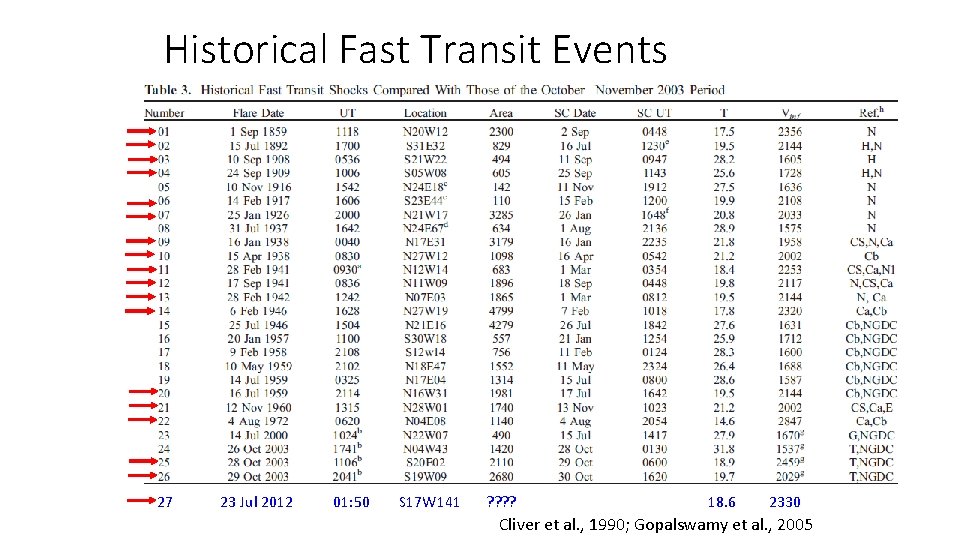
Historical Fast Transit Events 27 23 Jul 2012 01: 50 S 17 W 141 ? ? 18. 6 2330 Cliver et al. , 1990; Gopalswamy et al. , 2005
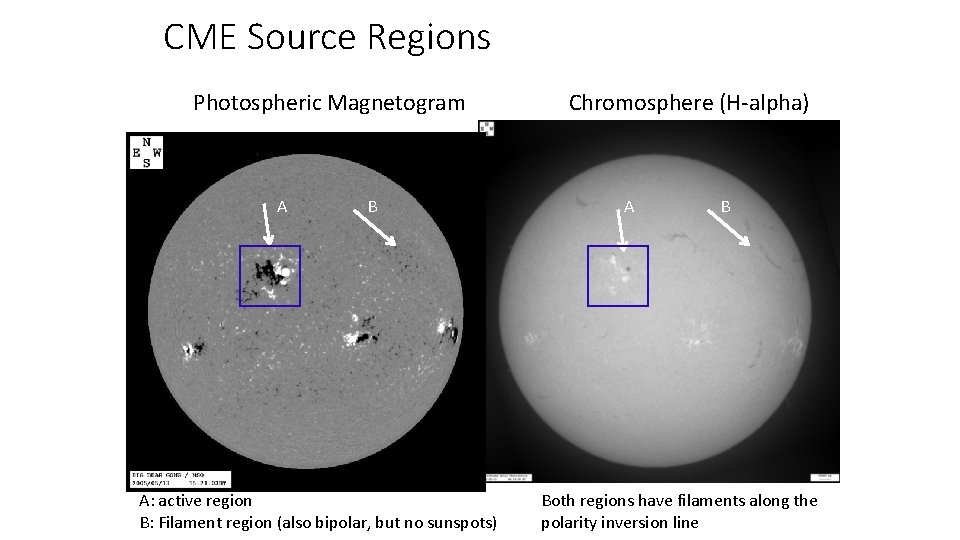
CME Source Regions Photospheric Magnetogram A B A: active region B: Filament region (also bipolar, but no sunspots) Chromosphere (H-alpha) A B Both regions have filaments along the polarity inversion line
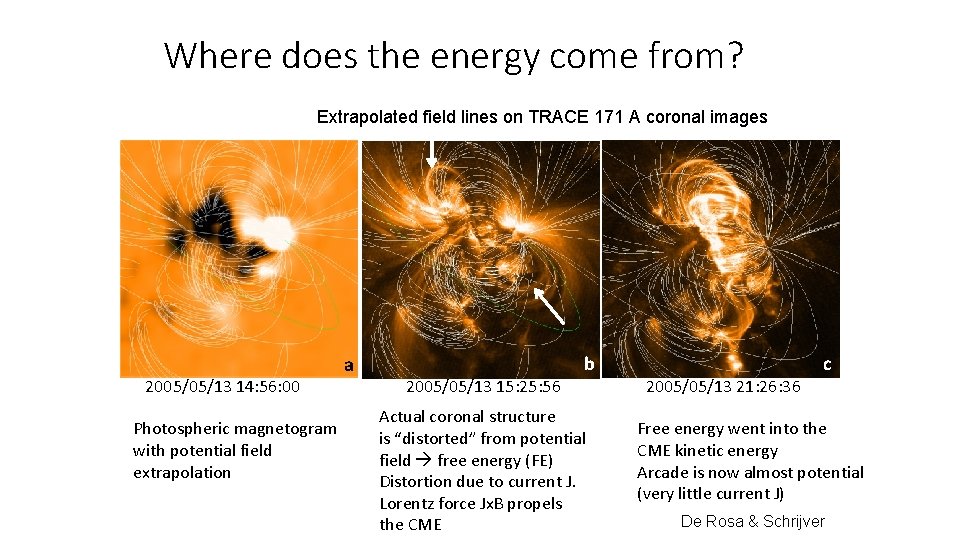
Where does the energy come from? Extrapolated field lines on TRACE 171 A coronal images 2005/05/13 14: 56: 00 Photospheric magnetogram with potential field extrapolation a 2005/05/13 15: 25: 56 b Actual coronal structure is “distorted” from potential field free energy (FE) Distortion due to current J. Lorentz force Jx. B propels the CME 2005/05/13 21: 26: 36 c Free energy went into the CME kinetic energy Arcade is now almost potential (very little current J) De Rosa & Schrijver
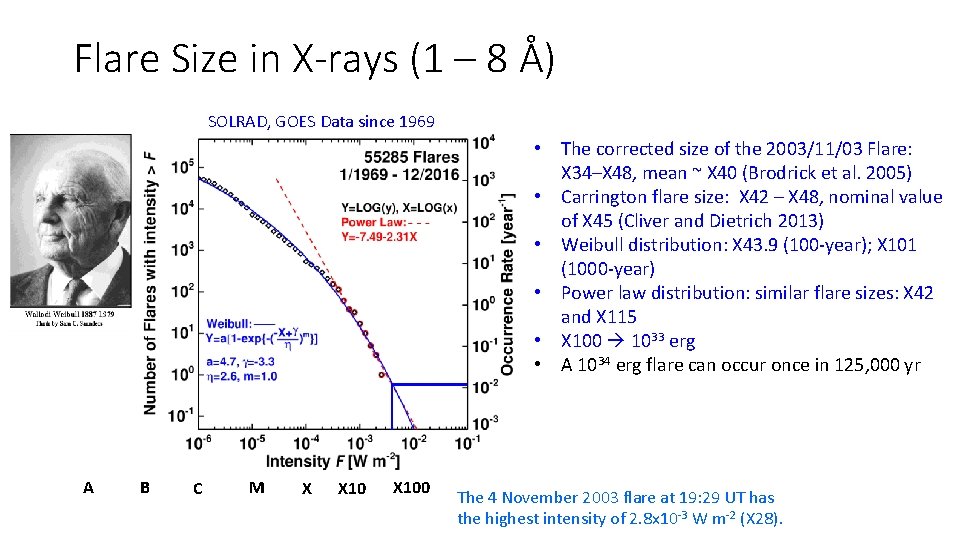
Flare Size in X-rays (1 – 8 Å) SOLRAD, GOES Data since 1969 • The corrected size of the 2003/11/03 Flare: X 34–X 48, mean ~ X 40 (Brodrick et al. 2005) • Carrington flare size: X 42 – X 48, nominal value of X 45 (Cliver and Dietrich 2013) • Weibull distribution: X 43. 9 (100 -year); X 101 (1000 -year) • Power law distribution: similar flare sizes: X 42 and X 115 • X 100 1033 erg • A 1034 erg flare can occur once in 125, 000 yr A B C M X X 100 The 4 November 2003 flare at 19: 29 UT has the highest intensity of 2. 8 x 10 -3 W m-2 (X 28).
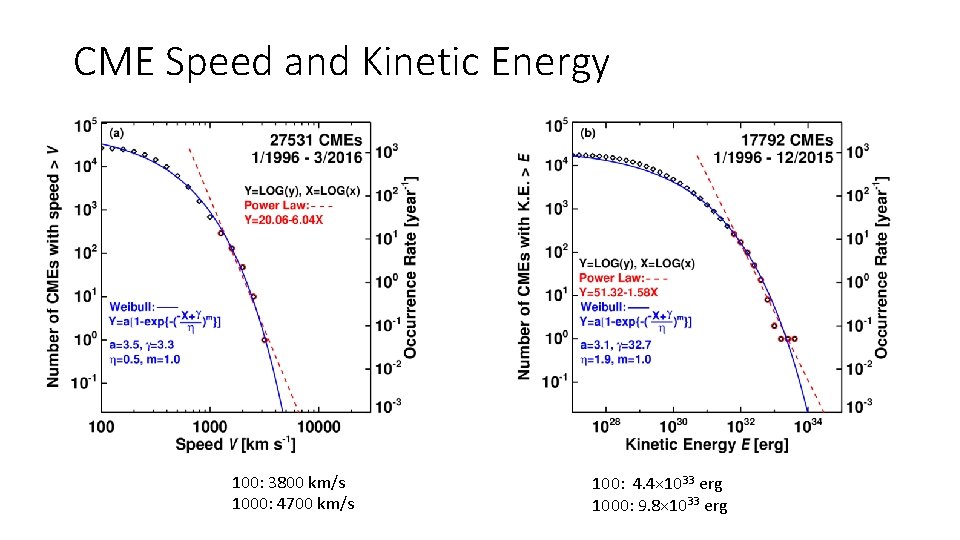
CME Speed and Kinetic Energy 100: 3800 km/s 1000: 4700 km/s 100: 4. 4× 1033 erg 1000: 9. 8× 1033 erg
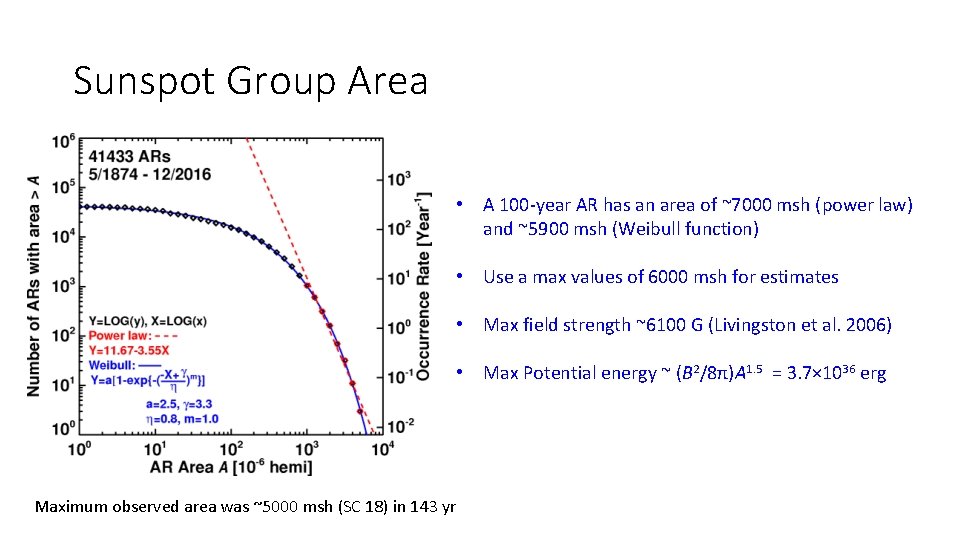
Sunspot Group Area • A 100 -year AR has an area of ~7000 msh (power law) and ~5900 msh (Weibull function) • Use a max values of 6000 msh for estimates • Max field strength ~6100 G (Livingston et al. 2006) • Max Potential energy ~ (B 2/8π)A 1. 5 = 3. 7× 1036 erg Maximum observed area was ~5000 msh (SC 18) in 143 yr
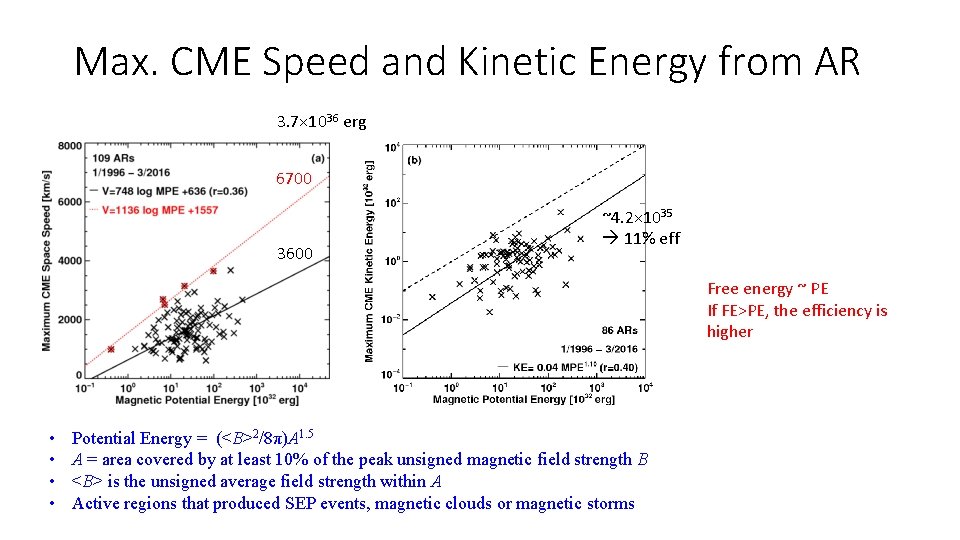
Max. CME Speed and Kinetic Energy from AR 3. 7× 1036 erg 6700 3600 ~4. 2× 1035 11% eff Free energy ~ PE If FE>PE, the efficiency is higher • • Potential Energy = (<B>2/8π)A 1. 5 A = area covered by at least 10% of the peak unsigned magnetic field strength B <B> is the unsigned average field strength within A Active regions that produced SEP events, magnetic clouds or magnetic storms
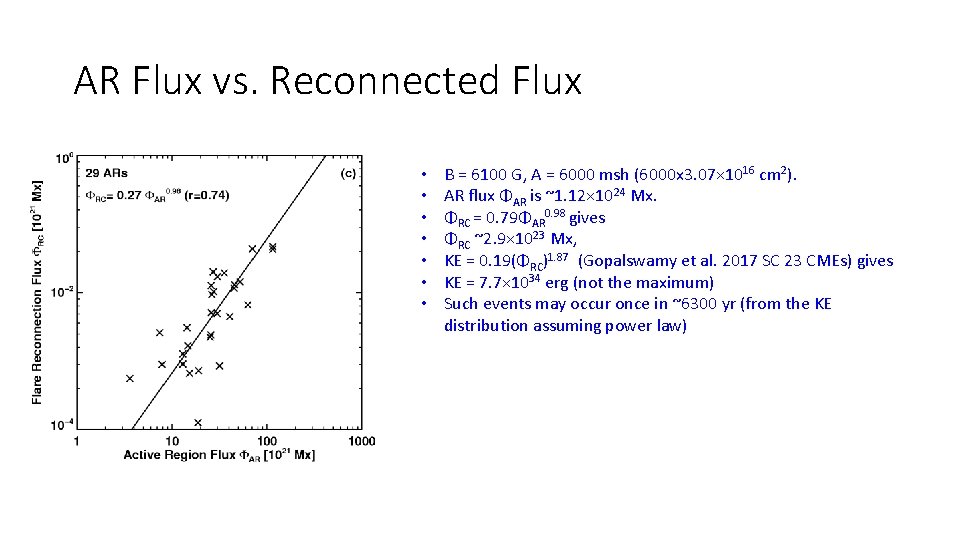
AR Flux vs. Reconnected Flux • • B = 6100 G, A = 6000 msh (6000 x 3. 07× 1016 cm 2). AR flux ΦAR is ~1. 12× 1024 Mx. ΦRC = 0. 79ΦAR 0. 98 gives ΦRC ~2. 9× 10²³ Mx, KE = 0. 19(ΦRC)1. 87 (Gopalswamy et al. 2017 SC 23 CMEs) gives KE = 7. 7× 1034 erg (not the maximum) Such events may occur once in ~6300 yr (from the KE distribution assuming power law)
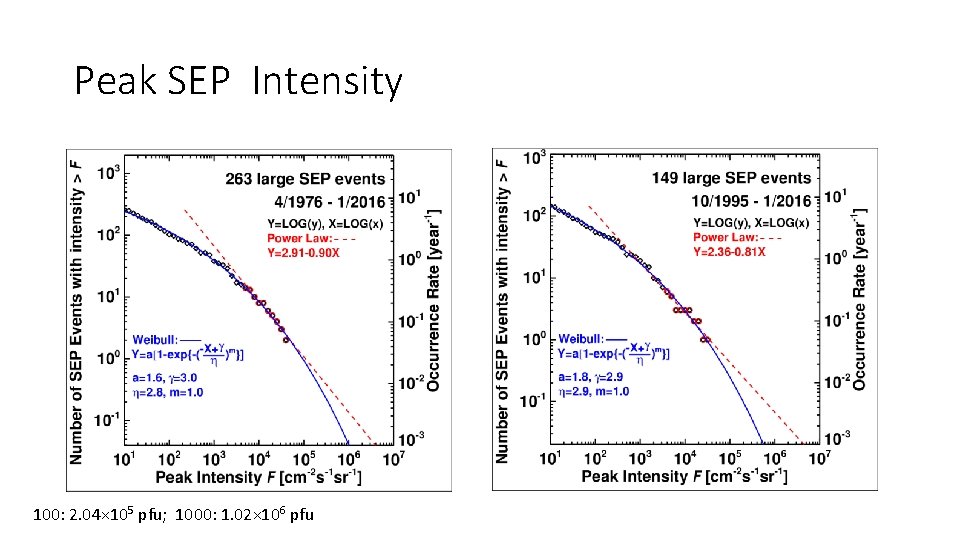
Peak SEP Intensity 100: 2. 04× 105 pfu; 1000: 1. 02× 106 pfu
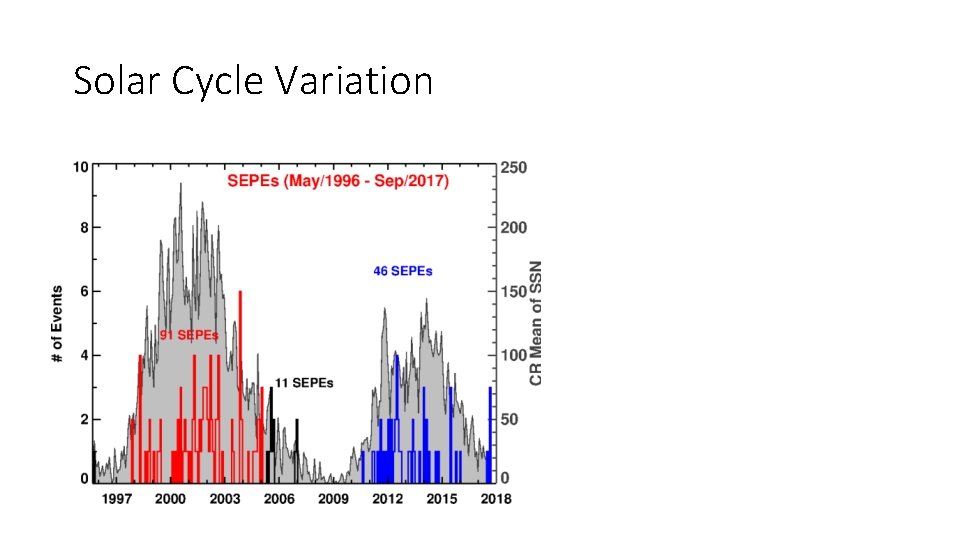
Solar Cycle Variation
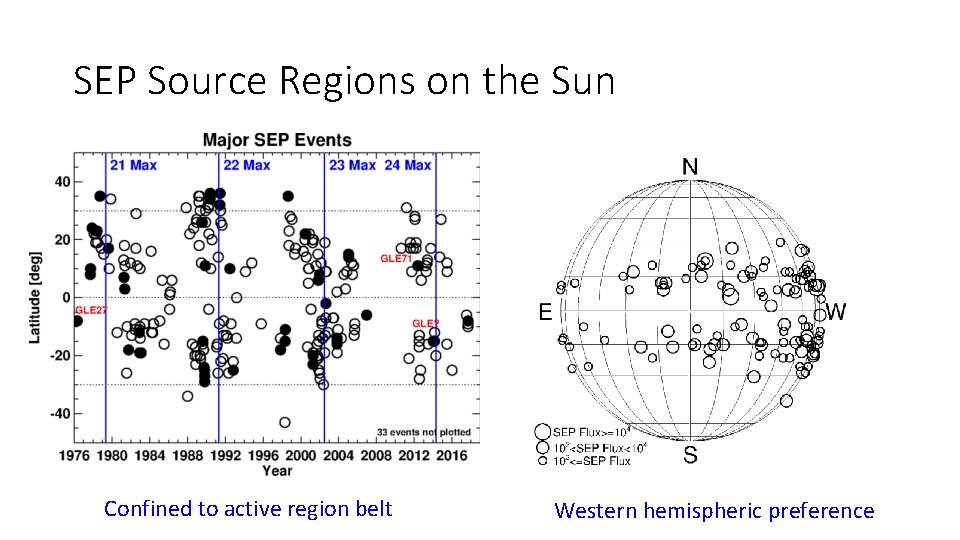
SEP Source Regions on the Sun Confined to active region belt Western hemispheric preference
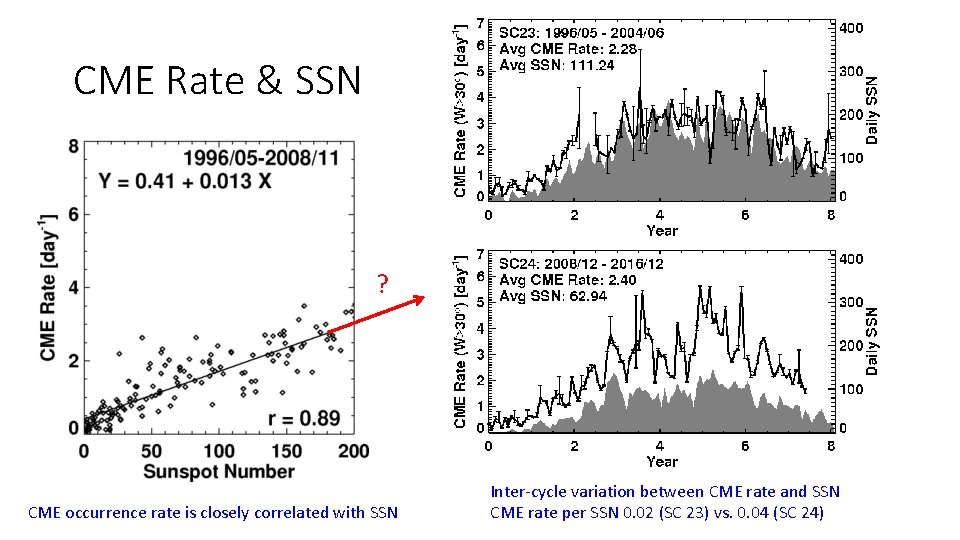
CME Rate & SSN ? CME occurrence rate is closely correlated with SSN Inter-cycle variation between CME rate and SSN CME rate per SSN 0. 02 (SC 23) vs. 0. 04 (SC 24)
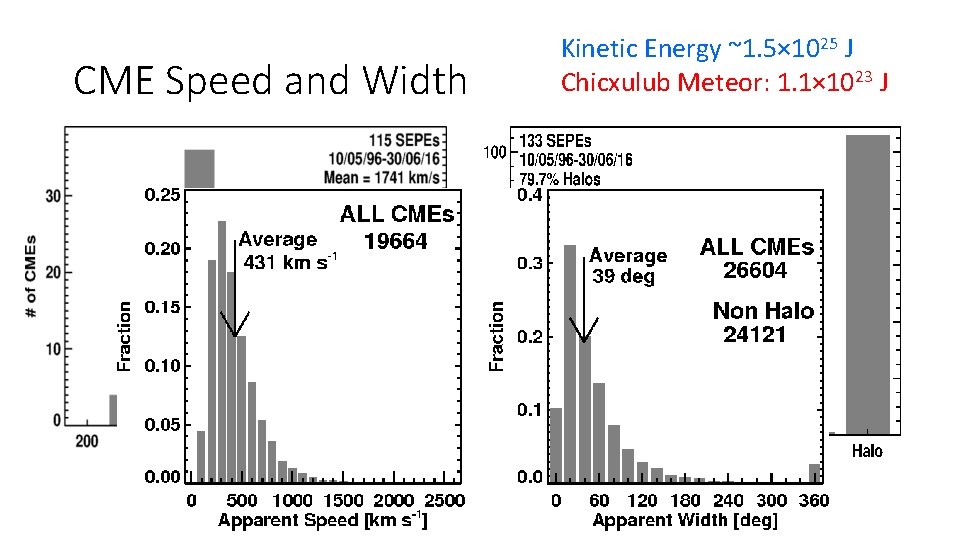
CME Speed and Width Kinetic Energy ~1. 5× 1025 J Chicxulub Meteor: 1. 1× 10²³ J
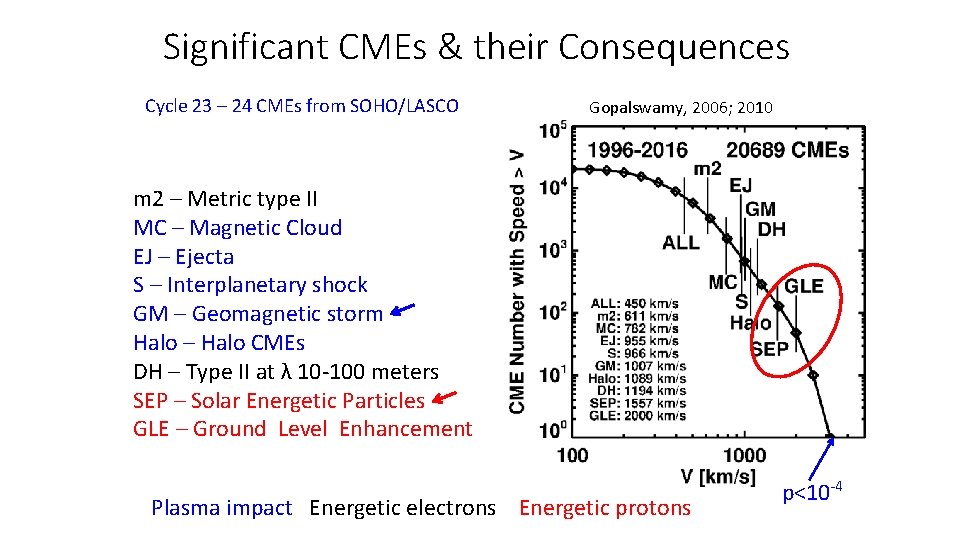
Significant CMEs & their Consequences Cycle 23 – 24 CMEs from SOHO/LASCO Gopalswamy, 2006; 2010 m 2 – Metric type II MC – Magnetic Cloud EJ – Ejecta S – Interplanetary shock GM – Geomagnetic storm Halo – Halo CMEs DH – Type II at λ 10 -100 meters SEP – Solar Energetic Particles GLE – Ground Level Enhancement Plasma impact Energetic electrons Energetic protons p<10 -4
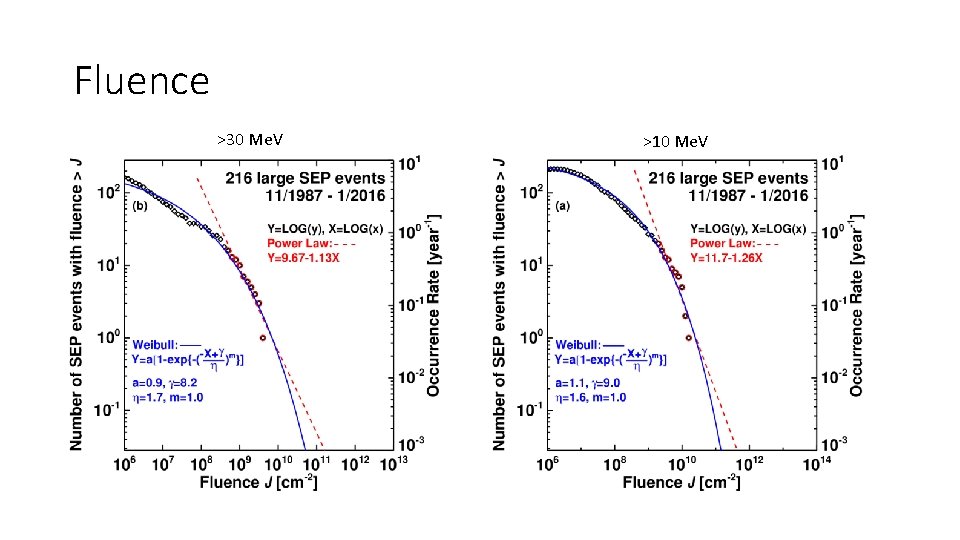
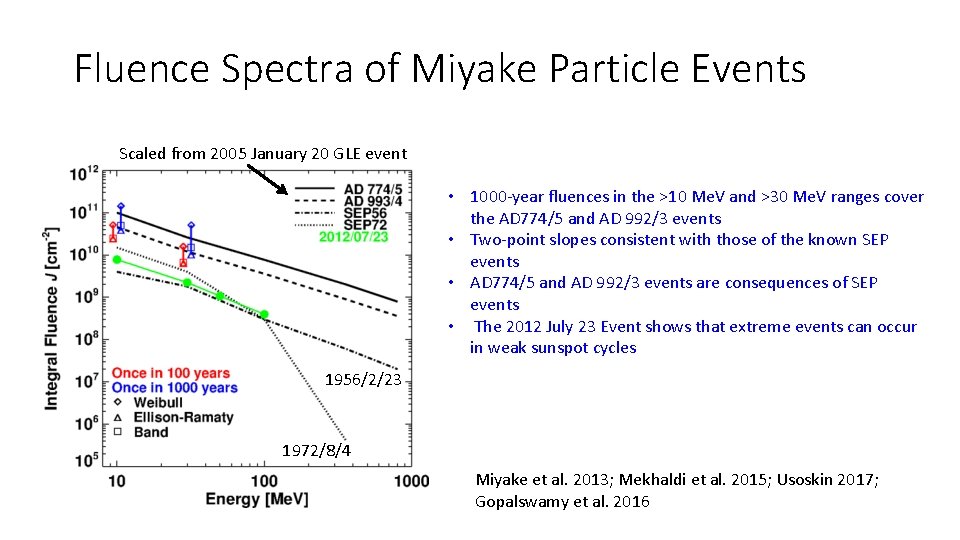
Fluence >30 Me. V >10 Me. V
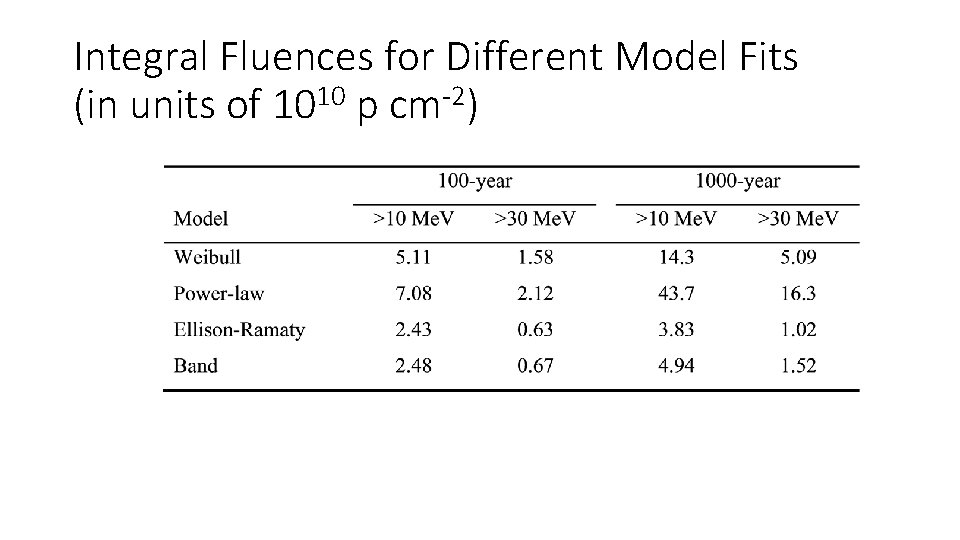
Integral Fluences for Different Model Fits (in units of 1010 p cm-2)
Fluence Spectra of Miyake Particle Events Scaled from 2005 January 20 GLE event • 1000 -year fluences in the >10 Me. V and >30 Me. V ranges cover the AD 774/5 and AD 992/3 events • Two-point slopes consistent with those of the known SEP events • AD 774/5 and AD 992/3 events are consequences of SEP events • The 2012 July 23 Event shows that extreme events can occur in weak sunspot cycles 1956/2/23 1972/8/4 Miyake et al. 2013; Mekhaldi et al. 2015; Usoskin 2017; Gopalswamy et al. 2016
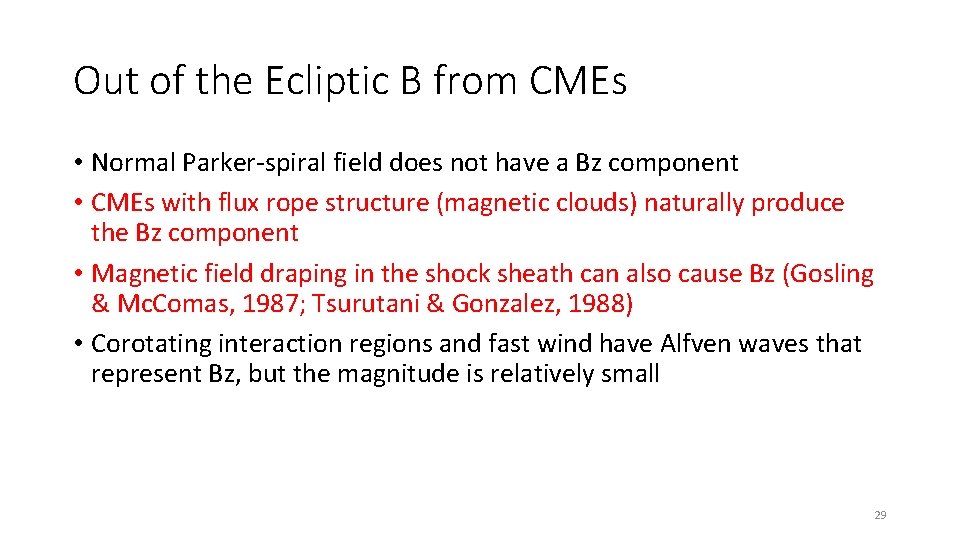
Out of the Ecliptic B from CMEs • Normal Parker-spiral field does not have a Bz component • CMEs with flux rope structure (magnetic clouds) naturally produce the Bz component • Magnetic field draping in the shock sheath can also cause Bz (Gosling & Mc. Comas, 1987; Tsurutani & Gonzalez, 1988) • Corotating interaction regions and fast wind have Alfven waves that represent Bz, but the magnitude is relatively small 29
Geomagnetic Storm and CME parameters Gopalswamy 2008 Dst [n. T] Dst = – 0. 01 VBz – 32 n. T The high correlation suggests That V and Bz are the most Important parameters ( - Bz is absolutely necessary) V and Bz in the IP medium are 4 n. T • km/s] V B [10 MC z related to the CME speed and magnetic content Carrington Event: VBz = 1. 6 105 n. T • km/s V = 2000 km/s, Dst = -1650 n. T Bz = -81 n. T 30
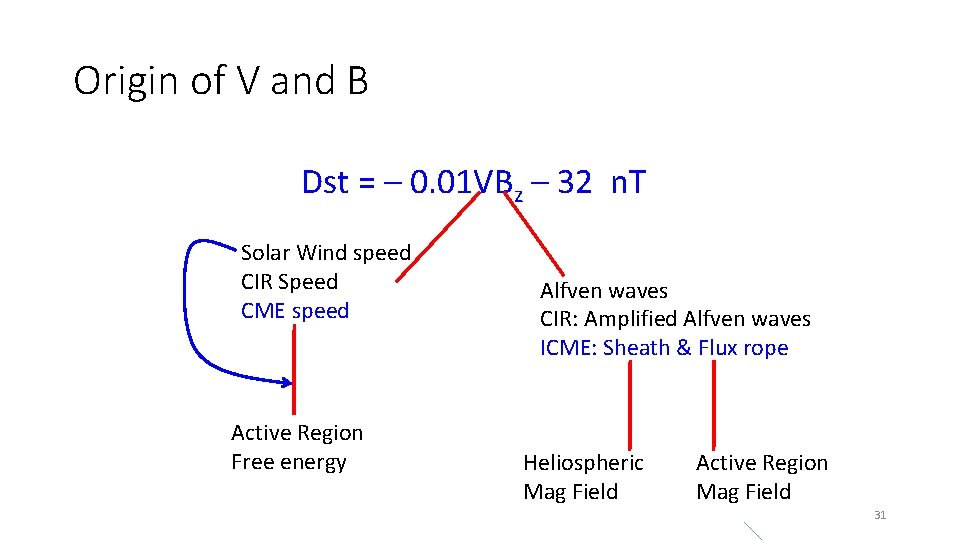
Origin of V and B Dst = – 0. 01 VBz – 32 n. T Solar Wind speed CIR Speed CME speed Active Region Free energy Alfven waves CIR: Amplified Alfven waves ICME: Sheath & Flux rope Heliospheric Mag Field Active Region Mag Field 31
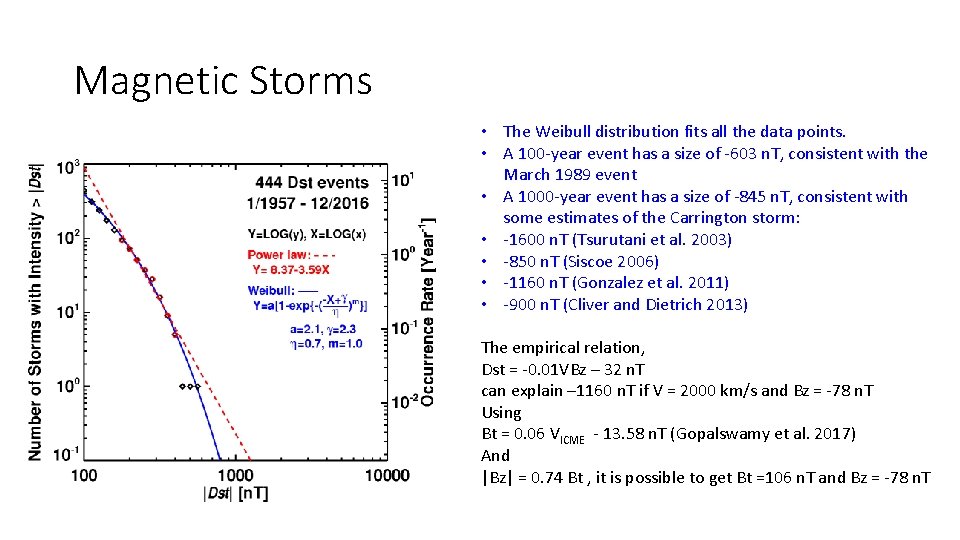
Magnetic Storms • The Weibull distribution fits all the data points. • A 100 -year event has a size of -603 n. T, consistent with the March 1989 event • A 1000 -year event has a size of -845 n. T, consistent with some estimates of the Carrington storm: • -1600 n. T (Tsurutani et al. 2003) • -850 n. T (Siscoe 2006) • -1160 n. T (Gonzalez et al. 2011) • -900 n. T (Cliver and Dietrich 2013) The empirical relation, Dst = -0. 01 VBz – 32 n. T can explain – 1160 n. T if V = 2000 km/s and Bz = -78 n. T Using Bt = 0. 06 VICME - 13. 58 n. T (Gopalswamy et al. 2017) And |Bz| = 0. 74 Bt , it is possible to get Bt =106 n. T and Bz = -78 n. T
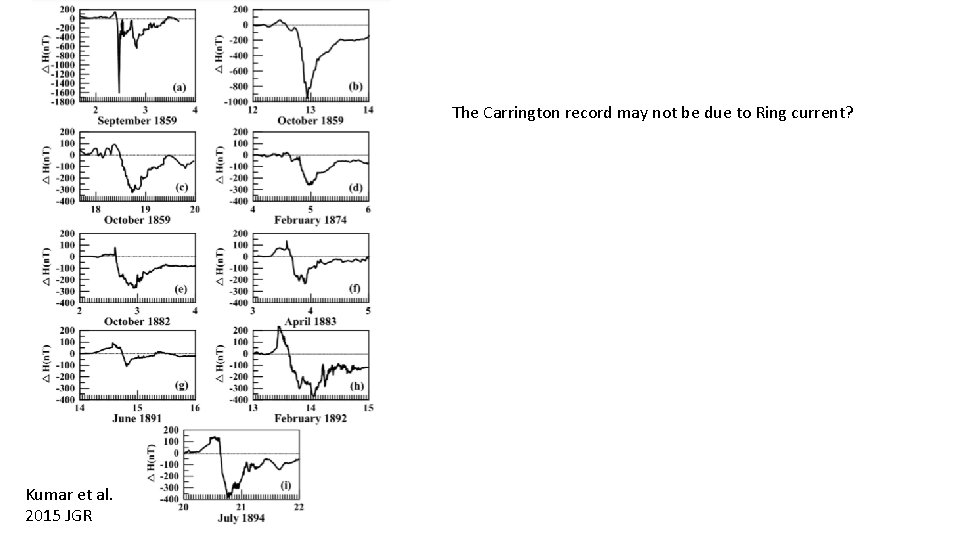
The Carrington record may not be due to Ring current? Kumar et al. 2015 JGR
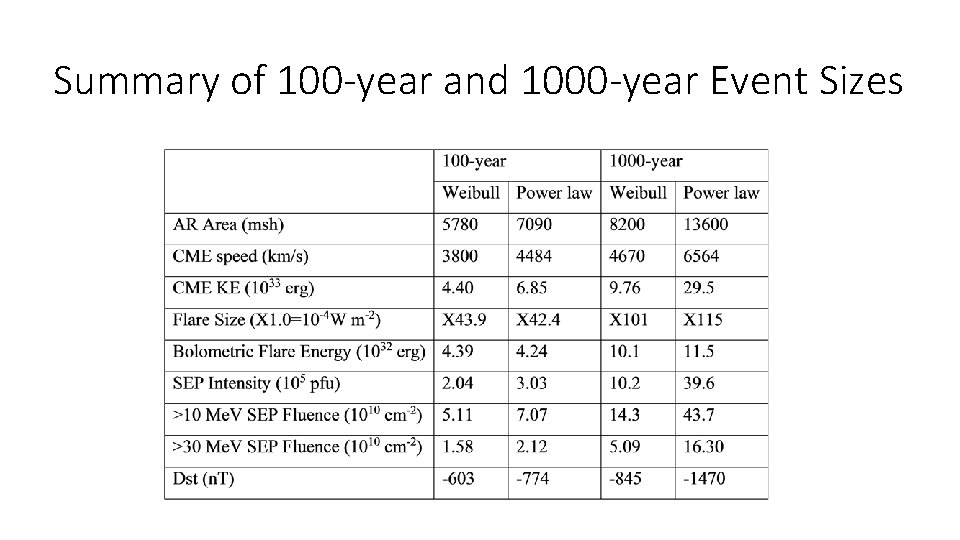
Summary of 100 -year and 1000 -year Event Sizes
Summary • Assuming extreme events to be events on the tails of cumulative distributions, we estimated one-in-100 and one-in-1000 yr sizes • Weibull function used as the baseline in extrapolating the distributions to estimate the 100 -year and 1000 -year event sizes; Power-law distributions appear to yield overestimates • The >30 Me. V fluence of a 1000 -year event is in the range (1 -5)× 1010 p cm-2 • Consistent with the historical extreme event such as the Carrington event, the AD 774/75 event, the AD 994/95 event, and the recent 2012 July 23 backside event • The simple relation Dst = -0. 01 VBz – 32 n. T is adequate to estimate extreme storms including the Carrington storm
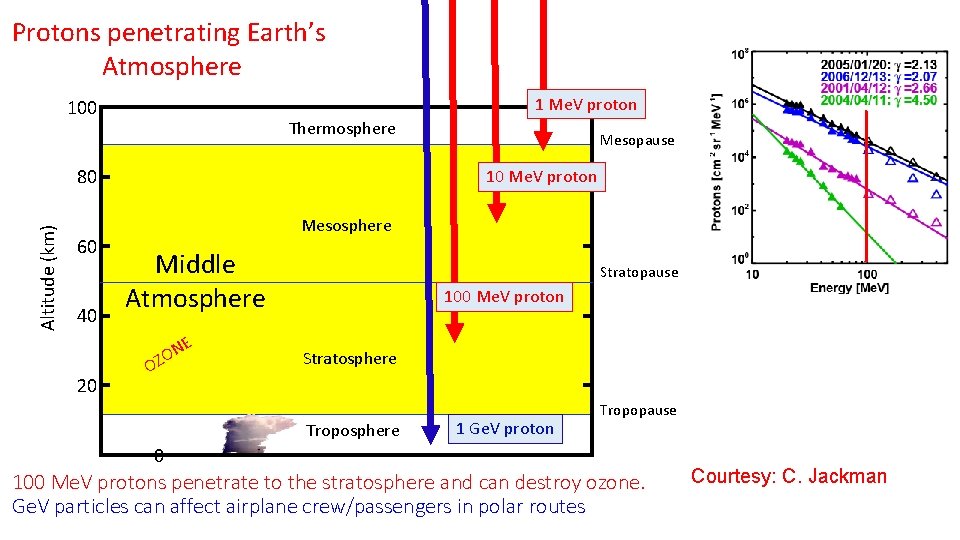
Protons penetrating Earth’s Atmosphere 1 Me. V proton 100 Thermosphere Altitude (km) 80 60 40 20 Mesopause 10 Me. V proton Mesosphere Middle Atmosphere NE O OZ Stratopause 100 Me. V proton Stratosphere Troposphere 1 Ge. V proton Tropopause 0 100 Me. V protons penetrate to the stratosphere and can destroy ozone. Ge. V particles can affect airplane crew/passengers in polar routes Courtesy: C. Jackman