
Extratropical Cyclones in Recent ReAnalyses Kevin Hodges Lennart
- Slides: 20
Extra-tropical Cyclones in Recent Re-Analyses Kevin Hodges Lennart Bengtsson and Robert Lee 1
Motivation • Extra-tropical cyclones: 1. Important components of the general circulation. 2. How should they be verified for distribution and properties? a) Observations are highly inhomogeneous. b) No long term observational record. • Re-analyses: 1. Best available, 4 D, homogeneous data sets constrained by observations. 2. What are the uncertainties? 2
New Re-Analyses • ERA-Interim (ECMWF) – T 255 L 60 (~80 km) spectral, 4 D Var. , 1989 -2009. • Modern Era Retrospective Re-Analysis (MERRA) – 0. 50 x 0. 670 L 72(~74 km) finite volume, Grid-point Statistical Interpolation (GSI, 3 D Var. ), 1979 -2009. • Japanese 25 Year Re-Analysis (JRA 25) – T 106 L 40 (~125 km) spectral, 3 D Var. , 1979 -2009. • NCEP Coupled Re-analysis – T 382 L 64 (~38 km), GSI, 1979 -2009. • 20 th Century Re-Analysis – Surface only observations, 1891 -2008, ensemble kalmen filter, T 63. 3
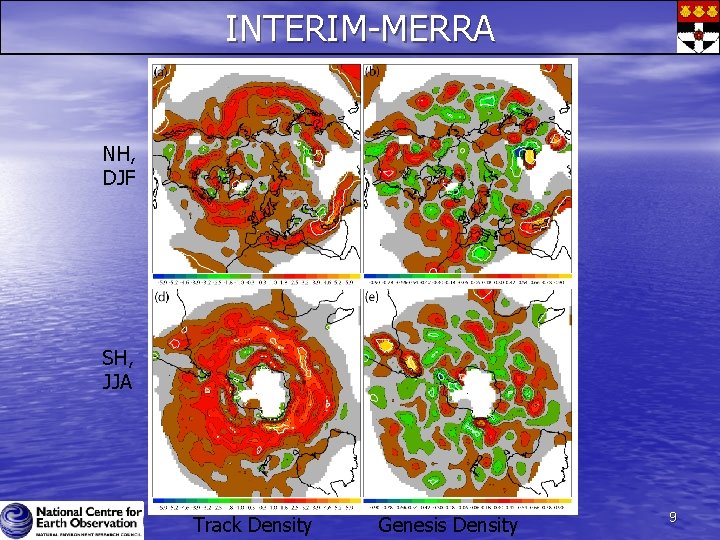
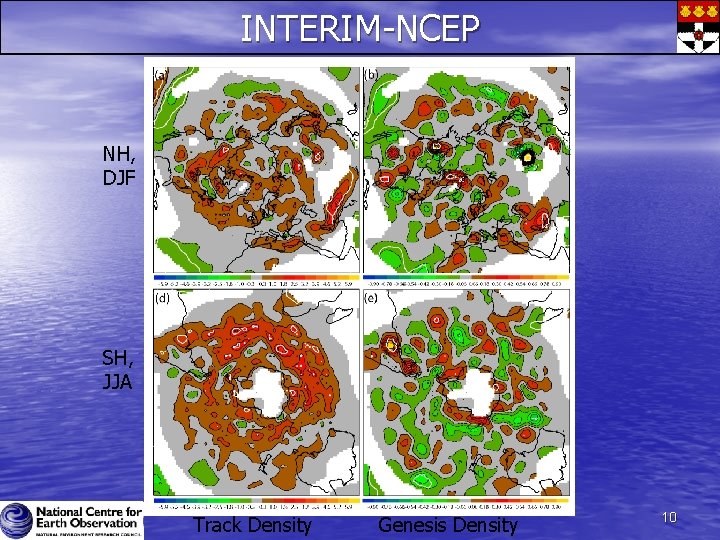
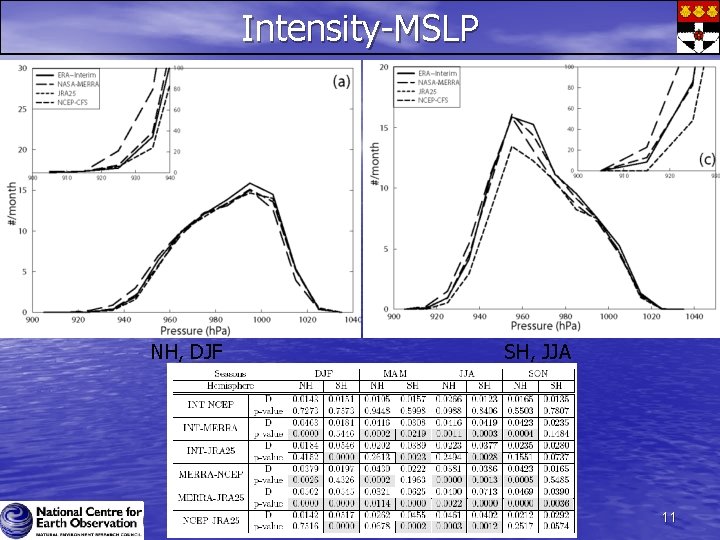
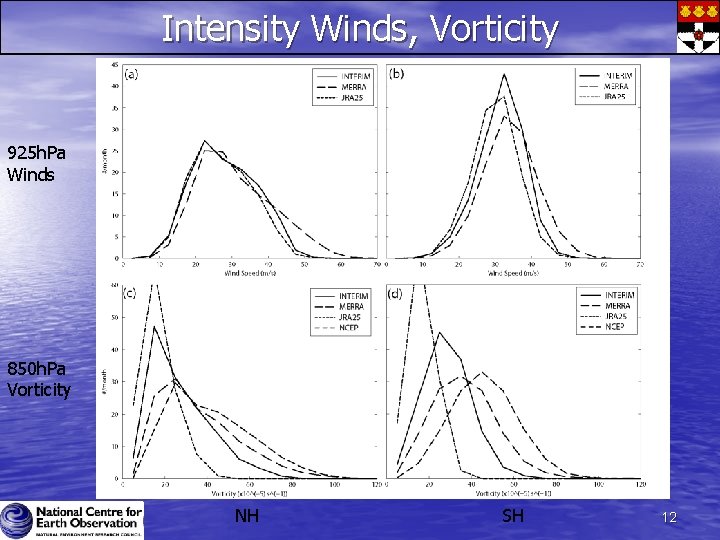
Comparison Methodology • Identify and track cyclones – synoptic. – MSLP – T 63. – ξ 850 – T 42. • Compare using: – INTERIM as base (1989 -2006). – Spatial statistics. – Intensity pdf’s. – Cyclone matching. – Composites. 4
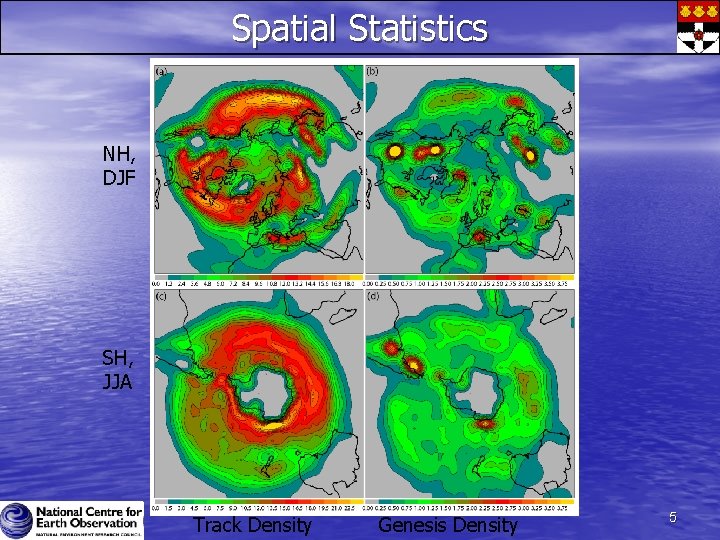
Spatial Statistics NH, DJF SH, JJA Track Density Genesis Density 5
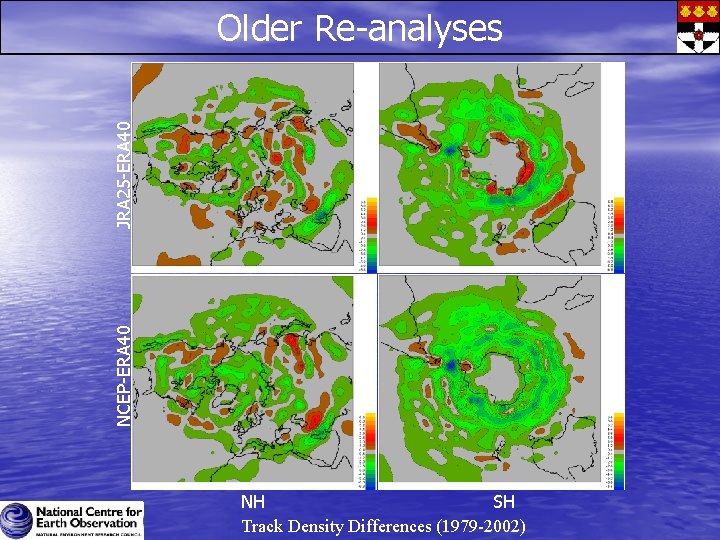
NCEP-ERA 40 JRA 25 -ERA 40 Older Re-analyses NH SH Track Density Differences (1979 -2002)
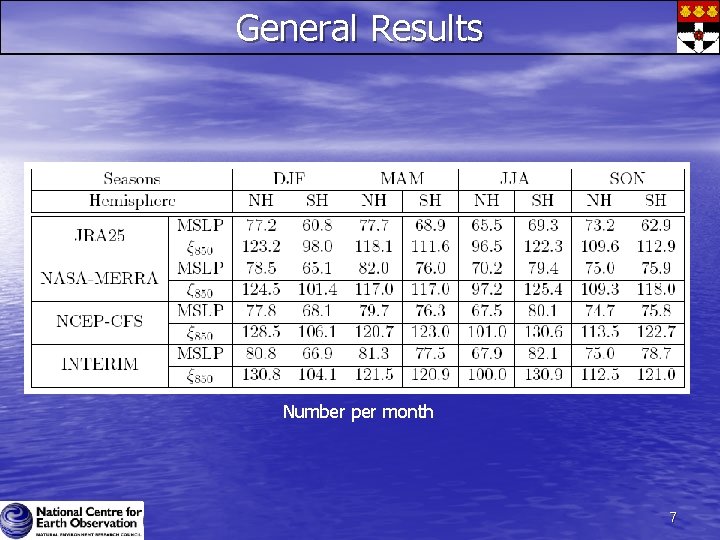
General Results Number per month 7
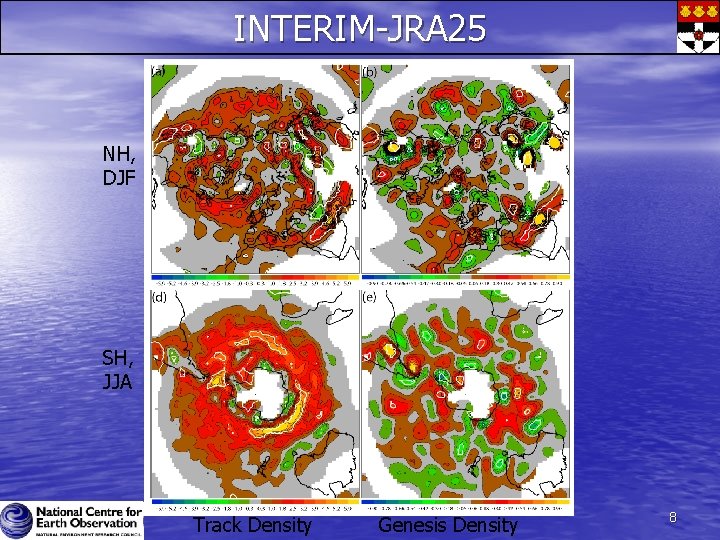
INTERIM-JRA 25 NH, DJF SH, JJA Track Density Genesis Density 8
INTERIM-MERRA NH, DJF SH, JJA Track Density Genesis Density 9
INTERIM-NCEP NH, DJF SH, JJA Track Density Genesis Density 10
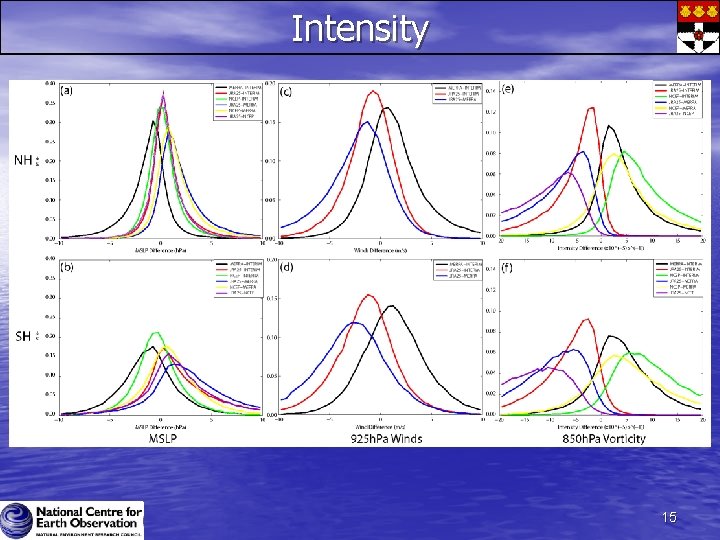
Intensity-MSLP NH, DJF SH, JJA 11
Intensity Winds, Vorticity 925 h. Pa Winds 850 h. Pa Vorticity NH SH 12
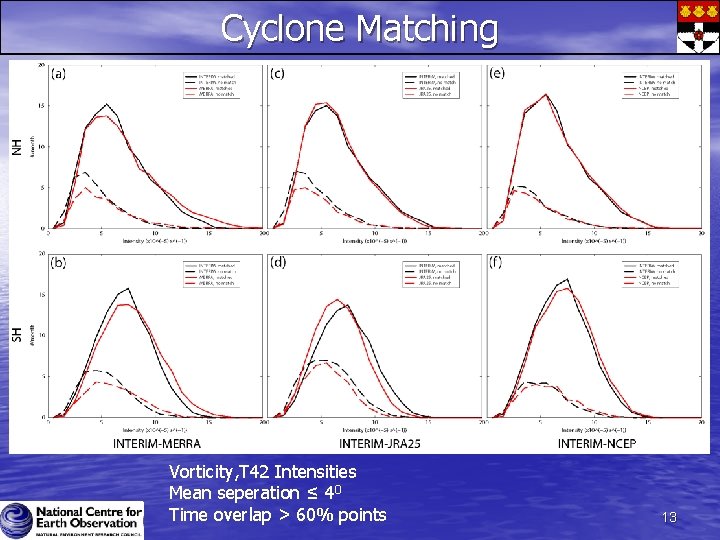
Cyclone Matching Vorticity, T 42 Intensities Mean seperation ≤ 40 Time overlap > 60% points 13
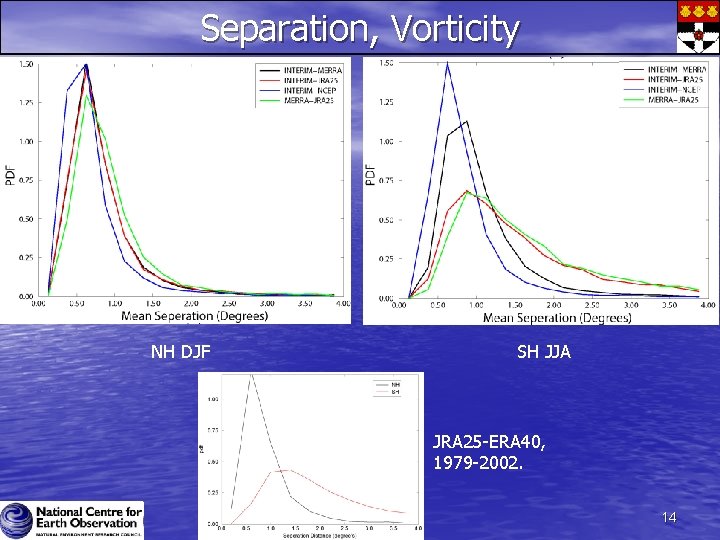
Separation, Vorticity NH DJF SH JJA JRA 25 -ERA 40, 1979 -2002. 14
Intensity 15
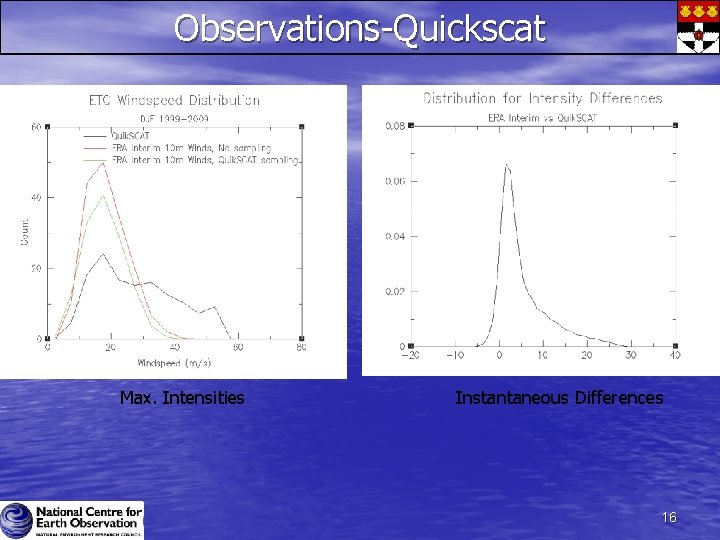
Observations-Quickscat Max. Intensities Instantaneous Differences 16
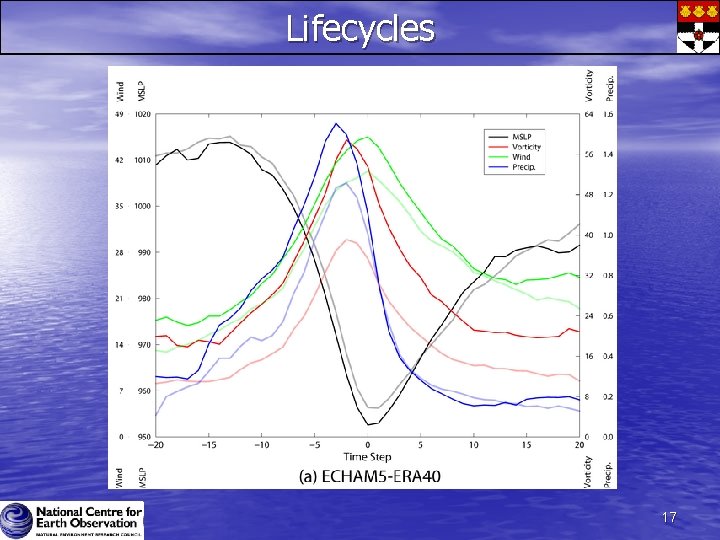
Lifecycles 17
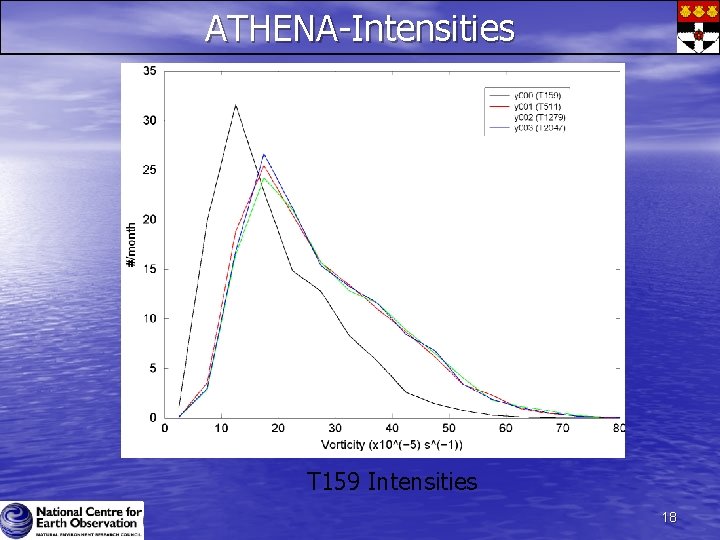
ATHENA-Intensities T 159 Intensities 18
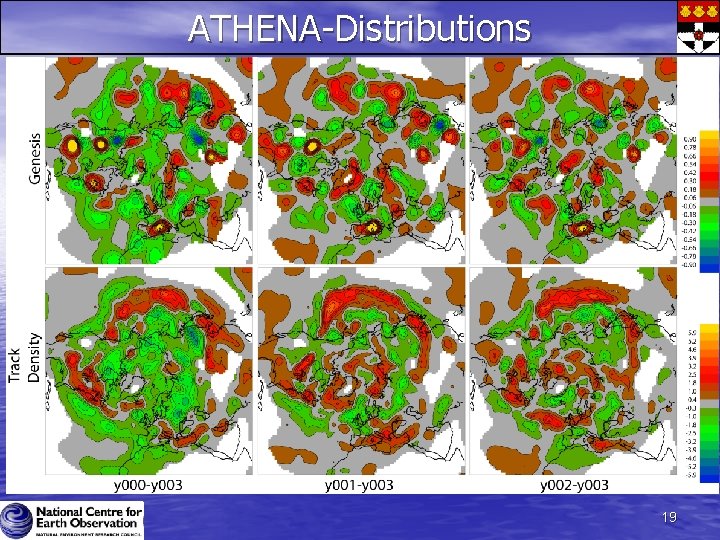
ATHENA-Distributions 19
Future Work • Apply same methods directly to satellite data to verify cyclone structure in NWP (directly) and climate models (statistically). • Apply to other weather system types, e. g. TC including examining the transition of EW to TC; the extra-tropical transition of TC and polar lows. • Extend to energetics. 20