
EXTRAPYRAMIDAL SYSTEM LECTURE III Definition Tracts other than
- Slides: 17
EXTRAPYRAMIDAL SYSTEM LECTURE - III
Definition: Tracts other than corticospinal tract are known as Extrapyramidal tract. The word extrapyramidal is slowly being replaced by Corticonuclear & corticobulbar tracts.
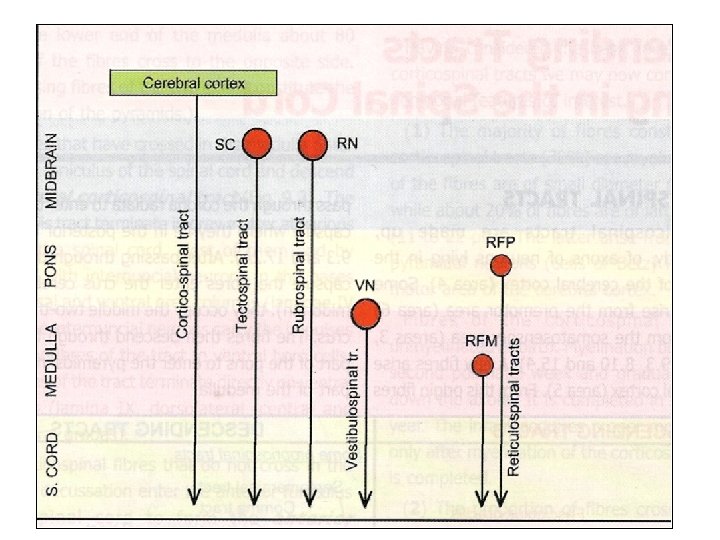
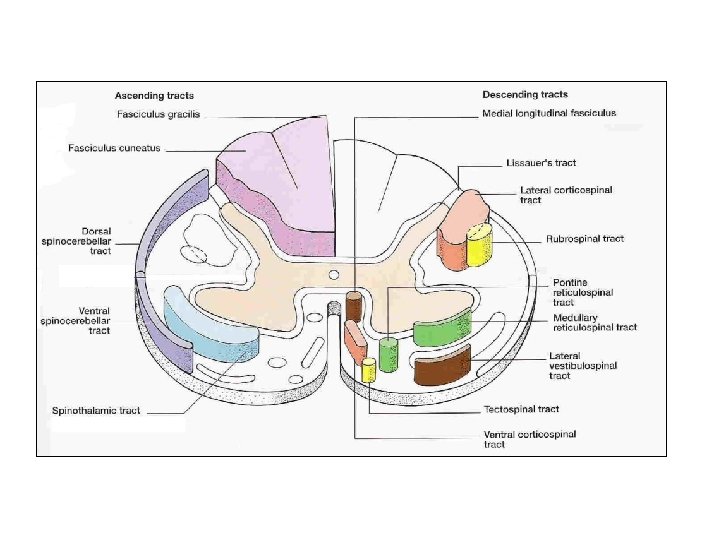
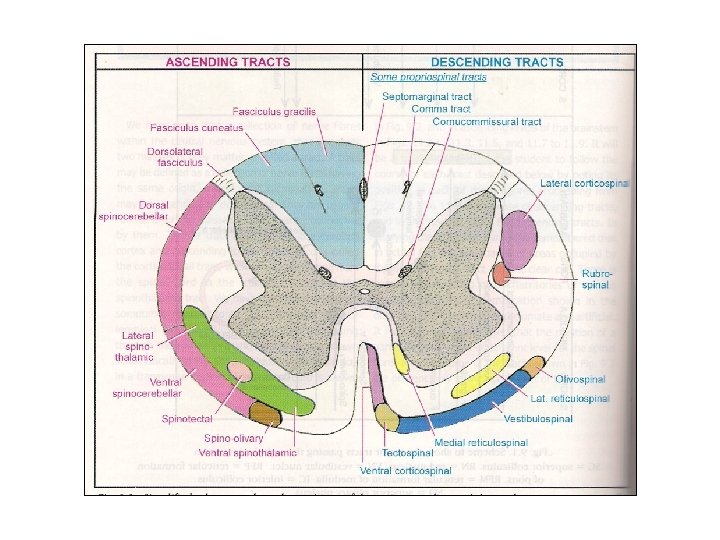
Components of extrapyramidal system 1. Basal Ganglia 2. Midbrain giving rise to following bulbospinal tracts. A. Rubrospinal tract. B. Vestibulospinal Tract. C. Reticulospinal Tract D. Tectspinal Tract. E. Olivospinal Tract.
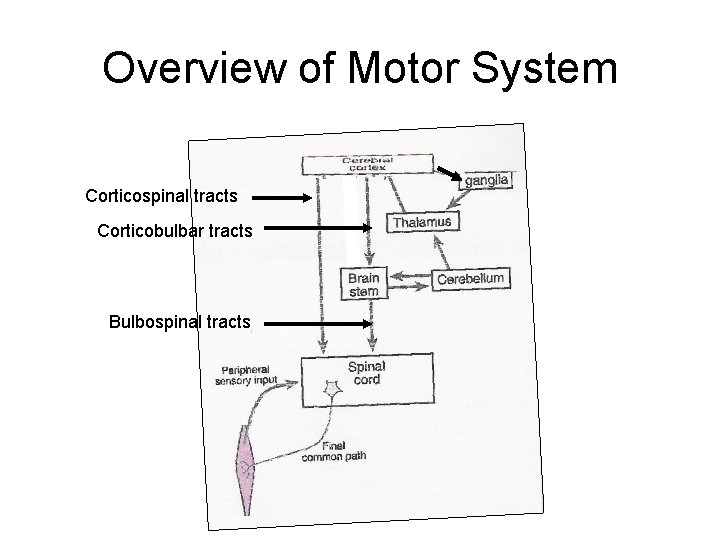
Overview of Motor System Corticospinal tracts Corticobulbar tracts Bulbospinal tracts
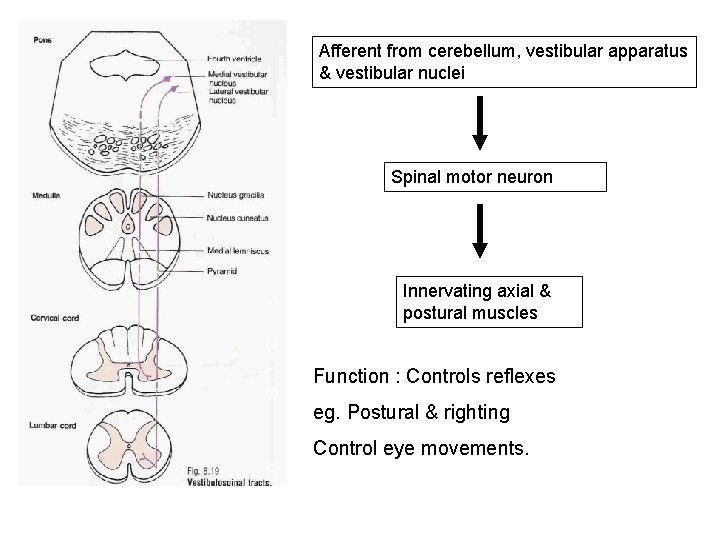
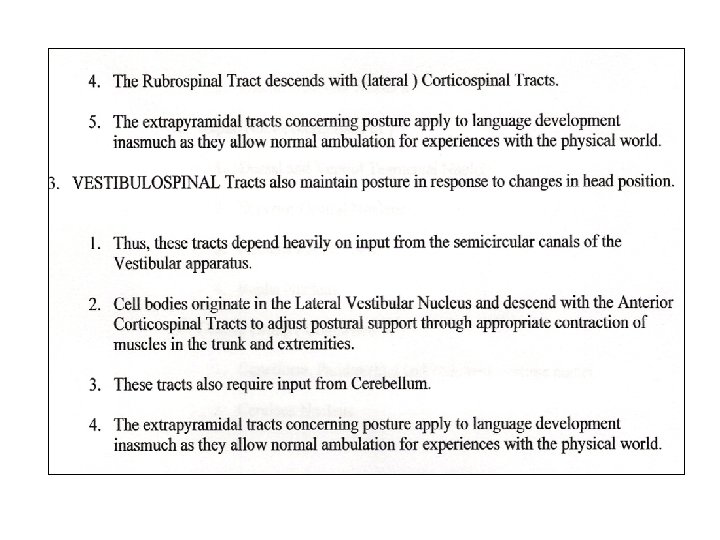
Afferent from cerebellum, vestibular apparatus & vestibular nuclei Spinal motor neuron Innervating axial & postural muscles Function : Controls reflexes eg. Postural & righting Control eye movements.
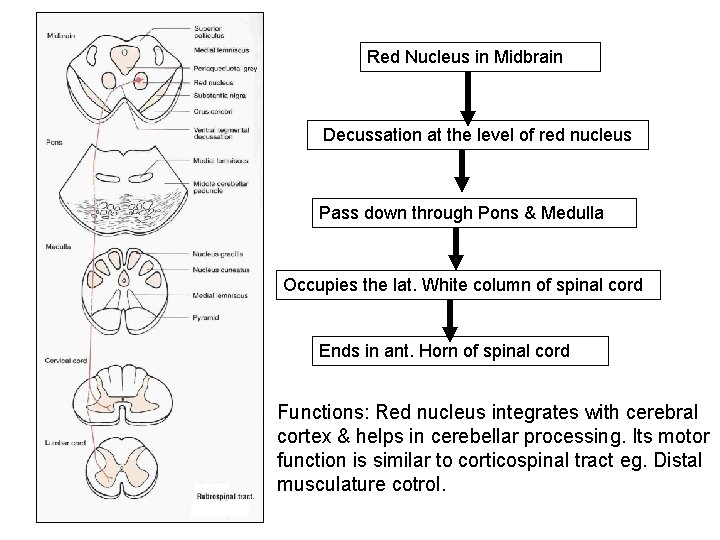
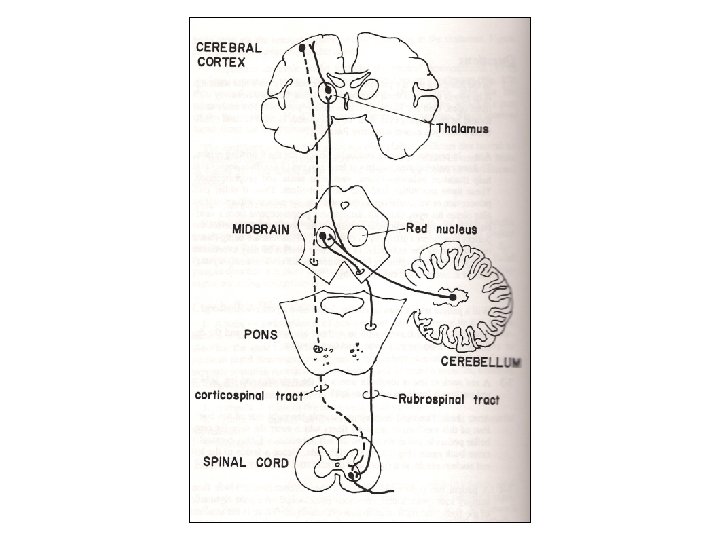
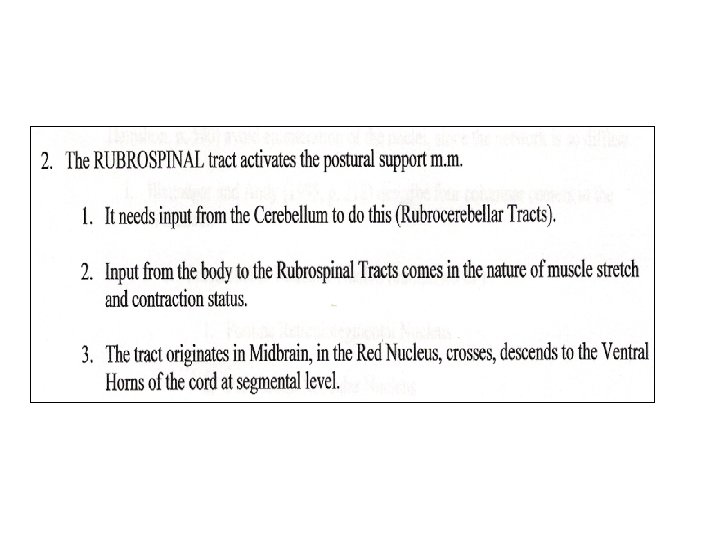
Red Nucleus in Midbrain Decussation at the level of red nucleus Pass down through Pons & Medulla Occupies the lat. White column of spinal cord Ends in ant. Horn of spinal cord Functions: Red nucleus integrates with cerebral cortex & helps in cerebellar processing. Its motor function is similar to corticospinal tract eg. Distal musculature cotrol.
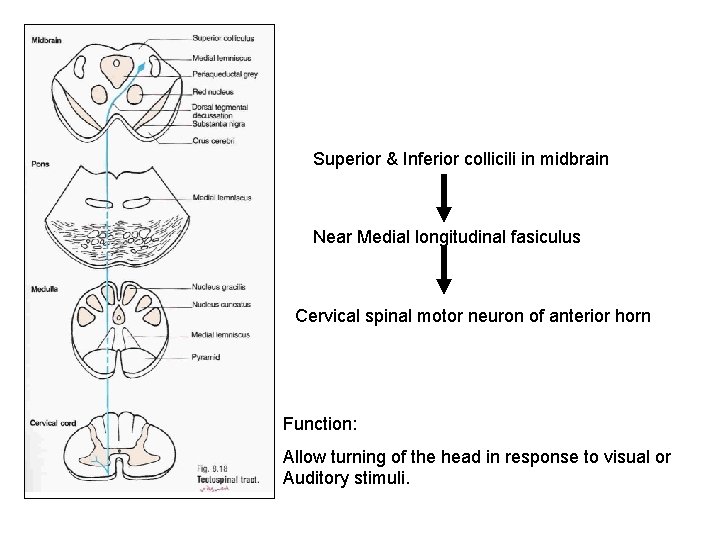
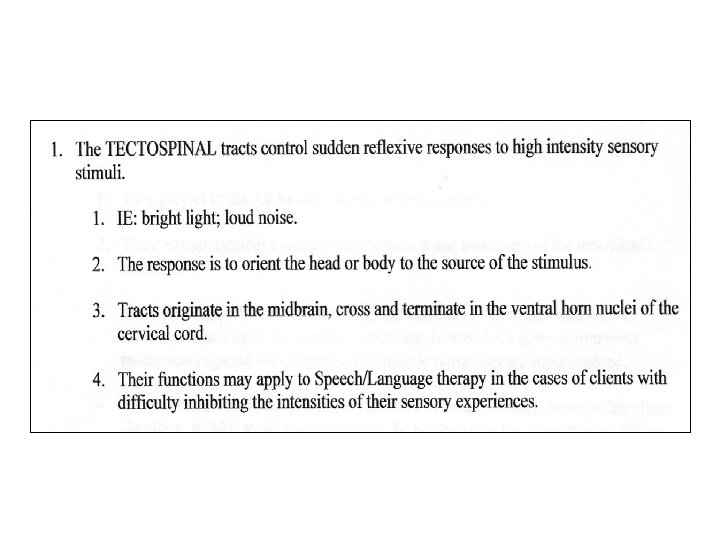
Superior & Inferior collicili in midbrain Near Medial longitudinal fasiculus Cervical spinal motor neuron of anterior horn Function: Allow turning of the head in response to visual or Auditory stimuli.
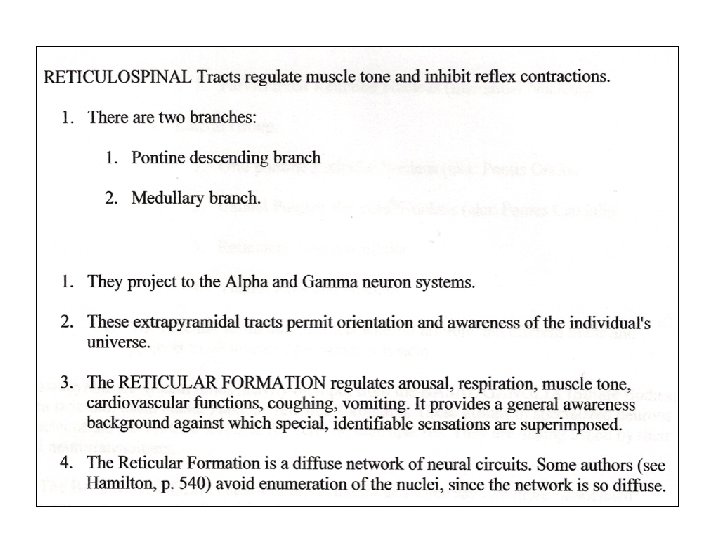
Reticulospinal Tract The reticular formation makes up a central core through much of the brainstem. It contains many different nuclear groups. Pontine and medullary nuclei projects to the anterior horn of the spinal cord. Functions: influence motor functions as for example voluntary & reflex movement and is also responsible for the muscle tone.
Olivospinal Tract It arises in the cells of inferior olive of the medulla and is found only in the cervical region of the spinal cord. Function is unknown