
EXTRAPYRAMIDAL SYSTEM DISORDERS BASAL GANGLION DYSFUNCTION ANATOMY Caudate

EXTRAPYRAMIDAL SYSTEM DISORDERS
BASAL GANGLION DYSFUNCTION
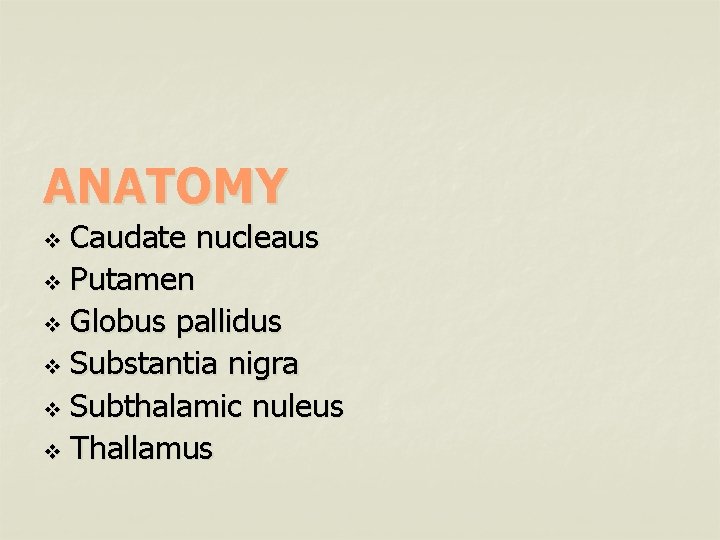
ANATOMY Caudate nucleaus v Putamen v Globus pallidus v Substantia nigra v Subthalamic nuleus v Thallamus v
EFFECTS OF DYSFUNCTION IN GENERAL v Involuntary movements v Altered movements • slow • Interrupted • Uncordinated v Posture and tone altered
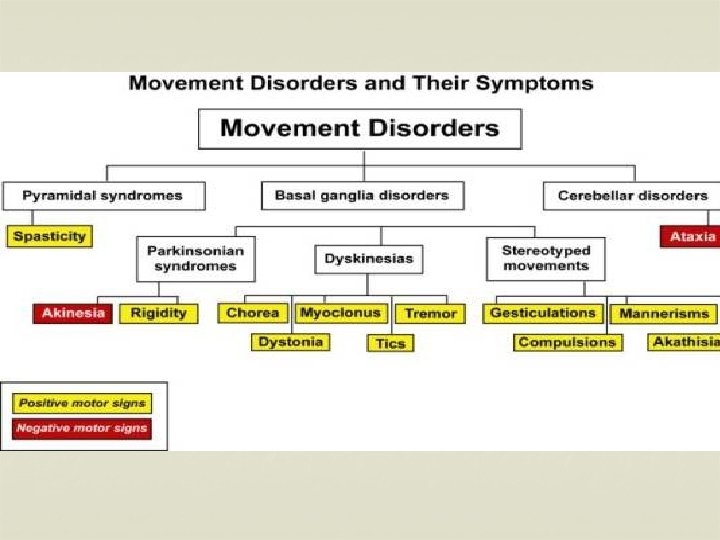
MOVEMENT DISORDERS BRADYKINETIC ---TOO LITTLE v Parkinson disease v Wilsons disease v Huntingtons disease
HYPERKINETIC –TOO MUCH v Athetosis v Hemiballismus v Dystonia v Dyskinesia v Chorea v Myoclonus v Tremors v Tics
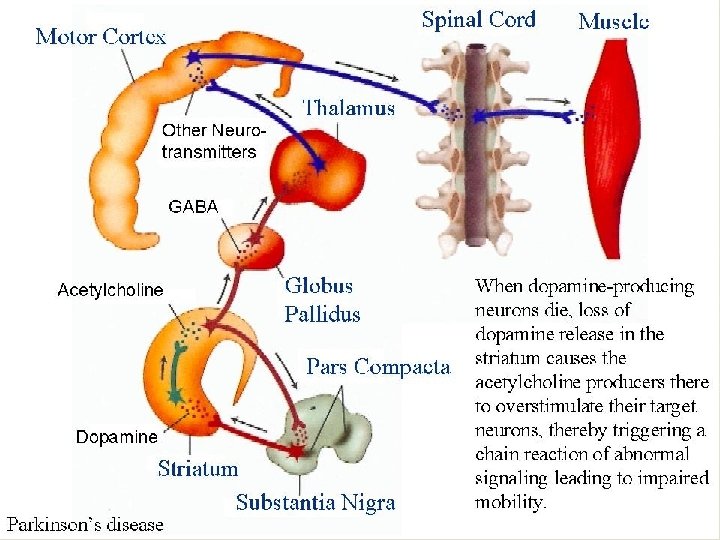
NEUROTRANSMITTERS Dopamine > Ach = hyperkinetic v Ach > dopamine =hypokinetic v
CAUSES OF EXTRAPYRAMIDAL DISORDERS v Drugs---chlorpromazine ---butyrophenons ---metochlorpramide ---reserpine
Causes cont. v Toxins—CO and manganese poisoning v Inherited and metabolic disorders : Ø wilsons disease Ø spinocerebellar ataxia v Encephalitis lethargica v Diffuse small vascular disease
Causes cont. v Inherited or degenerative disease Ø huntingtons disease Ø progressive supra nuclear gaze palsy {Steel Richardson}
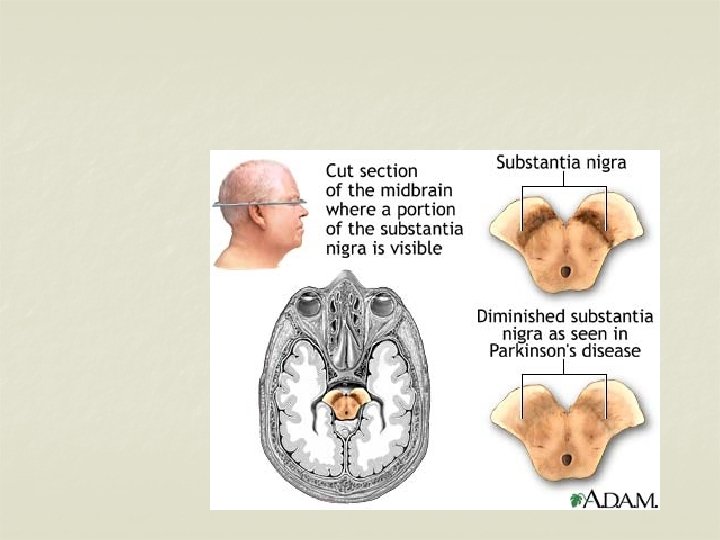
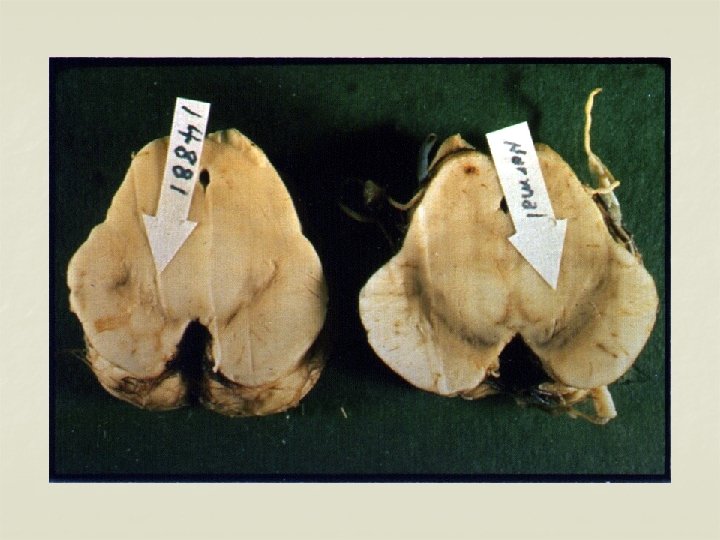
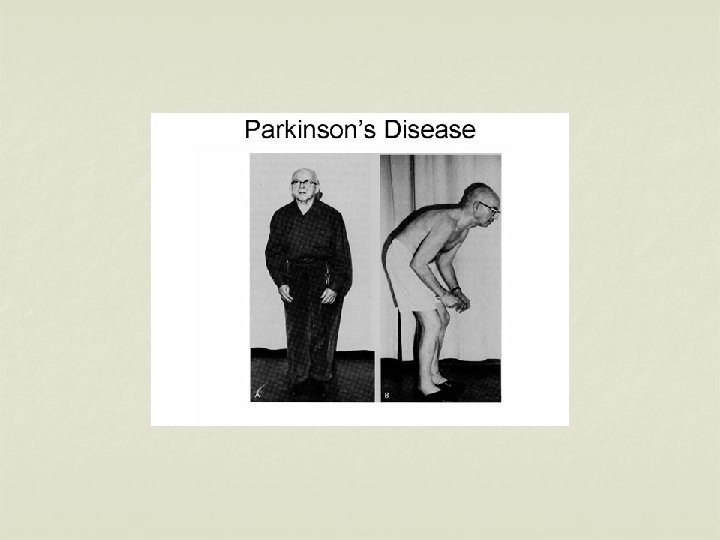
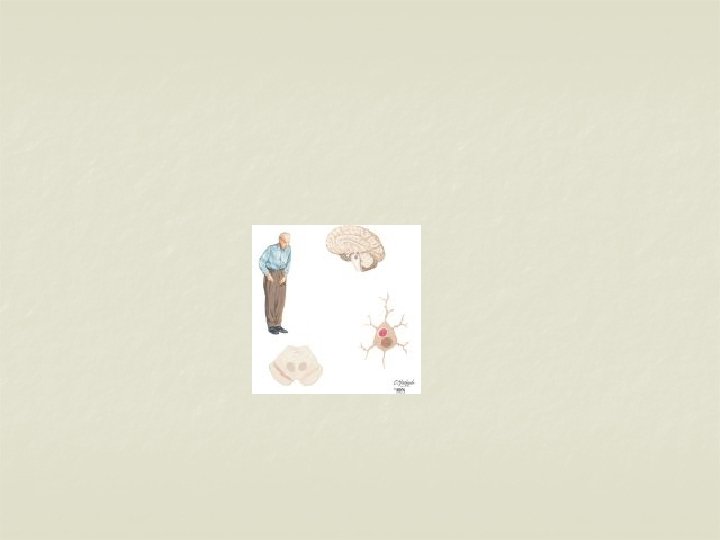
PARKINSONS DISEASE § Effects dopaminergic neurons § Neurons are lost from substantia nigra § Rarely presents before 50 years § Neurodegenerative disease § Equal sex distribution
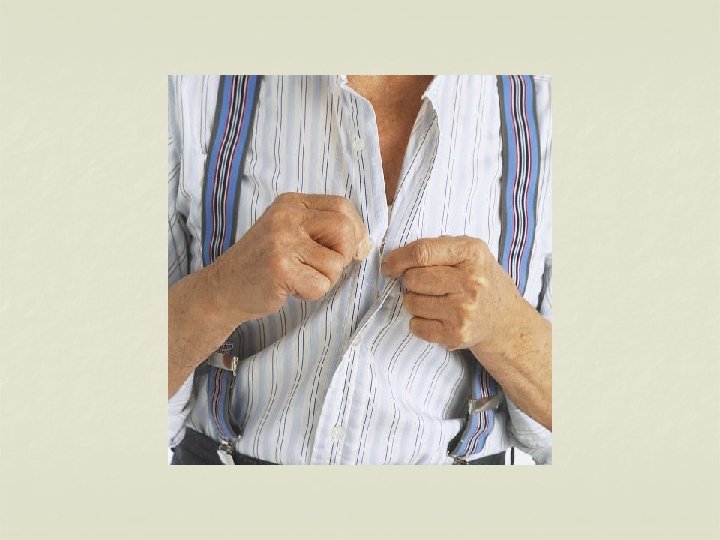
CLINICAL FEATURES Characterized by: § Tremors § Rigidity § bradykinesia
TREMORS § Rest tremor § Starts in the thumb § Adduction and abduction of the thumb § Pill rolling § Tremors may effect the legs, mouth or the tongue
RIGIDITY § Leadpipe or plastic § Cogwheel BRADYKINESIA § Slow movements § Develop gradually § Impairement of fine movements
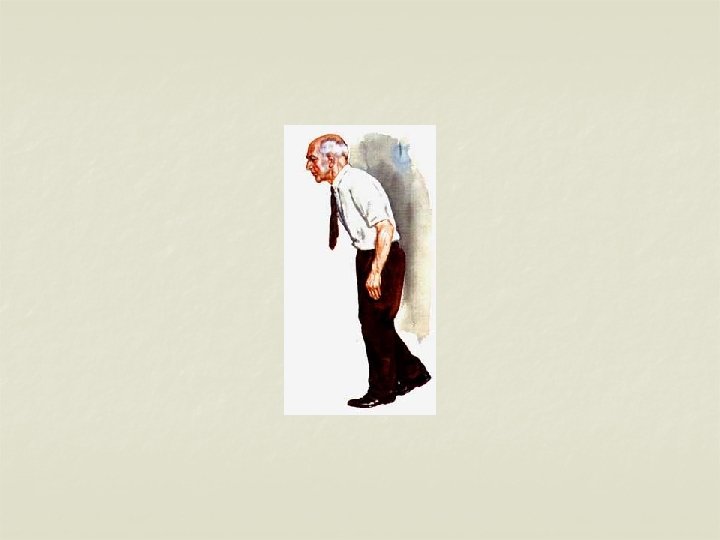
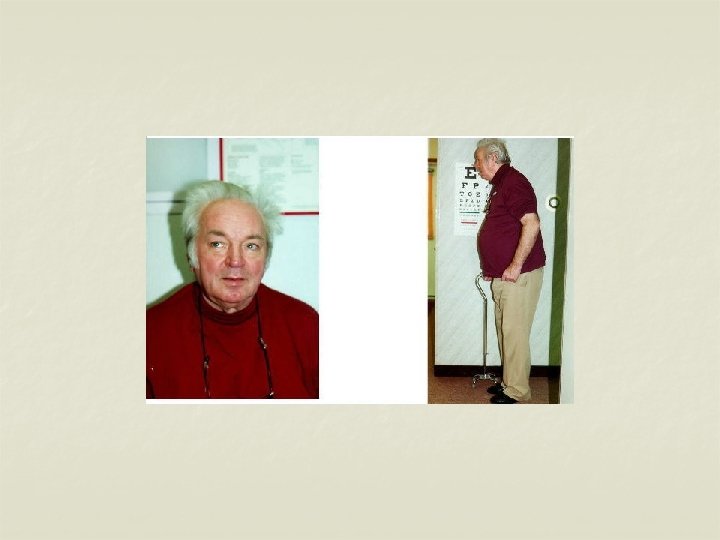
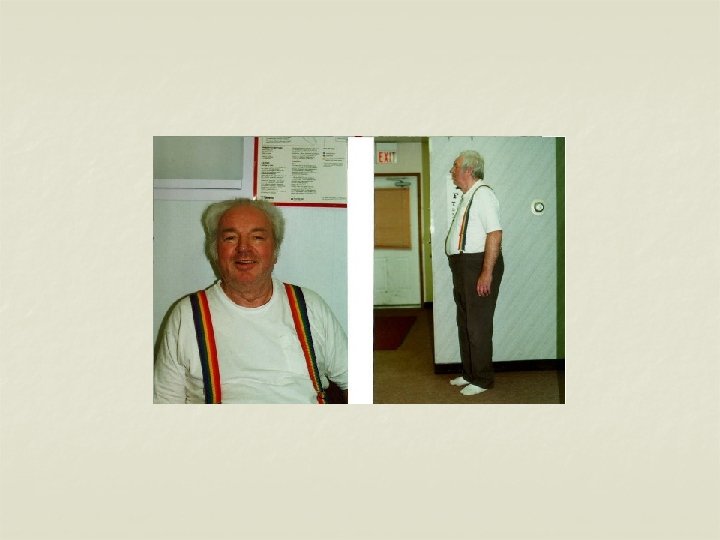
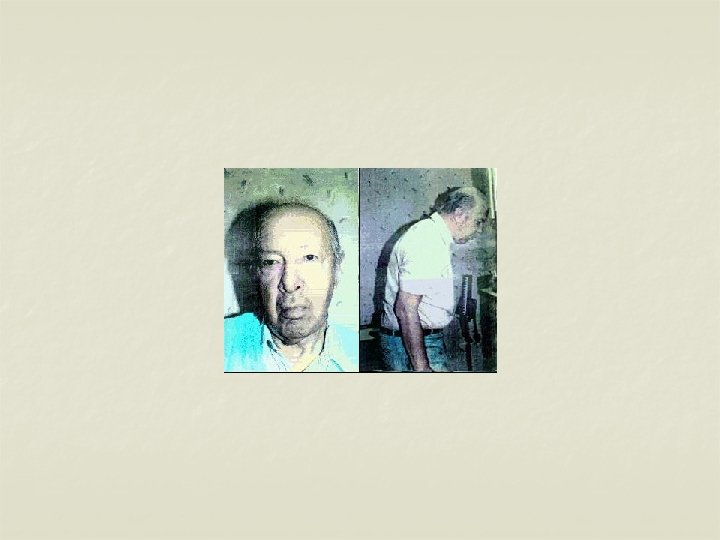
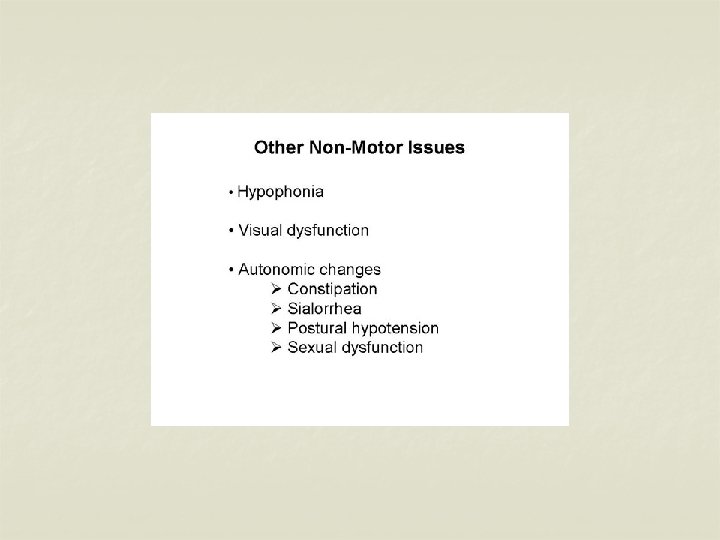
General clinical features § Slow and monotonous speech § Greasy skin § Expressionless face ---mask face § Infrequent blinking § Flexed posture § Reduced arm swing
Clinical features cont. § Gait—slow in initiating ---rapid small steps tendency to runfestination ---shuffling § Impaired balance § Glabber tap
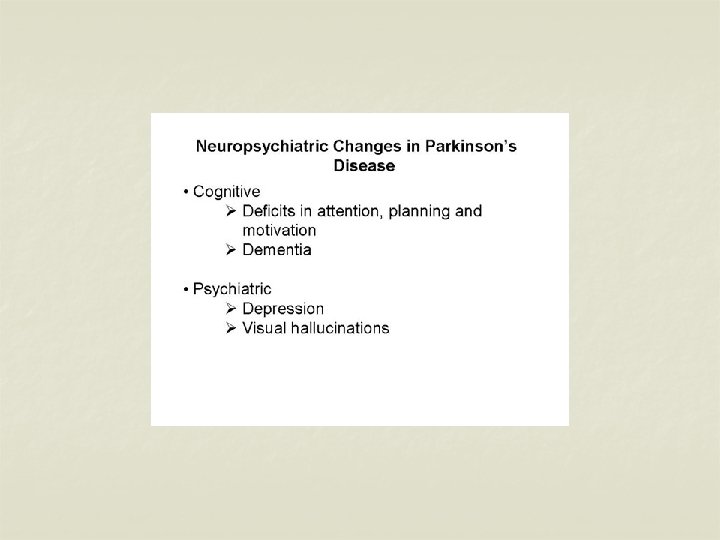
Clinical features cont. § Muscle power is normal § Reflexes –normal § Sensations –normal § Cognitive abnormality as the disease advances
INVESTIGATIONS § Clinical diagnosis § Exclude other causes –pts who present before 50 years § Brain CT scan or MRI
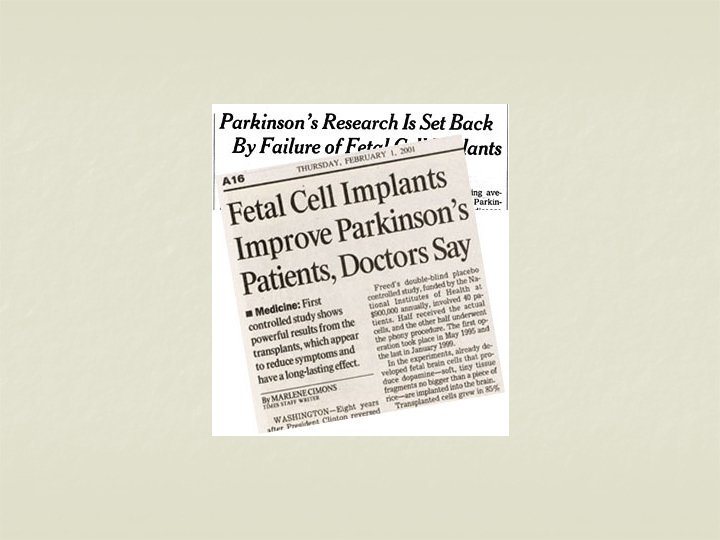
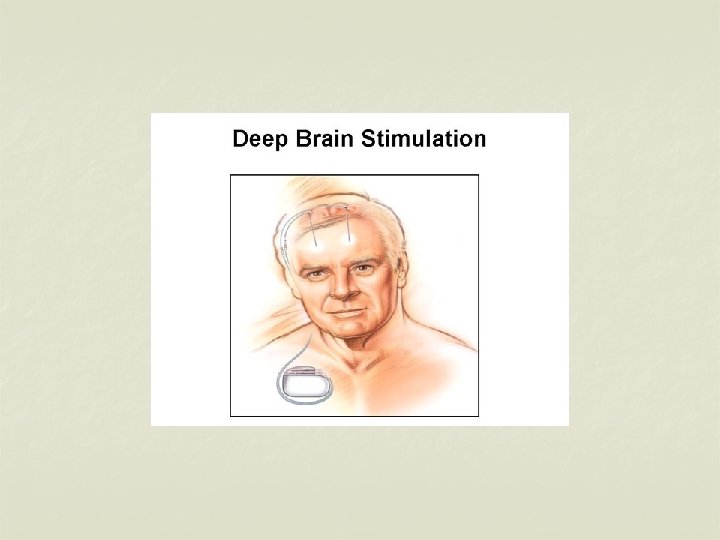
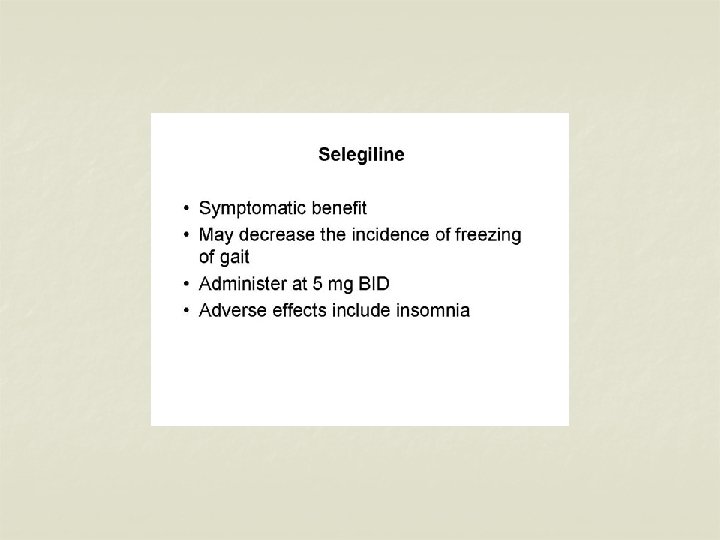
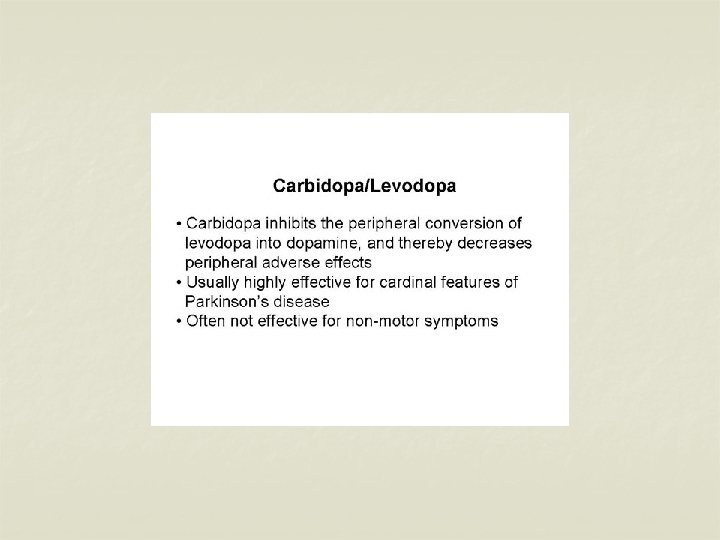
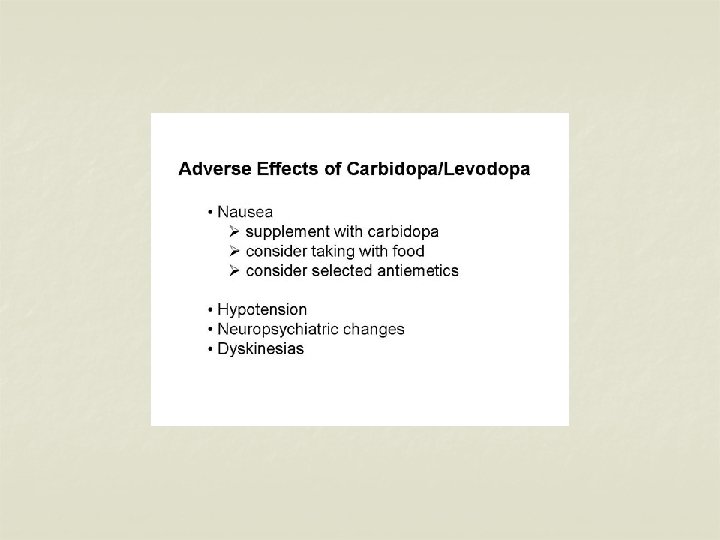
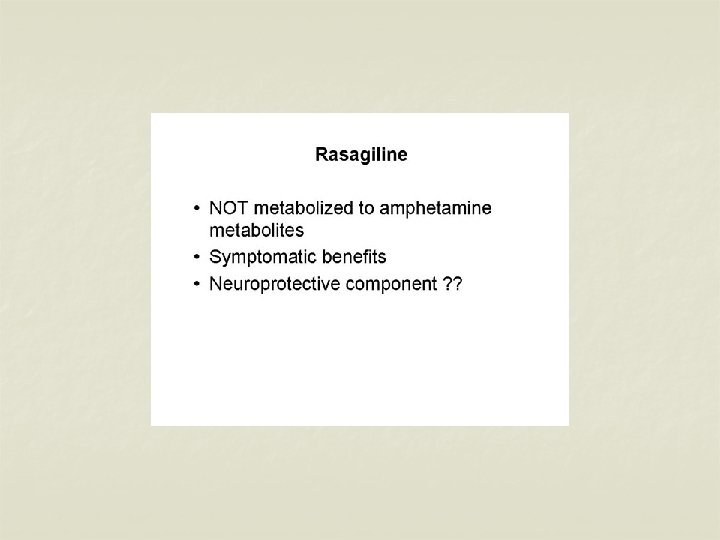
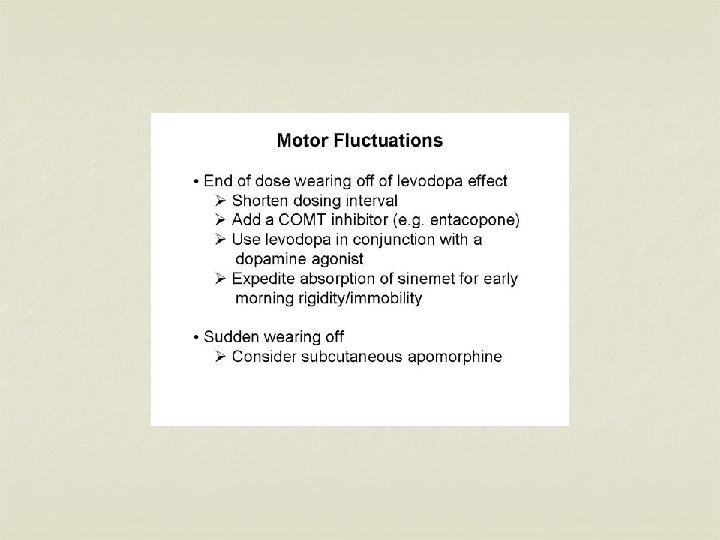
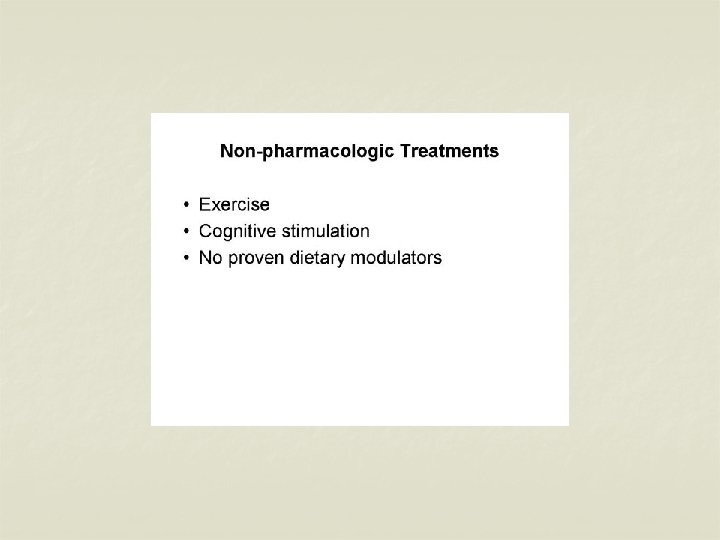
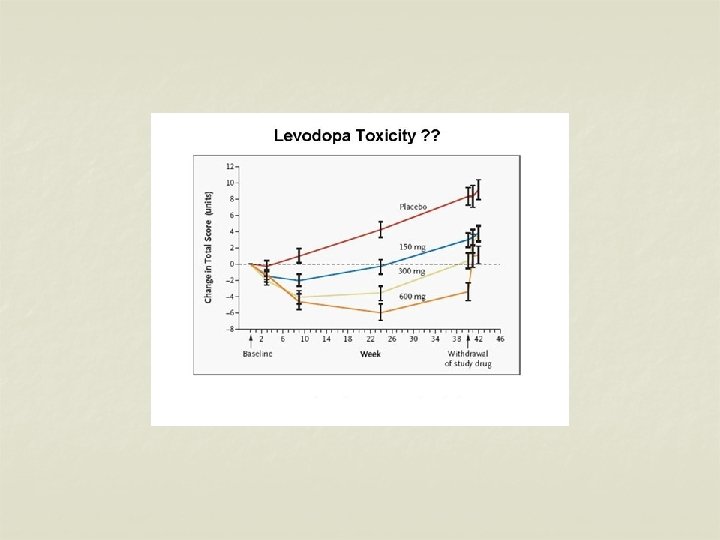
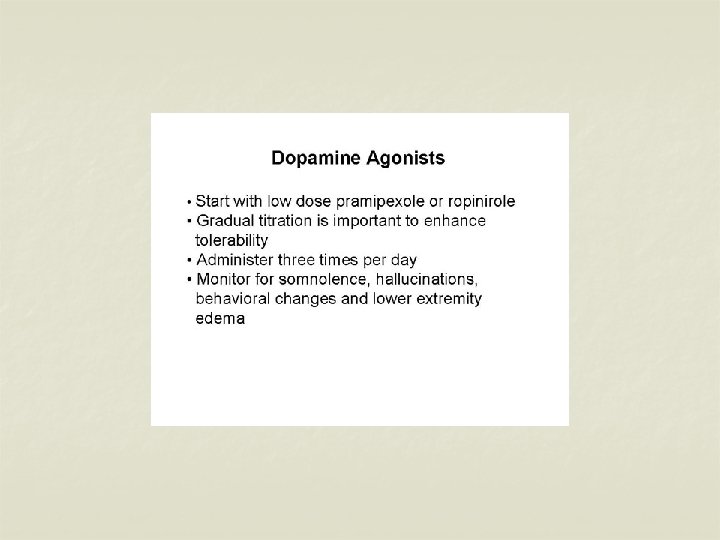
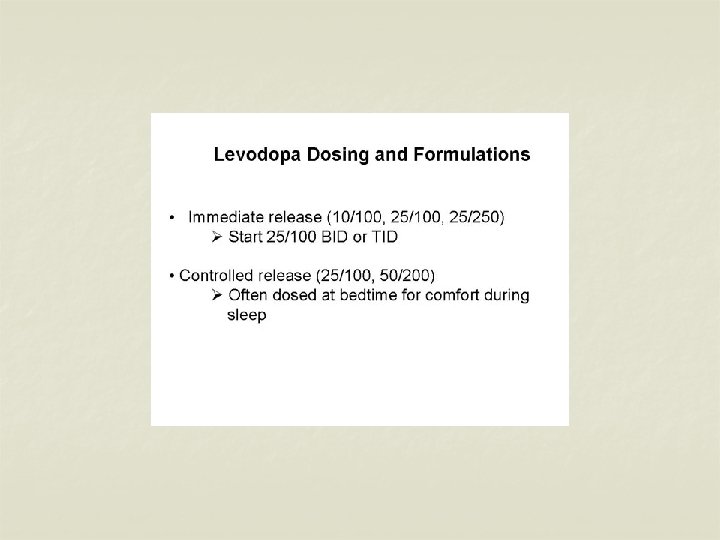
TREATMENT § Levodopa § Anticholinergic drugs § Amantadine § Dopamine agonists—bromocriptine, pergolide § COMT inhibitors (catechol-o-methyl transferase) —tolcapone § MAO –inhibitors--selegine
HUNTINGTONS DISEASE § Inherited disorder § Autosomal dominant § Males females equally affected § Presents during the 4 th decade § Chorea which worsens with time § Cognitive disorders § Dementia
Cont. § Abnormal facial movement § Mood swings § Jaw clenching § Slurred speech § Difficulty in walking § Personality changes

Cont. § Abnormal facial movement § Mood swings § Jaw clenching § Slurred speech § Difficulty in walking § Personality changes
WILSONS DISEASE § Hepato lenticular disorder § Autosomal recessive § Treatable cause of parkinsonsim § Due to deposition of copper in basal ganglia § Onset during childhood rarely in adulthood
Cont. § Present with liver disease in childhood § Impaired concentration § Decling intellect § Behavioural problems § Involuntary movements § Generalized dystonia
Cont. § Ataxia § Kayser Fleicher ring Diagnosis § Serum ceruloplasmin level § 24 hour urine for copper § LFT § Liver biopsy
HYPERKINETIC MOVEMENTS § § § large variety of hyperkinetic disorders Most are organic All movements disappear during sleep
CHOREA § § § Continous unsustained rapid abrupt and random contractures Small fidgety movements Distal muscles involved
CAUSES § Huntingtons disease § Drugs—Rx of parkinsonism , oral c. pills § SLE § Sydenhams chorea § Wilsons disease § Polycythemia § Friedricks ataxia
HEMIBALLISMUS § Throwing of the limbs on one side of the body § Usually due to CVA involving the subthalamic nucleus
MYOCLONUS § Simple jerky movements that are not coordinated or suppressible CAUSES § Renal failure § Hepatic failure § Creutz feldt jacob disease § Subacute sclerosing panencephalitis
DYSTONIA § Repeated patterned twisting and sustained movements that may be either slow or rapid § Involuntary movements occur before 20 years
Dystonia Cont. § Disturbance of the affected muscle groups depend upon age --distally---in children ---cranial - cervical ---adults
Dystonia cont. § Primary----focal----torticollis ----writers cramps generalized § Secondary----wilsons disease ----toxins
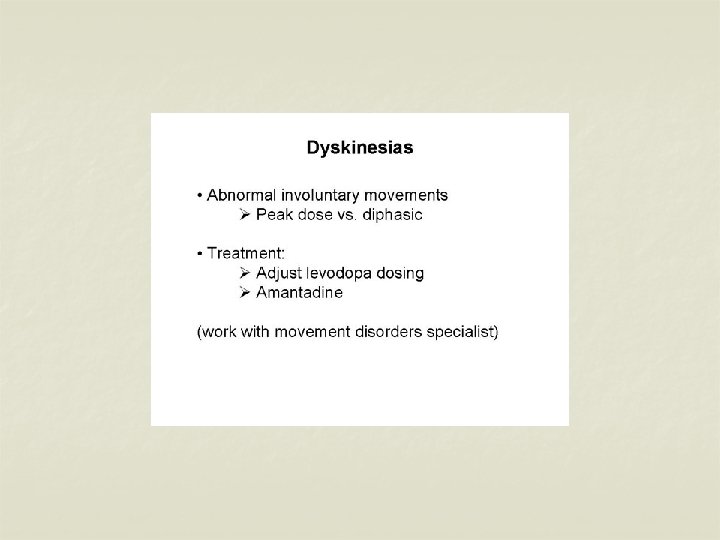
ATHETOSIS § Writhing movements § Mainly due to cerebral palsy DYSKINESIA § Tardive—drugs-> 6 wks exposure to dopamine agonists § Orofacial repeated movements
TREMORS § Physiological § Familial § Resting—parkinsons disease § Intention or action ---cerebellar
TICS § Brief stereotyped supressible movements § Worse with stress Cause Dopamine excess causes inhibition of limbic system Rx Dopamine agonist


- Slides: 69