
Extraordinary Case Management ECM Professionalising your today Protecting
- Slides: 32
Extraordinary Case Management (ECM®) ‘Professionalising your today – Protecting your tomorrow’ “Advocacy – Preparing you to win” 1. ‘Memory as a Crime Scene’ The Value of Recording Fact-finding (Forensic) Interviews
Objectives: • Context - ‘The Journey’ • Memory • Interview Recording Presentation © Intersol Global
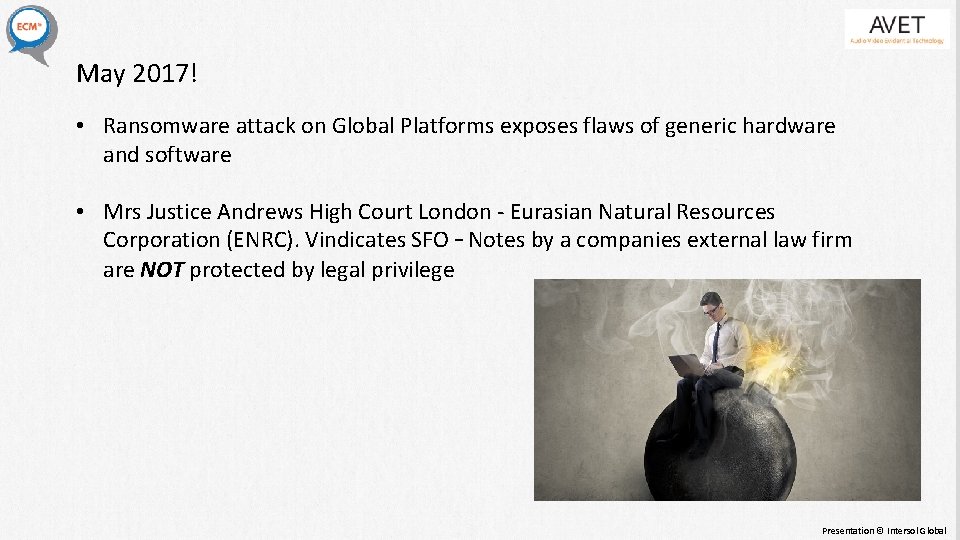
May 2017! • Ransomware attack on Global Platforms exposes flaws of generic hardware and software • Mrs Justice Andrews High Court London - Eurasian Natural Resources Corporation (ENRC). Vindicates SFO – Notes by a companies external law firm are NOT protected by legal privilege Presentation © Intersol Global
Evidence, Witnesses, and Court Presentation “The witness and suspect interviews were the shop window for the integrity and ethical transparency of the entire investigation” and; “Express no opinion in the interview, leave the cross examination to the barrister” (Ian Unsworth. Prosecuting Counsel, Leon SMALL murder) “Witnesses play a vital role in helping solve crimes and deliver justice. The criminal justice system cannot work without them” (www. cjsonline. gov. uk/witness) Presentation © Intersol Global
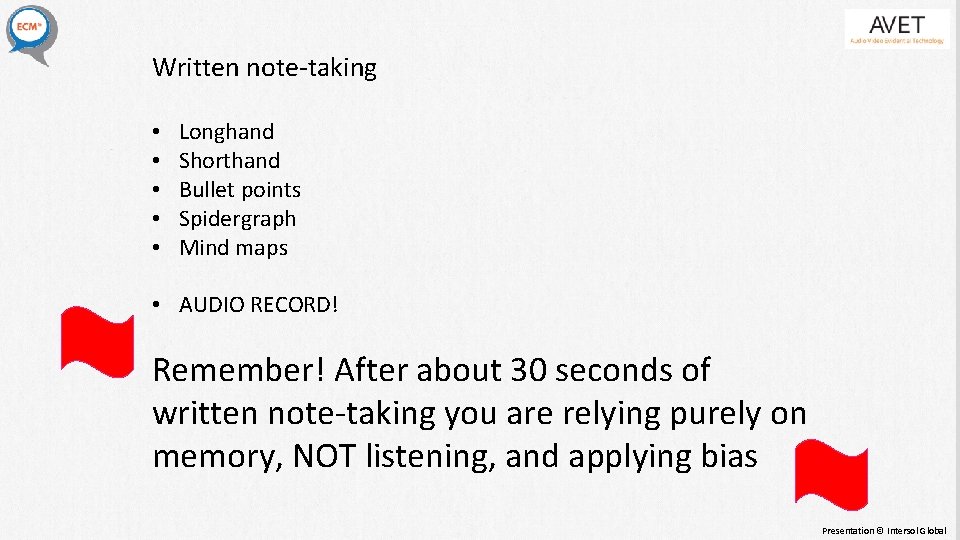
Why audio and/or visually record interviews? “After 30 seconds of written note-taking the human brain starts to rely on its long-term memory for accuracy and detail of content with all the associated mistakes” (Shepherd) Presentation © Intersol Global
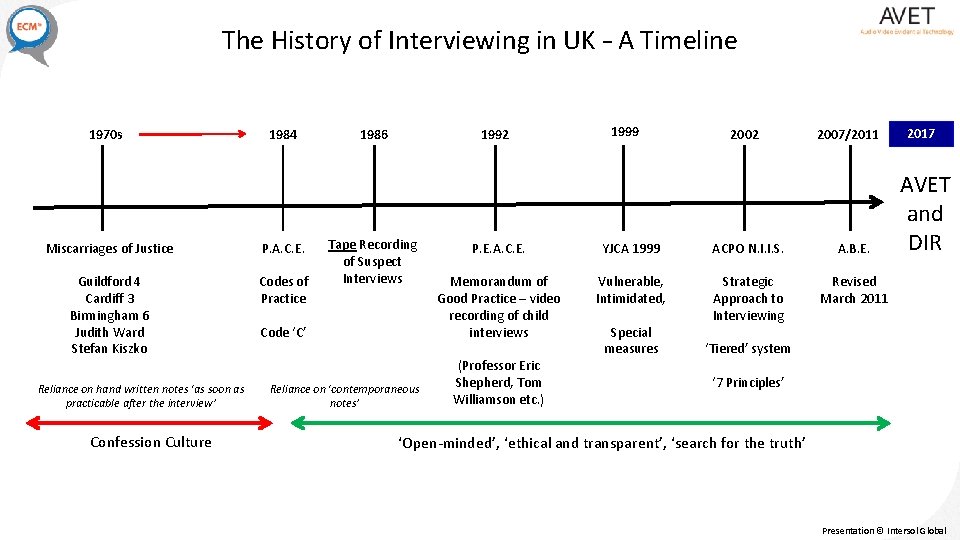
The History of Interviewing in UK – A Timeline 1970 s 1984 Miscarriages of Justice P. A. C. E. Guildford 4 Cardiff 3 Birmingham 6 Judith Ward Stefan Kiszko Codes of Practice Reliance on hand written notes ‘as soon as practicable after the interview’ Confession Culture 1986 1992 Tape Recording of Suspect Interviews Code ‘C’ Reliance on ‘contemporaneous notes’ 1999 2002 2007/2011 P. E. A. C. E. YJCA 1999 ACPO N. I. I. S. A. B. E. Memorandum of Good Practice – video recording of child interviews Vulnerable, Intimidated, Strategic Approach to Interviewing Revised March 2011 (Professor Eric Shepherd, Tom Williamson etc. ) Special measures 2017 AVET and DIR ‘Tiered’ system ‘ 7 Principles’ ‘Open-minded’, ‘ethical and transparent’, ‘search for the truth’ Presentation © Intersol Global
“Confirmation bias and rapid closure (of the interview) were the defining characteristics in almost every investigation and questioning exchange. Interviewing was a low status activity, compressing what an interviewee said into a written statement drafted by the interviewer. (Shepherd) was only too aware that more than half of the forensically significant detail went unregistered or wasn’t noted down so never got into the statement (outcome report in business) It was an exercise in confirmation of what the interviewer already knew”(Shepherd and Griffiths. Investigative interviewing, The Conversation management Approach) ‘Compression’ Presentation © Intersol Global
The 7 Principles of Investigative Interviewing • The aim of investigative interviewing is to obtain accurate and reliable accounts from victims, witnesses or suspects about matters under investigation. • Investigators must act fairly when questioning victims, witnesses or suspects. Vulnerable people must be treated with particular consideration at all times. • Investigative Interviewing should be approached with an investigative mindset. Accounts obtained from the person who is being interviewed should always be tested against what the interviewer already knows or what can reasonably be established. • When conducting an interview, investigators are free to ask a wide range of questions in order to obtain material which may assist an investigation. • Investigators should recognise the positive impact of an early admission in the context of the criminal justice system. (Nearest thing to ‘confession’!). • Investigators are not bound to accept the first answer given. Questioning is not unfair merely because it is persistent. • Even when the right of silence is exercised by a suspect, investigators have a responsibility to put questions to them. Presentation © Intersol Global
UK Interview and Recording Governance Includes: • P. A. C. E. • YJCA 1999 • ABE (2011) • C. P. I. A. – Disclosure, Unused Material. • R. I. P. A. • Coroners and Justice Act 2009 • ACPO advice on the Structure of Visually Recorded Witness Interviews 2010 • Witness Code • Victims Charter Presentation © Intersol Global
The role of Investigative Interviewing Effective interviews professionally undertaken and quality assured can realise several business benefits. In particular they can: • Direct an investigation (or enqiry), which in turn can lead to a prosecution or early release of an innocent person • Support the prosecution case, therefore saving time, money and resources • Increase public confidence in the Service particularly with witnesses and victims of crimes who come into direct contact with the police • Conversely, failure to professionally undertake and quality assure interviews can have adverse consequences in terms of failure to adhere to legislation, loss of critical material, unsolved crime, lack of credibility and loss of confidence Presentation © Intersol Global
Managing Workplace Investigations and Interviews - Benefits and Outcomes Effective workplace investigations and meetings (interviews) that are professionally conducted and quality assured realise and secure clear strategic business benefit and outcomes for your organisation. They can: • Direct and inform organisational Governance, Regulation, and Compliance (GRC) • Protect your brand reputation, underpinning Company values • Provide internal and external reassurance, consistency, and confidence • Preserve stakeholder loyalty, improving performance • Identify, reduce, and manage risks, increase revenue and reduce costs • Energise, motivate, and empower staff • Support industry standard leadership • Reassure the regulators and avoid sanctions • Conversely, failure to quality assure and professionally undertake those investigations and meetings (interviews), can attract adverse consequence for your organisation, causing: • Loss of critical information and exposure to risk • Irreparable brand, institutional, and personal damage • Stakeholder disengagement • Increased expenditure on unnecessary meetings and interviews • Poor value and return on investment • Reinforcement of poor practice and inefficient resource deployment • Lack of internal and external credibility and confidence • Failure to adhere to regulation and subsequent regulatory or criminal sanction And could ultimately lead to CRIMINAL CONDUCT Presentation © Intersol Global
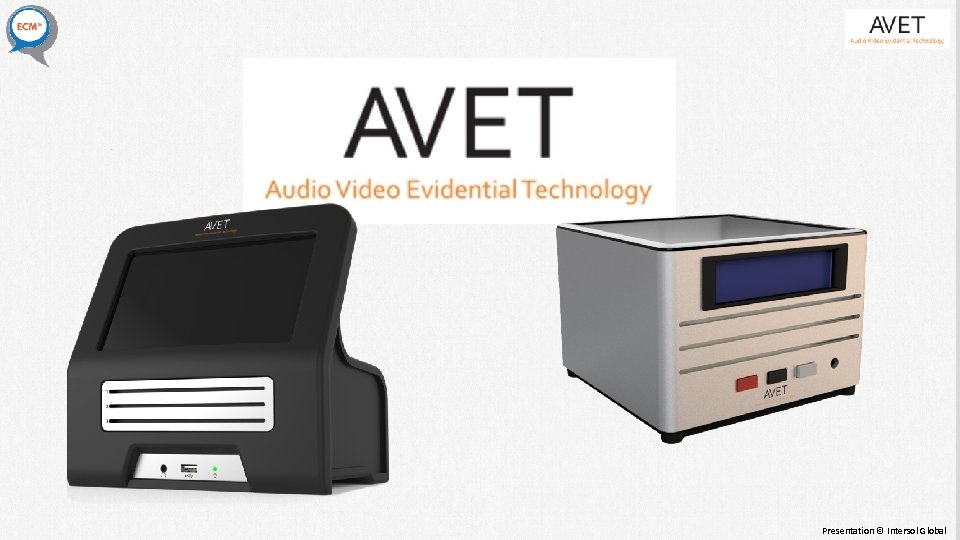
• In the UK, future miscarriages of justice are more likely to stem from the interviewing of witnesses, not suspects • Miscarriages include the guilty evading justice just as it does the innocent being wrongly convicted • Interviewing, a confession or a search for detail, checkable facts and the truth? Intersol and AVET, world leaders at uniting the technical solution with non-technical skills Presentation © Intersol Global
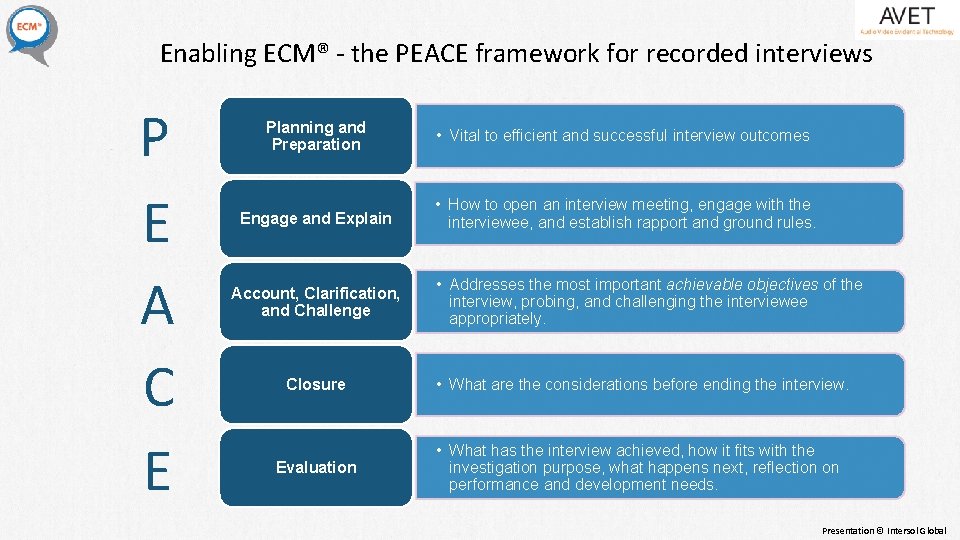
Enabling ECM® - the PEACE framework for recorded interviews P E A C E Planning and Preparation • Vital to efficient and successful interview outcomes Engage and Explain • How to open an interview meeting, engage with the interviewee, and establish rapport and ground rules. Account, Clarification, and Challenge • Addresses the most important achievable objectives of the interview, probing, and challenging the interviewee appropriately. Closure • What are the considerations before ending the interview. Evaluation • What has the interview achieved, how it fits with the investigation purpose, what happens next, reflection on performance and development needs. Presentation © Intersol Global
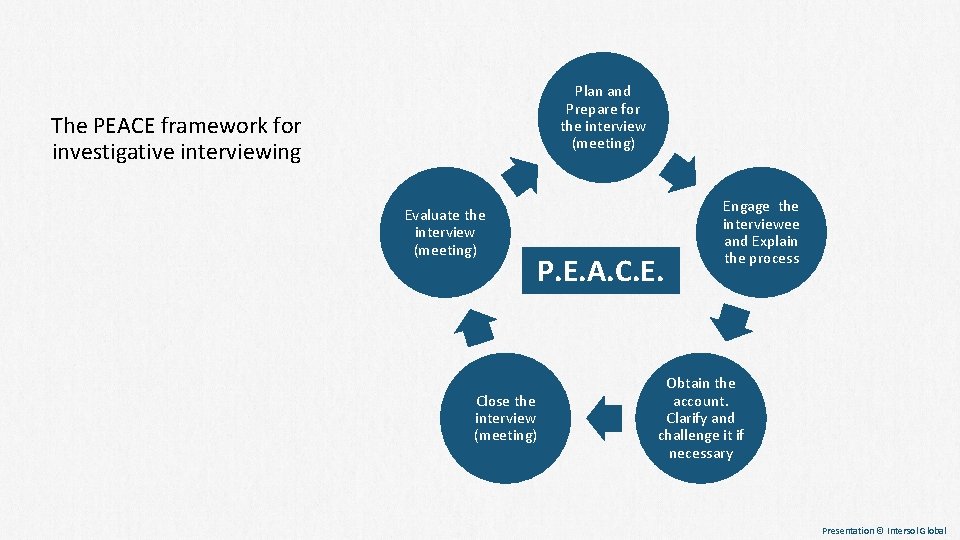
Plan and Prepare for the interview (meeting) The PEACE framework for investigative interviewing Evaluate the interview (meeting) P. E. A. C. E. Close the interview (meeting) Engage the interviewee and Explain the process Obtain the account. Clarify and challenge it if necessary Presentation © Intersol Global
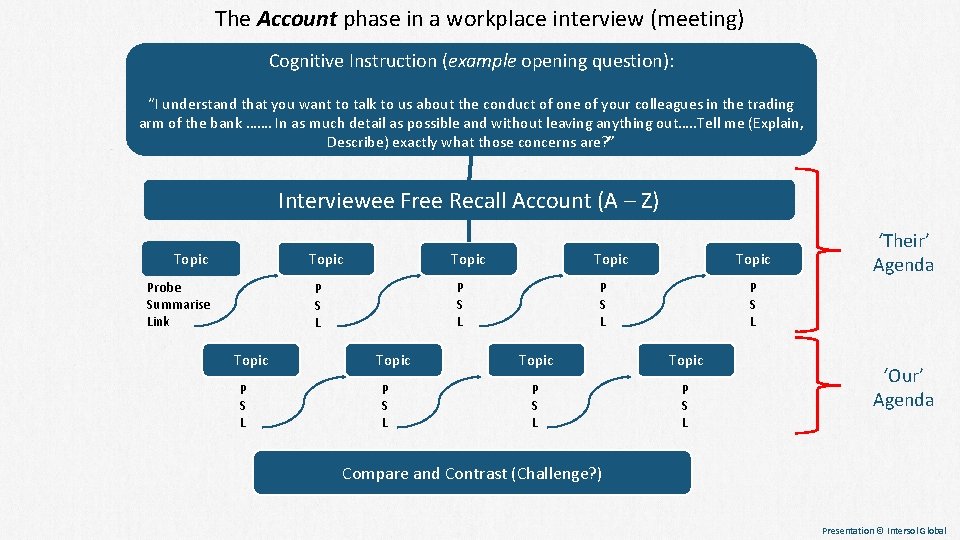
The Account phase in a workplace interview (meeting) Cognitive Instruction (example opening question): “I understand that you want to talk to us about the conduct of one of your colleagues in the trading arm of the bank ……. In as much detail as possible and without leaving anything out…. . Tell me (Explain, Describe) exactly what those concerns are? ” Interviewee Free Recall Account (A – Z) Topic Probe Summarise Link Topic P S L Topic P S L ‘Their’ Agenda P S L Topic P S L ‘Our’ Agenda Compare and Contrast (Challenge? ) Presentation © Intersol Global
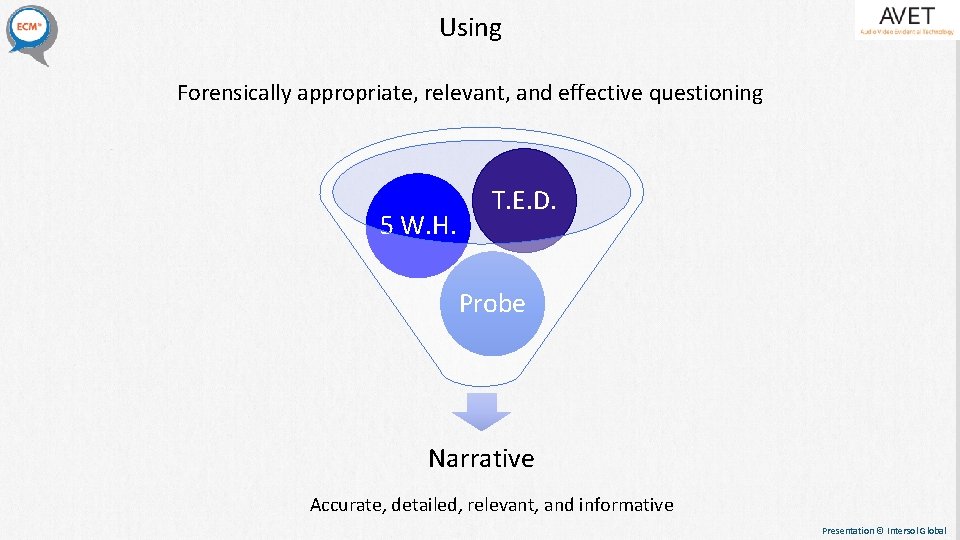
Using Forensically appropriate, relevant, and effective questioning 5 W. H. T. E. D. Probe Narrative Accurate, detailed, relevant, and informative Presentation © Intersol Global
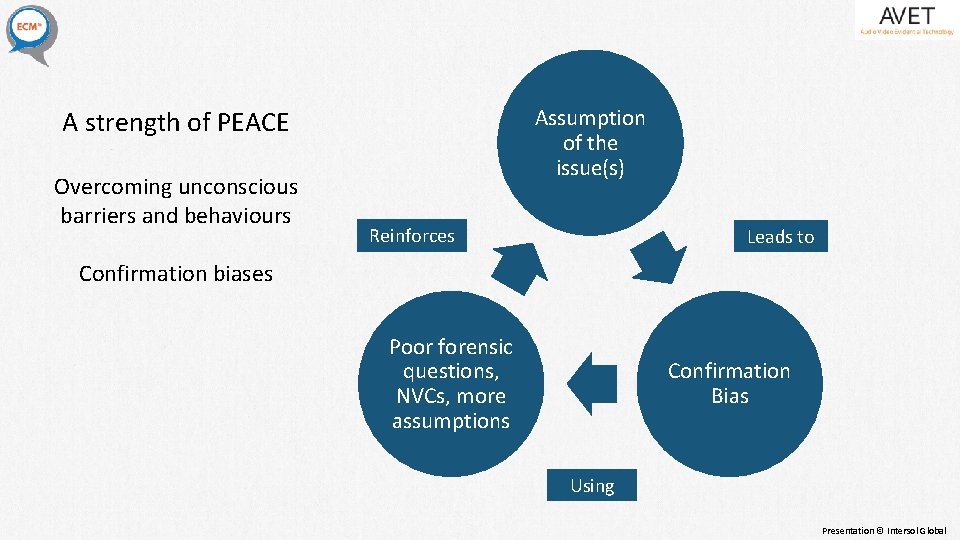
Assumption of the issue(s) A strength of PEACE Overcoming unconscious barriers and behaviours Reinforces Leads to Confirmation biases Poor forensic questions, NVCs, more assumptions Confirmation Bias Using Presentation © Intersol Global
Memory as a crime scene – Discuss! Presentation © Intersol Global
Forensic Investigations are an attempt to reconstruct a past event: In any investigation there are essentially two strands that support those attempts: 1. Physical evidence (hair, fibres, DNA, fingerprints, documents, etc. ) and, 2. Witness evidence (Memory & Identification) Both are forensically obtained and at the centre of securing justice. But! Both forms of evidence are handled very differently within the criminal justice system Presentation © Intersol Global
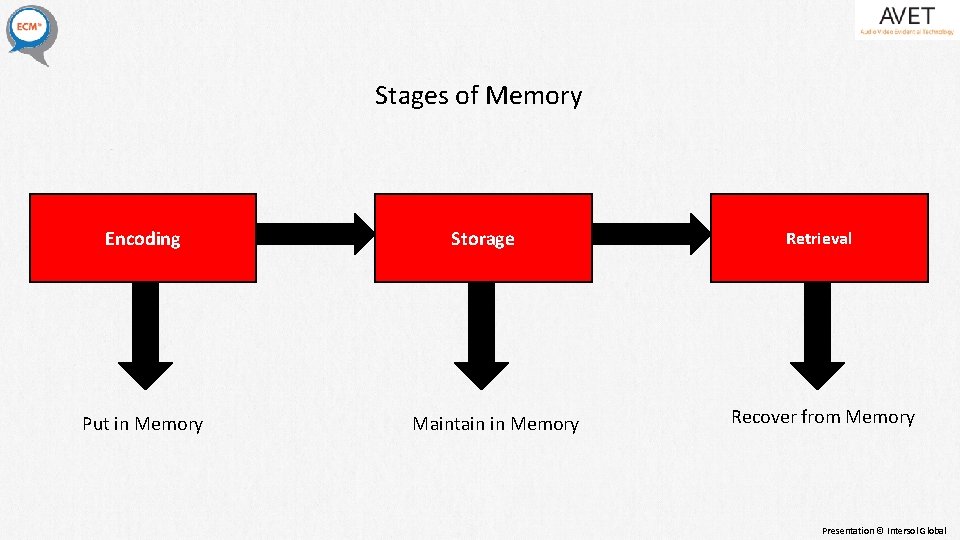
Stages of Memory Encoding Put in Memory Storage Maintain in Memory Retrieval Recover from Memory Presentation © Intersol Global
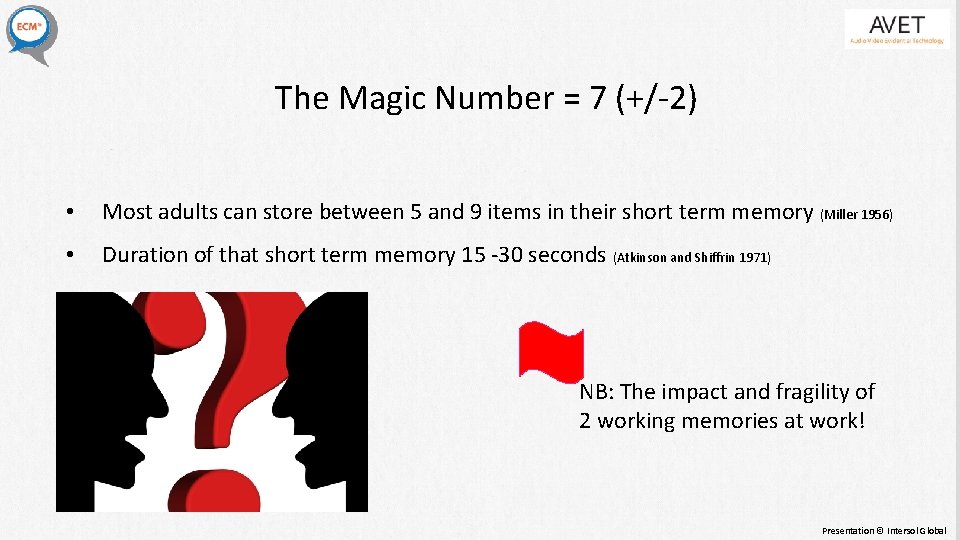
The Magic Number = 7 (+/-2) • Most adults can store between 5 and 9 items in their short term memory (Miller 1956) • Duration of that short term memory 15 -30 seconds (Atkinson and Shiffrin 1971) NB: The impact and fragility of 2 working memories at work! Presentation © Intersol Global
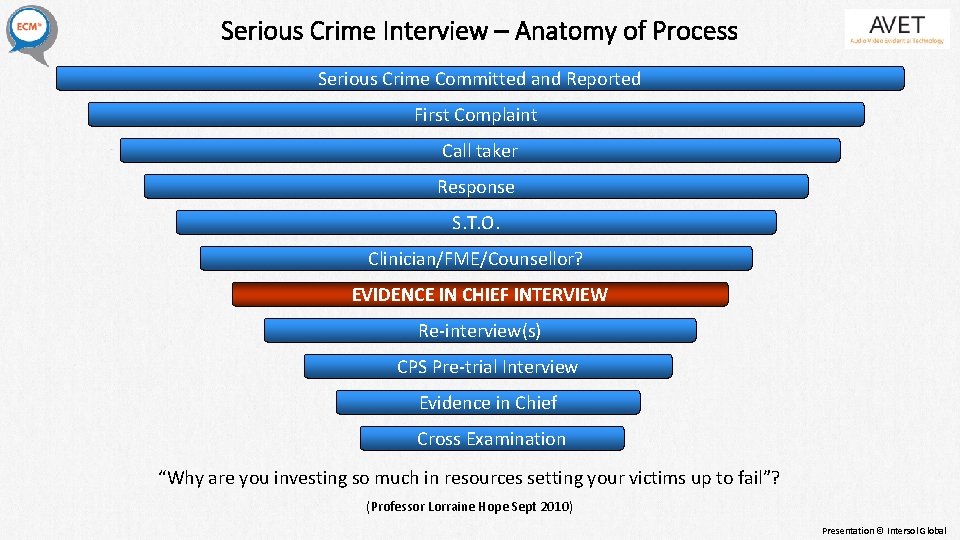
Serious Crime Interview – Anatomy of Process Serious Crime Committed and Reported First Complaint Call taker Response S. T. O. Clinician/FME/Counsellor? EVIDENCE IN CHIEF INTERVIEW Re-interview(s) CPS Pre-trial Interview Evidence in Chief Cross Examination “Why are you investing so much in resources setting your victims up to fail”? (Professor Lorraine Hope Sept 2010) Presentation © Intersol Global
Written note-taking • • • Longhand Shorthand Bullet points Spidergraph Mind maps • AUDIO RECORD! Remember! After about 30 seconds of written note-taking you are relying purely on memory, NOT listening, and applying bias Presentation © Intersol Global
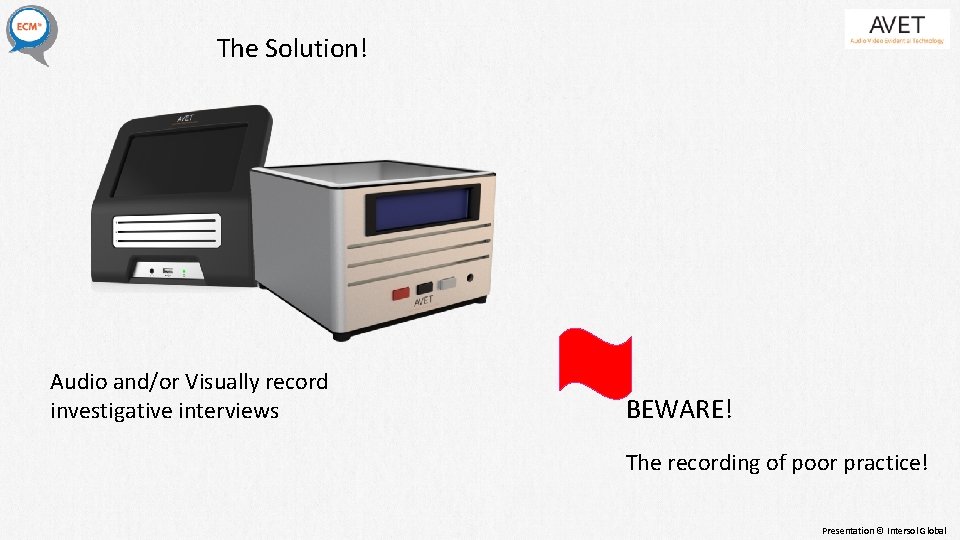
The Solution! Audio and/or Visually record investigative interviews BEWARE! The recording of poor practice! Presentation © Intersol Global
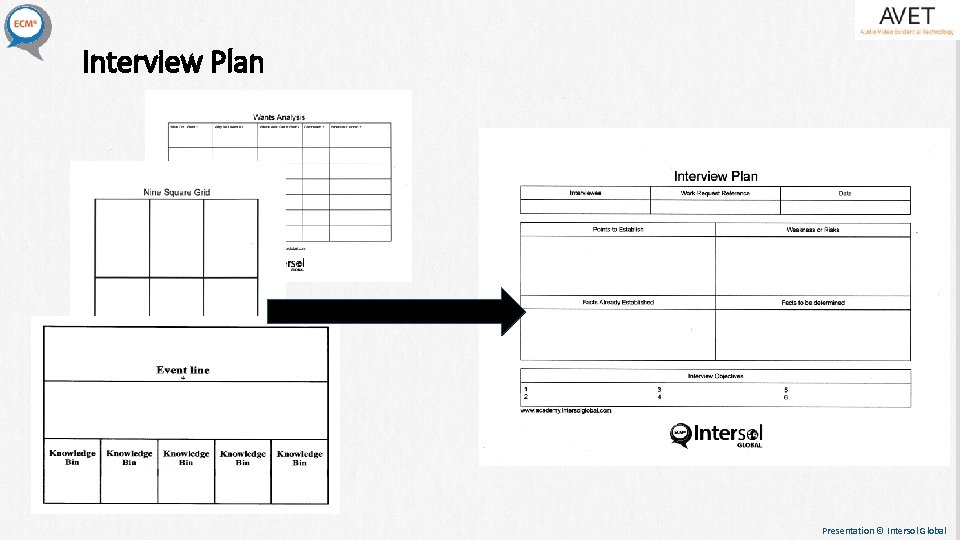
Interview Plan Presentation © Intersol Global
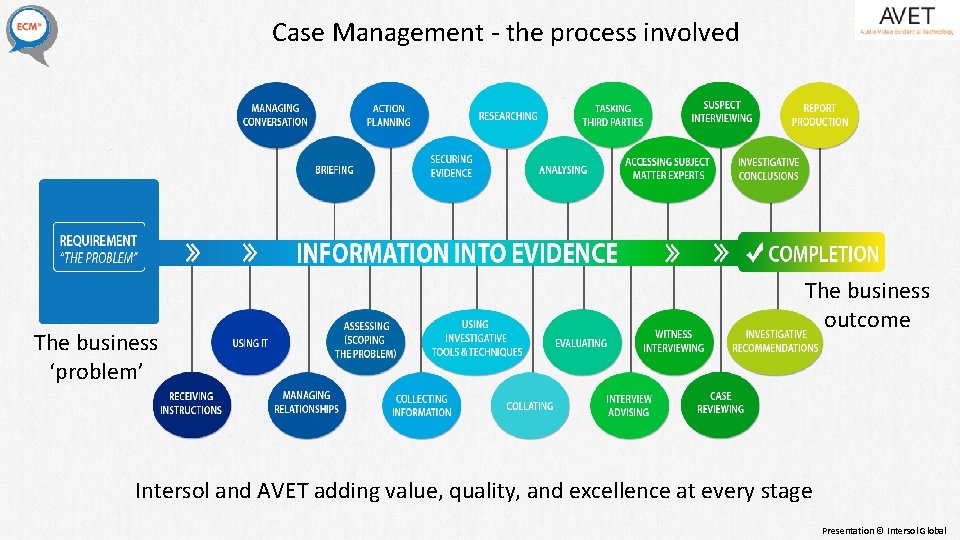
Case Management - the process involved The business ‘problem’ The business outcome Intersol and AVET adding value, quality, and excellence at every stage Presentation © Intersol Global
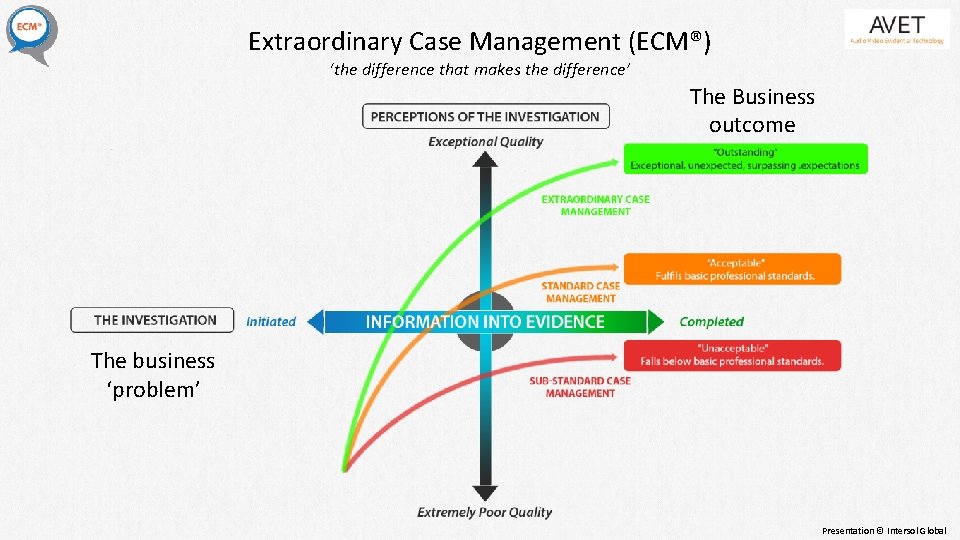
Extraordinary Case Management (ECM®) ‘the difference that makes the difference’ The Business outcome The business ‘problem’ Presentation © Intersol Global
Key Points re Memory (Guidelines on Memory and the Law) (Recommendations from the Scientific Study of Human Memory 2010) i) Memories are records of people’s experiences of events not a record of the events themselves. In this respect they are unlike other recording media such as videos or audio recordings, to which they should not be compared. ii) Memory is not only of experienced events but also of the knowledge of a person’s life, e. g. schools, occupations, holidays, friends, homes, achievements, failures, etc. As a general rule memory is more likely to be accurate when it is of the knowledge of a person’s life than when it is of specific experienced events iii) Remembering is a constructive process. Memories are mental constructions that bring together different types of knowledge in an act of remembering. As a consequence, memory is prone to error and is easily influenced by the recall environment, including police interviews and cross-examination in court iv) Memories for experienced events are always incomplete. Memories are time compressed fragmentary records of experience. Any account of a memory will feature forgotten details and gaps, and this must not be taken as any sort of indicator of accuracy. Accounts of memories that do not feature forgetting and gaps are highly unusual. Presentation © Intersol Global
v) Memories typically contain only a few highly specific details. Detailed recollection of the specific time and date of experiences is normally poor, as is highly specific information such as the precise recall of spoken conversations. As a general rule, a high degree of very specific detail in a long-term memory is unusual. vi) Recall of a single or several highly specific details does not guarantee that a memory is accurate or even that it actually occurred. In general, the only way to establish the truth of a memory is with independent corroborating evidence. vii) The content of memories arise from an individual’s comprehension of an experience, both conscious and nonconscious. This content can be further modified and changed by subsequent recall. viii) People can remember events that they have not in reality experienced. This does not necessarily entail deliberate deception. For example, an event that was imagined was a blend of a number of different events, or that makes personal sense for some other reason, can come to be genuinely experienced as a memory, (often referred to as ‘confabulations’). ix) Memories of traumatic experiences, childhood events, interview and identification practices, memory in younger children and older adults and other vulnerable groups all have special features. These are features that are unlikely to be commonly known by a non-expert, but about which an appropriate memory expert will be able to advise a court x) A memory expert is a person who is recognised by the memory research community to possess knowledge relevant to the particular case. It is recommended that, in addition to current requirements, those acting as memory expert witnesses be required to submit their full curriculum vitae to the court as evidence of their expertise. Presentation © Intersol Global
Presentation © Intersol Global
Thank you! ? Intersol can support with workshops, training, and operationally on any and all aspects of investigation and investigative interviewing. If you or your team would like to know any more detail about any of the topics highlighted today or related services please contact info@intersolglobal. com for an informal and confidential discussion. Presentation © Intersol Global
THANK YOU Ian Hynes CEO Intersol Global T: +44 (0) 845 388 5467 M: +44 (0) 7921 123 400 E: ian@intersolglobal. com or info@intersolglobal. com Intersol Global is a unique association of world-renowned consultant practitioners academics and clinicians combining hundreds of years experience of investigation and investigative interviewing. Intersol Global enable individuals and institutions to engage in effective empirically-grounded investigation, placing robustly ethical investigative interviewing firmly at the heart of Extraordinary Case Management (ECM®) Presentation © Intersol Global