
EXTRACTION OF METALS A guide for A level




- Slides: 61
EXTRACTION OF METALS A guide for A level students KNOCKHARDY PUBLISHING
KNOCKHARDY PUBLISHING EXTRACTION OF METALS INTRODUCTION This Powerpoint show is one of several produced to help students understand selected topics at AS and A 2 level Chemistry. It is based on the requirements of the AQA and OCR specifications but is suitable for other examination boards. Individual students may use the material at home for revision purposes or it may be used for classroom teaching if an interactive white board is available. Accompanying notes on this, and the full range of AS and A 2 topics, are available from the KNOCKHARDY SCIENCE WEBSITE at. . . www. knockhardy. org. uk/sci. htm Navigation is achieved by. . . either or clicking on the grey arrows at the foot of each page using the left and right arrow keys on the keyboard
EXTRACTION OF METALS CONTENTS • Theory of extraction • Extraction of iron • Conversion of iron into steel • Extraction of aluminium • Extraction of titanium • Extraction of chromium • Extraction of sodium • Recycling
EXTRACTION OF METALS Before you start it would be helpful to… • Recall the layout of the reactivity series • Recall definitions of reduction, oxidation and redox
GENERAL PRINCIPLES OCCURRENCE • ores of some metals are very common (iron, aluminium) • others occur only in limited quantities in selected areas • high grade ores are cheaper to process because, ores need to be purified before being reduced to the metal
GENERAL PRINCIPLES THEORY The method used to extract metals depends on the. . . • purity required • energy requirements • cost of the reducing agent • position of the metal in the reactivity series
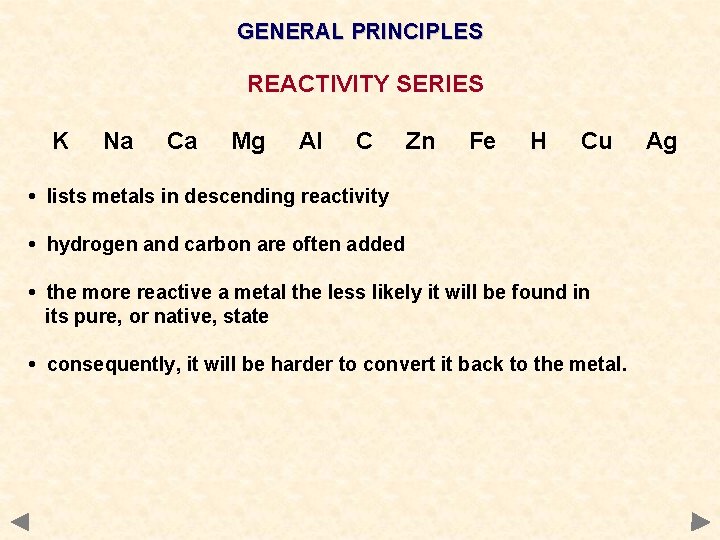
GENERAL PRINCIPLES REACTIVITY SERIES K Na Ca Mg Al C Zn Fe H Cu • lists metals in descending reactivity • hydrogen and carbon are often added • the more reactive a metal the less likely it will be found in its pure, or native, state • consequently, it will be harder to convert it back to the metal. Ag
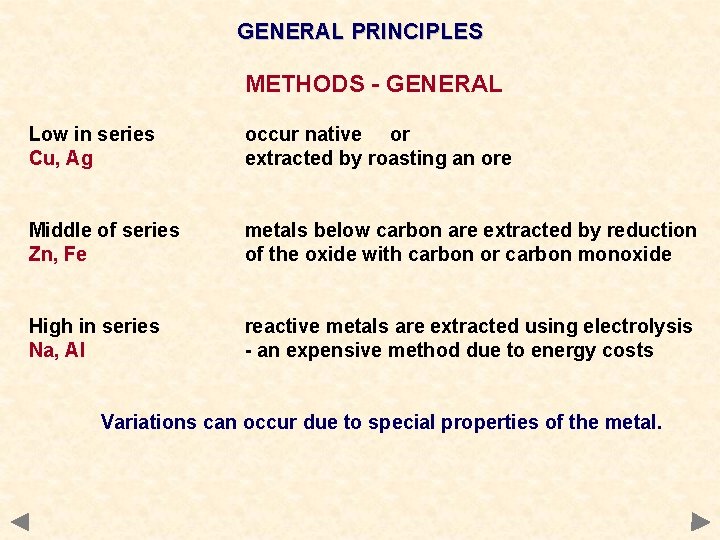
GENERAL PRINCIPLES METHODS - GENERAL Low in series Cu, Ag occur native or extracted by roasting an ore Middle of series Zn, Fe metals below carbon are extracted by reduction of the oxide with carbon or carbon monoxide High in series Na, Al reactive metals are extracted using electrolysis - an expensive method due to energy costs Variations can occur due to special properties of the metal.
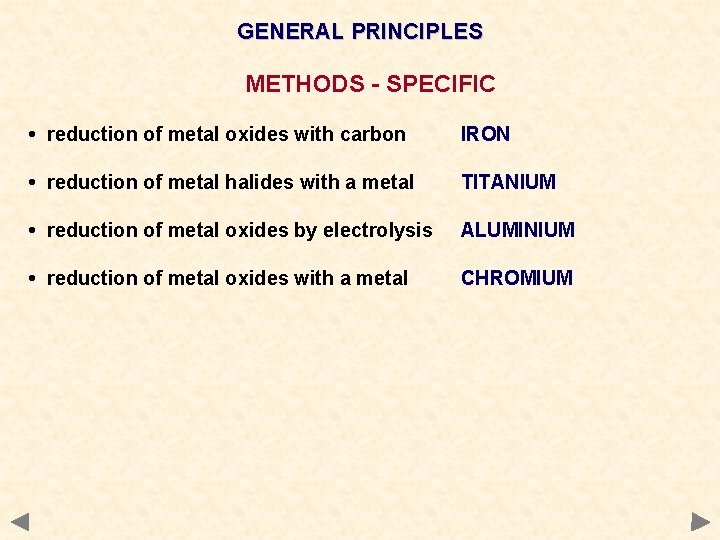
GENERAL PRINCIPLES METHODS - SPECIFIC • reduction of metal oxides with carbon IRON • reduction of metal halides with a metal TITANIUM • reduction of metal oxides by electrolysis ALUMINIUM • reduction of metal oxides with a metal CHROMIUM
IRON
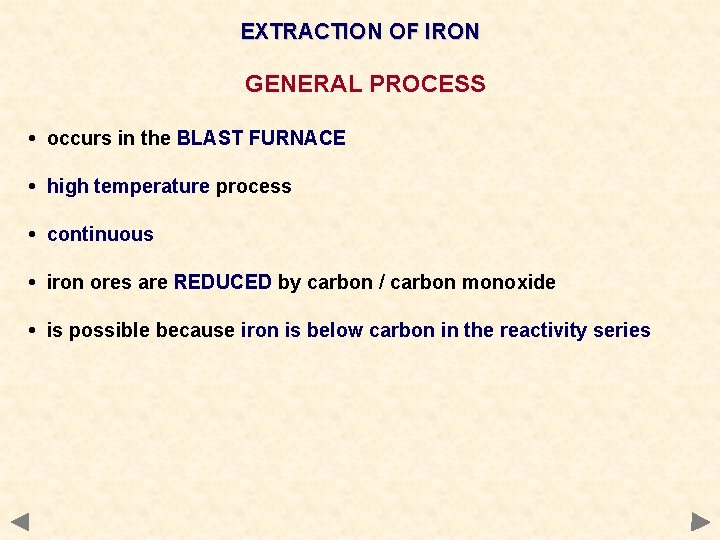
EXTRACTION OF IRON GENERAL PROCESS • occurs in the BLAST FURNACE • high temperature process • continuous • iron ores are REDUCED by carbon / carbon monoxide • is possible because iron is below carbon in the reactivity series
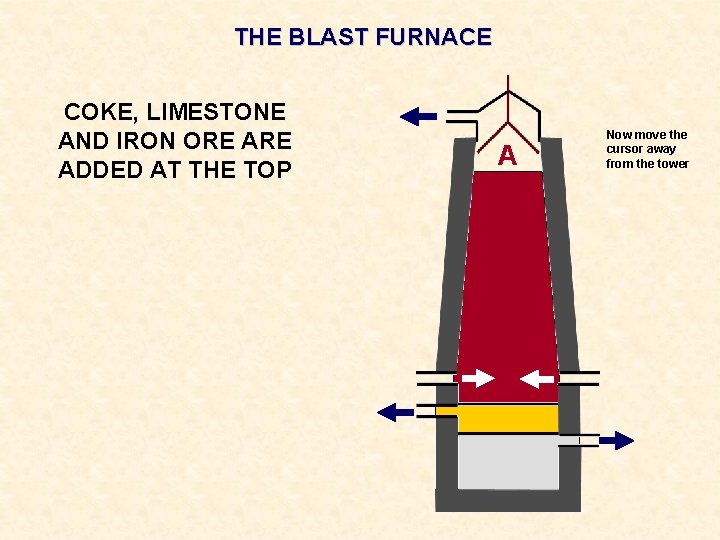
EXTRACTION OF IRON RAW MATERIALS HAEMATITE - Fe 2 O 3 a source of iron COKE fuel / reducing agent CHEAP AND PLENTIFUL LIMESTONE conversion of silica into slag (calcium silicate) – USED IN THE CONSTRUCTION INDUSTRY AIR source of oxygen for combustion
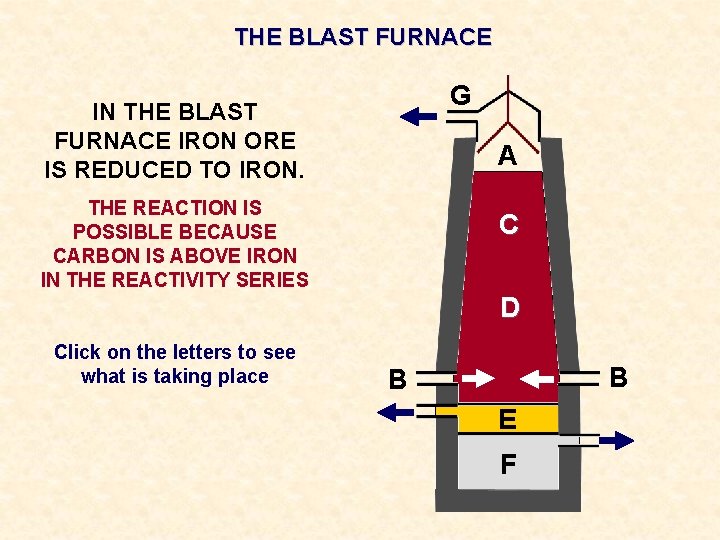
THE BLAST FURNACE G IN THE BLAST FURNACE IRON ORE IS REDUCED TO IRON. A THE REACTION IS POSSIBLE BECAUSE CARBON IS ABOVE IRON IN THE REACTIVITY SERIES C D Click on the letters to see what is taking place B B E F
THE BLAST FURNACE COKE, LIMESTONE AND IRON ORE ADDED AT THE TOP A Now move the cursor away from the tower
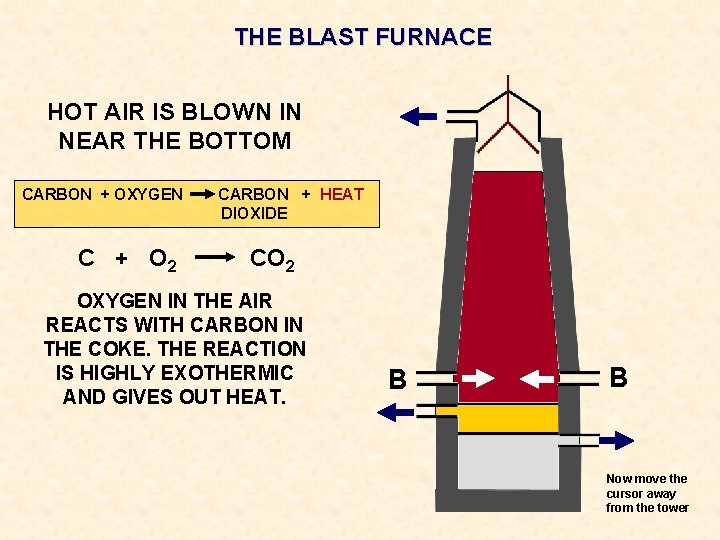
THE BLAST FURNACE HOT AIR IS BLOWN IN NEAR THE BOTTOM CARBON + OXYGEN C + O 2 CARBON + HEAT DIOXIDE CO 2 OXYGEN IN THE AIR REACTS WITH CARBON IN THE COKE. THE REACTION IS HIGHLY EXOTHERMIC AND GIVES OUT HEAT. B B Now move the cursor away from the tower
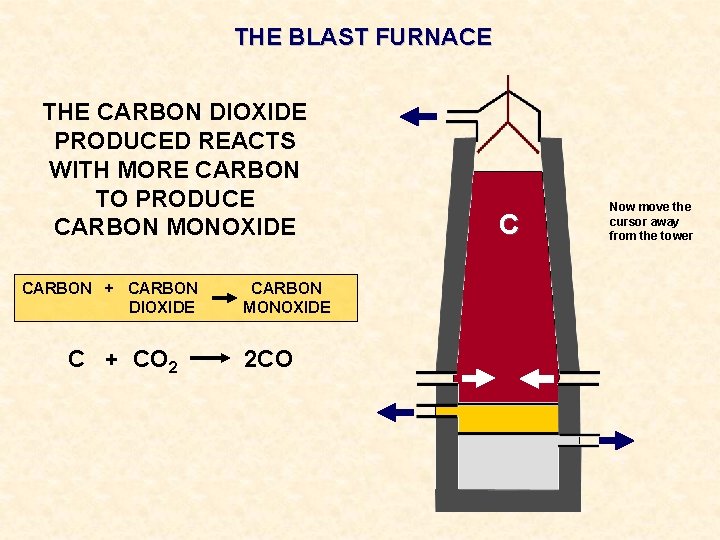
THE BLAST FURNACE THE CARBON DIOXIDE PRODUCED REACTS WITH MORE CARBON TO PRODUCE CARBON MONOXIDE CARBON + CARBON DIOXIDE C + CO 2 CARBON MONOXIDE 2 CO C Now move the cursor away from the tower
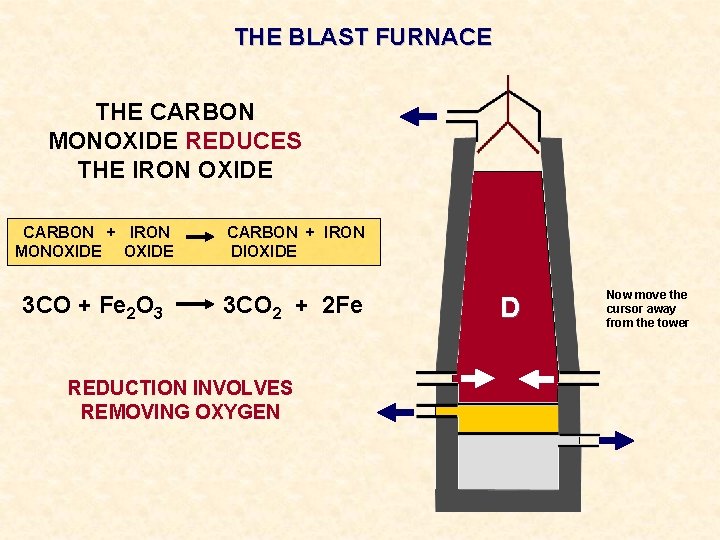
THE BLAST FURNACE THE CARBON MONOXIDE REDUCES THE IRON OXIDE CARBON + IRON MONOXIDE 3 CO + Fe 2 O 3 CARBON + IRON DIOXIDE 3 CO 2 + 2 Fe REDUCTION INVOLVES REMOVING OXYGEN D Now move the cursor away from the tower
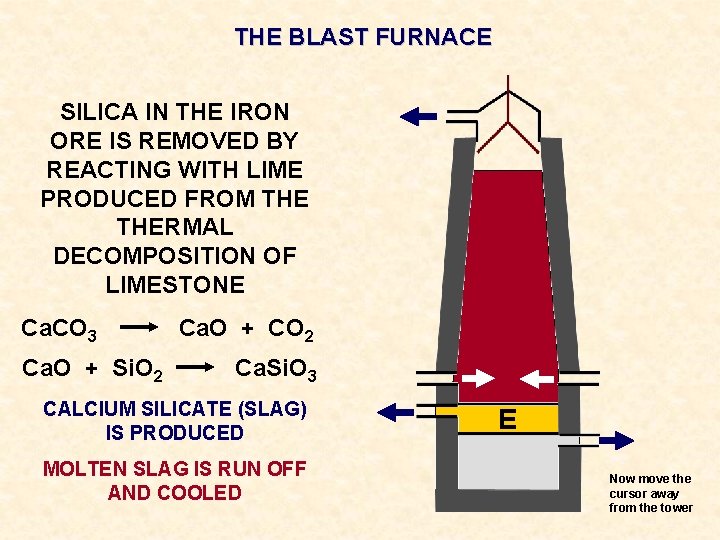
THE BLAST FURNACE SILICA IN THE IRON ORE IS REMOVED BY REACTING WITH LIME PRODUCED FROM THERMAL DECOMPOSITION OF LIMESTONE Ca. CO 3 Ca. O + Si. O 2 Ca. O + CO 2 Ca. Si. O 3 CALCIUM SILICATE (SLAG) IS PRODUCED MOLTEN SLAG IS RUN OFF AND COOLED E Now move the cursor away from the tower
THE BLAST FURNACE MOLTEN IRON RUNS TO THE BOTTOM OF THE FURNACE. IT IS TAKEN OUT (CAST) AT REGULAR INTERVALS CAST IRON - cheap and easily moulded - used for drainpipes, engine blocks F Now move the cursor away from the tower
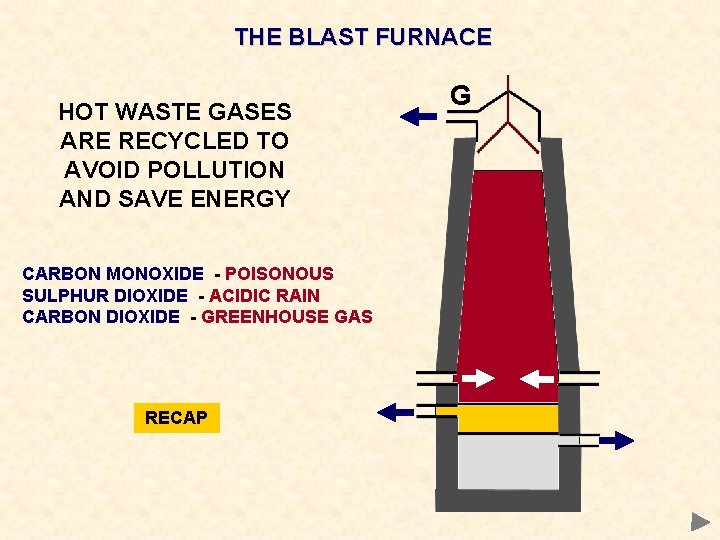
THE BLAST FURNACE HOT WASTE GASES ARE RECYCLED TO AVOID POLLUTION AND SAVE ENERGY CARBON MONOXIDE - POISONOUS SULPHUR DIOXIDE - ACIDIC RAIN CARBON DIOXIDE - GREENHOUSE GAS RECAP G
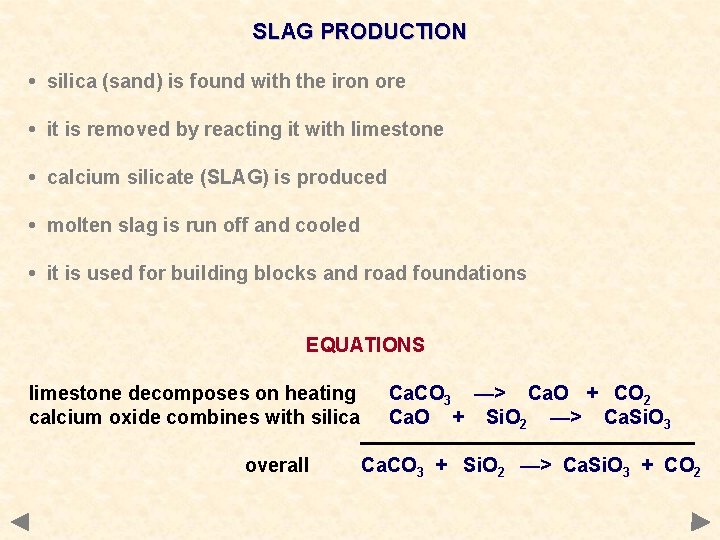
SLAG PRODUCTION • silica (sand) is found with the iron ore • it is removed by reacting it with limestone • calcium silicate (SLAG) is produced • molten slag is run off and cooled • it is used for building blocks and road foundations
SLAG PRODUCTION • silica (sand) is found with the iron ore • it is removed by reacting it with limestone • calcium silicate (SLAG) is produced • molten slag is run off and cooled • it is used for building blocks and road foundations EQUATIONS limestone decomposes on heating calcium oxide combines with silica overall Ca. CO 3 —> Ca. O + CO 2 Ca. O + Si. O 2 —> Ca. Si. O 3 Ca. CO 3 + Si. O 2 —> Ca. Si. O 3 + CO 2
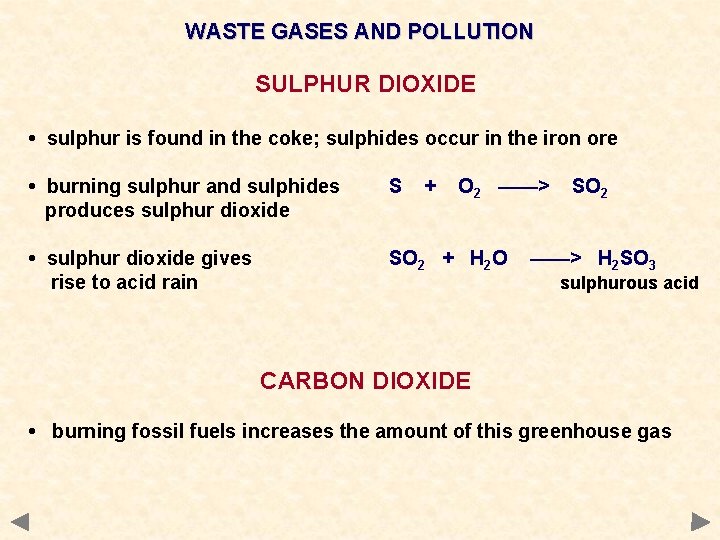
WASTE GASES AND POLLUTION SULPHUR DIOXIDE • sulphur is found in the coke; sulphides occur in the iron ore • burning sulphur and sulphides produces sulphur dioxide S + O 2 ——> • sulphur dioxide gives rise to acid rain SO 2 + H 2 O SO 2 ——> H 2 SO 3 sulphurous acid CARBON DIOXIDE • burning fossil fuels increases the amount of this greenhouse gas
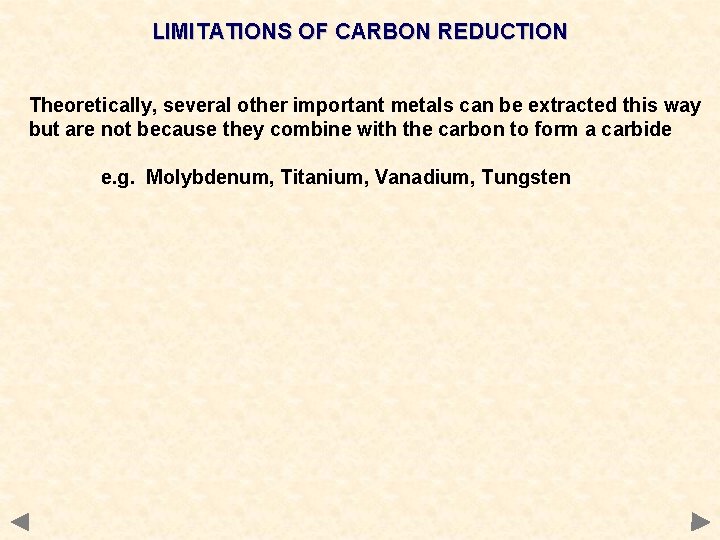
LIMITATIONS OF CARBON REDUCTION Theoretically, several other important metals can be extracted this way but are not because they combine with the carbon to form a carbide e. g. Molybdenum, Titanium, Vanadium, Tungsten
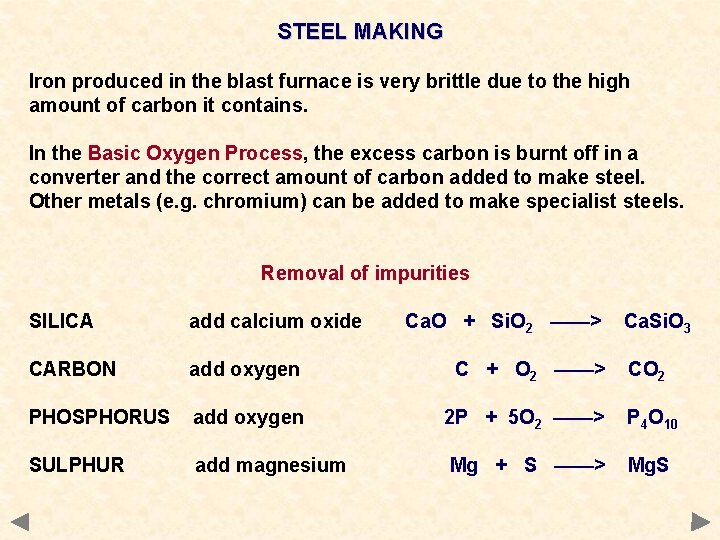
STEEL MAKING Iron produced in the blast furnace is very brittle due to the high amount of carbon it contains. In the Basic Oxygen Process, the excess carbon is burnt off in a converter and the correct amount of carbon added to make steel. Other metals (e. g. chromium) can be added to make specialist steels. Removal of impurities SILICA add calcium oxide Ca. O + Si. O 2 ——> Ca. Si. O 3 CARBON add oxygen C + O 2 ——> PHOSPHORUS add oxygen 2 P + 5 O 2 ——> P 4 O 10 SULPHUR add magnesium Mg + S ——> Mg. S CO 2
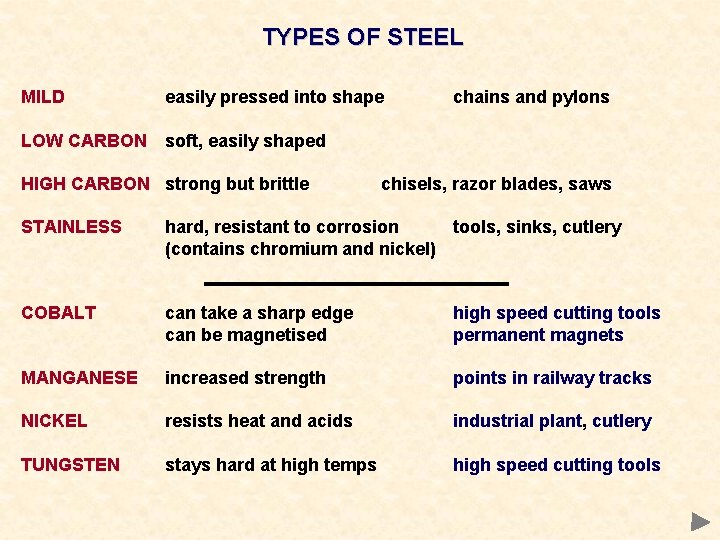
TYPES OF STEEL MILD easily pressed into shape LOW CARBON soft, easily shaped HIGH CARBON strong but brittle chains and pylons chisels, razor blades, saws STAINLESS hard, resistant to corrosion tools, sinks, cutlery (contains chromium and nickel) COBALT can take a sharp edge can be magnetised high speed cutting tools permanent magnets MANGANESE increased strength points in railway tracks NICKEL resists heat and acids industrial plant, cutlery TUNGSTEN stays hard at high temps high speed cutting tools
TITANIUM
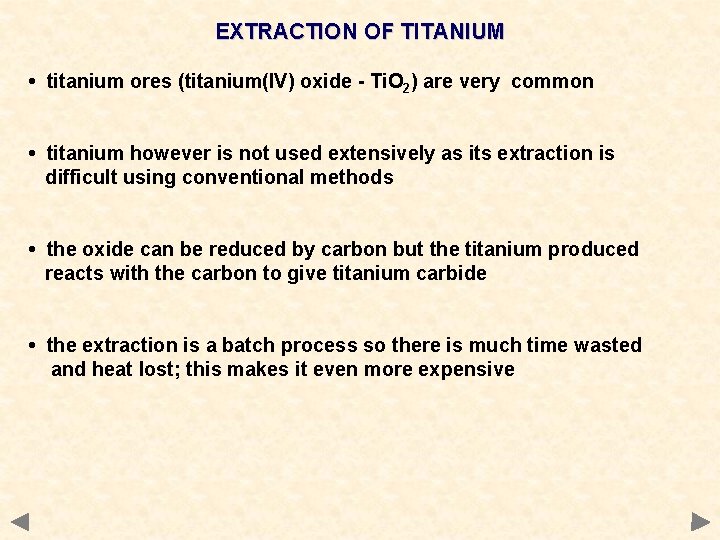
EXTRACTION OF TITANIUM • titanium ores (titanium(IV) oxide - Ti. O 2) are very common • titanium however is not used extensively as its extraction is difficult using conventional methods • the oxide can be reduced by carbon but the titanium produced reacts with the carbon to give titanium carbide • the extraction is a batch process so there is much time wasted and heat lost; this makes it even more expensive
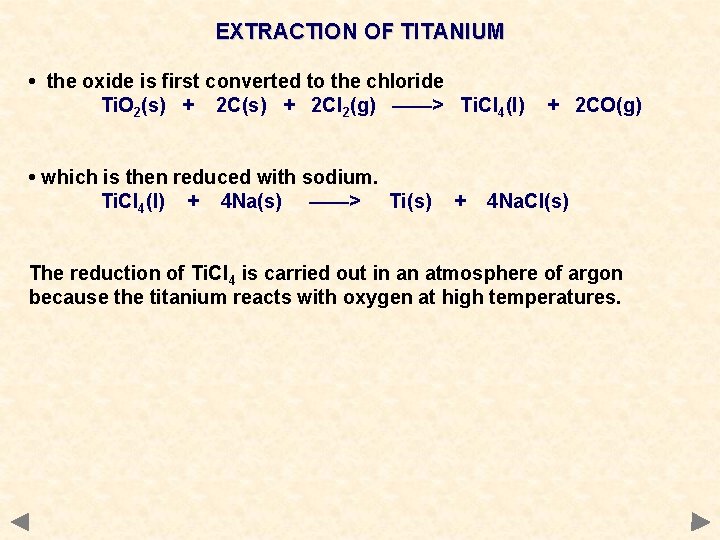
EXTRACTION OF TITANIUM • the oxide is first converted to the chloride Ti. O 2(s) + 2 Cl 2(g) ——> Ti. Cl 4(l) • which is then reduced with sodium. Ti. Cl 4(l) + 4 Na(s) ——> Ti(s) + + 2 CO(g) 4 Na. Cl(s) The reduction of Ti. Cl 4 is carried out in an atmosphere of argon because the titanium reacts with oxygen at high temperatures.
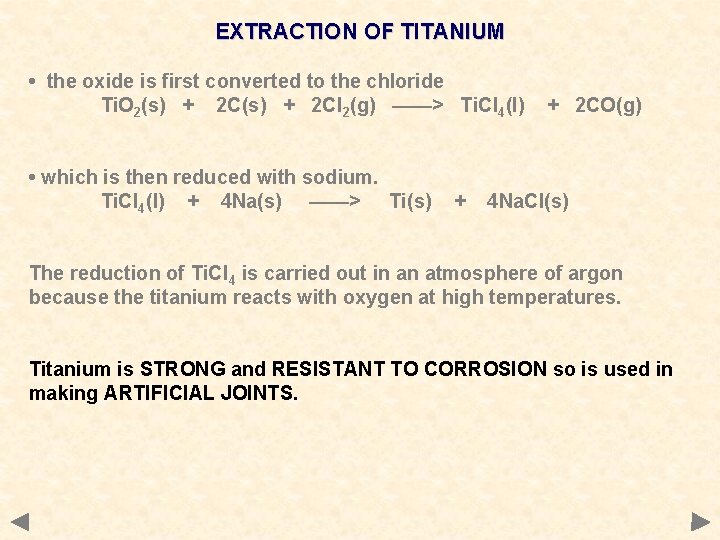
EXTRACTION OF TITANIUM • the oxide is first converted to the chloride Ti. O 2(s) + 2 Cl 2(g) ——> Ti. Cl 4(l) • which is then reduced with sodium. Ti. Cl 4(l) + 4 Na(s) ——> Ti(s) + + 2 CO(g) 4 Na. Cl(s) The reduction of Ti. Cl 4 is carried out in an atmosphere of argon because the titanium reacts with oxygen at high temperatures. Titanium is STRONG and RESISTANT TO CORROSION so is used in making ARTIFICIAL JOINTS.
ALUMINIUM
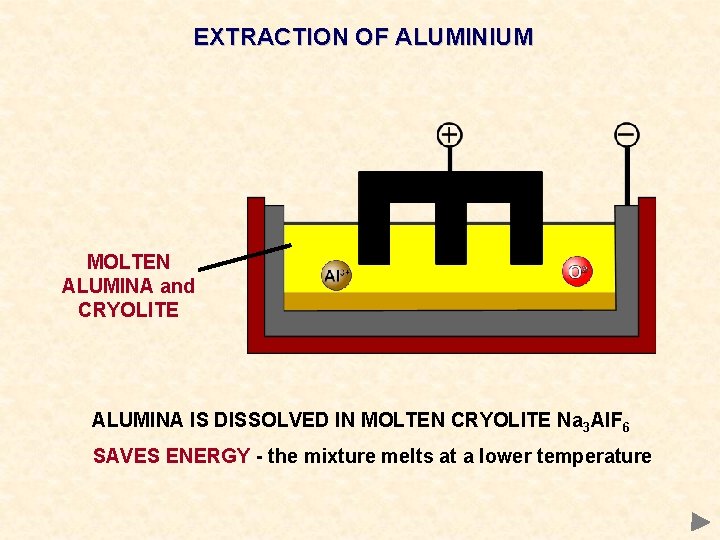
EXTRACTION OF ALUMINIUM Aluminium is above carbon in the series so it cannot be extracted from its ores in the same way as carbon. Electrolysis of molten aluminium ore (alumina) must be used As energy is required to melt the alumina and electrolyse it, a large amount of energy is required.
EXTRACTION OF ALUMINIUM RAW MATERIALS BAUXITE aluminium ore Bauxite contains alumina (Al 2 O 3 aluminium oxide) plus impurities such as iron oxide – it is purified before use.
EXTRACTION OF ALUMINIUM RAW MATERIALS BAUXITE aluminium ore Bauxite contains alumina (Al 2 O 3 aluminium oxide) plus impurities such as iron oxide – it is purified before use. CRYOLITE Aluminium oxide has a very high melting point. Adding cryolite lowers the melting point and saves energy.
EXTRACTION OF ALUMINIUM ELECTROLYSIS Unlike iron, aluminium cannot be extracted using carbon. (Aluminium is above carbon in the reactivity series)
EXTRACTION OF ALUMINIUM ELECTROLYSIS Unlike iron, aluminium cannot be extracted using carbon. (Aluminium is above carbon in the reactivity series) Reactive metals are extracted using electrolysis
EXTRACTION OF ALUMINIUM ELECTROLYSIS Unlike iron, aluminium cannot be extracted using carbon. (Aluminium is above carbon in the reactivity series) Reactive metals are extracted using electrolysis Electrolysis is expensive - it requires a lot of energy… - ore must be molten (have high melting points) - electricity is needed for the electrolysis process
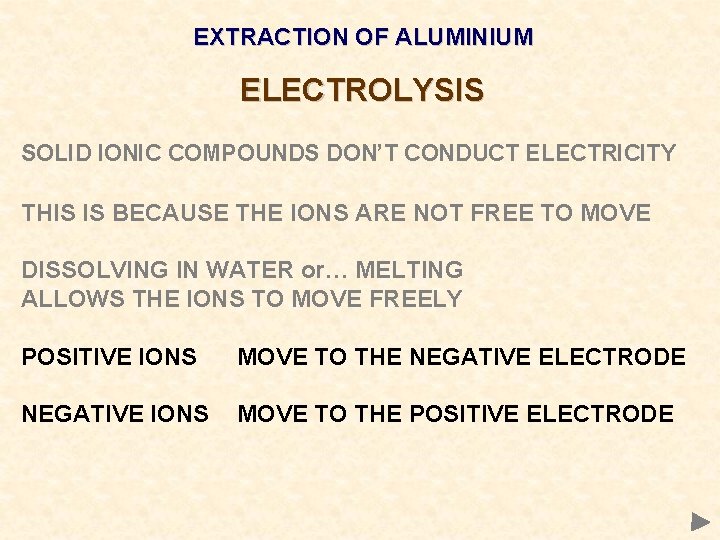
EXTRACTION OF ALUMINIUM ELECTROLYSIS SOLID IONIC COMPOUNDS DON’T CONDUCT ELECTRICITY THIS IS BECAUSE THE IONS ARE NOT FREE TO MOVE
EXTRACTION OF ALUMINIUM ELECTROLYSIS SOLID IONIC COMPOUNDS DON’T CONDUCT ELECTRICITY THIS IS BECAUSE THE IONS ARE NOT FREE TO MOVE DISSOLVING IN WATER or… MELTING ALLOWS THE IONS TO MOVE FREELY
EXTRACTION OF ALUMINIUM ELECTROLYSIS SOLID IONIC COMPOUNDS DON’T CONDUCT ELECTRICITY THIS IS BECAUSE THE IONS ARE NOT FREE TO MOVE DISSOLVING IN WATER or… MELTING ALLOWS THE IONS TO MOVE FREELY POSITIVE IONS MOVE TO THE NEGATIVE ELECTRODE NEGATIVE IONS MOVE TO THE POSITIVE ELECTRODE
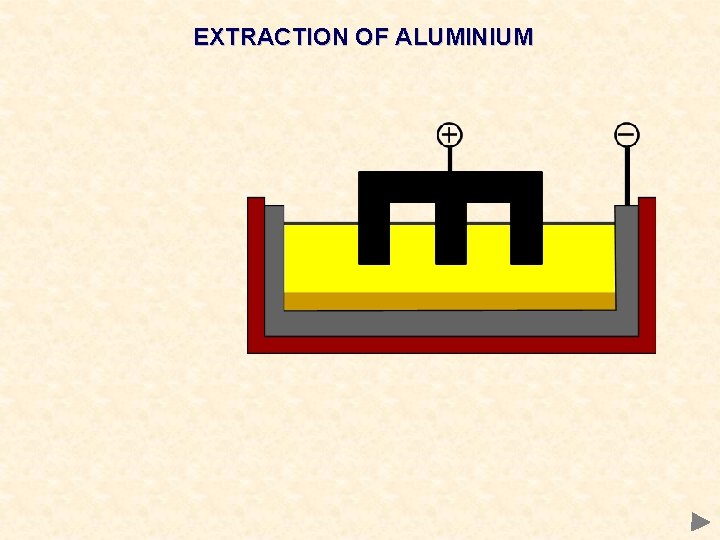
EXTRACTION OF ALUMINIUM
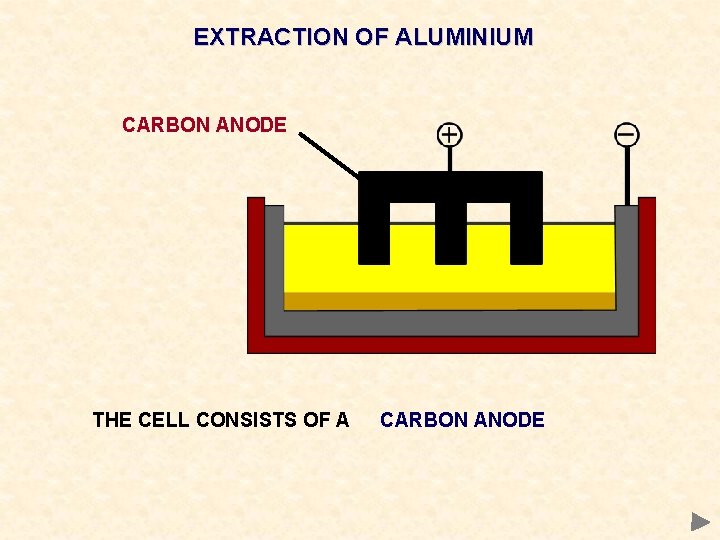
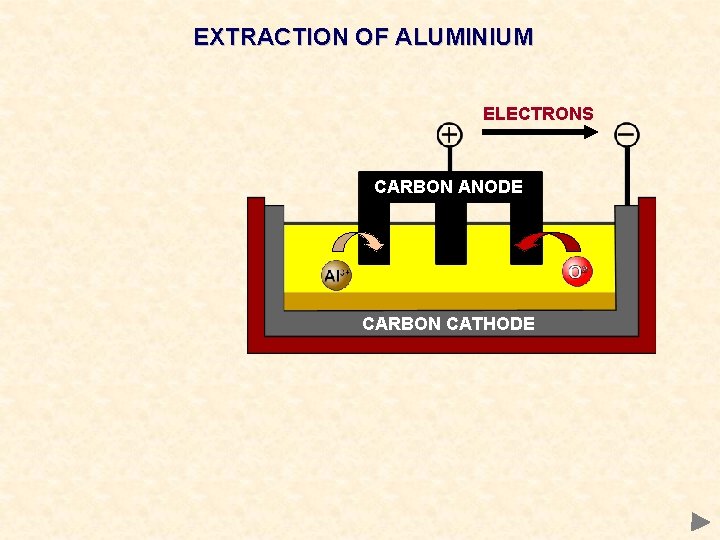
EXTRACTION OF ALUMINIUM CARBON ANODE THE CELL CONSISTS OF A CARBON ANODE
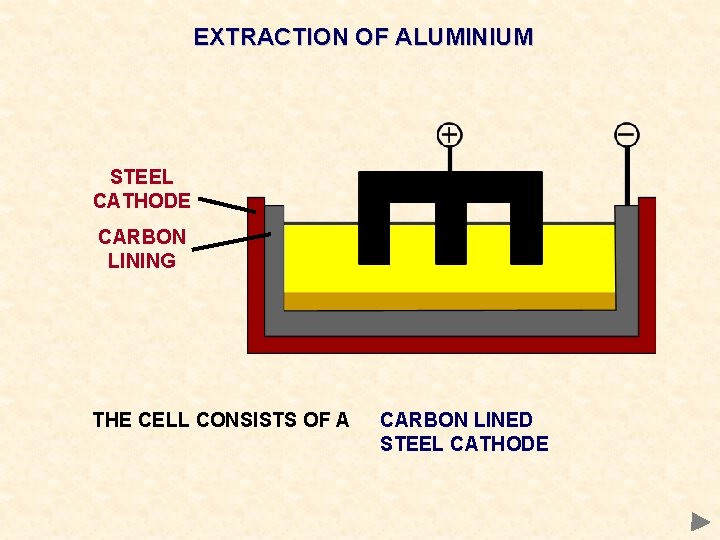
EXTRACTION OF ALUMINIUM STEEL CATHODE CARBON LINING THE CELL CONSISTS OF A CARBON LINED STEEL CATHODE
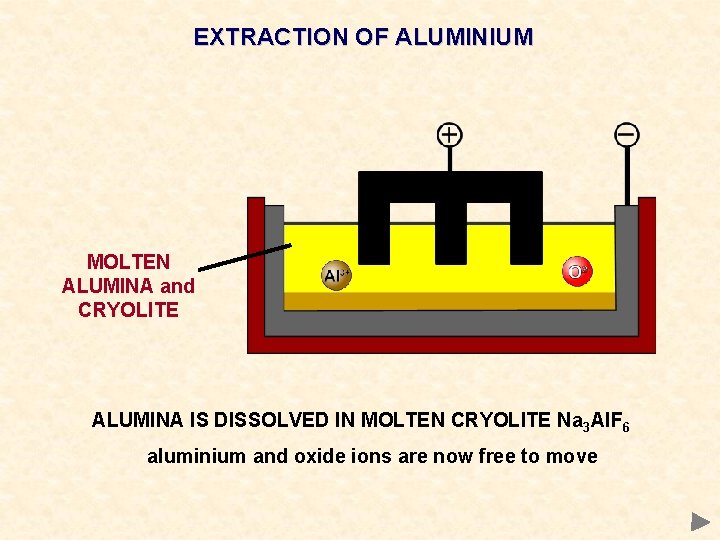
EXTRACTION OF ALUMINIUM MOLTEN ALUMINA and CRYOLITE ALUMINA IS DISSOLVED IN MOLTEN CRYOLITE Na 3 Al. F 6 SAVES ENERGY - the mixture melts at a lower temperature
EXTRACTION OF ALUMINIUM MOLTEN ALUMINA and CRYOLITE ALUMINA IS DISSOLVED IN MOLTEN CRYOLITE Na 3 Al. F 6 aluminium and oxide ions are now free to move
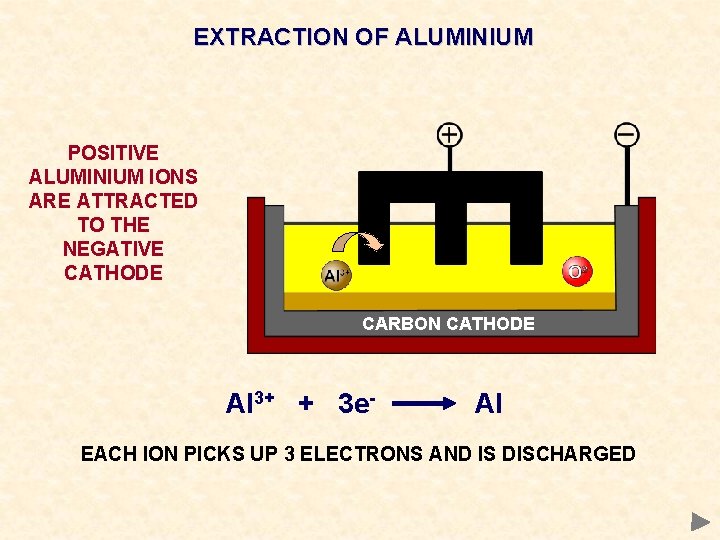
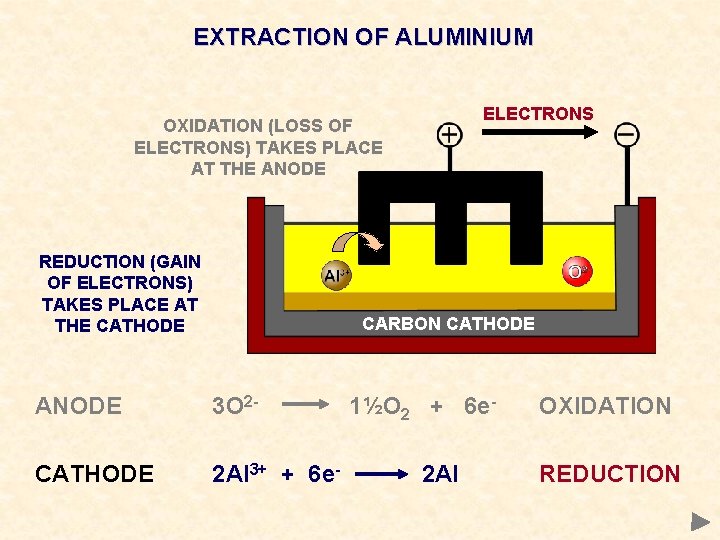
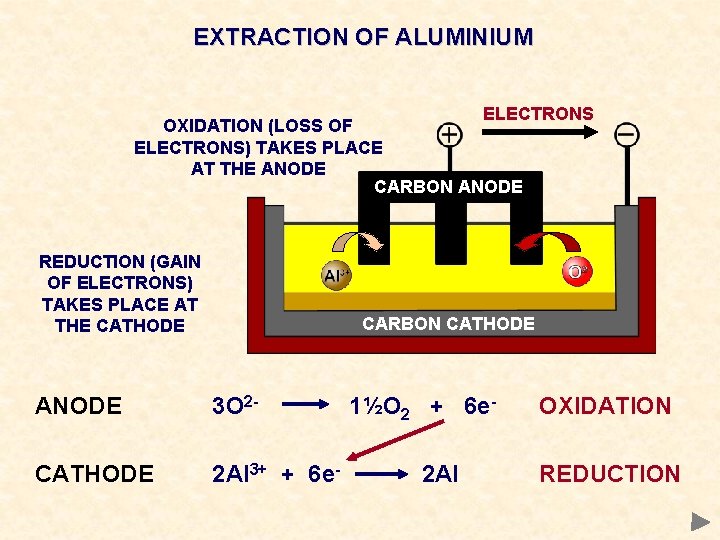
EXTRACTION OF ALUMINIUM POSITIVE ALUMINIUM IONS ARE ATTRACTED TO THE NEGATIVE CATHODE CARBON CATHODE Al 3+ + 3 e- Al EACH ION PICKS UP 3 ELECTRONS AND IS DISCHARGED
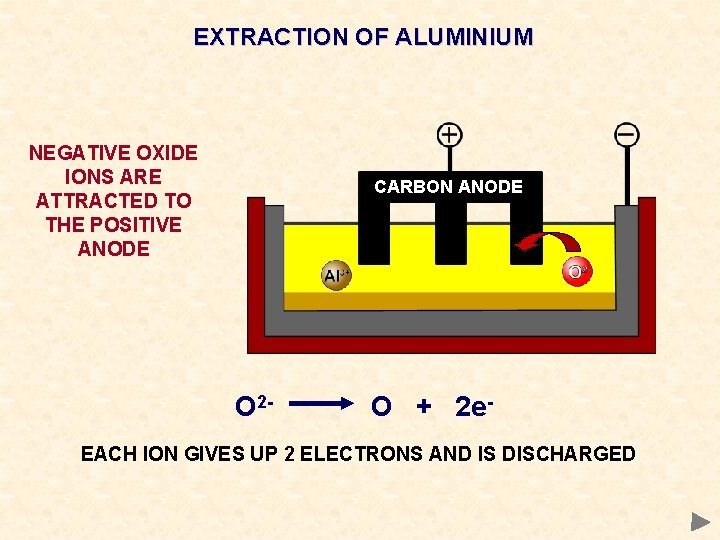
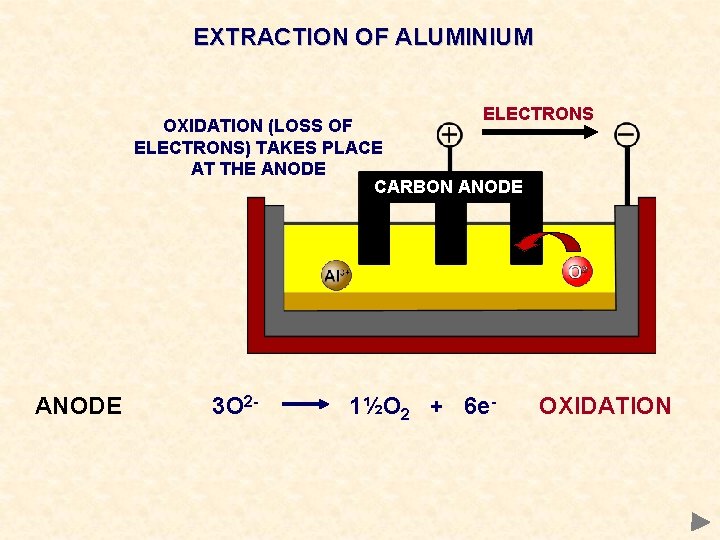
EXTRACTION OF ALUMINIUM NEGATIVE OXIDE IONS ARE ATTRACTED TO THE POSITIVE ANODE CARBON ANODE O 2 - O + 2 e- EACH ION GIVES UP 2 ELECTRONS AND IS DISCHARGED
EXTRACTION OF ALUMINIUM ELECTRONS CARBON ANODE CARBON CATHODE
EXTRACTION OF ALUMINIUM ELECTRONS OXIDATION (LOSS OF ELECTRONS) TAKES PLACE AT THE ANODE CARBON ANODE 3 O 2 - 1½O 2 + 6 e- OXIDATION
EXTRACTION OF ALUMINIUM ELECTRONS OXIDATION (LOSS OF ELECTRONS) TAKES PLACE AT THE ANODE REDUCTION (GAIN OF ELECTRONS) TAKES PLACE AT THE CATHODE CARBON CATHODE ANODE 3 O 2 - CATHODE 2 Al 3+ + 6 e- 1½O 2 + 6 e 2 Al OXIDATION REDUCTION
EXTRACTION OF ALUMINIUM ELECTRONS OXIDATION (LOSS OF ELECTRONS) TAKES PLACE AT THE ANODE CARBON ANODE REDUCTION (GAIN OF ELECTRONS) TAKES PLACE AT THE CATHODE CARBON CATHODE ANODE 3 O 2 - CATHODE 2 Al 3+ + 6 e- 1½O 2 + 6 e 2 Al OXIDATION REDUCTION
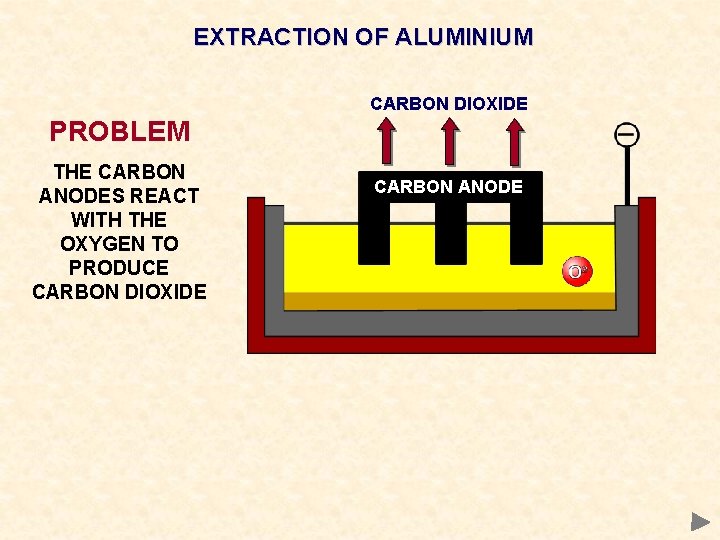
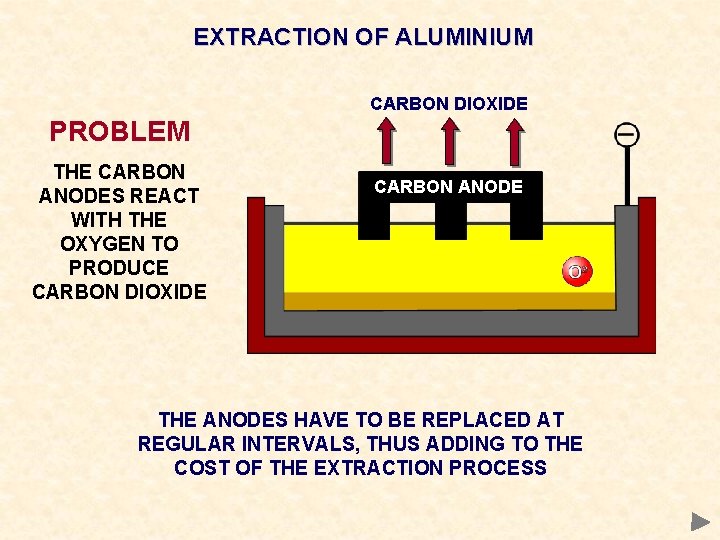
EXTRACTION OF ALUMINIUM CARBON DIOXIDE PROBLEM THE CARBON ANODES REACT WITH THE OXYGEN TO PRODUCE CARBON DIOXIDE CARBON ANODE
EXTRACTION OF ALUMINIUM CARBON DIOXIDE PROBLEM THE CARBON ANODES REACT WITH THE OXYGEN TO PRODUCE CARBON DIOXIDE CARBON ANODE THE ANODES HAVE TO BE REPLACED AT REGULAR INTERVALS, THUS ADDING TO THE COST OF THE EXTRACTION PROCESS
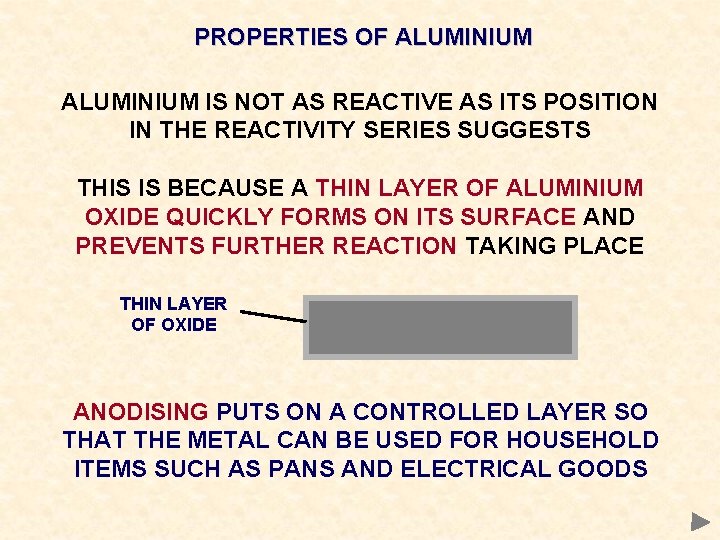
PROPERTIES OF ALUMINIUM IS NOT AS REACTIVE AS ITS POSITION IN THE REACTIVITY SERIES SUGGESTS THIS IS BECAUSE A THIN LAYER OF ALUMINIUM OXIDE QUICKLY FORMS ON ITS SURFACE AND PREVENTS FURTHER REACTION TAKING PLACE THIN LAYER OF OXIDE ANODISING PUTS ON A CONTROLLED LAYER SO THAT THE METAL CAN BE USED FOR HOUSEHOLD ITEMS SUCH AS PANS AND ELECTRICAL GOODS
CHROMIUM
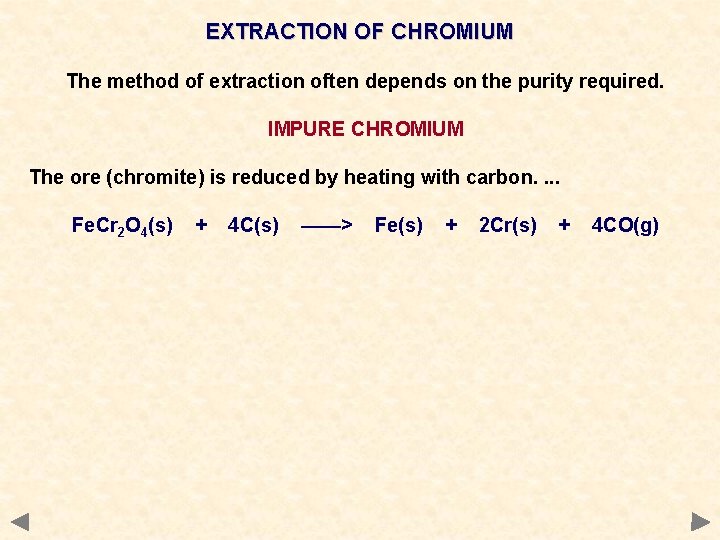
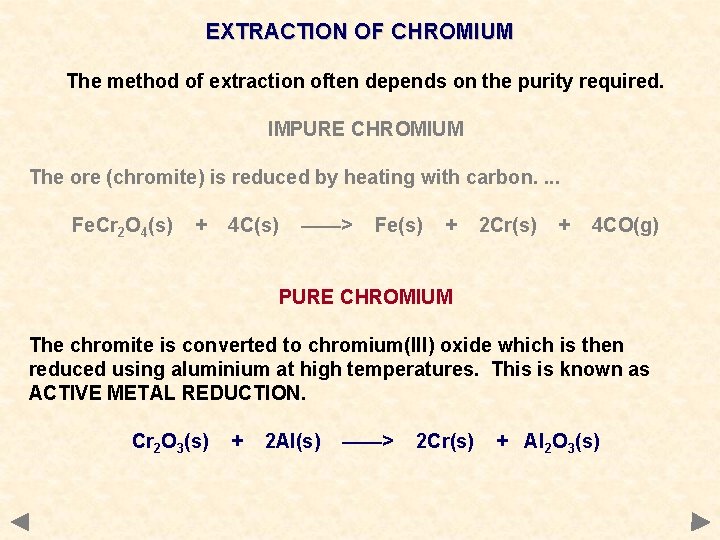
EXTRACTION OF CHROMIUM The method of extraction often depends on the purity required. IMPURE CHROMIUM The ore (chromite) is reduced by heating with carbon. . Fe. Cr 2 O 4(s) + 4 C(s) ——> Fe(s) + 2 Cr(s) + 4 CO(g)
EXTRACTION OF CHROMIUM The method of extraction often depends on the purity required. IMPURE CHROMIUM The ore (chromite) is reduced by heating with carbon. . Fe. Cr 2 O 4(s) + 4 C(s) ——> Fe(s) + 2 Cr(s) + 4 CO(g) PURE CHROMIUM The chromite is converted to chromium(III) oxide which is then reduced using aluminium at high temperatures. This is known as ACTIVE METAL REDUCTION. Cr 2 O 3(s) + 2 Al(s) ——> 2 Cr(s) + Al 2 O 3(s)
SODIUM
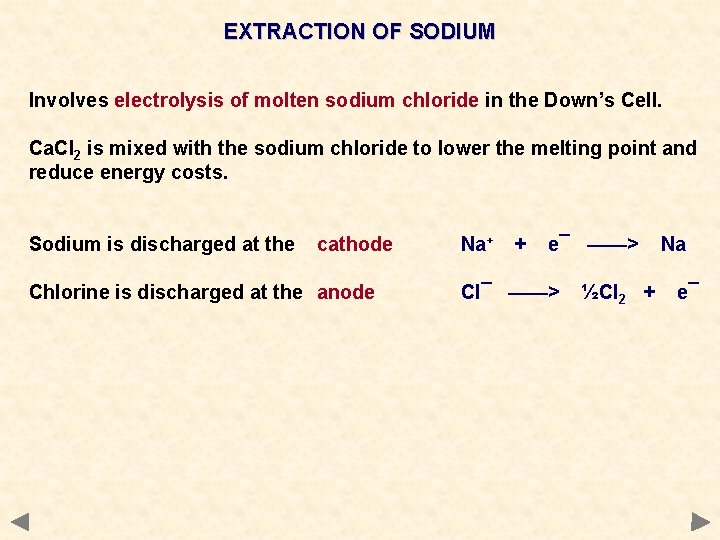
EXTRACTION OF SODIUM Involves electrolysis of molten sodium chloride in the Down’s Cell. Ca. Cl 2 is mixed with the sodium chloride to lower the melting point and reduce energy costs. Sodium is discharged at the cathode Chlorine is discharged at the anode Na+ + e¯ ——> Cl¯ ——> ½Cl 2 + Na e¯
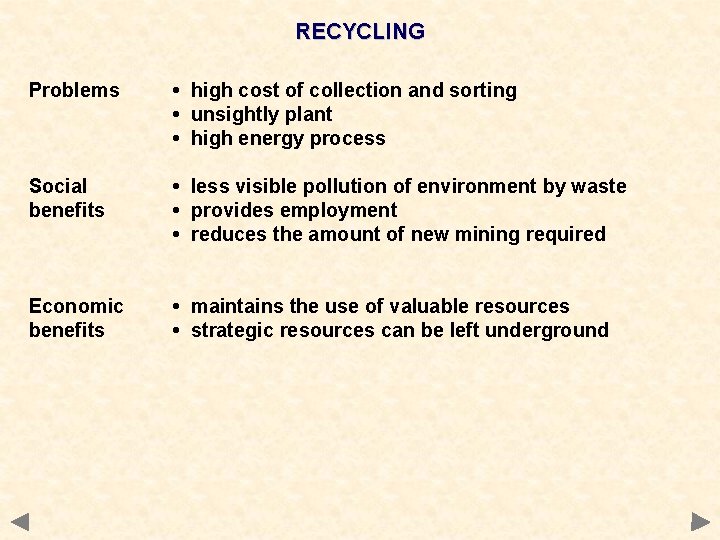
RECYCLING Problems • high cost of collection and sorting • unsightly plant • high energy process Social benefits • less visible pollution of environment by waste • provides employment • reduces the amount of new mining required Economic benefits • maintains the use of valuable resources • strategic resources can be left underground
EXTRACTION OF METALS The End © 2006 JONATHAN HOPTON & KNOCKHARDY PUBLISHING