
Extracting Recipes from Chemical Academic Papers Lei Luo
- Slides: 25
Extracting Recipes from Chemical Academic Papers Lei Luo
Extracting Recipes from Chemical Academic Papers • Chemicals Extraction – Tools – Results Comparison – Future Work • Recipes Extraction – Sample Results – Future Work
Chemicals Extraction • Tools – Brat – Chem. Tagger – Chem. Data. Extractor
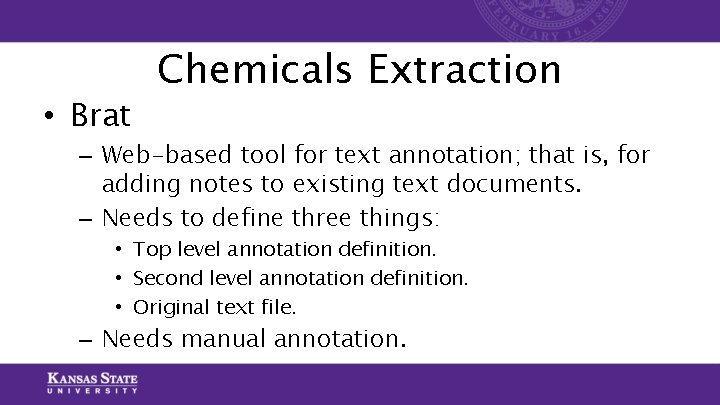
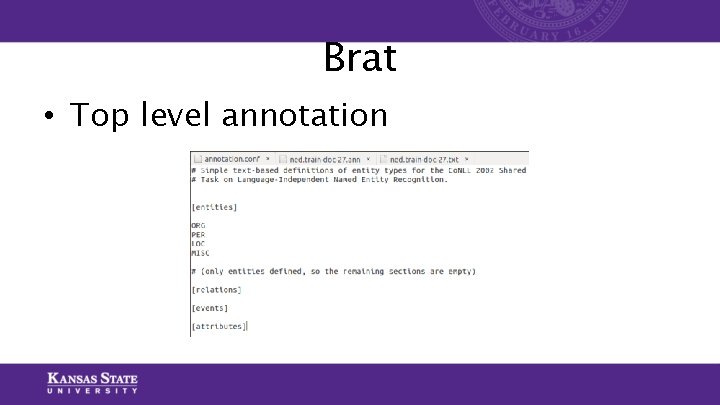
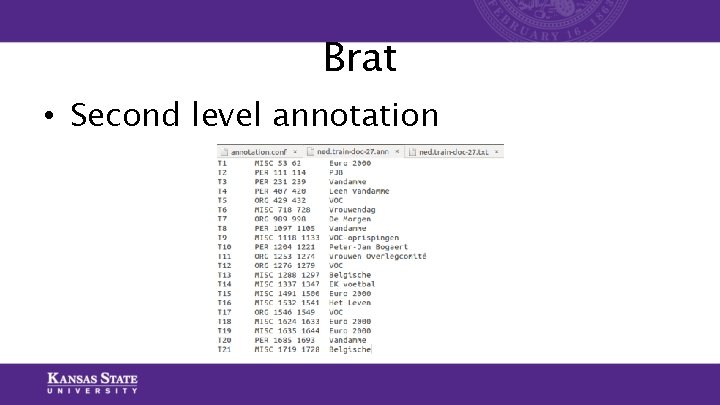
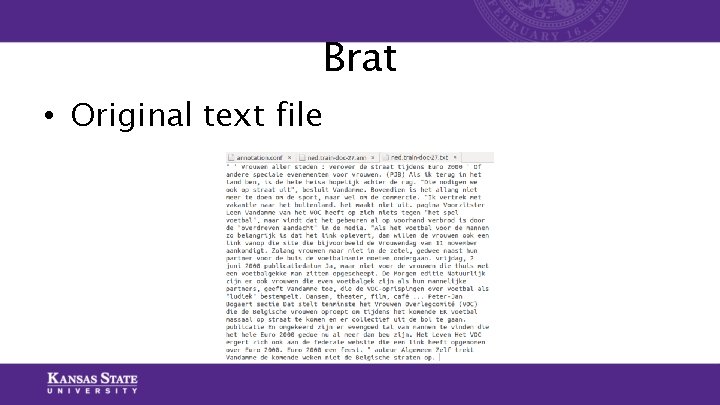
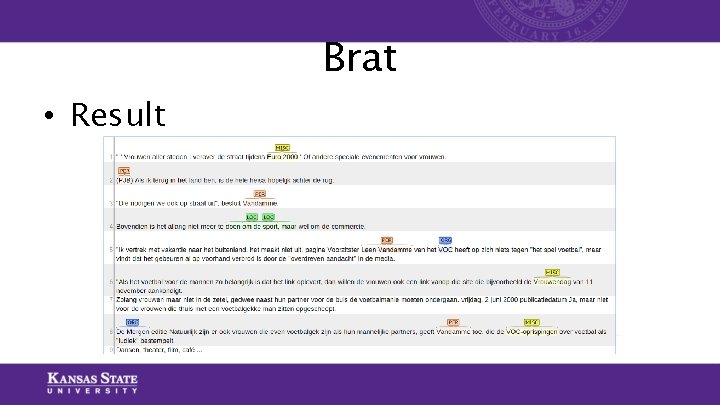
• Brat Chemicals Extraction – Web-based tool for text annotation; that is, for adding notes to existing text documents. – Needs to define three things: • Top level annotation definition. • Second level annotation definition. • Original text file. – Needs manual annotation.
Brat • Top level annotation
Brat • Second level annotation
Brat • Original text file
Brat • Result
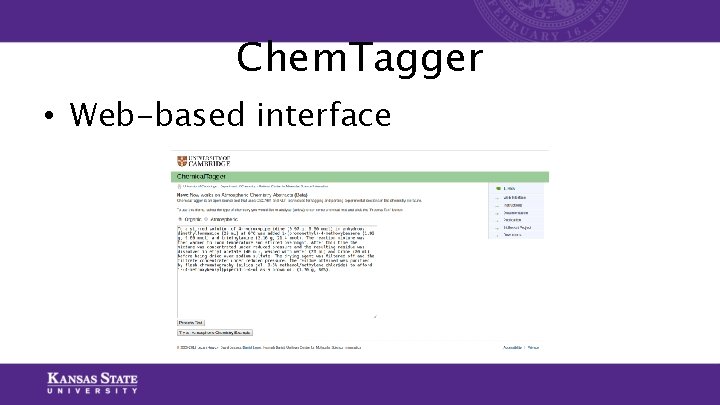
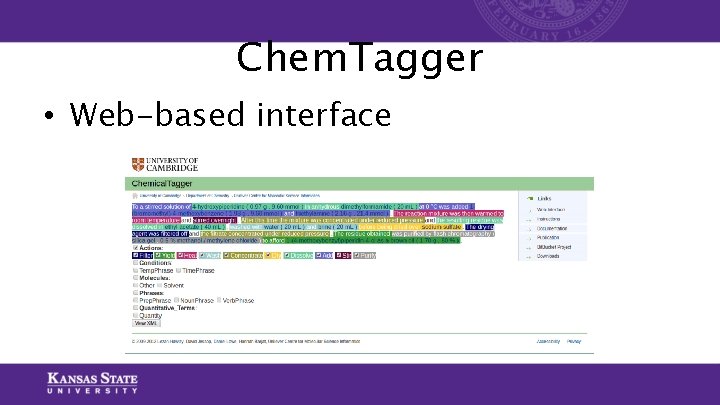
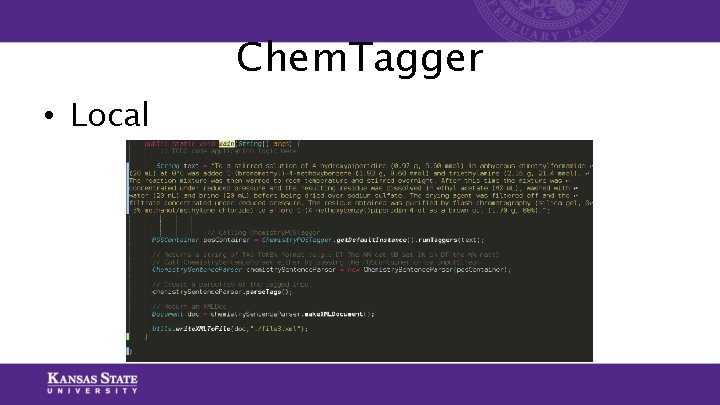
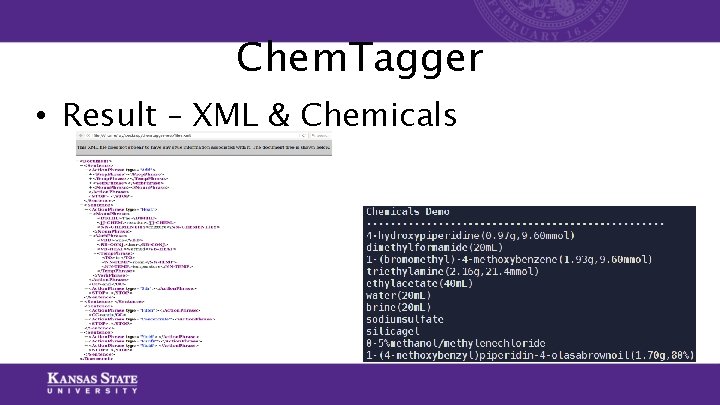
Chemicals Extraction • Chem. Tagger – Phrase-based semantic NLP tool for parsing the language of chemical experiments. – Takes a string as input and produces an XML document as output. – Uses a combination of OSCAR 4, domain-specific regex and English taggers to identify parts-ofspeech.
Chem. Tagger • Web-based interface
Chem. Tagger • Web-based interface
Chem. Tagger • Local
Chem. Tagger • Result – XML & Chemicals
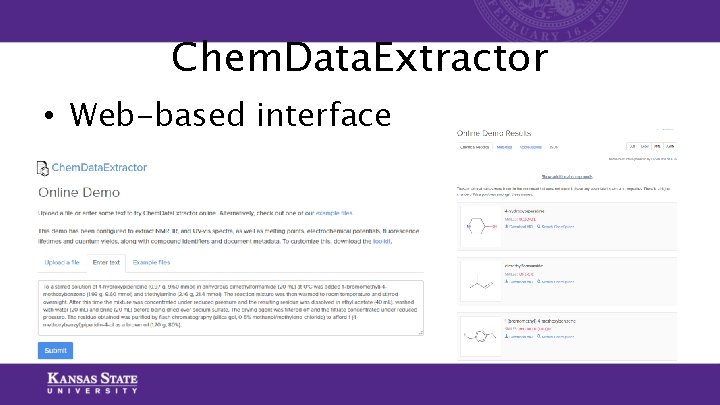
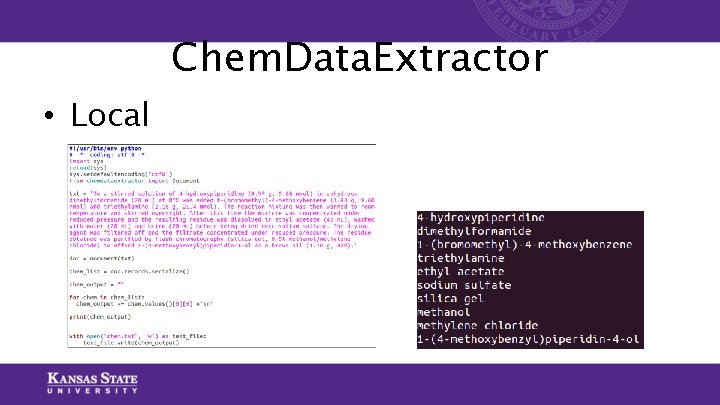
Chemicals Extraction • Chem. Data. Extractor – Able to automatically extract chemical names, properties, and spectra from scientific papers. – Uses machine learning, custom dictionaries, and rule-based parsing grammars. – Able to resolve data interdependencies. – Extracts data from tables.
Chem. Data. Extractor • Web-based interface
Chem. Data. Extractor • Local
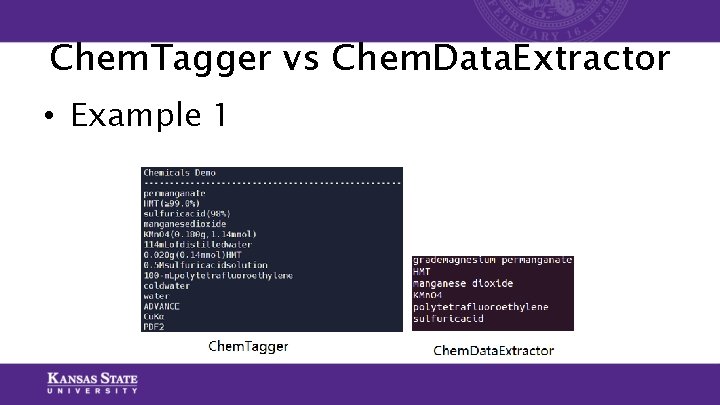
Chem. Tagger vs Chem. Data. Extractor • Example 1
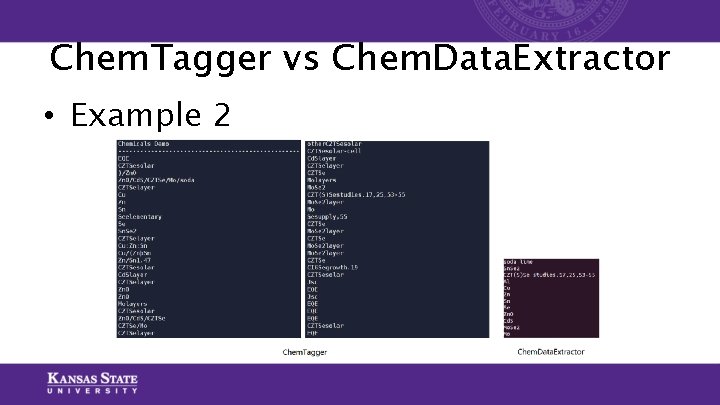
Chem. Tagger vs Chem. Data. Extractor • Example 2
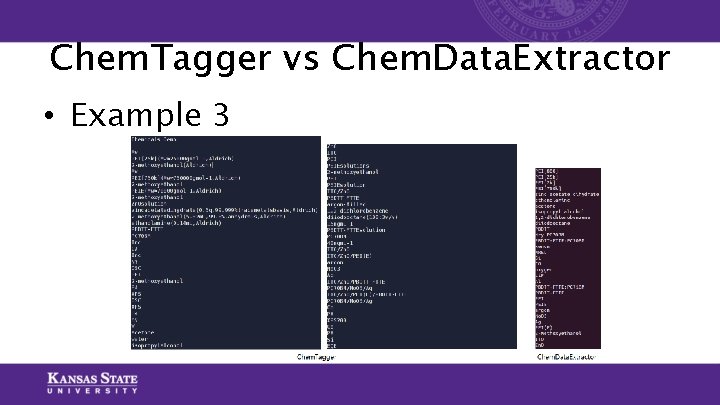
Chem. Tagger vs Chem. Data. Extractor • Example 3
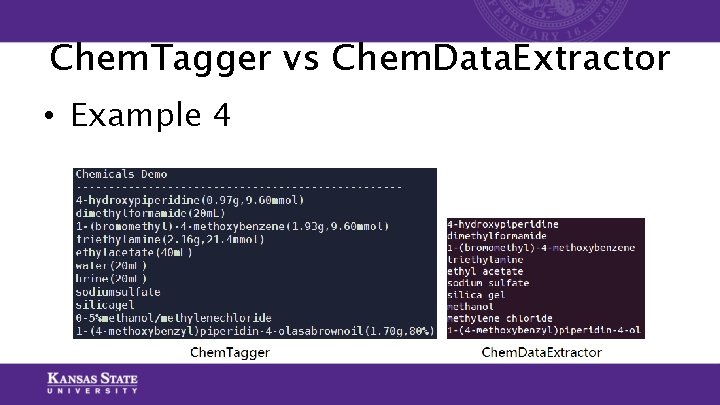
Chem. Tagger vs Chem. Data. Extractor • Example 4
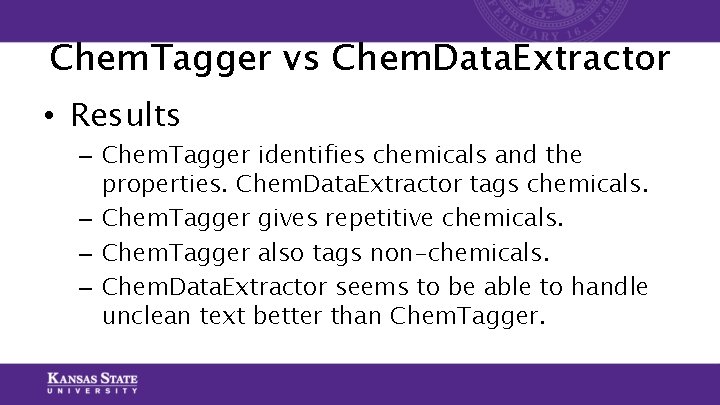
Chem. Tagger vs Chem. Data. Extractor • Results – Chem. Tagger identifies chemicals and the properties. Chem. Data. Extractor tags chemicals. – Chem. Tagger gives repetitive chemicals. – Chem. Tagger also tags non-chemicals. – Chem. Data. Extractor seems to be able to handle unclean text better than Chem. Tagger.
Chemicals Extraction • Near Future Work – Clean the results and combine. – Chemical entities verification. – Accuracy assessment.
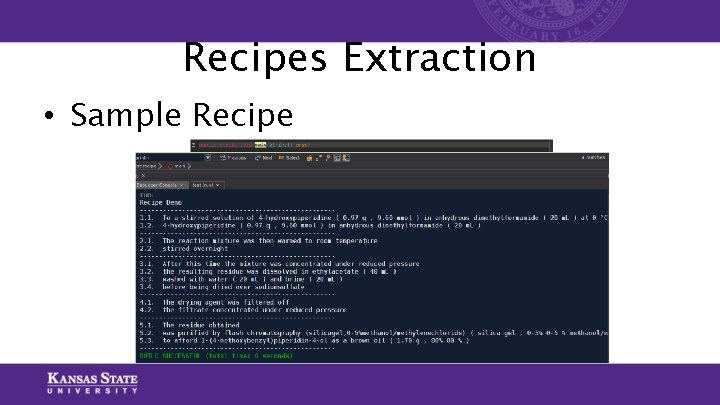
Recipes Extraction • Sample Recipe
Recipes Extraction • Future Work – More literature review. – From a large number of papers we can get many different recipes for the making the same chemical. – For each paper we can extract chemicals and synthesis parameters.
Recipes Extraction • Future Work – Build a database for chemicals. – Use data mining to see under which condition the chemical is more likely to be produced. – use machine learning models by providing examples of synthesis parameters and synthesis outcomes. Then, make prediction.