
Extracting Essential Features of Biological Networks Natalie Arkus

Extracting Essential Features of Biological Networks Natalie Arkus, Michael P. Brenner School of Engineering and Applied Sciences Harvard University
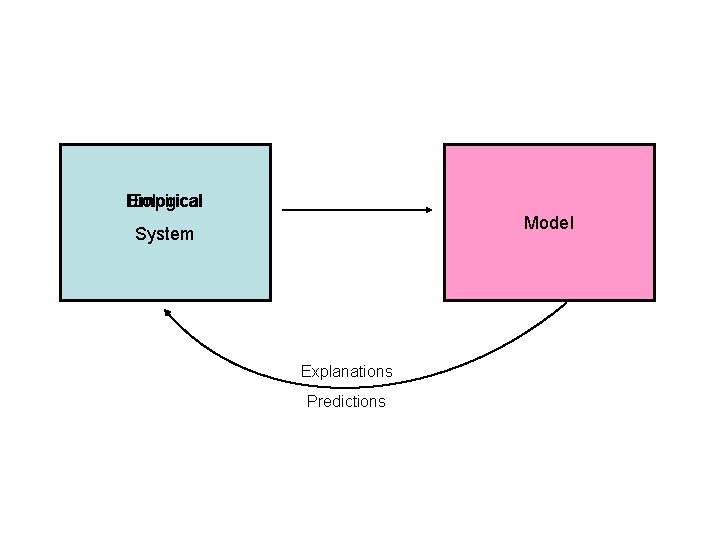
Biological Empirical Model System Explanations Predictions
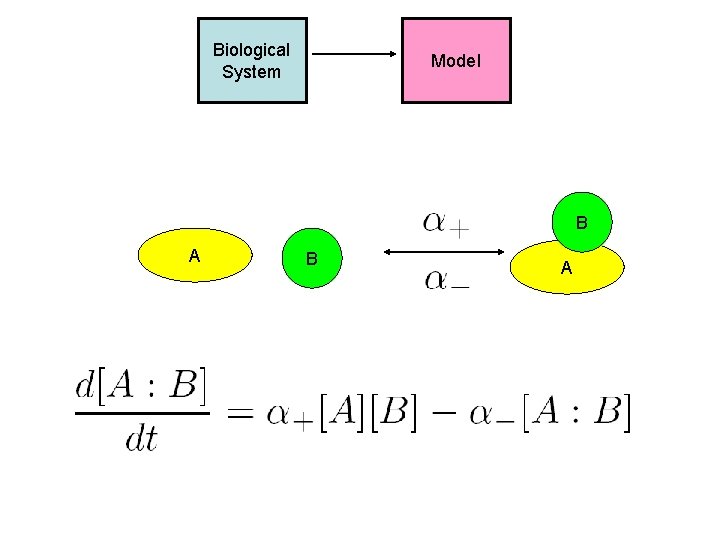
Biological System Model B A
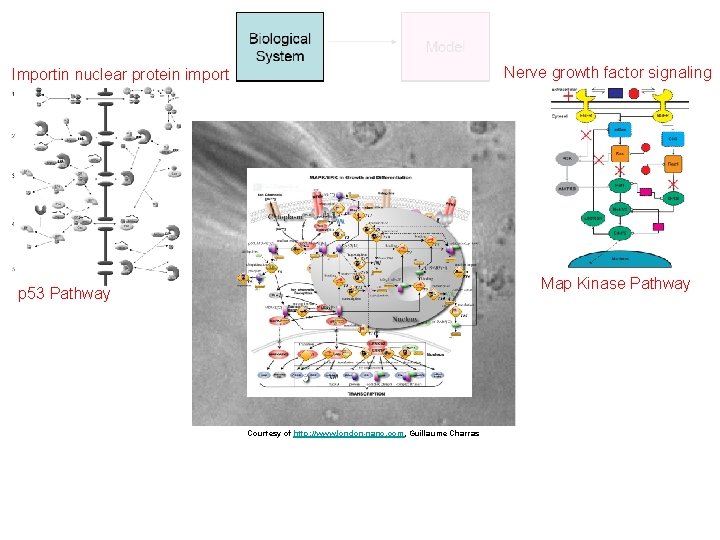
Nerve growth factor signaling Importin nuclear protein import Map Kinase Pathway p 53 Pathway Courtesy of http: //www. london-nano. com, Guillaume Charras

Biological System Model B A
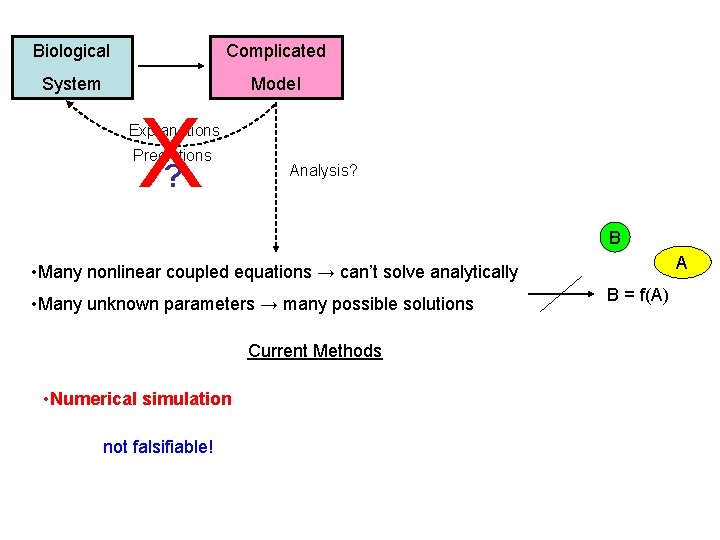
Biological Complicated System Model X Explanations Predictions ? Analysis? B A • Many nonlinear coupled equations → can’t solve analytically • Many unknown parameters → many possible solutions Current Methods • Numerical simulation not falsifiable! B = f(A)
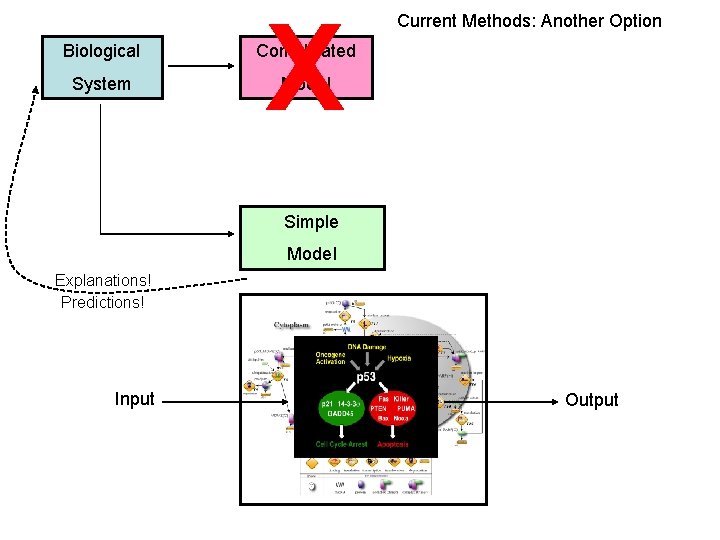
X Biological Complicated System Model Current Methods: Another Option Simple Model Explanations! Predictions! Input Output
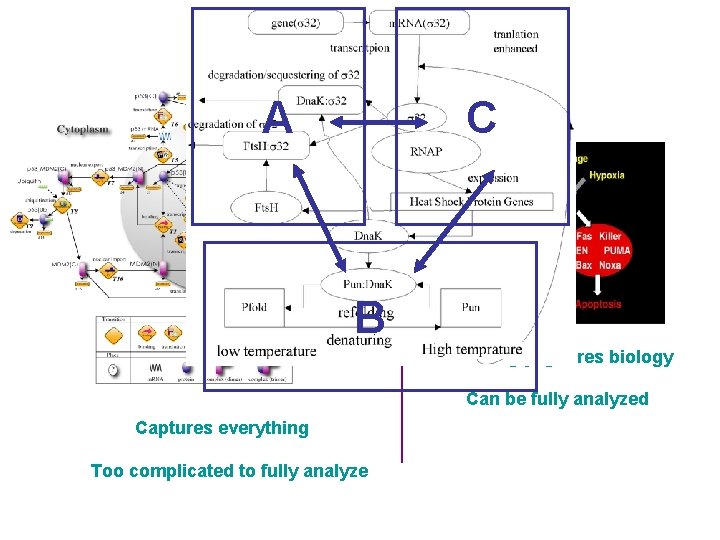
A C B Knowingly ignores biology Can be fully analyzed Captures everything Too complicated to fully analyze
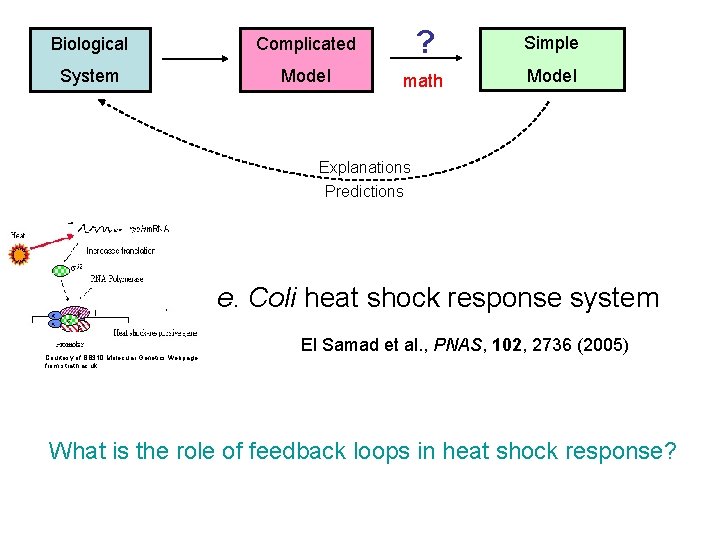
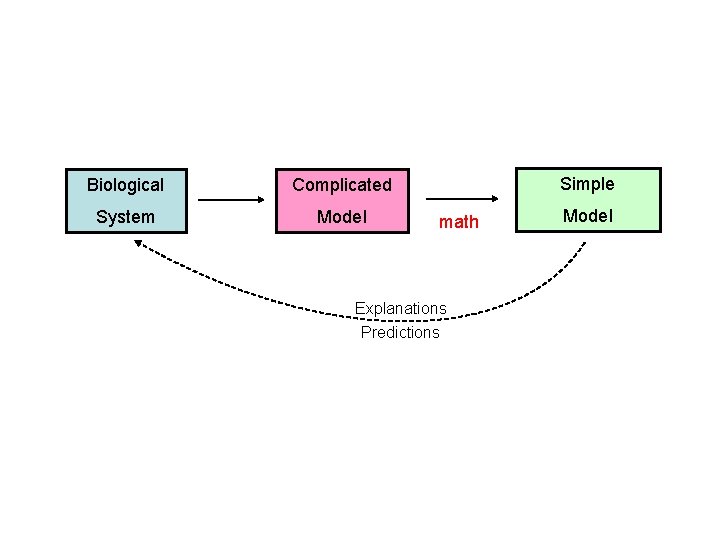
Biological Complicated ? Simple System Model math Model Explanations Predictions e. Coli heat shock response system Courtesy of BB 310 Molecular Genetics Webpage from strath. ac. uk El Samad et al. , PNAS, 102, 2736 (2005) What is the role of feedback loops in heat shock response?
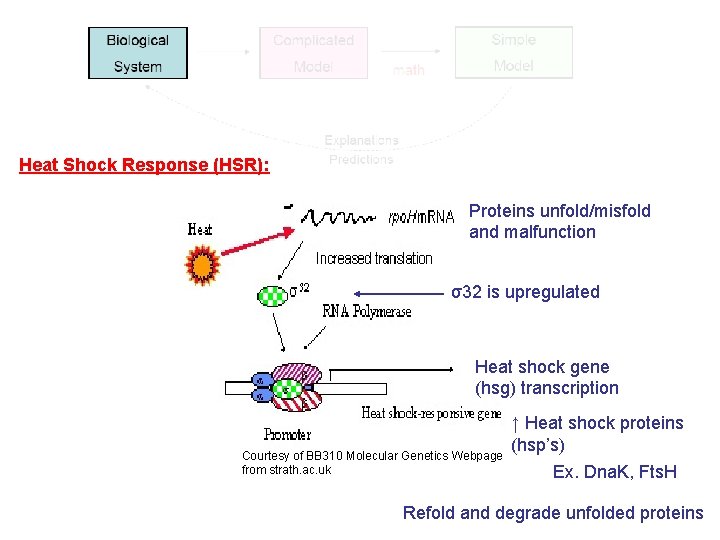
Heat Shock Response (HSR): Proteins unfold/misfold and malfunction σ32 is upregulated Heat shock gene (hsg) transcription Courtesy of BB 310 Molecular Genetics Webpage from strath. ac. uk ↑ Heat shock proteins (hsp’s) Ex. Dna. K, Fts. H Refold and degrade unfolded proteins
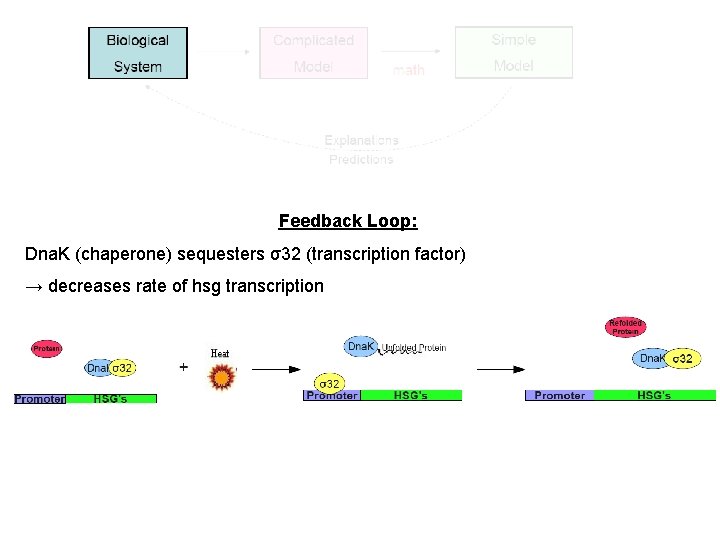
Feedback Loop: Dna. K (chaperone) sequesters σ32 (transcription factor) → decreases rate of hsg transcription
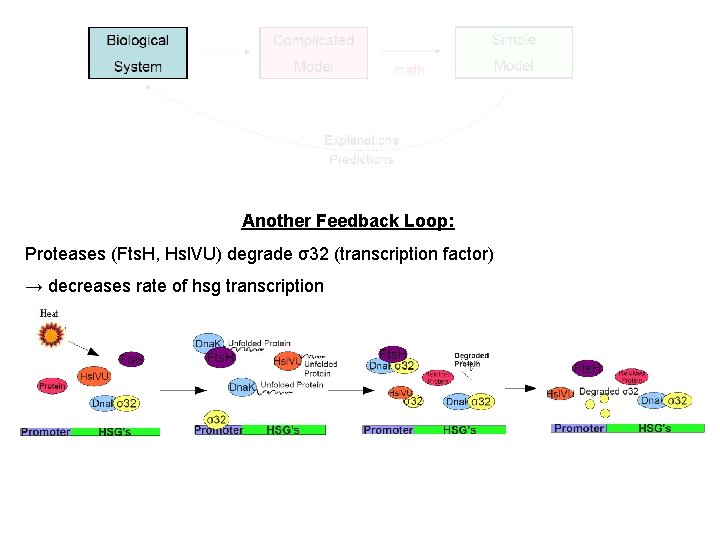
Another Feedback Loop: Proteases (Fts. H, Hsl. VU) degrade σ32 (transcription factor) → decreases rate of hsg transcription
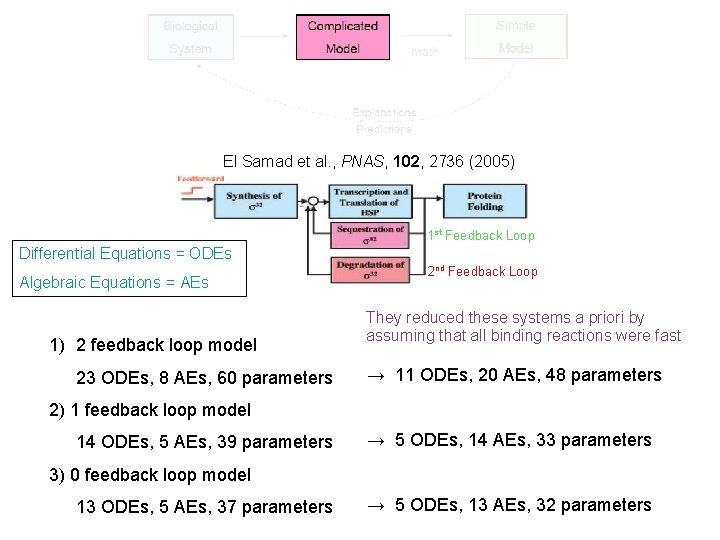
El Samad et al. , PNAS, 102, 2736 (2005) 1 st Feedback Loop Differential Equations = ODEs Algebraic Equations = AEs 1) 2 feedback loop model 23 ODEs, 8 AEs, 60 parameters 2 nd Feedback Loop They reduced these systems a priori by assuming that all binding reactions were fast → 11 ODEs, 20 AEs, 48 parameters 2) 1 feedback loop model 14 ODEs, 5 AEs, 39 parameters → 5 ODEs, 14 AEs, 33 parameters 3) 0 feedback loop model 13 ODEs, 5 AEs, 37 parameters → 5 ODEs, 13 AEs, 32 parameters
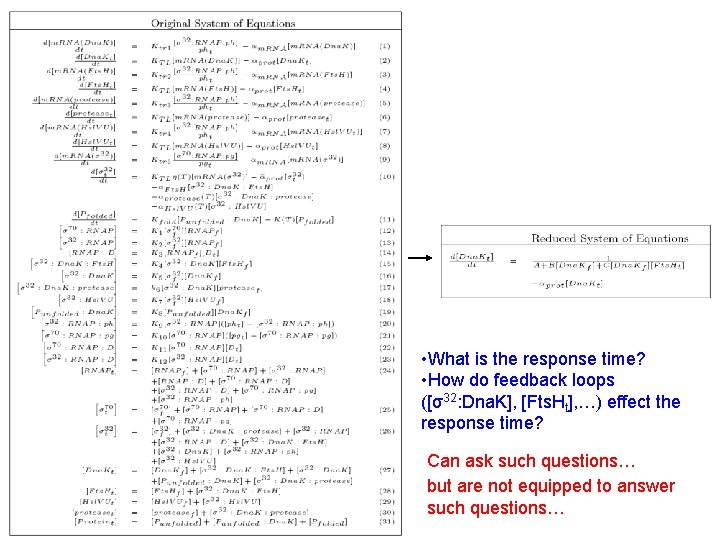
• What is the response time? • How do feedback loops ([σ32: Dna. K], [Fts. Ht], …) effect the response time? Can ask such questions… but are not equipped to answer such questions…
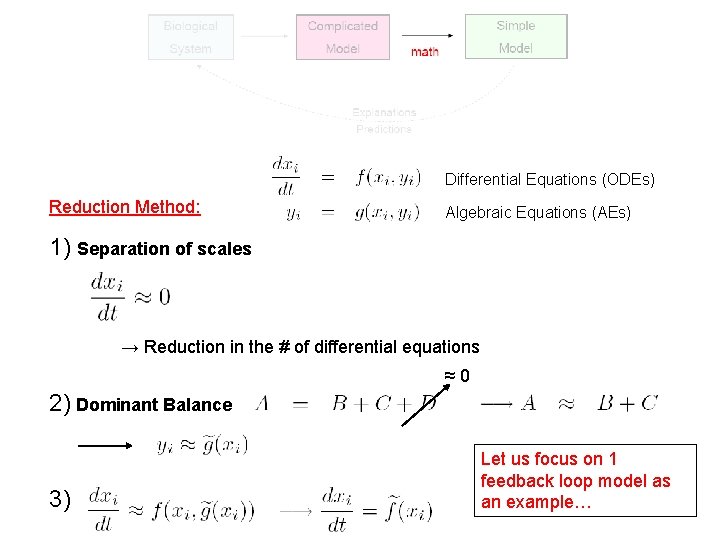
Differential Equations (ODEs) Reduction Method: Algebraic Equations (AEs) 1) Separation of scales → Reduction in the # of differential equations ≈0 2) Dominant Balance 3) Let us focus on 1 feedback loop model as an example…
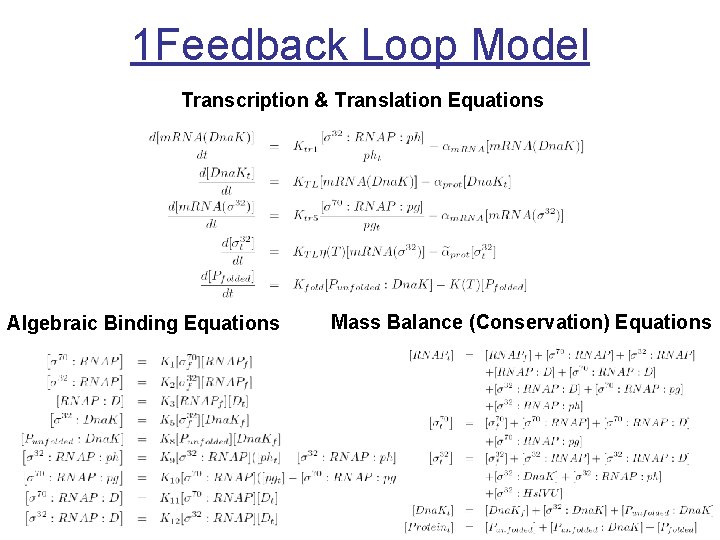
1 Feedback Loop Model Transcription & Translation Equations Algebraic Binding Equations Mass Balance (Conservation) Equations
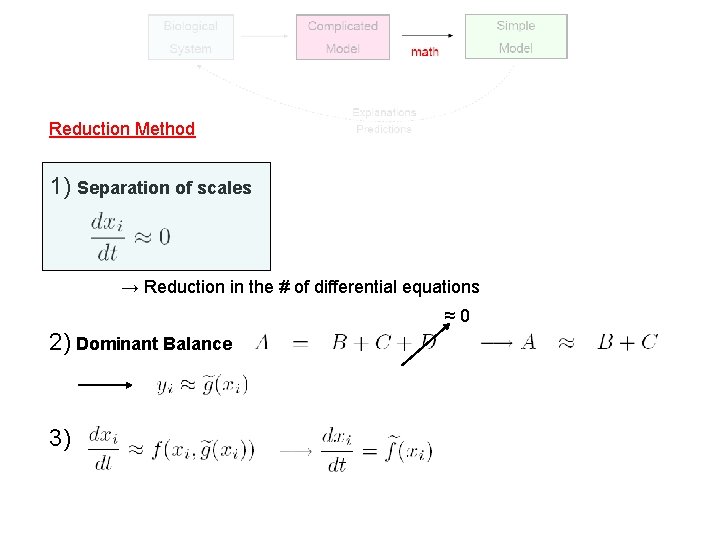
Reduction Method 1) Separation of scales → Reduction in the # of differential equations ≈0 2) Dominant Balance 3)
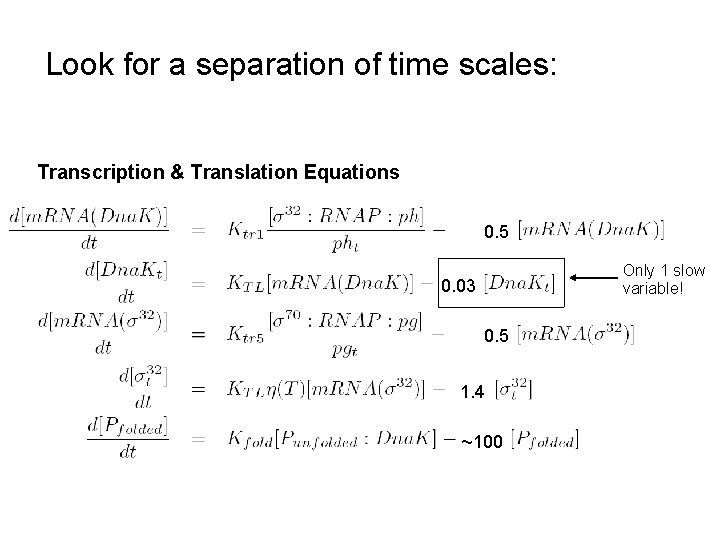
Look for a separation of time scales: Transcription & Translation Equations 0. 5 Only 1 slow variable! 0. 03 0. 5 1. 4 ~100
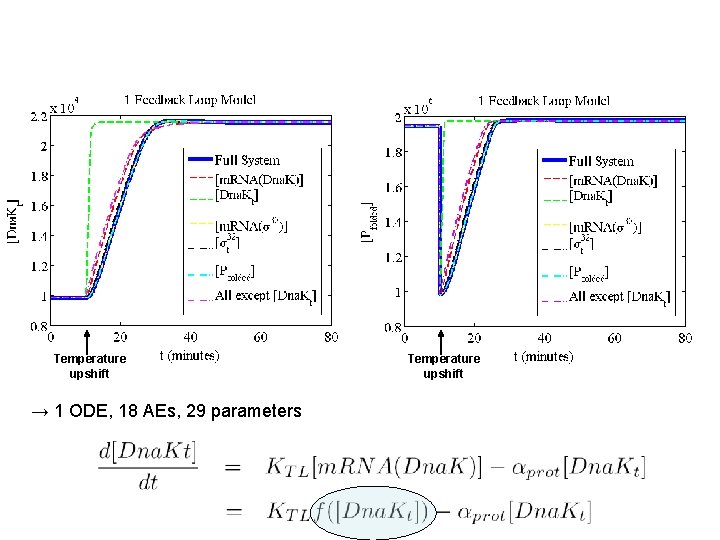
Temperature upshift → 1 ODE, 18 AEs, 29 parameters Temperature upshift
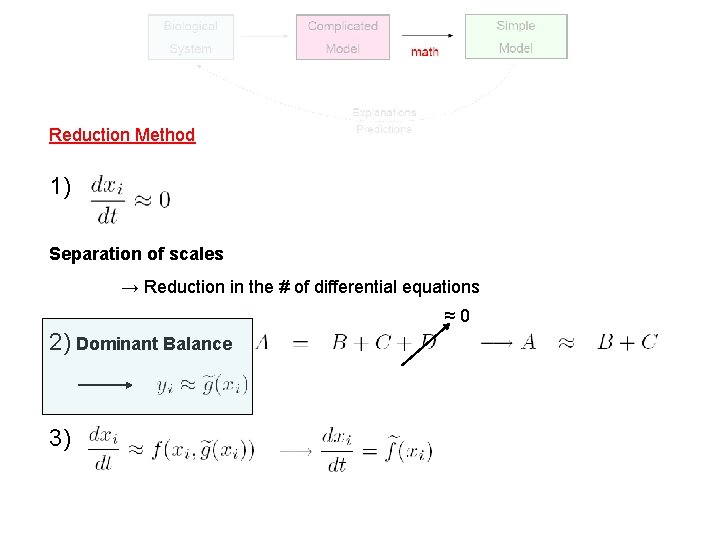
Reduction Method 1) Separation of scales → Reduction in the # of differential equations ≈0 2) Dominant Balance 3)
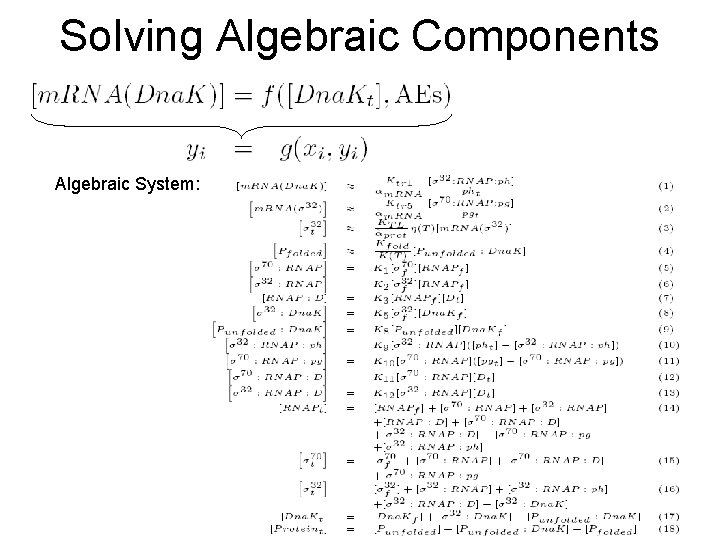
Solving Algebraic Components Algebraic System:
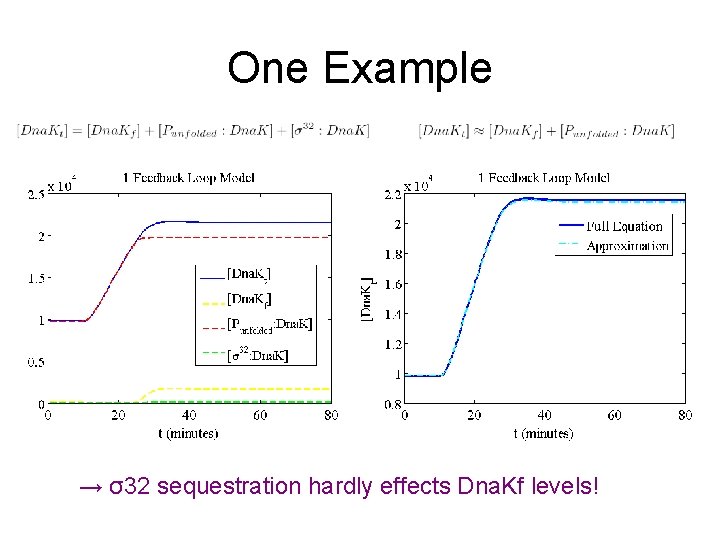
One Example → σ32 sequestration hardly effects Dna. Kf levels!

X X
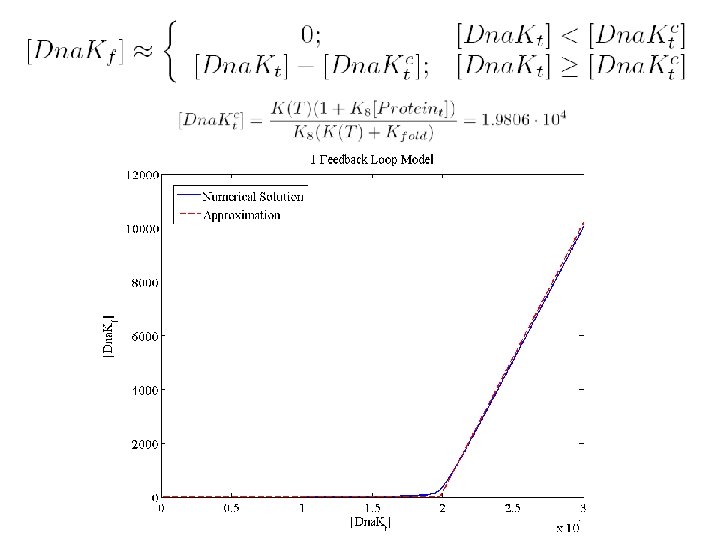
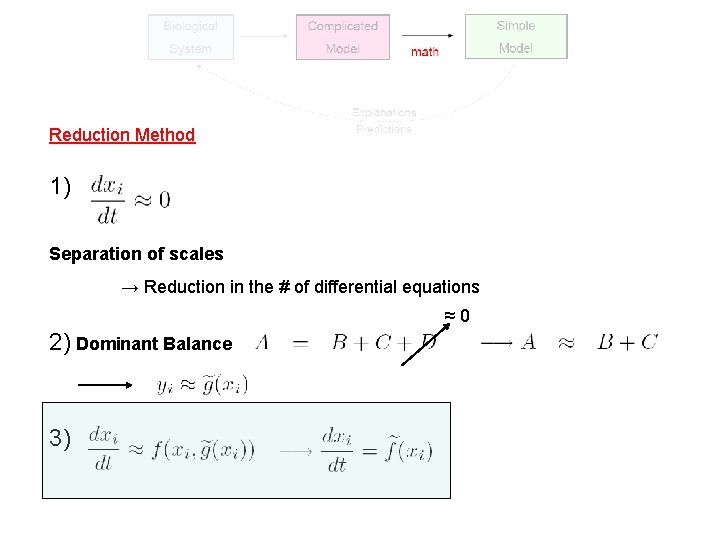
Reduction Method 1) Separation of scales → Reduction in the # of differential equations ≈0 2) Dominant Balance 3)
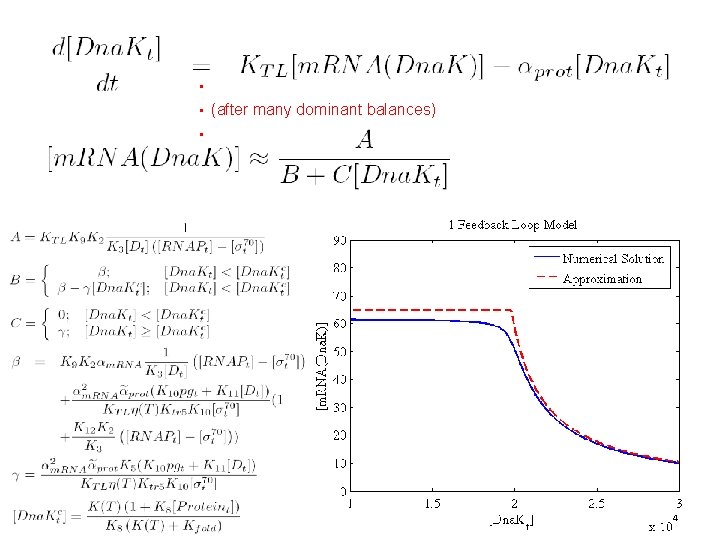
. . (after many dominant balances).
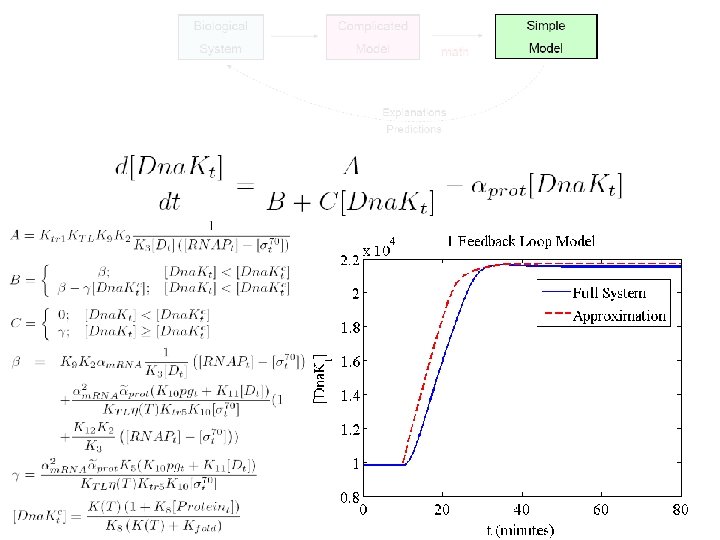
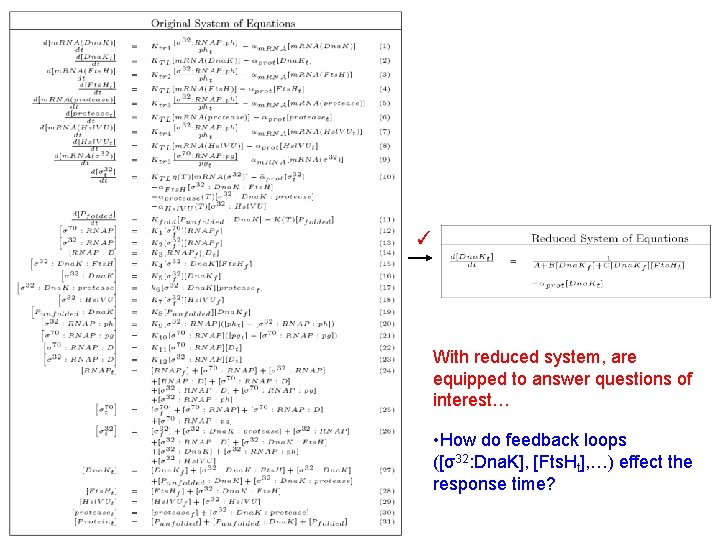
✓ With reduced system, are equipped to answer questions of interest… • How do feedback loops ([σ32: Dna. K], [Fts. Ht], …) effect the response time?
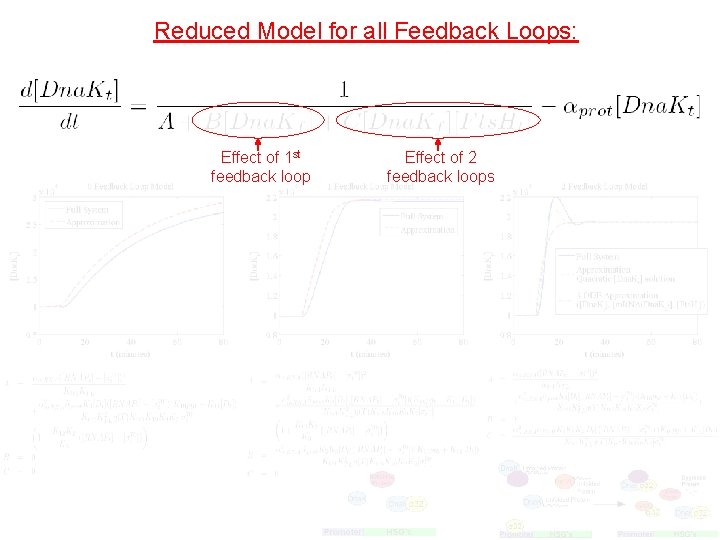
Reduced Model for all Feedback Loops: Effect of 1 st feedback loop Effect of 2 feedback loops
Biological Complicated System Model Simple math Explanations Predictions Model
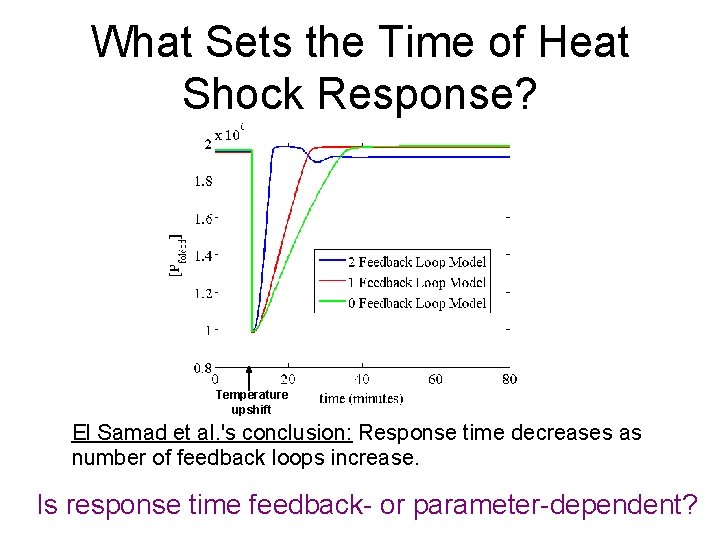
What Sets the Time of Heat Shock Response? Temperature upshift El Samad et al. 's conclusion: Response time decreases as number of feedback loops increase. Is response time feedback- or parameter-dependent?
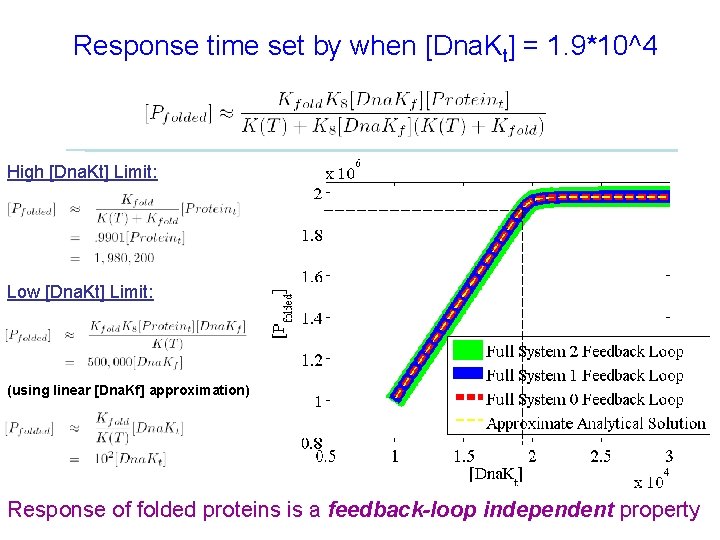
Response time set by when [Dna. Kt] = 1. 9*10^4 High [Dna. Kt] Limit: Low [Dna. Kt] Limit: (using linear [Dna. Kf] approximation) Response of folded proteins is a feedback-loop independent property
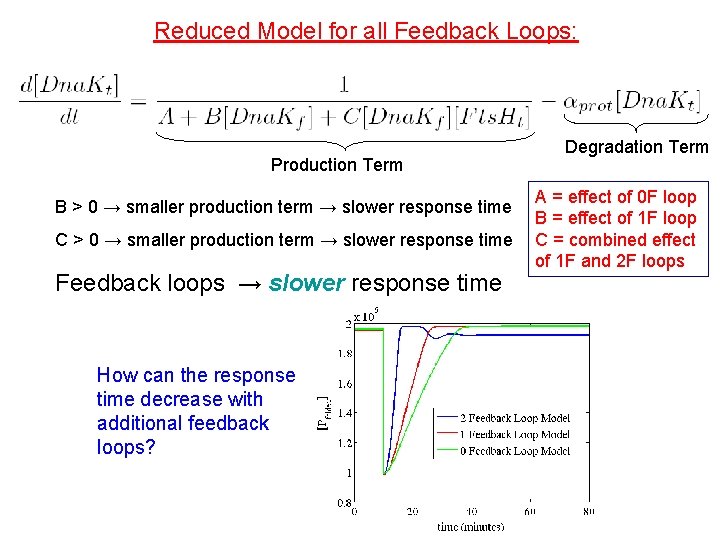
Reduced Model for all Feedback Loops: Production Term B > 0 → smaller production term → slower response time C > 0 → smaller production term → slower response time Feedback loops → slower response time How can the response time decrease with additional feedback loops? Degradation Term A = effect of 0 F loop B = effect of 1 F loop C = combined effect of 1 F and 2 F loops
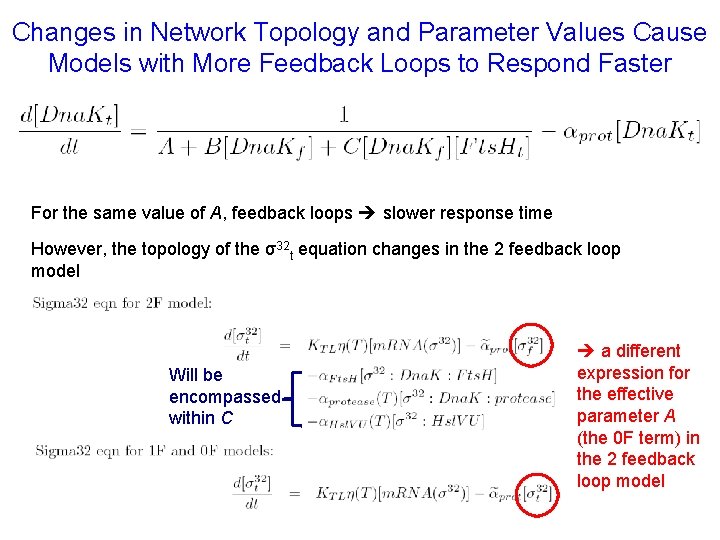
Changes in Network Topology and Parameter Values Cause Models with More Feedback Loops to Respond Faster For the same value of A, feedback loops slower response time However, the topology of the σ32 t equation changes in the 2 feedback loop model Will be encompassed within C a different expression for the effective parameter A (the 0 F term) in the 2 feedback loop model
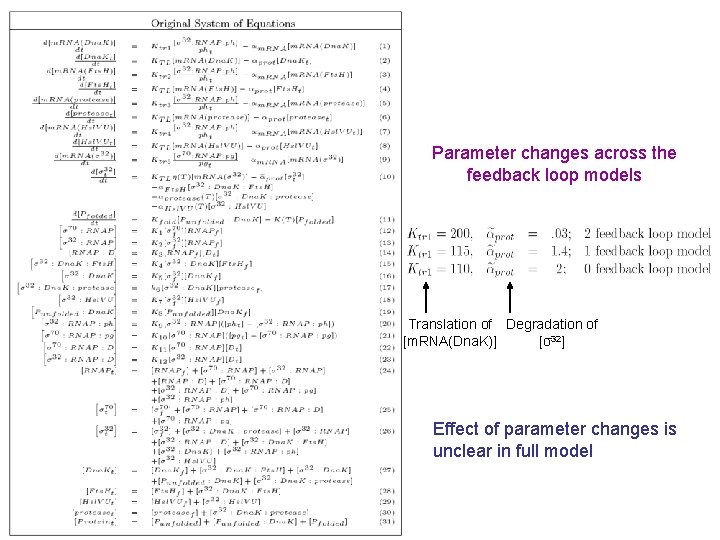
Parameter changes across the feedback loop models Translation of Degradation of [m. RNA(Dna. K)] [σ32] Effect of parameter changes is unclear in full model
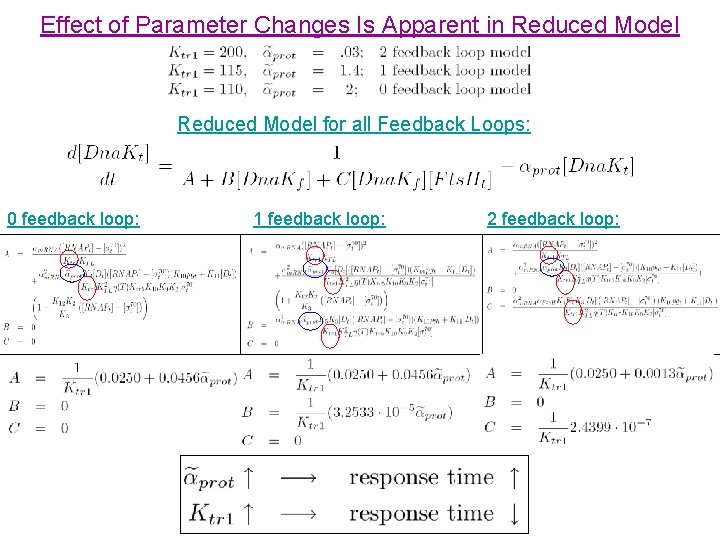
Effect of Parameter Changes Is Apparent in Reduced Model for all Feedback Loops: 0 feedback loop: 1 feedback loop: 2 feedback loop:
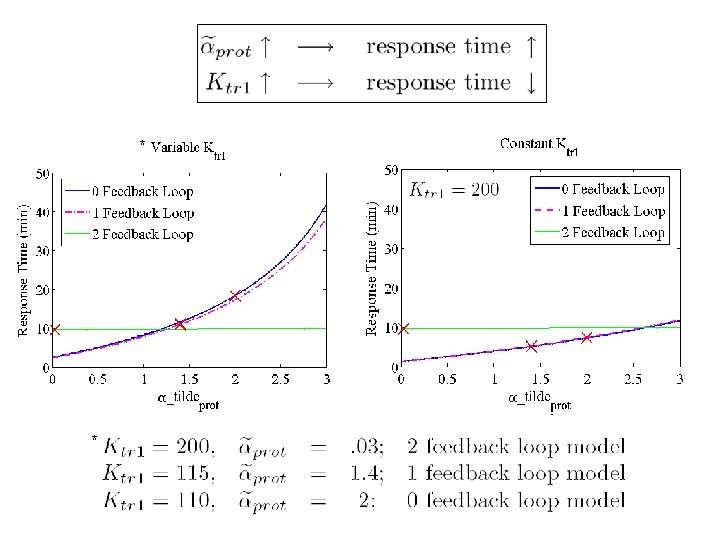
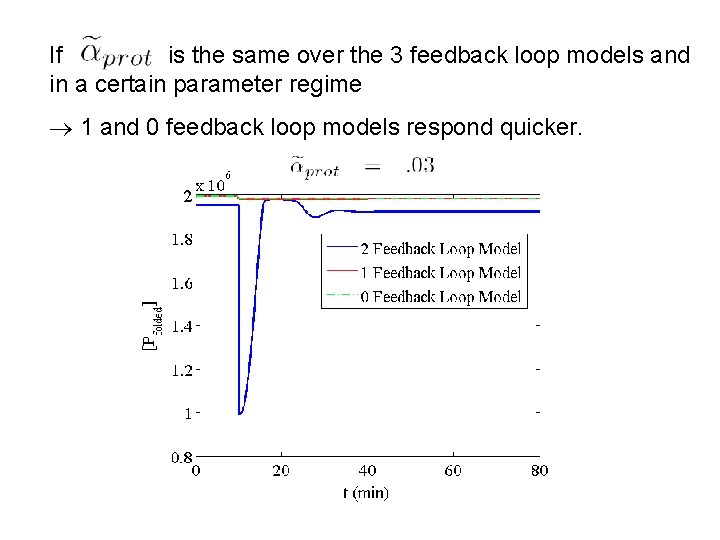
If is the same over the 3 feedback loop models and in a certain parameter regime 1 and 0 feedback loop models respond quicker.
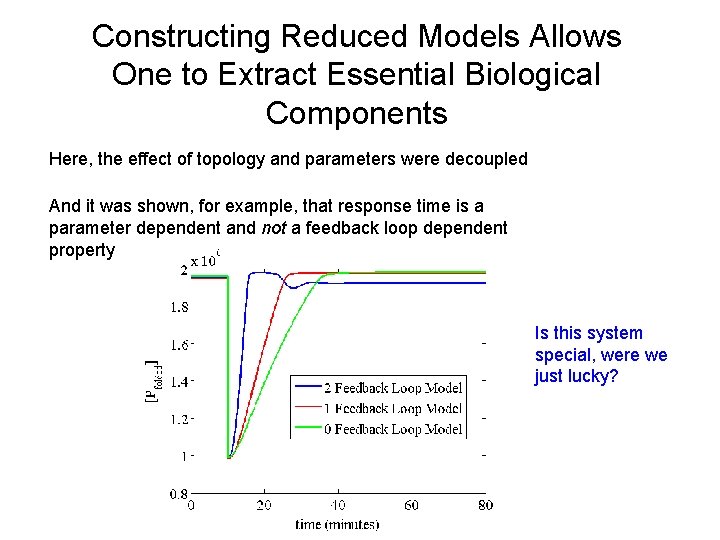
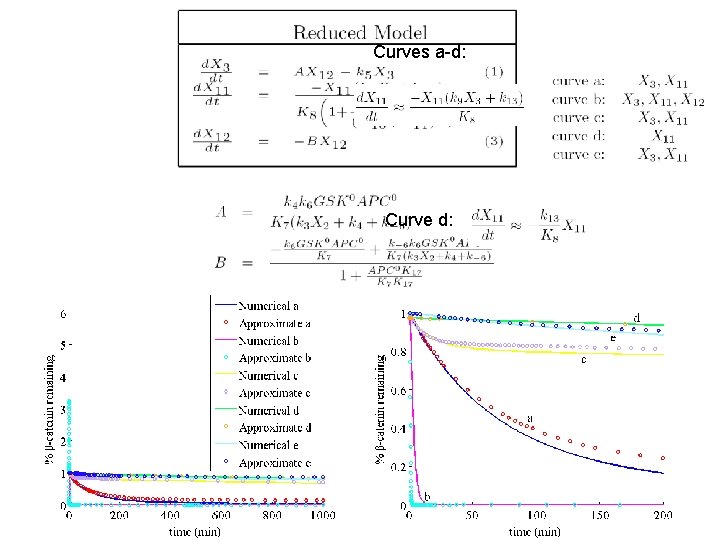
Constructing Reduced Models Allows One to Extract Essential Biological Components Here, the effect of topology and parameters were decoupled And it was shown, for example, that response time is a parameter dependent and not a feedback loop dependent property Is this system special, were we just lucky?
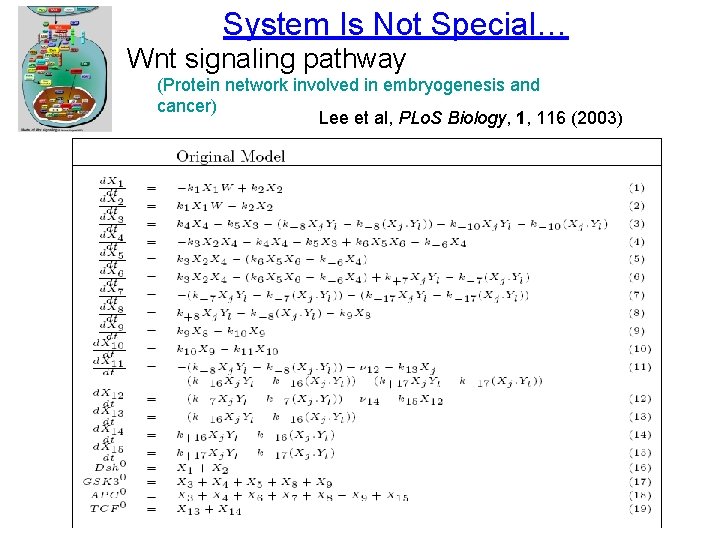
System Is Not Special… Wnt signaling pathway (Protein network involved in embryogenesis and cancer) Lee et al, PLo. S Biology, 1, 116 (2003)
Curves a-d: Curve d:
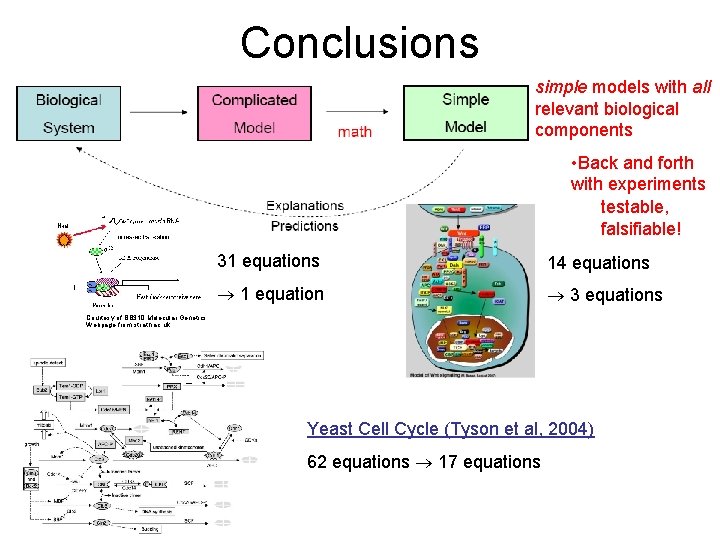
Conclusions simple models with all relevant biological components • Back and forth with experiments testable, falsifiable! 31 equations 14 equations 1 equation 3 equations Courtesy of BB 310 Molecular Genetics Webpage from strath. ac. uk Yeast Cell Cycle (Tyson et al, 2004) 62 equations 17 equations
Future Directions f(dimenionless parameters) ? { Reduced Model 1, Reduced Model 2, Reduced Model 3, …}
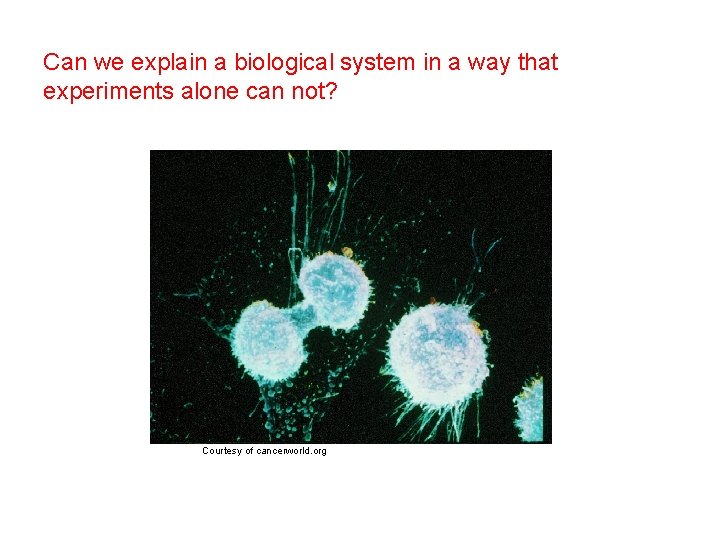
Can we explain a biological system in a way that experiments alone can not? Courtesy of cancerworld. org
- Slides: 44