
Extract microscopic information of materials from Neutron Scattering

- Slides: 26
Extract microscopic information of materials from Neutron Scattering data using a Machine Learning assisted approach ANJANA SAMARAKOON Post Doctoral Research Associate, Direct Geometry Team, Oak Ridge National Laboratory ORNL is managed by UT-Battelle, LLC for the US Department of Energy
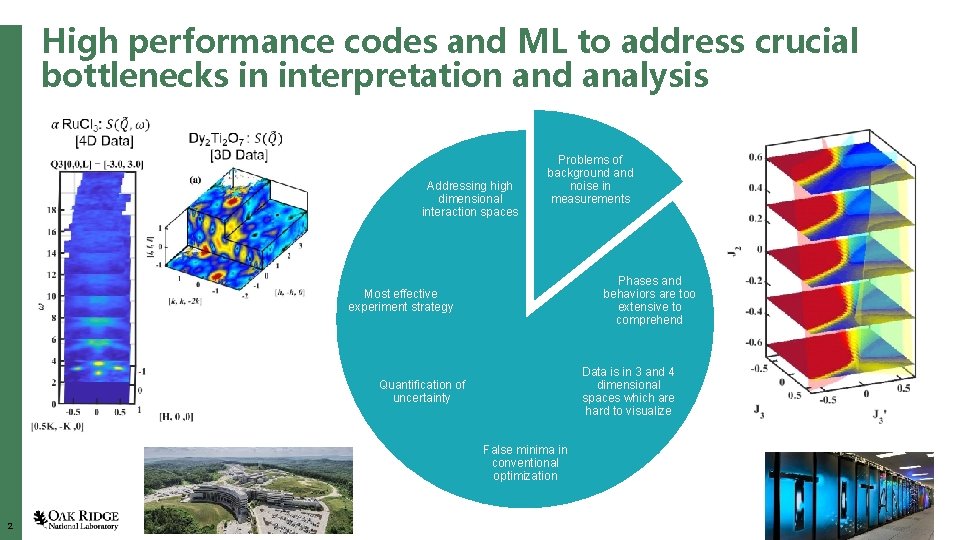
High performance codes and ML to address crucial bottlenecks in interpretation and analysis Addressing high dimensional interaction spaces Problems of background and noise in measurements Phases and behaviors are too extensive to comprehend Most effective experiment strategy Data is in 3 and 4 dimensional spaces which are hard to visualize Quantification of uncertainty False minima in conventional optimization 2 Open slide master to edit
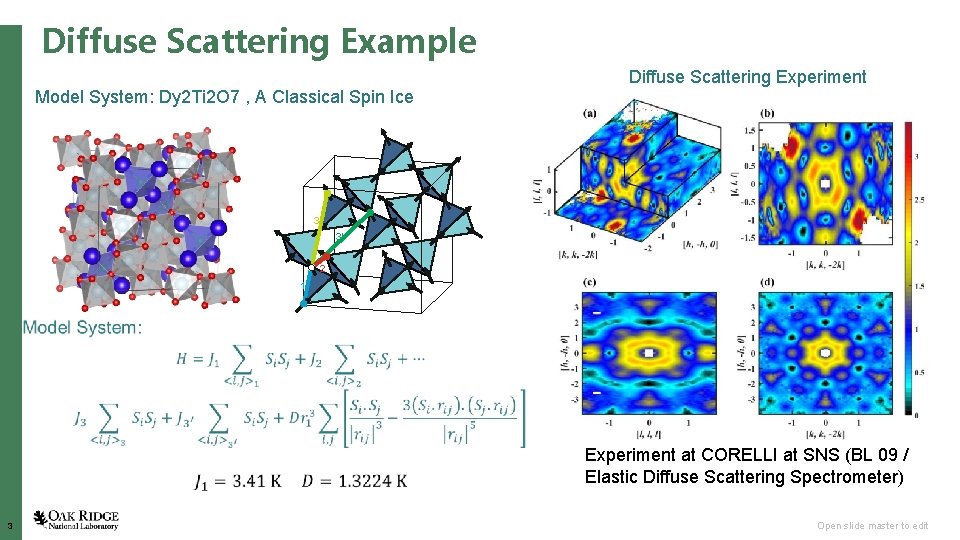
Diffuse Scattering Example Model System: Dy 2 Ti 2 O 7 , A Classical Spin Ice Diffuse Scattering Experiment 3 3' 2 1 Experiment at CORELLI at SNS (BL 09 / Elastic Diffuse Scattering Spectrometer) 3 Open slide master to edit
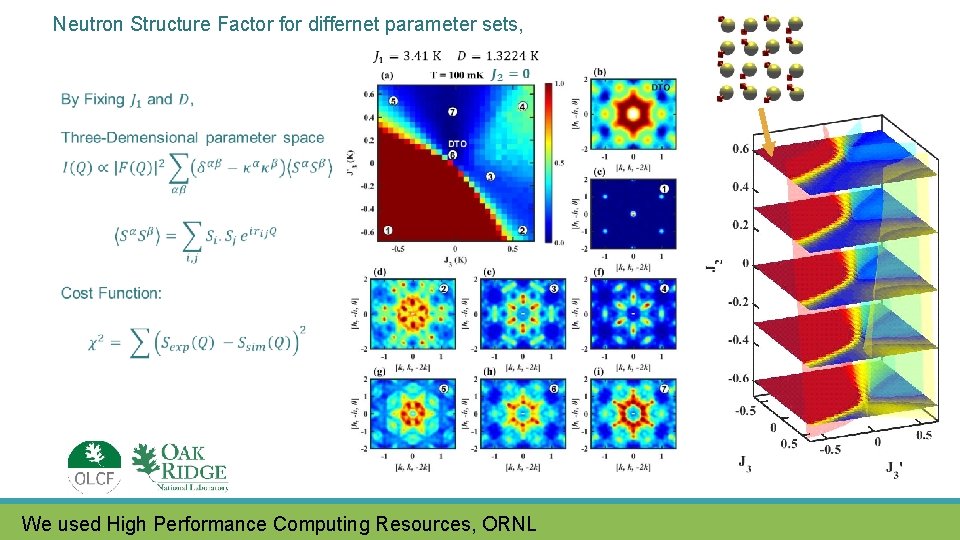
Neutron Structure Factor for differnet parameter sets, We used High Performance Computing Resources, ORNL
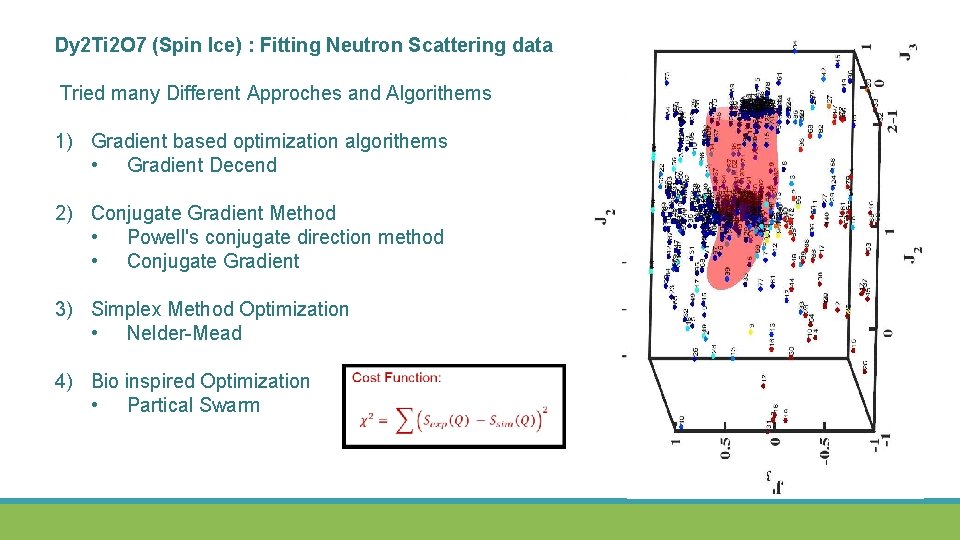
Dy 2 Ti 2 O 7 (Spin Ice) : Fitting Neutron Scattering data Tried many Different Approches and Algorithems 1) Gradient based optimization algorithems • Gradient Decend 2) Conjugate Gradient Method • Powell's conjugate direction method • Conjugate Gradient 3) Simplex Method Optimization • Nelder-Mead 4) Bio inspired Optimization • Partical Swarm
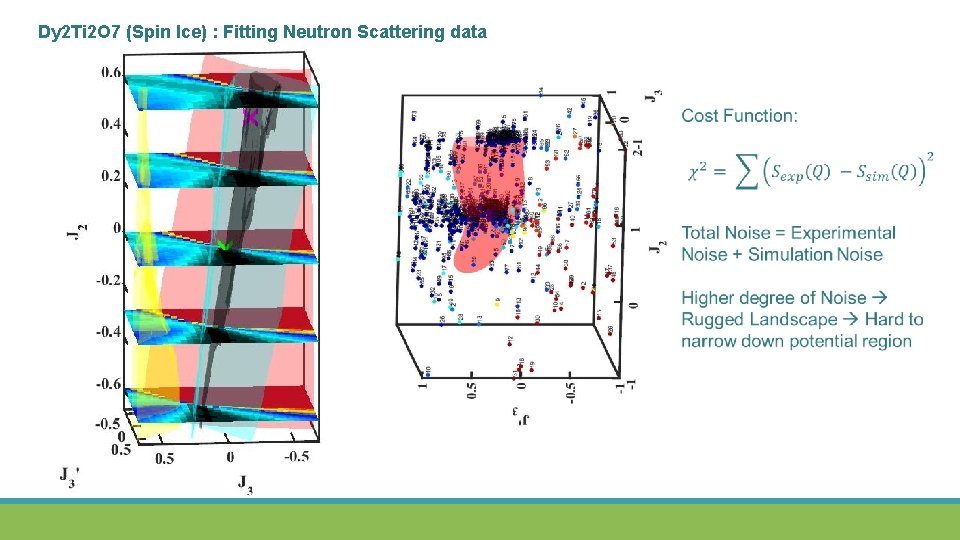
Dy 2 Ti 2 O 7 (Spin Ice) : Fitting Neutron Scattering data
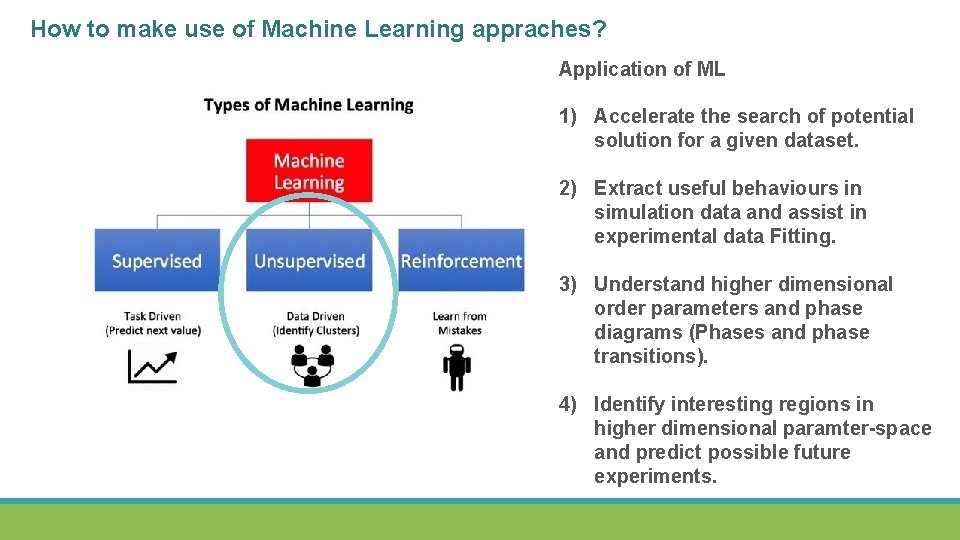
How to make use of Machine Learning appraches? Application of ML 1) Accelerate the search of potential solution for a given dataset. 2) Extract useful behaviours in simulation data and assist in experimental data Fitting. 3) Understand higher dimensional order parameters and phase diagrams (Phases and phase transitions). 4) Identify interesting regions in higher dimensional paramter-space and predict possible future experiments.
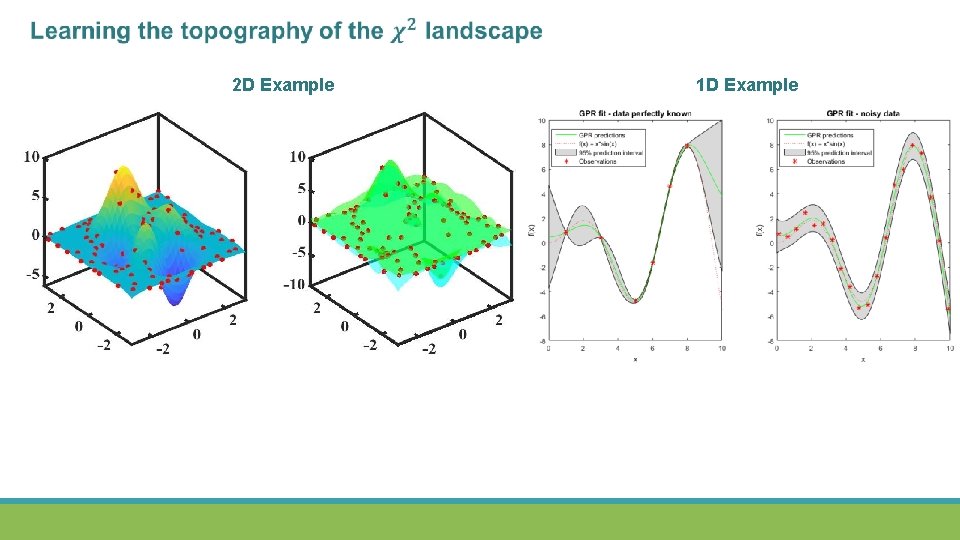
2 D Example 1 D Example
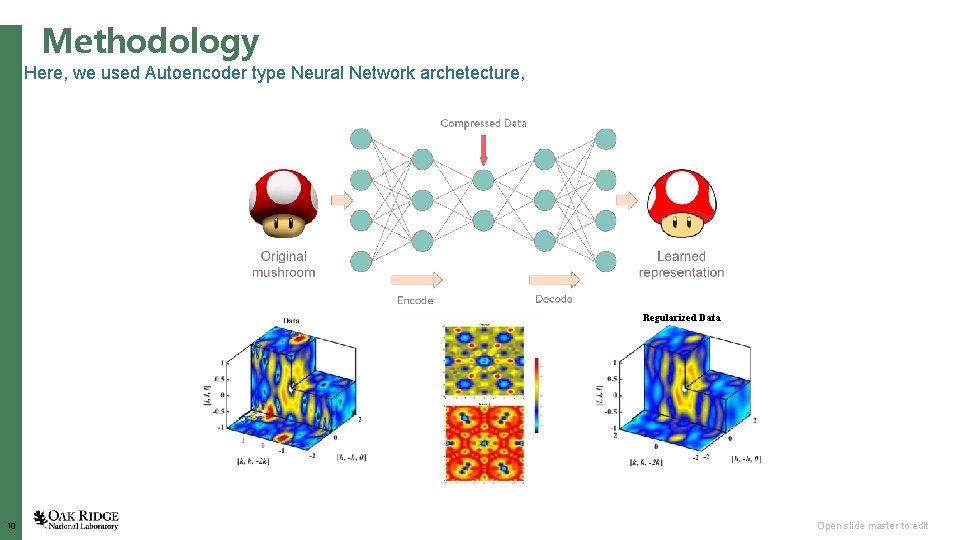
Methodology Here, we used Autoencoder type Neural Network archetecture, Regularized Data 10 Open slide master to edit
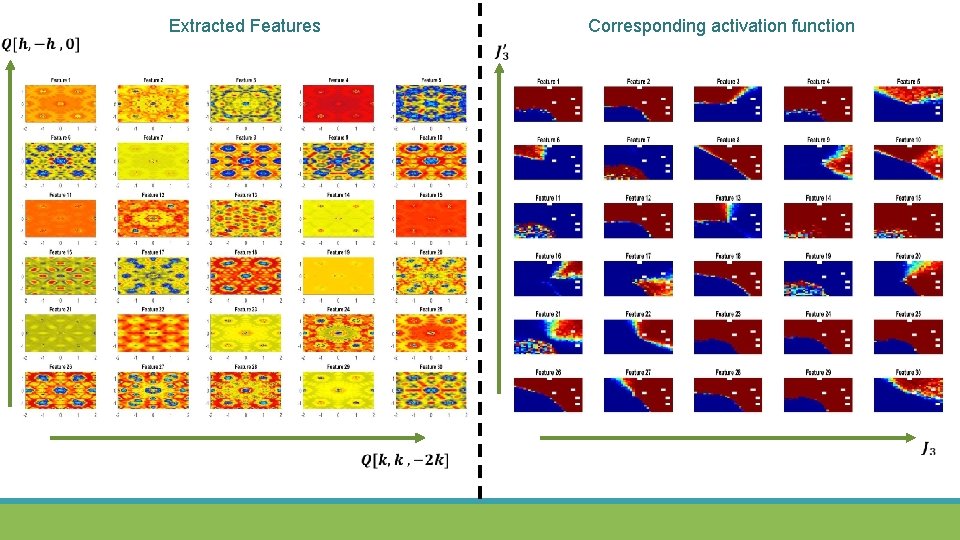
Extracted Features Corresponding activation function
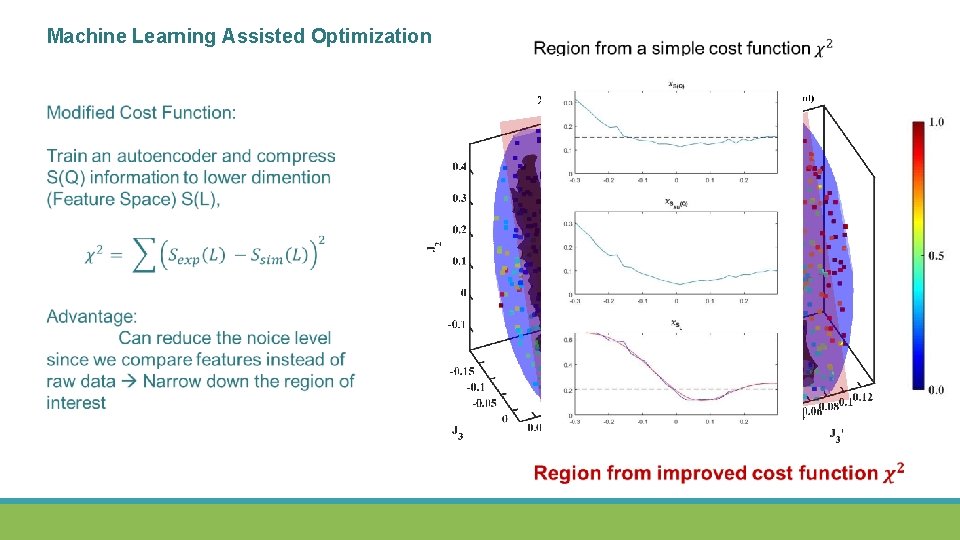
Machine Learning Assisted Optimization
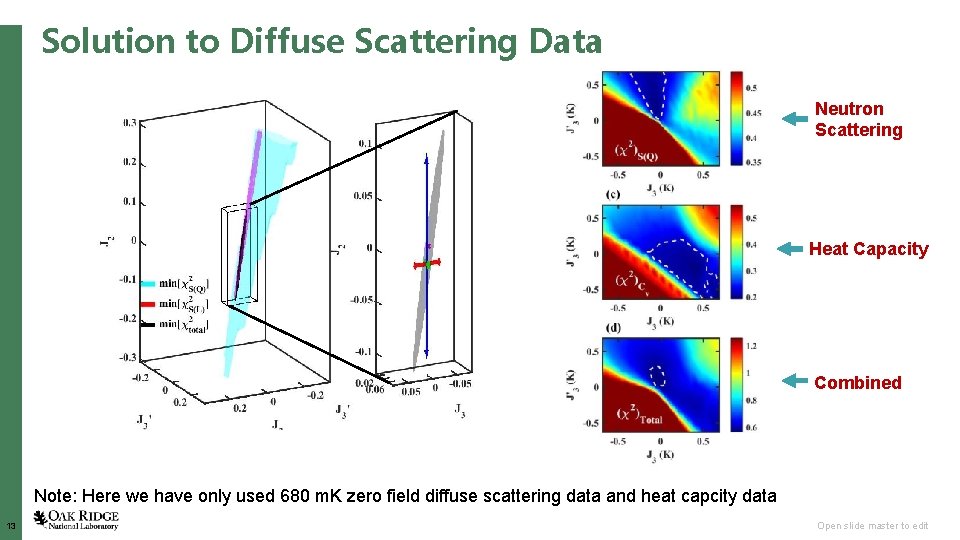
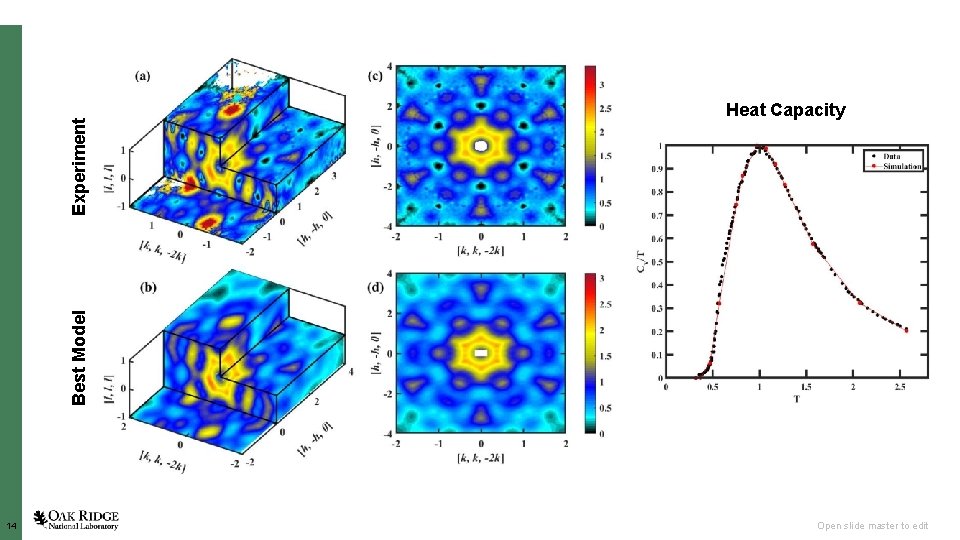
Solution to Diffuse Scattering Data Neutron Scattering Heat Capacity Combined Note: Here we have only used 680 m. K zero field diffuse scattering data and heat capcity data 13 Open slide master to edit
Experiment Best Model Heat Capacity 14 Open slide master to edit
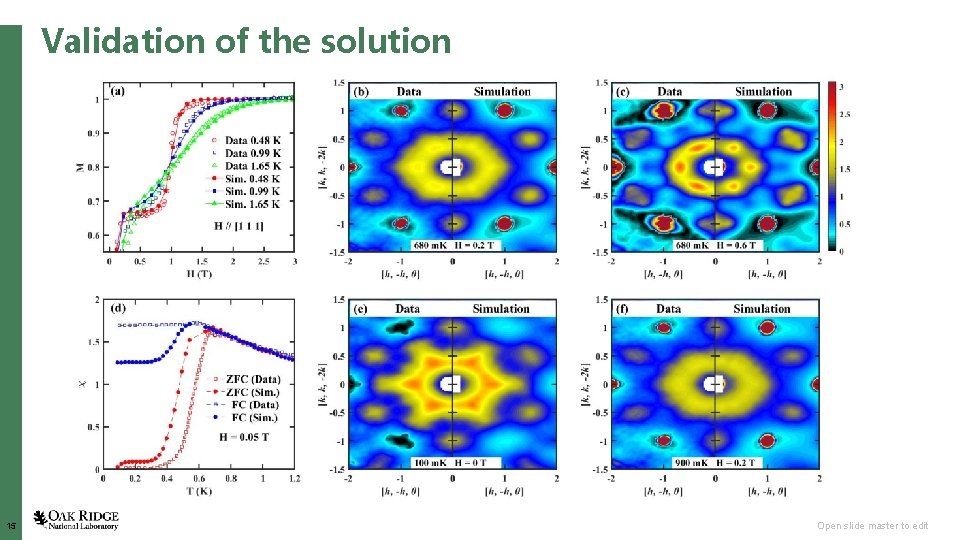
Validation of the solution 15 Open slide master to edit
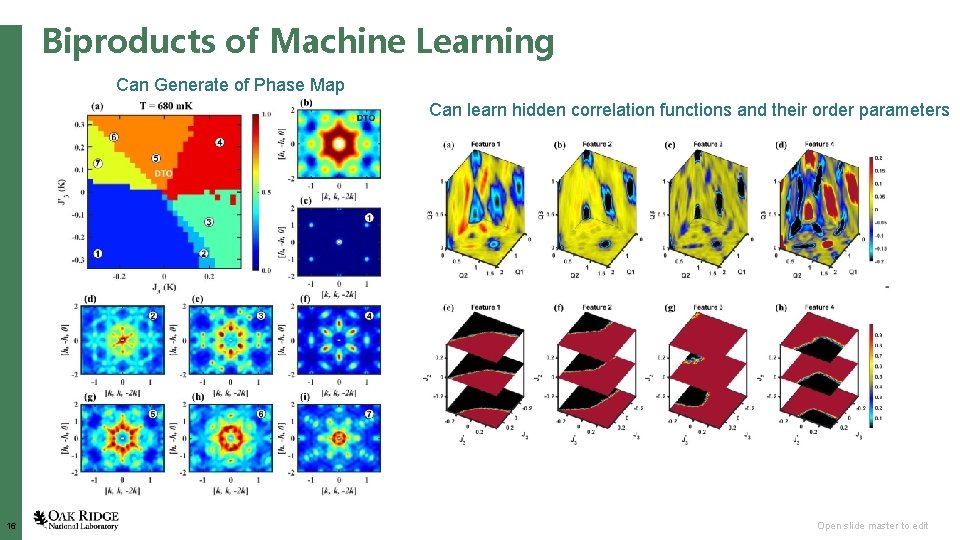
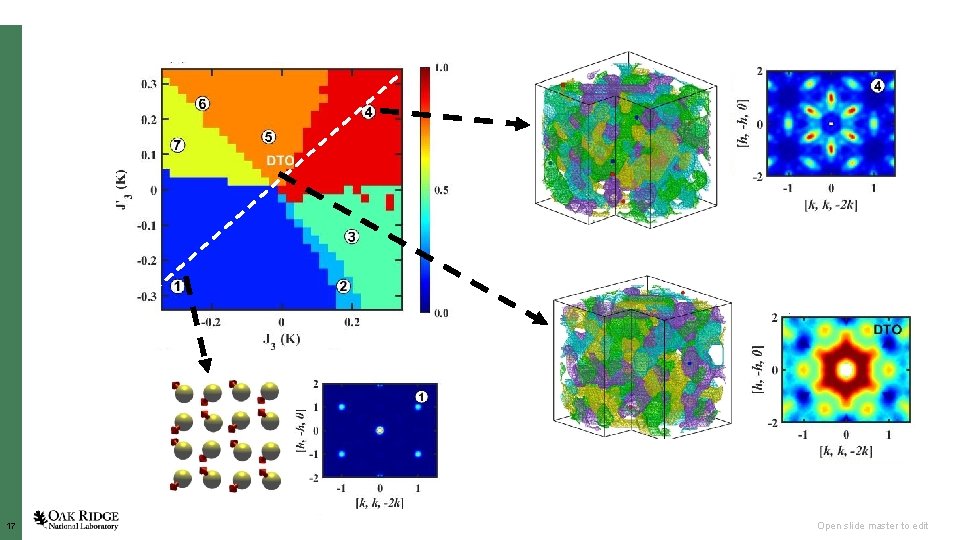
Biproducts of Machine Learning Can Generate of Phase Map Can learn hidden correlation functions and their order parameters 16 Open slide master to edit
17 Open slide master to edit
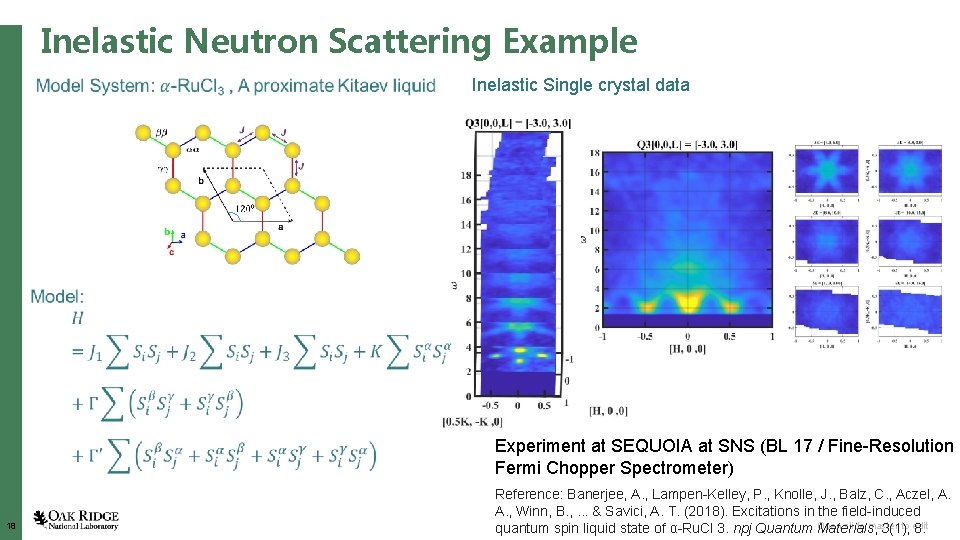
Inelastic Neutron Scattering Example Inelastic Single crystal data Experiment at SEQUOIA at SNS (BL 17 / Fine-Resolution Fermi Chopper Spectrometer) 18 Reference: Banerjee, A. , Lampen-Kelley, P. , Knolle, J. , Balz, C. , Aczel, A. , Winn, B. , . . . & Savici, A. T. (2018). Excitations in the field-induced quantum spin liquid state of α-Ru. Cl 3. npj Quantum Open slide master to edit Materials, 3(1), 8.
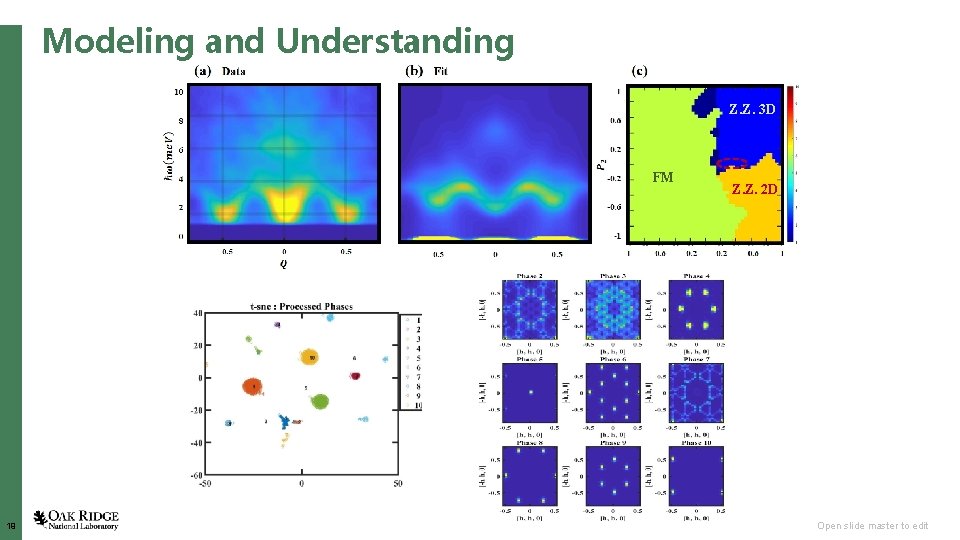
Modeling and Understanding Z. Z. 3 D FM 19 Z. Z. 2 D Open slide master to edit
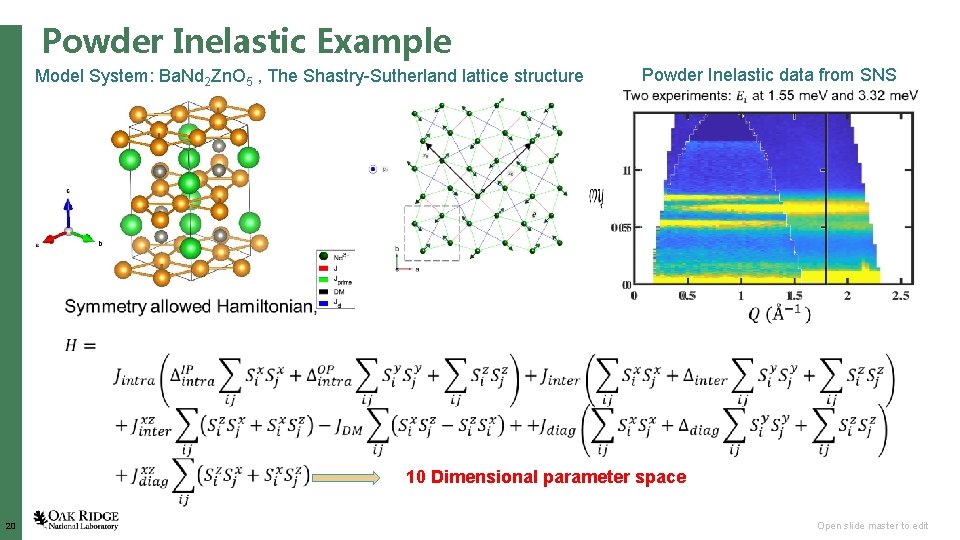
Powder Inelastic Example Powder Inelastic data from SNS Model System: Ba. Nd 2 Zn. O 5 , The Shastry-Sutherland lattice structure 10 Dimensional parameter space 20 Open slide master to edit
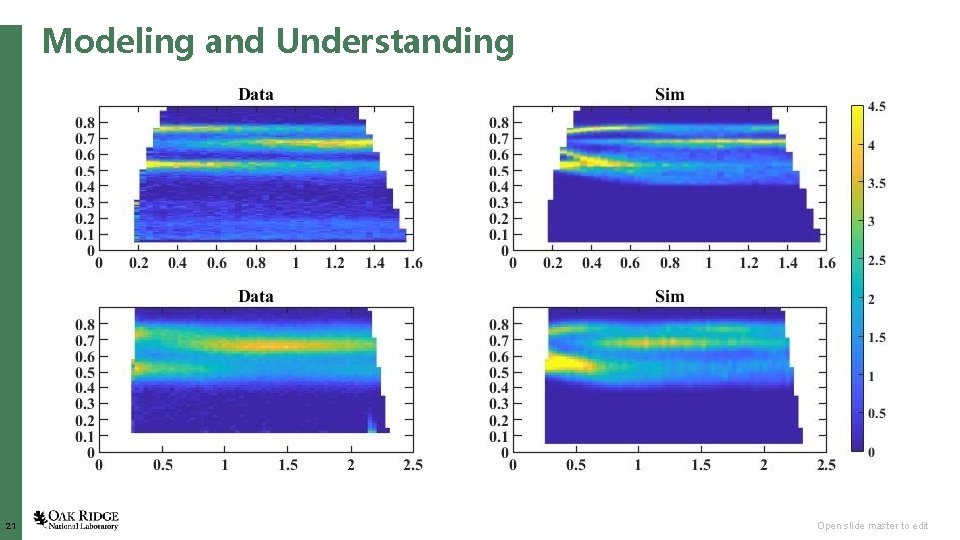
21 Modeling and Understanding Open slide master to edit
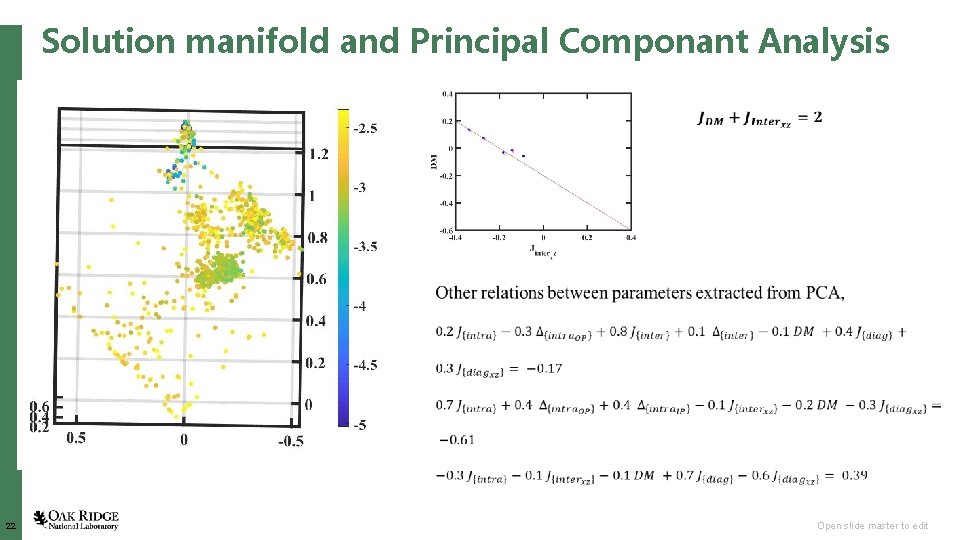
Solution manifold and Principal Componant Analysis 22 Open slide master to edit
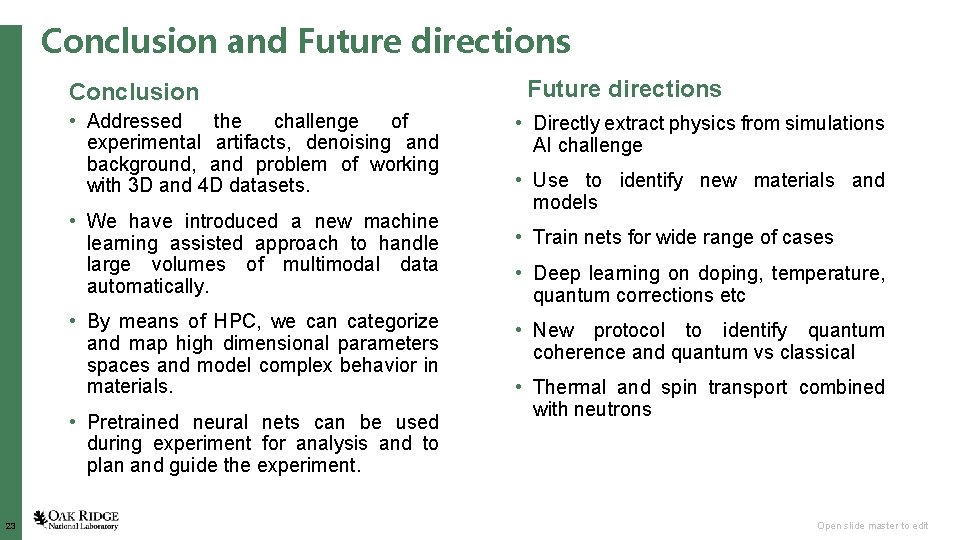
Conclusion and Future directions Conclusion • Addressed the challenge of experimental artifacts, denoising and background, and problem of working with 3 D and 4 D datasets. • We have introduced a new machine learning assisted approach to handle large volumes of multimodal data automatically. • By means of HPC, we can categorize and map high dimensional parameters spaces and model complex behavior in materials. • Pretrained neural nets can be used during experiment for analysis and to plan and guide the experiment. 23 Future directions • Directly extract physics from simulations AI challenge • Use to identify new materials and models • Train nets for wide range of cases • Deep learning on doping, temperature, quantum corrections etc • New protocol to identify quantum coherence and quantum vs classical • Thermal and spin transport combined with neutrons Open slide master to edit
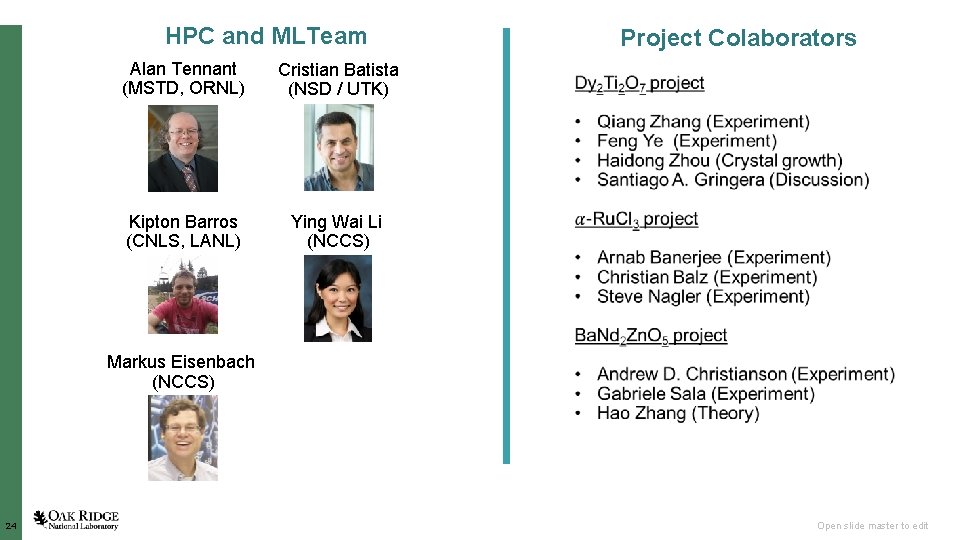
HPC and MLTeam Alan Tennant (MSTD, ORNL) Cristian Batista (NSD / UTK) Kipton Barros (CNLS, LANL) Ying Wai Li (NCCS) Project Colaborators Markus Eisenbach (NCCS) 24 Open slide master to edit
Thank you !!! Any Questions? 25 Open slide master to edit
26 Open slide master to edit