
Extracorporeal Carbon Dioxide Removal Yan Wing Wa Pamela
Extracorporeal Carbon Dioxide Removal Yan Wing Wa Pamela Youde Nethersole Eastern Hospital 4 January 2013
Scopes n What’s it? n n How does it differ from ECMO? Indications Principles Types available n n AVCO 2 R VVCO 2 R Gas exchange catheter (intracorporeal) Respiratory dialysis
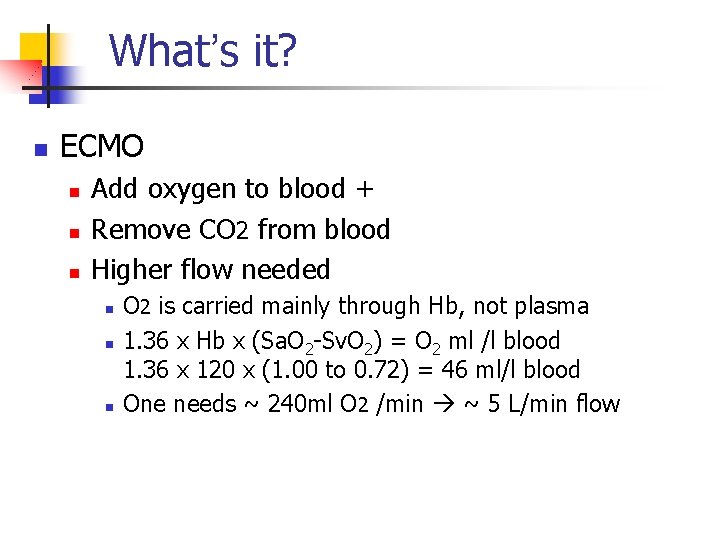
What’s it? n ECMO n n n Add oxygen to blood + Remove CO 2 from blood Higher flow needed n n n O 2 is carried mainly through Hb, not plasma 1. 36 x Hb x (Sa. O 2 -Sv. O 2) = O 2 ml /l blood 1. 36 x 120 x (1. 00 to 0. 72) = 46 ml/l blood One needs ~ 240 ml O 2 /min ~ 5 L/min flow
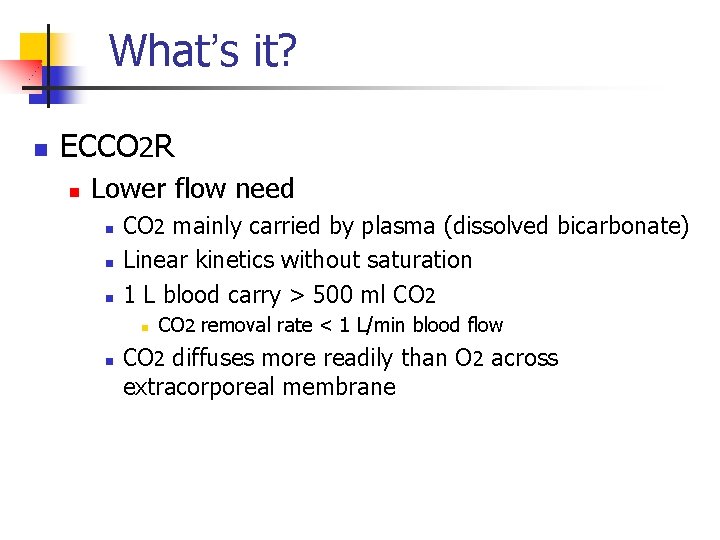
What’s it? n ECCO 2 R n Lower flow need n n n CO 2 mainly carried by plasma (dissolved bicarbonate) Linear kinetics without saturation 1 L blood carry > 500 ml CO 2 n n CO 2 removal rate < 1 L/min blood flow CO 2 diffuses more readily than O 2 across extracorporeal membrane
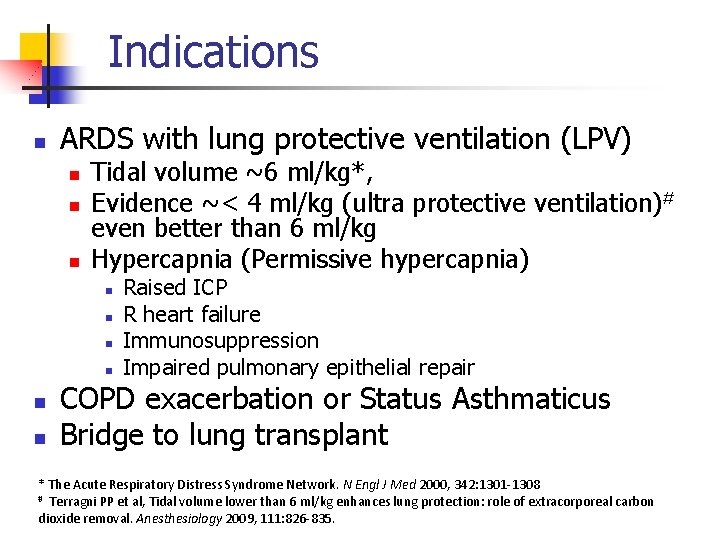
Indications n ARDS with lung protective ventilation (LPV) n n n Tidal volume ~6 ml/kg*, Evidence ~< 4 ml/kg (ultra protective ventilation)# even better than 6 ml/kg Hypercapnia (Permissive hypercapnia) n n n Raised ICP R heart failure Immunosuppression Impaired pulmonary epithelial repair COPD exacerbation or Status Asthmaticus Bridge to lung transplant * The Acute Respiratory Distress Syndrome Network. N Engl J Med 2000, 342: 1301 -1308 # Terragni PP et al, Tidal volume lower than 6 ml/kg enhances lung protection: role of extracorporeal carbon dioxide removal. Anesthesiology 2009, 111: 826 -835.
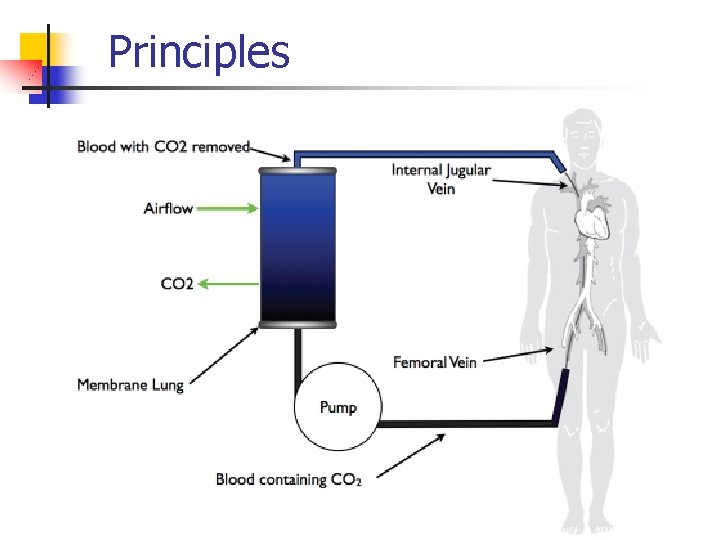
Principles
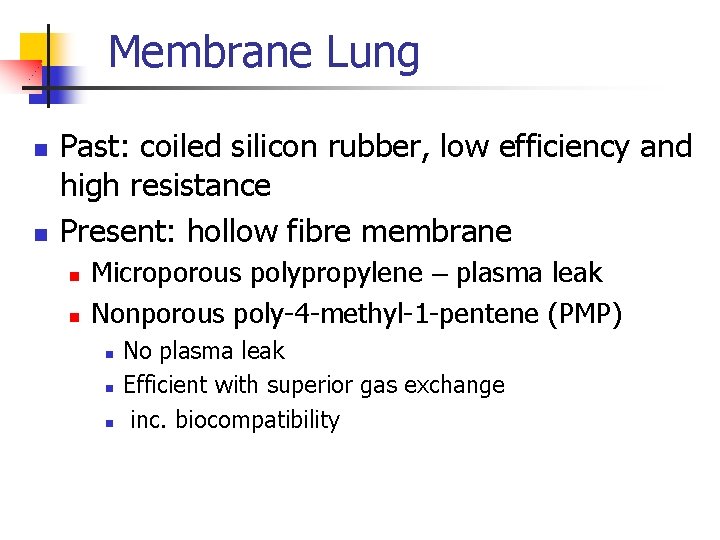
Membrane Lung n n Past: coiled silicon rubber, low efficiency and high resistance Present: hollow fibre membrane n n Microporous polypropylene – plasma leak Nonporous poly-4 -methyl-1 -pentene (PMP) n n n No plasma leak Efficient with superior gas exchange inc. biocompatibility
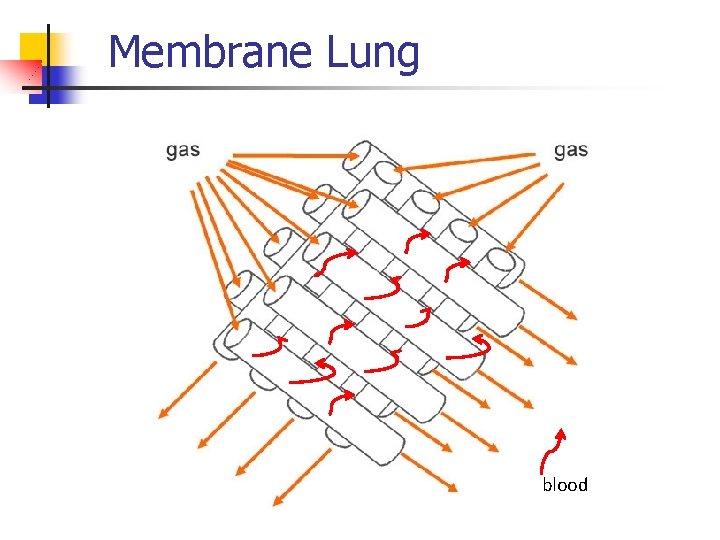
Membrane Lung blood
Membrane Lung n Non-porous PMP membrane n n n Maquet – Quadrox D Novalung – i. LA membrane ventilator Medos – hilite 7000 LT Eurosets – Eurosets ECMO Terumo – Capiox EBS
Membrane Lung n Coating to improve biocompatibility and decrease clotting n n n Bioline: Maquet - Quadrox D Rheoparin: Medos – hilite 7000 LT Carmeda Bioactive Surface: Medtronic X coating: Terumo – Capiox EBS Phosphorylcholine: Sorin – Phisio; Euromed Eurosets
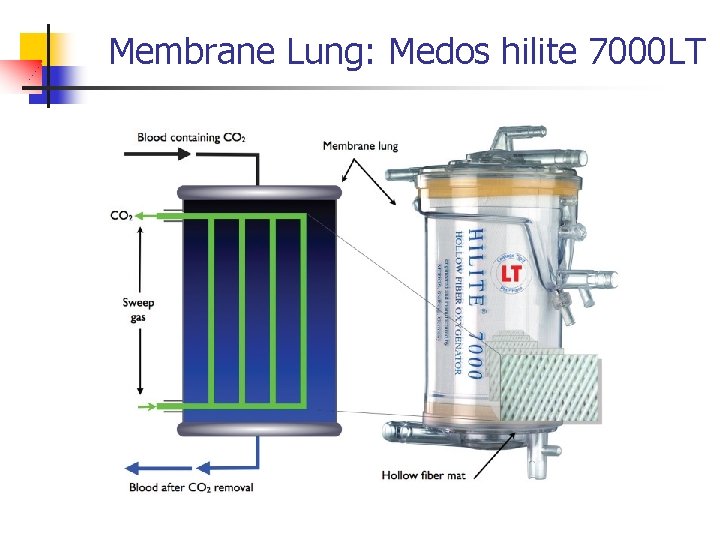
Membrane Lung: Medos hilite 7000 LT
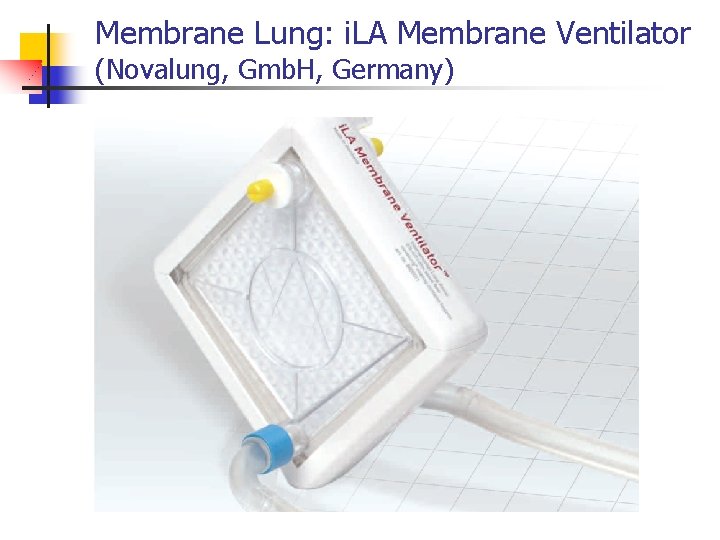
Membrane Lung: i. LA Membrane Ventilator (Novalung, Gmb. H, Germany)
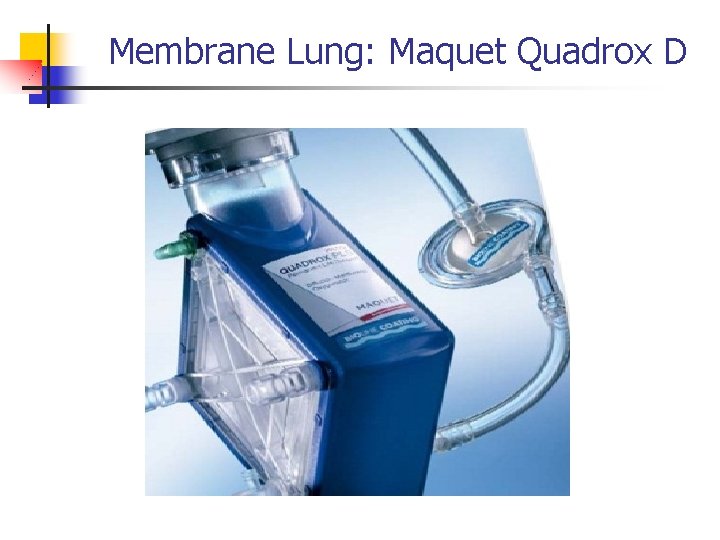
Membrane Lung: Maquet Quadrox D
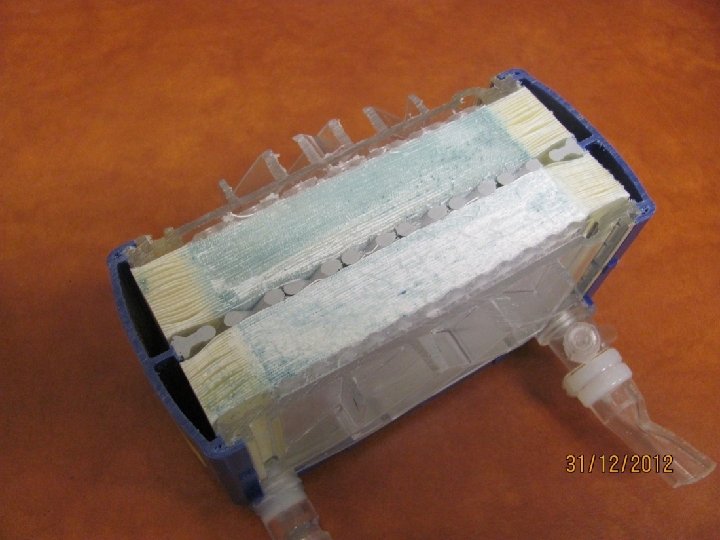
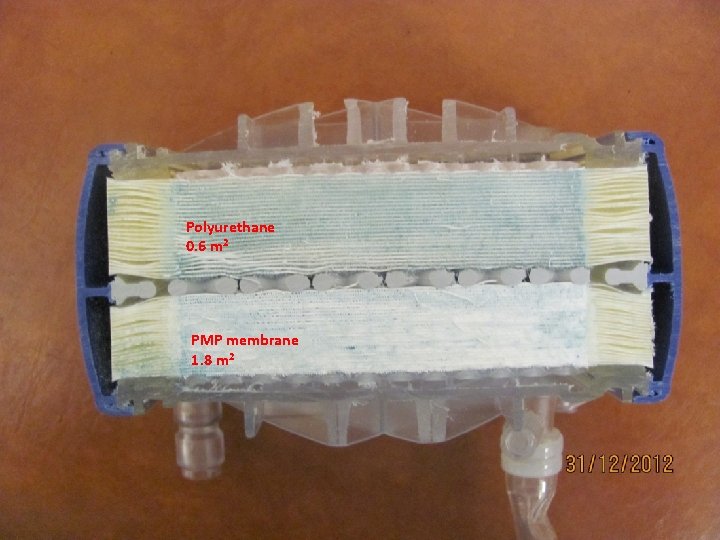
Polyurethane 0. 6 m 2 PMP membrane 1. 8 m 2
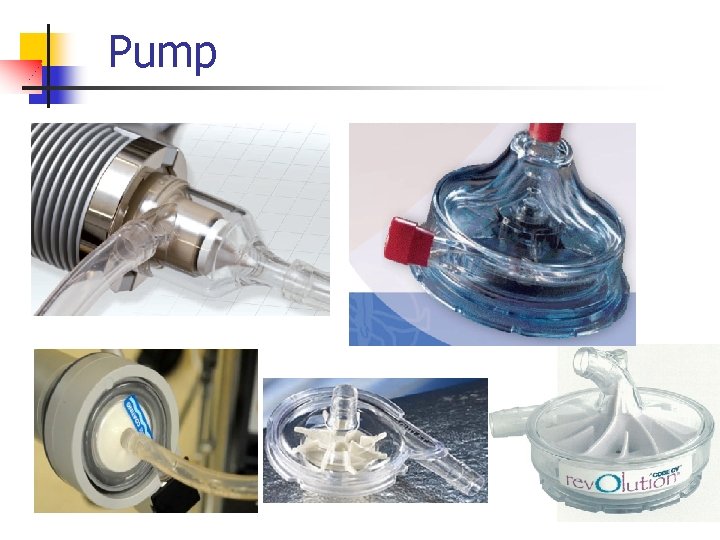
Pump n Types: n n n Centrifugal pump Diagonal pump: centrifugal + axial pump +/- shaft or bearings n n Medtronic – Biomedicus Impellors suspended by electromagnetic field n n n Maquet – Rotaflow Levotronix – Centrimag Sorin – Cobe-Revolution
Pump
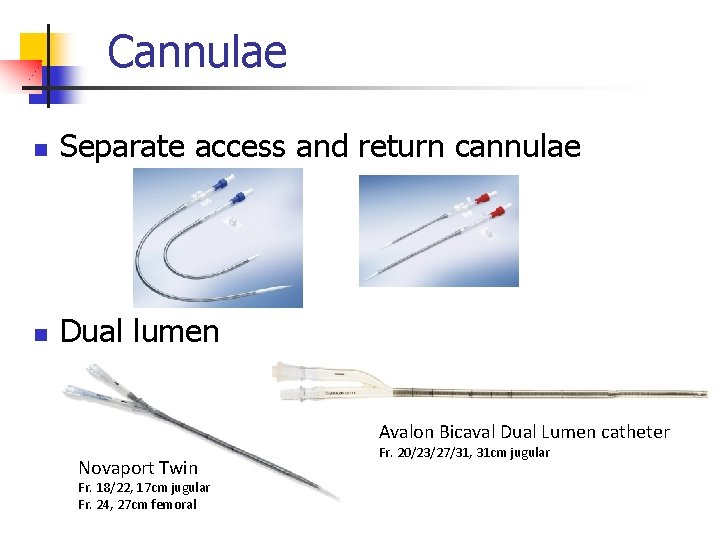
Cannulae n Separate access and return cannulae n Dual lumen Avalon Bicaval Dual Lumen catheter Novaport Twin Fr. 18/22, 17 cm jugular Fr. 24, 27 cm femoral Fr. 20/23/27/31, 31 cm jugular
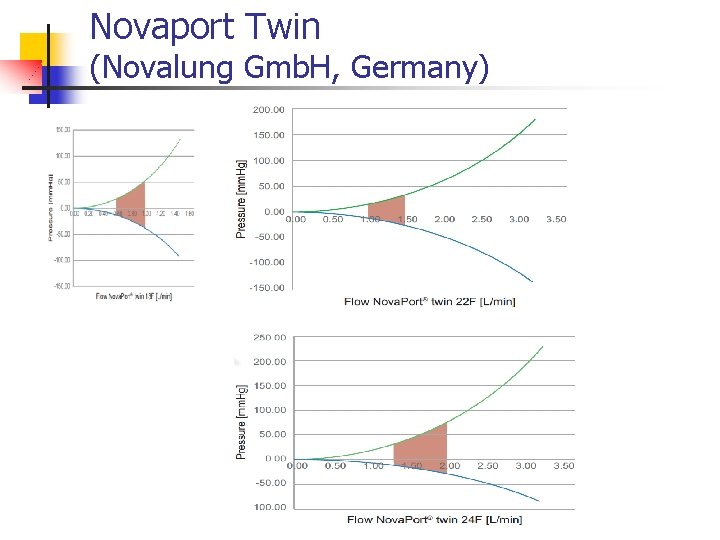
Novaport Twin (Novalung Gmb. H, Germany)
ECCO 2 R n n First introduced in 1978 Gattinoni L, Kolobow T, Tomlinson T, Iapichino G, Samaja M, White D, Pierce J; Low-frequency positive pressure ventilation with extracorporeal carbon dioxide removal (LFPPV-ECCO 2 R): an experimental study. Anesth Analg 1978, 57: 470477
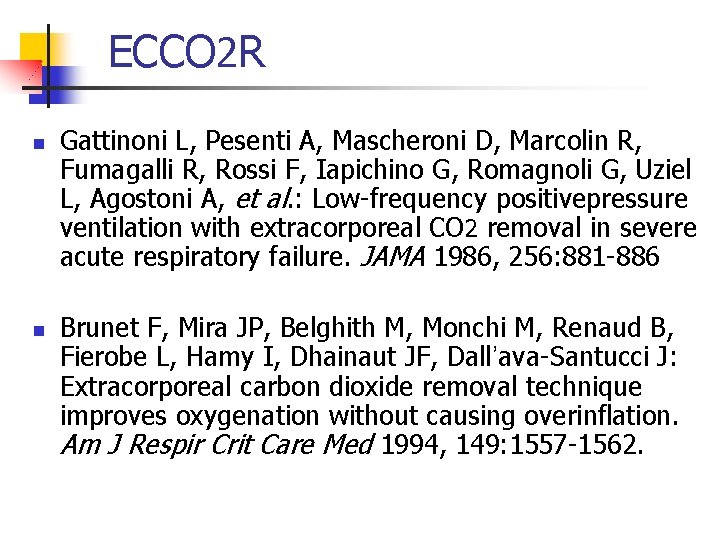
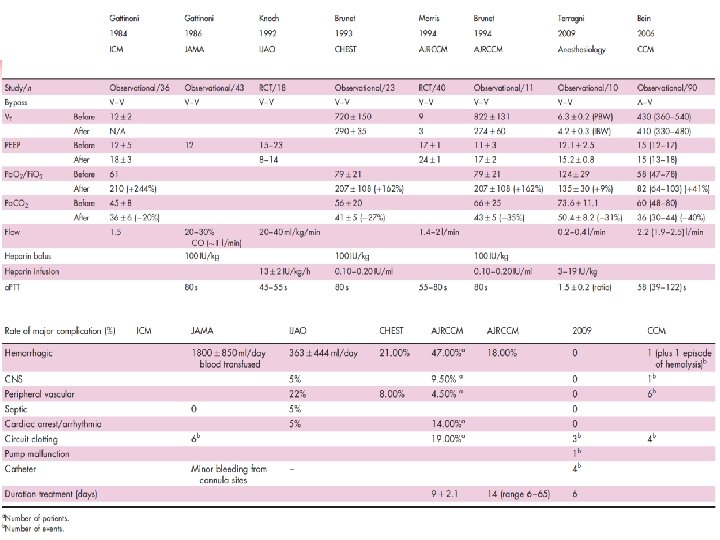
ECCO 2 R n n Gattinoni L, Pesenti A, Mascheroni D, Marcolin R, Fumagalli R, Rossi F, Iapichino G, Romagnoli G, Uziel L, Agostoni A, et al. : Low-frequency positivepressure ventilation with extracorporeal CO 2 removal in severe acute respiratory failure. JAMA 1986, 256: 881 -886 Brunet F, Mira JP, Belghith M, Monchi M, Renaud B, Fierobe L, Hamy I, Dhainaut JF, Dall’ava-Santucci J: Extracorporeal carbon dioxide removal technique improves oxygenation without causing overinflation. Am J Respir Crit Care Med 1994, 149: 1557 -1562.
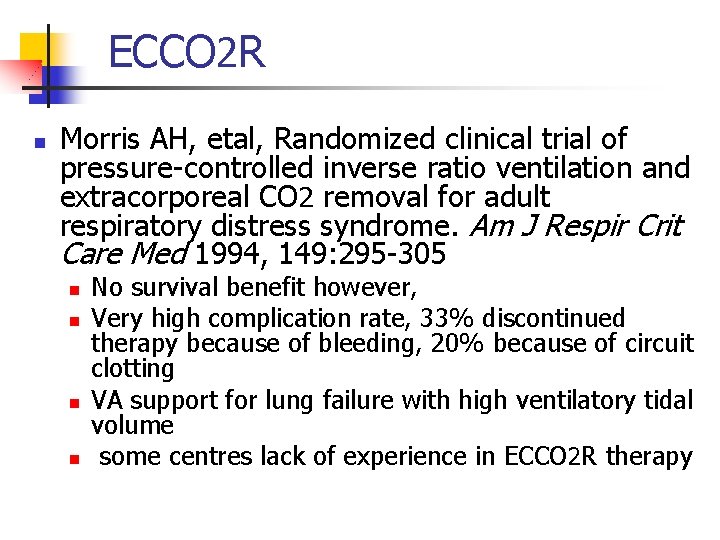
ECCO 2 R n Morris AH, etal, Randomized clinical trial of pressure-controlled inverse ratio ventilation and extracorporeal CO 2 removal for adult respiratory distress syndrome. Am J Respir Crit Care Med 1994, 149: 295 -305 n n No survival benefit however, Very high complication rate, 33% discontinued therapy because of bleeding, 20% because of circuit clotting VA support for lung failure with high ventilatory tidal volume some centres lack of experience in ECCO 2 R therapy
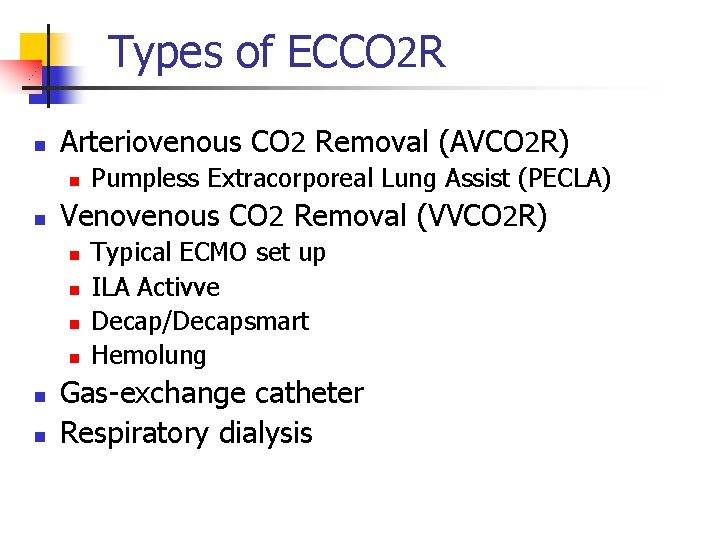
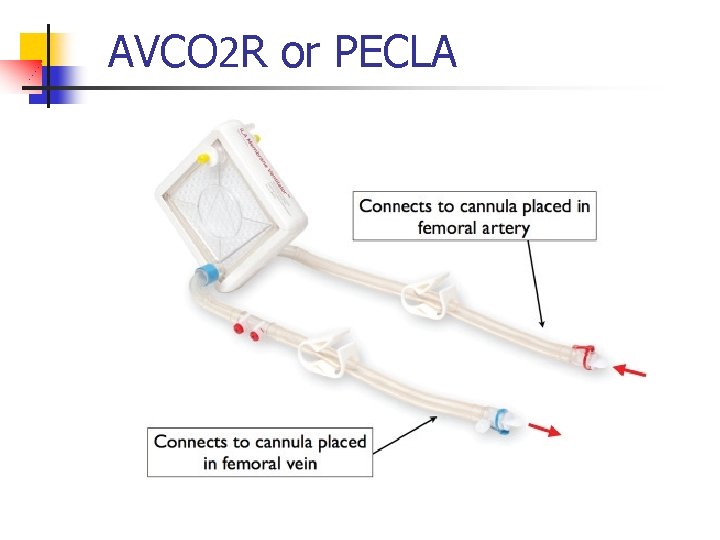
Types of ECCO 2 R n Arteriovenous CO 2 Removal (AVCO 2 R) n n Venovenous CO 2 Removal (VVCO 2 R) n n n Pumpless Extracorporeal Lung Assist (PECLA) Typical ECMO set up ILA Activve Decap/Decapsmart Hemolung Gas-exchange catheter Respiratory dialysis
AVCO 2 R or PECLA
AVCO 2 R or PECLA n n Novalung: interventional Lung Assist (i. LA) membrane ventilator Hemodynamic should be stable, with MAP >60 mm. Hg Risk of distal limb ischemia Indications n n LPV for ALI/ARDS or severe asthmaticus Bridge to lung transplantation
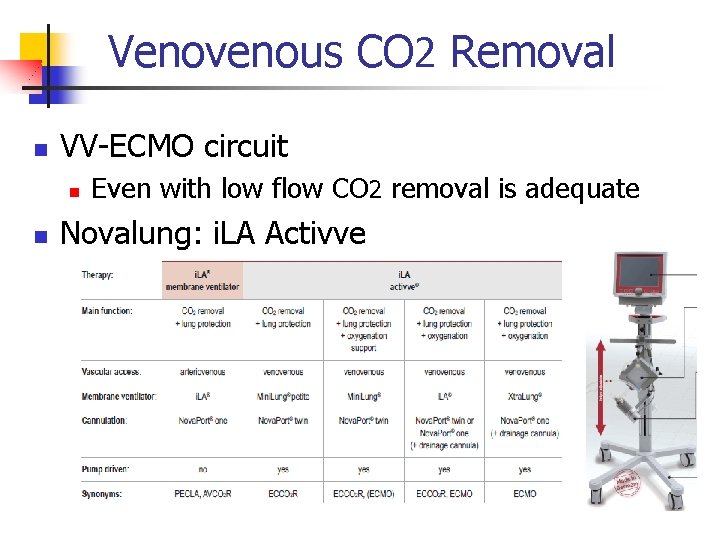
Venovenous CO 2 Removal n VV-ECMO circuit n n Even with low flow CO 2 removal is adequate Novalung: i. LA Activve
Decap / Decap Smart (Hemodec, Salerno, Italy)
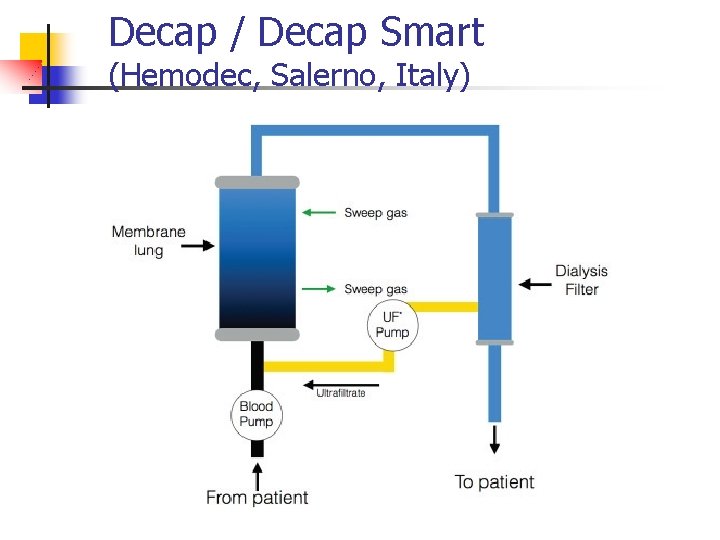
Decap / Decap Smart n n n Allow CO 2 removal + RRT Roller pump + hemofilter & membrane lung connected in series Infusing Uf back to membrane lung n n n Inc. membrane lung pressure Inc. CO 2 removal Smaller lung (0. 3 to 1. 35 m 2) n n Neonate Medos Hilite 800 LT Lower blood flow rate, 300 - 500 ml/min Terragni PP, Gattinoni L, Ranieri VM et al: Tidal volume lower than 6 ml/kg enhances lung protection: role of extracorporeal carbon dioxide removal. Anesthesiology 2009, 111: 826 -835
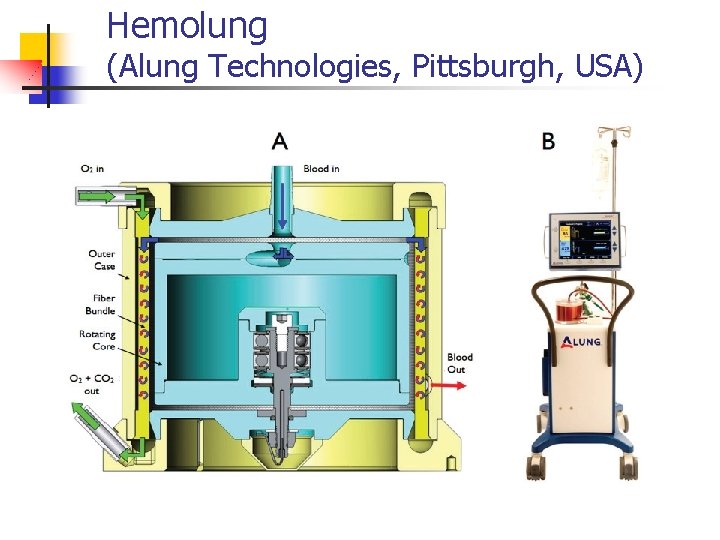
Hemolung (Alung Technologies, Pittsburgh, USA)
Hemolung n n Centrifugal pump + membrane lung together Rotating core impeller pushing blood to the surrounding fibre bundle n n Active mixing CO 2 removal is efficient & with smaller area Blood flow 400 – 600 ml/min Gas flow to membrane lung is under negative pressure to prevent risk of gas embolism Burki N etal: A novel extracoporeal CO 2 removal system: application of the hemolung in patients with hypercapnic respiratory failure. Am J Respir Crit Care Med 2011, 183: A 1697
Gas exchange catheter n Intravenocaval gas exchanger (IVOX) n n Hollow fibre (spiral) membrane lung catheter <15 mmф Intracorporeal catheter in IVC flow 2 -3 L/min n n Therefore, not flow dependent Gas flow is applied under negative pressure to prevent gas embolism (in case of fibre breaks) High complication rate: bleeding & thrombosis Conflicting clinical results n Facilitated lower ventilator settings in some studies but not all
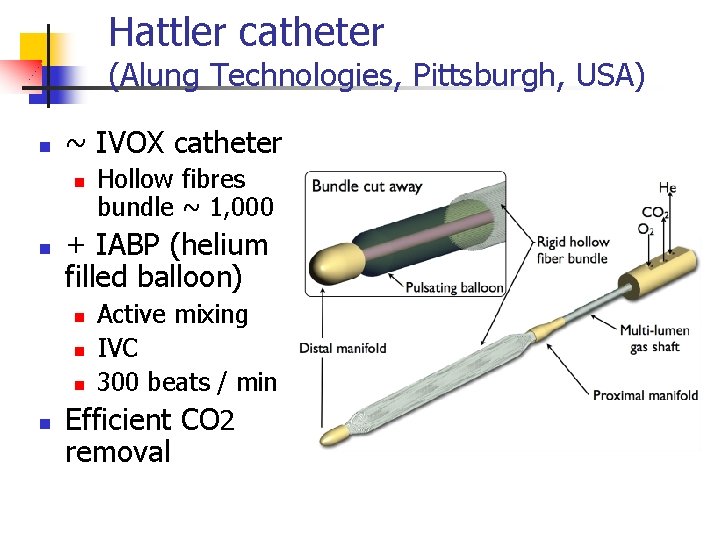
Hattler catheter (Alung Technologies, Pittsburgh, USA) n ~ IVOX catheter n n + IABP (helium filled balloon) n n Hollow fibres bundle ~ 1, 000 Active mixing IVC 300 beats / min Efficient CO 2 removal
Gas exchange catheters n Dynamic intravascular lung assist device (DILAD) n Rotating fibres n n Modified Hattler catheter n n May damage vessel wall Balloon replaced by a series of small impellers CO 2 exchange further improved by covalent immobilization of carbonic anhydrase to the surface of membrane fibres (CO 2 more readily generated from blood soluble HCO 3)
Respiratory dialysis n n Using dialysis to remove CO 2 in the form of HCO 3 Easy to remove HCO 3 but difficult to maintain p. H (hyperchloremic acidosis) n n n Venous blood contains 52 ml CO 2/dl blood (within which 65% in plasma fraction) > 500 ml/min CO 2 +H 2 O Carbonic anhydrase H+ + HCO 3 -
Respiratory dialysis n ? Rapid conversion of CO 2 back to HCO 3 n n Na. OH Tromethamine (THAM) Electrolytes, hemolysis, cardiac arrhythmia Still investigational
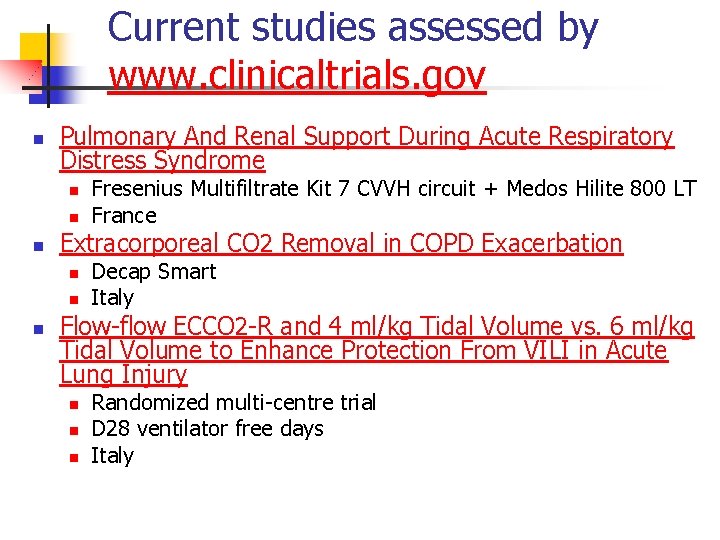
Current studies assessed by www. clinicaltrials. gov n Pulmonary And Renal Support During Acute Respiratory Distress Syndrome n n n Extracorporeal CO 2 Removal in COPD Exacerbation n Fresenius Multifiltrate Kit 7 CVVH circuit + Medos Hilite 800 LT France Decap Smart Italy Flow-flow ECCO 2 -R and 4 ml/kg Tidal Volume vs. 6 ml/kg Tidal Volume to Enhance Protection From VILI in Acute Lung Injury n n n Randomized multi-centre trial D 28 ventilator free days Italy

Thank you.
- Slides: 38