
Extinction Recovery Chapter 6 Extinction Procedure Extinction can

- Slides: 52
Extinction & Recovery Chapter 6
Extinction Procedure • Extinction can be used as an intervention to reduce behavior • Reinforcement must precede use of extinction
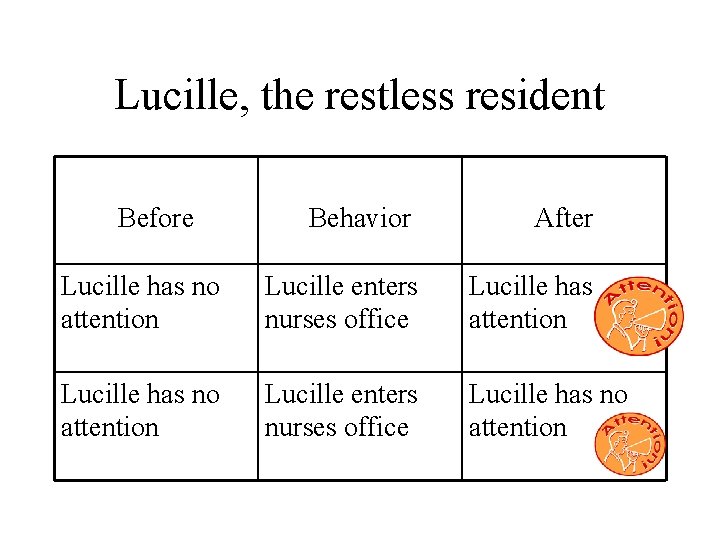
Lucille, the restless resident Before Behavior After Lucille has no attention Lucille enters nurses office Lucille has attention Lucille has no attention Lucille enters nurses office Lucille has no attention
Extinction Principle • Stopping the reinforcement or escape contingency for a previously reinforced response causes the response frequency to decrease
Examples of Extinction • Stop writing with pen when it runs out of ink • Stop calling friend who never answers • Stop trying to push down clutch on car that has an automatic shift
Examples of Extinction • Stop trying to open a locked door with the wrong key • Stop fiddling with a broken TV
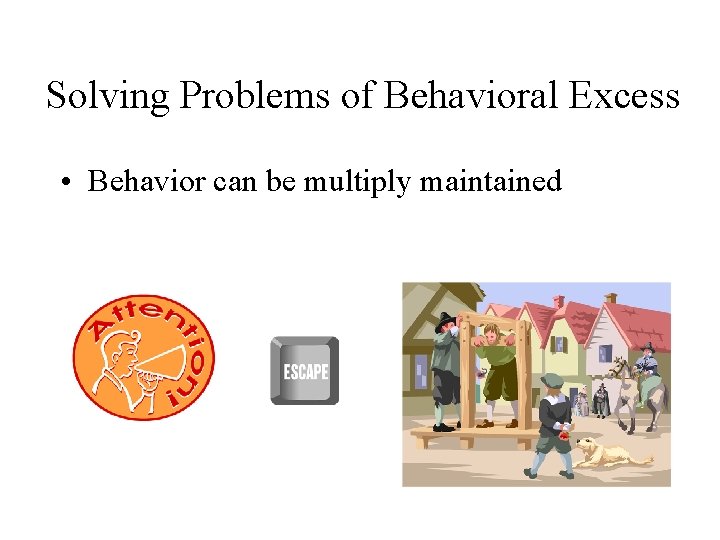
Solving Problems of Behavioral Excess • Behavior can be multiply maintained
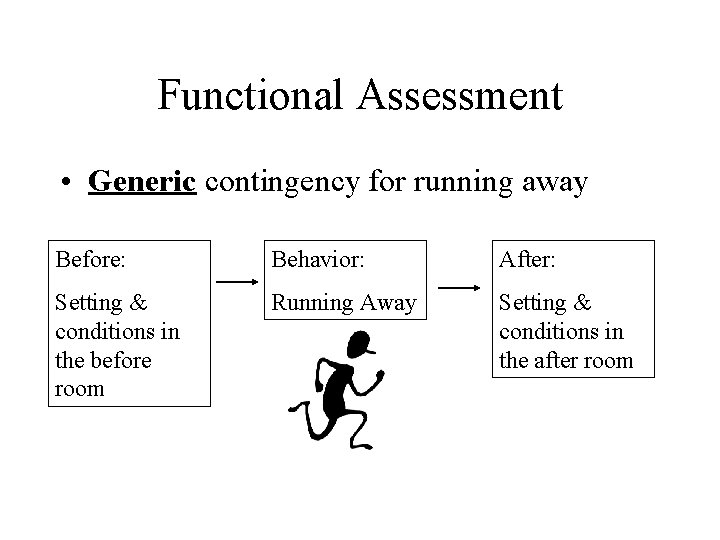
Functional Assessment • Generic contingency for running away Before: Behavior: After: Setting & conditions in the before room Running Away Setting & conditions in the after room
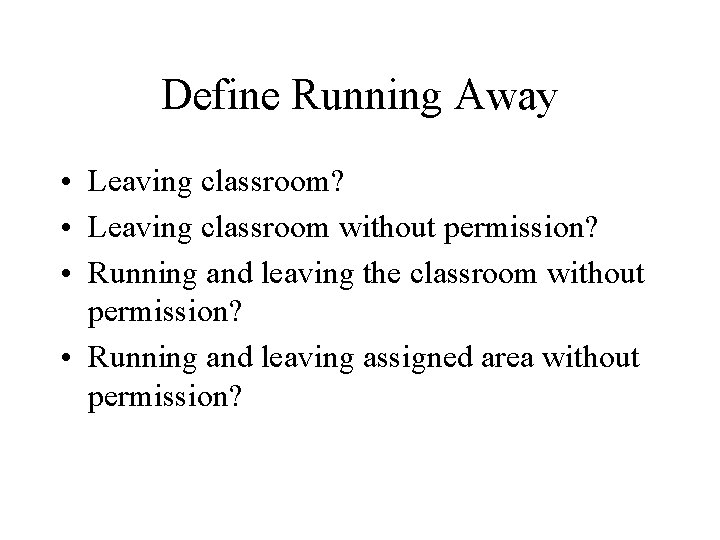
Define Running Away • Leaving classroom? • Leaving classroom without permission? • Running and leaving the classroom without permission? • Running and leaving assigned area without permission?
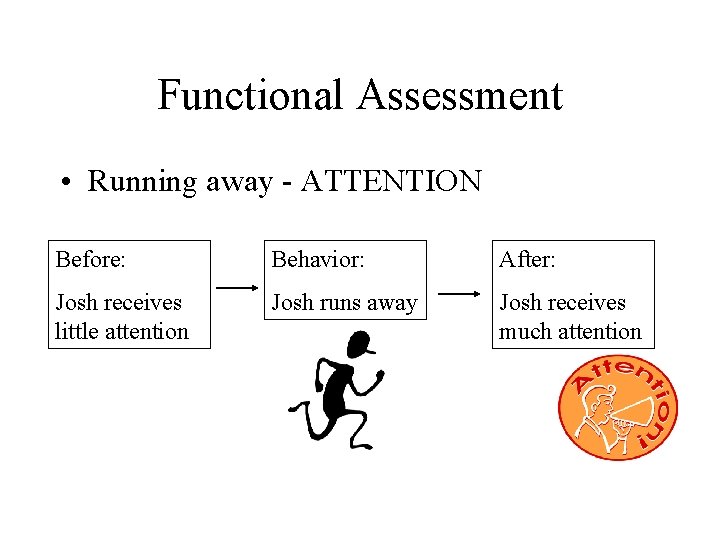
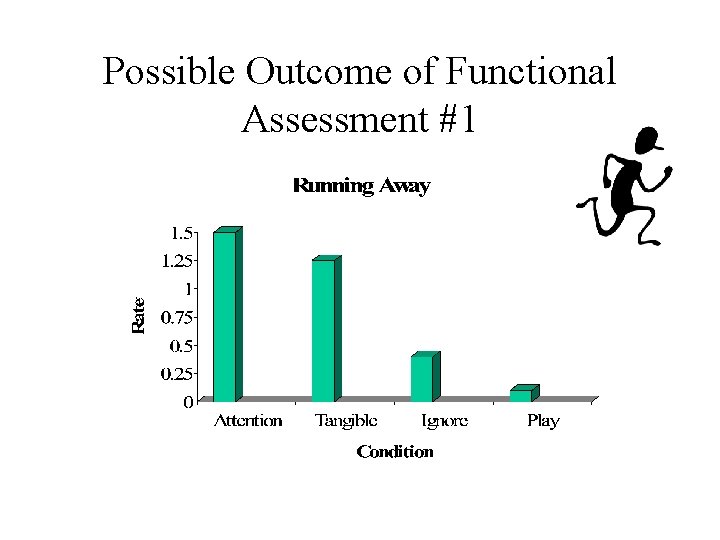
Functional Assessment • Running away - ATTENTION Before: Behavior: After: Josh receives little attention Josh runs away Josh receives much attention
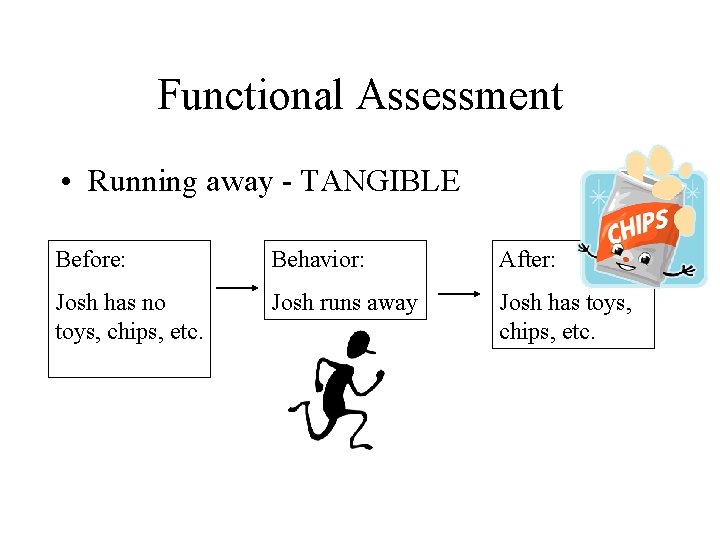
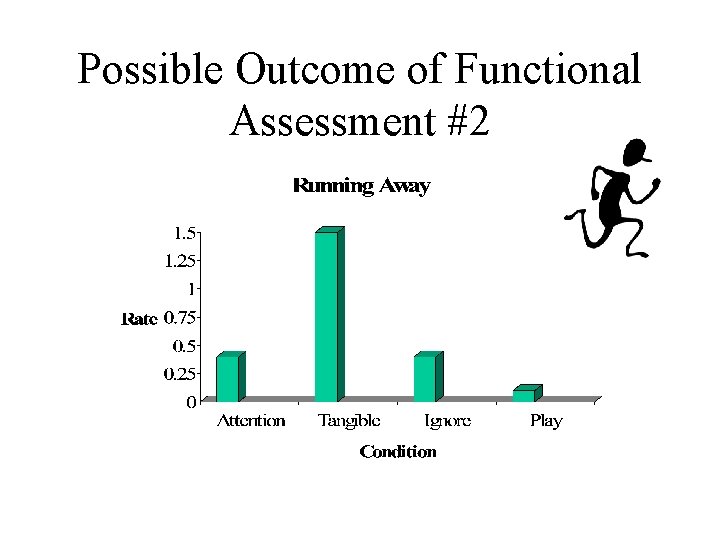
Functional Assessment • Running away - TANGIBLE Before: Behavior: After: Josh has no toys, chips, etc. Josh runs away Josh has toys, chips, etc.
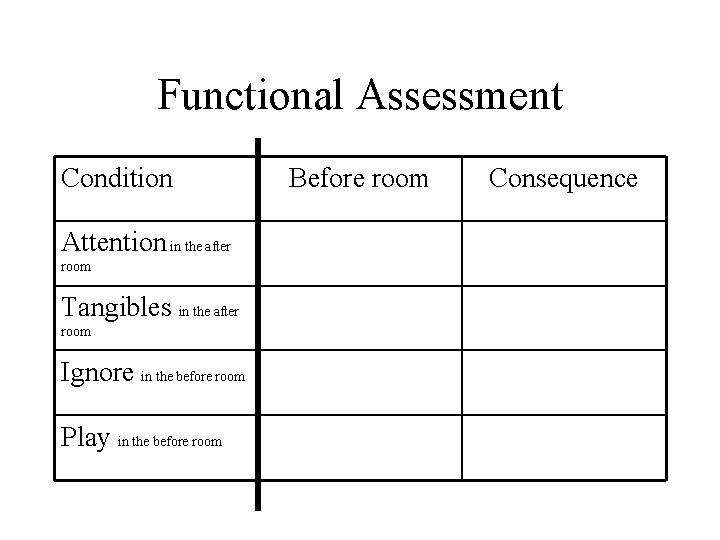
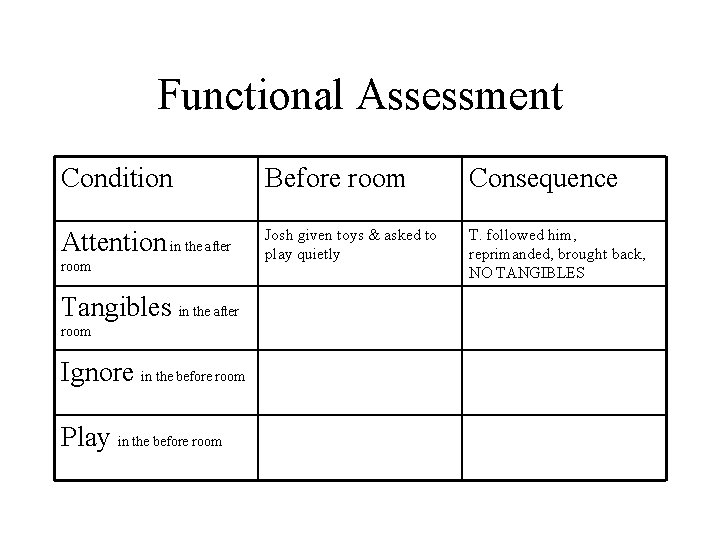
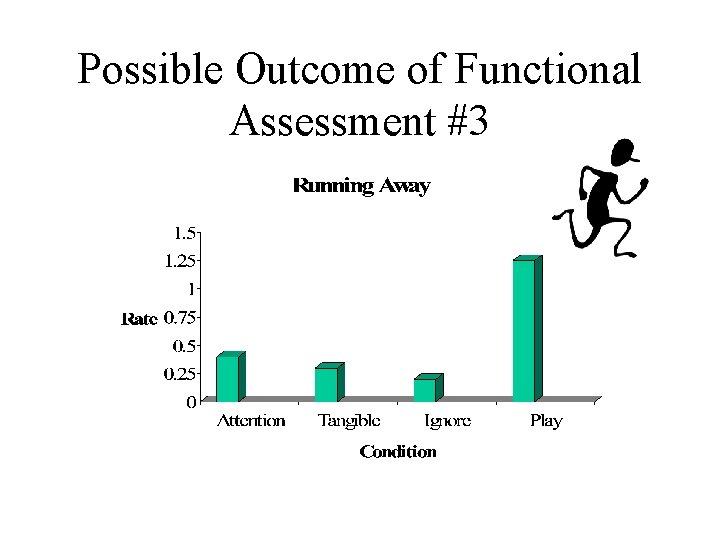
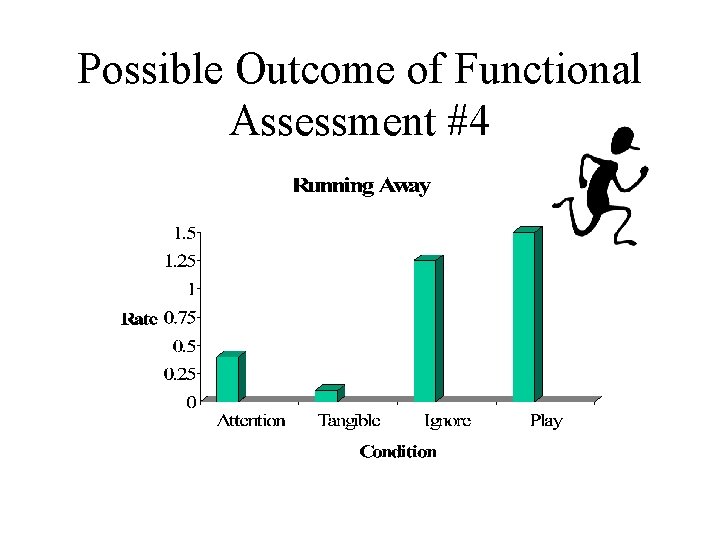
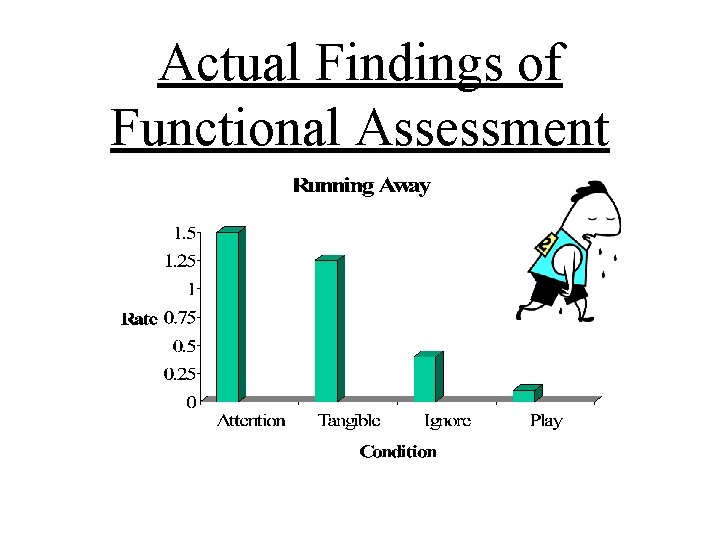
Functional Assessment Condition Attention in the after room Tangibles in the after room Ignore in the before room Play in the before room Before room Consequence
Functional Assessment Condition Before room Consequence Attention in the after Josh given toys & asked to play quietly T. followed him, reprimanded, brought back, NO TANGIBLES room Tangibles in the after room Ignore in the before room Play in the before room
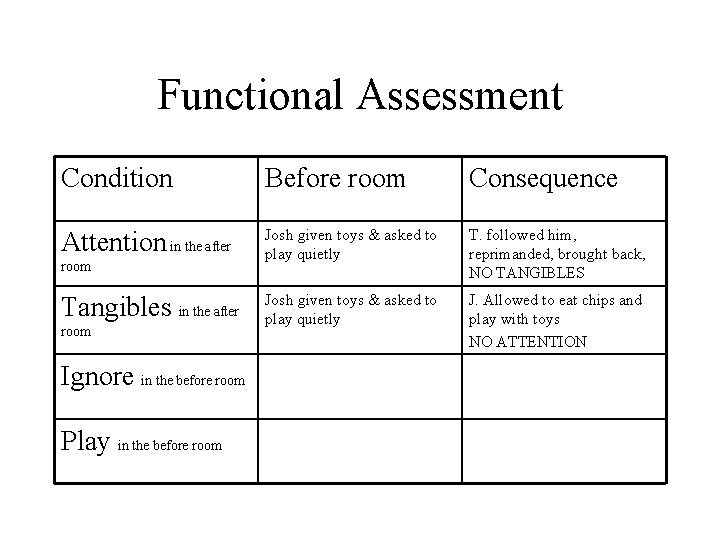
Functional Assessment Condition Before room Consequence Attention in the after Josh given toys & asked to play quietly T. followed him, reprimanded, brought back, NO TANGIBLES Josh given toys & asked to play quietly J. Allowed to eat chips and play with toys NO ATTENTION room Tangibles in the after room Ignore in the before room Play in the before room
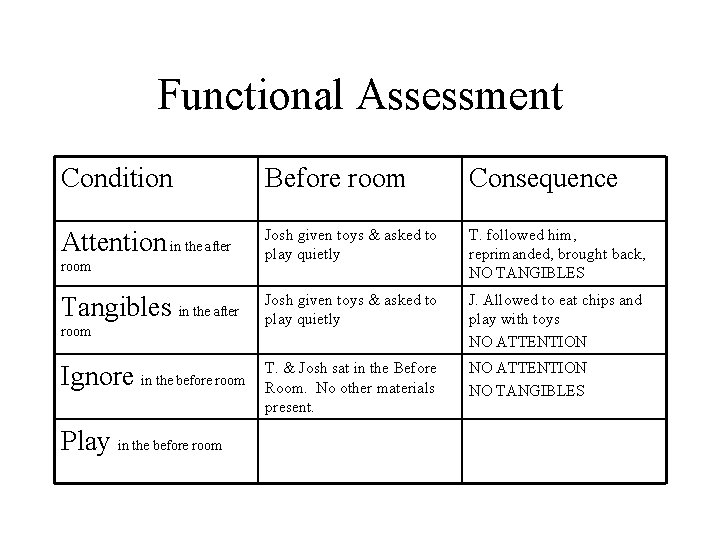
Functional Assessment Condition Before room Consequence Attention in the after Josh given toys & asked to play quietly T. followed him, reprimanded, brought back, NO TANGIBLES Josh given toys & asked to play quietly J. Allowed to eat chips and play with toys NO ATTENTION T. & Josh sat in the Before Room. No other materials present. NO ATTENTION NO TANGIBLES room Tangibles in the after room Ignore in the before room Play in the before room
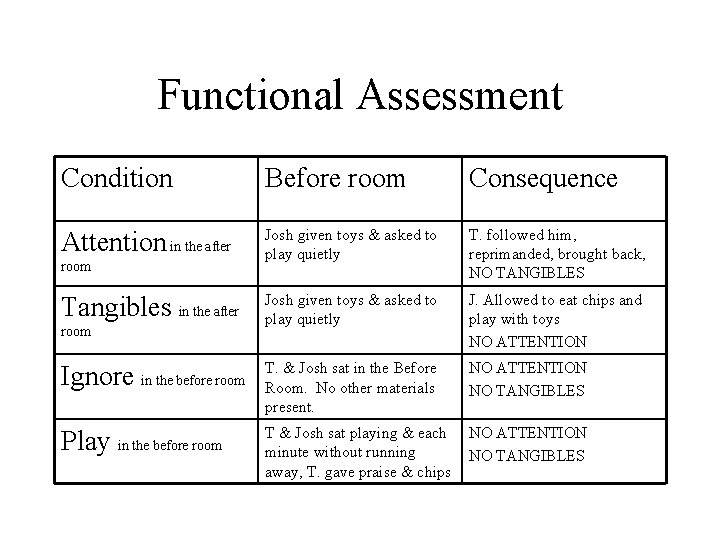
Functional Assessment Condition Before room Consequence Attention in the after Josh given toys & asked to play quietly T. followed him, reprimanded, brought back, NO TANGIBLES Josh given toys & asked to play quietly J. Allowed to eat chips and play with toys NO ATTENTION Ignore in the before room T. & Josh sat in the Before Room. No other materials present. NO ATTENTION NO TANGIBLES Play in the before room T & Josh sat playing & each minute without running away, T. gave praise & chips NO ATTENTION NO TANGIBLES room Tangibles in the after room
Possible Outcome of Functional Assessment #1
Possible Outcome of Functional Assessment #2
Possible Outcome of Functional Assessment #3
Possible Outcome of Functional Assessment #4
Actual Findings of Functional Assessment
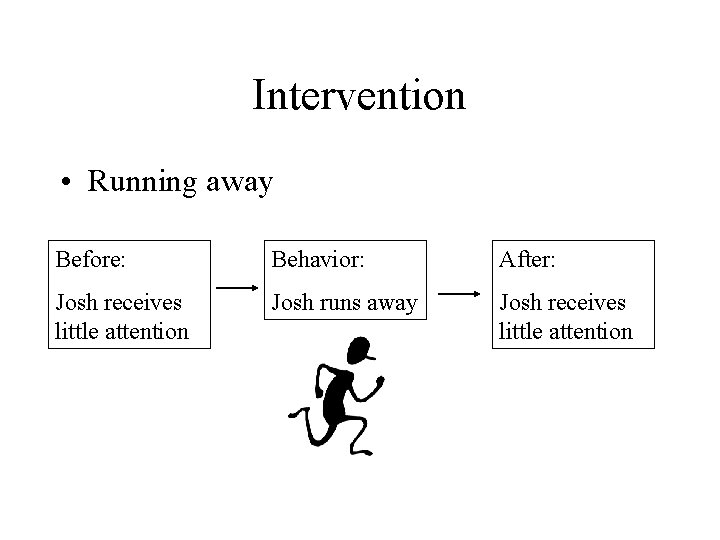
Intervention • Running away Before: Behavior: After: Josh receives little attention Josh runs away Josh receives little attention
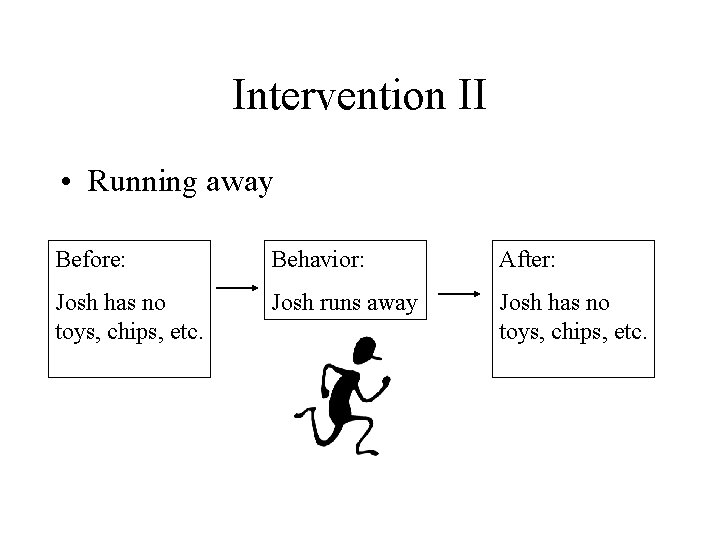
Intervention II • Running away Before: Behavior: After: Josh has no toys, chips, etc. Josh runs away Josh has no toys, chips, etc.
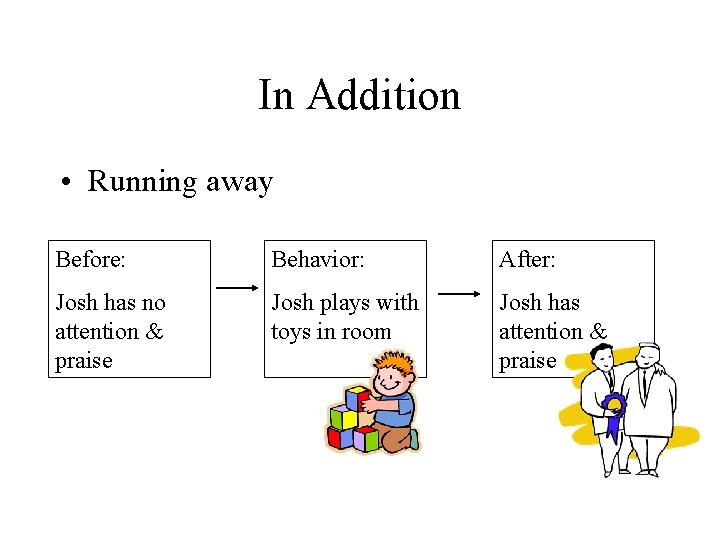
In Addition • Running away Before: Behavior: After: Josh has no attention & praise Josh plays with toys in room Josh has attention & praise
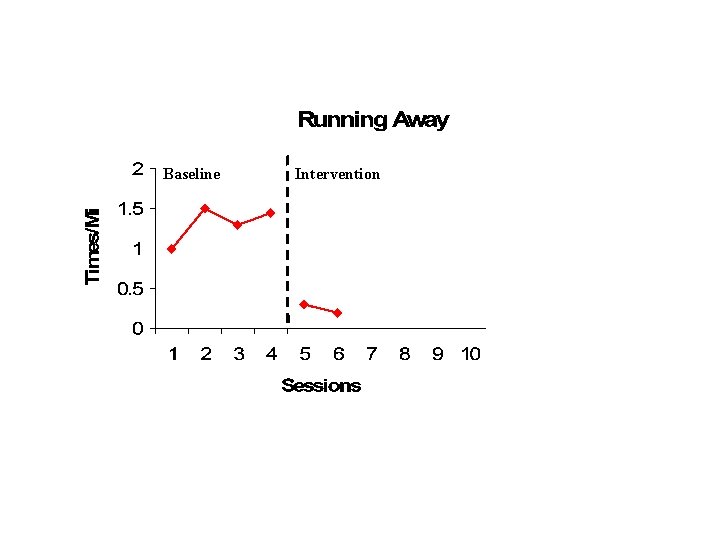
Results of Extinction Intervention • Reduction of behavior of running away • Functional assessment led to use of interventions functionally related to the maladaptive response of running away.
Baseline Intervention
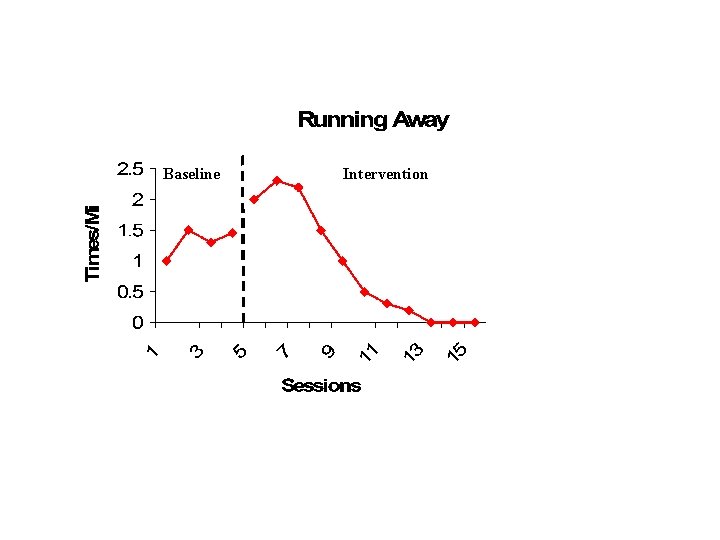
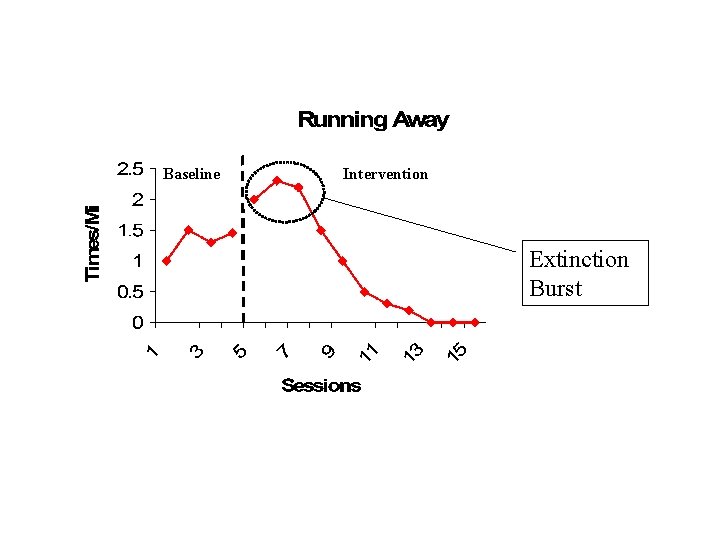
Extinction Bursts • Initial increases in the response frequency, magnitude, or intensity, especially if that response has an “emotional” Or aggressive component.
Baseline Intervention
Baseline Intervention Extinction Burst
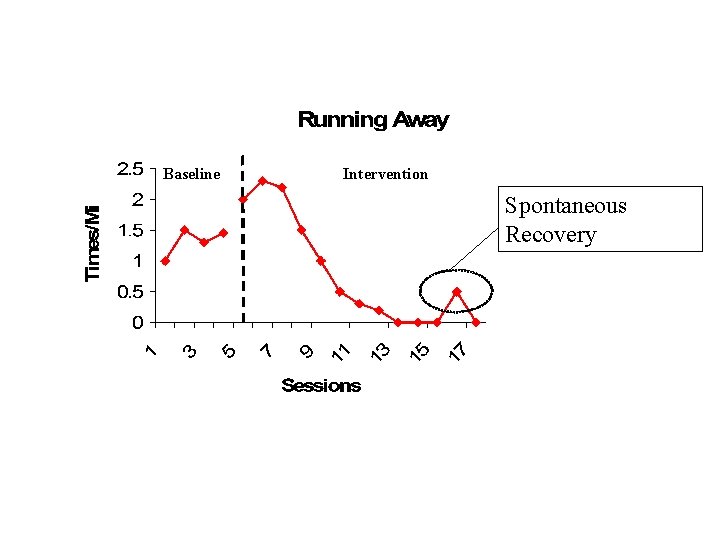
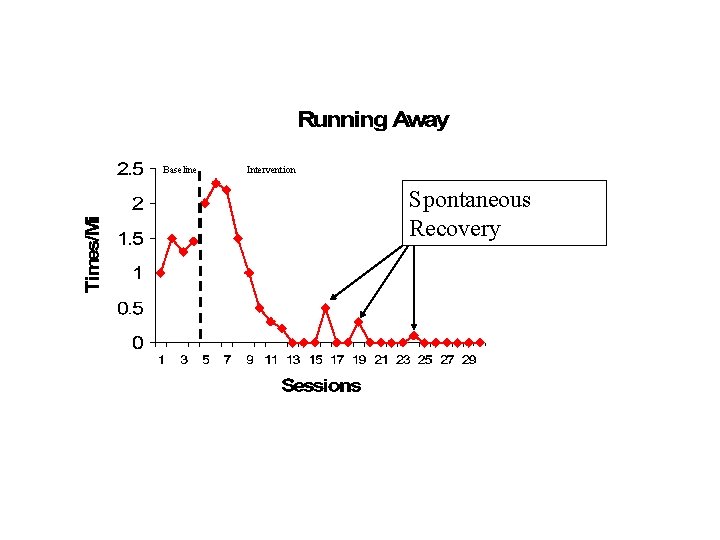
Spontaneous Recovery • A temporary recovery of the extinguished behavior during the first part of extinction sessions that follow the first session.
Baseline Intervention Spontaneous Recovery
Baseline Intervention Spontaneous Recovery
Extinction • What will happen if baseline contingencies occur during spontaneous recovery? • What will happen if baseline contingencies occur during an extinction burst?
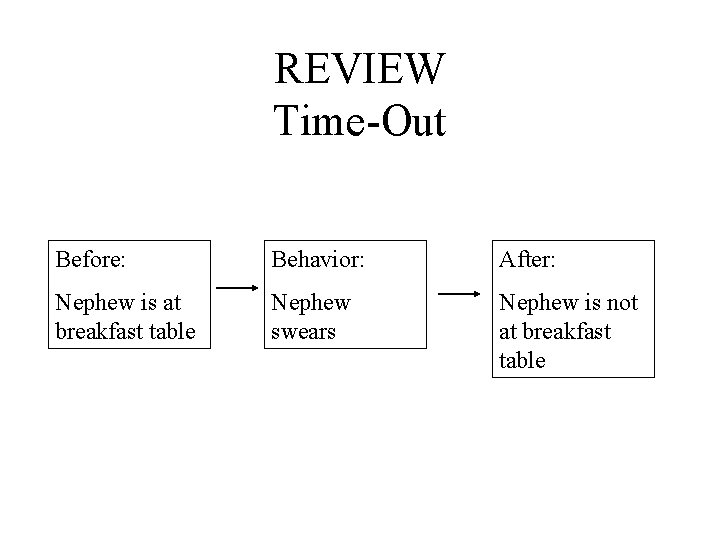
REVIEW Time-Out Before: Behavior: After: Nephew is at breakfast table Nephew swears Nephew is not at breakfast table
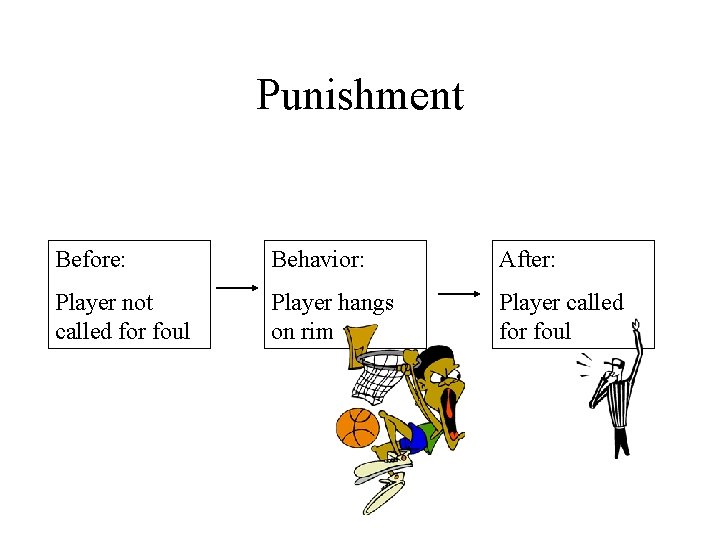
Punishment Before: Behavior: After: Player not called for foul Player hangs on rim Player called for foul
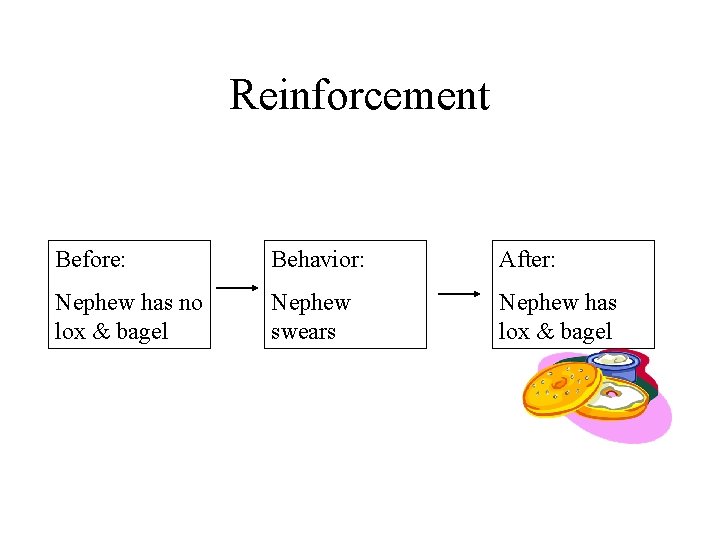
Reinforcement Before: Behavior: After: Nephew has no lox & bagel Nephew swears Nephew has lox & bagel
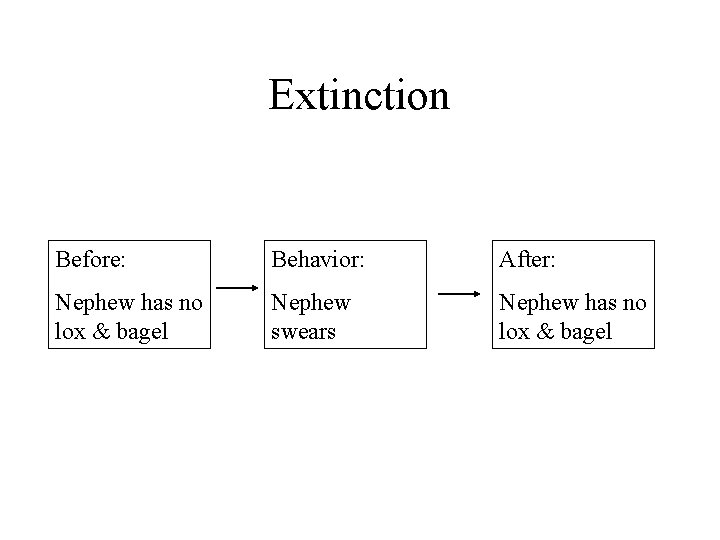
Extinction Before: Behavior: After: Nephew has no lox & bagel Nephew swears Nephew has no lox & bagel
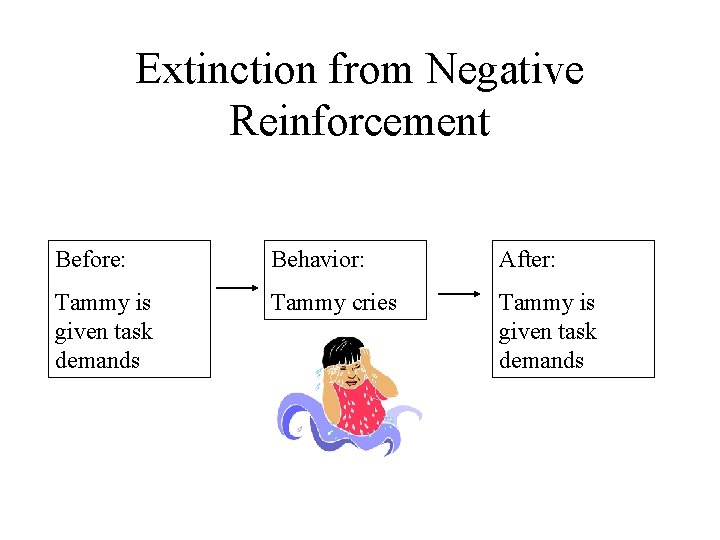
Extinction from Negative Reinforcement Before: Behavior: After: Tammy is given task demands Tammy cries Tammy is given task demands
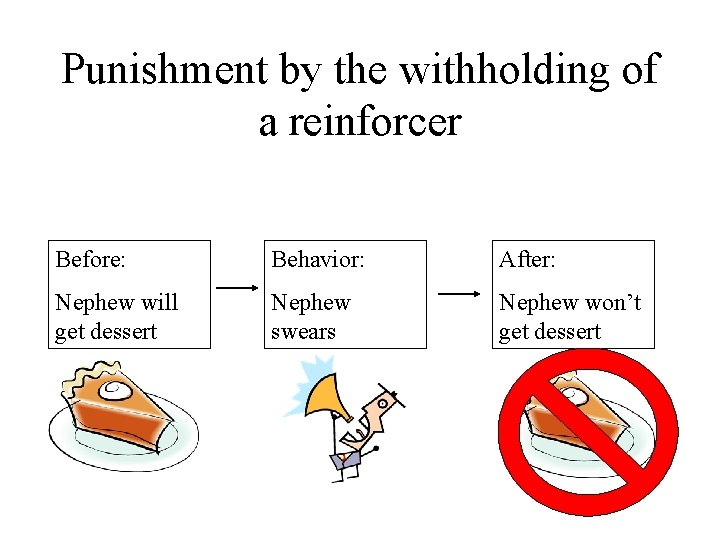
Punishment by the withholding of a reinforcer Before: Behavior: After: Nephew will get dessert Nephew swears Nephew won’t get dessert
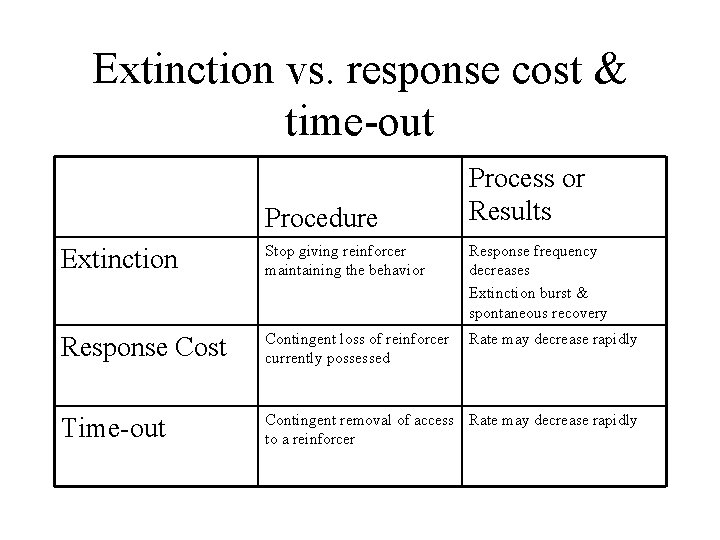
Extinction vs. response cost & time-out Procedure Process or Results Extinction Stop giving reinforcer maintaining the behavior Response frequency decreases Extinction burst & spontaneous recovery Response Cost Contingent loss of reinforcer currently possessed Rate may decrease rapidly Time-out Contingent removal of access Rate may decrease rapidly to a reinforcer
Recovery from Punishment • Stopping the punishment or penalty contingency for a previously punished response causes the response frequency to increase to its frequency before the punishment or penalty contingency • Can you draw a graph that illustrates this?
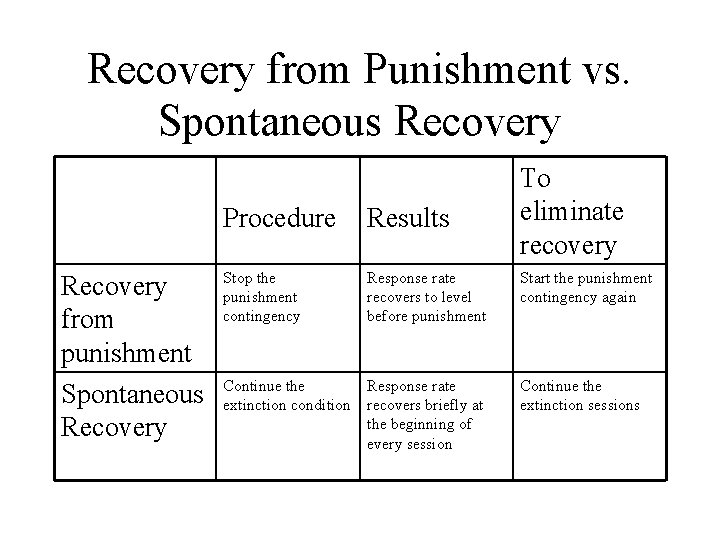
Recovery from Punishment vs. Spontaneous Recovery from punishment Spontaneous Recovery Procedure Results Stop the punishment contingency Response rate recovers to level before punishment Continue the Response rate extinction condition recovers briefly at the beginning of every session To eliminate recovery Start the punishment contingency again Continue the extinction sessions
In extinction following either reinforcement or escape training, everything stays the same, except the response no longer has any effect.
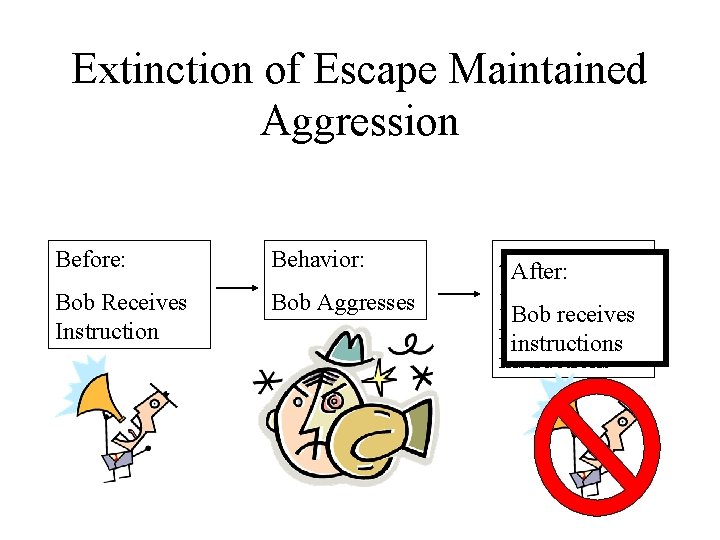
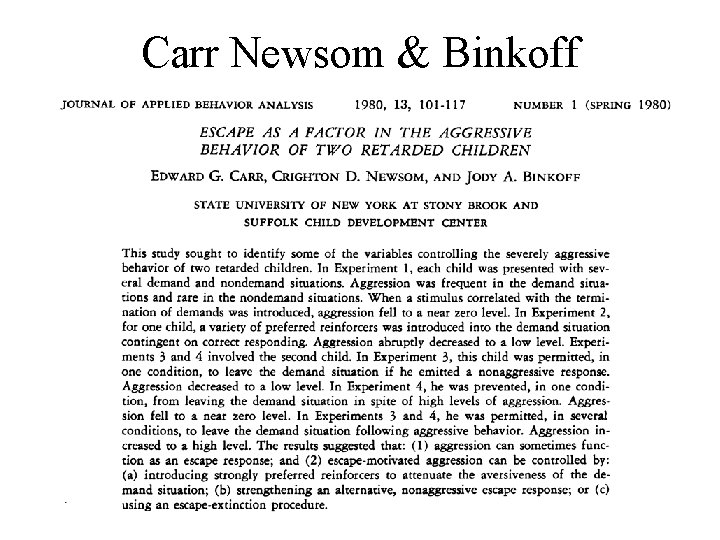
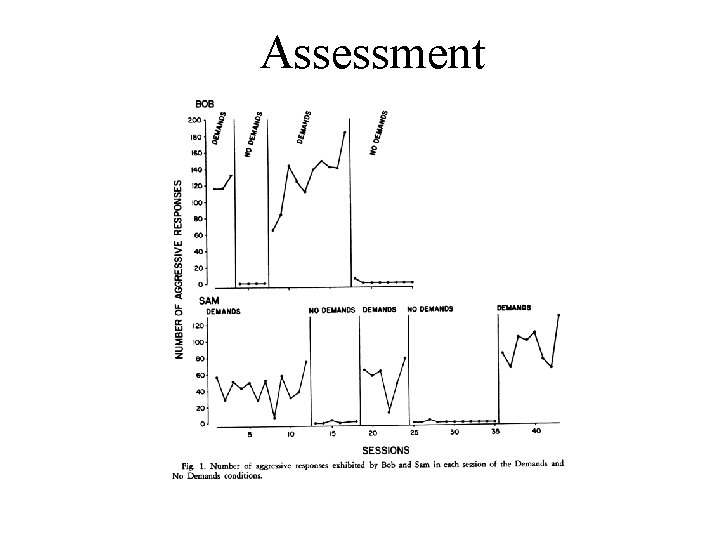
Extinction of Escape Maintained Aggression Before: Behavior: Bob Receives Instruction Bob Aggresses After: Bobreceives noinstructions more instructions
Carr Newsom & Binkoff
Assessment
Extinction from Negative Reinforcement
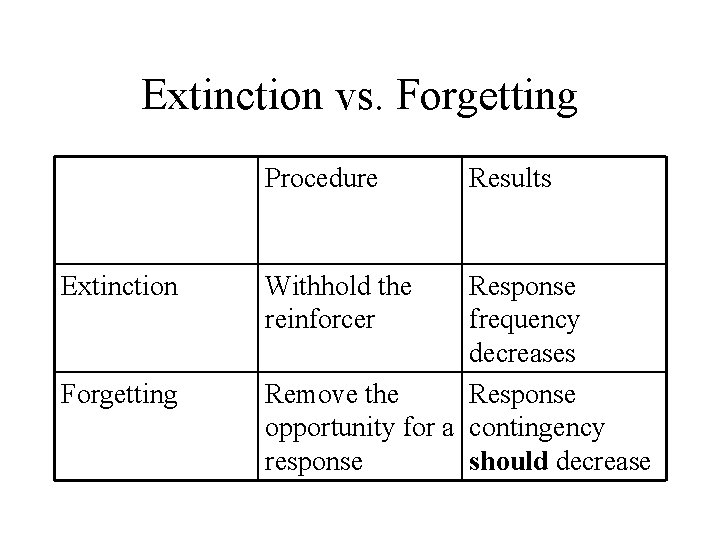
Extinction vs. Forgetting • Forgetting procedure – Preventing the opportunity for a response
Results expected from forgetting procedure • Expect a decreased frequency of a response following a period when the response could not occur. • Is this what happens?
Extinction vs. Forgetting Procedure Extinction Forgetting Withhold the reinforcer Results Response frequency decreases Remove the Response opportunity for a contingency response should decrease
Forgetting • Forget forgetting, there is no such thing.