
EXTERNAL FUNDING PART III PROPOSAL WRITING II Kristin



- Slides: 38
EXTERNAL FUNDING: PART III PROPOSAL WRITING II Kristin Beck Grants Coordinator November 2018
Agenda • Introduction • Overview/Summary • Title • Timeline • Evaluation • Logic Models • Competitiveness • Structure • Common Pitfalls
INTRODUCTION The challenge of concision Aka: Summary, Overview
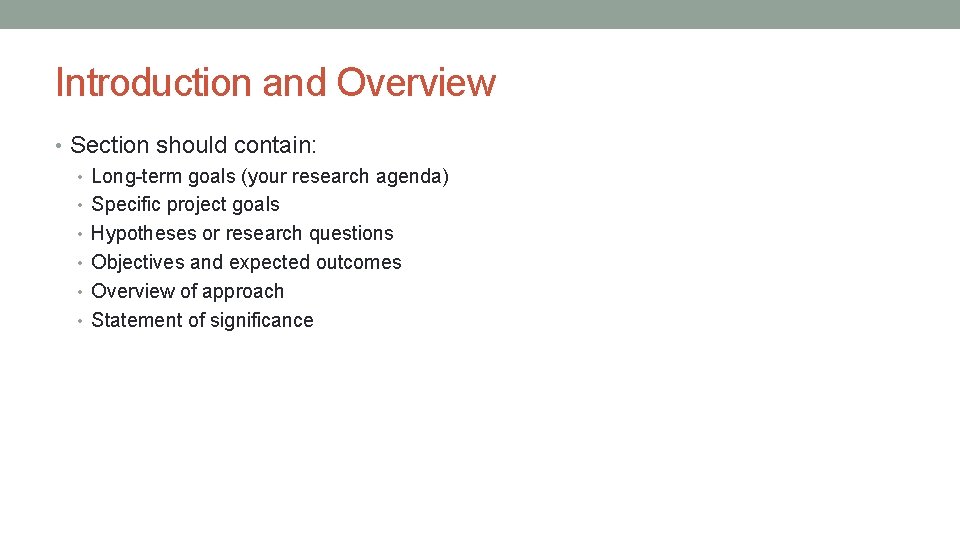
Introduction and Overview • Opening sentence/paragraph should be unique to your project. • Grab the reviewers attention. • After reading the introduction, the reviewer should • Have a basic understanding of the project • Be convinced of the need • Want more details
Introduction and Overview • Section should contain: • Long-term goals (your research agenda) • Specific project goals • Hypotheses or research questions • Objectives and expected outcomes • Overview of approach • Statement of significance
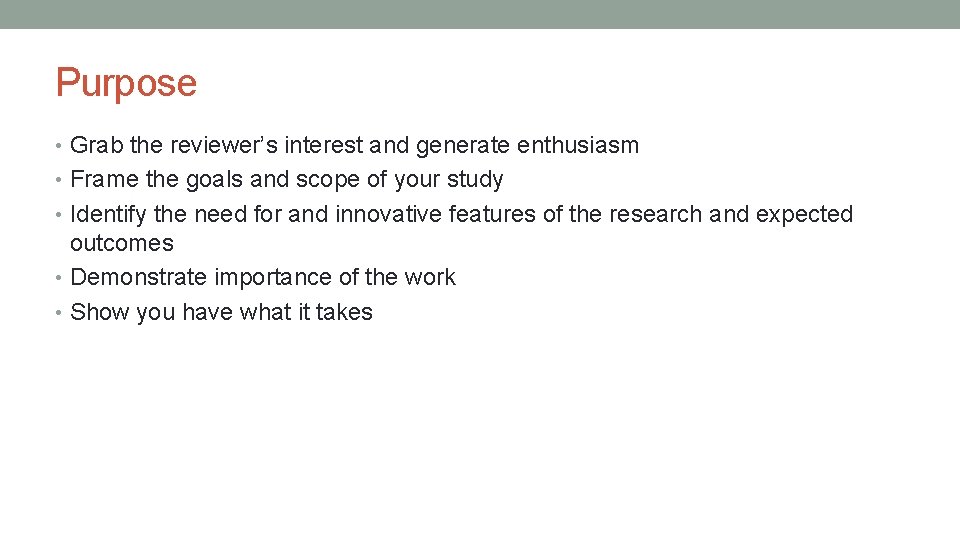
Purpose • Grab the reviewer’s interest and generate enthusiasm • Frame the goals and scope of your study • Identify the need for and innovative features of the research and expected outcomes • Demonstrate importance of the work • Show you have what it takes
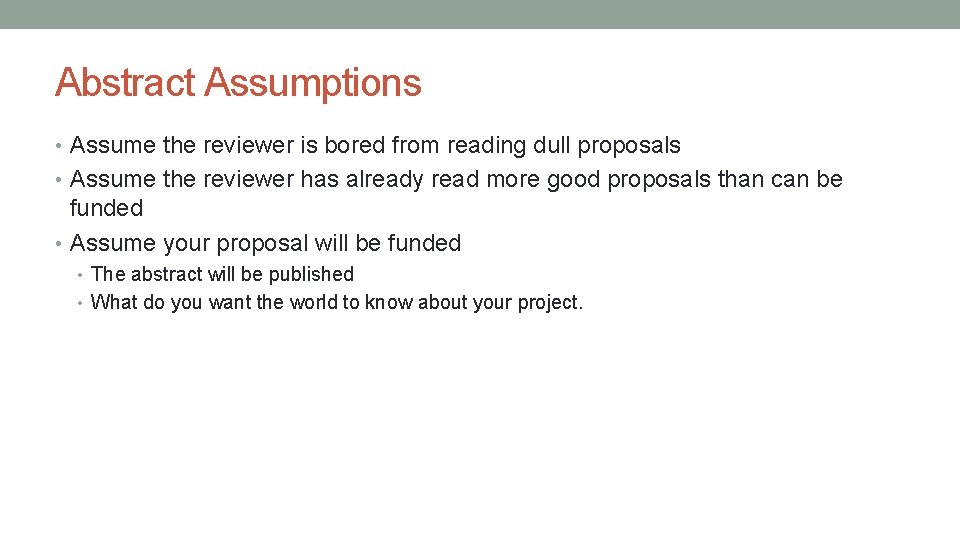
Abstract Assumptions • Assume the reviewer is bored from reading dull proposals • Assume the reviewer has already read more good proposals than can be funded • Assume your proposal will be funded • The abstract will be published • What do you want the world to know about your project.
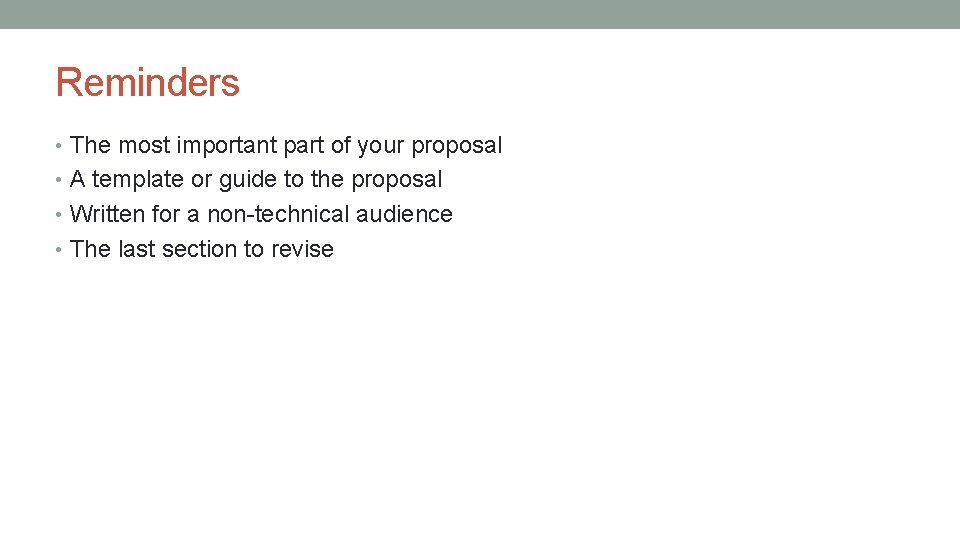
Reminders • The most important part of your proposal • A template or guide to the proposal • Written for a non-technical audience • The last section to revise
TITLES What’s in a name?
Purpose of Titles • Introduce reader to framework and perspective • Prepare the reader for the desired focus • Capture the reader’s attention • Reviewer may begin with the most intriguing titles • Get the reviewer when freshest and most receptive
Titles Should Be • Original • Written in plain language • Use active verbs that point to the outcome of the research • Clear, concise, and meaningful • Viewed as a work in progress
Writing Your Title • List all appropriate elements and weave them into various permutations • Rework your title to clarify, shorten, make more precise • Ask yourself • Is it understandable? • Is it easy to guess the content of the proposal? • Would a few word changes make it more interesting or effective to a non-specialist?
Titles of Projects submitted by NMU • C 3 PO for Students (Coding and Circuits for Cultivating Potential and Opportunity for Students) • An Assessment of the Effects of Mountain Biking in Marquette on Michigan’s Ecotourism Economy: Co-Learning Plan • Implementing a Student Support Services Program to Support First Generation, Low Income Students and Students with Disabilities • Population and Habitat Use of Spruce Grouse (Falcipennis canadensis) in the Central Upper Peninsula of Michigan • Supramolecular Catalyst Assembled through Aromatic Donor-acceptor Interaction and Its Application in Asymmetric Ring Opening Reactions of Epoxides
• Digital Humanities Institute: Photovoice Stories Using Technology for Educator -Researchers (Digital HIPSTERs) • STEP UP to MESS (Secondary Teacher Education for the Upper Peninsula in Mathematics, English Literacy, Science and Social Studies) • Educator Evaluation Research and Evaluation Activities
Titles Include • Dependent and independent variables • Performance component represented by criterion task • Treatment to be administered • Model underlying the study
Titles Include • Purpose of the study (can be implied) • Study of relationship: “Anthropometrics, Swimming Speed, and Shoulder-Girdle Strength” • Study of differences: “Anthropometrics and Shoulder-Girdle Strength of Fast and Slow Swimmers. ” • Any unusual contribution of the study • Length or magnitude: “Longitudinal Analysis of Human Short-Term Memory from Age 20 to Age 80” • Creative method: “Hand Preference in Telephone Use as a Measure of Limb Dominance and Laterality” • Unique sampling technique: “Intelligence of Children Whose Parents Own Personal Computers. ” • Unusual measurement site: “Perceptual Judgment in a Weightless Environment: Report from the Space Shuttle. ”
Elements to Exclude • Population, research design, instrumentation (unless they represent a substantial departure from similar studies) • Eliminate redundancies • Aspects of • Comments on • Study of • Investigation of • Inquiry into • An Analysis of
Writing Your Title • List all appropriate elements and weave them into various permutations. • Rework your title to clarify, shorten, make more precise • Ask yourself • Is it understandable? • Is it easy to guess the content of the proposal based on the title? • Would a few word changes make it more interesting or effective to a non-specialist?
PULLING IT ALL TOGETHER Is your plan persuasive?
Capture and Keep Attention • Organize • Offer roadmaps to keep reader headed in the right direction • Highlight • Don’t bury critical information • Don’t emphasize that are less important • Funnel • From the big picture to research specifics • Focus • Avoid information that detracts from or dilutes
Write with the Reviewers in Mind • Reviewers: • Are tired and overworked • Probably wear bifocals • May be reading your proposal at 2 am • Make it easy for them and they will love you • Follow directions • Clearly address review criteria • Include lots of headings, figures, white space
Storytelling • Tell a story that • Unfolds in a way the reader can follow • Doesn’t violate the reader’s sense of logic • Makes the reader want to know what will happen next • Communicate your excitement • Good science is interesting
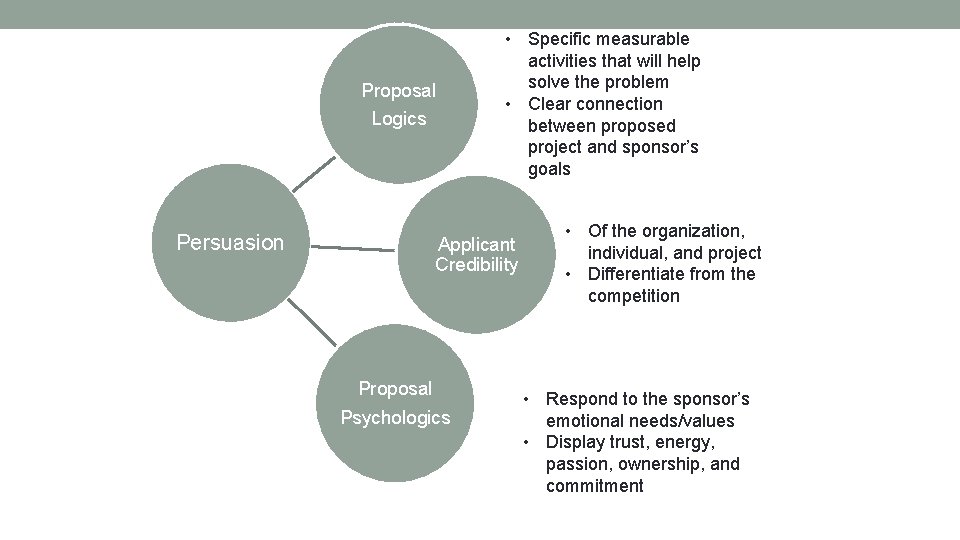
Proposal Logics Persuasion • Specific measurable activities that will help solve the problem • Clear connection between proposed project and sponsor’s goals Applicant Credibility Proposal Psychologics • Of the organization, individual, and project • Differentiate from the competition • Respond to the sponsor’s emotional needs/values • Display trust, energy, passion, ownership, and commitment
POTENTIAL PITFALLS
Return Without Review • Inappropriate for funding by the agency • Doesn’t meet specific requirements (deadline) • Submitted with insufficient lead time before the project is to begin • Duplicate of a proposal already under review or already awarded • Not substantially revised after previously reviewed and declined
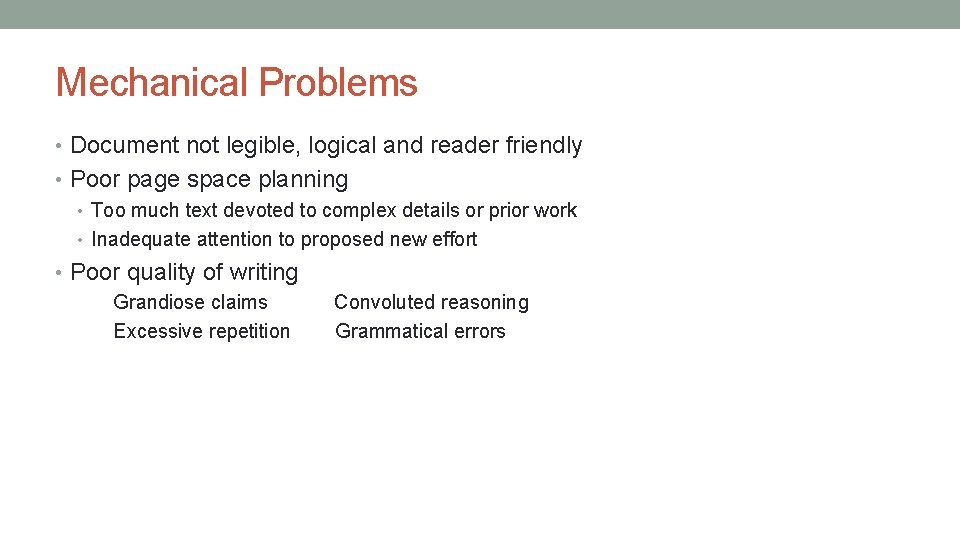
Mechanical Problems • Document not legible, logical and reader friendly • Poor page space planning • Too much text devoted to complex details or prior work • Inadequate attention to proposed new effort • Poor quality of writing Grandiose claims Excessive repetition Convoluted reasoning Grammatical errors
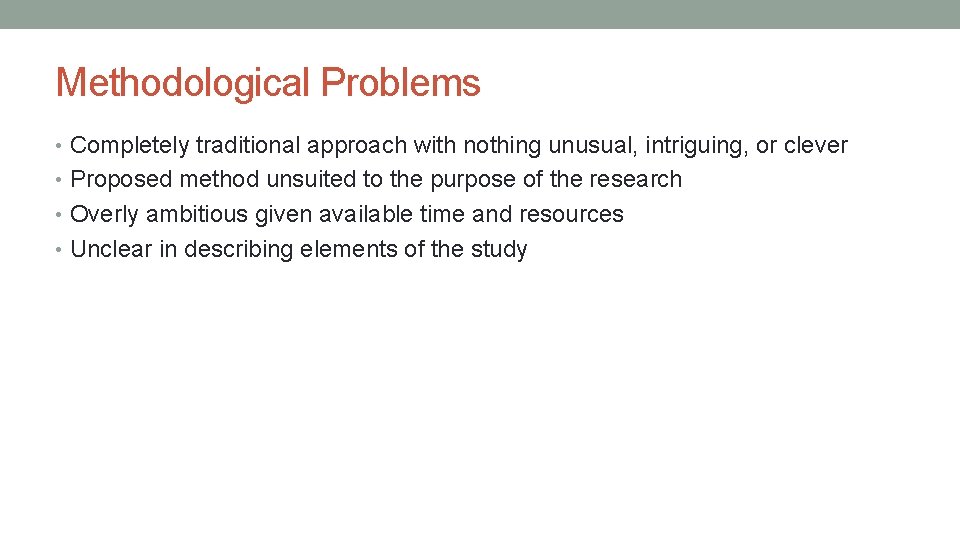
Methodological Problems • Completely traditional approach with nothing unusual, intriguing, or clever • Proposed method unsuited to the purpose of the research • Overly ambitious given available time and resources • Unclear in describing elements of the study
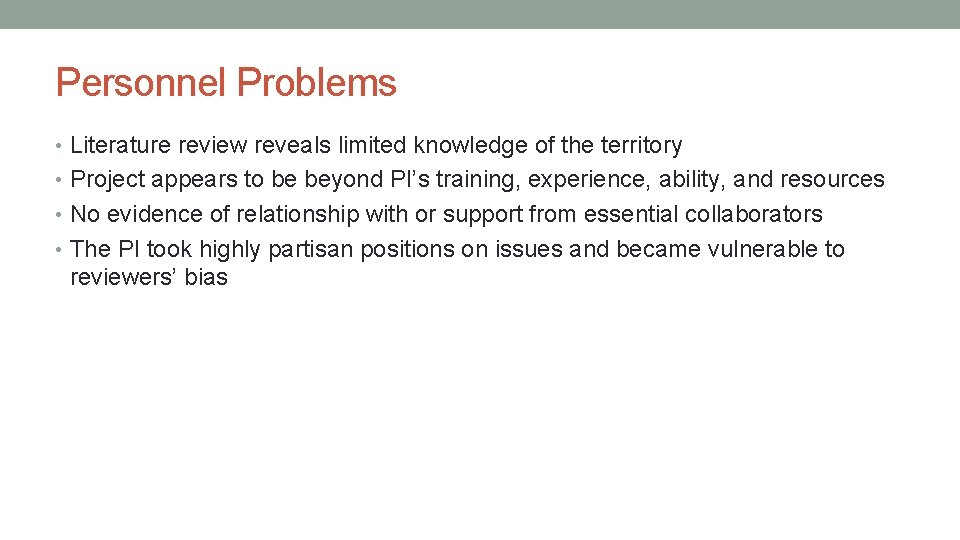
Personnel Problems • Literature review reveals limited knowledge of the territory • Project appears to be beyond PI’s training, experience, ability, and resources • No evidence of relationship with or support from essential collaborators • The PI took highly partisan positions on issues and became vulnerable to reviewers’ bias
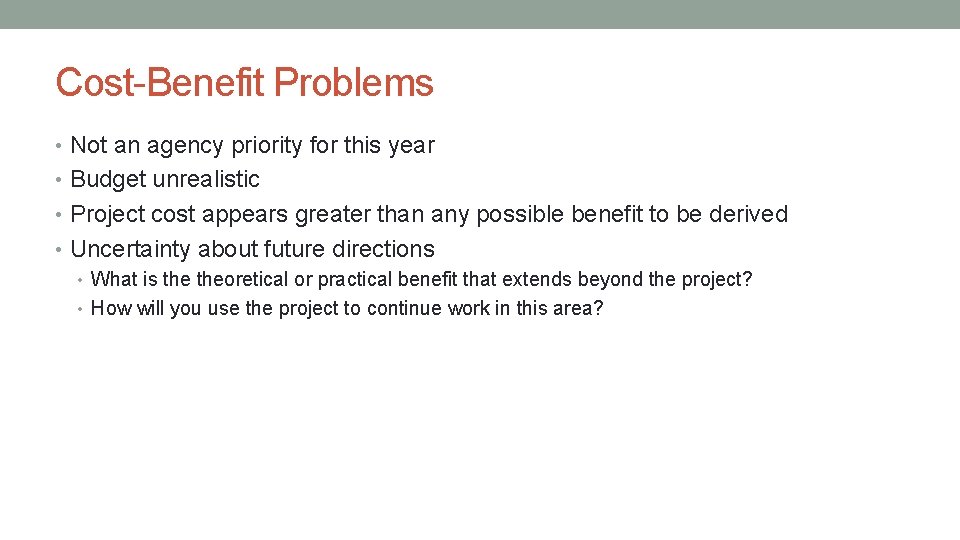
Cost-Benefit Problems • Not an agency priority for this year • Budget unrealistic • Project cost appears greater than any possible benefit to be derived • Uncertainty about future directions • What is theoretical or practical benefit that extends beyond the project? • How will you use the project to continue work in this area?
STRATEGIES
• Clearly identify novelty and distinguish your approach from others • Consider both empirical and theoretical contributions that may emerge • Show your work will address concerns specific to the agency
Overall Strategies • Remember the cornerstones of good research • Important questions • The best and most appropriate methods • Appropriate analysis and application of results • Synthesis and timely dissemination of results • Promise success through • Clarity of presentation • Sharp focus on important problem • Clearly defined, experimental model • A few specific, testable hypotheses
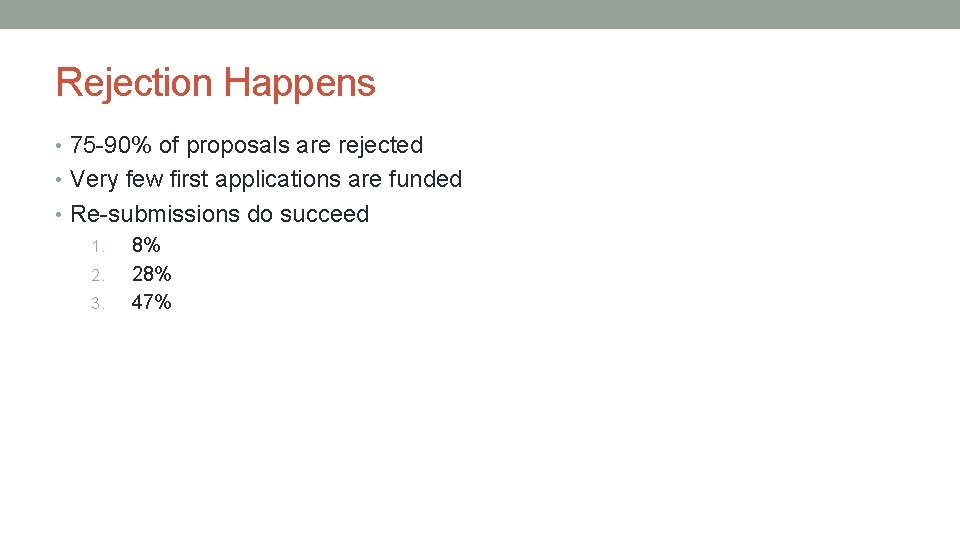
Rejection Happens • 75 -90% of proposals are rejected • Very few first applications are funded • Re-submissions do succeed 1. 8% 2. 28% 3. 47%
Analyzing the Reviews • Did the reviewers have particular concerns that you can address? • Were the reviewers confused or unclear about your project? • Were the reviewers unimpressed by the significance or novelty of your research idea? • Be careful about chasing one comment by one reviewer – look at the Panel Summary.
Call the Program Officer • Be nice! • Ask for clarification of reviewer comments • Ask for advice • Should you resubmit? • Should you apply to a different program? • What would strengthen your proposal?
Questions?
Next Sessions • November 28 • WS 2803 • 8: 00 am
Any Questions • Kristin Beck • krbeck@nmu. edu • x 1893