
External Forces that change the Earth Weathering Erosion
- Slides: 10
External Forces that change the Earth Weathering Erosion Deposition What do you know about these forces?
Weathering is the process where rock is dissolved, worn away or broken down into smaller and smaller pieces. There are mechanical, chemical and organic weathering processes.
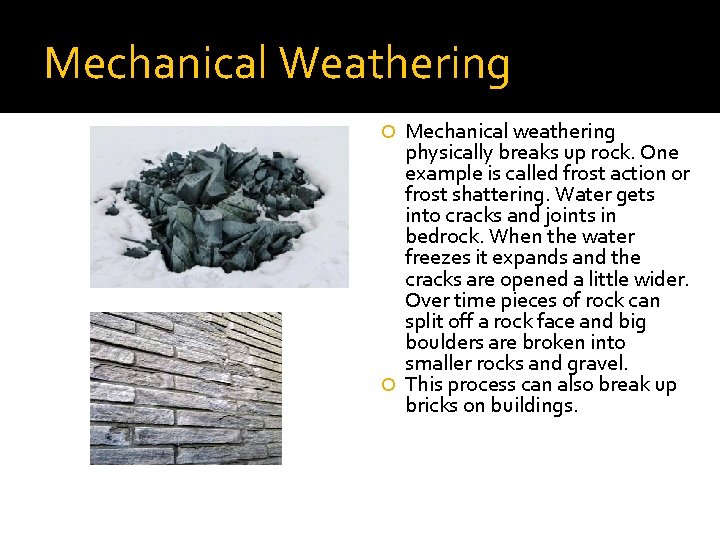
Mechanical Weathering Mechanical weathering physically breaks up rock. One example is called frost action or frost shattering. Water gets into cracks and joints in bedrock. When the water freezes it expands and the cracks are opened a little wider. Over time pieces of rock can split off a rock face and big boulders are broken into smaller rocks and gravel. This process can also break up bricks on buildings.
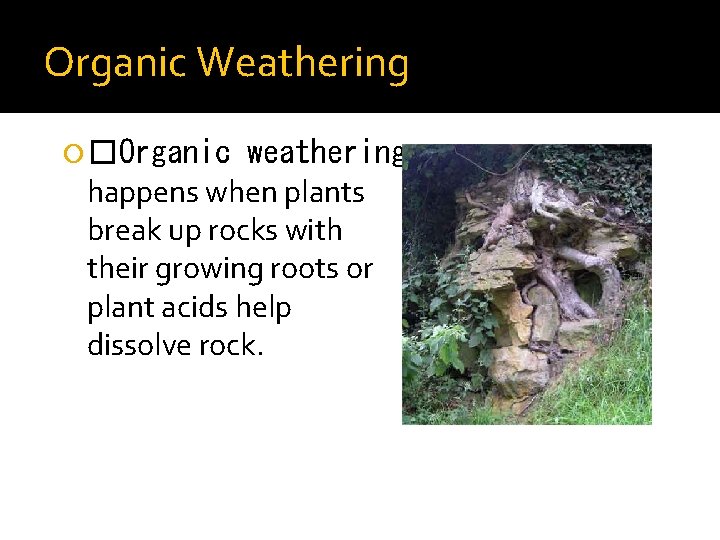
Organic Weathering �Organic weathering happens when plants break up rocks with their growing roots or plant acids help dissolve rock.
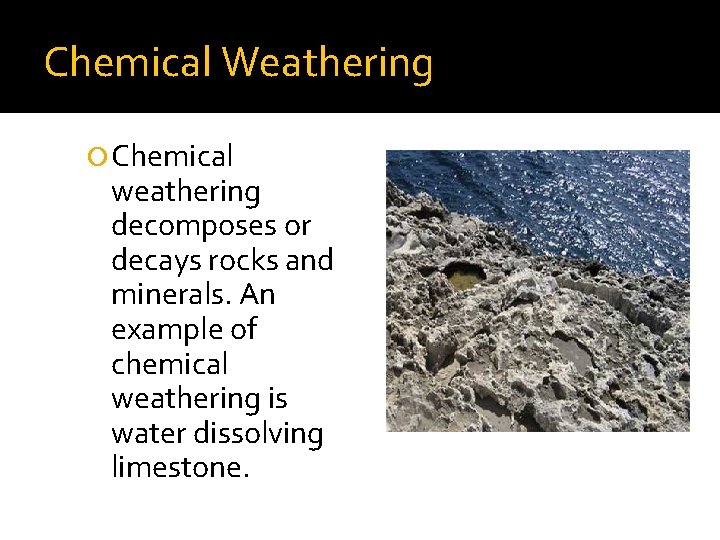
Chemical Weathering Chemical weathering decomposes or decays rocks and minerals. An example of chemical weathering is water dissolving limestone.
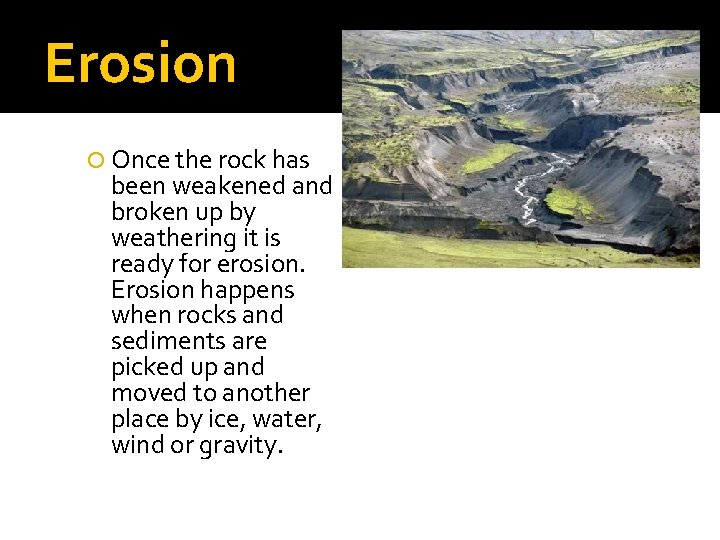
Erosion Once the rock has been weakened and broken up by weathering it is ready for erosion. Erosion happens when rocks and sediments are picked up and moved to another place by ice, water, wind or gravity.
Deposition Deposition- the process in which sediment is laid down in new locations. This is done by water, glaciers and wind. The end result of erosion
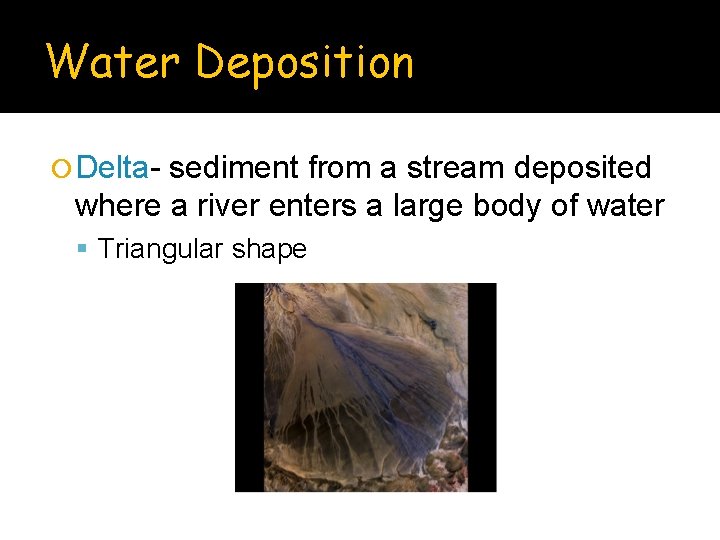
Water Deposition Delta- sediment from a stream deposited where a river enters a large body of water Triangular shape
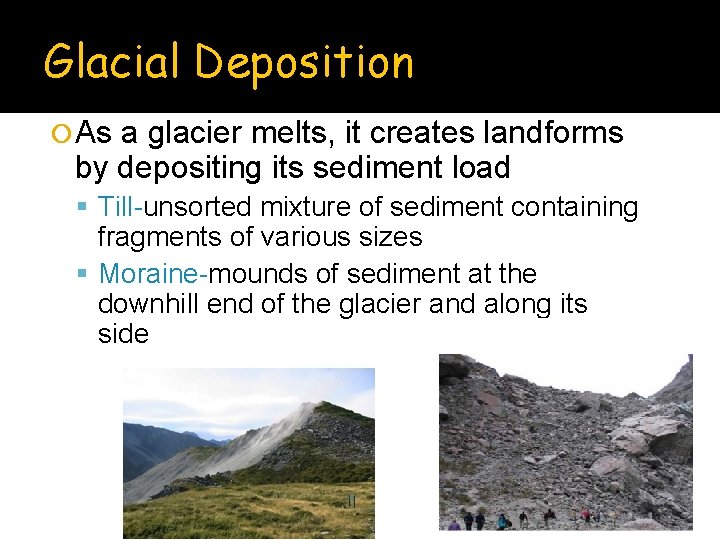
Glacial Deposition As a glacier melts, it creates landforms by depositing its sediment load Till-unsorted mixture of sediment containing fragments of various sizes Moraine-mounds of sediment at the downhill end of the glacier and along its side
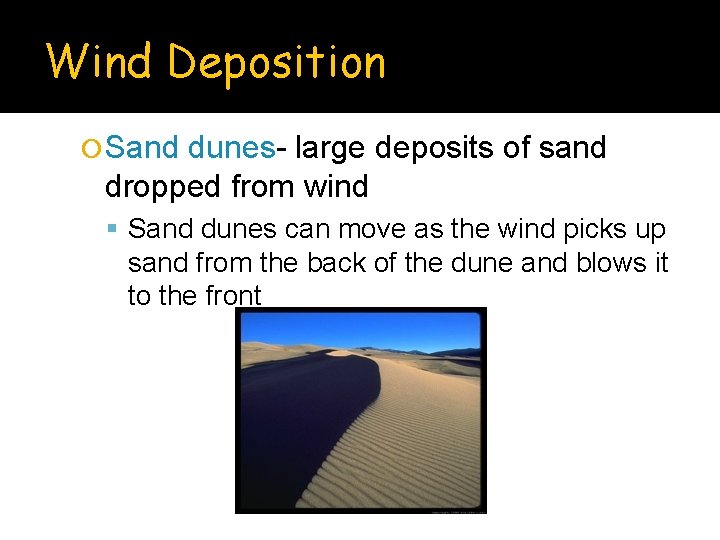
Wind Deposition Sand dunes- large deposits of sand dropped from wind Sand dunes can move as the wind picks up sand from the back of the dune and blows it to the front �