
External Forces Shaping the Earth Erosion Even though

- Slides: 11
External Forces Shaping the Earth
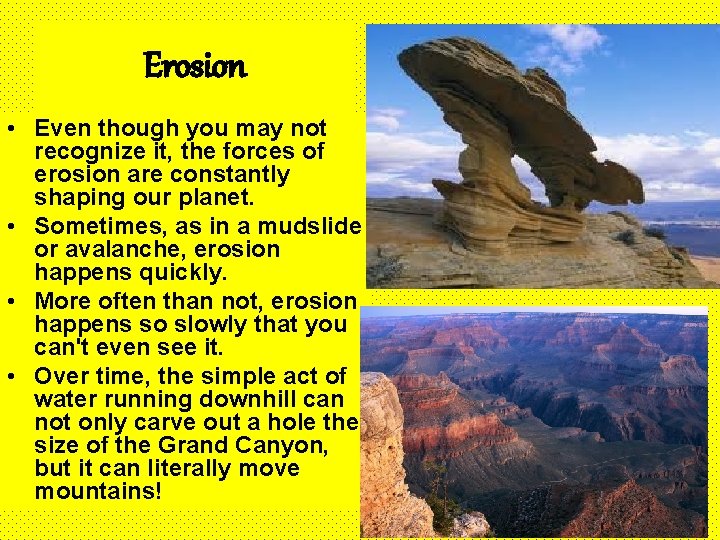
Erosion • Even though you may not recognize it, the forces of erosion are constantly shaping our planet. • Sometimes, as in a mudslide or avalanche, erosion happens quickly. • More often than not, erosion happens so slowly that you can't even see it. • Over time, the simple act of water running downhill can not only carve out a hole the size of the Grand Canyon, but it can literally move mountains!
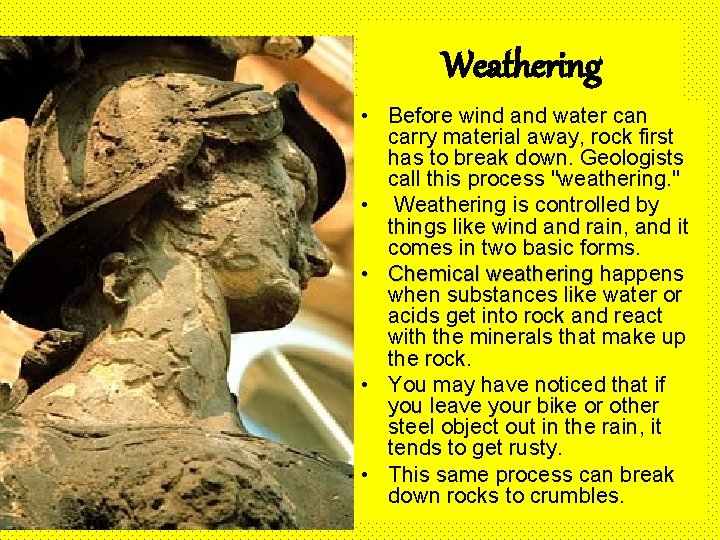
Weathering • Before wind and water can carry material away, rock first has to break down. Geologists call this process "weathering. " • Weathering is controlled by things like wind and rain, and it comes in two basic forms. • Chemical weathering happens when substances like water or acids get into rock and react with the minerals that make up the rock. • You may have noticed that if you leave your bike or other steel object out in the rain, it tends to get rusty. • This same process can break down rocks to crumbles.
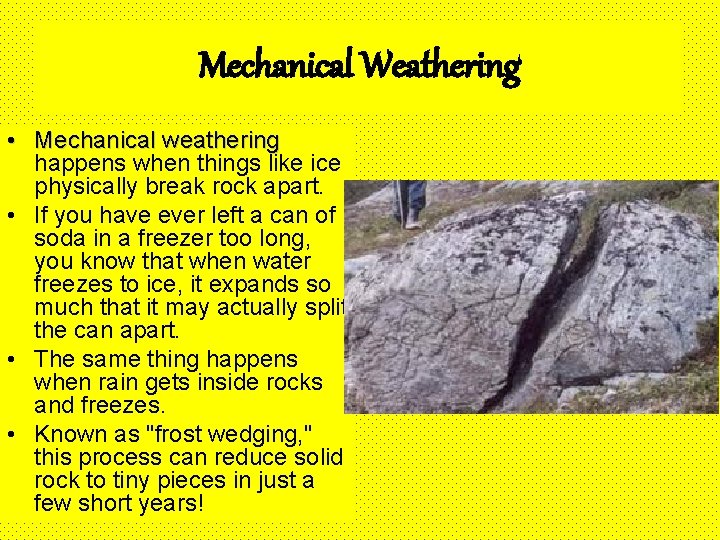
Mechanical Weathering • Mechanical weathering happens when things like ice physically break rock apart. • If you have ever left a can of soda in a freezer too long, you know that when water freezes to ice, it expands so much that it may actually split the can apart. • The same thing happens when rain gets inside rocks and freezes. • Known as "frost wedging, " this process can reduce solid rock to tiny pieces in just a few short years!
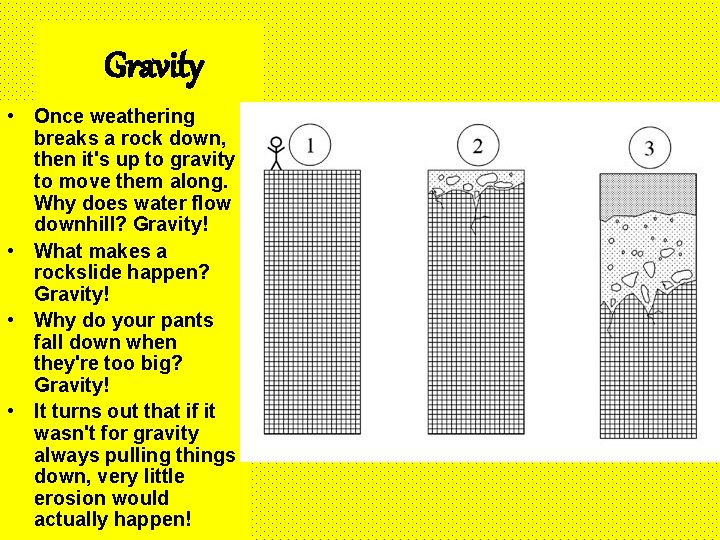
Gravity • Once weathering breaks a rock down, then it's up to gravity to move them along. Why does water flow downhill? Gravity! • What makes a rockslide happen? Gravity! • Why do your pants fall down when they're too big? Gravity! • It turns out that if it wasn't for gravity always pulling things down, very little erosion would actually happen!
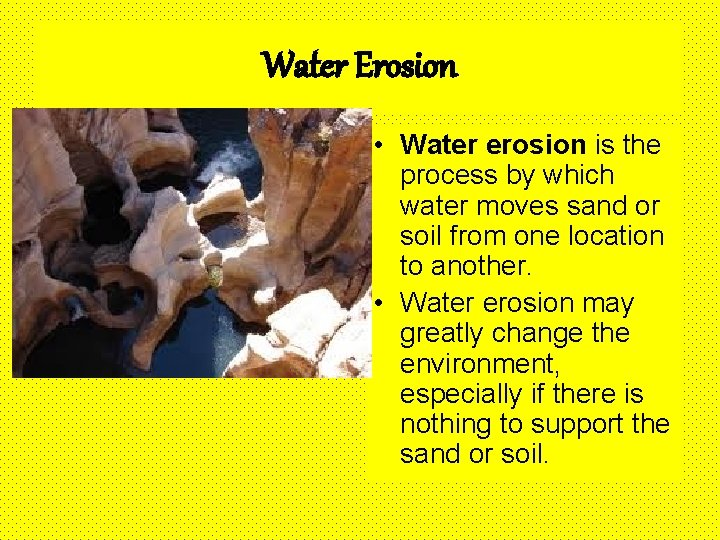
Water Erosion • Water erosion is the process by which water moves sand or soil from one location to another. • Water erosion may greatly change the environment, especially if there is nothing to support the sand or soil.
• http: //www. history. com/sh ows/how-the-earth-wasmade/videos/erosion
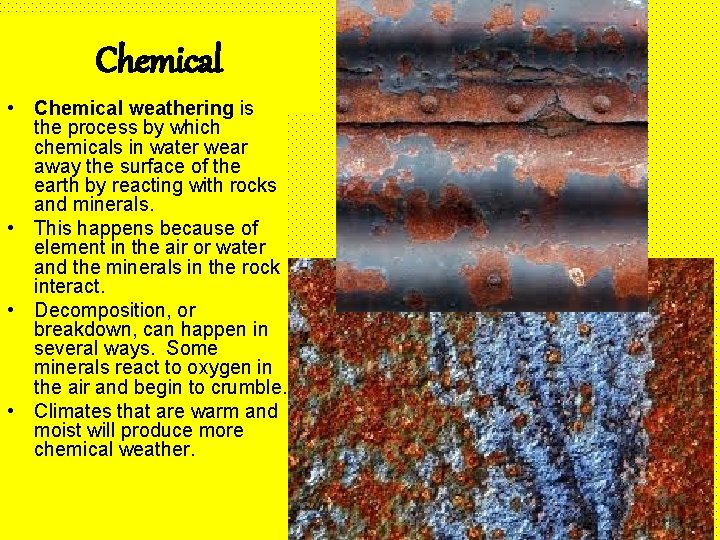
Chemical • Chemical weathering is the process by which chemicals in water wear away the surface of the earth by reacting with rocks and minerals. • This happens because of element in the air or water and the minerals in the rock interact. • Decomposition, or breakdown, can happen in several ways. Some minerals react to oxygen in the air and begin to crumble. • Climates that are warm and moist will produce more chemical weather.
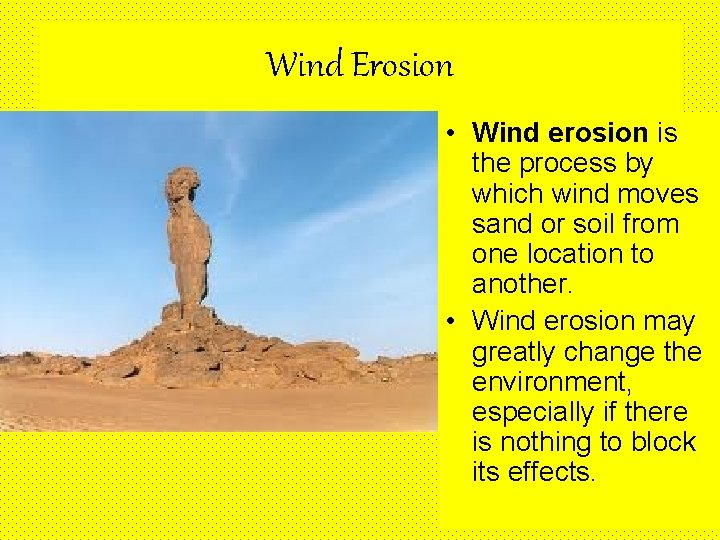
Wind Erosion • Wind erosion is the process by which wind moves sand or soil from one location to another. • Wind erosion may greatly change the environment, especially if there is nothing to block its effects.
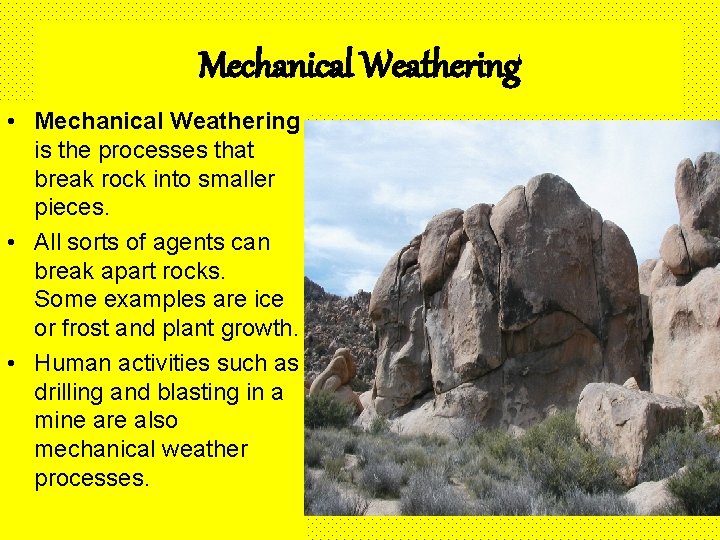
Mechanical Weathering • Mechanical Weathering is the processes that break rock into smaller pieces. • All sorts of agents can break apart rocks. Some examples are ice or frost and plant growth. • Human activities such as drilling and blasting in a mine are also mechanical weather processes.
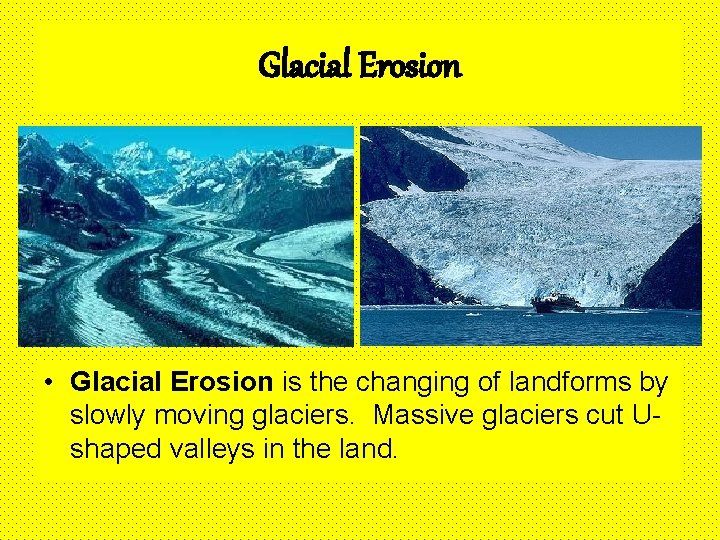
Glacial Erosion • Glacial Erosion is the changing of landforms by slowly moving glaciers. Massive glaciers cut Ushaped valleys in the land.