
External Forces of Change MRS MINKS WORLD GEOGRAPHY



- Slides: 22
External Forces of Change MRS. MINKS WORLD GEOGRAPHY AND CULTURES PEYTON HIGH SCHOOL
Entrance Ticket Name and describe three different types of plate boundaries.
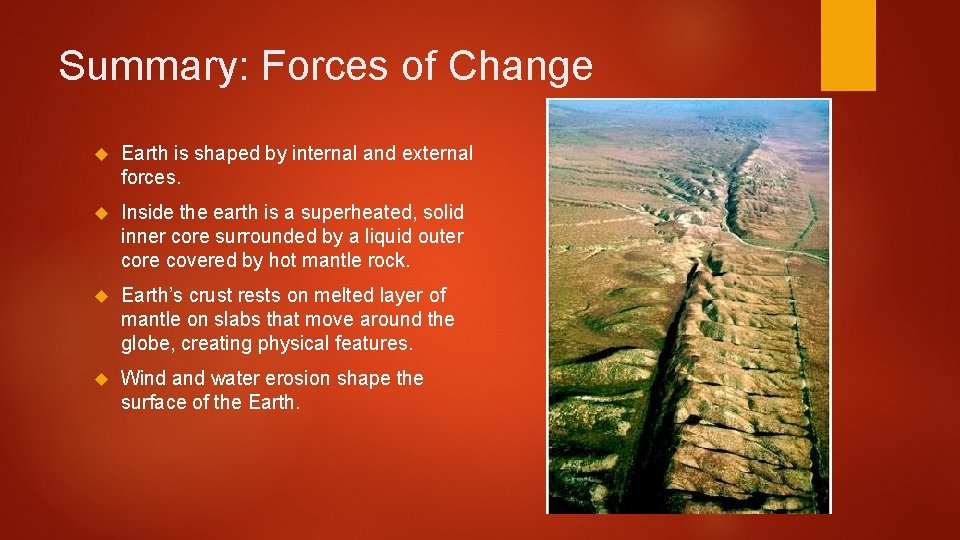
Folds, faults, & earthquakes Fold: bends in layers of rocks. Faults: cracks in Earth’s crust. Earthquakes occur where plates meet.
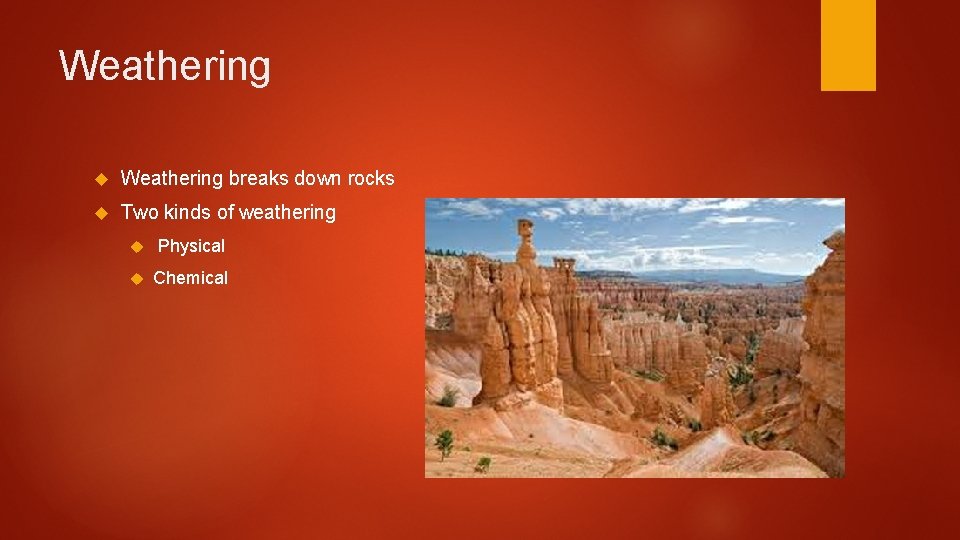
Weathering breaks down rocks Two kinds of weathering Physical Chemical
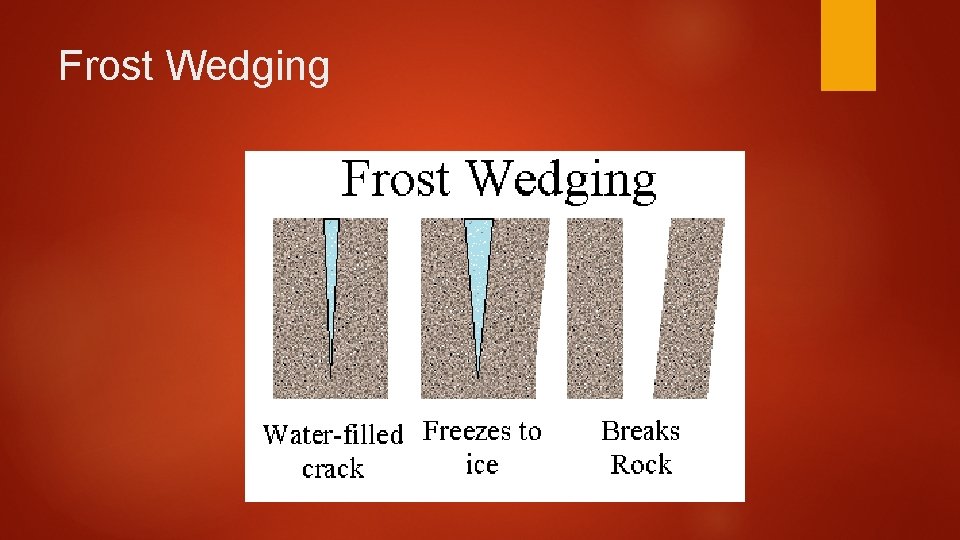
Frost Wedging
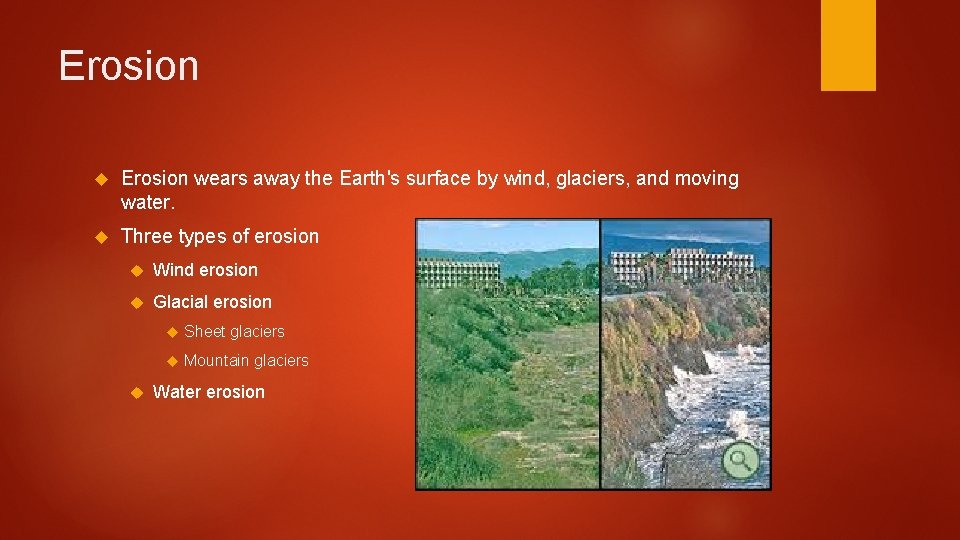
Erosion wears away the Earth's surface by wind, glaciers, and moving water. Three types of erosion Wind erosion Glacial erosion Sheet glaciers Mountain glaciers Water erosion
Water Erosion How water erosion works
Soil Building Soil is product of thousands of years of weathering Development begins when weathering breaks down solid rock into smaller pieces Worms and other organisms help break down organic matter & add nutrients to the soil Five factors influence soil formation Climate Topography Geology Biology Time
Exploring the Water Cycle
Think-Pair-Share What is precipitation?
The Freshwater Connection
Think-Pair-Share Based upon what we just viewed, why is it important to study and understand the water cycle?
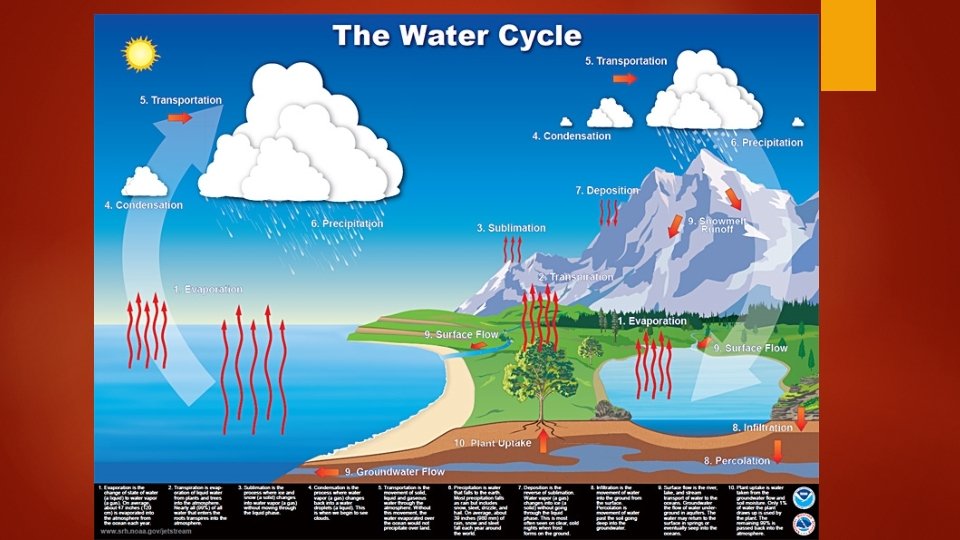
Water Cycle Evaporation is the changing of liquid water into vapor, or gas. Water vapor is gathered in the air. Condensation – water vapor turning into liquid water. Released moisture which falls to Earth is precipitation. Precipitation is rain, snow, or sleet, sinks to ground and collects. Total amount of water on Earth doesn’t change
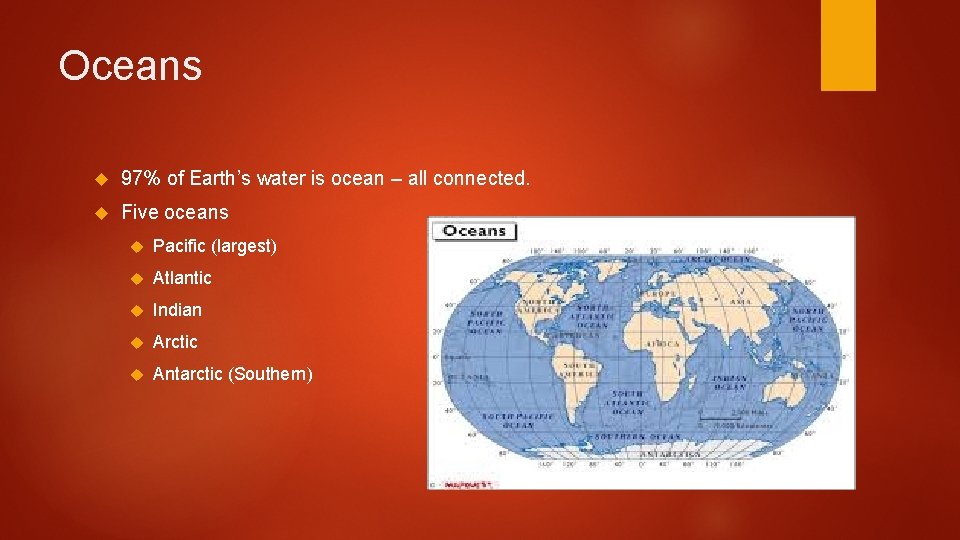
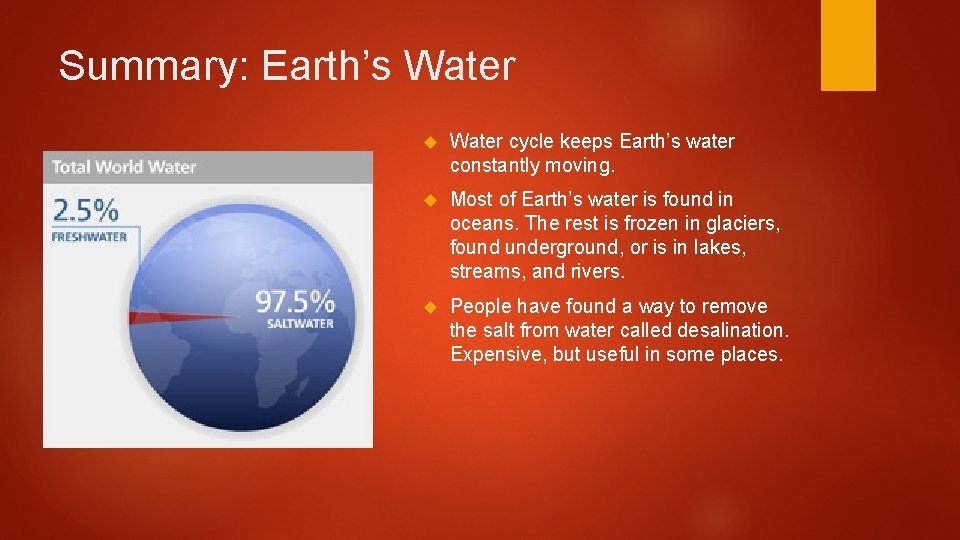
Oceans 97% of Earth’s water is ocean – all connected. Five oceans Pacific (largest) Atlantic Indian Arctic Antarctic (Southern)
Other salt water Seas Gulfs Bays
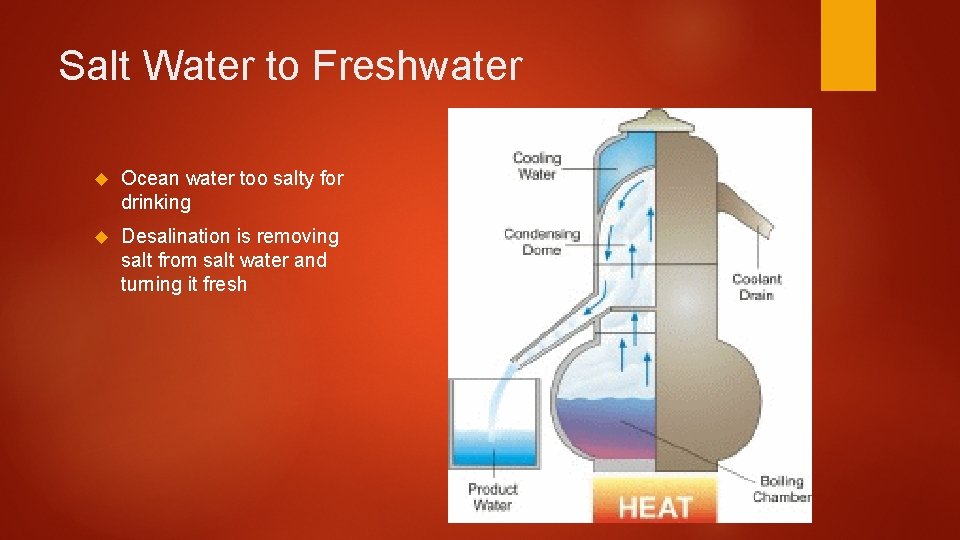
Salt Water to Freshwater Ocean water too salty for drinking Desalination is removing salt from salt water and turning it fresh
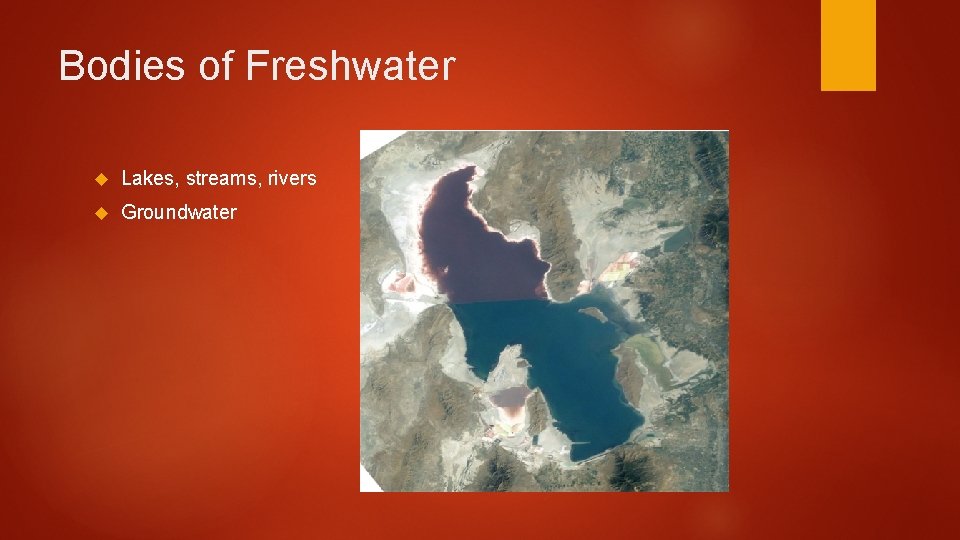
Bodies of Freshwater Lakes, streams, rivers Groundwater
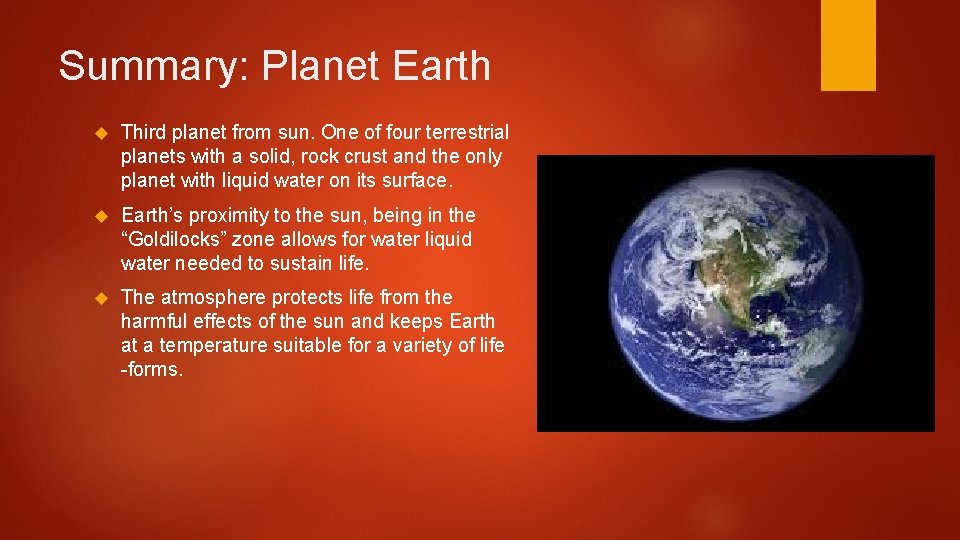
Summary: Planet Earth Third planet from sun. One of four terrestrial planets with a solid, rock crust and the only planet with liquid water on its surface. Earth’s proximity to the sun, being in the “Goldilocks” zone allows for water liquid water needed to sustain life. The atmosphere protects life from the harmful effects of the sun and keeps Earth at a temperature suitable for a variety of life -forms.
Summary: Forces of Change Earth is shaped by internal and external forces. Inside the earth is a superheated, solid inner core surrounded by a liquid outer core covered by hot mantle rock. Earth’s crust rests on melted layer of mantle on slabs that move around the globe, creating physical features. Wind and water erosion shape the surface of the Earth.
Summary: Earth’s Water cycle keeps Earth’s water constantly moving. Most of Earth’s water is found in oceans. The rest is frozen in glaciers, found underground, or is in lakes, streams, and rivers. People have found a way to remove the salt from water called desalination. Expensive, but useful in some places.
Exit Ticket What is the force that does most of the work of wearing down the Earth?