
Extending the Link Transmission Model with general concave



- Slides: 21
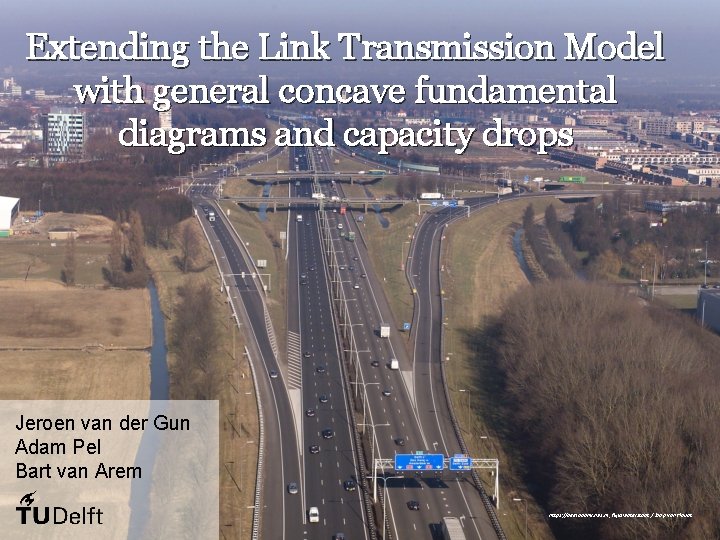
Extending the Link Transmission Model with general concave fundamental diagrams and capacity drops Jeroen van der Gun Adam Pel Bart van Arem https: //beeldbank. rws. nl, Rijkswaterstaat / Joop van Houdt 1
Solving kinematic wave theory • Lighthill & Whitham (1955), Richards (1956) Formulation of kinematic wave theory • Godunov (1956), Daganzo (1994) Numerical solution through Cell Transmission Model • Newell (1993), Yperman et al. (2006), Yperman (2007), Gentile (2010) Alternative numerical solution through Link Transmission Model • Daganzo (2005), Jin (2015), Han et al. (2015) Proofs using variational theory that LTM converges for triangular fundamental diagrams as Δt↓ 0 2
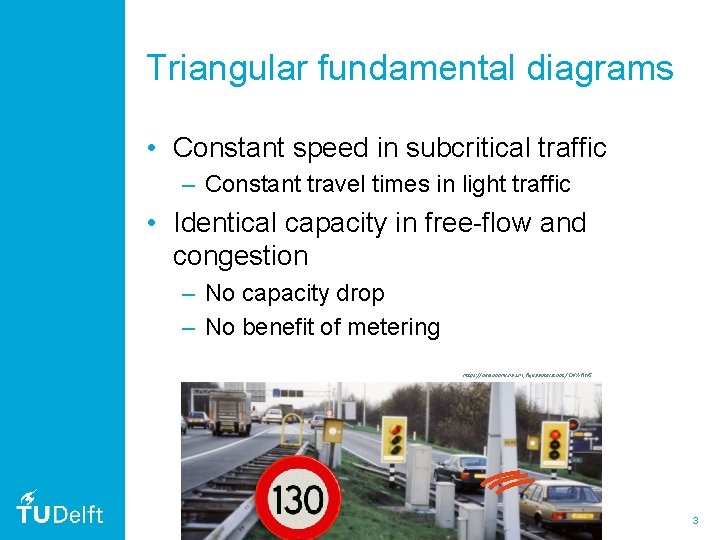
Triangular fundamental diagrams • Constant speed in subcritical traffic – Constant travel times in light traffic • Identical capacity in free-flow and congestion – No capacity drop – No benefit of metering https: //beeldbank. rws. nl, Rijkswaterstaat / DVK-RWS 3
Contents • Overview of LTM structure • Link model for continuous concave FD • LWR theory with capacity drop • Link model with capacity drop • Node model with capacity drop • Numerical examples 4
Overview of LTM structure 5
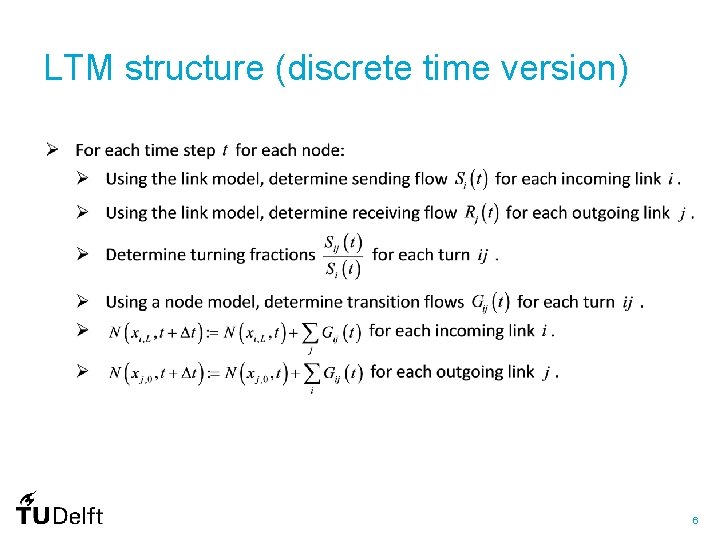
LTM structure (discrete time version) 6
Link model for continuous concave FD 7
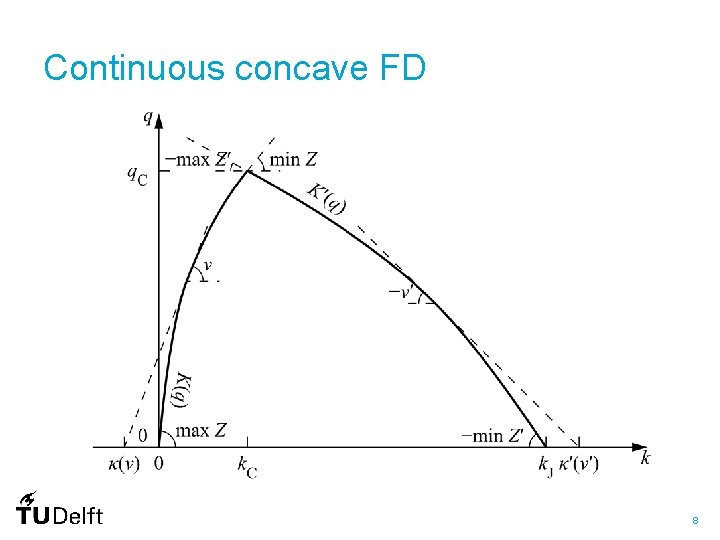
Continuous concave FD 8
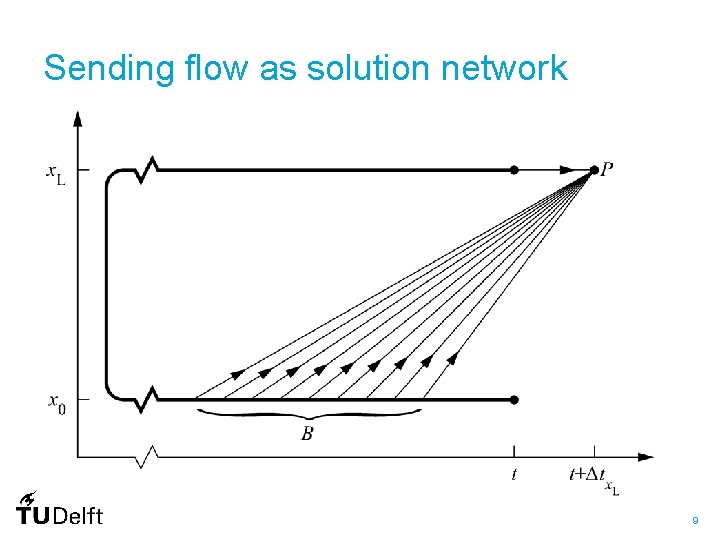
Sending flow as solution network 9
LWR theory with capacity drop 10
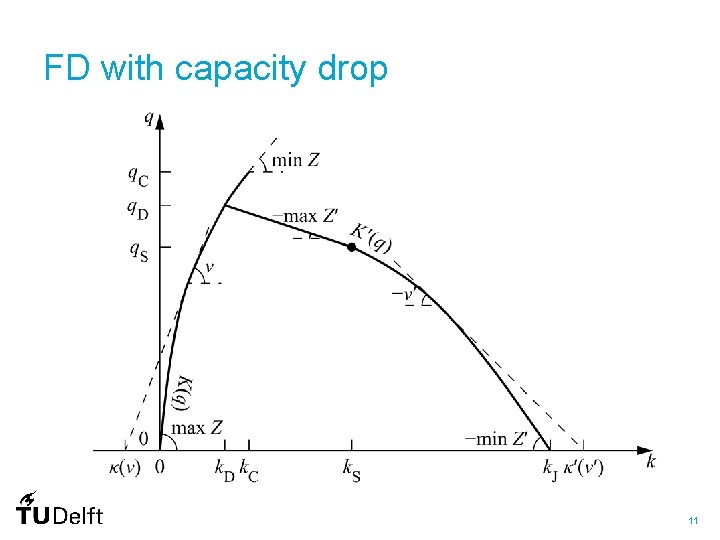
FD with capacity drop 11
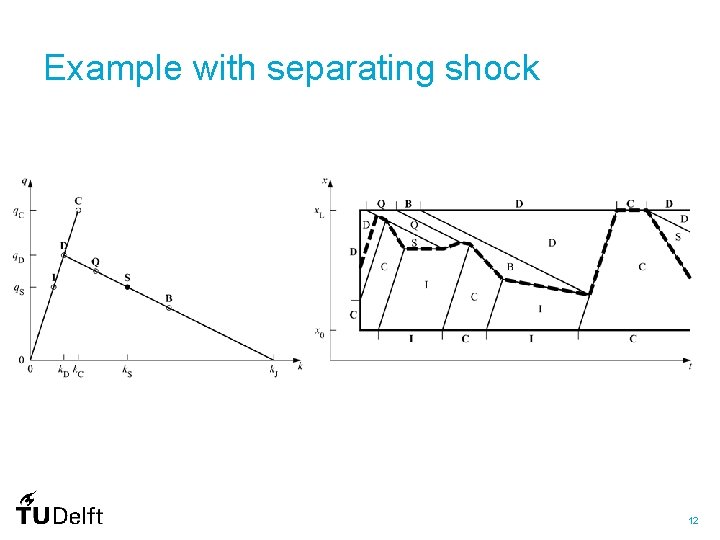
Example with separating shock 12
Link model with capacity drop 13
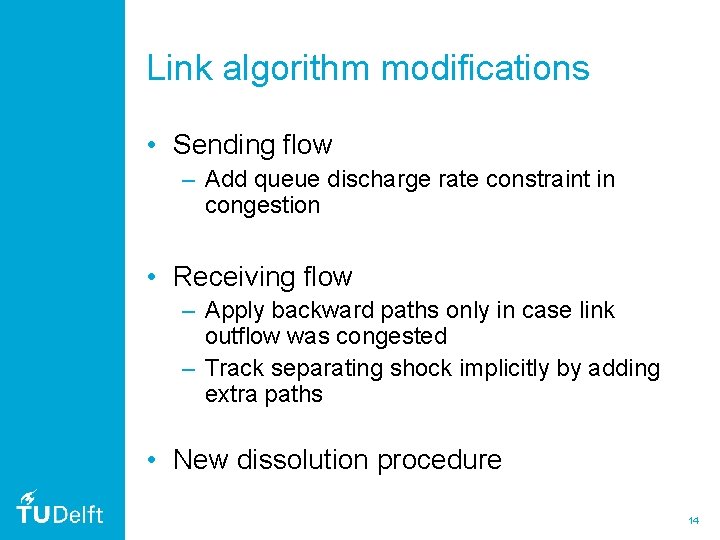
Link algorithm modifications • Sending flow – Add queue discharge rate constraint in congestion • Receiving flow – Apply backward paths only in case link outflow was congested – Track separating shock implicitly by adding extra paths • New dissolution procedure 14
Node model with capacity drop 15
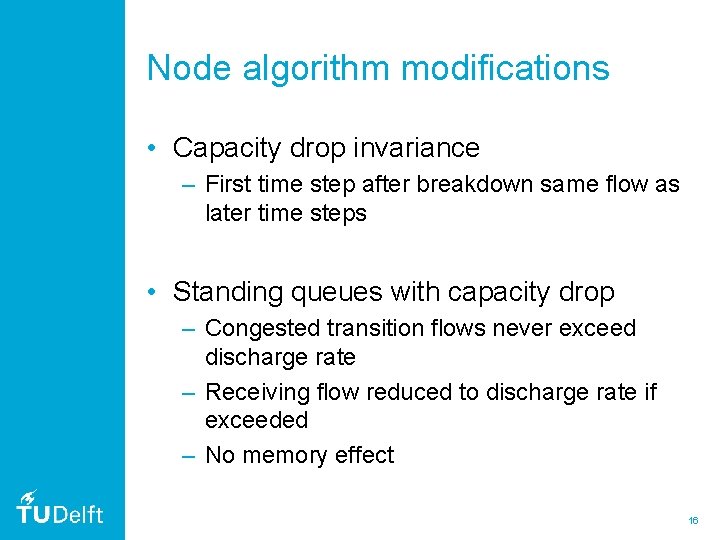
Node algorithm modifications • Capacity drop invariance – First time step after breakdown same flow as later time steps • Standing queues with capacity drop – Congested transition flows never exceed discharge rate – Receiving flow reduced to discharge rate if exceeded – No memory effect 16
Numerical examples 17
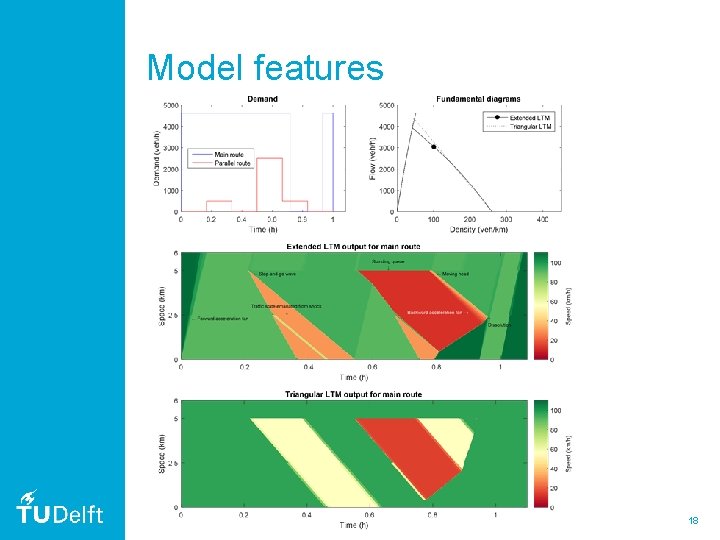
Model features 18
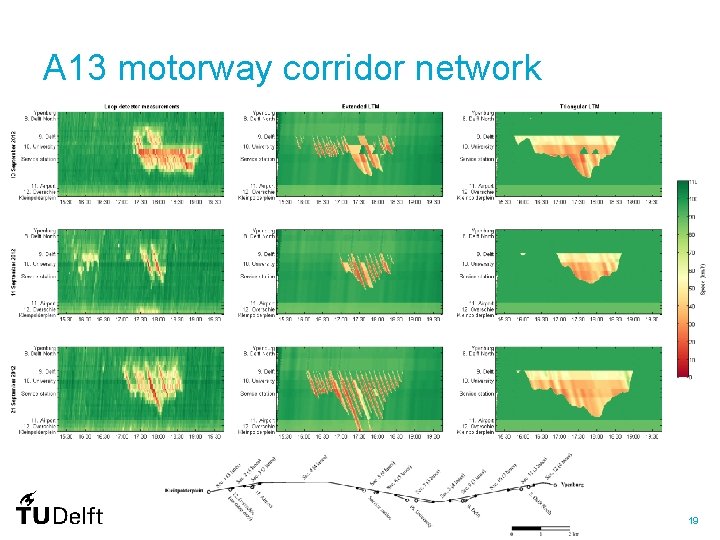
A 13 motorway corridor network 19
Conclusions 20
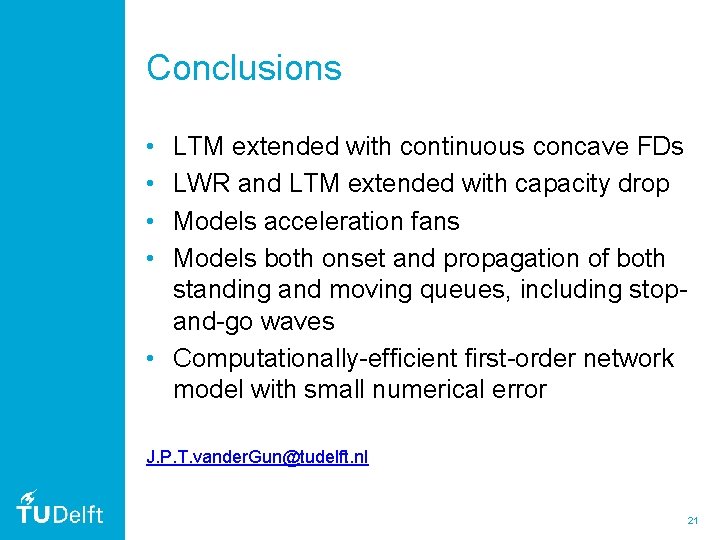
Conclusions • • LTM extended with continuous concave FDs LWR and LTM extended with capacity drop Models acceleration fans Models both onset and propagation of both standing and moving queues, including stopand-go waves • Computationally-efficient first-order network model with small numerical error J. P. T. vander. Gun@tudelft. nl 21