
Extended writing process Attempt Reflect Perfect In class
- Slides: 38
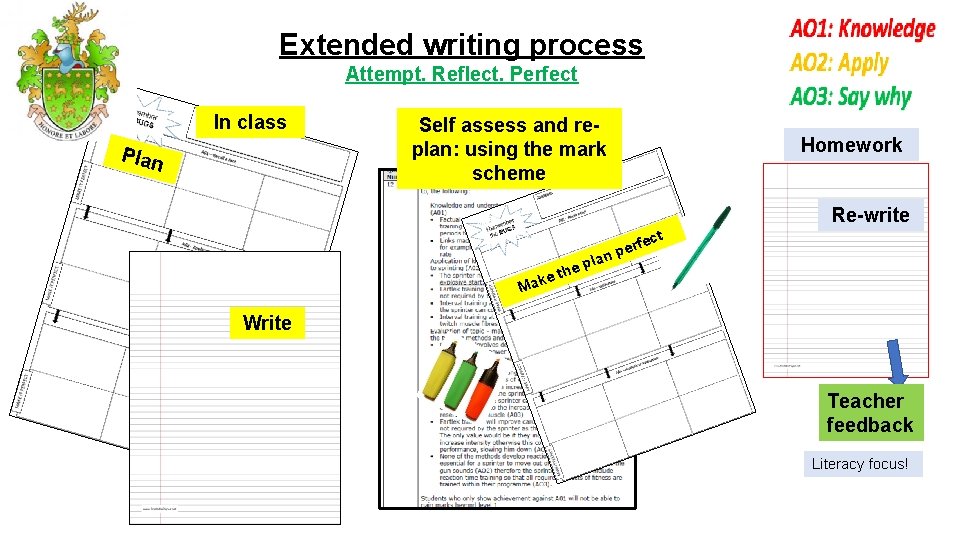
Extended writing process Attempt. Reflect. Perfect In class Plan Self assess and replan: using the mark scheme Homework Re-write ct lan p he t e k fe per Ma Write Teacher feedback Literacy focus!
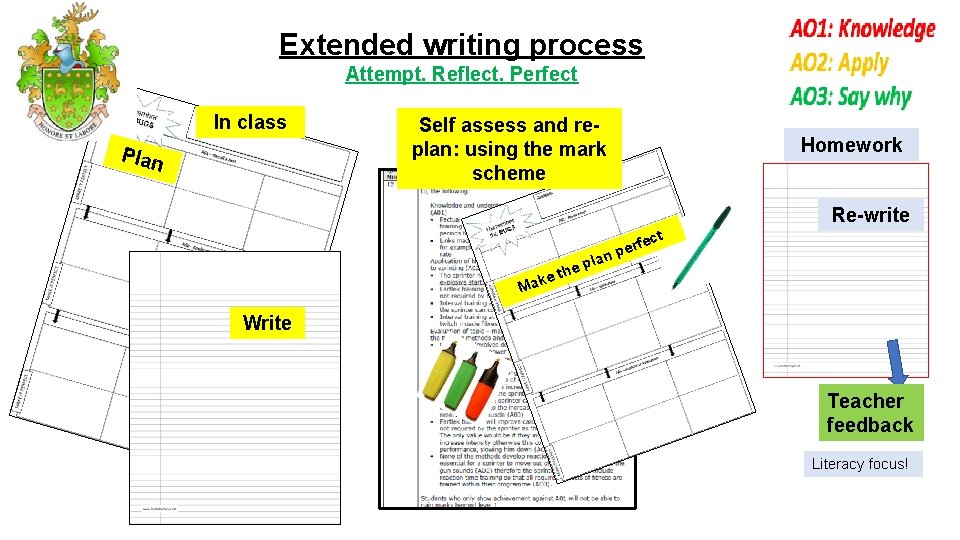
Extended writing process Attempt. Reflect. Perfect In class Plan Self assess and replan: using the mark scheme Homework Re-write ct lan p he t e k fe per Ma Write Teacher feedback Literacy focus!
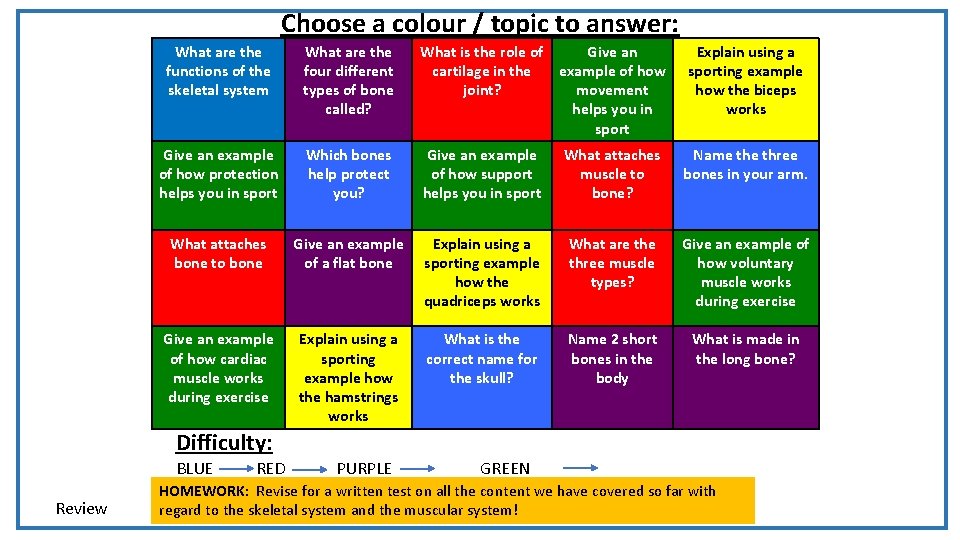
Choose a colour / topic to answer: What are the functions of the skeletal system What are the four different types of bone called? What is the role of Give an cartilage in the example of how joint? movement helps you in sport Explain using a sporting example how the biceps works Give an example of how protection helps you in sport Which bones help protect you? Give an example of how support helps you in sport What attaches muscle to bone? Name three bones in your arm. What attaches bone to bone Give an example of a flat bone Explain using a sporting example how the quadriceps works What are three muscle types? Give an example of how voluntary muscle works during exercise Give an example of how cardiac muscle works during exercise Explain using a sporting example how the hamstrings works What is the correct name for the skull? Name 2 short bones in the body What is made in the long bone? Difficulty: Review BLUE RED PURPLE GREEN YELLOW Revise for a written test on all the content we have covered so far with HOMEWORK: regard to the skeletal system and the muscular system!
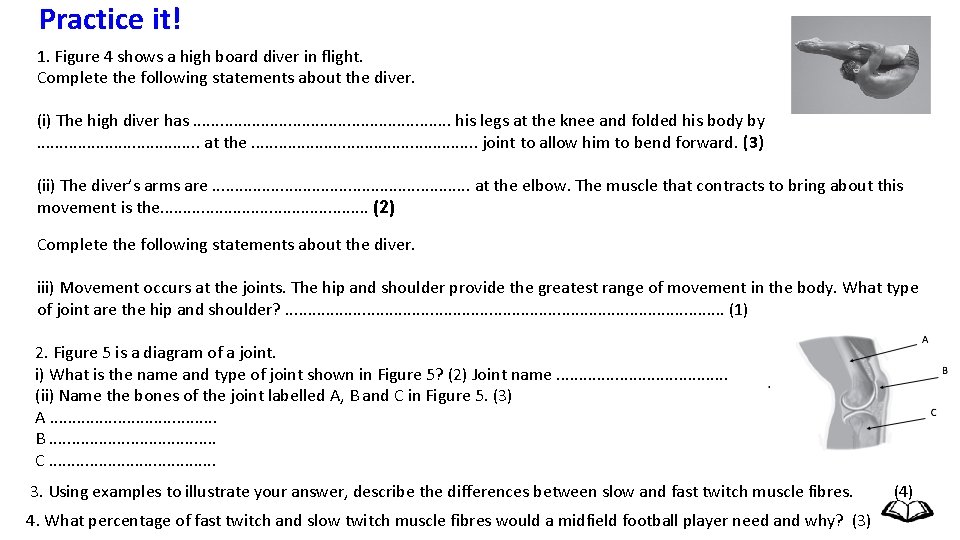
Practice it! 1. Figure 4 shows a high board diver in flight. Complete the following statements about the diver. (i) The high diver has. . . . his legs at the knee and folded his body by. . . . . at the. . . joint to allow him to bend forward. (3) (ii) The diver’s arms are. . . . at the elbow. The muscle that contracts to bring about this movement is the. . . (2) Complete the following statements about the diver. iii) Movement occurs at the joints. The hip and shoulder provide the greatest range of movement in the body. What type of joint are the hip and shoulder? . . . . . . (1) 2. Figure 5 is a diagram of a joint. i) What is the name and type of joint shown in Figure 5? (2) Joint name. . . . . (ii) Name the bones of the joint labelled A, B and C in Figure 5. (3) A. . . . . B. . . . . C. . . . . 3. Using examples to illustrate your answer, describe the differences between slow and fast twitch muscle fibres. 4. What percentage of fast twitch and slow twitch muscle fibres would a midfield football player need and why? (3) (4)
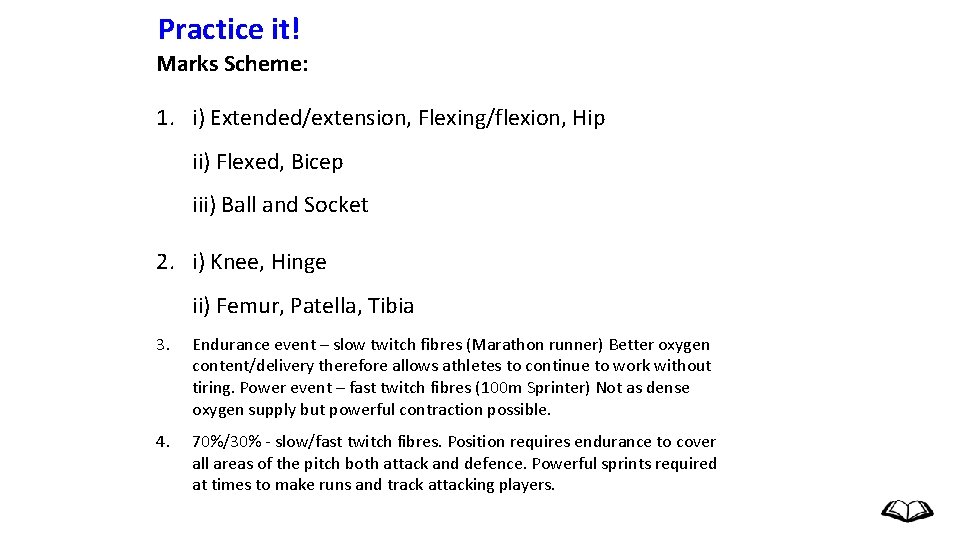
Practice it! Marks Scheme: 1. i) Extended/extension, Flexing/flexion, Hip ii) Flexed, Bicep iii) Ball and Socket 2. i) Knee, Hinge ii) Femur, Patella, Tibia 3. Endurance event – slow twitch fibres (Marathon runner) Better oxygen content/delivery therefore allows athletes to continue to work without tiring. Power event – fast twitch fibres (100 m Sprinter) Not as dense oxygen supply but powerful contraction possible. 4. 70%/30% - slow/fast twitch fibres. Position requires endurance to cover all areas of the pitch both attack and defence. Powerful sprints required at times to make runs and track attacking players.
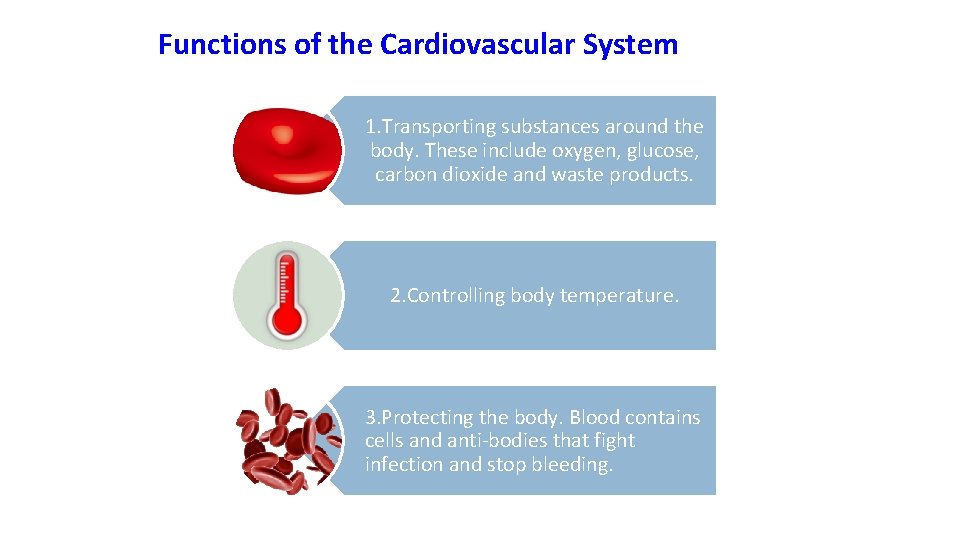
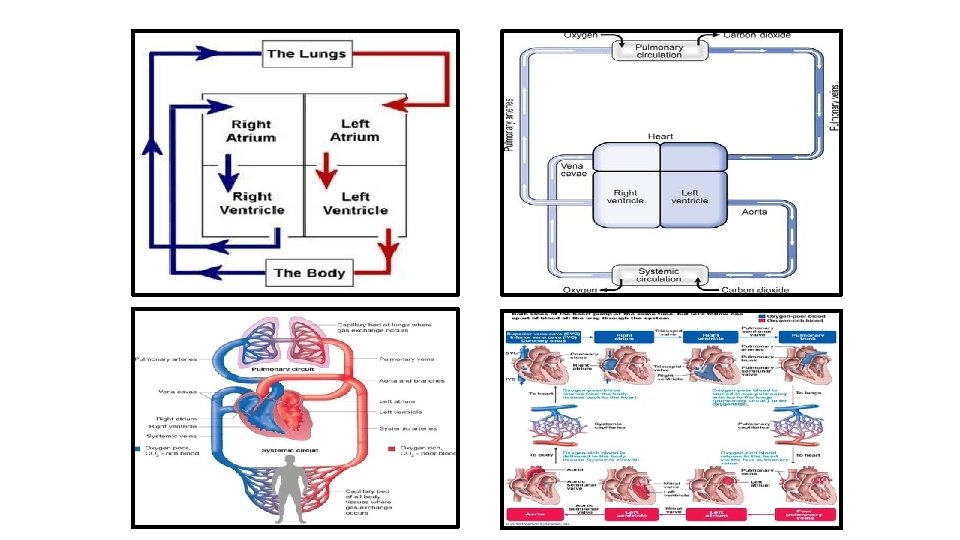
Functions of the Cardiovascular System 1. Transporting substances around the body. These include oxygen, glucose, carbon dioxide and waste products. 2. Controlling body temperature. 3. Protecting the body. Blood contains cells and anti-bodies that fight infection and stop bleeding.
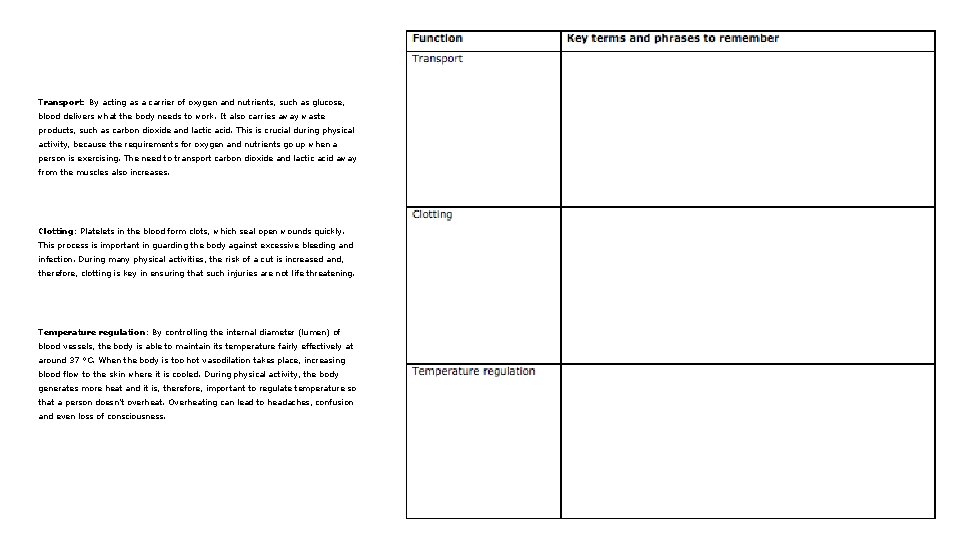
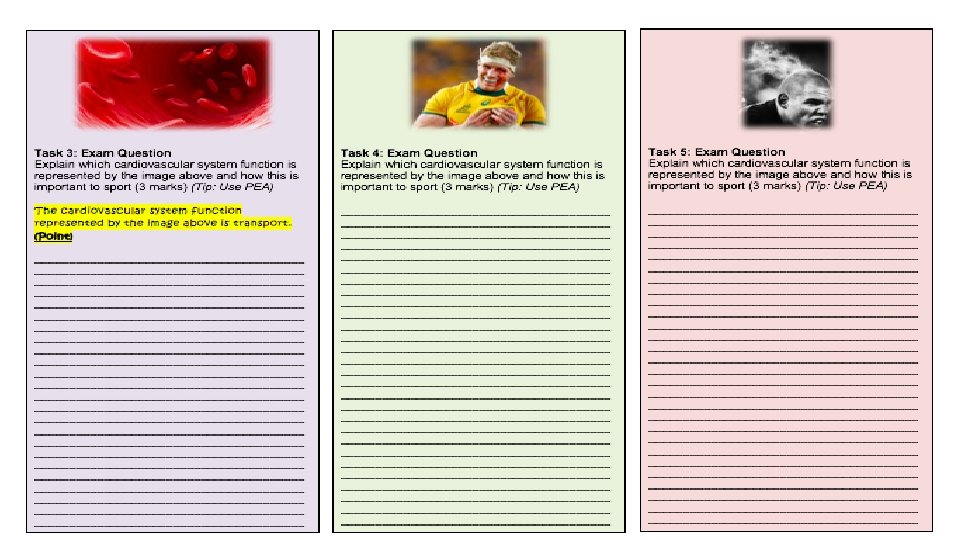
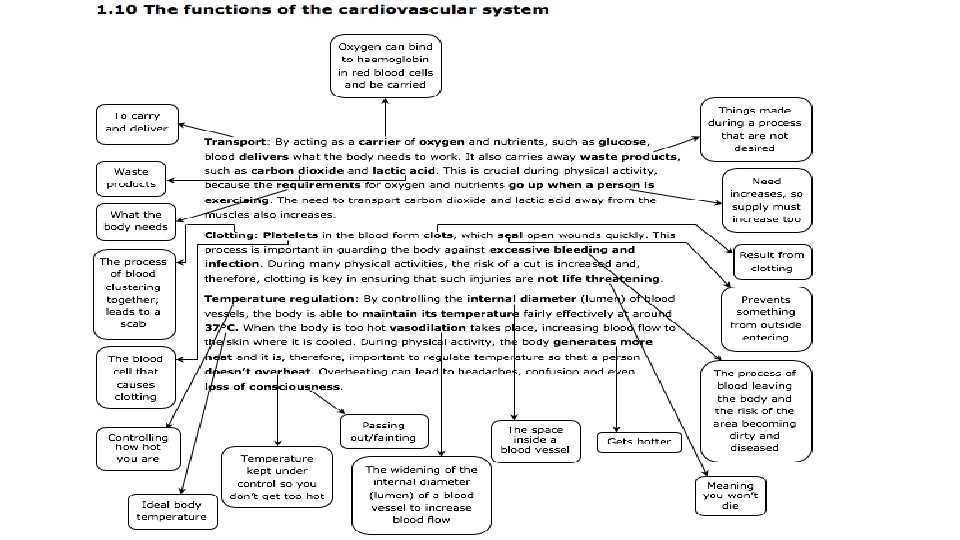
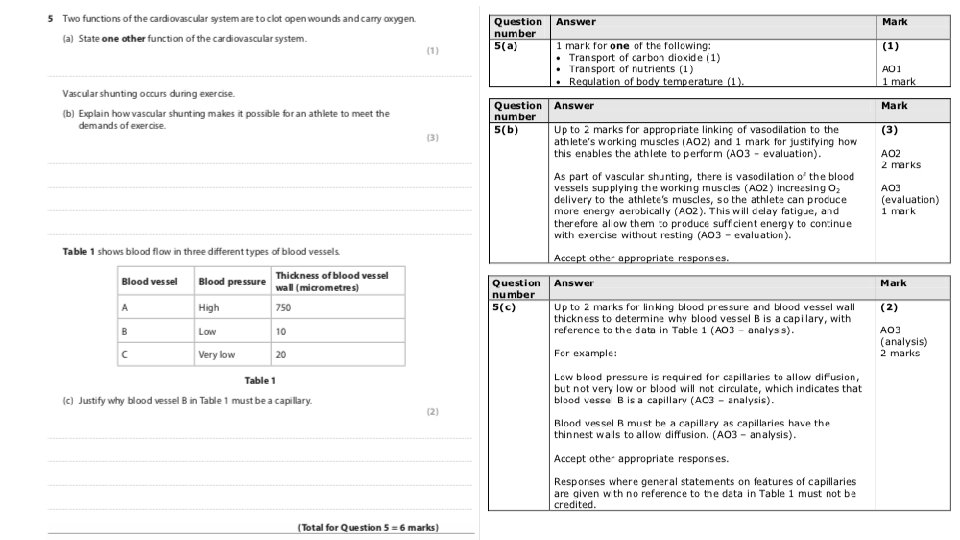
Transport: By acting as a carrier of oxygen and nutrients, such as glucose, blood delivers what the body needs to work. It also carries away waste products, such as carbon dioxide and lactic acid. This is crucial during physical activity, because the requirements for oxygen and nutrients go up when a person is exercising. The need to transport carbon dioxide and lactic acid away from the muscles also increases. Clotting: Platelets in the blood form clots, which seal open wounds quickly. This process is important in guarding the body against excessive bleeding and infection. During many physical activities, the risk of a cut is increased and, therefore, clotting is key in ensuring that such injuries are not life threatening. Temperature regulation: By controlling the internal diameter (lumen) of blood vessels, the body is able to maintain its temperature fairly effectively at around 37 °C. When the body is too hot vasodilation takes place, increasing blood flow to the skin where it is cooled. During physical activity, the body generates more heat and it is, therefore, important to regulate temperature so that a person doesn’t overheat. Overheating can lead to headaches, confusion and even loss of consciousness.
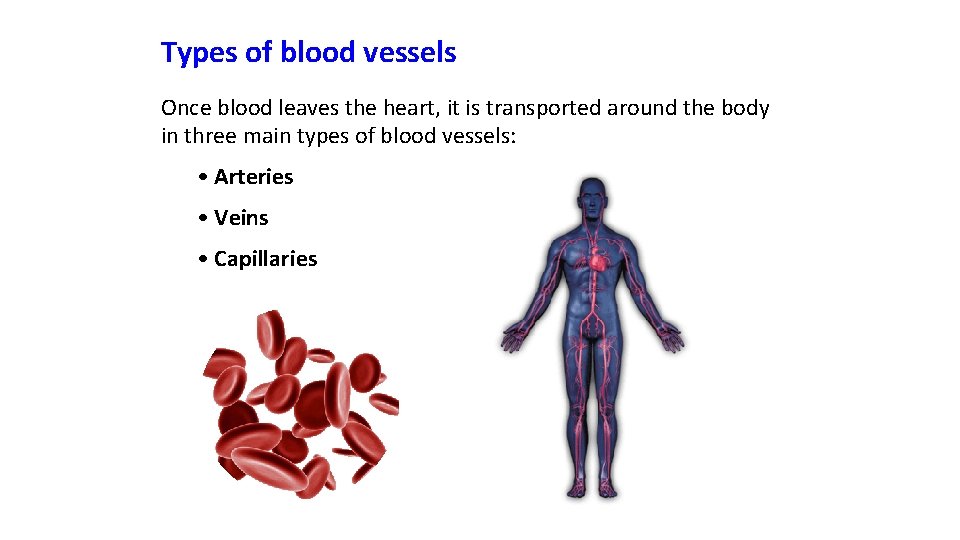
Types of blood vessels Once blood leaves the heart, it is transported around the body in three main types of blood vessels: • Arteries • Veins • Capillaries
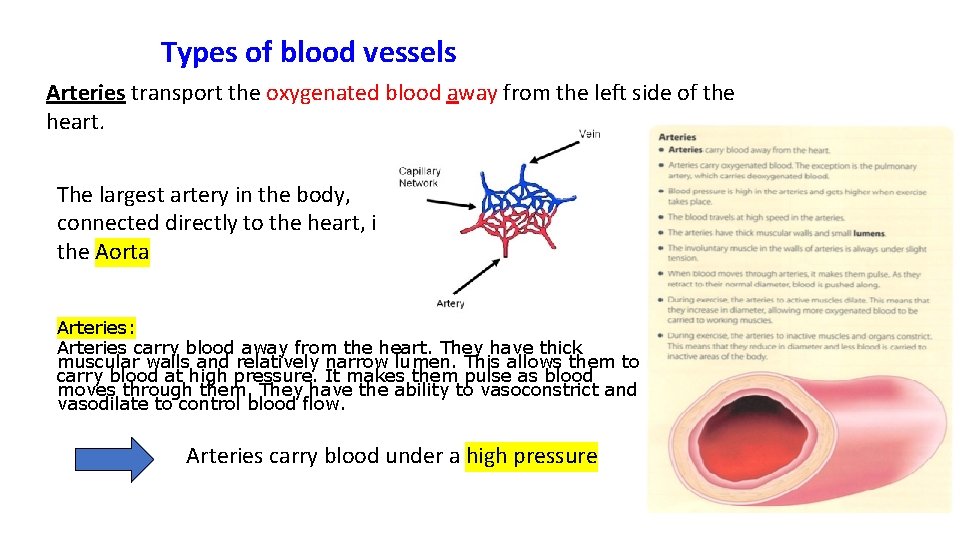
Types of blood vessels Arteries transport the oxygenated blood away from the left side of the heart. The largest artery in the body, connected directly to the heart, is the Aorta Arteries: Arteries carry blood away from the heart. They have thick muscular walls and relatively narrow lumen. This allows them to carry blood at high pressure. It makes them pulse as blood moves through them. They have the ability to vasoconstrict and vasodilate to control blood flow. Arteries carry blood under a high pressure
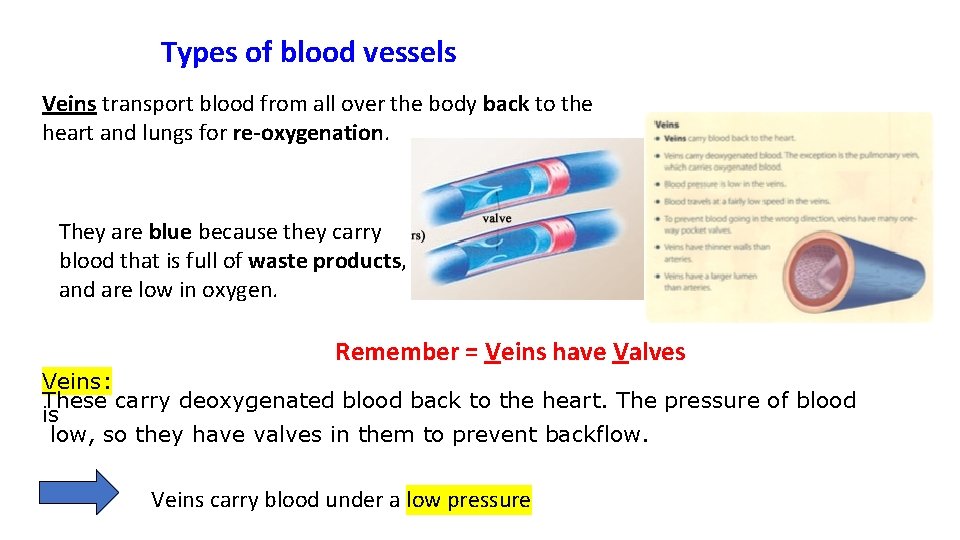
Types of blood vessels Veins transport blood from all over the body back to the heart and lungs for re-oxygenation. They are blue because they carry blood that is full of waste products, and are low in oxygen. Remember = Veins have Valves Veins: These carry deoxygenated blood back to the heart. The pressure of blood is low, so they have valves in them to prevent backflow. Veins carry blood under a low pressure
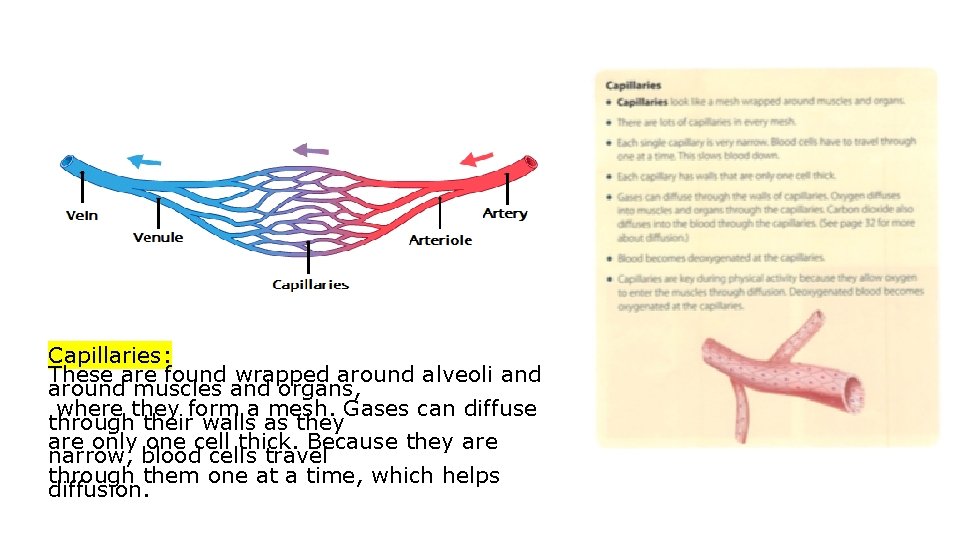
Capillaries: These are found wrapped around alveoli and around muscles and organs, where they form a mesh. Gases can diffuse through their walls as they are only one cell thick. Because they are narrow, blood cells travel through them one at a time, which helps diffusion.
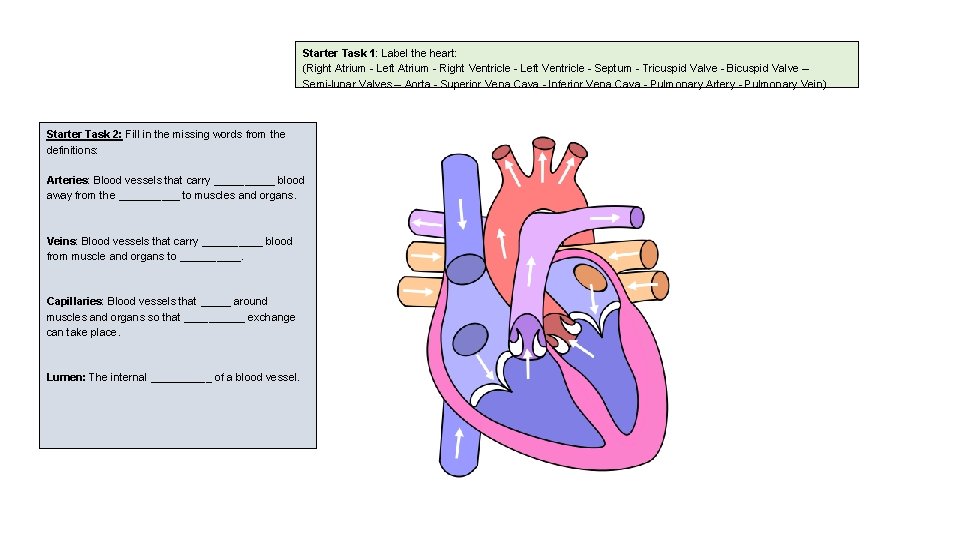
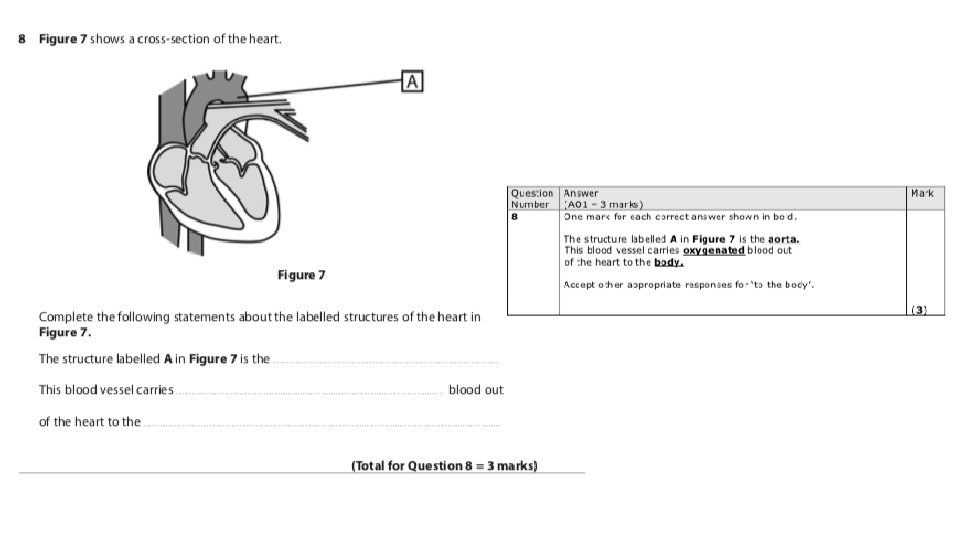
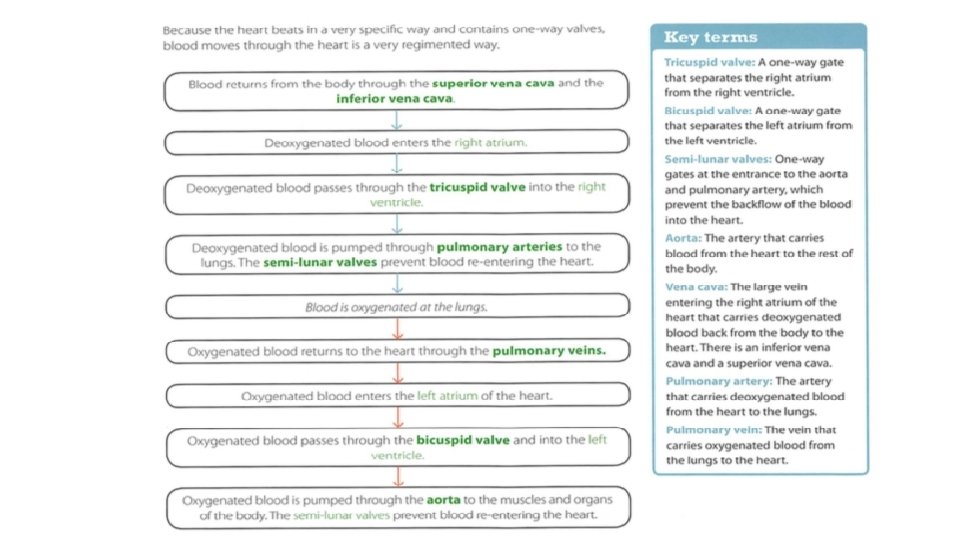
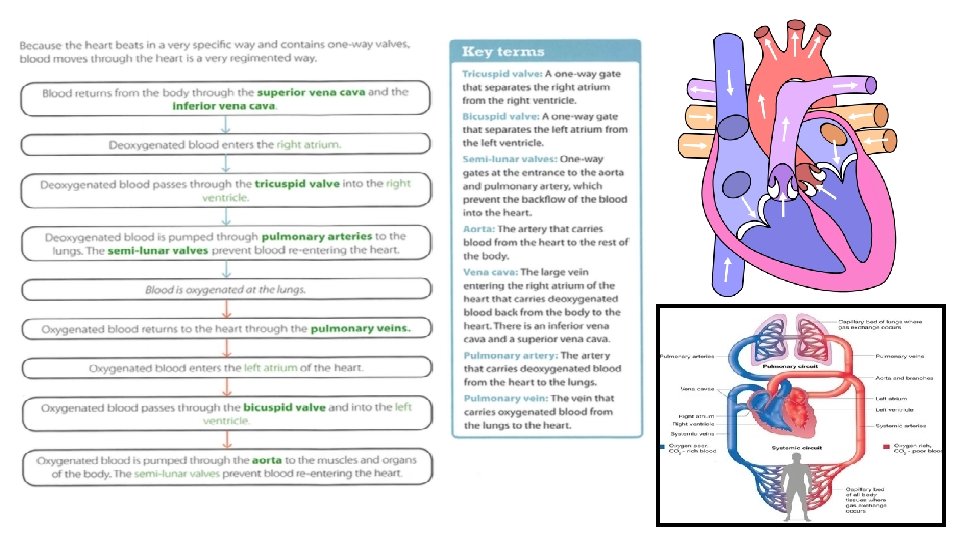
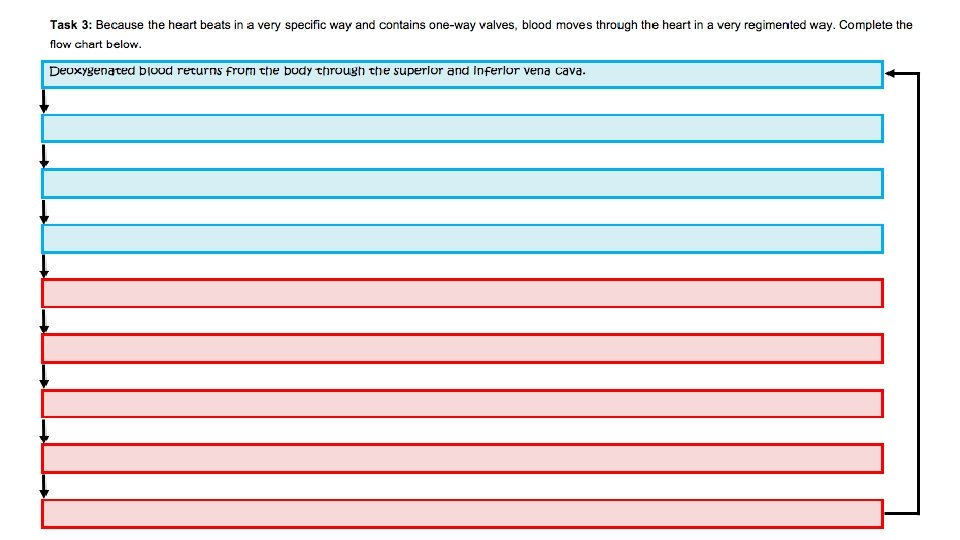
Starter Task 1: Label the heart: (Right Atrium - Left Atrium - Right Ventricle - Left Ventricle - Septum - Tricuspid Valve - Bicuspid Valve – Semi-lunar Valves – Aorta - Superior Vena Cava - Inferior Vena Cava - Pulmonary Artery - Pulmonary Vein) Starter Task 2: Fill in the missing words from the definitions: Arteries: Blood vessels that carry _____ blood away from the _____ to muscles and organs. Veins: Blood vessels that carry _____ blood from muscle and organs to _____. Capillaries: Blood vessels that _____ around muscles and organs so that _____ exchange can take place. Lumen: The internal _____ of a blood vessel.
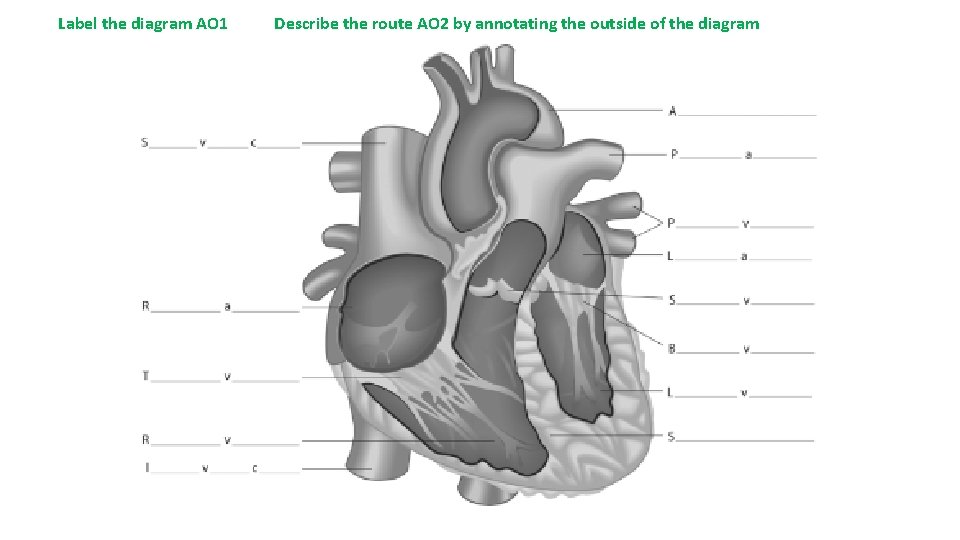
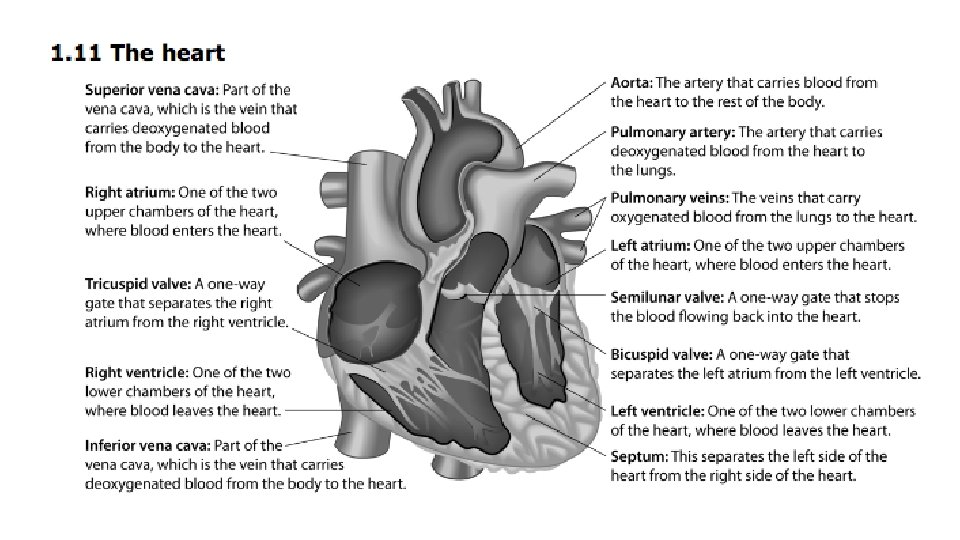
Label the diagram AO 1 Describe the route AO 2 by annotating the outside of the diagram
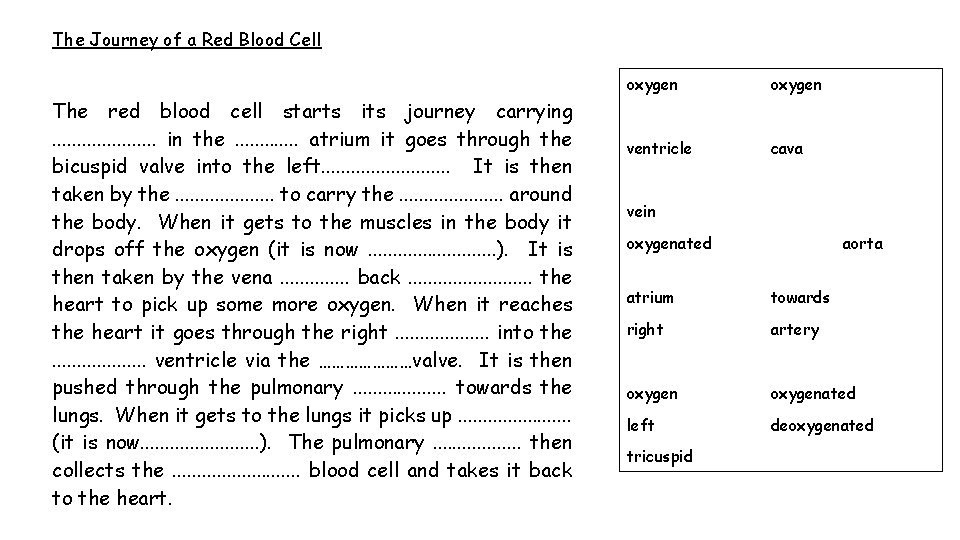
The Journey of a Red Blood Cell The red blood cell starts its journey carrying. . . . . in the. . . atrium it goes through the bicuspid valve into the left. . . It is then taken by the. . . . . to carry the. . . . . around the body. When it gets to the muscles in the body it drops off the oxygen (it is now. . . ). It is then taken by the vena. . . back. . . the heart to pick up some more oxygen. When it reaches the heart it goes through the right. . . . . into the. . . . . ventricle via the …………………valve. It is then pushed through the pulmonary. . . . . towards the lungs. When it gets to the lungs it picks up. . . (it is now. . . ). The pulmonary. . . . then collects the. . . blood cell and takes it back to the heart. oxygen ventricle cava vein oxygenated aorta atrium towards right artery oxygenated left deoxygenated tricuspid
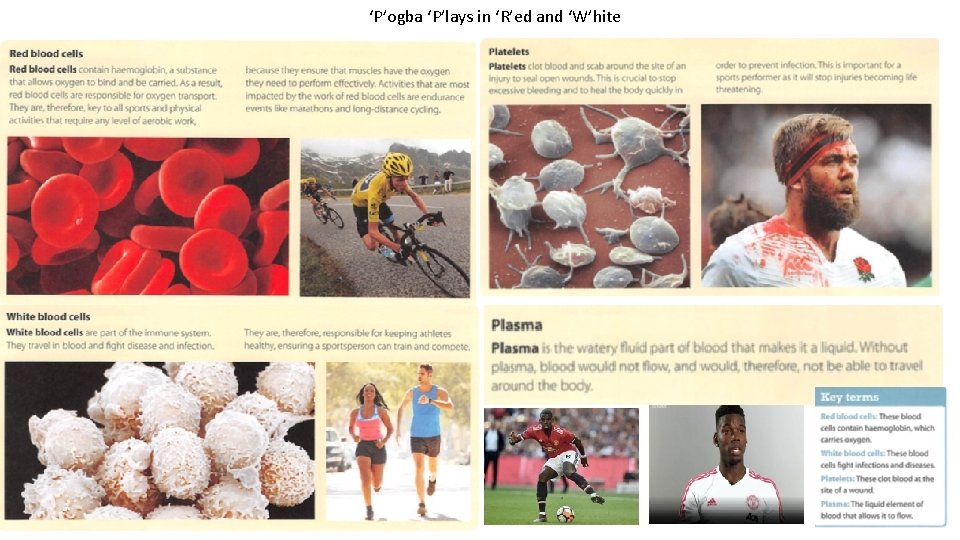
‘P’ogba ‘P’lays in ‘R’ed and ‘W’hite
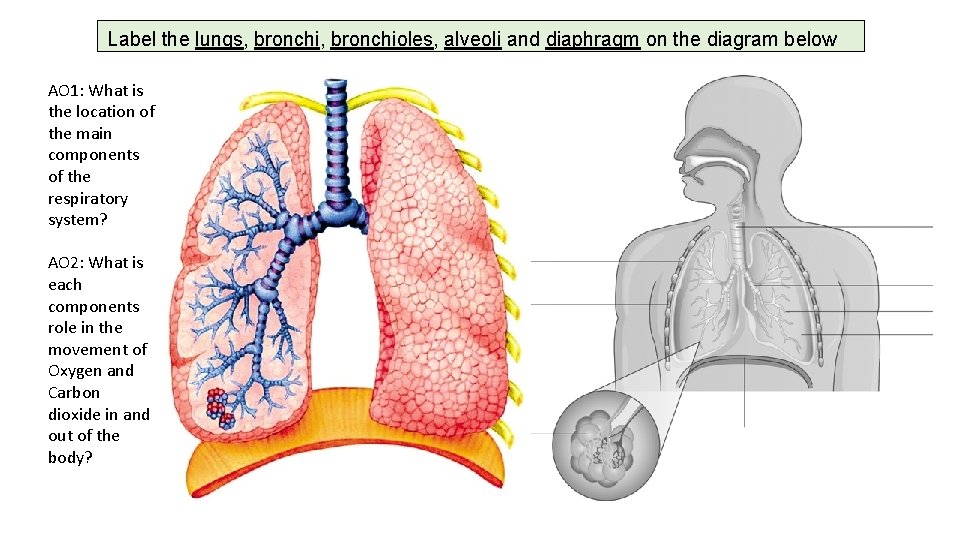
Label the lungs, bronchioles, alveoli and diaphragm on the diagram below AO 1: What is the location of the main components of the respiratory system? AO 2: What is each components role in the movement of Oxygen and Carbon dioxide in and out of the body?
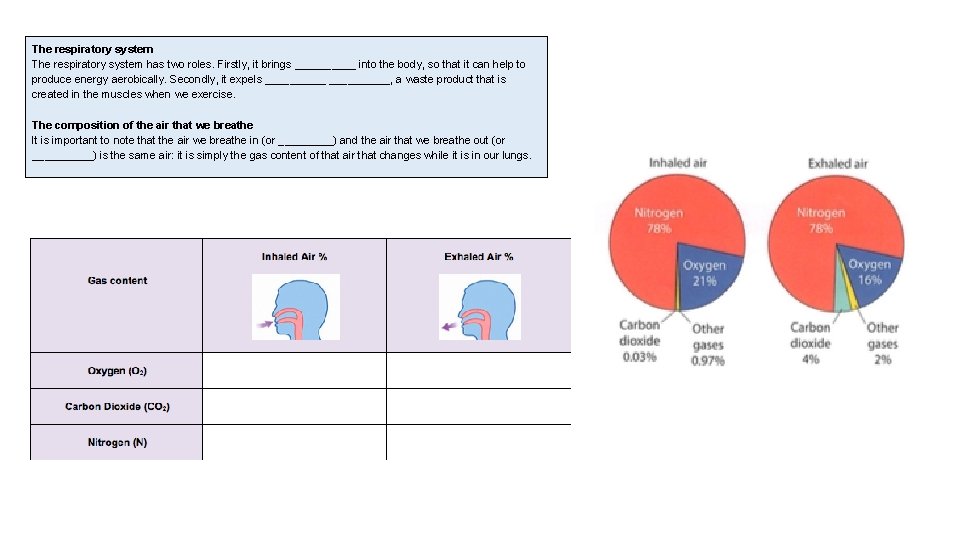
The respiratory system has two roles. Firstly, it brings _____ into the body, so that it can help to produce energy aerobically. Secondly, it expels __________, a waste product that is created in the muscles when we exercise. The composition of the air that we breathe It is important to note that the air we breathe in (or _____) and the air that we breathe out (or _____) is the same air: it is simply the gas content of that air that changes while it is in our lungs.
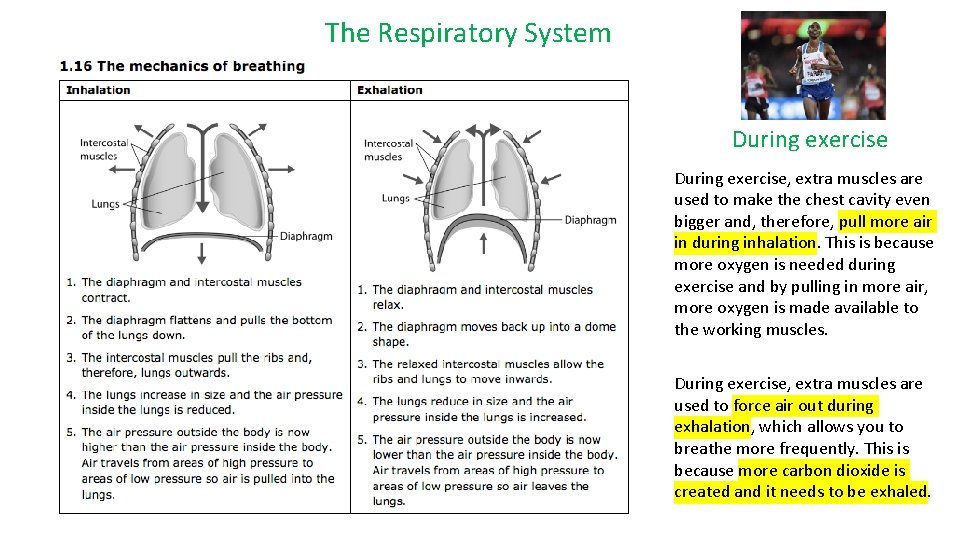
The Respiratory System During exercise, extra muscles are used to make the chest cavity even bigger and, therefore, pull more air in during inhalation. This is because more oxygen is needed during exercise and by pulling in more air, more oxygen is made available to the working muscles. During exercise, extra muscles are used to force air out during exhalation, which allows you to breathe more frequently. This is because more carbon dioxide is created and it needs to be exhaled.
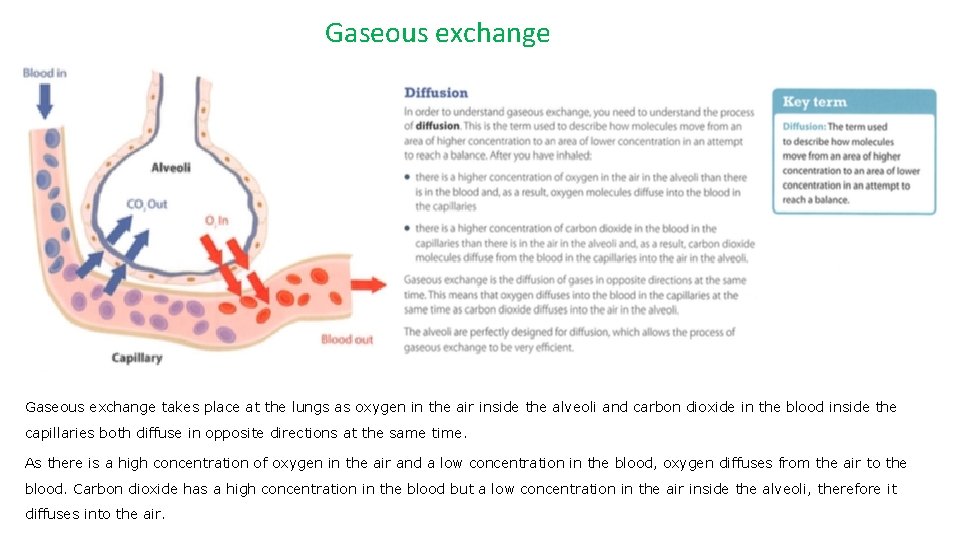
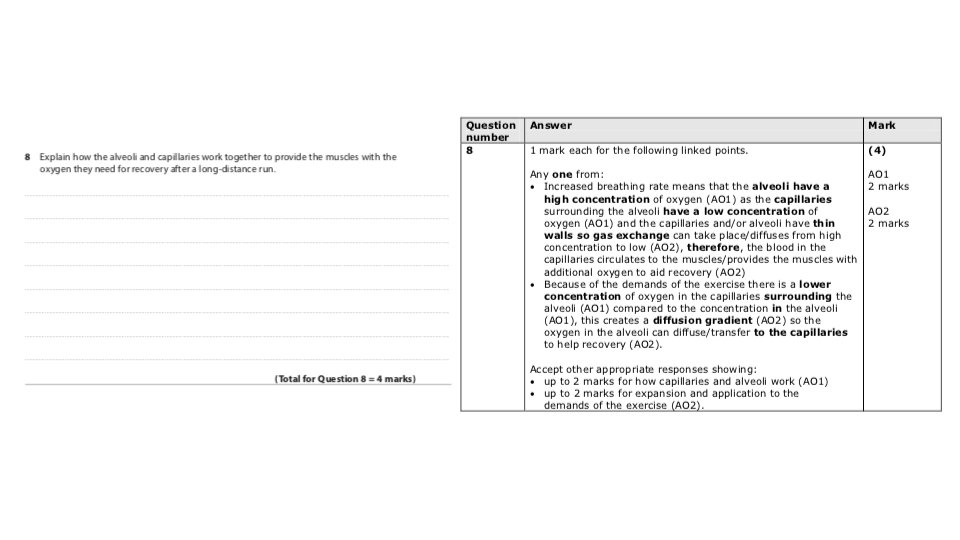
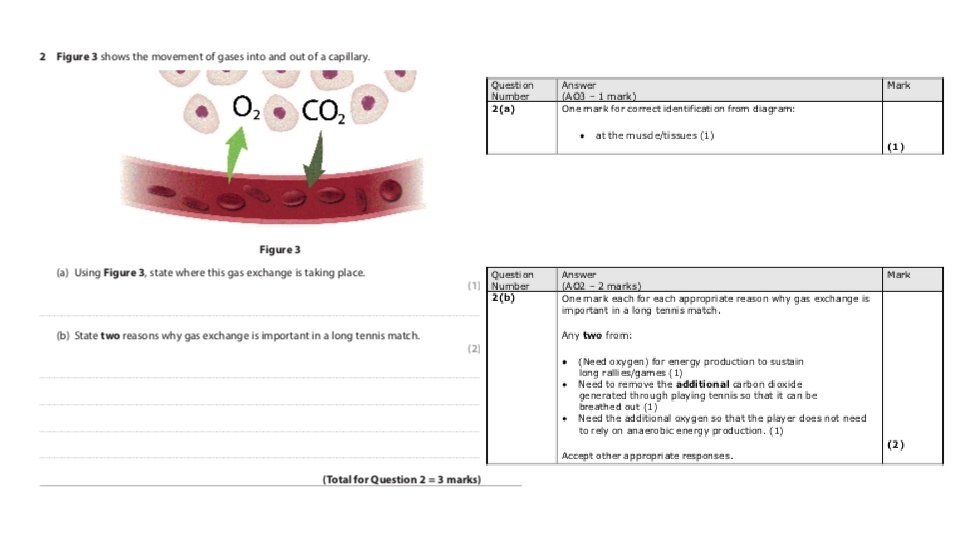
Gaseous exchange takes place at the lungs as oxygen in the air inside the alveoli and carbon dioxide in the blood inside the capillaries both diffuse in opposite directions at the same time. As there is a high concentration of oxygen in the air and a low concentration in the blood, oxygen diffuses from the air to the blood. Carbon dioxide has a high concentration in the blood but a low concentration in the air inside the alveoli, therefore it diffuses into the air.
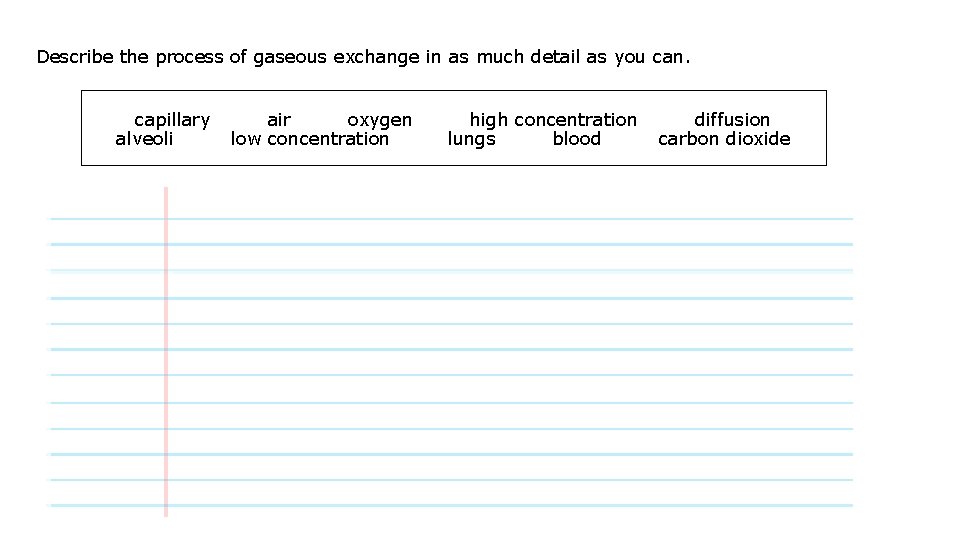
Describe the process of gaseous exchange in as much detail as you can. capillary alveoli air oxygen low concentration high concentration lungs blood diffusion carbon dioxide
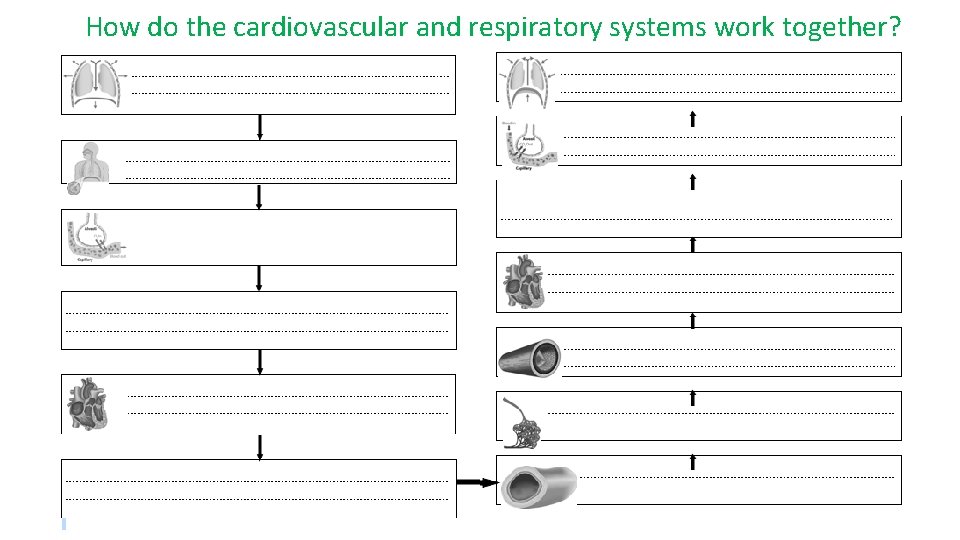
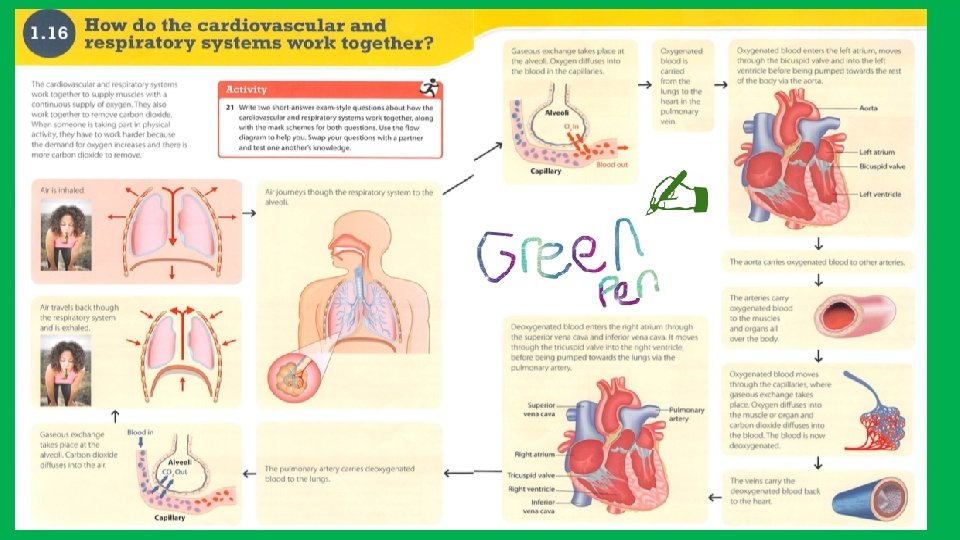
How do the cardiovascular and respiratory systems work together?