
Extended Reach Drilling n Discussion of the State
- Slides: 33
Extended Reach Drilling n Discussion of the State of the Art, Present Limitations, Completion, Fishing and Workover Tools & Techniques and Critical Safety Issues Steve Walls
Definitions of ERD n Throw ratio > 2: 1 u HD/TVD n ER Projects typically break into four groups: u Ultra Long ERD u Very Shallow ERD u Deepwater ERD u Small Rig ERD
General Limitations n n Traditional Challenges have been mostly overcome Remaining Ones are Toughest u ECD u Ultra Deep Casing Runs u Practices F Design F Implementation
ERD Performance n n n ERD: Just reaching the objective Time & Cost Performance New Benchmarks u Fit-for-Purpose n Solutions ERD Solutions: Alternatives u Subsea Tiebacks u Another Platform u Increased Footprint
Ultra-Long ERD Wells n Where are these wells being drilled? u US: Go. M, California, ANS u West Africa, Canada, North Sea u China, Australia, New Zealand u SE Asia: Thailand, Malaysia, Indonesia u Russia u Argentina, Venezuela
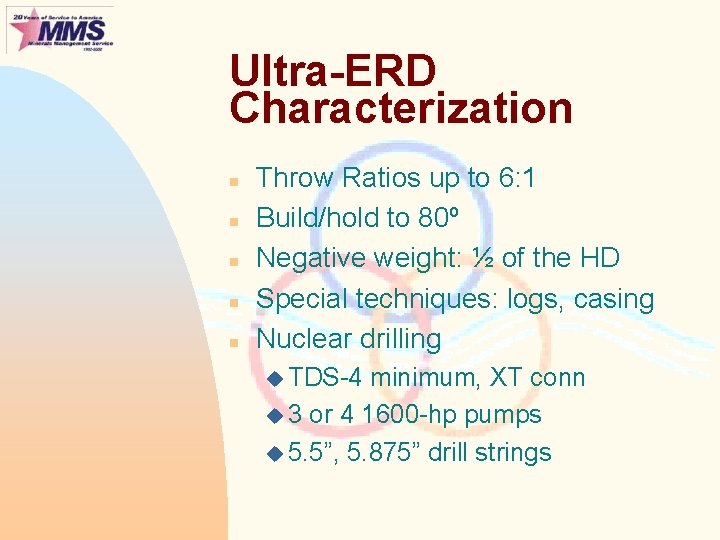
Ultra-ERD Characterization n n Throw Ratios up to 6: 1 Build/hold to 80º Negative weight: ½ of the HD Special techniques: logs, casing Nuclear drilling u TDS-4 minimum, XT conn u 3 or 4 1600 -hp pumps u 5. 5”, 5. 875” drill strings
What Does It Take? n n n Extensive Planning: 9 -12 mo/well Lead Times (Drill Pipe 1 year) Rig Availability & Modifications u HP, n HT, space, setback loads Training for THAT well u Office & Operations teams
Available Technologies n n n n Casing Flotation Downhole Adjustable Stabilizers Rotary Steerable Systems Walking PDC bits Mechanical torque/drag reducers Wireline tractors Hole condition monitoring systems HT top drives and tubulars
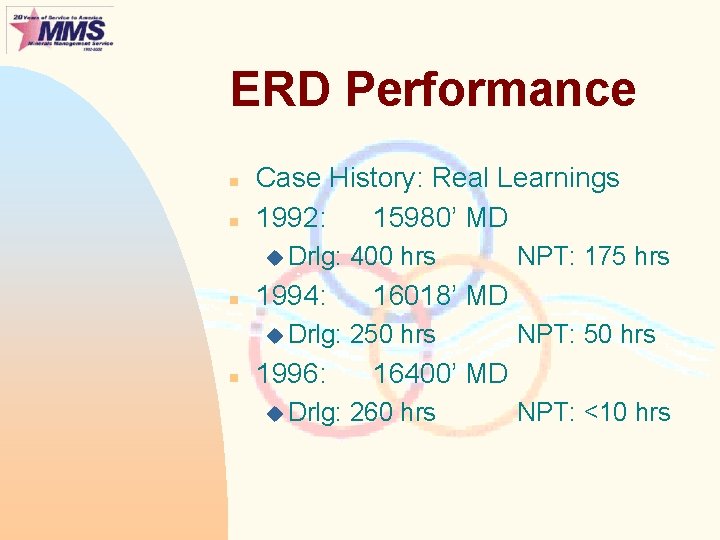
ERD Performance n n Case History: Real Learnings 1992: 15980’ MD u Drlg: n 1994: u Drlg: n 1996: u Drlg: 400 hrs NPT: 175 hrs 16018’ MD 250 hrs NPT: 50 hrs 16400’ MD 260 hrs NPT: <10 hrs
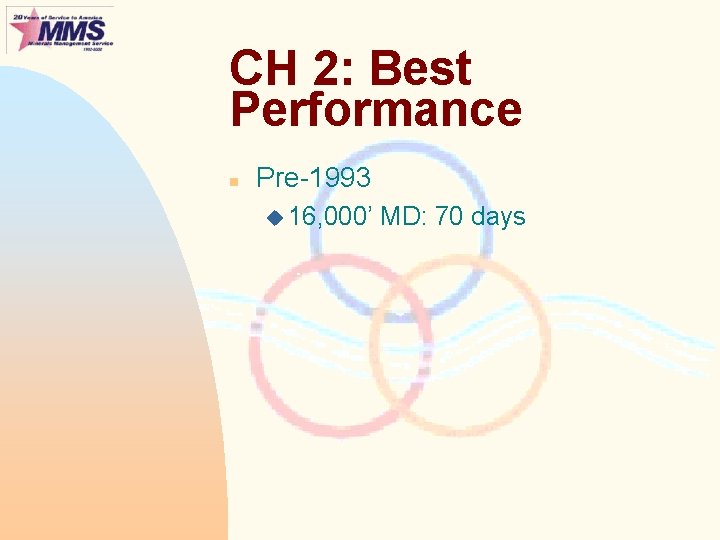
CH 2: Best Performance n Pre-1993 u 16, 000’ MD: 70 days
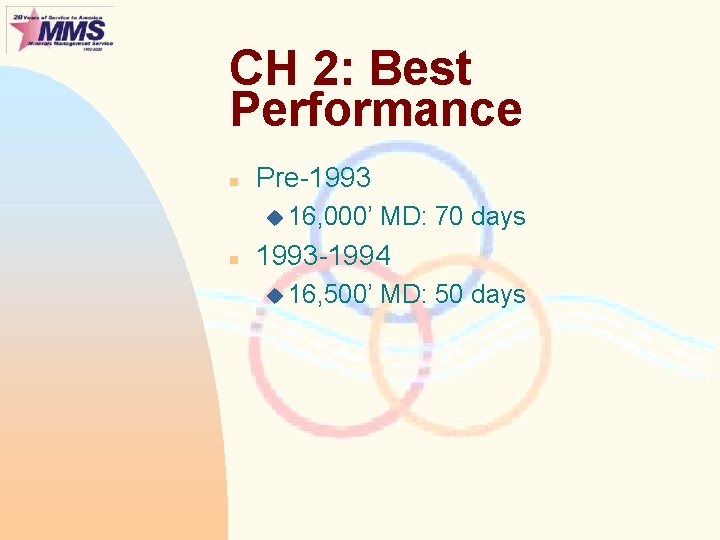
CH 2: Best Performance n Pre-1993 u 16, 000’ n MD: 70 days 1993 -1994 u 16, 500’ MD: 50 days
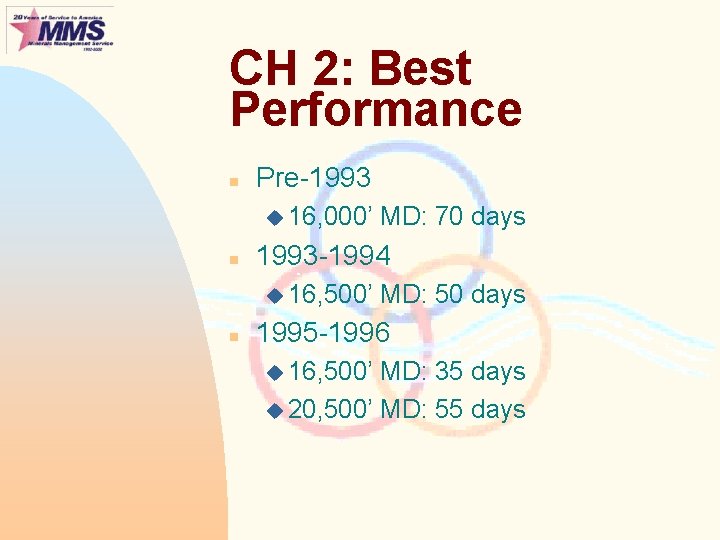
CH 2: Best Performance n Pre-1993 u 16, 000’ n 1993 -1994 u 16, 500’ n MD: 70 days MD: 50 days 1995 -1996 u 16, 500’ MD: 35 days u 20, 500’ MD: 55 days
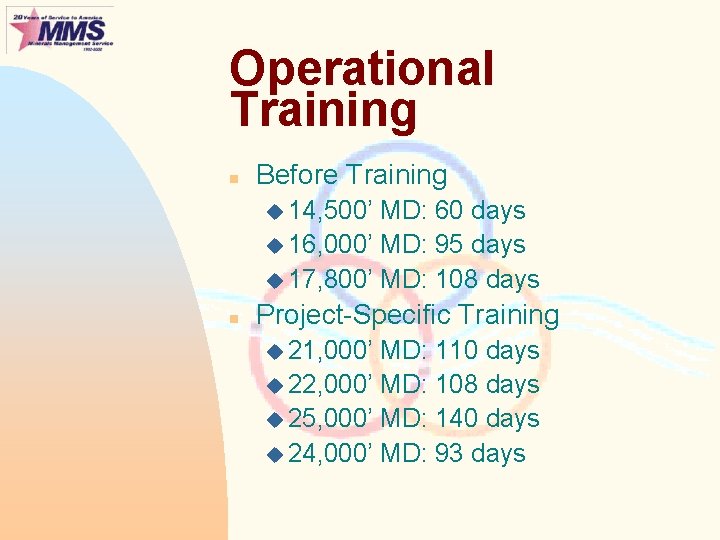
Operational Training n Before Training u 14, 500’ MD: 60 days u 16, 000’ MD: 95 days u 17, 800’ MD: 108 days n Project-Specific Training u 21, 000’ MD: 110 days u 22, 000’ MD: 108 days u 25, 000’ MD: 140 days u 24, 000’ MD: 93 days
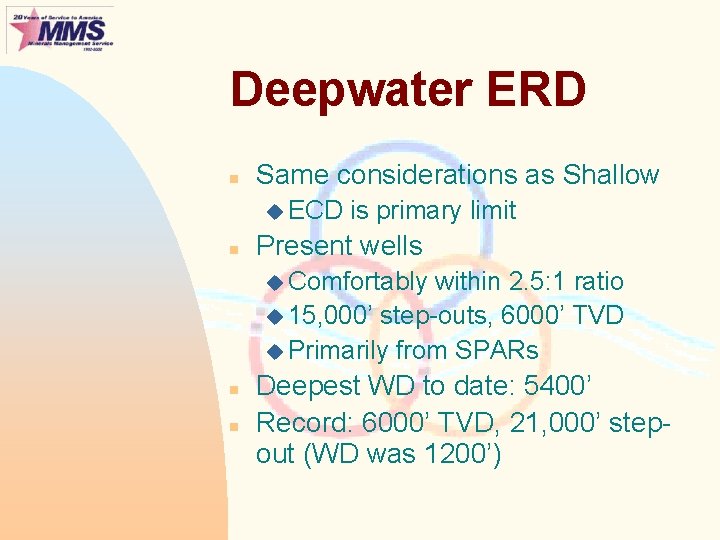
Deepwater ERD n Same considerations as Shallow u ECD n is primary limit Present wells u Comfortably within 2. 5: 1 ratio u 15, 000’ step-outs, 6000’ TVD u Primarily from SPARs n n Deepest WD to date: 5400’ Record: 6000’ TVD, 21, 000’ stepout (WD was 1200’)
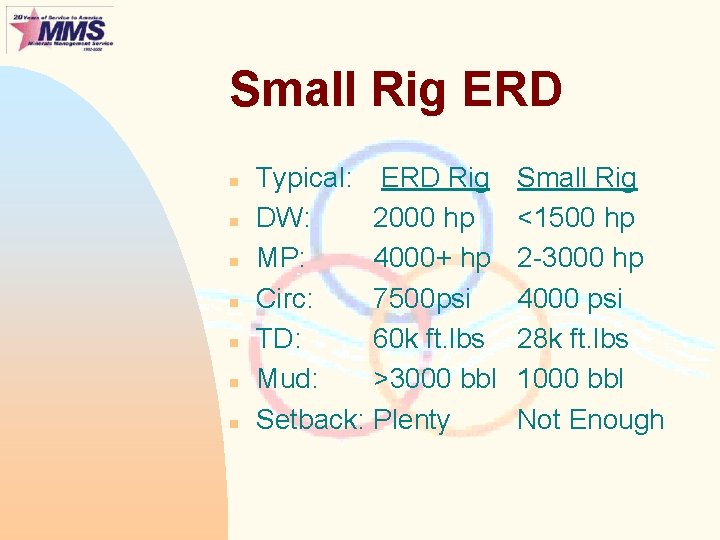
Small Rig ERD n n n n Typical: ERD Rig DW: 2000 hp MP: 4000+ hp Circ: 7500 psi TD: 60 k ft. lbs Mud: >3000 bbl Setback: Plenty Small Rig <1500 hp 2 -3000 hp 4000 psi 28 k ft. lbs 1000 bbl Not Enough
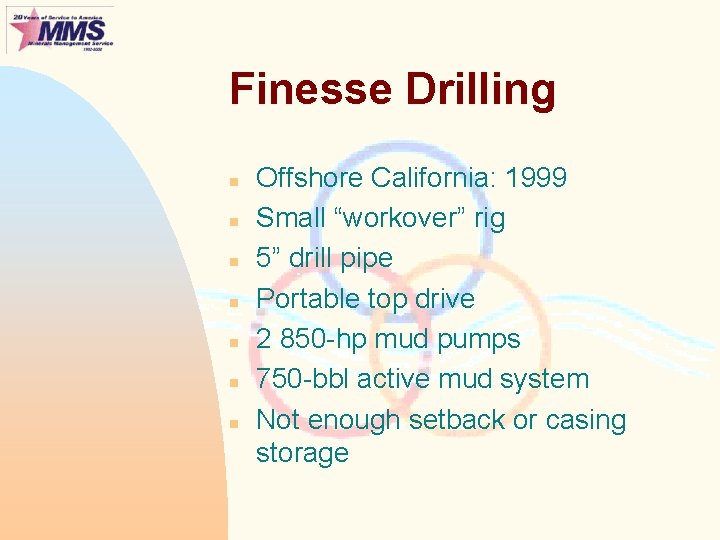
Finesse Drilling n n n n Offshore California: 1999 Small “workover” rig 5” drill pipe Portable top drive 2 850 -hp mud pumps 750 -bbl active mud system Not enough setback or casing storage
Project Concerns n Setback Limits u Space and fingerboard size u Weight on sub and jacket n n Pipe stretch exceeded head room Pipe Rack Storage u Casing run off the boat u Managing multiple strings u Simultaneous setback limits
Operational Limits n n Catheads, Iron Roughnecks (HT) Rig Power u Impossible to backream at TD u Max: Pumps, Top drive, Lifting n n Design Limits: Overpulls gone Mud systems: shipped whole mud Solids handling, small volume Circ: Flowrate, pressure limits
Project Results n n n Record California Well 19, 555’ MD 79º Tangent section, drop @ TD 3º/100’ build 16, 000+’ HD 8, 000’+ TVD
Completion Techniques n Pre-Drilling Consideration u Well: designed for the completion AND future interventions n n Tubular logging, perforations 8500’ slotted horizontal liner Wireline, CT tractors Intelligent completions, particularly for multiple pay sections
Interventions n Three Main Technologies u Jointed Tubing u Live Workovers (Snubbing) u Coiled Tubing Units n Wireline Options typically limited u Wheeled n Tools, Tractors Primarily are System Failures u Corrosion, Sand Control, failed packers (Annular pressure)
Fishing Considerations n n Wellbore friction constraints due to tortuosity, wellbore stability Jar placement is of prime importance in ERD wells Computer program placement instead of rules of thumb Required at the start: Risk Management Analysis u Sidetrack Planning Team u Are the Take Points Firm?
Jar Placement n Longitudinal Stress Wave Theory u Foundation of Jarring Programs u Impact and Impulse n n n Stress Wave Reflection Jars need to be optimized for both down-hits and up-hits, depending on the anticipated problems Two-piece jars can be useful
General Fishing Rules n n DLS>15º/100’: don’t operate jars in this environment due to stresses Jars below build/turn section: As much as 50% of the axial load can be lost due to wellbore contact Jars above build/turn section: Stress wave reflections are less, resulting in lower impulse. Anticipate (experience)
Intelligent Wells n Fundamental: downhole process control u Realtime (or near-RT) surveillance, interpretation and actuation u Accomplished through downhole measurement and remotely controlled zones (versus surface) n “Dumb” wells: provide no data or control except through CT, wireline or jointed tubing interventions
Converging Technology n Smart wells Just In Time u ERD-ML, Horiz Drlg achievements u Fewer but larger tubulars u Sand control & stim improvements F 50 bpm @ 15000 psi frac-pacs u Pre-completion F Draining of multiple pays multiple reservoirs u Co-mingled production
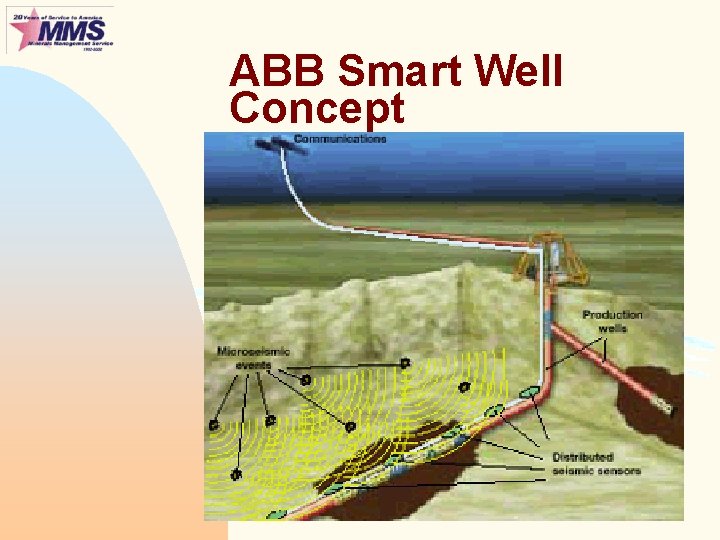
ABB Smart Well Concept
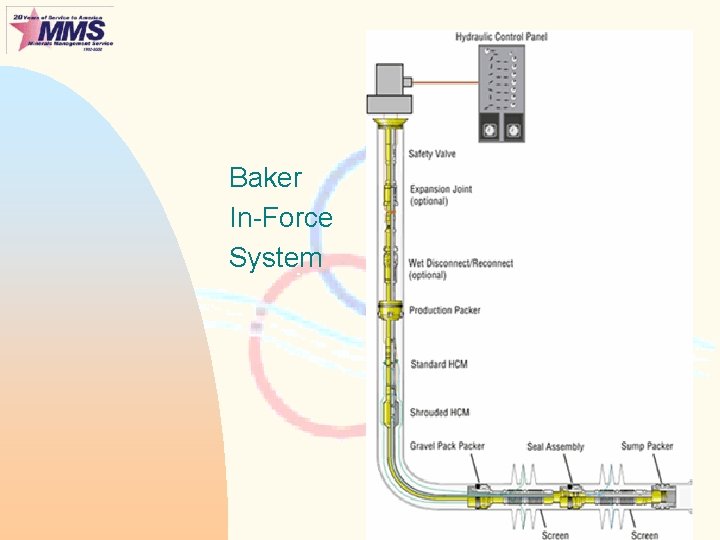
Baker In-Force System
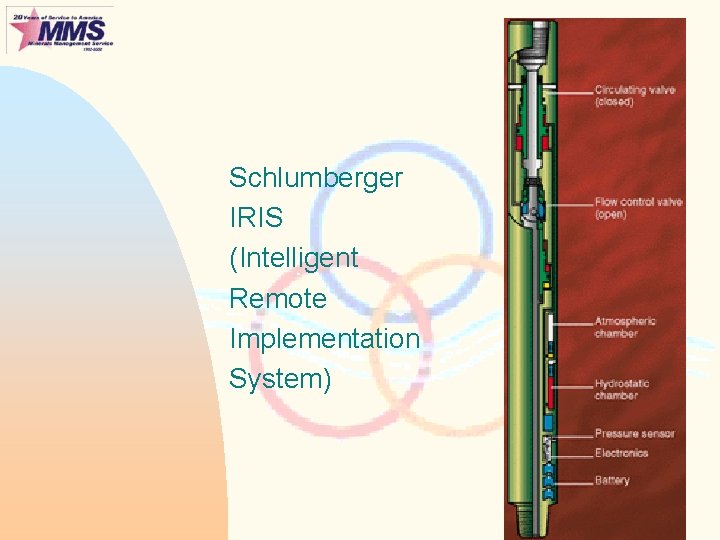
Schlumberger IRIS (Intelligent Remote Implementation System)
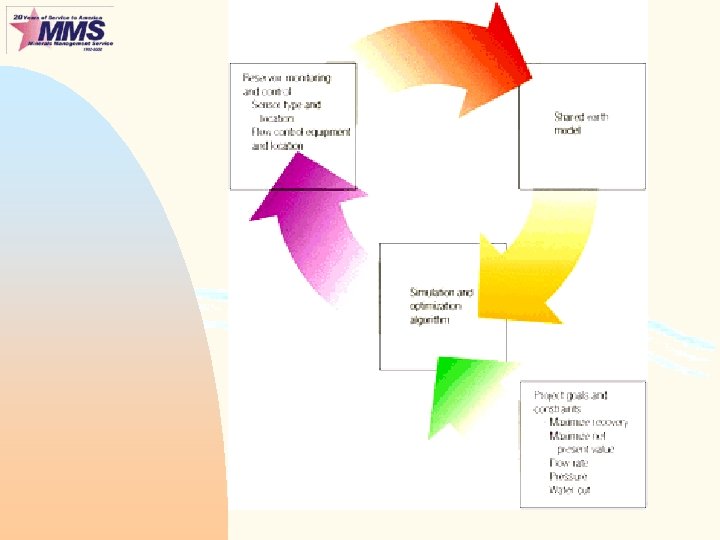
Project Optimization
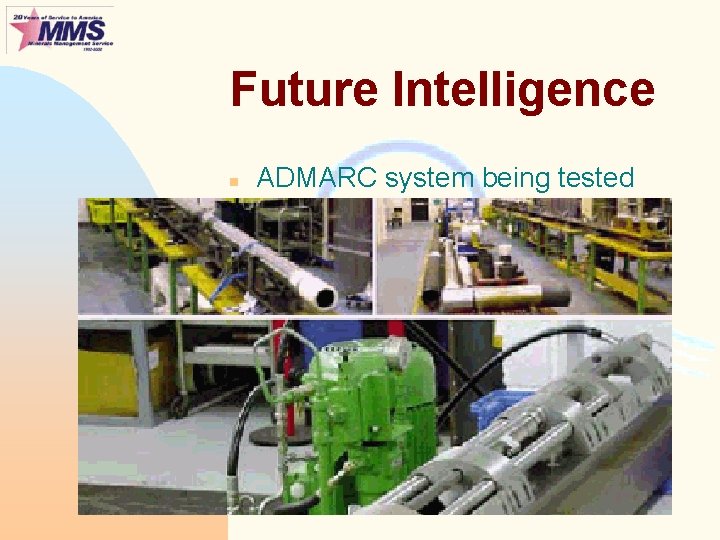
Future Intelligence n ADMARC system being tested
Critical Safety Issues n n n n Consider the Operations HP Circulating Systems Multiple handling of Tubulars Exposures to exotic fluids SBM BMP: compliance systems Storm planning, ops disruptions Rushed planning implications
Summary n n n Viable ERD projects are now being undertaken from small rigs, in deepwater & with very long HDs. Current technologies answer most of the limitations of ERD. Those limitations which remain are very significant challenges. ERD through specific design and implementation practices is an absolute must.