
EXTENDED LEARNING Part II Inspire Imaginative Play Children

- Slides: 10
EXTENDED LEARNING Part II
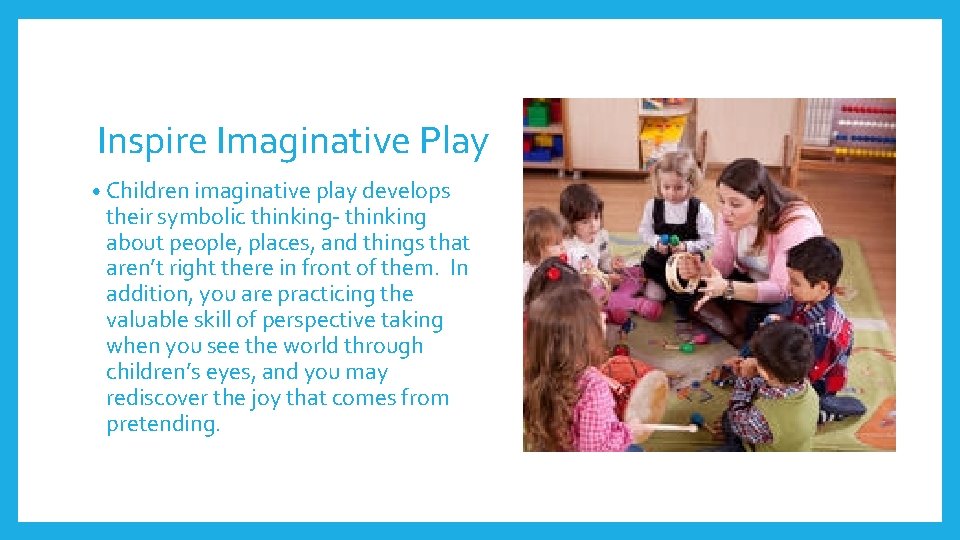
Inspire Imaginative Play • Children imaginative play develops their symbolic thinking- thinking about people, places, and things that aren’t right there in front of them. In addition, you are practicing the valuable skill of perspective taking when you see the world through children’s eyes, and you may rediscover the joy that comes from pretending.
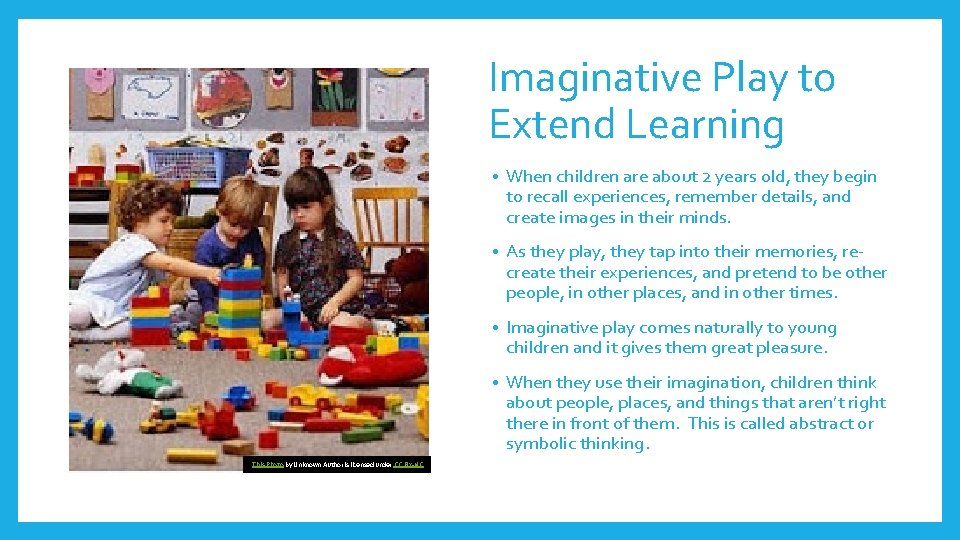
Imaginative Play to Extend Learning This Photo by Unknown Author is licensed under CC BY-NC • When children are about 2 years old, they begin to recall experiences, remember details, and create images in their minds. • As they play, they tap into their memories, recreate their experiences, and pretend to be other people, in other places, and in other times. • Imaginative play comes naturally to young children and it gives them great pleasure. • When they use their imagination, children think about people, places, and things that aren’t right there in front of them. This is called abstract or symbolic thinking.
01 02 03 04 Be a Player. Be a mirror. Be a rubber band. Be a steering wheel. • Play with the children at their level whether it be on the floor or in a chair. Connect with them. • Let the children know you see and hear them. Reflect their actions and language. • Stretch the child’s play. Introduce more props and interesting language. • When the imaginative play goes in a direction that might not be appropriate, take on a role that allows you to redirect the play in a more appropriate direction. Tips for Inspiring Imagination
Solve Problems Together • By collaborating with children, you can help them think through the steps of solving a problem, use multiple strategies, and develop a positive attitude toward problem solving. Collaborative problem solving with children will contribute to a strong sense of community in your classroom, which will make your work feel more fulfilling.
Solving Problems to Extend Learning • As you interact with children, you can help them develop a positive attitude toward solving problems and learn how to think through the steps that lead toward a solution. • As you interact with children, be a problem solver, model, and a guide.
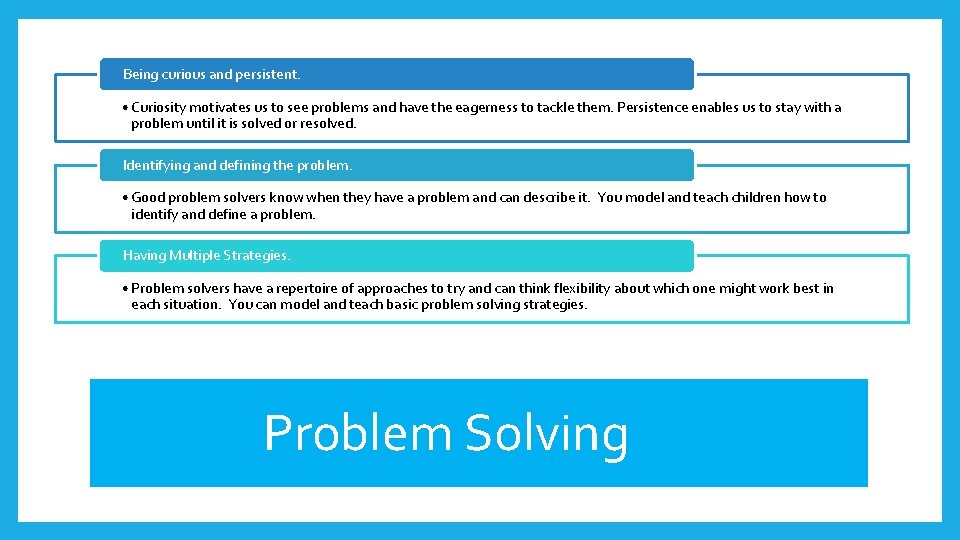
Being curious and persistent. • Curiosity motivates us to see problems and have the eagerness to tackle them. Persistence enables us to stay with a problem until it is solved or resolved. Identifying and defining the problem. • Good problem solvers know when they have a problem and can describe it. You model and teach children how to identify and define a problem. Having Multiple Strategies. • Problem solvers have a repertoire of approaches to try and can think flexibility about which one might work best in each situation. You can model and teach basic problem solving strategies. Problem Solving
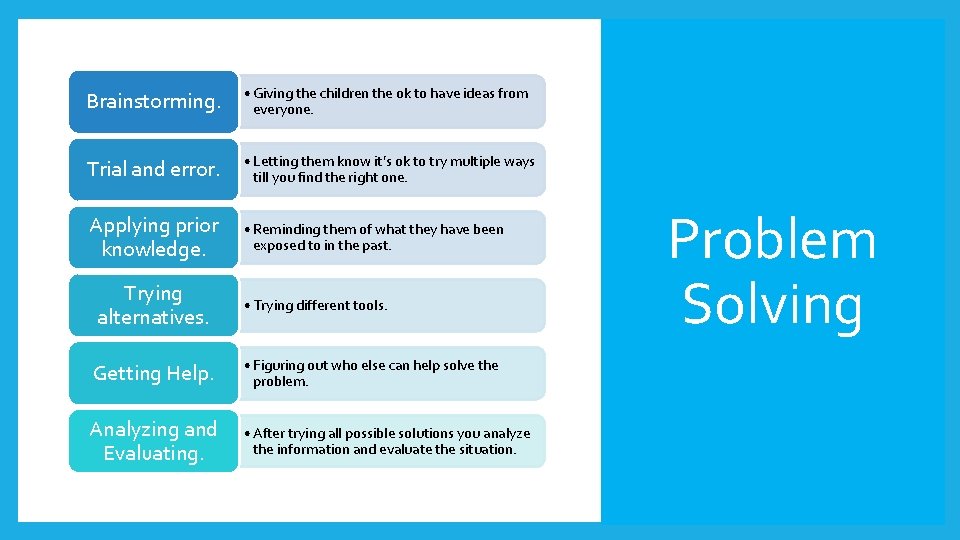
Brainstorming. • Giving the children the ok to have ideas from everyone. Trial and error. • Letting them know it’s ok to try multiple ways till you find the right one. Applying prior knowledge. • Reminding them of what they have been exposed to in the past. Trying alternatives. • Trying different tools. Getting Help. • Figuring out who else can help solve the problem. Analyzing and Evaluating. • After trying all possible solutions you analyze the information and evaluate the situation. Problem Solving
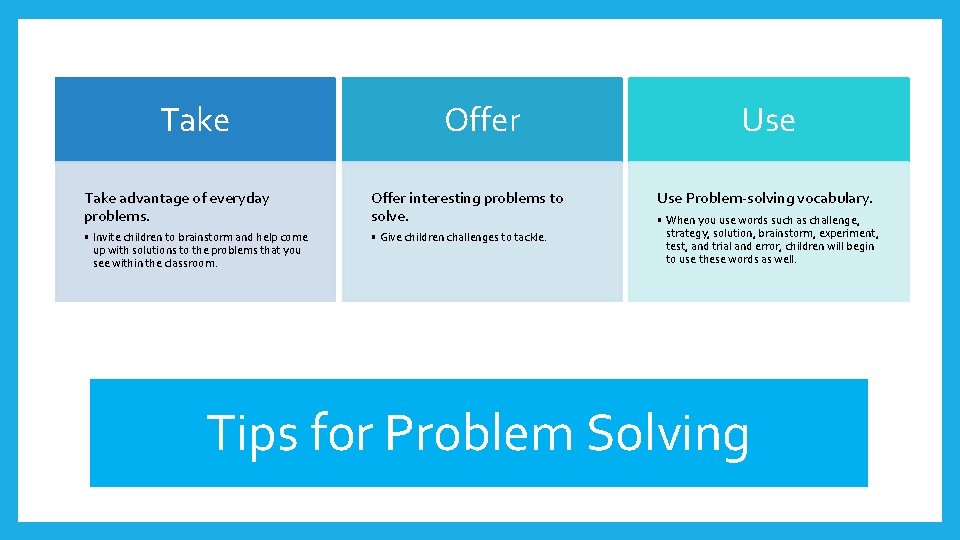
Take Offer Take advantage of everyday problems. Offer interesting problems to solve. • Invite children to brainstorm and help come up with solutions to the problems that you see within the classroom. • Give children challenges to tackle. Use Problem-solving vocabulary. • When you use words such as challenge, strategy, solution, brainstorm, experiment, test, and trial and error, children will begin to use these words as well. Tips for Problem Solving
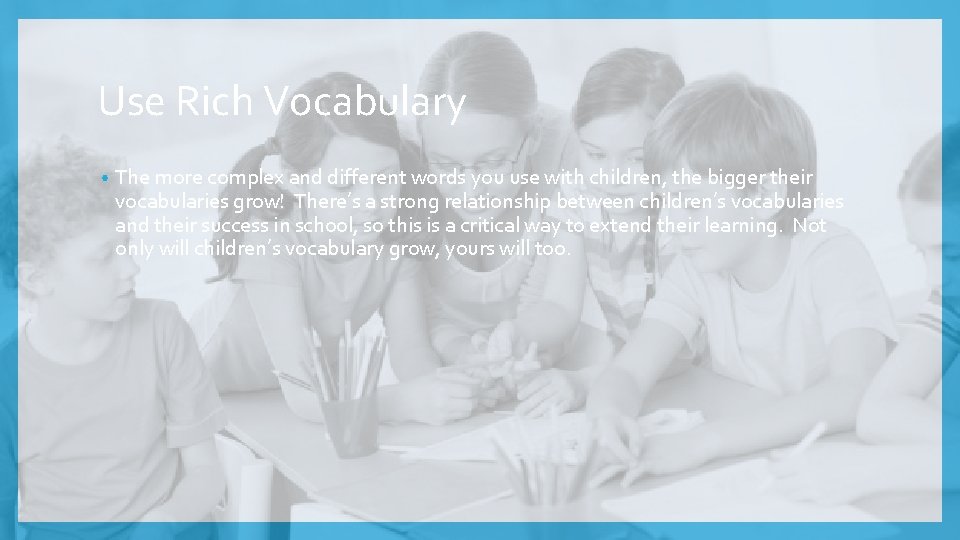
Use Rich Vocabulary • The more complex and different words you use with children, the bigger their vocabularies grow! There’s a strong relationship between children’s vocabularies and their success in school, so this is a critical way to extend their learning. Not only will children’s vocabulary grow, yours will too.