
Extended Kalman Filter with slides adapted from http
- Slides: 18
Extended Kalman Filter with slides adapted from http: //www. probabilistic-robotics. com 1
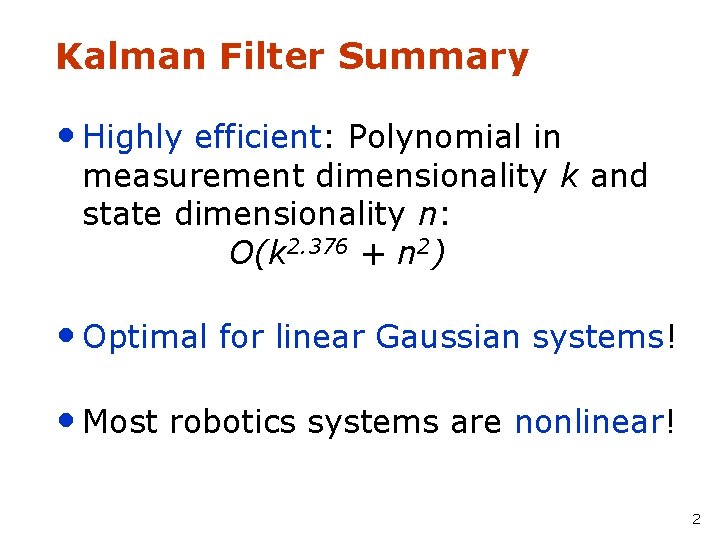
Kalman Filter Summary • Highly efficient: Polynomial in measurement dimensionality k and state dimensionality n: O(k 2. 376 + n 2) • Optimal for linear Gaussian systems! • Most robotics systems are nonlinear! 2
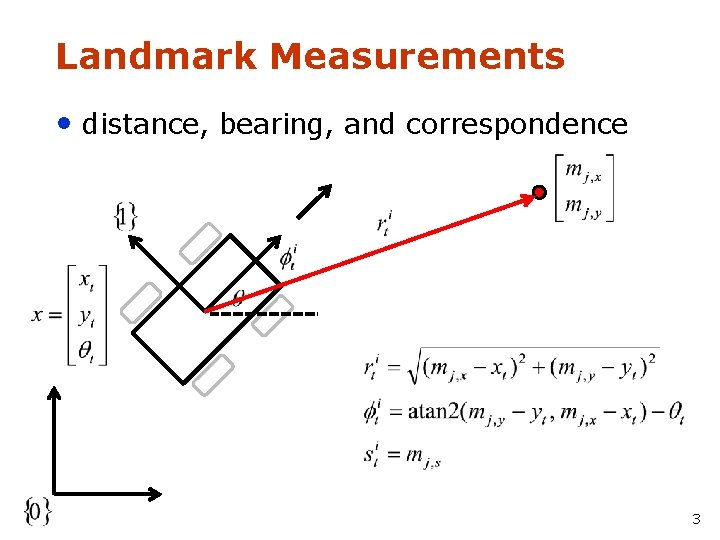
Landmark Measurements • distance, bearing, and correspondence 3
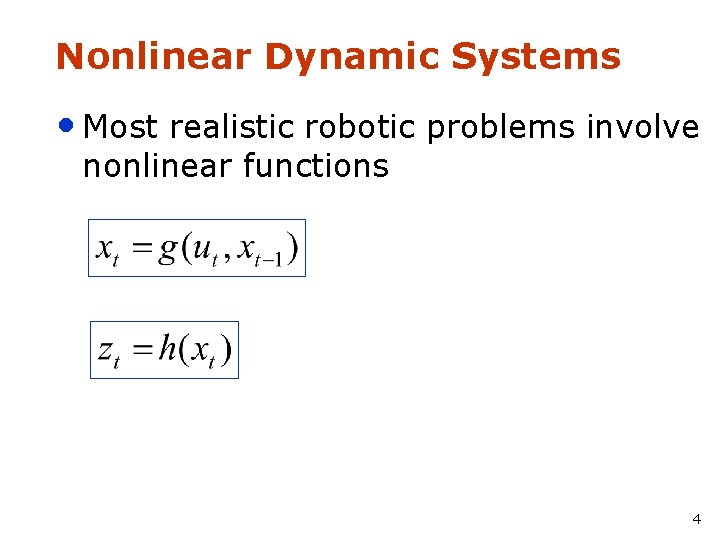
Nonlinear Dynamic Systems • Most realistic robotic problems involve nonlinear functions 4
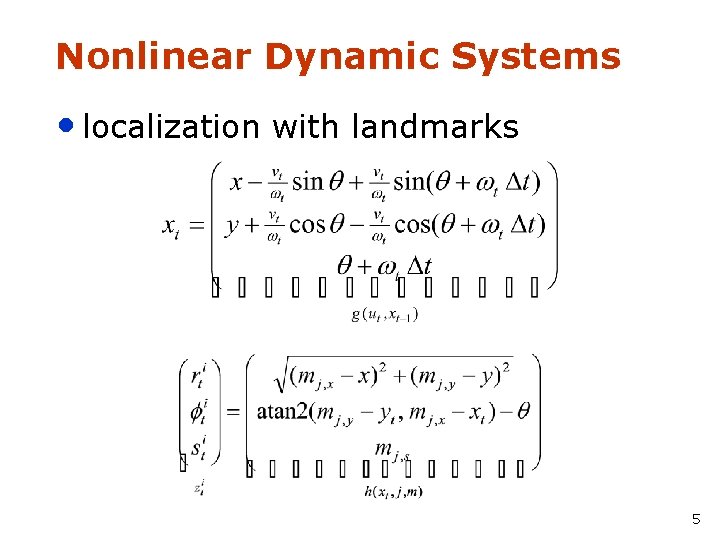
Nonlinear Dynamic Systems • localization with landmarks 5
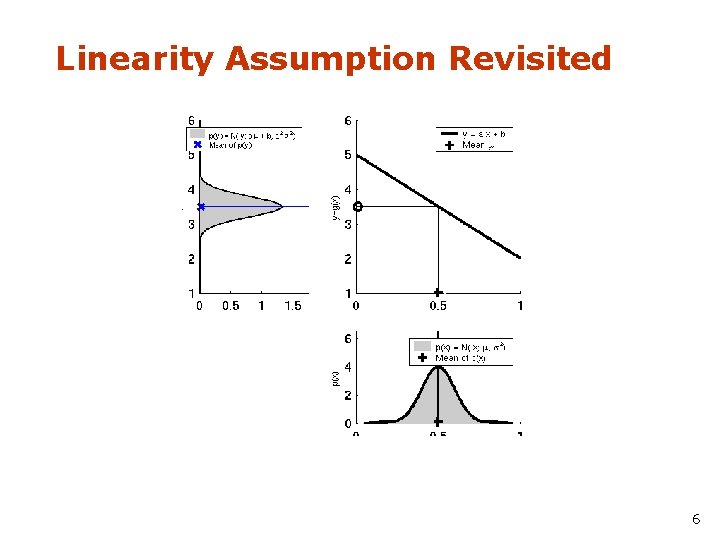
Linearity Assumption Revisited 6
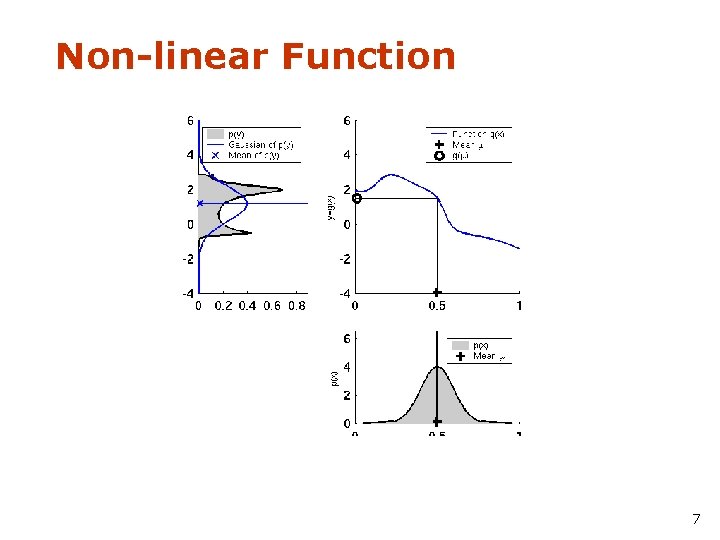
Non-linear Function 7
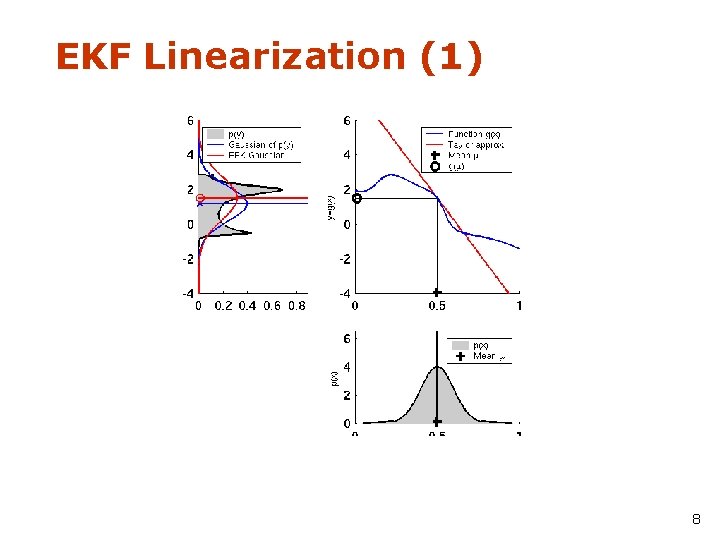
EKF Linearization (1) 8
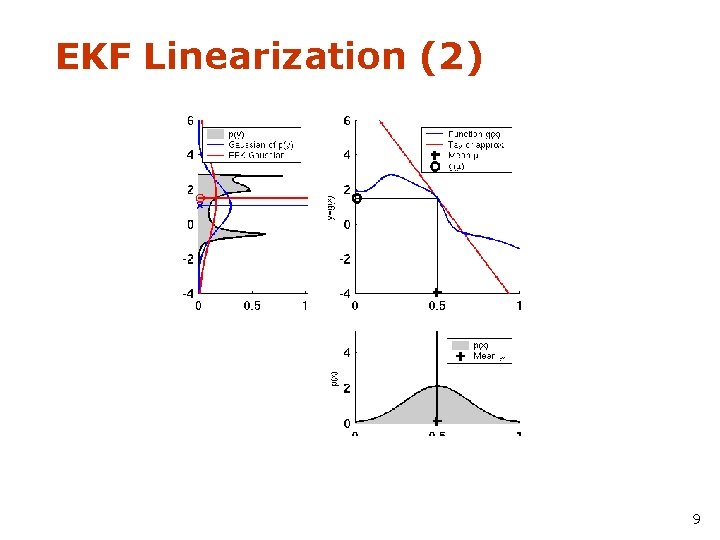
EKF Linearization (2) 9
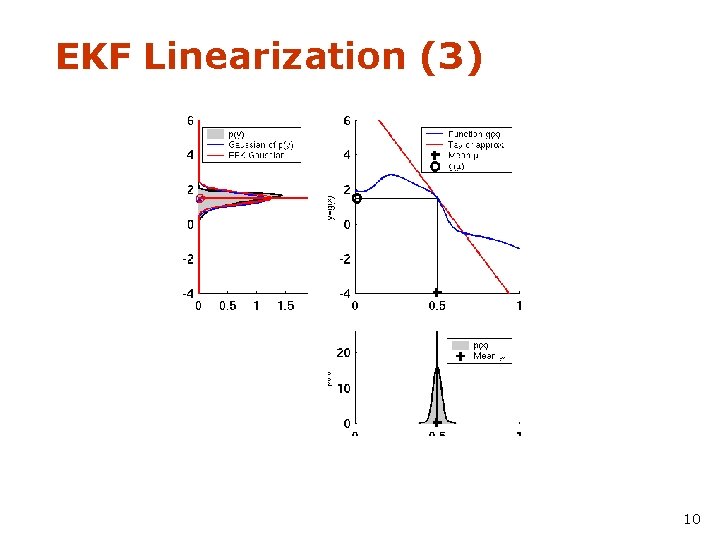
EKF Linearization (3) 10
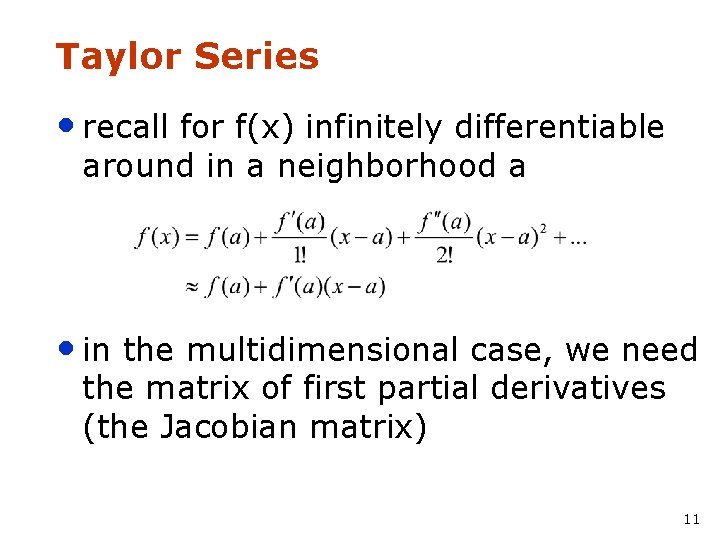
Taylor Series • recall for f(x) infinitely differentiable around in a neighborhood a • in the multidimensional case, we need the matrix of first partial derivatives (the Jacobian matrix) 11
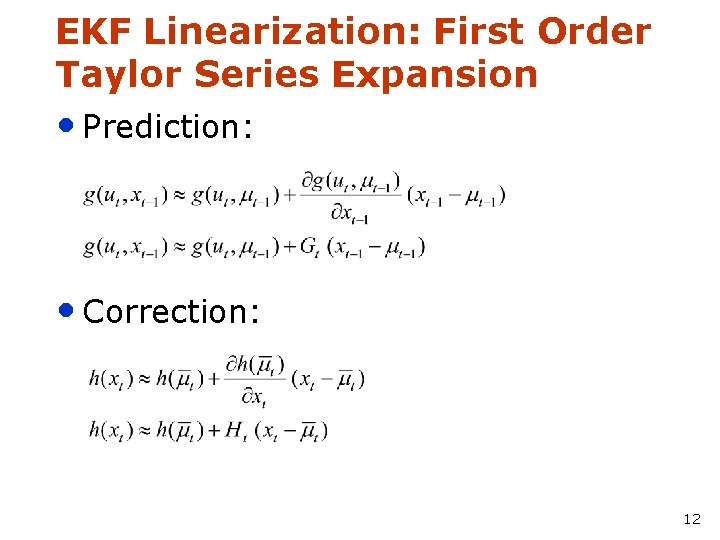
EKF Linearization: First Order Taylor Series Expansion • Prediction: • Correction: 12
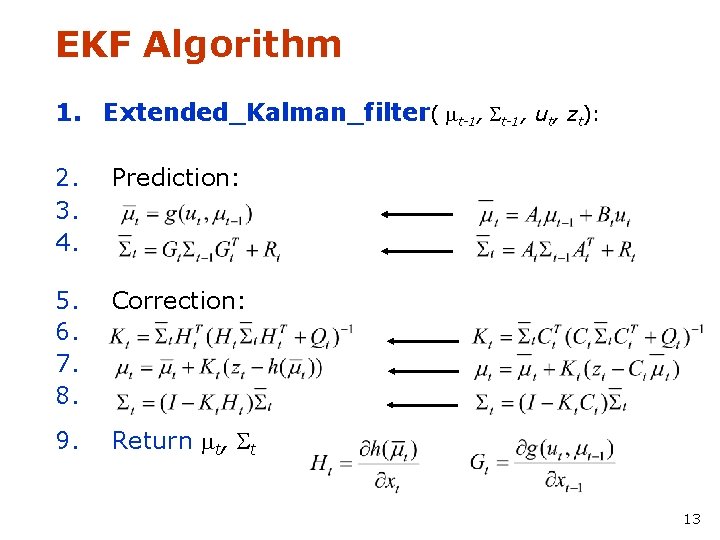
EKF Algorithm 1. Extended_Kalman_filter( mt-1, St-1, ut, zt): 2. Prediction: 3. 4. 5. 6. 7. 8. Correction: 9. Return mt, St 13
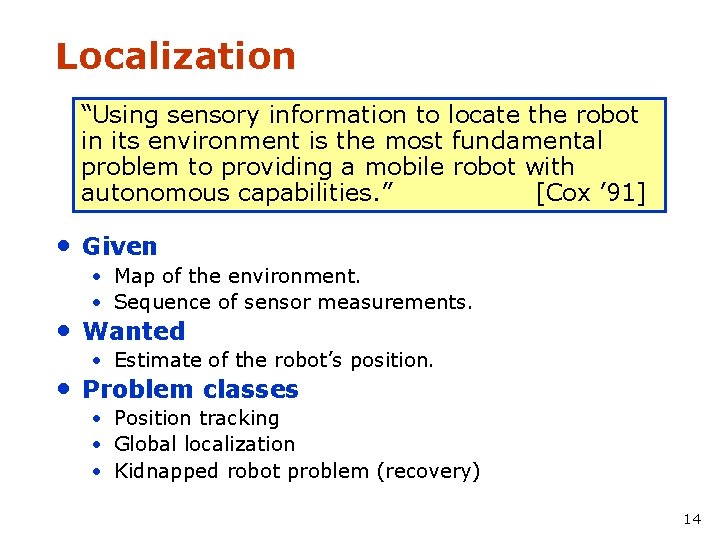
Localization “Using sensory information to locate the robot in its environment is the most fundamental problem to providing a mobile robot with autonomous capabilities. ” [Cox ’ 91] • Given • Map of the environment. • Sequence of sensor measurements. • Wanted • Estimate of the robot’s position. • Problem classes • Position tracking • Global localization • Kidnapped robot problem (recovery) 14
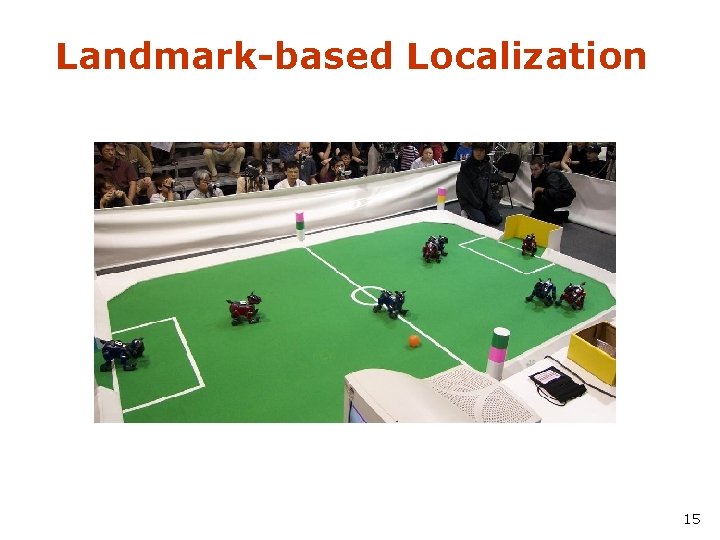
Landmark-based Localization 15
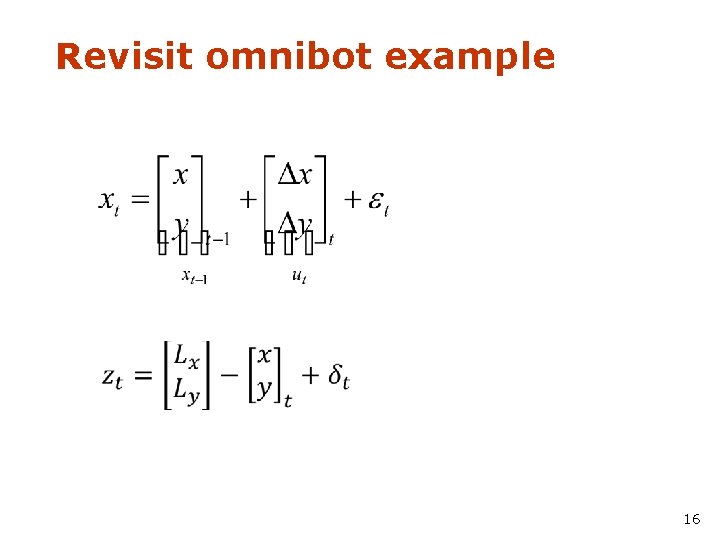
Revisit omnibot example 16
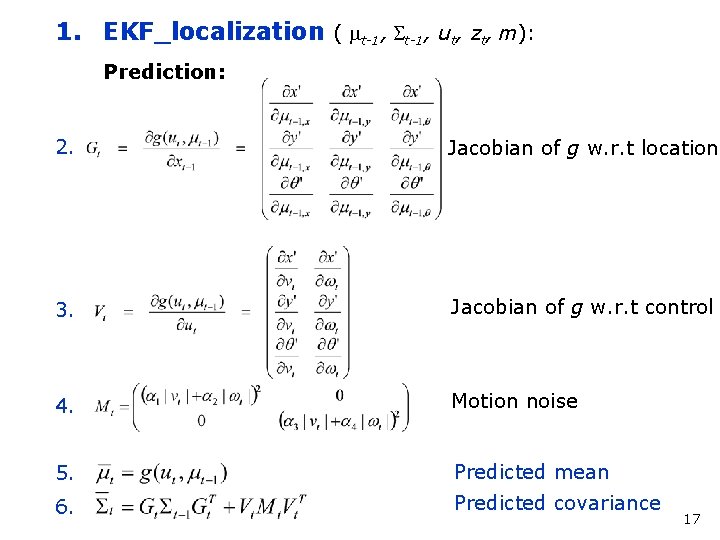
1. EKF_localization ( mt-1, St-1, ut, zt, m): Prediction: 2. Jacobian of g w. r. t location 3. Jacobian of g w. r. t control 4. Motion noise 5. Predicted mean 6. Predicted covariance 17
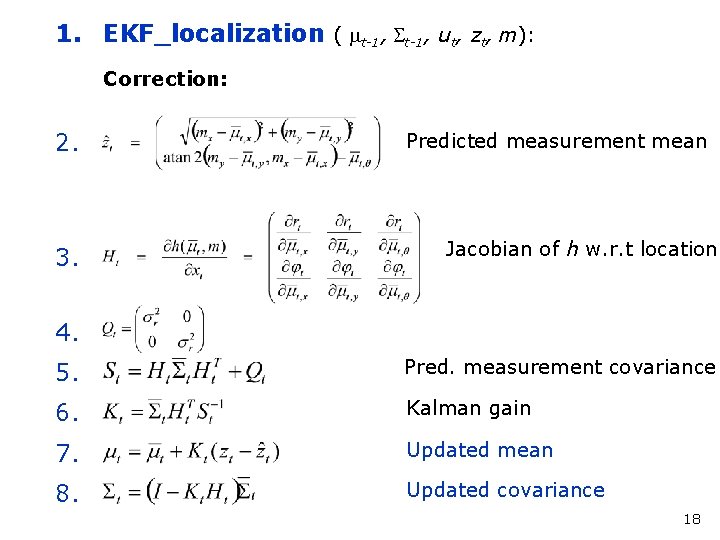
1. EKF_localization ( mt-1, St-1, ut, zt, m): Correction: 2. 3. Predicted measurement mean Jacobian of h w. r. t location 4. 5. Pred. measurement covariance 6. Kalman gain 7. Updated mean 8. Updated covariance 18