
Expressio ns of Politeness and Idiomatic versus Literal


- Slides: 12
Expressio ns of Politeness and
Idiomatic versus Literal Meanings Idiomatic Meanings Literal Meanings • Translated as used in the language. • Usually sound “normal” to us. • Translated word-for-word. • E. g. the English expression “you’re on fire” means “you’re doing great!” idiomatically. • E. g. the English expression “you’re on fire” means “stop, drop, and roll!” literally. • Usually sound strange to us.
Idiomatic versus Literal Meanings “You’re on fire!” (Idiomatic Meaning) “You’re on fire!” (Literal Meaning) “You’re doing great!” “Stop, drop, and roll, man!”
Mea culpa! • Idiomatic meaning: “I’m sorry. ” • Literal meaning: “my fault” or “my bad. ” • This is often used in American courts by lawyers today! • If the Pope makes an official apology, it’s called a “Mea Culpa. ”
Salve(te)! • Idiomatic meaning: “hello, ” “hi, ” or “greetings. ” • Literal meaning: “be well” or “be healthy. ” N. b. this expression is a verb command. • The English word “hello” is the modern form of the Old English expression “waes halle, ” meaning “be well” or “be healthy. ”
Vale(te)! • Idiomatic meaning: “goodbye” or “farewell. ” • Literal meaning: “be strong” or “be brave. ” Roman culture was rather violent, and you never knew if you would see someone again. N. b. this expression is a verb command. • The English expression “goodbye” originally meant “God be with you. ”
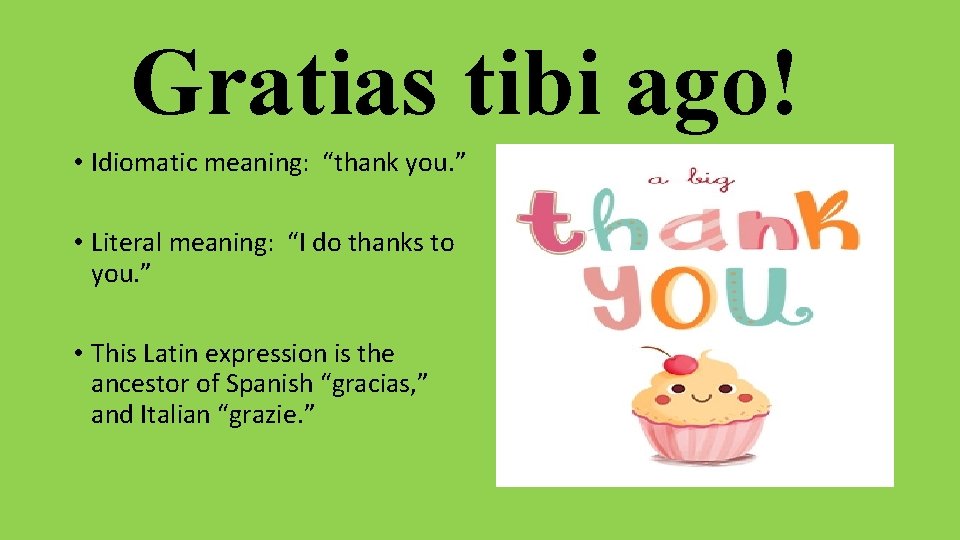
Gratias tibi ago! • Idiomatic meaning: “thank you. ” • Literal meaning: “I do thanks to you. ” • This Latin expression is the ancestor of Spanish “gracias, ” and Italian “grazie. ”
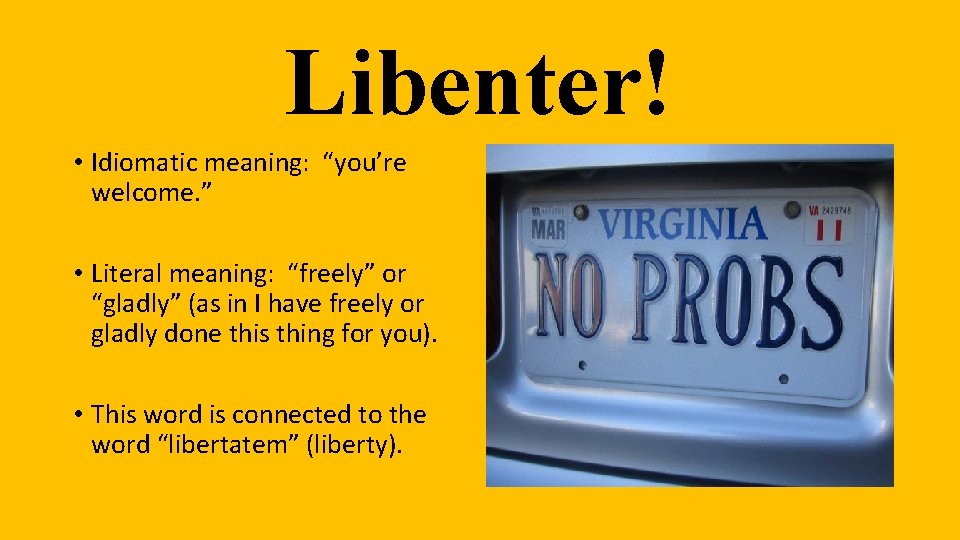
Libenter! • Idiomatic meaning: “you’re welcome. ” • Literal meaning: “freely” or “gladly” (as in I have freely or gladly done this thing for you). • This word is connected to the word “libertatem” (liberty).
Ignosce mihi! • Idiomatic meaning: “excuse me. ” • Literal meaning: “ignore me” (in the sense of “ignore my mistake”). • This expression can be used in any way the English “excuse me” can be used: to move past someone, after burping or farting, etc.
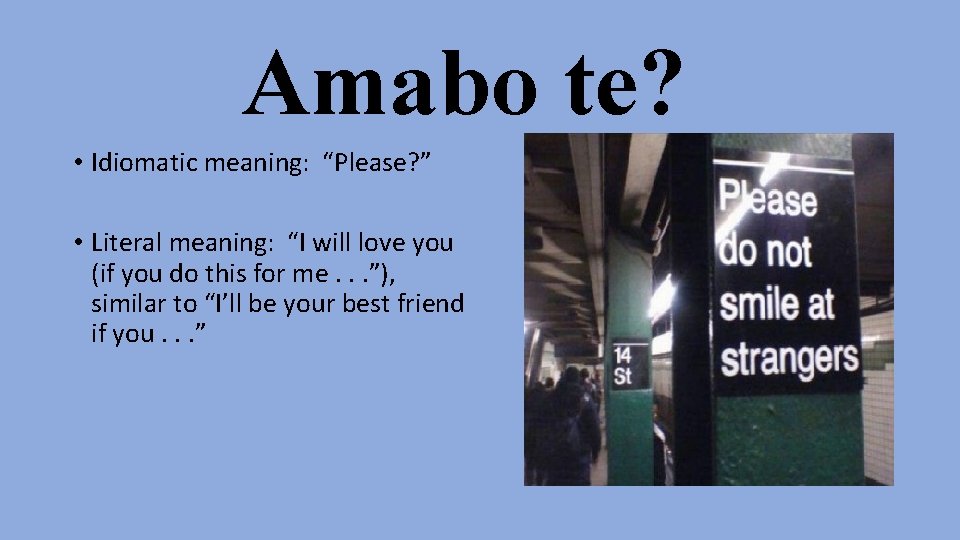
Amabo te? • Idiomatic meaning: “Please? ” • Literal meaning: “I will love you (if you do this for me. . . ”), similar to “I’ll be your best friend if you. . . ”
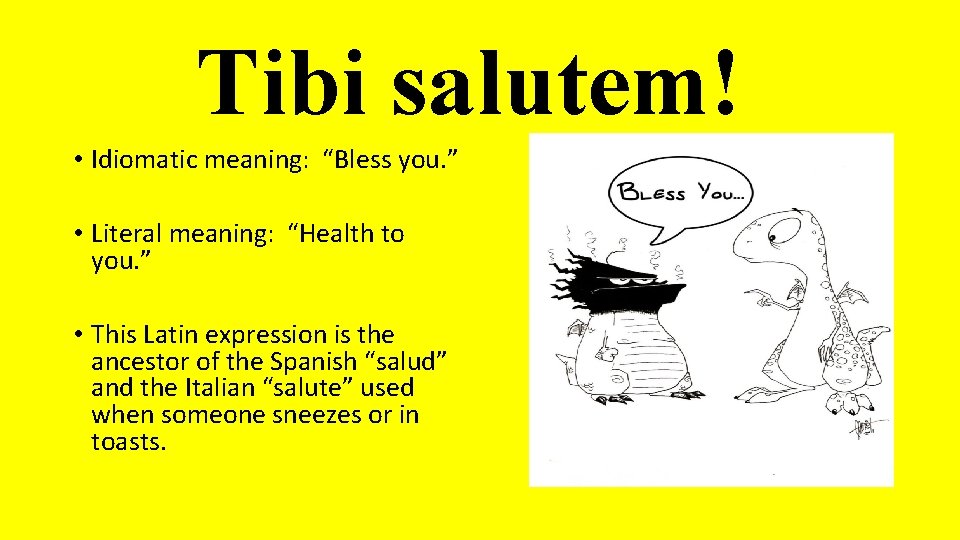
Tibi salutem! • Idiomatic meaning: “Bless you. ” • Literal meaning: “Health to you. ” • This Latin expression is the ancestor of the Spanish “salud” and the Italian “salute” used when someone sneezes or in toasts.
Licetne mihi in latrinam ire? • Idiomatic meaning: “May I use the bathroom? ” • Literal meaning: “is it permitted for me to go into the toilet? ” • This is a really good question to be able to ask in any language!