
Expressing and Measuring Reaction Rates Mr Krstovic Grade
![Rate of Reaction A+B C Rate of reaction = ∆ [A]/ ∆ t (in](https://slidetodoc.com/presentation_image_h2/4525cb4566732d97cddabd593a8b267d/image-4.jpg "Rate of Reaction A+B C Rate of reaction = ∆ [A]/ ∆ t (in")
- Slides: 13
Expressing and Measuring Reaction Rates Mr. Krstovic Grade 12 Chemistry
Expressing Reaction Rates o The change in the amount of reactants or products over time is called the reaction rate.
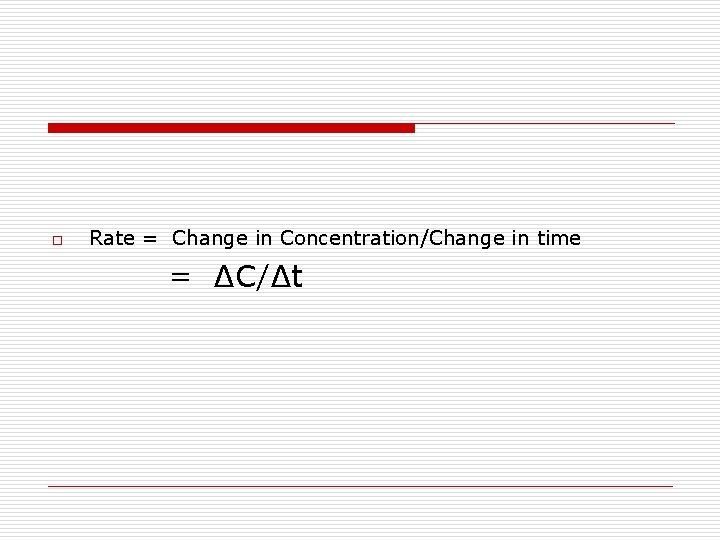
o Rate = Change in Concentration/Change in time = ∆C/∆t
Rate of Reaction A+B C Rate of reaction = ∆ [A]/ ∆ t (in mol/(L x s)) (consumption of A) or: ∆ [B]/ ∆ t (consumption of B) or: ∆ [C]/ ∆ t (production of C)
o Reaction rates are always positive, by convention.
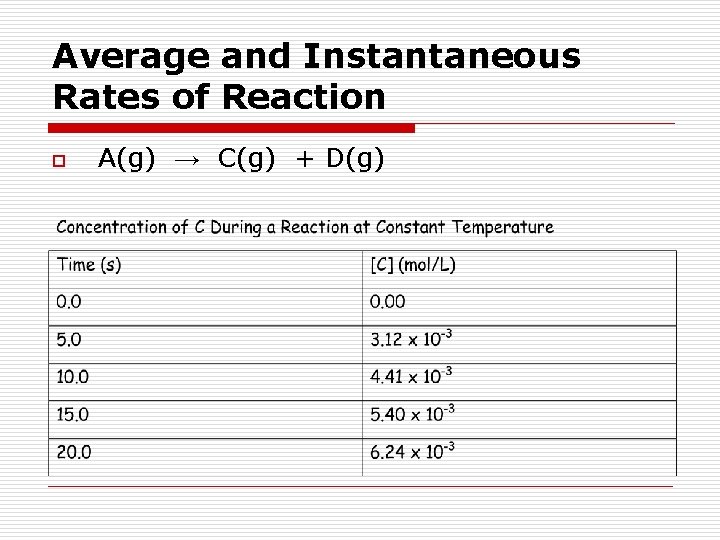
Average and Instantaneous Rates of Reaction o A(g) → C(g) + D(g)
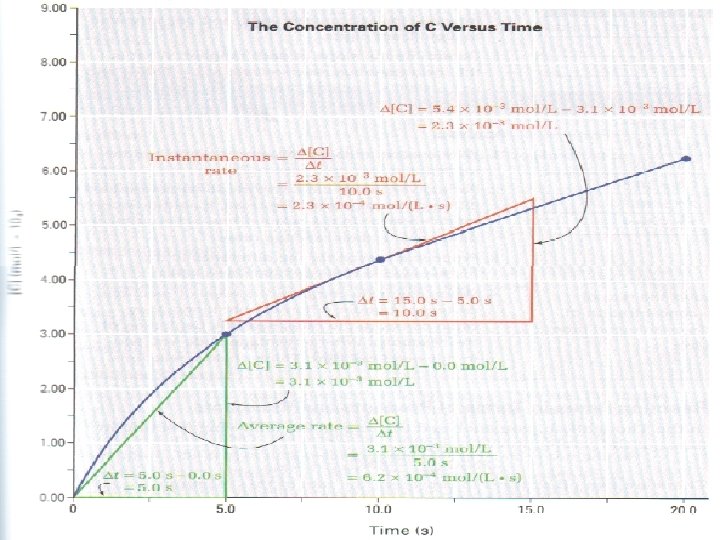
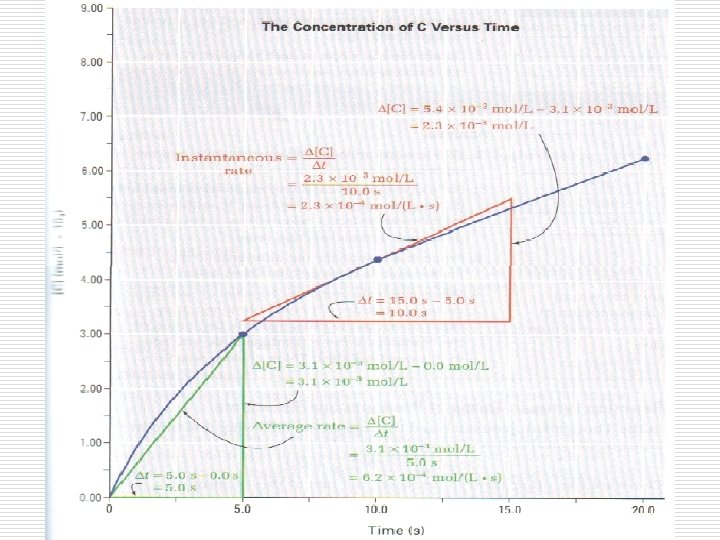
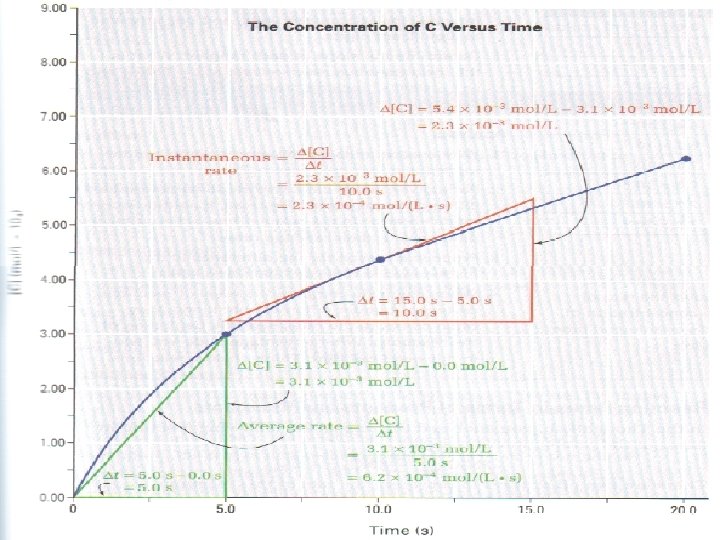
Average Rate of Change (AROC) o The average rate of a reaction is the average change in the concentration of a reactant or product per unit time over a given time interval.
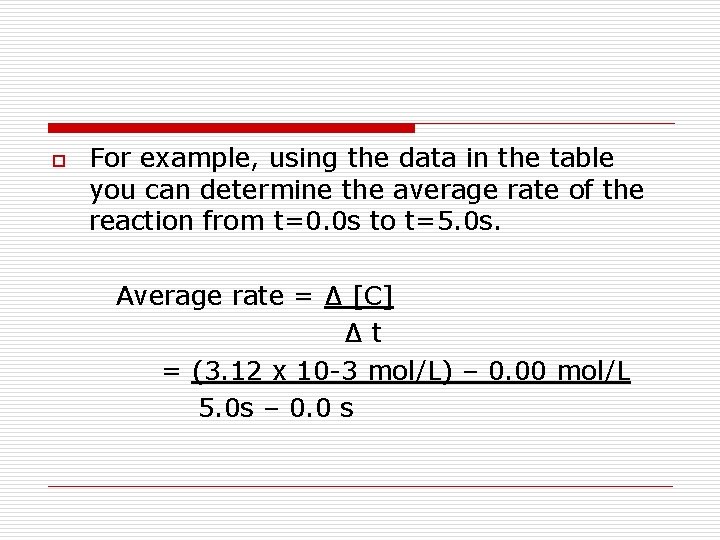
o For example, using the data in the table you can determine the average rate of the reaction from t=0. 0 s to t=5. 0 s. Average rate = ∆ [C] ∆t = (3. 12 x 10 -3 mol/L) – 0. 00 mol/L 5. 0 s – 0. 0 s
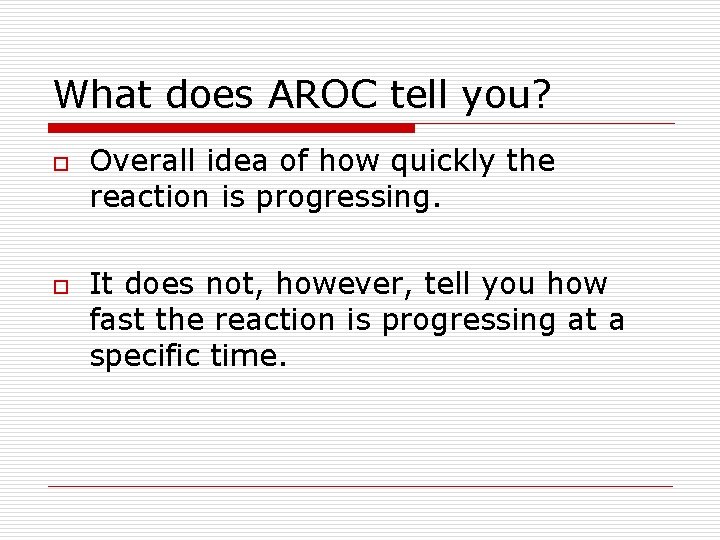
What does AROC tell you? o o Overall idea of how quickly the reaction is progressing. It does not, however, tell you how fast the reaction is progressing at a specific time.
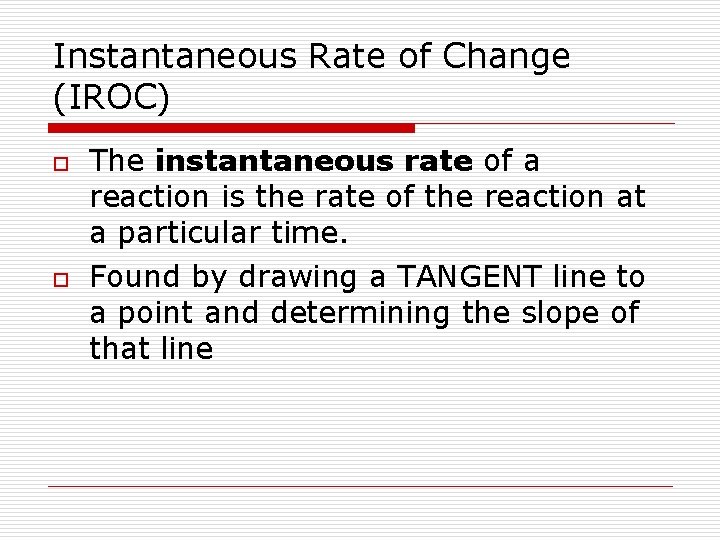
Instantaneous Rate of Change (IROC) o o The instantaneous rate of a reaction is the rate of the reaction at a particular time. Found by drawing a TANGENT line to a point and determining the slope of that line