
Exposure Hyperthermia AOB Human body keeps internal temperature
Exposure: Hyperthermia AOB

• Human body keeps internal temperature at around 37°C (98. 6°F), the temperature at which the organs work their best • Circulatory system and skin work as heat conductors, carrying away/ conserving the heat your body produces • When the core temperature is too hot, blood vessels close to the skin dilate, so more heat is released through the skin’s surface https: //pmgbiology. com/tag/vasodilation/ 2
After prolonged exposure to a heat, the body adapts to higher heat in the following ways: v sweat more v sweat starts containing a lesser concentration of salt so Na+ doesn’t become depleted v heart beats more efficiently, circulating more blood per beat to cool at skin surface v cells become more efficient, making less heat per unit of energy produced 3
FACTORS THAT INCREASE THE RISK OF OVERHEATING • external air temperature > 32°C • high humidity • prolonged strenuous physical activity • AGE—the elderly and children age < 4 are particularly susceptible • chronic illness 4
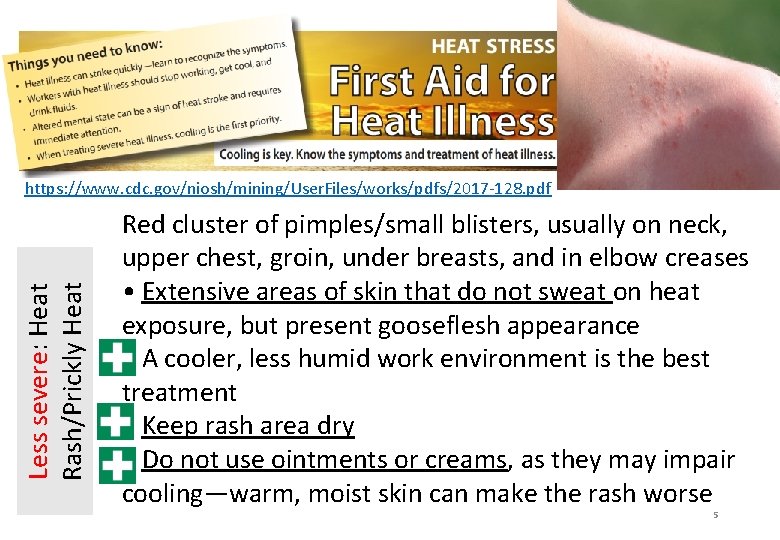
Less severe: Heat Rash/Prickly Heat https: //www. cdc. gov/niosh/mining/User. Files/works/pdfs/2017 -128. pdf Red cluster of pimples/small blisters, usually on neck, upper chest, groin, under breasts, and in elbow creases • Extensive areas of skin that do not sweat on heat exposure, but present gooseflesh appearance • A cooler, less humid work environment is the best treatment • Keep rash area dry • Do not use ointments or creams, as they may impair cooling—warm, moist skin can make the rash worse 5
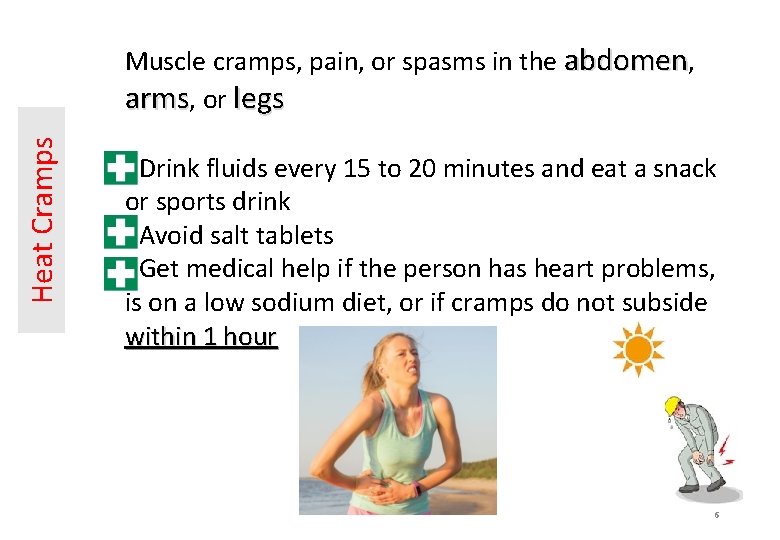
Heat Cramps Muscle cramps, pain, or spasms in the abdomen, arms, or legs • Drink fluids every 15 to 20 minutes and eat a snack or sports drink • Avoid salt tablets • Get medical help if the person has heart problems, is on a low sodium diet, or if cramps do not subside within 1 hour 6
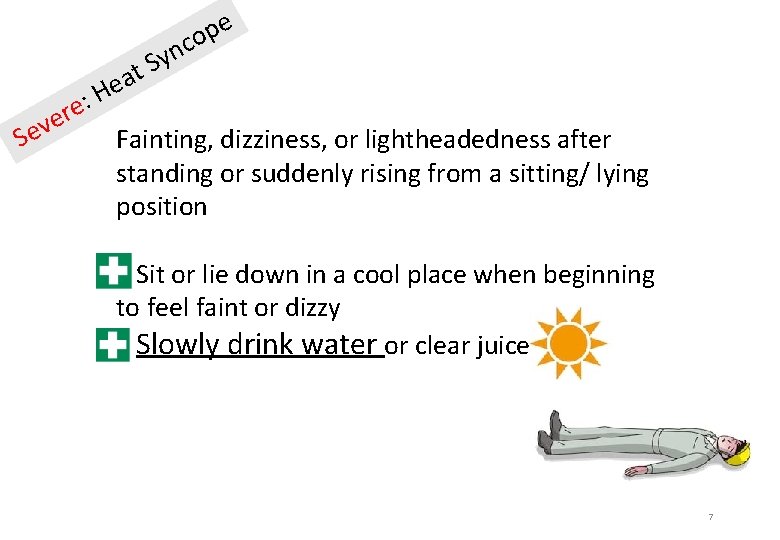
Se : e r ve e p o nc y S t a e H Fainting, dizziness, or lightheadedness after standing or suddenly rising from a sitting/ lying position • Sit or lie down in a cool place when beginning to feel faint or dizzy • Slowly drink water or clear juice 7
SEVERE OFTEN FATAL: • Call for medical help • Stay with person until help Heat Exhaustio n • Headache • Nausea • Dizziness, weakness • Irritability • Thirst, heavy sweating • Elevated body temperature • Decreased urine output • • arrives Remove person from hot area and give liquids to drink Remove unnecessary clothing, including shoes and socks Cool worker with water, cold compresses, an ice bath, or fans Encourage frequent sips of cool water 8
OFTEN FATAL: Heat Stroke • Confusion, altered mental state, slurred speech, loss of consciousness • Hot, dry skin or profuse sweating • Seizures • Very high body temperatures (>39 C) • Fast, strong pulse • Fatal if treatment delayed 9
OFTEN FATAL: Heat Stroke This is an emergency! Call for emergency care immediately! • Move person to a cool area and remove outer clothing • Cool person with water, cold compresses, an ice bath, or fans • Circulate air around person to speed cooling Place cold, wet cloths or ice on head, neck, armpits, and groin • Stay with person until emergency medical services arrive 10
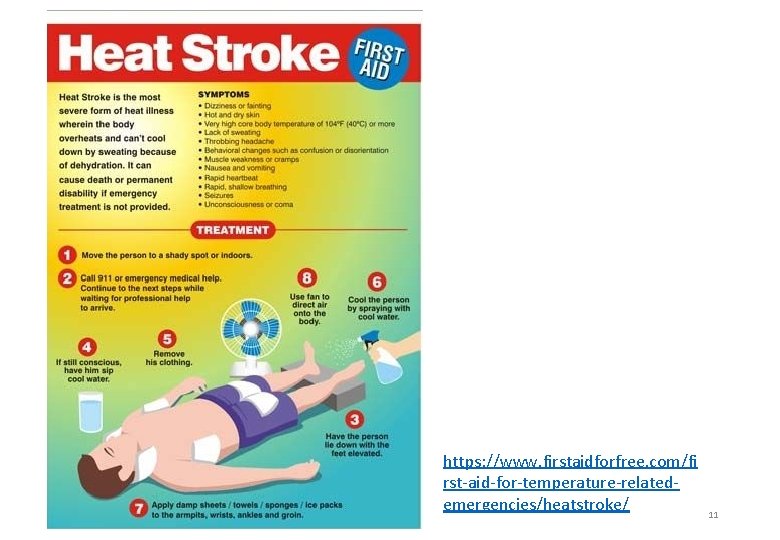
https: //www. firstaidforfree. com/fi rst-aid-for-temperature-relatedemergencies/heatstroke/ 11
- Slides: 11