
Expose Vo IP Problems With Wireshark June 15
Expose Vo. IP Problems With Wireshark June 15, 2010 Sean Walberg Vantage Media SHARKFEST ‘ 10 Stanford University June 14 -17, 2010 SHARKFEST ‘ 10 | Stanford University | June 14– 17, 2010
Vo. IP is just another application SHARKFEST ‘ 10 | Stanford University | June 14– 17, 2010
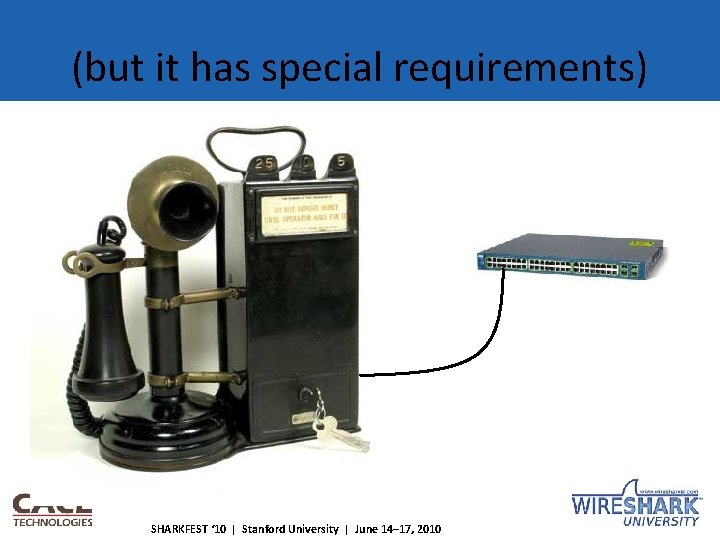
(but it has special requirements) SHARKFEST ‘ 10 | Stanford University | June 14– 17, 2010
Without tools, Vo. IP is a black box SHARKFEST ‘ 10 | Stanford University | June 14– 17, 2010
About Me SHARKFEST ‘ 10 | Stanford University | June 14– 17, 2010
The Agenda 1. 2. 3. 4. About Vo. IP Capturing Vo. IP Analyzing Signaling Analyzing RTP SHARKFEST ‘ 10 | Stanford University | June 14– 17, 2010

About Vo. IP Capturing Vo. IP Signaling RTP
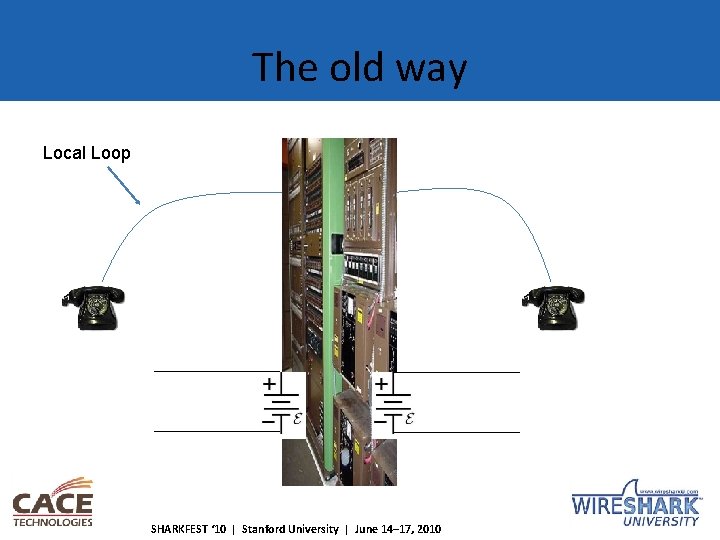
The old way Local Loop SHARKFEST ‘ 10 | Stanford University | June 14– 17, 2010
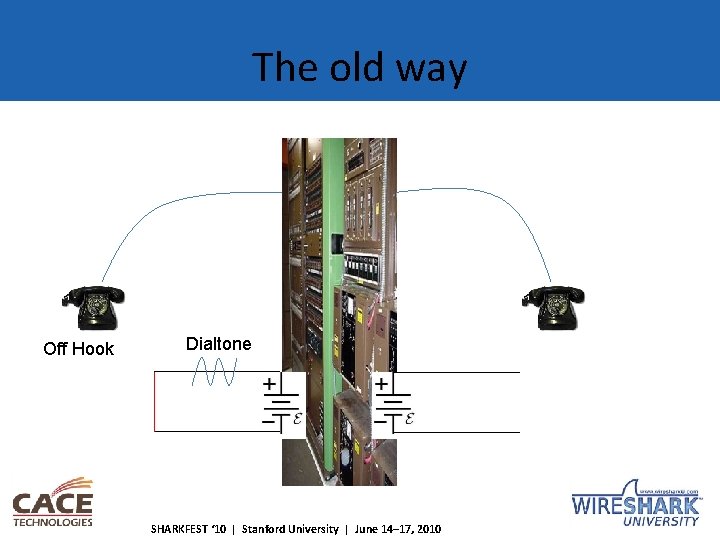
The old way Off Hook Dialtone SHARKFEST ‘ 10 | Stanford University | June 14– 17, 2010
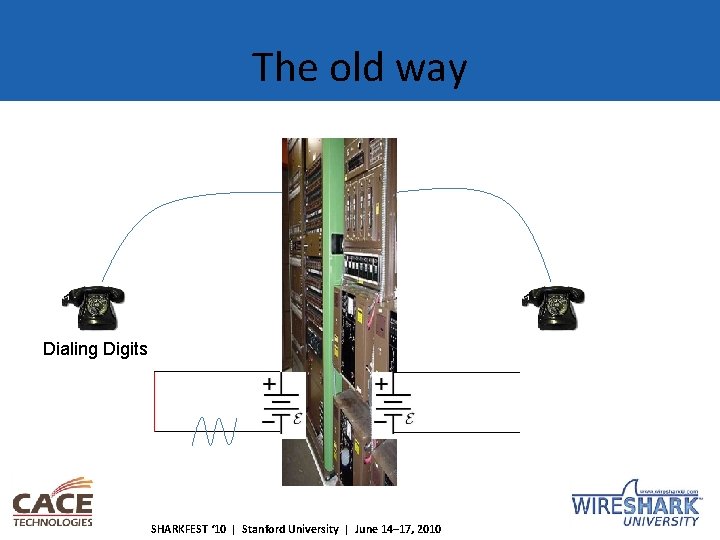
The old way Dialing Digits SHARKFEST ‘ 10 | Stanford University | June 14– 17, 2010
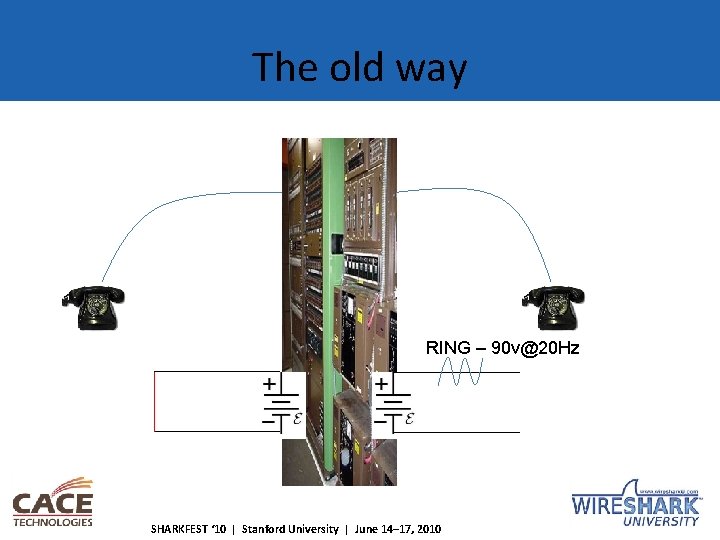
The old way RING – 90 v@20 Hz SHARKFEST ‘ 10 | Stanford University | June 14– 17, 2010
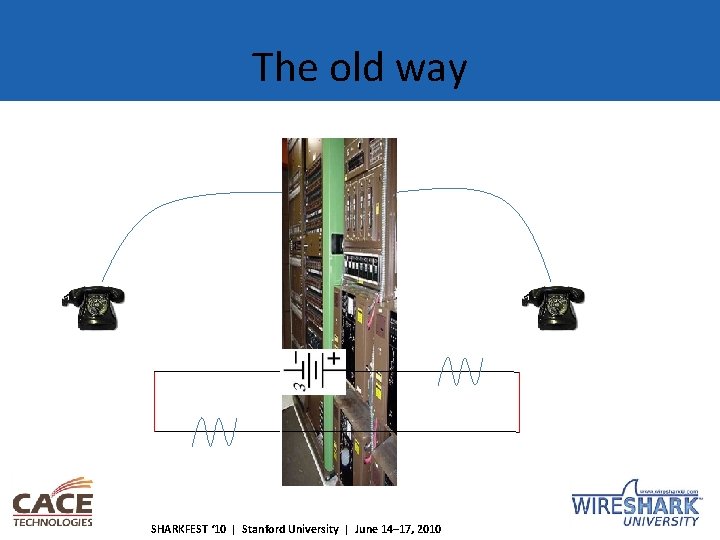
The old way SHARKFEST ‘ 10 | Stanford University | June 14– 17, 2010

The Vo. IP way ng I’m lli a c 34 2 1 x SHARKFEST ‘ 10 | Stanford University | June 14– 17, 2010
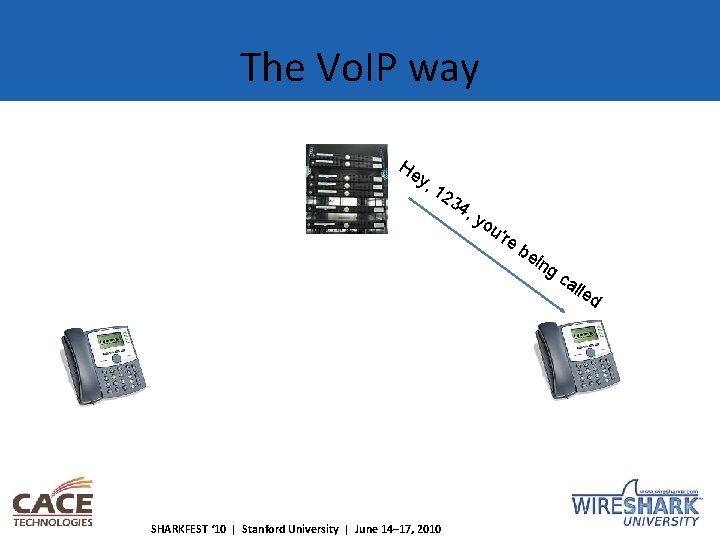
The Vo. IP way He y, 12 3 4, yo u’r e be ing ca ll ed SHARKFEST ‘ 10 | Stanford University | June 14– 17, 2010
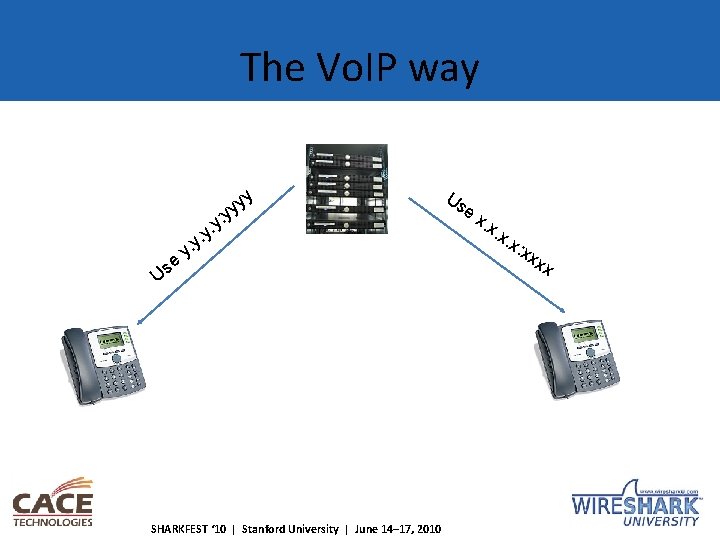
The Vo. IP way y e Us y. yy y y: y. SHARKFEST ‘ 10 | Stanford University | June 14– 17, 2010 Us ex . x. x : xx xx

The Vo. IP way ZZZZZZ SHARKFEST ‘ 10 | Stanford University | June 14– 17, 2010
So there are two parts to Vo. IP • Signaling – SIP – H. 323 – MGCP – SCCP – Proprietary • Voice (Bearer) – RTP (G. 711, G. 722, G. 729 a, …) SHARKFEST ‘ 10 | Stanford University | June 14– 17, 2010
(two and a half, really) • Touch Tones are a problem unto themselves • 3212333222333 3212333322321 SHARKFEST ‘ 10 | Stanford University | June 14– 17, 2010

Network Conditions Affecting Vo. IP SHARKFEST ‘ 10 | Stanford University | June 14– 17, 2010
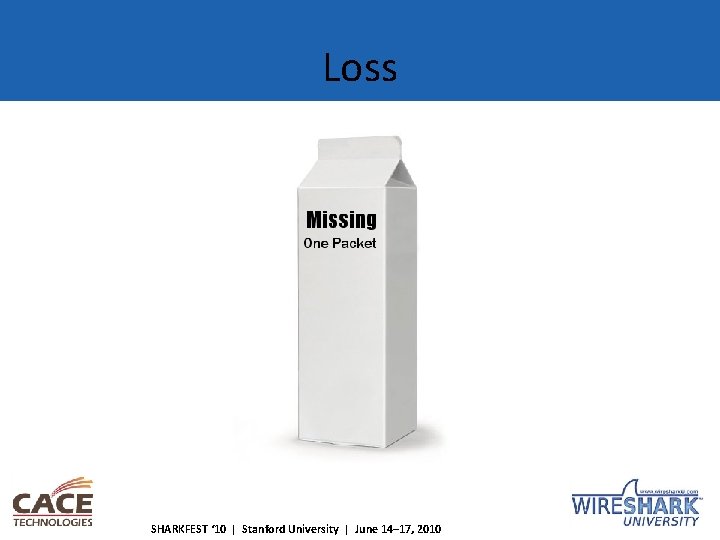
Loss SHARKFEST ‘ 10 | Stanford University | June 14– 17, 2010
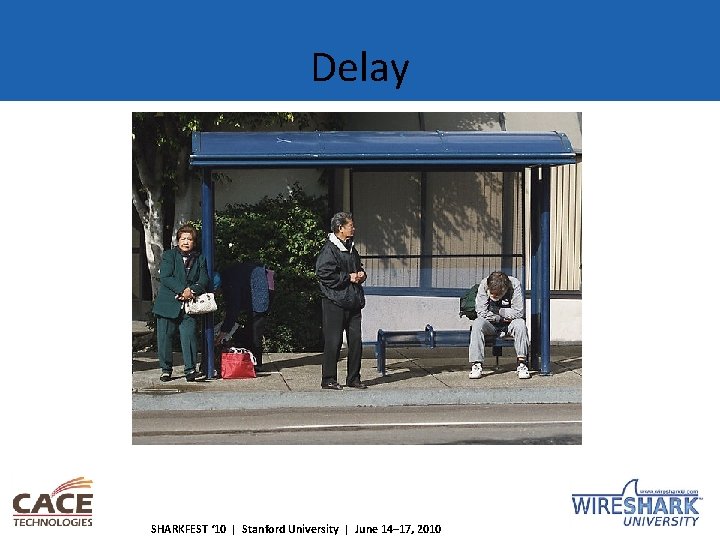
Delay SHARKFEST ‘ 10 | Stanford University | June 14– 17, 2010
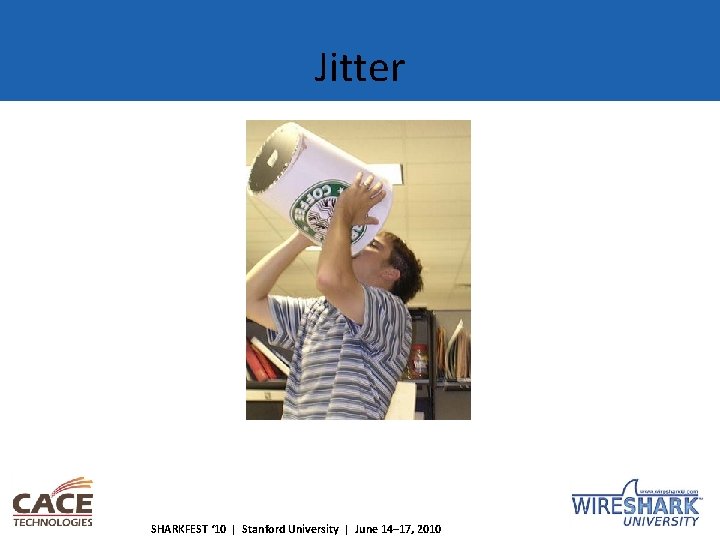
Jitter SHARKFEST ‘ 10 | Stanford University | June 14– 17, 2010

Jitter != Delay Loss Jitter Delay (This is from a program called smokeping) SHARKFEST ‘ 10 | Stanford University | June 14– 17, 2010
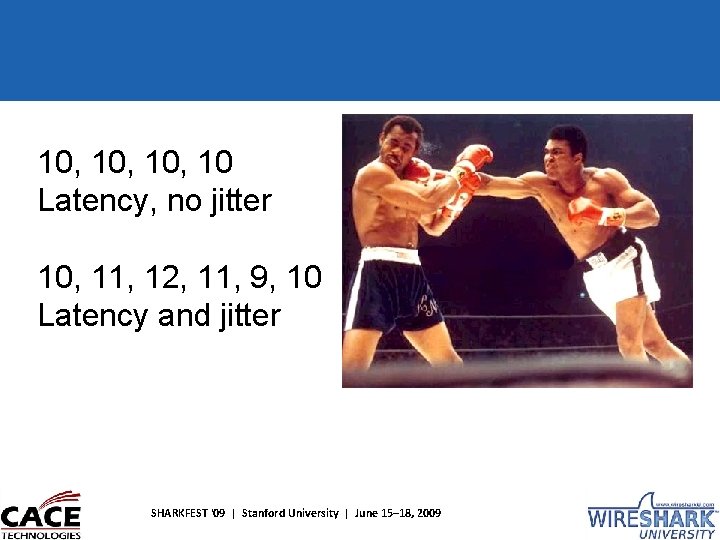
10, 10, 10 Latency, no jitter 10, 11, 12, 11, 9, 10 Latency and jitter SHARKFEST '09 | Stanford University | June 15– 18, 2009
About Vo. IP Capturing Vo. IP Signaling RTP
Location, Location SHARKFEST ‘ 10 | Stanford University | June 14– 17, 2010

Just a simple network SHARKFEST ‘ 10 | Stanford University | June 14– 17, 2010
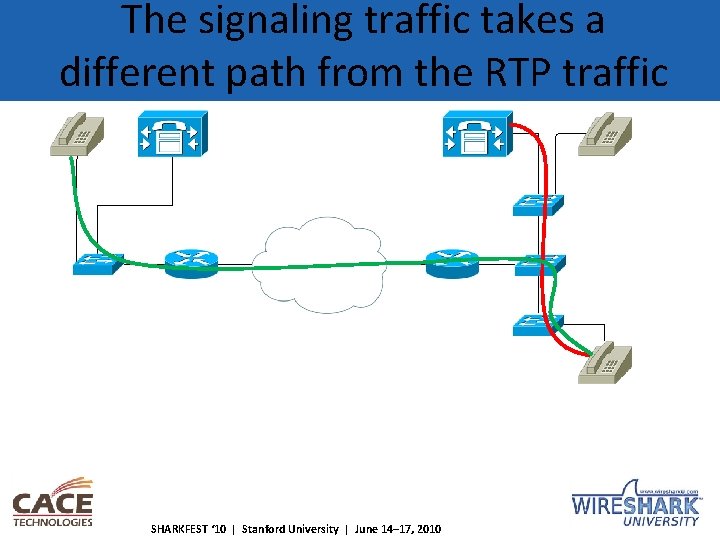
The signaling traffic takes a different path from the RTP traffic SHARKFEST ‘ 10 | Stanford University | June 14– 17, 2010
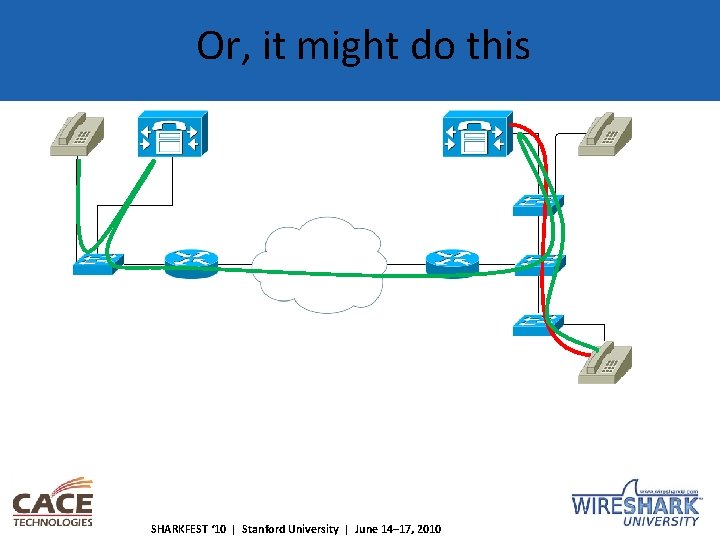
Or, it might do this SHARKFEST ‘ 10 | Stanford University | June 14– 17, 2010
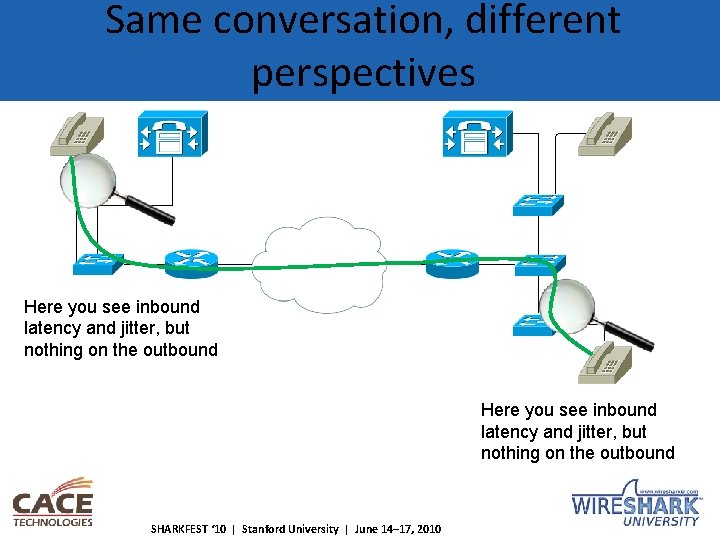
Same conversation, different perspectives Here you see inbound latency and jitter, but nothing on the outbound SHARKFEST ‘ 10 | Stanford University | June 14– 17, 2010
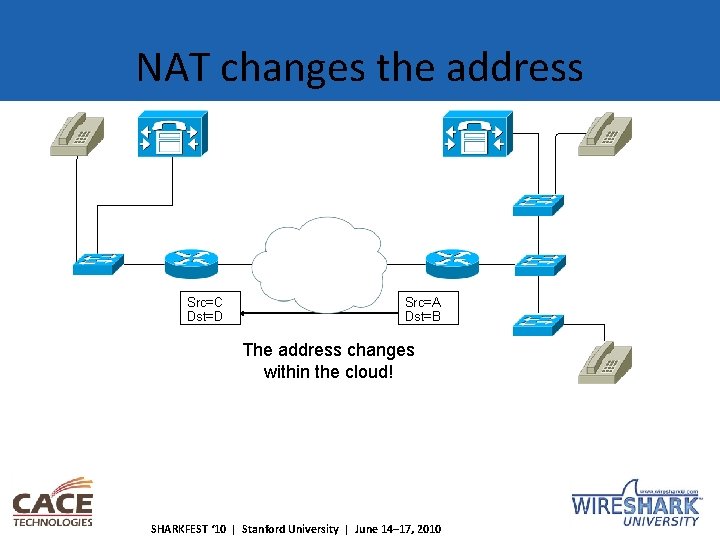
NAT changes the address Src=C Dst=D Src=A Dst=B The address changes within the cloud! SHARKFEST ‘ 10 | Stanford University | June 14– 17, 2010
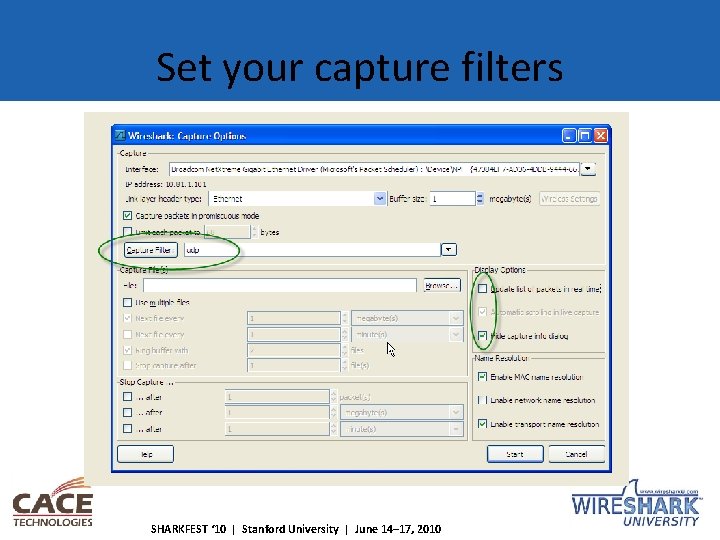
Set your capture filters SHARKFEST ‘ 10 | Stanford University | June 14– 17, 2010
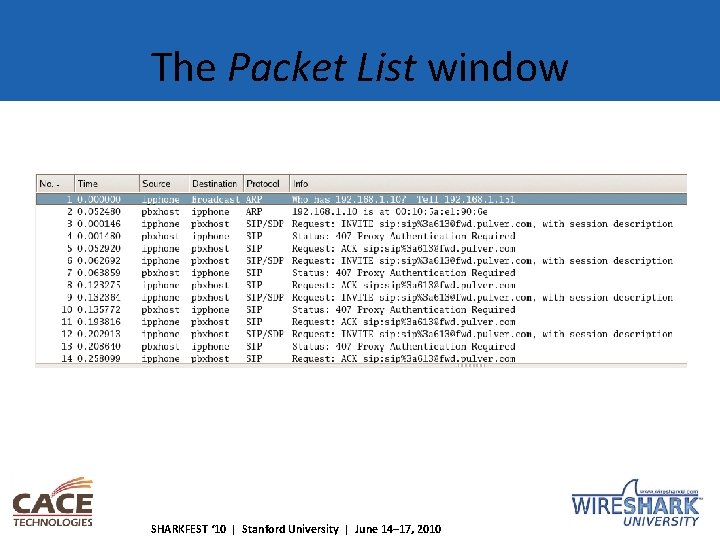
The Packet List window SHARKFEST ‘ 10 | Stanford University | June 14– 17, 2010
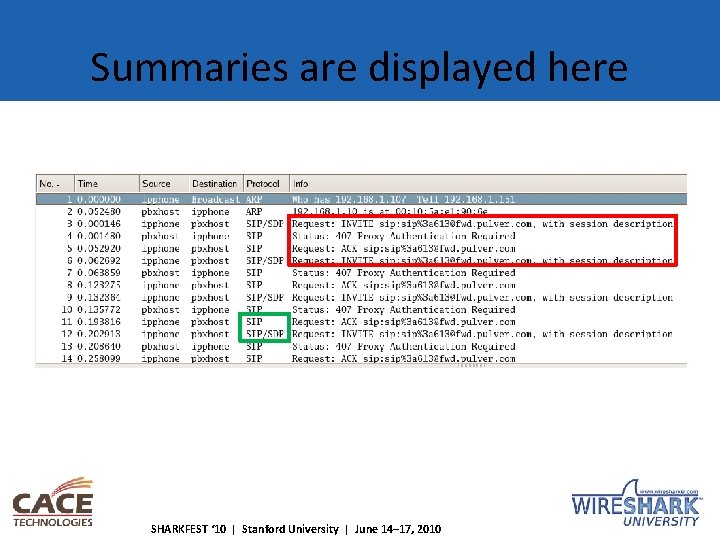
Summaries are displayed here SHARKFEST ‘ 10 | Stanford University | June 14– 17, 2010
By the way… If the signaling or the voice is encrypted, you won’t be able to decode it. Sorry. SHARKFEST ‘ 10 | Stanford University | June 14– 17, 2010
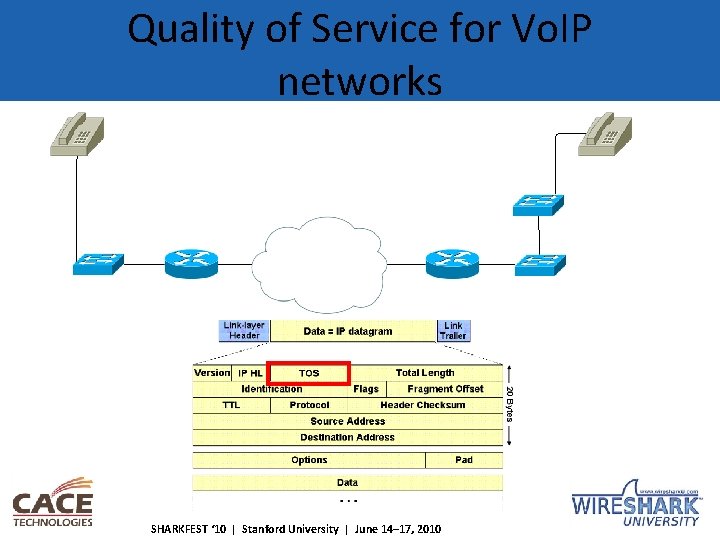
Quality of Service for Vo. IP networks SHARKFEST ‘ 10 | Stanford University | June 14– 17, 2010
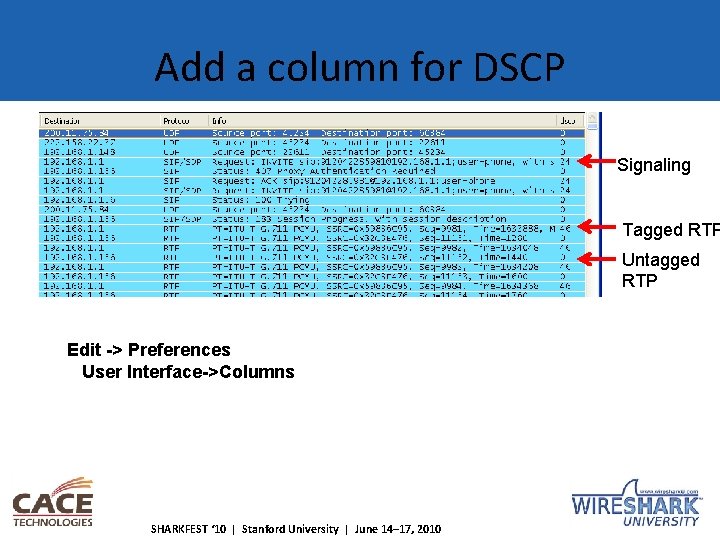
Add a column for DSCP Signaling Tagged RTP Untagged RTP Edit -> Preferences User Interface->Columns SHARKFEST ‘ 10 | Stanford University | June 14– 17, 2010
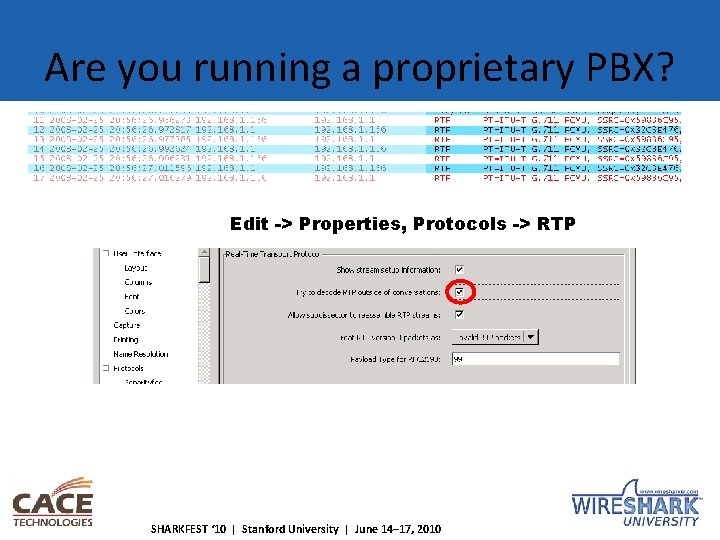
Are you running a proprietary PBX? Edit -> Properties, Protocols -> RTP SHARKFEST ‘ 10 | Stanford University | June 14– 17, 2010

About Vo. IP Capturing Vo. IP Signaling RTP
The Role of Signaling • Indicate to the remote end that a call is coming • Establish the codec to be used for voice • Establish the addresses of the endpoints • Get out of the way • Tear down the connection once it’s done SHARKFEST ‘ 10 | Stanford University | June 14– 17, 2010
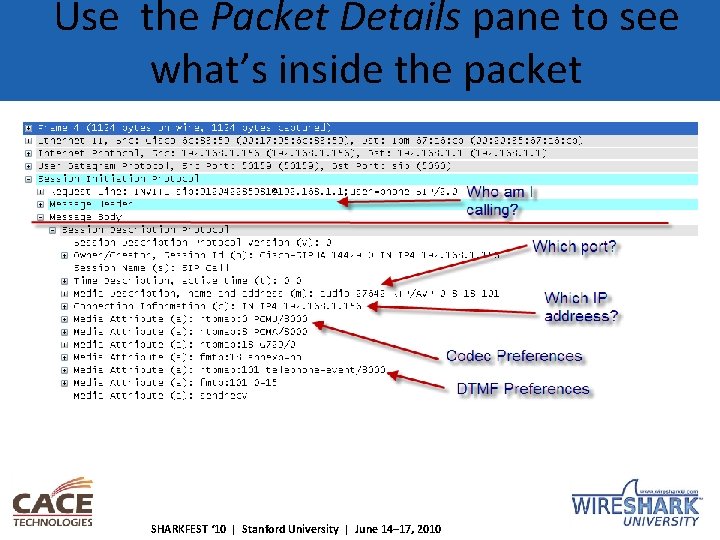
Use the Packet Details pane to see what’s inside the packet SHARKFEST ‘ 10 | Stanford University | June 14– 17, 2010
Back to Loss, Delay, and Jitter • Jitter is usually a non-issue • Delay, within reason, is OK – Clustering/Specific applications notwithstanding • Loss isn’t great – TCP retransmits at layer 4 – UDP retries at layer 7 SHARKFEST ‘ 10 | Stanford University | June 14– 17, 2010
Demos SHARKFEST ‘ 10 | Stanford University | June 14– 17, 2010

About Vo. IP Capturing Vo. IP Signaling RTP
The properties of RTP • RTP simulates the real time voice normally carried over a wire • 4 KHz voice bandwidth = 8 KHz sampling rate (Nyquist) • 8 bits/sample * 8 KHz = 64, 000 bps (DS 0) • A Codec (G. 711 u/A law, G. 729, G. 726, etc) • Most codecs use 20 ms voice samples = 50 pps • Even with compression, you have a fairly consistent packet rate, only the size changes SHARKFEST ‘ 10 | Stanford University | June 14– 17, 2010
DTMF • Compressing DTMF is bad • So many different ways to carry the digits out of band, look for them in traces (see demo) SHARKFEST ‘ 10 | Stanford University | June 14– 17, 2010
Three factors that affect voice quality Latency <= 150 ms (one way) Jitter <= 20 ms Packet loss <= 0. 1% SHARKFEST ‘ 10 | Stanford University | June 14– 17, 2010
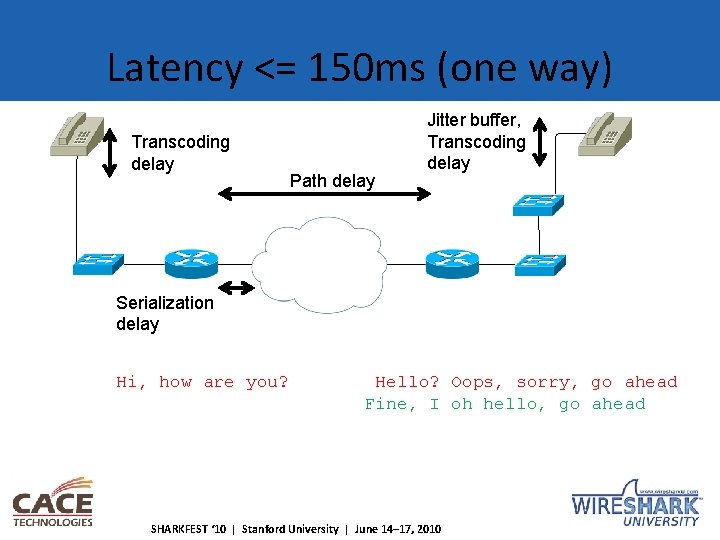
Latency <= 150 ms (one way) Transcoding delay Path delay Jitter buffer, Transcoding delay Serialization delay Hi, how are you? Hello? Oops, sorry, go ahead Fine, I oh hello, go ahead SHARKFEST ‘ 10 | Stanford University | June 14– 17, 2010
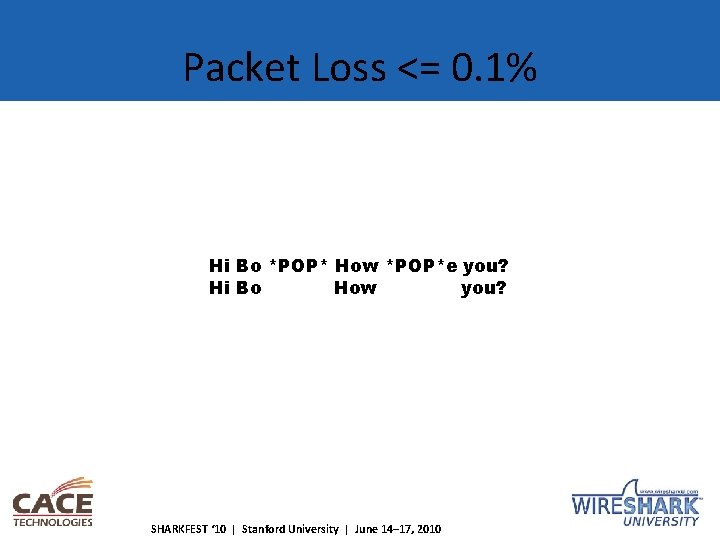
Packet Loss <= 0. 1% Hi Bo *POP* How *POP*e you? Hi Bo How you? SHARKFEST ‘ 10 | Stanford University | June 14– 17, 2010
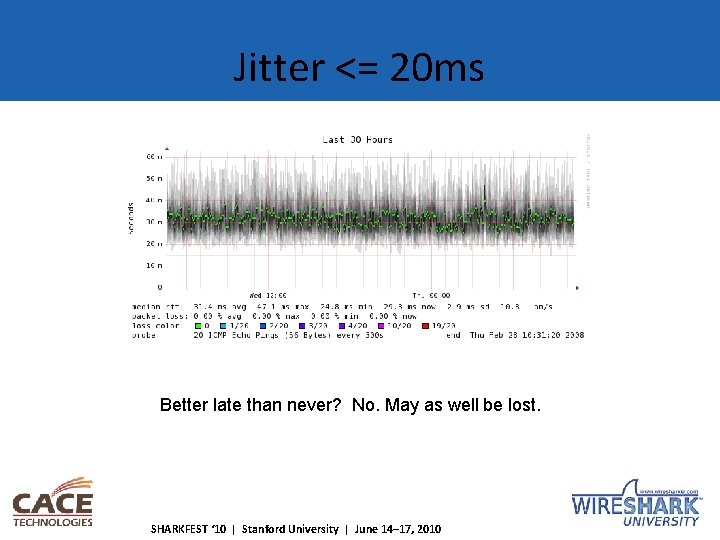
Jitter <= 20 ms Better late than never? No. May as well be lost. SHARKFEST ‘ 10 | Stanford University | June 14– 17, 2010
Demos SHARKFEST ‘ 10 | Stanford University | June 14– 17, 2010
Thanks! sean@ertw. com This presentation will be downloadable from the Sharkfest website. SHARKFEST ‘ 10 | Stanford University | June 14– 17, 2010
- Slides: 52